Процветание туристического кластера на востоке земли «Девять драконов»

В первые месяцы 2022 года индустрия туризма провинций в Кластере сотрудничества и развития туризма на востоке дельты Меконга получила хорошие сигналы, поскольку количество посетителей значительно увеличилось, а туристическая деятельность постепенно активизируется в новом направлении «безопасной адаптации к эпидемии COVID-19».

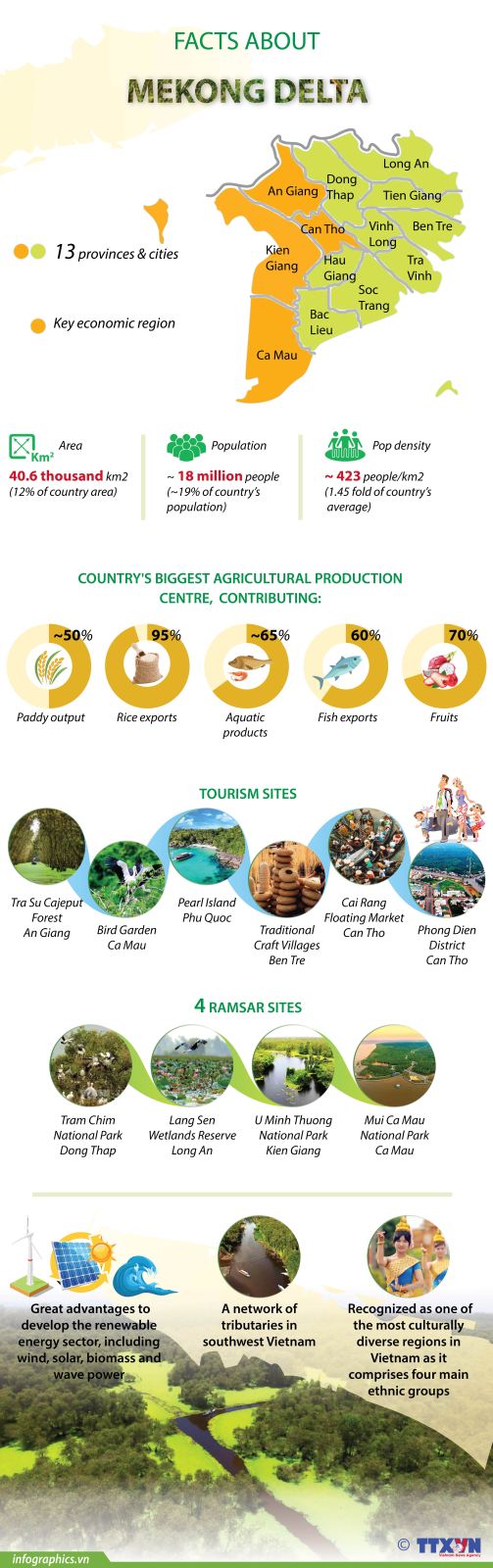
Дельта Меконга включает город Кантхо и 12 провинций: Лонг-ан, Тиенжанг, Бенче, Виньлонг, Чавинь, Хаужанг, Шокчанг, Донгтхап, Анжанг, Киенжанг, Баклиеу и Камау. При этом Кластер сотрудничества, сотрудничества и развития туризма на востоке дельты Меконга включает провинции Бенче, Виньлонг, Тиенжанг, Чавинь, Лонг-ан и Донгтхап. После длительного периода воздействия эпидемии COVID-19 туристическая отрасль столкнулась с трудностями, количество посетителей значительно сократилось, а многим предприятиям туристического сервиса пришлось приостановить работу.

Однако хорошо подготовившись, населенные пункты предприняли активные шаги к возобновлению работы, тем более что Лунный Новый год в 2022 году считается временем начала процветания туристической отрасли в провинциях после долгой «спячки». Увеличилось количество туристов, приезжающих в населенные пункты, а психология туристов постепенно «адаптировалась» к туристической деятельности в условиях новой «нормальности».

В Бенче, чтобы «оживить» туристическую индустрию, провинция расширила рекламу для туристов с сообщением «Экотуризм реки кокосовой воды – безопасное, дружелюбное и качественное направление». Провинция способствует созданию туристических ассоциаций и сотрудничеству между городом Хошимин и другими населенными пунктами, уделяя особое внимание созданию привлекательных и уникальных туристических продуктов и программ.

В провинции Виньлонг с конца 2021 года власти активно поддерживаются туристические учреждения в разработке планов профилактики эпидемии и планов лечения, если в их заведениях появятся случаи заболевания COVID-19; усиливают рекламную поддержку, продвигают туризм, мобилизует учреждения для создания рекламных пакетов, готовясь к приему гостей в ближайшее время.

По словам директора Департамента культуры, спорта и туризма провинции Тиенжанг Нгуен Дык Дам, провинция уделяет особое внимание модернизации объектов, инвестированию в восстановление и развитие туристических продуктов, продвигая применение электронного маркетинга, технологии 4.0 для привлечения инвесторов. В 2022 году провинция стремится принять 1,1 млн. посетителей, что вдвое больше, чем в 2021 году.

Определив, что восстановление туризма в «новом нормальном» состоянии является одновременно и проблемой, и возможностью, населенные пункты Кластера сотрудничества и развития туризма в восточной части дельты Меконга реализуют множество решений, направленных на стимулирование спроса, восстановление туризма, диверсифицируя продукты, чтобы продвигать имеющиеся преимущества и идти в ногу с изменениями спроса и психологии посетителей. В то же время местности укрепляют региональные связи, рассчитывают открыть больше туров и маршрутов, разрабатывают новые туристические продукты для создания региональных достопримечательностей для привлечения и удержания туристов.

По данным Департамента культуры, спорта и туризма провинции Виньлонг, провинция сосредоточена на создании и повышении ценности четырех конкретных туристических продуктов: туризма с проживанием в семье, сельскохозяйственного туризма, культурно-духовного туризма и культурного туризма. Соответственно, в районе острова Анбинь в районе Лонгхо есть два объекта с проживанием в семье, соответствующие стандартам АСЕАН, и один объект с проживанием в семье, соответствующий провинциальным туристическим стандартам. В частности, провинция совершенствует туристический продукт «Приехать в Виньлонг, чтобы слушать пение бой», превращая этот тип продукта в регулярное и привлекательное направление для обслуживания туристов, повышая конкурентоспособность туризма провинции.

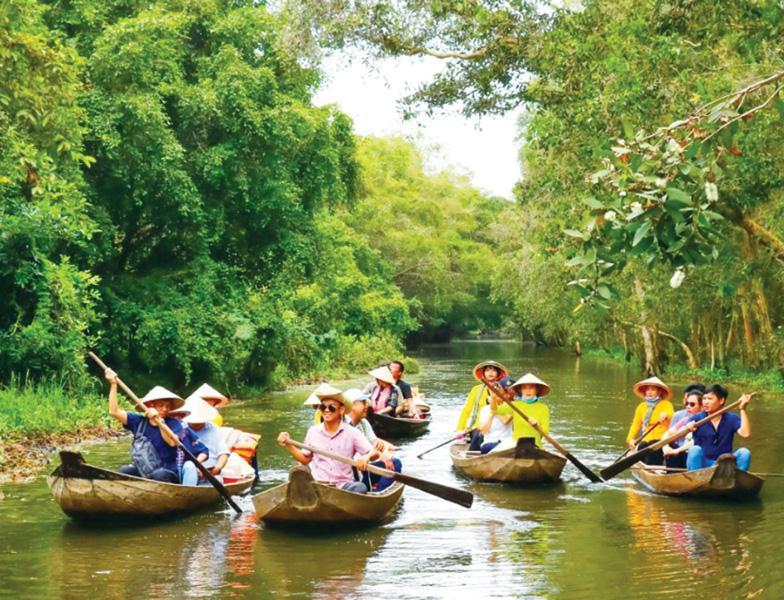
Благодаря удобному расположению и береговой линией протяженностью 32 км, простирающейся вдоль реки Тиен, а также развитой системой автомобильного и водного транспорта, провинция Тиенжанг фокусируется на реализации множества решений для развития экотуризма в трех регионах: экологическая зона соленой воды, пресной воды, рек и экологическое сочетание квасцов, затопленных в районе Донгтхапмыой; фруктовые пейзажи; духовный туризм.

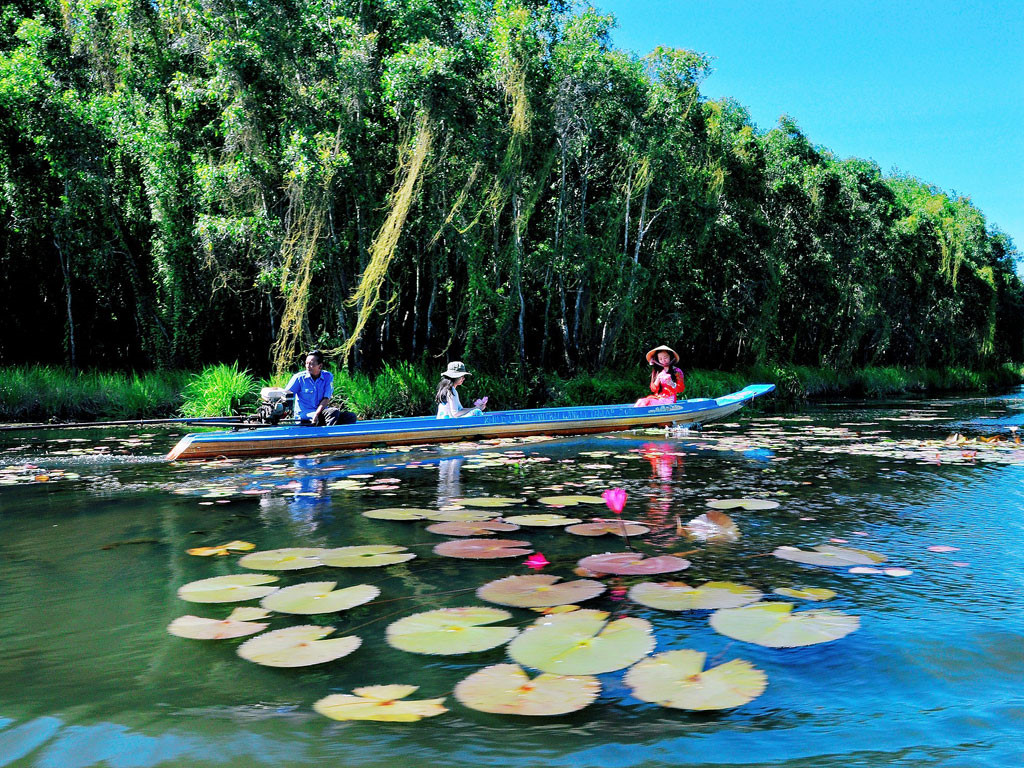
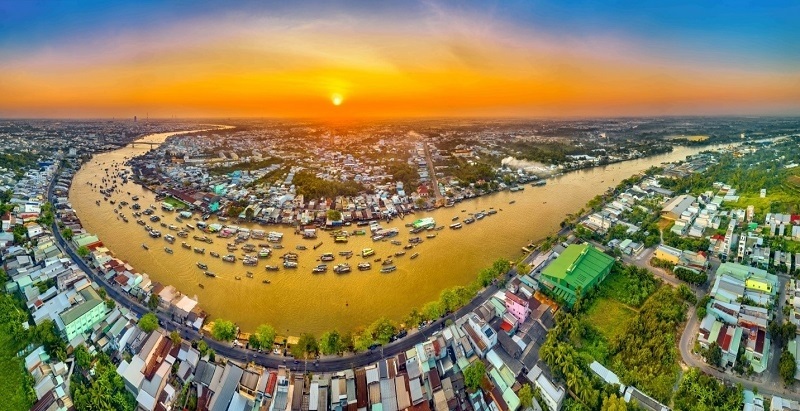
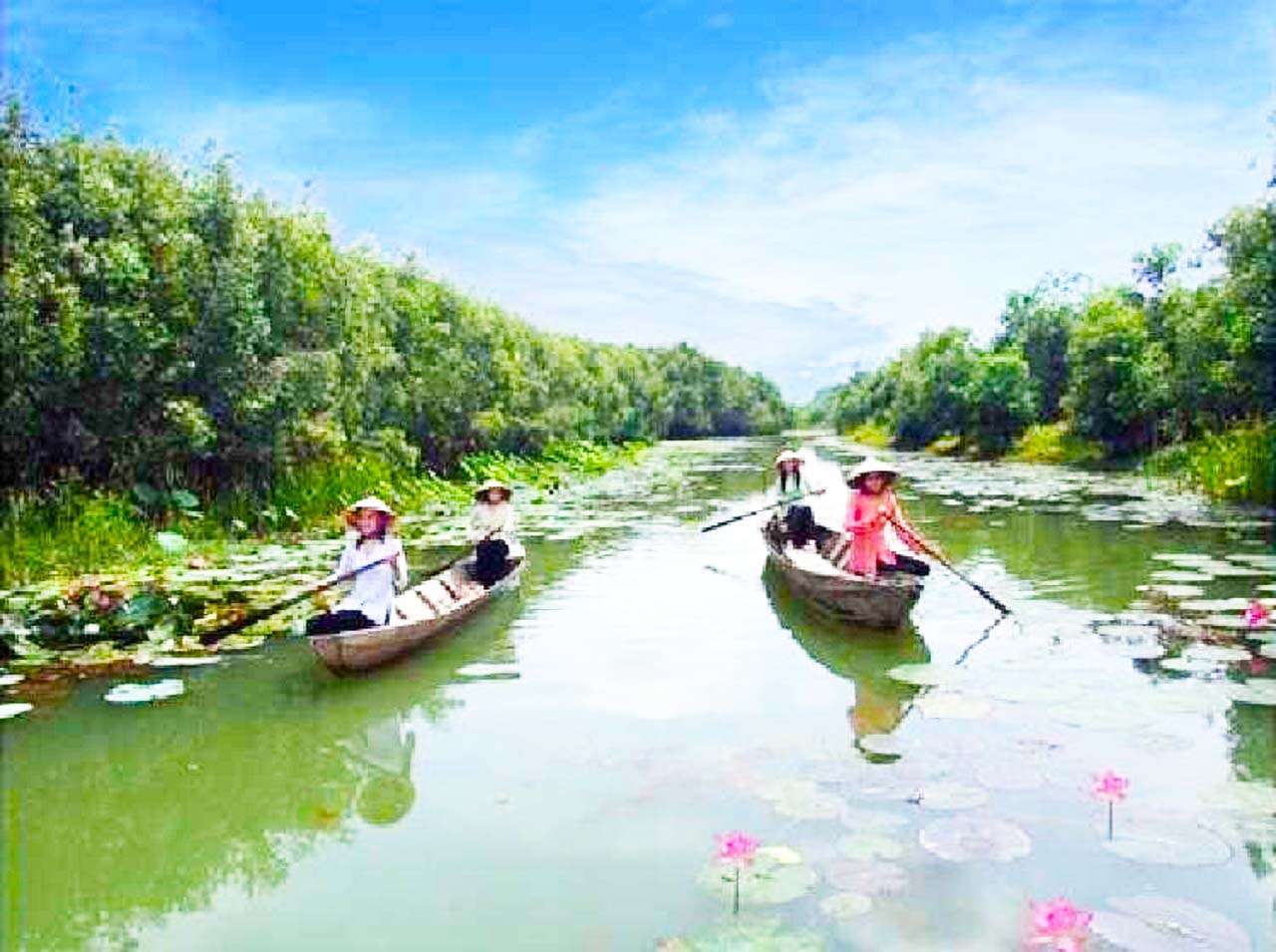
В частности, в провинции Бенче, которую сравнивают с зеленым островом посреди реки Меконг, бренд «Экотуризм на кокосовой реке Бенче» всегда был привлекательной формой туризма. Согласно проекту развития туризма провинции Бенче до 2030 года, провинция стремится принять не менее 3,2–5 млн. посетителей, из которых иностранные посетители составляют 46–48%.

По словам директора департамента сельского хозяйства и развития сельских районов Бенче Доана Ван Дана, в настоящее время в провинции есть ремесленные деревни, которые заинтересованы в обслуживании туристов и предлагают такие услуги, как выращивание саженцев, декоративных цветов, переработка рыбы, производство конфет… Кроме того, программа «Одна община – один продукт» со многими товарами является сильной стороной провинции, предлагая зеленые грейпфруты, дуриан, сухофрукты, мед, сушеную рыбу, вино…, особенно популярны и хорошо приняты посетителями продукты из кокоса.

Находя решения для адаптации к «новой нормальности», провинции и города в дельте Меконга, включая Восточный кластер, активно продвигают изменения и укрепляют связи, чтобы вместе преодолевать трудности. С этой целью с самого начала 2022 года провинции кластера подписали программу сотрудничества и ассоциации в области развития туризма для содействия восстановлению и развитию туризма в соответствии с новой ситуацией.
В 2022 году провинции будут продолжать сотрудничать и поддерживать друг друга в реализации таких направлений, как обмен информацией о ситуации с развитием туризма; обмен опытом и решениями для повышения эффективности государственного управления туризмом; развитие новых туристических продуктов и рынков; обучение и развитие человеческих ресурсов. Местности в Кластере укрепляют связи, продвигают туризм, организуют делегации в рамках фермерского туризма для изучения новых туристических направлений, делятся и поддерживают друг друга в применении технологий 4.0 для продвижения и соединения маршрутов, туристических направлений в новом контексте…

С первых дней «открытия» местной туристической деятельности провинция Бенче координировала свои действия с городом Хошимин, чтобы найти решения для объединения туризма двух населенных пунктов для восстановления и развития посредством конференции «Сотрудничество в области развития туризма между Хошимином и провинцией Бенче в условиях безопасной адаптации к эпидемии COVID-19».

В Тиенжанге провинциальный департамент культуры, спорта и туризма совместно с департаментом туризма Хошимина и других провинций и городов дельты Меконга организовал более 8 делегаций для изучения туристических маршрутов и направлений развития, связанных с привлечением инвестиций в развитие туризма, продвижением и рекламой ключевых туристических рынков, обменом опытом государственного управления туризмом… Ожидается, что вместе с Виньлонгом в апреле 2022 года провинция организует 2-й Фестиваль туризма на тему: «Туризм Виньлонга и кластер развития туризма в провинциях на востоке дельты Меконга – безопасное, дружелюбное, привлекательное направление».

Директор Департамента культуры, спорта и туризма провинции Виньлонг Фан Ван Жау сказал, что в последнее время между провинциями дельты Меконга и городом Хошимин наметились признаки сотрудничества в развитии туризма. Реализация подписанного содержания создала условия и основу для индустрии туризма провинций, чтобы продвигать свои сильные стороны, приносить туризм в каждый населенный пункт для восстановления и развития, а также улучшать цепочку создания стоимости продукта./.

https://ru.vietnamplus.vn/turizm-binthuana-mnogie-napravleniya-ocharovyvayut-turistov-33244.vnp

https://ru.vietnamplus.vn/10-gorodov-vetnama-priznany-samymi-gostepriimnymi-v-2022-godu-33216.vnp

https://ru.vietnamplus.vn/traveloffpath-vetnam-primenyaet-samye-udobnye-usloviya-vezda-sredi-stran-yuva-dlya-inostrannyh-posetitelei-32967.vnp

https://ru.vietnamplus.vn/natsionalnyi-god-turizma-2022-ukreplenie-imidzha-kuangnama-kak-bezopasnogo-i-druzhelyubnogo-napravleniya-32831.vnp

https://ru.vietnamplus.vn/dongthap-prodvigaet-selskohozyaistvennyi-turizm-32839.vnp
https://ru.vietnamplus.vn/turizm-vetnama-ninthuan-ispolzuet-preimuschestva-razvitiya-morskogo-turizma-32734.vnp

Eastern Mekong Delta enjoys tourism boom 

Hanoi (VNA) – Since early 2022, provinces within the tourism development cooperation cluster in the Eastern Mekong Delta have been welcoming increasing numbers of visitors as the nation shifts to safely adapts to the COVID-19 epidemic.

The cluster consists of Ben Tre, Vinh Long, Tien Giang, Tra Vinh, Long An and Dong Thap provinces. Due to the pandemic, it witnessed a significant drop in the number of visitors and was forced to temporarily close tourism services.

However, these localities have been gradually reopening, with the Lunar New Year festival in 2022 marking a booming tourism industry after a prolonged “hibernation”. Holidaymakers have flocked to the localities as they gradually adapt to the new normal.

In Ben Tre, a message of safe, friendly, and quality eco-tourism has been promoted in order to revive the industry. The province has stepped up cooperation with Ho Chi Minh City and other localities, focusing on building attractive and unique tour packages.

Vinh Long, meanwhile, has actively helped tourism establishments to develop pandemic prevention and response plans and encouraged them to prepare promotion packages for the near future.

According to Director of the Tien Giang Department of Culture, Sports and Tourism Nguyen Duc Dam, the province is concentrating on upgrading facilities, developing tourism products, and applying new technologies from the 4th Industrial Revolution to lure investors. In 2022, Tien Giang aims to welcome 1.1 million tourists, doubling that of last year.

CREATING A UNIQUE IMPRESSION

Determining that the restoration of tourism in the ‘new normal’ is both a challenge and an opportunity, delta localities have been implementing a host of solutions to stimulate demand, restore tourism and diversify products to promote their advantages and keep pace with changes in visitors’ demands. They are also working to strengthen regional links in the expectation of launching more tours and routes and developing new products as regional highlights for tourists.

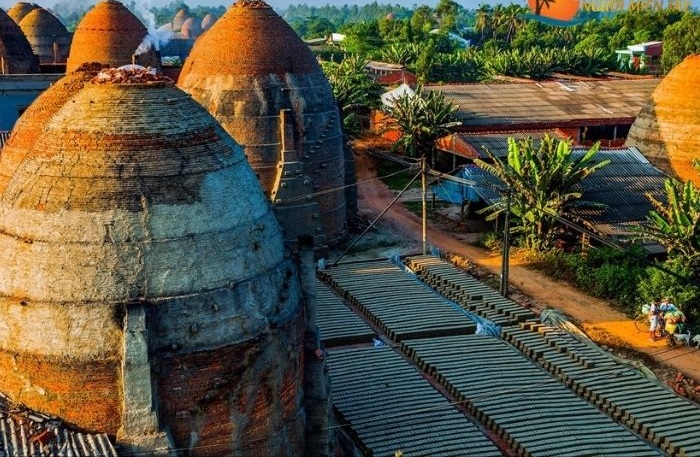
According to the Vinh Long Department of Culture, Sports and Tourism, the province is focusing on building and enhancing the value of its homestay, agricultural, cultural-spiritual, and craft village tourism. An Binh island in Long Ho district has two ASEAN-standard homestay facilities and one provincial-level one.

Vinh Long is in the process of turning the art of “boi” singing (classical drama) into a regular and attractive feature to enhance local tourism competitiveness.

Boasting a 32km coastline, the Tien River, and a comprehensive road and waterway transport system, Tien Giang is eyeing the development of eco-tourism in its local orchards, saltwater-freshwater-river ecological zones and the Dong Thap Muoi area.

In Ben Tre, which is considered a green island in the middle of the Mekong River, coconut-river ecotourism has always been an attractive form of local tourism. By 2030, the province targets to host at least 3.2 – 5 million visitors, of which the number of foreigners will account for nearly 50 percent.

According to Director of the Ben Tre Department of Agriculture and Rural Development Doan Van Danh, the province boasts many craft villages which make ornamental flowers, dried fish, wine and coconut candy, among others.

PROMOTING TOURISM LINKS

In the quest to adapt in the ‘new normal’, these provinces are intensifying their connections to overcome any difficulties together, with a deal on tourism cooperation and links signed among them in early 2022.

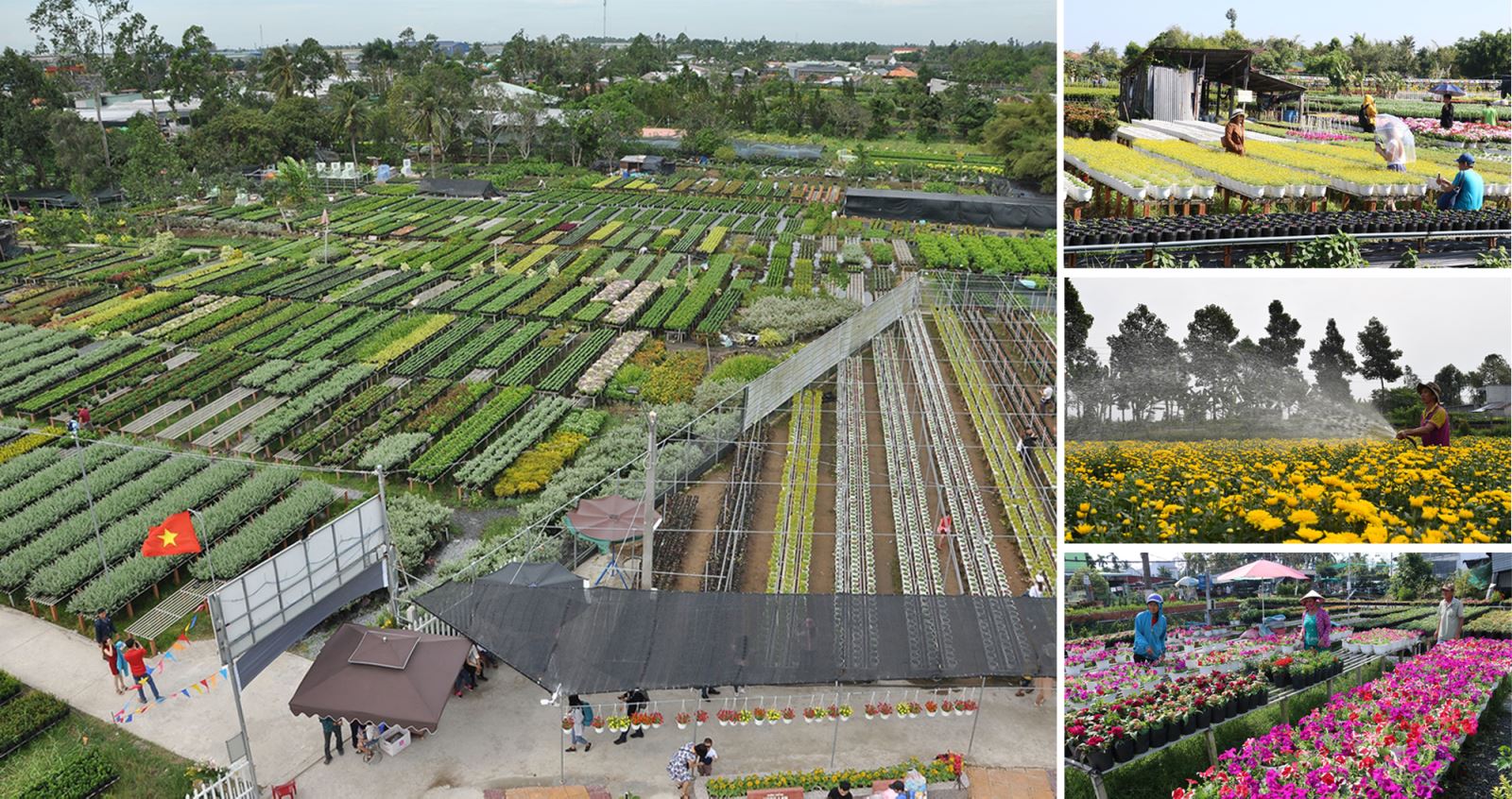
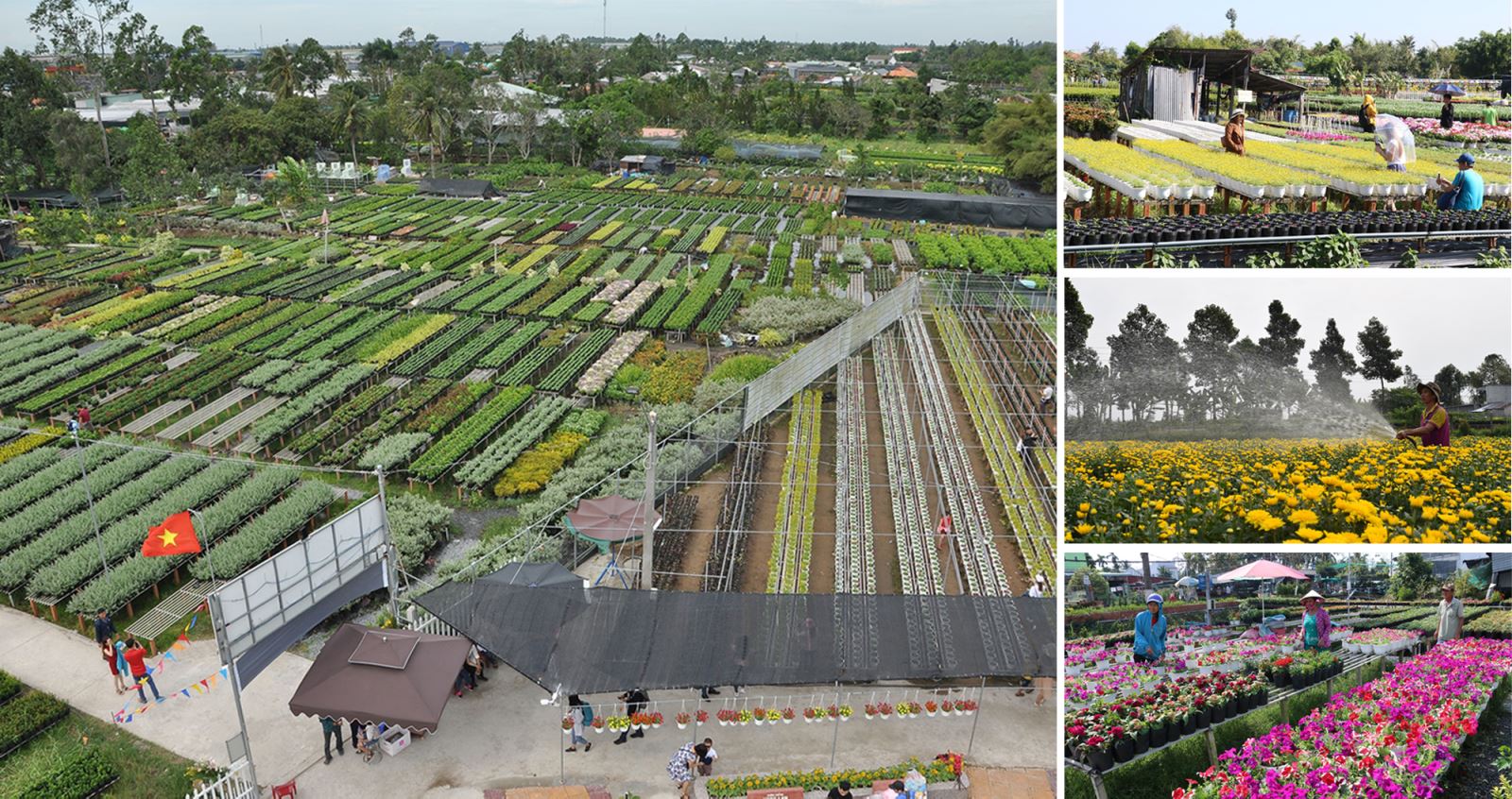
The Sa Dec flower village is a popular tourist destination in Dong Thap (Photo: VNA)

Under the deal, they agreed to assist one another throughout the year in information-experience exchange, product-market development, and human resources training. Their collaboration also covers tourism promotion, famtrips, and technological application, among other activities.

When tourism was allowed to resume, Ben Tre coordinated with Ho Chi Minh City to serve tourism recovery and growth via a conference.

In Tien Giang, the provincial Department of Culture, Sports and Tourism has worked with the tourism departments of HCM City and other provinces and cities in the Mekong Delta to survey tourist routes and destinations for the development of tours and inter-locality routes in association with investment attraction and management experience sharing.

Meanwhile, Director of the Vinh Long Department of Culture, Sports and Tourism Phan Van Giau said that many cooperation deals have been sealed between Mekong Delta provinces and HCM City, creating conditions and a basis for the regional tourism industry to recover, grow and improve its product value chain./.

Related stories:

HCM City shakes hands with Mekong Delta localities in tourism development

Dong Thap promotes agricultural tourism

Tourism surges in Tet in Mekong Delta

Développement du tourisme à l’Est du delta du Mékong

Pendant les premiers mois de 2022, le secteur touristique des localités membres du groupe de coopération pour le développement du tourisme à l’Est du delta du Mékong a connu des signes encourageants, le nombre de visiteurs ayant fortement augmenté. Les activités touristiques se redressent en s’adaptant en toute sécurité au COVID-19. 

Le delta du Mékong comprend la ville de Can Tho et 12 provinces que sont Long An, Tien Giang, Ben Tre, Vinh Long, Tra Vinh, Hau Giang, Soc Trang, Dong Thap, An Giang, Kien Giang, Bac Lieu et Ca Mau. Le groupe de coopération pour le développement du tourisme à l’Est du delta du Mékong comprend les provinces de Ben Tre, Vinh Long, Tien Giang, Tra Vinh, Long An et Dong Thap. Le COVID-19 a gravement affecté le tourisme de cette région avec un fort recul du nombre de visiteurs et la fermeture temporaire de plusieurs établissements de services. 

Cependant, le Nouvel An lunaire en 2022 a été considéré comme un moment important, marquant le début du redressement du tourisme dans ces provinces. Le nombre de visiteurs a fortement augmenté dans le contexte de nouvelle normalité. 

A Ben Tre, les autorités renforcent la communication pour promouvoir l’image de la province en tant que destination écotouristique sûre, amicale et de qualité. Parallèlement, la province renforce la coopération avec Ho Chi Minh-Ville et d’autres localités pour concevoir de nouveaux services et programmes touristiques de qualité. 

A Vinh Long, depuis fin 2021, les organes compétents assistent les établissements et entreprises du tourisme dans l’élaboration de plans de prévention et de réponse en cas de découverte de cas de COVID-19. Ils intensifient également la communication et la publicité, encouragent les entreprises à lancer des programmes promotionnels pour attirer des touristes. 

Selon le directeur du Service de la Culture, des Sports et du Tourisme de Tien Giang, Nguyen Duc Dam, sa province se concentre sur la modernisation d’infrastructures, le développement des produits touristiques et l’application de technologies de la 4e révolution industrielle pour attirer des investisseurs. Cette année, Tien Giang vise à accueillir 1,1 million de visiteurs, soit le double du niveau en 2021. 

Promouvoir l’identité touristique

Les localités membres du groupe de coopération pour le développement du tourisme à l’Est du delta du Mékong prennent plusieurs mesures pour stimuler la demande, relancer les activités touristiques, diversifier leurs produits. Parallèlement, elles renforcent les liens régionaux, dans l’espoir de lancer de nouveaux circuits empreints de l’identité locale. 

Selon le Service de la Culture, des Sports et du Tourisme de Vinh Long, cette province se concentre sur le tourisme chez l’habitant (homestay), le tourisme rural, le tourisme culturel – spirituel et le tourisme de villages artisanaux. L’îlot de An Binh, district de Long Ho, comprend déjà deux homestay aux normes de l’ASEAN. Par ailleurs, Vinh Long s’efforce de faire du “hat boi” (opéra classique vietnamien) d’un produit touristique intéressant pour des visiteurs.

Avec 32 km de littoral, des réseaux de transport routier et fluvial, la province de Tien Giang opte pour le développement de l’écotourisme dans les zones humides, dans les vergers et du tourisme spirituel. 

Ben Tre, elle, est déjà connue pour son écoutourisme. Selon son Plan de développement du tourisme pour 2030, la province vise à accueillir au moins de 3,2 à 5 millions de visiteurs, dont les étrangers représentant de 46% à 48%.  

Selon le directeur du Service de l’Agriculture et du Développement rural de Ben Tre, Doan Van Danh, la province compte actuellement plusieurs villages artisanaux qui peuvent servir les touristes. Ces villages sont spécialisés dans la production de fleurs ornementales, la transformation de poissons, la production de vins ou de bonbons à la noix de coco… Plusieurs spécialités de Ben Tre comme pamplemousses, durians, fruits séchés, miel et noix de coco, satisfont plusieurs touristes. 

Renforcement des liens

Dans le contexte de nouvelle normalité, le delta du Mékong en général, le groupe de coopération pour le développement du tourisme à l’Est du delta du Mékong en particulier, promeuvent le renforcement des liens et la connectivité pour surmonter les difficultés. Début 2022, les provinces du groupe ont signé un programme de coopération pour la reprise et le développement du tourisme dans la nouvelle conjoncture. 

Village des fleurs de Sa Dec, province de Dong Thap. Photo: VNA

En 2022, ces provinces continuent de s’entraider en échangeant des informations, des expériences et des mesures pour améliorer la gestion publique du tourisme. Elles se soutiennent en outre dans le développement de nouveaux produits et marchés, dans la formation de personnel, dans les activités de promotion du tourisme, ainsi que dans l’application de technologies modernes… 

Ben Tre collabore avec Ho Chi Minh-Ville à la recherche de mesures favorables à la reprise et au développement du tourisme. Les deux localités ont conjointement organisé un séminaire sur la coopération dans le tourisme dans le contexte d’adaptation en toute sécurité au COVID-19. 

À Tien Giang, le Service provincial de la Culture, des Sports et du Tourisme s’est coordonné avec ses homologues de Ho Chi Minh-Ville et d’autres localités du delta du Mékong pour organiser des délégations afin d’examiner des itinéraires et des destinations touristiques, d’édifier des circuits touristiques… 

Le directeur du Service de la Culture, des Sports et du Tourisme de la province de Vinh Long, Phan Van Giau, a indiqué que les provinces du delta du Mékong et Ho Chi Minh-Ville avaient signé des coopérations dans le développement touristique. Ces coopérations permettent aux localités concernées de mieux exploiter leurs avantages au service de la reprise et du développement de ce secteur./.

Florece el turismo en localidades vietnamitas en el Delta de Mekong

En los primeros meses de 2022, la llamada industria sin humo de las localidades vietnamitas ubicadas en el clúster de conexión, cooperación y desarrollo turístico en el este del Delta de Mekong recibió señales alentadoras cuando el número de visitantes aumentó significativamente y las actividades del sector se recuperaron gradualmente en la nueva dirección de “adaptación segura a la pandemia de COVID-19”.

El Delta de Mekong se extiende por la ciudad de Can Tho y 12 provincias: Long An, Tien Giang, Ben Tre, Vinh Long, Tra Vinh, Hau Giang, Soc Trang, Dong Thap, An Giang, Kien Giang, Bac Lieu y Ca Mau. Entre ellas, el clúster turístico en el este de la región del delta incluye las provincias de Ben Tre, Vinh Long, Tien Giang, Tra Vinh, Long An y Dong Thap. Debido a los impactos de la situación epidémica, el turismo en esta zona enfrentó dificultades, el número de visitantes disminuyó considerablemente y muchas empresas de servicios turísticos tuvieron que suspender temporalmente sus operaciones.

Sin embargo, gracias a la preparación, las localidades registraron signos de recuperación iniciales, especialmente, el Año Nuevo Lunar de 2022 se considera el momento que marcó la reactivación de la  industria del ocio después de un largo periodo en paro. El número de turistas incrementó, a medida que los viajeros se van “adaptando” paulatinamente a las actividades turísticas en el contexto de la nueva normalidad.

En Ben Tre, con el fin de “reactivar” el turismo local, se intensificó la propaganda sobre la provincia como un destino seguro, amigable y de calidad; también se impulsó la implementación de actividades de conexión, cooperación y desarrollo turístico con Ciudad Ho Chi Minh y otras localidades, centradas en la creación de productos y programas atractivos y únicos.

En Vinh Long, desde finales de 2021, la provincia apoya activamente a los establecimientos turísticos a desarrollar planes de prevención y tratamiento del COVID-19, fortalecer la promoción, y construir paquetes promocionales para atender la demanda de los excursionistas.

Mientras, según el director del Departamento de Cultura, Deportes y Turismo de Tien Giang, Nguyen Duc Dam, la localidad se enfoca en mejorar las instalaciones, restaurar y desarrollar productos turísticos, promover la aplicación de e-Marketing y tecnologías avanzadas, y atraer a los inversores, en un esfuerzo por alcanzar la meta de recibir 1,1 millones de visitantes este año, el doble de la cifra registrada en 2021. 

Al determinar que la reactivación del turismo en las condiciones de “nueva normalidad” es tanto un desafío como una oportunidad, las localidades orientales del Delta de Mekong se empeñan en desplegar soluciones para estimular la demanda, restaurar las actividades del sector y diversificar los productos para promover las ventajas disponibles y atender a los visitantes.

Según el Departamento de Cultura, Deportes y Turismo de Vinh Long, la provincia se concentra en construir y mejorar la calidad de cuatro productos específicos, a saber, el turismo de homestay (alojamiento familiar), agrícola, cultural-espiritual y de oficios tradicionales. En consecuencia, el conjunto de islas de An Binh, en el distrito de Long Ho, cuenta con dos albergues de familia de estándar de la Asociación de Naciones del Sudeste Asiático (ASEAN) y uno a nivel provincial. Además, se esfuerza por desarrollar el Canto Boi en un producto turístico regular, atractivo y competitivo.

Por otro lado, la provincia de Tien Giang cuenta con 32 kilómetros de costa y también alberga el río Tien, lo que favorece el sistema de transporte por vía terrestre y fluvial. Por tal motivo, la localidad se enfoca en implementar muchas soluciones para desarrollar el ecoturismo.

En tanto, la provincia de Ben Tre, considerada una isla verde en medio del río Mekong, espera recibir entre 3,2 y cinco millones de visitantes para 2030, de los cuales los viajeros internacionales representan del 46 al 48 por ciento.

Según el director del Departamento de Agricultura y Desarrollo Rural de Ben Tre, Doan Van Danh, la provincia posee muchas aldeas dedicadas a oficios tradicionales, como el cultivo de plántulas y flores ornamentales, procesamiento de pescado, elaboración de vino y dulces de coco. Además, el programa “Una comuna, un producto” (OCOP), con muchas especialidades locales como pomelo verde, durian, frutos secos, miel, pescado desecado, vino, y sobre todo productos elaborados de coco también acapara la atención de muchos visitantes.

Para encontrar soluciones en la adaptación a la “nueva normalidad”, las provincias y ciudades del Delta de Mekong, incluido el clúster oriental, se enfrascan en promover la transformación y la conectividad en aras de superar las dificultades. Para lograr ese objetivo, desde principios de 2022, las provincias del clúster firmaron un programa de cooperación y conexión para el desarrollo turístico, en pos de acelerar la recuperación y el desarrollo del sector acorde con la nueva situación.

La famosa aldea de flores Sa Dec, en la provincia de Dong Thap, también constituye uno de los destinos atractivos para los turistas (Foto: VNA)

En 2022, las localidades continúan cooperando y apoyándose en la implementación de contenidos tales como: intercambio de información sobre la situación de desarrollo turístico, mejora de la eficacia de la gestión estatal al respecto, desarrollo de nuevos productos y mercados, así como capacitación y desarrollo de recursos humanos. También colaboran en las labores de propaganda, despliegue del turismo experimental y aplicación tecnológica.

Desde los primeros días de “reanudación” de las actividades turísticas locales, Ben Tre además coordinó con Ciudad Ho Chi Minh para organizar una conferencia para la cooperación y desarrollo turístico entre ambas partes, en adaptación segura a la COVID-19.

Mientras, el Departamento de Cultura, Deportes y Turismo de Tien Giang colaboró con sus similares de Ciudad Ho Chi Minh y otras provincias y ciudades del Delta de Mekong para estudiar las rutas y destinos turísticos, en aras de elaborar tours y asociar el desarrollo de la industria sin humo con la captación de inversión, promover los sitios turísticos clave e intercambiar experiencias en la gestión estatal al respecto.

En Vinh Long, se organizó el segundo Festival de Turismo con el tema “El turismo de Vinh Long y las provincias en el clúster de desarrollo turístico en el este del Delta de Mekong – Destino seguro, amigable y atractivo”.

El director del Departamento de Cultura, Deportes y Turismo de Vinh Long, Phan Van Giau, dijo que las provincias deltaicas y Ciudad Ho Chi Minh firmaron un acuerdo de cooperación para el desarrollo del turismo, creando una base para que la industria del ocio promueva sus fortalezas, mejore el valor de sus productos, así como que se recupere y desarrolle./.

“九龙”地区东部旅游业渐有起色

2022年头几个月,九龙江三角洲东部地区合作发展旅游联结体各省旅游业呈现积极信号,接待游客数量明显增加,旅游活动朝着“安全适应新冠疫情”的新方向逐步复苏。

九龙江三角洲地区包括芹苴市以及隆安、前江、槟椥、永隆、茶荣、后江、朔庄、同塔、安江、坚江、薄辽和金瓯等12个省。其中,九龙江三角洲东部合作发展旅游联结体包括槟椥、永隆、前江、茶荣、隆安和同塔等省。在长期受新冠肺炎疫情的影响之后,该地区的旅游业面临游客数量大幅下降,许多旅游服务企业暂时停止运营等诸多困难。

然而,各地旅游业已做好准备,各项工作出现积极信号,尤其是2022年的春节假期被视为标志着各省旅游业因受疫情影响而长期“冬眠”之后逐渐有起色的时期。各地接待游客数量大幅增加,尤其是游客心理也逐渐适应了在新常态下的各项旅游活动。

为了振兴旅游业,槟椥省以“槟椥水上生态旅游——安全、友好、优质目的地”为主题向游客加大宣传力度。槟椥省也促进开展胡志明市与其他省市之间的各项合作发展旅游活动并注重打造特色且具有吸引力的旅游产品。

永隆省自2021年底已积极协助旅游单位在制定防疫计划和出现新冠肺炎确诊病例时的处理计划,加大协助旅游宣传力度,促进旅游业发展等,动员其制定各项优惠活动,为未来一段时间迎接游客做好准备。

前江省文化体育与旅游厅厅长阮德担表示,前江省集中将旅游基础设施升级扩展,开发旅游产品以及加强将电子营销及4.0技术应用于招商引资。2022年,全省力争实现接待游客量达110万人次,比2021年翻一番的目标。

打造特色亮点

九龙江三角洲东部地区合作发展旅游联结体的各省市确定在新常态下恢复旅游业既是挑战也是机遇并正在开展刺激旅游需求,恢复旅游活动,多样化旅游产品等多项方案,以发挥现有优势并适应游客需求和心理的变化。同时,加强地区对接,开发更多旅游线路及新旅游产品,打造该地区特色亮点,从而吸引和留住更多游客。

永隆省文化体育与旅游厅表示,该省注重于开发和提升民宿旅游、农业旅游、文化-信仰旅游和手工艺村旅游等四种特色旅游产品的价值。永隆省龙湖县安平乡小贞民宿旅游区有两家满足东盟旅游标准的民宿和一家满足省级旅游标准民宿。尤其是,该省正完善“来永隆省看倍唱(Hát bội)表演”(越南南部地区人民的一种民间艺术)的旅游产品,将其发展成为具有吸引力的旅游产品,提高全省旅游业的竞争力。

前江省拥有32公里海岸线的优越地理位置和便捷的公路及水路交通系统的优势,注重于实施开发咸水生态区,淡水生态区、江河生态区等三类生态旅游与同塔梅生态区相结合,果园景观以及精神旅游的多项措施。

尤其是在被喻为九龙江三角洲地区的绿色岛屿的槟椥省,“槟椥江河生态旅游”一直是一种极具吸引力的旅游模式。根据至2030年槟椥省旅游发展计划,该省将力争实现至少接待320-500万游客,其中国际游客占游客总数46%-48%的目标。

槟椥省农业与农村发展厅厅长段文党表示,目前,该省正在将种苗生产、花盆、鱼干加工等当地各工艺村开发并为游客提供服务。此外,具有青柚、榴莲、干果、蜂蜜、鱼干,尤其是椰子类产品等省内具有优势的多种产品的“一乡一品”(OCOP)计划已深受游客的喜爱。

加强联结

为了在新常态下寻找新的适应措施,包括东部联结体在内的九龙江三角洲地区各省市正在大力改革,加强各地对接,以共克时艰。2022年初,东部联结体各省市已签订了旅游发展合作与对接计划,以在新常态下促进旅游恢复和发展。

2022年,东部联结体各省将继续相互配合开展交换旅游发展情况的信息,互相分享旅游业的经验和提高国家管理效率的方案,开发新的旅游产品和市场以及人力资源培训与开发等活动。同时,加强各省对接,推介旅游活动,组织旅游考察团(Famtrip)活动并在4.0技术应用方面相互支持,以推介和连接各旅游路线及旅游目的地。

重新开放当地旅游活动时,通过“胡志明市-槟椥省在安全适应疫情的条件下合作发展旅游”会议,槟椥省已与胡志明市配合寻找复苏和发展两个省市旅游业的方案。

前江省文化体育与旅游厅已同胡志明市旅游局及九龙江三角洲地区各省市配合组织8个旅游考察团,以建立发展旅游与招商引资相结合的旅游对接线路,促进推介各重点旅游市场以及分享国家管理经验等。

2022年4月份,永隆省举办主题为“永隆省和九龙江三角洲东部地区合作发展旅游联结体——安全、友好、具有吸引力的旅游目的地”的第二届旅游节。

永隆省文化体育与旅游厅厅长潘文饶表示,过去一段时间,九龙江三角洲地区各省市与胡志明市已签订发展旅游的合作与对接协议,为各省旅游业发挥其优势,带动各地旅游业复苏发展及提升旅游产品价值链创造便利条件。(完)

COVID-19 pandemic – motivation for changing banking transaction habits

The COVID-19 outbreak has seriously affected the global economy, including Vietnam. However, from another perspective, the pandemic could promote the digital transformation in the banking system, such as moving transactions from “offline to online”.  This movement has taken a clearer and clearer shape..

A number of commercial banks have invested in developing banking services in accordance with this trend in order to ensure customers can transact without any problem.

CASHLESS PAYMENT SEES SUDDEN SPIKE

During the complicated developments of the pandemic, limited direct contact is a condition.

Minh Thanh often eats at restaurants purely for convenience because of her busy schedule. However, since the outbreak of the pandemic, she has been ordering food and drink through online shopping apps.

“I can use my phone for ordering and paying, so I rarely use cash,” Thanh said, adding that she can also pay her rent through e-banking applications to minimise the risk of infection from cash and direct contact.

Nguyen Van Hung from Tay Ho district in Hanoi is also an online shopaholic. He said that his family mainly uses cards for payment instead of cash.
“I find online shopping convenient. It doesn’t take much time, and has a lot of promotions, with some items being discounted by more than 30 percent,” he said. 

Hung added that his family is determined not to use cash payments anymore.

According to a Visa Vietnam survey, around 77 percent of the Vietnamese consumers know about digital banking services and up to 31 percent use them.

Consumers like the convenience of being able to carry out transactions at any time without having to go to a bank, with the highest numbers of people using them to pay bills (72 percent) and transfer money to family and friends (67 percent).

According to Dang Tuyet Dung, country manager for Visa Vietnam and Laos, the study has shown that Vietnamese consumers are increasingly willing to trust new payment services provided by prestigious firms.

She said that besides the safety and security these payment methods provide, they are also preferred for the increased control and oversight over personal finance.

The survey also shows that more and more people are interested in new payment methods, with 83 percent saying they are aware of biometric systems such as fingerprint and retina scan, and voice and facial recognition. Meanwhile, 62 percent are aware of numberless cards, with 77 percent saying they will use them in the future.

Dung said that the COVID-19 pandemic has pushed the shift toward cashless payments for small spending.

Gen Z consumers show remarkable trust and excitement in new payment services and consumption channels like social commerce, she noted.
They are a driving force behind commerce via social networks, with 85 percent knowing about it, and 68 percent using social media to view at least three reviews of products before making a first-time purchase, Dung said.

According to statistics from the State Bank of Vietnam (SBV), as of September 2021, the total number of transactions through the interbank electronic payment system increased by 1.88 percent in volume and 42.58 percent in value.

Payment activities through electronic channels have recorded strong growth, with those via mobile devices and the internet showing yearly increases of 50-80 percent, and 35-40 percent in volume, respectively.

Notably, many new and modern payment services such as bank cards, QR Code, and e-wallets have been deployed by banks and payment intermediary service providers.

EFFORTS TO BETTER CUSTOMER-SERVICE

The digital transformation is taking place rapidly with mobile banking applications, the use of automatic banking systems, and the provision of multi-platform online payment solutions for businesses.

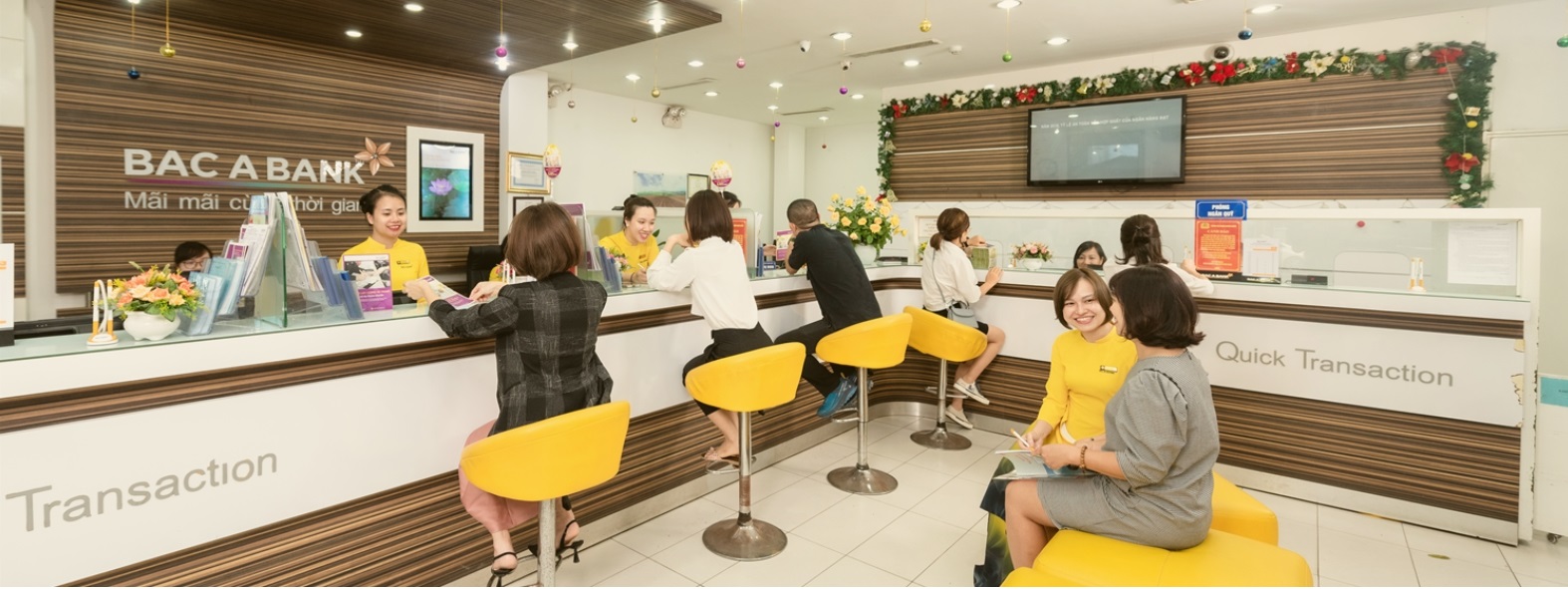
Bac A Commercial Joint Stock Bank (BAC A BANK) has also updated product and service features to provide more smooth and convenient transactions for customers.

This is not a random “step” by BAC A BANK due to COVID-19; but a long-term strategy.

According to leading officials of the bank, the plan to develop digital banking is part of its development strategy to 2030.

BAC A BANK has launched projects to upgrade e-banking services, towards realising its goal of diversifying and optimising customer experience.

In the third quarter of 2021, the bank launched an upgraded version of both Internet Banking and Mobile Banking services for individual customers.
These provide a seamless scientific experience for customers on electronic devices.

Users can also change their avatar and wallpaper, choose their favourite utilities for quick access, and set up a homepage to suit their needs.

Besides the smart interface, BAC A BANK’s e-banking application is also integrated with a series of features to help customers perform multiple transactions from paying electricity, water, television, and internet bills to charity money transfer, money transfer via identity documents, data recharge, and QR Pay payment. Every transaction is secured with the modern authentication method – Smart OTP.

The new version allows customers of BAC A BANK to log in with their own phone numbers registered for e-banking service, or with their fingerprints or facial recognition.

CUSTOMERS MAGAGE FINANCES

The bank balance feature will be integrated and displayed on BAC A BANK Mobile Banking.

Querying account information from the homepage, encrypting beneficiary accounts with QR code or querying transaction history are minimised with a few “touches”.

With this upgrade, the new version of BAC A BANK Mobile Banking is also simple and fast. Customers only need to update the application on Google Play or Apple Store, log in and activate Smart OTP by following the instructions to then fully experience new features and utilities – meeting most of their personal financial management and transaction needs.

“With these changes, we hope to meet and satisfy customers using BAC A BANK’s online banking channels, especially in the period of social distancing,” a bank representative said.

Thanks to the upgrade, customers can easily manage their finances through intuitive graphs and detailed information for each account.

C

CONVENIENT TRANSACTIONS

Increasing transactions via e-commerce platforms has brought benefits to consumers, especially during the COVID-19 pandemic.

BAC A BANK is also applying preferential fees for its customers such as free registration, free service maintenance, and free and reduced interbank money transfers.

The bank also applies a relatively higher transaction limit compared to those provided by other banks.

Specifically, with internal transfers, the limit is up to 1.5 billion VND (over 65,500 USD) per day and 800 million VND, while the inter-bank transfer limit is up to 1.5 billion VND per day and 500 million VND.

In addition to the fixed limits for all, BAC A BANK also offers higher limits for prioritised customers or those with special demand in accordance with its regulations.

 “BAC A BANK’s app has helped me optimise financial transaction times with simple and fast procedures,” said Tran Ngoc Lan, a long-time customer of the bank.

 “In the past, I still used to pay with cash, but recently I have switched to online shopping, and paying online,” she said.

Lan said with her phone, she can easily check account information and transfer money safely.

Meanwhile, Tran Thuy Duong from Hanoi’s Hai Ba Trung district said she has used BAC A BANK services for decades and found it very convenient.

Duong added that because she often shops online, she can directly share payment receipts via Facebook, Chat, Viber, and Zalo to sellers without needing to take a photo of invoices before sending them.

“BAC A BANK’s transfer service is free so I don’t mind transacting multiple times with small payments,” Duong said.

According to statistics from BAC A BANK, in the first seven months of 2021, the number of transactions increased by 200 percent over the same period in 2020.
Along with the popularity of digital transaction channels, many forms of fraud to hack electronic banking accounts have also become more sophisticated.

However, the bank is always updating its systems with the latest technologies to give customers’ peace of mind.

BAC A BANK also regularly updates, warns and provides information related to forms of fraud and bank account hacking to its customers via email, SMS and mass media.

Cashless payment is growing rapidly and this offers more opportunities for banks to develop their digital channels./. 

Cashless payment is growing rapidly and this offers more opportunities for banks to develop their digital channels.

Transport infrastructure key to Mekong Delta’s economic growth

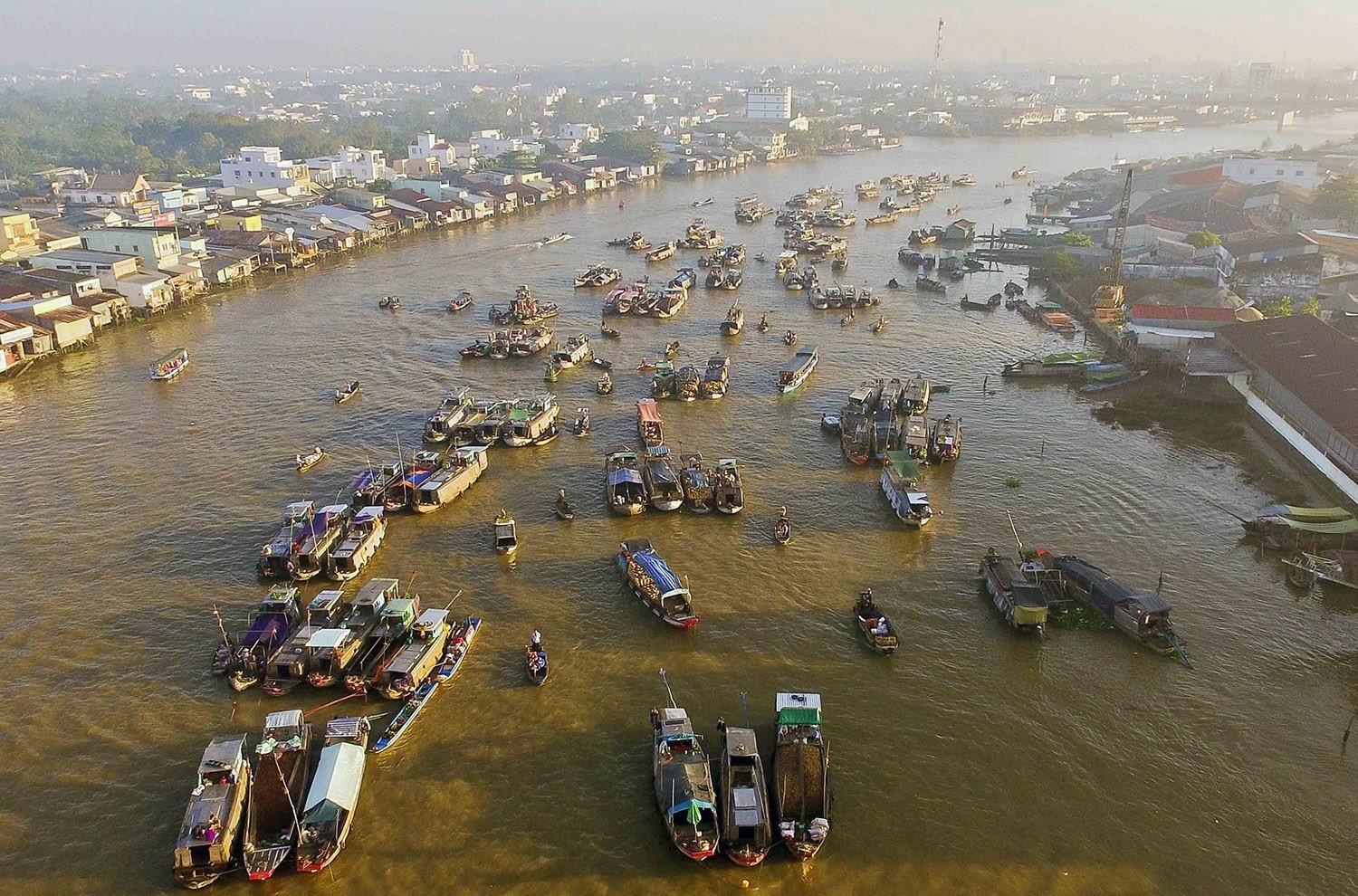
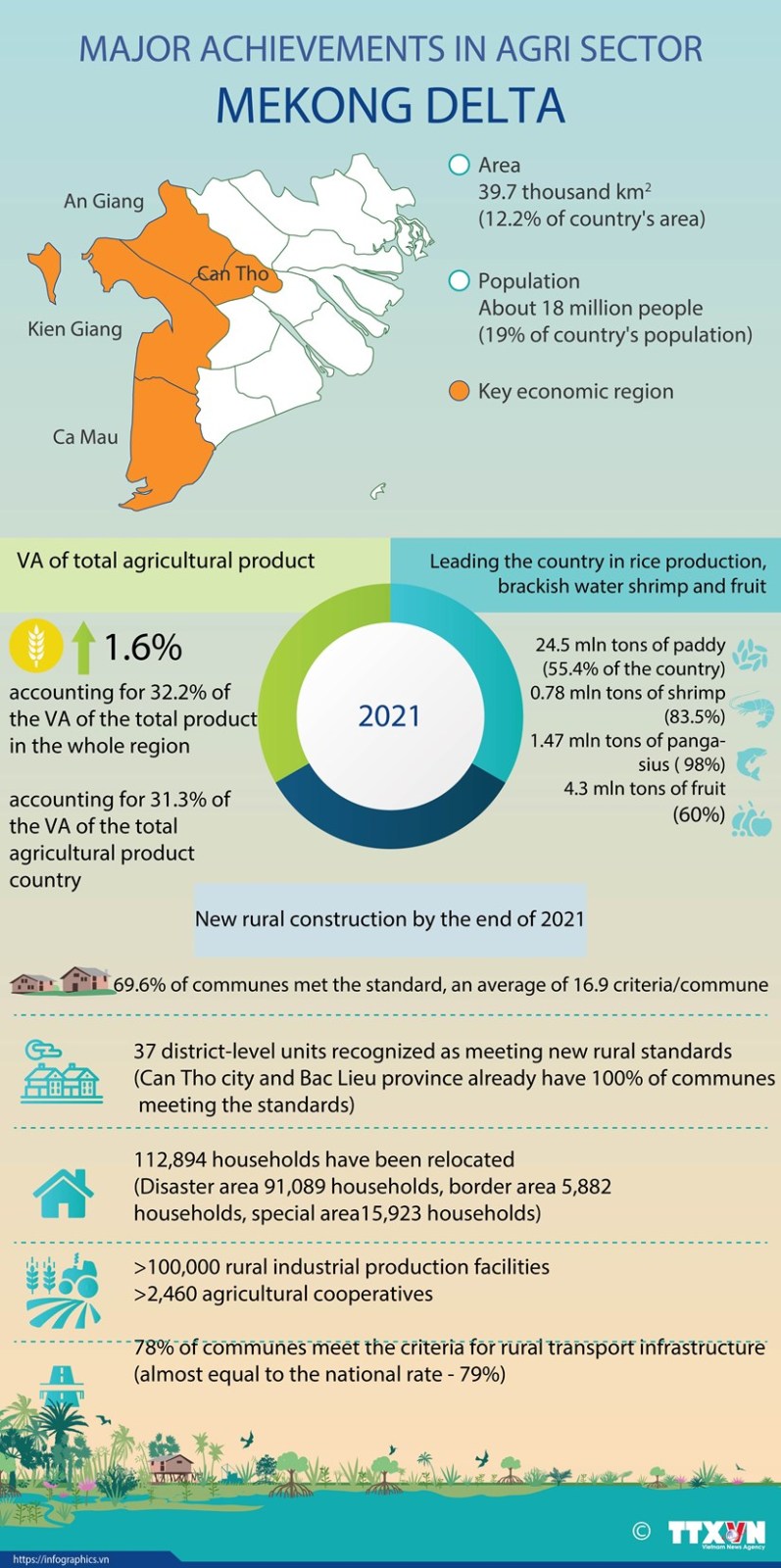
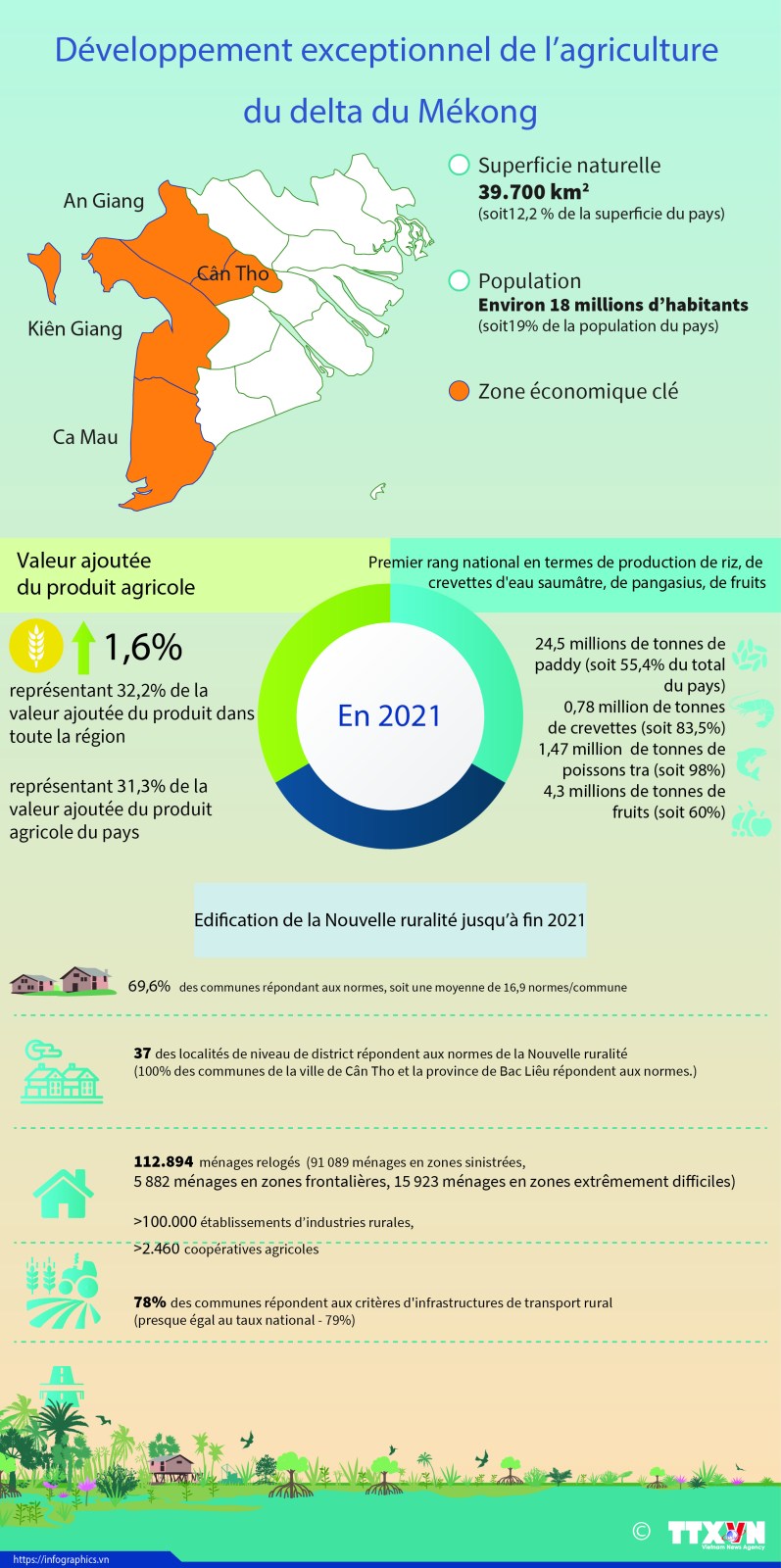
A vast major economic zone covering 40,400 sq.km., the Mekong Delta boasts abundant advantages in agricultural production and investment attraction across a variety of fields. However, for years, the slow development transport infrastructure has hindered the development of the region, becoming a bottleneck that prevent localities in the region from fully tapping their potential and optimising their natural advantages.

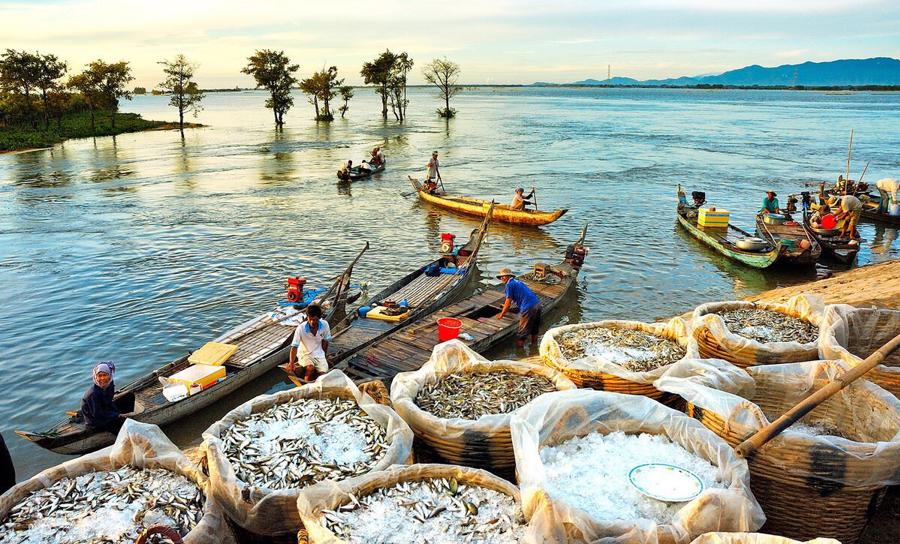
The fertile delta accounts for about 40 percent of the country’s agricultural output, including more than 54 percent of the rice yield and 90 percent of rice exports, 65 percent of aquaculture output, and 70 percent of the country’s fruit.

Analysing investment attraction in the Mekong Delta, Director of the Vietnam Chamber of Commerce and Industry (VCCI) in Can Tho Nguyen Phuong Lam said the advantages of the region come from its geographical location.

Sprawling across a vast flat fertile land coupled with an extensive river network and coasts on both sides, the Mekong Delta holds huge advantages in the sectors of rice, aquaculture, vegetables, tourism and energy.

In addition, the Delta is home to a favourable business climate that has gradually improved over the years. The region’s provincial competitiveness index (PCI) has ranked first nationwide in recent years.

Lam pointed out that infrastructure is among the major challenges facing the Mekong Delta at present. Its logistics sector lacks cold chain technology while seaport and river port infrastructure remains modest in terms of scale and quality.

Logistics infrastructure lacks connectivity and there are few providers offering full packages. Inadequate transport infrastructure results in high logistics costs, impairing the competitiveness of the region’s commodities.

General Secretary Truong Dinh Hoe of the Vietnam Association of Seafood Exporters and Producers (VASEP) said 85 percent of export items from the Mekong Delta must go through ports in Ho Chi Minh City and Ba Ria-Vung Tau, while the rest is transported by land to border gates in the central and northern areas.

As a consequence, seaport and logistics services in the Delta have yet to meet production and consumption demand for key products.

* Developing transport infrastructure

A master plan for the Mekong Delta region for the 2021-2030 period, with a vision to 2050, was recently adopted, aiming to turn the region into a highly developed and attractive destination to tourists and investors.

It looks to develop transport infrastructure so as to bolster regional and international connectivity and tap into the region’s strengths in inland waterway transport.

The plan aims to build new and upgrade about 830km of expressways, about 4,000 km of national roads, four airports, 13 seaports, 11 passenger terminals and 13 inland cargo ports by 2030.

The Delta is projected to have 1,166 km of expressway by 2030 connecting localities in the southern region and linking its seaport network with international border gates.

The building of 13 cargo ports is expected to raise total volume of handled goods to more than 53 million tonnes per year while 11 passenger terminals may serve 31 million visitors annually.

By 2030, the seaport system is estimated to handle 64-80 million tonnes of commodities, with container cargo weighing 600,000-800,000 TEUs.

In regards to aviation development, Phu Quoc international airport will be the main hub for domestic and foreign tourists while Can Tho international airport is set to be the region’s air logistics hub.

The construction of Rach Mieu 2 bridge over Tien River began last month. The bridge will have six lanes to ease traffic on National Road 60, cutting travel time and costs for vehicles between HCM City and the provinces of Ben Tre, Tra Vinh, Soc Trang, Bac Lieu and Ca Mau.

At the same time, regional provinces and cities are speeding up the construction of key transport works to leverage socio-economic development./.

Related stories:

Mekong River Delta moves toward prosperity, sustainability

Party chief urges greater efforts to help Mekong Delta take off

Netherlands supports Mekong Delta’s sustainable development

Créer un élan pour le développement économique du delta du Mékong

En tant que grande région économique couvrant une superficie totale de 40.400 km², le delta du Mékong possède de nombreux atouts pour développer l’agriculture et attiré des investissements dans différents domaines. Cependant, ses infrastructures de transport laissent encore à désirer, empêchant les localités de promouvoir leurs avantages compétitifs.

Selon les experts, le delta du Mékong contribue actuellement à environ 40% de la valeur de production agricole nationale, plus de 54% de la production rizicole, 90% de la production de riz d’exportation, 65% de la production aquacole-halieutique et 70% de la production fruitière.

Analysant l’attractivité des localités du delta, Nguyen Phuong Lam, directeur de la Fédération vietnamienne du commerce et de l’industrie pour Can Tho, a estimé que la force de ce delta dépendait beaucoup de ses conditions naturelles.

Doté d’une superficie vaste, d’un réseau de rivières et canaux très dense, le delta dispose de nombreux atouts dans les secteurs comme la riziculture, l’aquaculture, la culture de fruits et légumes, le tourisme et l’énergie.

Cependant, selon Nguyen Phuong Lam, l’un de ses défis majeurs aujourd’hui est le faible développement de ses infrastructures portuaires et fluviales. L’infrastructure logistique manque encore de connexion et les prestataires de services logistiques de colis sont peu nombreux. Le système d’infrastructures de transport limité rend élevés les coûts logistiques, ce qui réduit la compétitivité des marchandises.

Truong Dinh Hoe, secrétaire général de l’Association vietnamienne des exportateurs et producteurs de produits aquatiques (VASEP), a déclaré que 85% des exportations du delta  devaient passer par les ports de Ho Chi Minh-Ville et la province de Ba Ria-Vung Tau. Les 15 % restants passent par la route jusqu’aux postes-frontières du Centre et du Nord. Par conséquent, bien que le potentiel des ports maritimes et des services logistiques dans le delta soit important, il ne peut pas répondre aux besoins de production et d’écoulement des principaux produits de la région.

Récemment, le Premier ministre a approuvé la Planification du delta du Mékong pour la période 2021 – 2030 avec  vision à l’horizon 2050, selon laquelle, le delta  deviendra une zone à haut niveau de développement, un lieu agréable à vivre, une destination attrayante pour les touristes et les investisseurs.

En ce qui concerne le développement des infrastructures, la planification fait référence au développement de systèmes d’infrastructures de transport multimodaux, de liaisons interrégionales et internationales et aussi à la promotion des atouts de la région dans le domaine de la navigation fluviale intérieure. D’ici 2030, la zone compte investir dans la construction et la modernisation d’environ 830 km d’autoroutes, d’environ 4.000 km de Nationales, de 4 aéroports, de 13 ports maritimes, de 11 clusters de ports de passagers et de 13 clusters de ports de fret fluviaux.

Il faudra mettre l’accent sur l’investissement dans le développement des infrastructures fluviales afin de tirer parti des avantages de la région et d’augmenter la part de marché du transport de conteneurs ; développer 13 clusters de ports de fret pour garantir un débit total de la capacité de fret de 53 millions de tonnes/an ; 11 clusters de ports de passagers assurant une capacité de débit totale estimée à 31 millions de passagers/an.

Quant au système portuaire, d’ici 2030, il faudra satisfaire la demande de marchandises de 64 à 80 millions de tonnes (marchandises en conteneurs de 0,6 à 0,8 millions de TEU). En ce qui concerne l’aviation, l’aéroport international de Phu Quoc a une vocation touristique  et celui de Can Tho de centre de développement de la logistique de l’aviation régionale.

Pour atteindre ces objectifs de développement des infrastructures, en particulier de transport, fin mars, la construction du pont Rach Mieu 2 a été lancée. Ce pont sur la rivière Tien  contribuera à réduire la congestion et  les coûts pour les véhicules car la distance  entre Ho Chi Minh-Ville et des provinces telles que Ben Tre, Tra Vinh, Soc Trang, Bac Lieu et Ca Mau sera raccourcie.

Actuellement, les villes et provinces de la région accélèrent également l’achèvement des principaux ouvrages de circulation, pour créer un effet de levier pour le développement socio-économique local./.

Promueven desarrollo económico en el delta del Mekong en Vietnam

El delta del Mekong constituye una gran región económica con una superficie de 40,4 mil kilómetros cuadrados, y potencialidades para el desarrollo de la producción agrícola y la atracción de las inversiones en diversos sectores.Sin embargo, la infraestructura de transporte en esta región todavía ha presentado limitaciones que impiden a las localidades impulsar plenamente sus ventajas competitivas.

En cuanto al potencial del desarrollo económico regional, en especial en el sector agrícola, los expertos evaluaron que el delta del Mekong aporta anualmente casi 40, 54, 90, 65 y 70 por ciento del valor de la producción agrícola, de arroz, la exportación de ese grano, volumen de los productos acuáticos y frutas del país, respectivamente.

Según el director de la filial de la Cámara de Comercio e Industria de Vietnam en la ciudad sureña de Can Tho, Nguyen Phuong Lam, las potencialidades de este delta dependen, en mayor parte, de las condiciones climáticas y la posición geográfica. Gracias a su sistema de ríos y canales densos, el delta del Mekong dispone de ventajas para el desarrollo de la producción de arroz, frutas y mariscos, turismo, energía e infraestructura industrial.

También se trata de una región con un entorno comercial bastante favorable, que se ha mejorado continuamente durante los últimos años, y tiene el Índice de Competitividad Provincial (PCI) que lidera al país, señaló Phuong Lam.

Sin embargo, calificó la infraestructura como uno de los principales desafíos que enfrenta el delta del Mekong, y en especial, el sector logístico de la región ha afrontado grandes dificultades, incluidas las limitaciones de inversión en la tecnología de cadena de frío, infraestructura portuaria y fluvial.

A su vez, el secretario general de la Asociación de Productores y Exportadores de Productos Acuáticos de Vietnam (VASEP), Truong Dinh Hoe, informó que 85 por ciento de las exportaciones del delta del Mekong deben pasar por los puertos de Ciudad Ho Chi Minh y Ba Ria- Vung Tau, mientras que el 15 por ciento restante se transporta por vía terrestre en las puertas fronterizas de la región central y norteña del país.

Por lo tanto, a pesar de sus potencialidades de los puertos marítimos y servicios logísticos, el delta del Mekong no se ha desarrollado lo suficiente para satisfacer las necesidades de producción y consumo de productos básicos claves en la región, enfatizó el funcionario.

* Desarrollo de infraestructura de transporte

Según el plan maestro del delta del Mekong en la etapa 2021- 2030 con visión al 2050, aprobado recientemente por el Primer Ministro, esta región se esforzará para convertirse en una con alto nivel de desarrollo, un lugar digno de vivir para los pobladores y un destino atractivo para los turistas e inversores.

De esa manera, se enfocará en promover el desarrollo de la infraestructura de transporte y las conexiones interregionales e internacionales, sobre todo para las vías fluviales a fin de promover mejor las fortalezas locales.

Hasta 2030, se invertirá en la construcción y remodelación de 830 kilómetros de la autopista, cuatro mil kilómetros de carreteras, cuatro aeropuertos, 13 puertos marítimos y 13 clúster de muelles de mercancías. Por otro lado, se centrará en mejorar el sistema de puertos marítimos con el fin de cubrir la demanda para recibir el volumen de carga de 64 a 80 millones de toneladas.

El aeropuerto internacional de Phu Quoc juega un papel importante al servicio de los turistas nacionales e internacionales, mientras que el aeródromo de Can Tho se considera como centro del desarrollo logístico del sector de aviación en esta región.

Para cumplir los objetivos trazados en el desarrollo infraestructural regional, se inició a fines de marzo pasado la construcción del puente Rach Mieu 2 que conecta las provincias sureñas de Ben Tre y Tien Giang.

El puente Rach Mieu 2 y su camino hacia esa obra tienen una longitud total de 17,6 kilómetros con seis carriles y fue diseñado para una velocidad de circulación de 80 kilómetros.

Una vez puesta en funcionamiento la obra en 2025, se espera que contribuya a perfeccionar la red vial nacional, reducir la congestión de tráfico y crear condiciones favorables para el transporte de personas y mercancías, así como acelerar el desarrollo socioeconómico de Ben Tre, en particular, y de otras localidades de la región, en general.

Mientras tanto, las provincias y ciudades de la región también han acelerado la conclusión de obras de tráfico clave, creando una palanca para el desarrollo socioeconómico del delta del Mekong./.

Создать рычаг экономического развития в дельте Меконга

Являясь крупным экономическим районом общей площадью 40,4 тыс. км кв., дельта Меконга имеет множество сильных сторон в развитии сельскохозяйственного производства и привлечении инвестиций в разные сферы. Однако в долгосрочной перспективе неразвитость транспортной инфраструктуры становится препятствием на пути, не позволяющим региону в полной мере реализовать конкурентные преимущества.

Оценивая потенциал экономического развития, особенно сельскохозяйственного производства в дельте Меконга, эксперты подтвердили, что регион дельты Меконга в настоящее время обеспечивает около 40% стоимости сельскохозяйственного производства, более 54% производства риса, 90% экспортного производства риса, 65% водных продуктов и 70% производства фруктов в стране.

Анализируя инвестиционную привлекательность населенных пунктов в дельте Меконга, г-н Нгуен Фыонг Лам – директор отделения Вьетнамской федерации торговли и промышленности в Кантхо, сказал, что преимущества дельты во многом зависит от природных условий и местоположения. Площадь дельты большая, система рек и каналов густая, с двух сторон граничащая с морем. Дельта Меконга имеет много преимуществ в кластерах таких отраслей, как рис, морепродукты, овощи, туризм или энергетическая промышленности. В частности, это район с богатым источником «входных» сельскохозяйственных и водных материалов, что с точки зрения привлечения инвестиций является большим преимуществом для развития промышленной инфраструктуры.

Не говоря уже о том, что дельта Меконга также является районом с довольно благоприятной деловой средой, которая постоянно улучшалась на протяжении многих лет. Об этом свидетельствует региональный индекс конкурентоспособности (ИПК) местности, который в последние годы постоянно лидирует в стране по сравнению с другими регионами.

Однако, по словам г-на Нгуен Фыонг Лама, одной из основных проблем, с которыми сегодня сталкивается дельта Меконга, является инфраструктура. Например, логистический кластер региона в настоящее время имеет серьезные трудности, такие как ограниченные инвестиции в технологию холодовой цепи, мелкомасштабная и некачественная инфраструктура морских и речных портов. Логистической инфраструктуре по-прежнему не хватает связности, а поставщиков услуг пакетной логистики мало. Ограниченная система транспортной инфраструктуры делает затраты на логистику все еще высокими, снижая конкурентоспособность товаров из этой области.

Чыонг Динь Хое, генеральный секретарь Вьетнамской ассоциации экспортеров и производителей морепродуктов (VASEP), сказал, что в настоящее время 85% экспорта региона дельты Меконга проходит через порты в Хошимине и Вунгтау; остальные 15% доставляются транспортом до пограничных пунктов в Центральном и Северном регионах. Поэтому, хотя потенциал морских портов и логистических услуг в дельте Меконга велик, он недостаточно развит для удовлетворения потребностей производства и потребления ключевых товаров в регионе.

* Развитие транспортной инфраструктуры

Недавно в Генеральном плане дельты Меконга на период 2021-2030 гг. с видением до 2050 года, утвержденным премьер-министром, четко указано, что к 2050 году дельта Меконга должна стать регионом с высоким уровнем развития, местом, достойным жизни для людей, привлекательным направлением для туристов и инвесторов.

Что касается развития инфраструктуры, то планирование касается развития систем мультимодальной транспортной инфраструктуры, межрегиональных и международных связей; в котором основное внимание уделяется развитию сильных сторон региона в области судоходства по внутренним водным путям. К 2030 году необходимо инвестировать в новое строительство и модернизацию около 830 км автомагистралей, около 4.000 км национальных автомагистралей, 4 аэропортов, 13 морских портов, 11 кластеров пассажирских портов и 13 кластеров грузовых портов внутренних водных путей. Например, для развития дорожно-транспортной сети к 2030 г. с перспективой до 2050 г. в дельте Меконга скоростная автомагистраль имеет общую протяженность 1.166 км, включая 3 вертикальные оси, соединяющие провинции и города региона с юго-востоком и 3 горизонтальные оси для усиления связи с системой морских портов в районе с международными пограничными пунктами пропуска.

Необходимо сосредоточьтесь на инвестировании в развитие инфраструктуры внутренних водных путей, чтобы использовать преимущества региона и увеличить долю рынка контейнерных перевозок. Развитие 13 кластеров грузовых портов для обеспечения общей грузоподъемности более 53 млн т/год; 11 кластеров пассажирских портов обеспечивают общую пропускную способность, оцениваемую в 31 млн. пассажиров в год.

Что касается морской портовой системы, то к 2030 году она будет обеспечивать потребность в товарах через 64​​-80 млн. тонн (контейнерные грузы от 0,6 до 0,8 млн. TEU). Международный аэропорт Фукуок обслуживает местных и иностранных туристов, а международный аэропорт Кантхо является центром развития региональной авиационной логистики.

Постепенно осознавая цели и задачи развития инфраструктуры, особенно транспортной, в конце марта было начато строительство моста Рах Мье 2. Это мост через реку Тянь, имеющий 6 полос движения (в том числе 4 полосы для автотранспорта, 2 полосы для малотоннажных транспортных средств), расчетную скорость в 80 км/ч, что позволяет удовлетворить растущий транспортный спрос на маршруте. Проект способствует сокращению заторов и в то же время экономии транспортных средств, учитывая, что расстояние по дорогам между городом Хошимин и такими провинциями, как Бенче, Чавинь, Шок-Чанг, Бакльеу и Камау, будет сокращено.

Между тем, в связи с акцентом на инвестиции в улучшение транспортной инфраструктуры, провинции и города региона также ускоряют выполнение основных транспортных работ, создавая рычаги для социально-экономического развития./.

https://ru.vietnamplus.vn/niderlandy-okazyvayut-podderzhku-ustoichivomu-razvitiyu-delty-mekonga-33356.vnp

https://ru.vietnamplus.vn/vb-finansiruet-adaptatsiyu-vinlonga-k-izmeneniyu-klimata-29702.vnp

https://ru.vietnamplus.vn/zapusk-proekta-regionalnoi-podderzhki-programmy-po-izmeneniyu-klimata-i-ekologicheskoi-ustoichivosti-subregiona-bolshogo-mekonga-19848.vnp

https://ru.vietnamplus.vn/upravlenie-vodnymi-resursami-reki-mekong-govoryaschie-chisla-prosyat-o-pomoschi-20280.vnp