Vietnam prioriza promoción de derechos humanos de grupos vulnerables

La Declaración de Independencia de Vietnam no solo llevó al pueblo vietnamita a la era de la independencia y la libertad, sino que también fue la proclama sobre los derechos humanos del gobierno vietnamita. Para asegurar el bienestar de los grupos vulnerables y alcanzar los objetivos del desarrollo sostenible, Vietnam ha participado activamente en los tratados internacionales sobre los derechos humanos, promoviendo la lucha contra la desigualdad de género y la reducción de la pobreza para garantizar que nadie se quede atrás.

Garantizar los derechos humanos en las zonas de minorías étnicas

Uno de los logros más destacados de Vietnam en la garantía de los derechos humanos es su notable progreso en la reducción de la pobreza, el desarrollo humano y la mejora de la calidad de vida de los pobladores, especialmente en las áreas remotas, montañosas y de las minorías étnicas.

Vietnam tiene 54 grupos étnicos, entre los cuales más de 82 millones de personas son de la etnia Kinh, lo que representa el 85,3 por ciento de la población total; mientras más de otros 14,1 millones habitantes pertenecen a los 53 grupos restantes.

Las minorías étnicas en zonas montañosas de Vietnam (Fuente VNA)

Para reducir la brecha en términos del nivel de vida y los ingresos de los habitantes de las minorías étnicas y las zonas montañosas en comparación con el promedio del país, la Asamblea Nacional de Vietnam emitió la Resolución número 120, en la cual aprobó el Programa de Objetivos nacionales para el desarrollo socioeconómico en las áreas de este grupo poblacional en el período 2021-2030.

El proyecto tiene como objetivo aprovechar el potencial y las ventajas de las localidades donde habitan las minorías étnicas, promover el desarrollo económico y garantizar la seguridad social, aparte de acelerar la reducción de la pobreza de manera sostenible.

Específicamente, este programa estableció el objetivo de que para 2025 el ingreso promedio de las minorías étnicas se incremente en más de dos veces en comparación con 2020; el 50 por ciento de las comunas y aldeas salgan de las zonas extremadamente difíciles; y todas las comunas cuenten con caminos asfaltados.

Se esforzará, además, por reducir las tasas de familias pobres de los grupos étnicos en más del tres por ciento cada año y de desempleo a menos del tres por ciento en la etapa 2021-2030, además de garantizar que el 99 por ciento de los hogares tengan acceso a la red de electricidad nacional y otras fuentes de energía; y el 90 por ciento de los pobladores de minorías étnicas, al agua potable, entre otras metas.

Por otro lado, el Gobierno vietnamita promulgó y aplicó diversos mecanismos y políticas de manera sincrónica y amplia con el propósito de respaldar integralmente a los pobres y los grupos vulnerables en términos de la atención de salud, educación, vivienda, agua potable y saneamiento, entre otros.

Como resultado, durante el último lustro se han ejecutado más de 13 mil proyectos para estimular la producción, diversificar los medios de vida y replicar los modelos efectivos de reducción de la pobreza a favor de los hogares de minorías étnicas.

Según las estadísticas del Ministerio del Trabajo, Inválidos de Guerra y Asuntos Sociales, hasta la fecha todas las comunas en el país cuentan con carreteras hacia los centros municipales; el 80 por ciento de la población rural cuenta con acceso a la red eléctrica nacional; el 65 por ciento de las comunas posee pequeños sistemas de riesgo, y más del 50 por ciento tiene centros médicos estándares.

La tasa de hogares pobres y en el umbral de la pobreza, especialmente de minorías étnicas, disminuyó anualmente en alrededor del 3,5 por ciento.

La Resolución del XIII Congreso Nacional del Partido Comunista de Vietnam (PCV) fijó el objetivo de mantener una reducción anual de la pobreza multidimensional entre el uno y 1,5 por ciento; mientras que la Estrategia de desarrollo socioeconómico para la etapa 2021-2030 trazó las tareas de implementar sincrónicamente soluciones para la reducción de la pobreza multidimensional, inclusiva y sostenible, especialmente en las zonas de minorías étnicas.

Además de la erradicación del hambre y la reducción de la pobreza, el Partido y el Estado siempre han prestado especial atención al derecho a la educación de los pobladores, incluidos los de las minorías étnicas.

Desde 2019 hasta la fecha, Vietnam ha desplegado el plan maestro para implementar 13 recomendaciones que aceptó según el tercer ciclo del Examen Periódico Universal (EPU) del Consejo de Derechos Humanos de las Naciones Unidas.

Estas recomendaciones se han centrado en la lucha contra la discriminación, la garantía de los derechos básicos de las minorías étnicas en materia de la educación, la cultura, las creencias, la religión y el desarrollo socioeconómico.

Entre los cinco consejos relativos a la educación, la garantía del acceso a la misma constituye el objetivo clave de la política de desarrollo de Vietnam. Y la ley vietnamita estipula que el Estado da prioridad al desarrollo de la educación en las áreas montañosas, insulares y de minorías étnicas con condiciones socioeconómicas difíciles.

En la actualidad, todas las comunas en Vietnam cuentan con escuelas primarias y secundarias, mientras que los jardines de infancia se han construido y desarrollado de manera gradual en las áreas montañosas.

Todas las comunas en las zonas de minorías étnicas lograron la erradicación del analfabetismo y la universalización de la educación preescolar, primaria, y secundaria. Asimismo, se establecieron escuelas de internado para estudiantes de grupos étnicos en 28 provincias y ciudades del país.

Se ha desplegado oficialmente el plan de enseñanza y aprendizaje de los seis dialectos de las minorías étnicas (con programas y libros de texto compilados por el Ministerio de Educación y Formación). Se trata de los dialectos de las etnias Mong, Cham, Jemer, Gia Rai, Ba Na y Ede, que se enseñan en 715 escuelas.
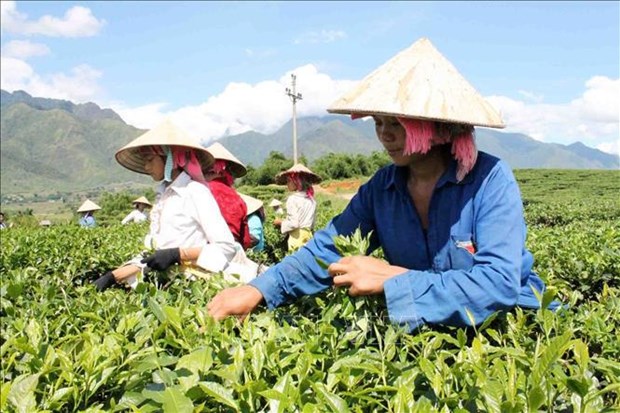
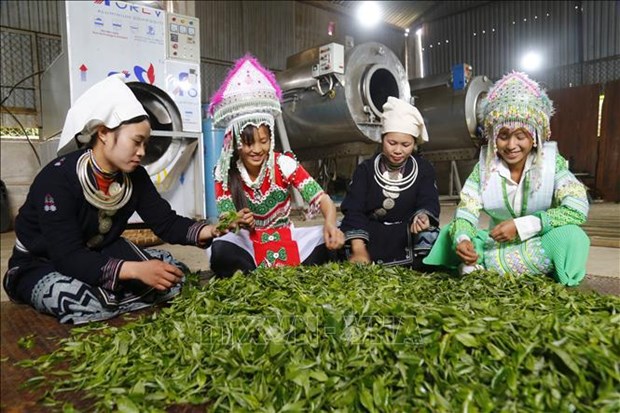
Entretanto, otras seis lenguas, a saber Hoa, Thai, Co Tu, Tai Oi, Kako y Mnong, están incluidas en el programa piloto de enseñanza en varias localidades, en beneficio de decenas de miles de alumnos.

Además del programa de educación general, los estudiantes de las minorías étnicas pueden participar en las actividades educativas especializadas, como aquellas referidas a las habilidades para la vida y la orientación vocacional, y beneficiarse también de la atención médica a favor de su desarrollo integral.

Para cumplir el Programa de Objetivos nacionales para el desarrollo socioeconómico en las áreas de esas comunidades en el período 2021-2030,  el Comité de Asuntos Étnicos del Gobierno de Vietnam pronto determinó la aplicación de la tecnología de la información y la transformación digital como una base para acelerar la implementación de las políticas relacionadas con las minorías étnicas y las áreas montañosas, y reducir la brecha de desarrollo entre los grupos étnicos.

En otro aspecto, el gobierno vietnamita también se centra en preservar y promover los valores culturales de esos grupos según el mecanismo del EPU del Consejo de Derechos Humanos de las Naciones Unidas.

En este sentido, se declararon cuatro patrimonios nacionales especiales y ocho reliquias histórico-culturales en las comunidades étnicas minoritarias, mientras que 559 de sus miembros recibieron el título de destacado artesano.

Se concede importancia a la preservación y promoción de las lenguas y escritura de varios grupos étnicos, además de organizar anualmente festivales culturales y deportivos para enaltecer la identidad de esas comunidades.

Hasta la fecha, el 95 por ciento de las comunas en las regiones montañosas y de comunidades étnicas pueden acceder a las transmisiones de la radio y la televisión nacionales. Se difunden gratuitamente cerca de 100 periódicos, 200 páginas electrónicas, y otras 18 publicaciones sobre estas poblaciones, además de construir 16 mil oficinas de correos para garantizar la fluidez en la comunicación.

En paralelo, estos grupos se benefician de un mayor acceso a los servicios sanitarios básicos, mientras que la política de seguro médico para ellos se implementa seriamente según las regulaciones establecidas.

El país también cumplió los objetivos de desarrollo del Milenio de las Naciones Unidas en cuanto a la reducción rápida y sostenible de la desnutrición infantil y de la tasa de mortalidad materno-infantil, incluyendo a las comunidades étnicas.

Vietnam es un país multiétnico y multirreligioso. Con una visión coherente, todas las políticas y lineamientos del Partido y el Estado apuntan a servir a toda la población sin distinción, por lo que el derecho a la libertad de credo y religión de las minorías étnicas es reconocido y garantizado como el de otros grupos.

Velar por los derechos e intereses de los ancianos y discapacitados

Los discapacitados, ancianos y las personas infectadas por el VIH también están protegidos por la ley vietnamita con regulaciones humanitarias.

Vietnam tiene actualmente unos 7,2 millones de discapacitados, lo que equivale al 7,8 por ciento de la población nacional. De ellos, el 48 por ciento son mujeres, el 28,3 por ciento niños, y la mayoría viven en las áreas rurales con circunstancias difíciles.
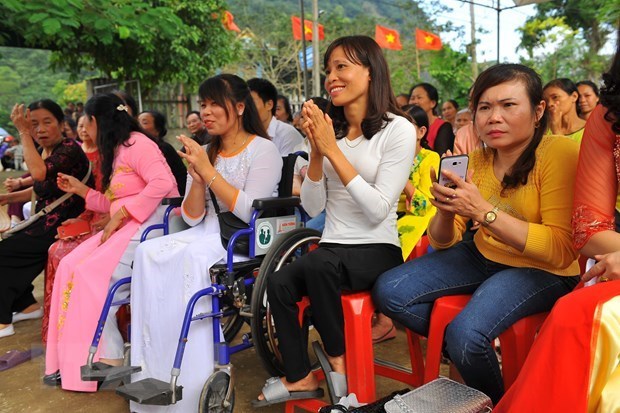
Junto con la promulgación de la Ley sobre las personas discapacitadas en 2010, Vietnam ha mejorado gradualmente su sistema legal y políticas prioritarias para este grupo de personas.

Se aprobó en agosto de 2020 el Programa de asistencia a esas personas para el período 2021-2030, con el fin de crear condiciones favorables para que este grupo disfrute de la igualdad de derechos y mejore su calidad de vida.

Para la fase 2026-2030, el programa fijó el objetivo de que cerca del 90 por ciento de los discapacitados tengan acceso a los servicios de salud; unos 70 mil niños y personas desafortunadas reciban cirugía ortopédica, rehabilitación y dispositivos de asistencia apropiados; y el 70 por ciento de las provincias o ciudades cuenten con clubes deportivos para ese grupo, entre otros beneficios.

En cuanto a las cuestiones relacionadas con los ancianos y sus derechos, el Partido, el Estado y el Gobierno vietnamitas también les dedican especial atención.

De acuerdo con las informaciones dadas en un seminario en noviembre de 2020, Vietnam entró oficialmente en el período de envejecimiento poblacional en 2011, y figura entre los países con mayor ritmo del envejecimiento demográfico en el mundo.

El país cuenta, en la actualidad, con 11,4 millones de personas de la tercera edad. Según el pronóstico, para 2030 este grupo de personas representará el 17 por ciento de la población nacional, y el porcentaje se elevará al 25 por ciento en 2050.

Al poner a las personas mayores en la lista de grupos vulnerables, el Estado vietnamita emitió diversos documentos legales y políticas, en los cuales afirma la posición y el papel de los ancianos en la sociedad, así como la responsabilidad de cuidar a esos habitantes.

En especial, la Ley de la Persona Adulta Mayor aprobada por la Asamblea Nacional de Vietnam el 23 de noviembre de 2009 y puesta en vigor en julio de 2010, ha ayudado a institucionalizar las políticas nacionales dedicadas a ese grupo de personas de manera sistemática e integral, asegurando su participación en las actividades sociales, y al mismo tiempo exhorta a la atención de las organizaciones sociales e individuos a las tareas de cuidado al respecto.

Se trata de un paso para concretar el compromiso del Gobierno vietnamita con la aplicación de la Declaración Política y el Programa de Acción Internacional de Madrid 2002, de conformidad con las políticas comunes de muchos países y de las Naciones Unidas sobre las personas con edad avanzada.

Los derechos y obligaciones de los ancianos en Vietnam se reflejan en los documentos legales, incluidos la Ley de Seguro Social de 2014, la Ley de Seguro de Salud de 2008 y el Decreto número 58 que regula el nivel de subsidio para esos ciudadanos, entre otros.

En 2020, el gobierno vietnamita dedicó un presupuesto de más de 782 millones de dólares para implementar las políticas de asistencia social. De esa manera, más de 1,8 millones de adultos mayores recibieron subsidios mensuales, mientras otros 3,1 millones se beneficiaron de pensiones y seguros sociales.

En particular, cuando estalló el brote de la pandemia del COVID-19, los ministerios, ramas, localidades, familias y la sociedad han desplegado las actividades prácticas y significativas para cuidar y proteger a las personas de tercera edad.

Debido a que Vietnam siempre considera a esas personas como sujetos prioritarios en la prevención contra el COVID-19, el Ministerio de Salud emitió las instrucciones sobre el cuidado de la salud para este grupo en los centros médicos locales.

Además, para prevenir el contagio del COVID-19 en los ancianos, las localidades vietnamitas realizaron la vacunación para las personas mayores de 65 años.  

Se puede decir que, a pesar de los impactos epidémicos, el Gobierno, los ministerios, ramas, organizaciones de masas y localidades vietnamitas aún han desplegado activamente el trabajo relativo a los adultos mayores.
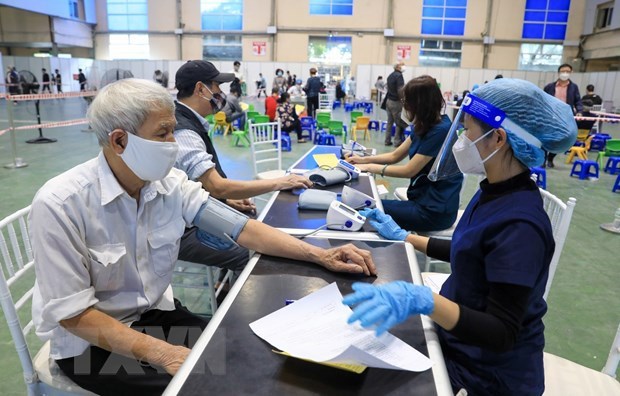
Los empleados médicos realizan vacunación contra el COVID-19 para los ancianos (Fuente: VNA)

El objetivo de que “nadie se quede atrás” es una política consistente que el Partido, el Estado y el sistema político del país han implementado de manera seria, completa y efectiva.

Por encima de todo, siempre califican al ser humano como el objetivo y fuerza impulsora de la causa de la construcción y defensa nacional, y consideran al pueblo como centro y sujeto de la prevención y el control epidémico.

Al referirse a los logros de Vietnam en la garantía de los derechos humanos, es imposible no mencionar los esfuerzos del Estado en velar por la igualdad de género y los derechos de las niñas.

Promover la igualdad de género, cumpliendo con los estándares internacionales

Con sus esfuerzos incansables durante los últimos años, Vietnam ha alcanzado logros en la garantía de la igualdad de género y ha sido reconocido en el mundo como uno de los 10 países que mejor implementan la meta número 5 de los Objetivos de Desarrollo Sostenible de las Naciones Unidas sobre este campo.

Una década después de la implementación de la Estrategia Nacional de Igualdad de Género para el período 2011-2020, Vietnam ha obtenido resultados alentadores, los cuales han contribuido a reducir la brecha de género en todos los campos.

Además de aprobar la Ley sobre el tema en 2006 y la Convención para la Eliminación de todas las Formas de Discriminación contra la Mujer (CEDAW), la Asamblea Nacional de Vietnam enmendó y promulgó múltiples documentos legales al respecto.
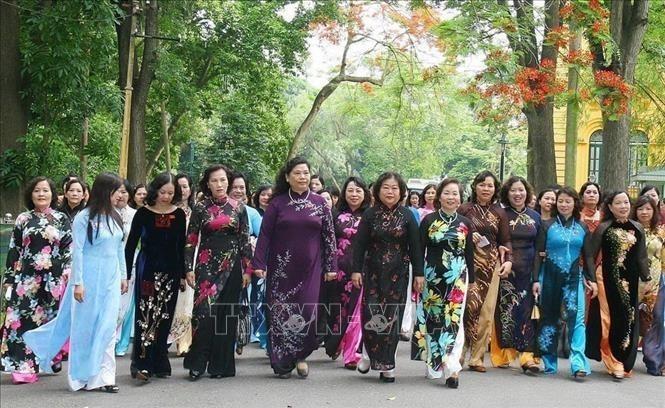
Con sus esfuerzos incansables durante los últimos años, Vietnam ha alcanzado logros en la garantía de la igualdad de género(Fuente: VNA)

El proceso de renovación (Doi Moi) de Vietnam ha brindado oportunidades para que las féminas participen cada vez más en las actividades políticas y socioeconómicas del país.

La proporción de mujeres diputadas en la Asamblea Nacional de Vietnam de la XV legislatura se elevó a más del 30 por ciento, lo que permitió al órgano legislativo vietnamita subir 20 escaños en ese índice a nivel mundial y cinco peldaños en el ranking de Asia.

La investigación reciente del censo de población y vivienda de la Oficina General de Estadísticas también mostró que el recurso humano femenino ocupa actualmente el 47,3 por ciento del total de la fuerza laboral del país.

Vietnam cuenta con 285 mil 600 empresas encabezadas por mujeres, lo que representa el 24 por ciento del total de firmas del país. La tasa de alfabetización femenina entre las edades de 15 a 60 años alcanzó el 97,33 por ciento y la proporción de mujeres con diplomas de másteres y doctorados se situó respectivamente en 54,25 y 30,8 por ciento.

En las actividades sociales, muchas mujeres vietnamitas que trabajan en los sectores de la salud, la educación, la cultura, el periodismo y el deporte ganaron títulos notables y se han convertido en ejemplos inspiradores para los demás.

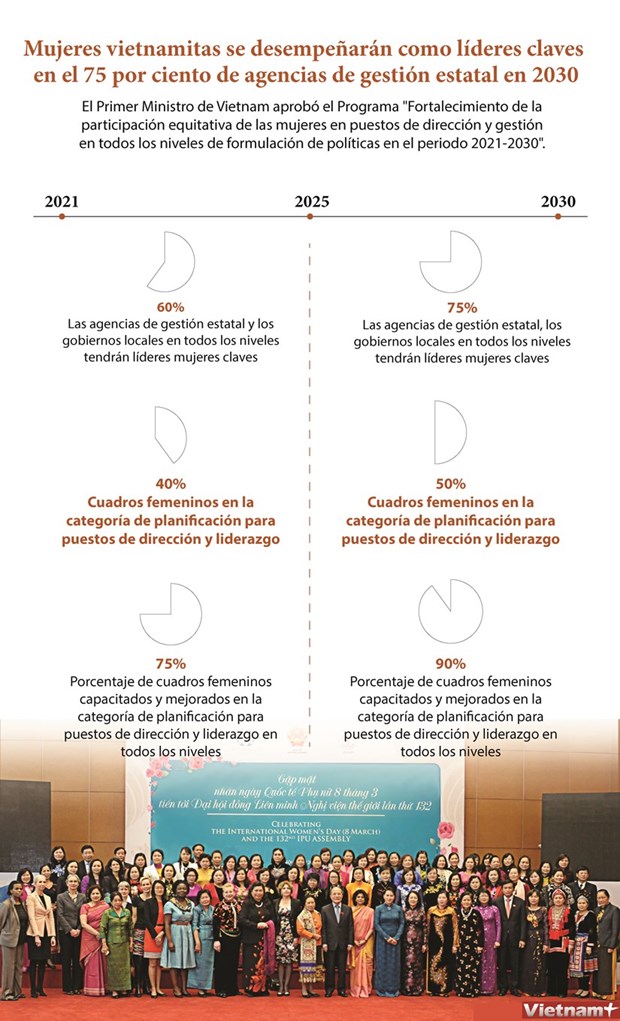
En 2020, el gobierno vietnamita promulgó la Estrategia Nacional de Igualdad de Género para el período 2021-2030, en la cual planteó que para 2025 el 60 por ciento de las agencias de gestión estatales en todos los niveles cuenten con mujeres en cargos directivos clave, cifra que deberá ascender al 75 por ciento en 2030.

Esta estrategia también tiene como objetivo reducir el promedio de horas de trabajo doméstico no remunerado de las mujeres en 1,7 veces para 2025 y 1,4 veces para 2030 en comparación con los hombres.
El Código Laboral modificado, que entró en vigor el 1 de enero de 2021, también marcó avances en la reducción de la brecha de género sobre la edad de jubilación y la discriminación en el lugar de trabajo.

En especial, durante los últimos dos años, frente a los severos impactos de la pandemia del COVID-19, el gobierno vietnamita ha implementado una serie de políticas y soluciones para apoyar a los pobladores y empresas, en las cuales las mujeres y niños siempre se han considerado como sujetos prioritarios.

Y el tema “Garantizar el bienestar social, aumentar el empoderamiento y crear oportunidades para las mujeres y niñas con el fin de lograr la igualdad de género y eliminar la violencia contra esas personas” del Mes de acción con estos fines de 2021 reafirmó una vez más las prioridades y compromisos de Vietnam al respecto en particular y en la protección y garantía de los derechos humanos en general.

Los logros de Vietnam a lo largo de los años constituyen el fruto de los esfuerzos incansables del Partido, el Estado y el pueblo en todos los campos, en los cuales la elaboración, el perfeccionamiento y la aplicación de la ley en materia de derechos humanos juegan un papel importante./.

Phuong Lan

Vietnam respeta y garantiza los derechos a la libertad de religión y creencias

Ngày 30 tháng 4 năm 1975 đưa đất nước Việt Nam bước vào một kỷ nguyên mới – độc lập dân tộc và chủ nghĩa xã hội. Tròn 47 năm thống nhất đất nước cũng là chừng ấy thời gian Đảng, Nhà nước ta đẩy mạnh chính sách hòa hợp, hòa giải dân tộc, xóa bỏ mặc cảm, định kiến, phân biệt đối xử do quá khứ hay thành phần giai cấp; xây dựng tinh thần cởi mở, tôn trọng, thông cảm, tin cậy lẫn nhau, cùng hướng tới tương lai.

Chính sách hòa hợp, hòa giải của Đảng và Nhà nước ta dựa trên lợi ích cốt lõi của quốc gia, dân tộc là Tổ quốc độc lập, thống nhất, giàu mạnh, lãnh thổ toàn vẹn, nhân dân làm chủ, đoàn kết gắn bó máu thịt giữa hơn 98 triệu người trong nước với hơn 5 triệu người Việt ở nước ngoài.

Hễ ai là người Việt Nam!

Lúc sinh thời Chủ tịch Hồ Chí Minh luôn khẳng định, đoàn kết toàn dân tộc là cội nguồn sức mạnh, là chìa khóa quyết định thành công của các mạng Việt Nam.

Người nêu rõ: Đại đoàn kết tức là trước hết phải đoàn kết đại đa số nhân dân, mà đại đa số nhân dân ta là công nhân, nông dân và các tầng lớp nhân dân lao động khác. Đó là nền gốc của đại đoàn kết. Nó cũng như cái nền của nhà, gốc của cây. Nhưng đã có nền vững, gốc tốt, còn phải đoàn kết các tầng lớp nhân dân khác. Bất kỳ ai mà thật thà tán thành hòa bình, thống nhất, độc lập, dân chủ thì dù những người đó trước đây chống chúng ta, bây giờ chúng ta cũng thật thà đoàn kết với họ.

Ngày 19/12/1946, trong Lời kêu gọi Toàn quốc kháng chiến Chủ tịch Hồ Chí Minh nhấn mạnh: “Bất kỳ đàn ông, đàn bà, bất kỳ người già, người trẻ không chia tôn giáo, đảng phái, dân tộc. Hễ là người Việt Nam thì phải đứng lên đánh thực dân Pháp để cứu Tổ quốc. Ai có súng dùng súng. Ai có gươm dùng gươm, không có gươm thì dùng cuốc, thuổng, gậy gộc. Ai cũng phải ra sức chống thực dân Pháp cứu nước.”

Thấm nhuần tư tưởng của Bác, Đảng Cộng sản và Nhà nước Việt Nam trong mọi giai đoạn cách mạng đều nêu cao tinh thần đại đoàn kết để tập hợp tất cả “hễ ai là người Việt Nam” vì lợi ích cốt lõi của quốc gia, dân tộc. Điều này càng được thể hiện rõ nét từ sau đại thắng Mùa Xuân năm 1975.

Chính sách hòa hợp, hòa giải của Đảng và Nhà nước Việt Nam lấy lợi ích quốc gia, dân tộc làm điểm tương đồng của mọi người có dòng máu Việt, dù ở trong nước hay nước ngoài. Nhà nước ta tạo điều kiện cho mọi người, kể cả những người từng làm việc trong chế độ cũ, về thăm, đóng góp để xây dựng quê hương.

Tháng 1/1994, Hội nghị đại biểu toàn quốc giữa nhiệm kỳ, khóa VII của Đảng chủ trương tăng cường khối đại đoàn kết toàn dân, phát huy mọi năng lực sáng tạo của công nhân, nông dân và trí thức, các tầng lớp, các giai cấp, các tôn giáo, kể cả cộng đồng người Việt Nam ở nước ngoài.

Tháng 6/1996, Đại hội đại biểu toàn quốc lần thứ VIII của Đảng nhấn mạnh: “Để tiếp tục đưa sự nghiệp đổi mới tiến lên, giành những thành tựu lớn hơn, cần thực hiện tốt hơn nữa việc mở rộng, tăng cường khối đại đoàn kết toàn dân, ở cả trong nước và nước ngoài, phát huy dân chủ, động viên tối đa sức mạnh của toàn thể dân tộc vì mục tiêu dân giàu, nước mạnh, xã hội công bằng, văn minh.”

Đảng xác định phương châm: Tăng cường khối đại đoàn kết toàn dân tộc trên cơ sở lấy liên minh công-nông-trí làm nền tảng, đoàn kết mọi người trong đại gia đình dân tộc Việt Nam dù sống ở trong nước hay đang định cư ở nước ngoài…

Chính sách hòa hợp, hòa giải của Đảng và Nhà nước Việt Nam lấy lợi ích quốc gia, dân tộc làm điểm tương đồng của mọi người có dòng máu Việt, dù ở trong nước hay nước ngoài.

Tháng 4/2001, Đại hội đại biểu toàn quốc lần thứ IX của Đảng cụ thể hóa về sức mạnh đại đoàn kết toàn dân: “Thực hiện đại đoàn kết các dân tộc, tôn giáo, giai cấp, tầng lớp, thành phần kinh tế, mọi giới, mọi lứa tuổi, mọi vùng của đất nước, người trong Đảng và người ngoài Đảng, người đang công tác và người đã nghỉ hưu, mọi thành viên trong đại gia đình Việt Nam dù sống trong nước hay ở nước ngoài. Phát huy sức mạnh của cả cộng đồng dân tộc, truyền thống yêu nước, ý chí tự lực, tự cường và lòng tự hào dân tộc, lấy mục tiêu giữ vững độc lập dân tộc, thống nhất, vì dân giàu, nước mạnh, xã hội công bằng, dân chủ, văn minh làm điểm tương đồng, tôn trọng những ý kiến khác nhau không trái với lợi ích chung của dân tộc, xóa bỏ mặc cảm, định kiến, phân biệt đối xử về quá khứ, giai cấp, thành phần, xây dựng tinh thần cởi mở, tin cậy lẫn nhau, hướng tới tương lai… trên cơ sở liên minh vững chắc giai cấp công nhân với giai cấp nông dân và đội ngũ trí thức.”

Ngày 12/3/2003, Hội nghị lần thứ bảy Ban Chấp hành Trung ương khóa IX ra Nghị quyết số 23-NQ/TW về phát huy sức mạnh đại đoàn kết toàn dân tộc vì dân giàu, nước mạnh, xã hội công bằng, dân chủ, văn minh. Tại hội nghị này, Đảng ta sử dụng thuật ngữ “đại đoàn kết toàn dân tộc” thay cho thuật ngữ “đại đoàn kết toàn dân” với ý nghĩa mở rộng đại đoàn kết, đoàn kết ở trong nước và cộng đồng người Việt Nam định cư ở nước ngoài.

Các Đại hội X, XI, XII và XIII của Đảng tiếp tục khẳng định tầm quan trọng to lớn của đại đoàn kết toàn dân tộc, không phân biệt vai trò, đóng góp của người Việt Nam ở trong nước hay ở nước ngoài đối với đất nước.

Đại hội lần thứ IX của Đảng: Phát huy sức mạnh toàn dân tộc, đẩy mạnh công nghiệp hóa, hiện đại hóa. (Ảnh: TTXVN)

Đặc biệt, ngày 26/3/2004, Bộ Chính trị Đảng Cộng sản Việt Nam ra Nghị quyết về công tác đối với người Việt Nam ở nước ngoài (Nghị quyết 36-NQ/TW). Nghị quyết 36-NQ/TW nêu rõ: Mặc dù sống xa Tổ quốc, đồng bào luôn nuôi dưỡng, phát huy tinh thần yêu nước, tự tôn dân tộc, giữ gìn truyền thống văn hóa và hướng về cội nguồn, dòng tộc, gắn bó với gia đình, quê hương. Nhiều người đã có những đóng góp về tinh thần, vật chất và cả xương máu cho sự nghiệp giải phóng dân tộc, thống nhất đất nước.

Công tác đối với người Việt Nam ở nước ngoài cần thể hiện đầy đủ truyền thống đại đoàn kết toàn dân tộc. Cơ sở của sự đoàn kết là ý thức dân tộc và lòng yêu nước, niềm tự hào dân tộc và mục tiêu chung của mọi người Việt Nam là giữ vững nền độc lập dân tộc, thống nhất Tổ quốc, làm cho dân giàu, nước mạnh, xã hội công bằng, dân chủ, văn minh; xóa bỏ mặc cảm, định kiến, phân biệt đối xử do quá khứ hay thành phần giai cấp; xây dựng tinh thần cởi mở, tôn trọng, thông cảm, tin cậy lẫn nhau, cùng hướng tới tương lai.

Mọi người Việt Nam, không phân biệt dân tộc, tôn giáo, nguồn gốc xuất thân, địa vị xã hội, lý do ra nước ngoài, có mong muốn góp phần thực hiện mục tiêu trên đều được tập hợp trong khối đại đoàn kết toàn dân tộc. Người Việt Nam ở nước ngoài là bộ phận không tách rời và là một nguồn lực của cộng đồng dân tộc Việt Nam.

Không đào bới quá nhưng không phủ mờ lịch sử

Để đất nước có được độc lập, thống nhất trọn vẹn, nhân dân được sống trong hòa bình như ngày nay, chúng ta đã trải qua các cuộc trường kỳ kháng chiến với những hy sinh, mất mát lớn lao.

Cả nước có 1.146.250 liệt sỹ, trong đó 191.605 liệt sỹ trong kháng chiến chống Pháp, 849.018 liệt sỹ trong kháng chiến chống Mỹ, 105.627 liệt sỹ trong các cuộc chiến tranh bảo vệ Tổ quốc (chiến tranh bảo vệ biên giới Tây Nam, chiến tranh bảo vệ biên giới phía Bắc, cuộc chiến đấu bảo vệ chủ quyền biển, đảo…); khoảng hơn 4 triệu dân thường đã thiệt mạng hoặc bị thương tật suốt đời do chiến tranh.

Chúng ta không đào bới quá khứ để nuôi hận thù, làm sâu sắc thêm sự mặc cảm, định kiến, phân biệt đối xử do quá khứ. Nhưng chúng ta không lãng quên lịch sử; ghi nhớ sự mất mát trong chiến tranh để trân trọng hòa bình và những thành quả có được ngày hôm nay. Chúng ta ghi nhận thái độ hòa giải, thiện chí hòa hợp, đóng góp xây dựng đất nước từ phía những người từng quay lưng với lợi ích cốt lõi của dân tộc là Tổ quốc độc lập, thống nhất, toàn vẹn lãnh thổ.

Nhưng bên cạnh đại đa số người Việt Nam ở nước ngoài có thiện chí hòa hợp, hòa giải, vẫn còn một bộ phận cố chấp, hằn học, chống phá, sau gần nửa thế kỷ đất nước được thống nhất, non sông thu về một mối mà vẫn gọi ngày 30/4 là “ngày quốc hận,” “tháng tư đen.”

Hòa hợp, hòa giải không phải là cái cớ để những người này đưa ra những đòi hỏi phi lý đối với đất nước, đánh tráo chân lý, đổi trắng thay đen, bóp méo ý nghĩa lịch sử trọng đại của Ngày thống nhất đất nước, phủ nhận những thành tựu kinh tế-xã hội-đối ngoại mà Việt Nam đã nỗ lực đạt được trong 47 năm qua, đặc biệt là sau gần 36 năm đổi mới.

Thực tế đã chứng minh: Đông đảo bà con người Việt ở nước ngoài hoan nghênh công cuộc đổi mới và chính sách đại đoàn kết toàn dân tộc của Đảng, Nhà nước ta, mong muốn đất nước cường thịnh, sánh vai với các quốc gia trong khu vực và trên thế giới; nhiều người đã về thăm gia đình, quê hương, tham gia các hoạt động đầu tư, kinh doanh, hợp tác khoa học, công nghệ, giáo dục, văn hóa, nghệ thuật, thể thao, nhân đạo, từ thiện…

Chúng ta không đào bới quá khứ để nuôi hận thù, làm sâu sắc thêm sự mặc cảm, định kiến, phân biệt đối xử do quá khứ. Nhưng chúng ta không lãng quên lịch sử

Mở rộng vòng tay đón nhận những người con xa quê hướng về Tổ quốc, Đảng, Nhà nước ta luôn tạo điều kiện thuận lợi để bà con trở về nguồn cội, thăm thân, thờ cúng tổ tiên, đóng góp cho quê hương đất nước; đã ban hành nhiều chính sách, cụ thể hóa và hoàn thiện các quy định về xuất nhập cảnh, cư trú, đi lại của người Việt Nam ở nước ngoài theo hướng thông thoáng, thuận tiện và đơn giản thủ tục; tiếp tục giải quyết những vấn đề tồn tại về mua nhà ở trong nước, thừa kế, hôn nhân gia đình, nhận con nuôi… liên quan đến người Việt Nam ở nước ngoài; giải quyết có tình, có lý và trên cơ sở đạo lý Việt Nam các vấn đề nhân đạo do lịch sử để lại, nhằm thực hiện chủ trương đại đoàn kết toàn dân tộc.

Vậy mà, một số ít người Việt Nam ở nước ngoài đến nay chưa có dịp trở về, chưa được tận mắt thấy được những thành tựu phát triển đất nước; hoặc do thành kiến, mặc cảm, nên chưa hiểu đúng về tình hình đất nước, cố tình đi ngược lại lợi ích chung của dân tộc, ra sức phá hoại mối quan hệ hợp tác giữa nước sở tại với Việt Nam…

Với bộ phận thiểu số này, với những hành vi cố tình chống đối chủ trương hòa giải, lợi dụng chính sách hòa hợp để phá hoại khối đại đoàn kết dân tộc, cố tình “đi ngược lại lợi ích chung của dân tộc, ra sức chống phá đất nước,” Đảng, Nhà nước và nhân dân sẽ không nhân nhượng. Họ sẽ phải đối mặt với sự xa lánh của cộng đồng, lạc lõng giữa dòng chảy mạnh mẽ của cả dân tộc hướng về phía trước. Và “những viên sỏi hận thù” bé nhỏ ấy, chắc chắn sẽ chìm nghỉm dưới đáy sông./.

Ảnh: Trọng Đạt/TTXVN

“Make in Vietnam” is an initiative/slogan launched by the Ministry of Information and Communications (MIC) in 2019, aiming to promote the development of the domestic ICT industry.

Nguyen Lan Anh, a primary school teacher, used a social media chat app to send and receive homework when online classes became the norm.

The teacher with the Lang Thuong Primary School in Hanoi’s Dong Da district said it took a lot of time because she had to download, grade the work and send it back to her students.

Of late, however, her burden has been considerably eased by home-developed platforms like Azota, designed specifically for generating questions and exercises.
“This application is very convenient and effective for teachers, especially for online learning. For online exams, the system will display the student’s name, status and submission time,” Anh told Vietnam News Agency.

In addition to serving as a database for teachers and students, the platform also helps promote cohesion between teachers and students’ parents, she said, explaining that it helped parents monitor the progress of their children.

A teacher in Hanoi at an online lesson. Such home-developed platforms like Azota is very convenient and effective for teachers, especially for online learning. (Photo: VNA)

Nguyen Hai Au, a representative of the Azota Education Technology Joint Stock Company, said the idea of developing the platform came from a desire to simplify the work for teachers and shorten the time taken for administering and grading a test from several hours to a few minutes. The platform makes it easy for both teachers and students to perform their tasks, he said.

Teachers can easily upload the list of students and exam questions to the system. The test is sent to each student and the teacher can keep track of who has submitted their answers. The company says the platform has six million monthly users.

The platform has been honoured as an outstanding “Make in Vietnam” product for 2021.

“Make in Vietnam” is an initiative/slogan launched by the Ministry of Information and Communications (MIC) in 2019, aiming to promote development of the domestic ICT industry. It calls on businesses to design, create and manufacture products in Vietnam instead of outsourcing them to help solve the nation’s problems and boost its global presence.

Nguyen Manh Hung, Minister of Information and Communications (MIC), highlighted Make-in-Vietnam as a key strategy in the country’s development.

Addressing the third Forum for Digital Technology Enterprise Development on December 11, he said: “Without Make in Vietnam, our country cannot become a developed nation; cannot establish our presence in the world; cannot strengthen ourselves; and cannot become mighty and prosperous.”

Pandemic impetus

Ha Trung Kien, deputy director general of G-Group, said the pandemic has accelerated the digital transformation process among Vietnam’s enterprises. 

He cited a 2020 report of the Vietnam Chamber of Commerce and Industry that said about 75 percent of small and medium enterprises (SMEs) in the country are willing to apply digital technology in their operations and management. The gap in technology application rate between SMEs and large enterprises has decreased from over 20 percent to only 5 percent. This is significantly different from what it was before the pandemic.

Kien said the pandemic has prompted enterprises to seek ways to optimise costs and this will result in a shift from foreign to indigenously developed platforms. With many businesses seriously affected by COVID-19 in 2021, digital transformation is not a question of advancement but one of survival, he said.

Kien, who founded the Gapo social network with more than 6 million users, said that home-grown platforms have several advantages over foreign ones because the creators have a better understanding of Vietnamese culture and business needs. Moreover, Vietnamese support teams are always ready to assist enterprises and their costs are lower than that of foreign platforms.

According to him, the idea of the home-grown platform was prompted by the need of his own company. 

“At the beginning, each company in our G-Group used different communication platforms. The lack of uniformity made management difficult,” he recalled.

The company then decided to adopt Workplace- a foreign technology platform for internal communication. However, it was too costly as they had to pay 8 USD per person per month, Kien said.

After three years, they ended up developing GapoWork, a set of tools that have helped employees connect with each other easily at a reasonable cost.

GapoWork provides essential features for delivering a uniform, accurate, and rapid workflow on a single platform. (Photo courtesy of the company)

Pleasant surprise

Mai Xuan Dat, the CEO of John Capital Company, which specialises in Objectives and key results (OKRs) training and startup investment, said online communication became essential to his company during pandemic times.

His company also had to stop using Workplace to optimise costs. For a long time, they couldn’t find any platform as good as Facebook Workplace. It took him a while before signing up for GapoWork.

“Actually, I opposed it at the beginning, thinking it would be difficult for a Vietnamese company to make a digital product of the same quality as that of US giants. But to my surprise, everything was smooth and in just ten minutes, I felt good about using it.

“The excitement returned to the company in just one day of using GapoWork,” he said.

GapoWork was recognised as an outstanding solution at the Vietnam Digital Awards 2021. 

These two products are evidence that tech products made in Vietnam can solve the nation’s problems and realise the ministry’s ambitious targets.

Prime Minister Pham Minh Chinh (third from the right) and Minister of Information and Communication Nguyen Manh Hung (fourth from the right) present awards to four products that receive gold prizes of Make in Vietnam Digital Product Awards 2021 at a ceremony held on December 11. (Photo: VNA)

It is expected that the information, electronics and telecommunications industry will master or develop technologies to produce cover more than 45 percent of relevant content by 2025.

The country is expected to have 100,000 digital technology enterprises by then, with at least 10 internationally competitive unicorns playing a major role.

Progress in difficult times

Despite all the pandemic difficulties, the number of indigenous businesses in the industry increased remarkably in 2021, said Nguyen Thanh Tuyen, Deputy Director of the Information Technology Department under the MIC.

Vietnam is home to 64,000 digital technology firms, an increase of 5,600 over 2020; and these have created 1,000 indigenous ICT products and services. 

In 2021, Vietnam ranked 44th out of 132 countries and economies in the Global Innovation Index (GII) and 59th out of 100 countries in startup ecosystem. The country also came third in the list of the most active startup ecosystem in Southeast Asia after Indonesia and Singapore. In 2020, the ministry announced more than 30 platforms were developed in the country, with many projects related to information security.

A girl scans QR code on PC-COVID, a Make in Vietnam app, which covers many functions such as online health declarations, contact tracing, and users’ information on vaccinations. (Photo: VNA)

Under the ministry’s leadership, Vietnamese businesses have researched new technologies including 5G, Artificial Intelligence (AI) and Big Data, Tuyen said, adding that the development is unprecedented.

The total revenue of the ICT industry was 3.46 quadrillion VND (152.2 billion USD) in 2021, a year-on-year growth of 9 percent.

The products of digital firms have been used and proved effective, Tuyen said, citing the digital transformation of public services and document management systems in several localities as examples. The smart city management centres in 38 localities have been built by Vietnamese digital tech enterprises, he noted.

Despite the impressive achievements, the ICT industry still faces numerous challenges.

Up to 90 percent of digital technology firms in Vietnam are small and medium enterprises (SMEs), so their R&D budgets remain modest.

Illustrative image. Vietnamese digital technology firms have not only processed and assembled produtcs for foreign countries but also manufactured and mastered products and platforms for the country’s digital transformation. (Photo: Vietnam Plus) 

According to the report entitled “Technological change in Vietnam: the contribution of technology to economic growth” which was developed by CSIRO, Australia’s national science agency, and the Ministry of Science and Technology, Vietnam’s R&D investment level is still quite low compared to the regional and world average. In 2019, the budget for R&D in Vietnam was just 0.53 percent of the country’s GDP.

The R&D resource limitations are reflected in the number of researchers engaged in R&D per million in Vietnam, which is reported at 896 in 2018, just 7.6 percent of the Republic of Korea, 29.8 percent of Malaysia and 58 percent of Thailand.

The lack of skilled workforce can also hamper its development, industry insiders have cautioned.

Incentive policies 

A showroom of Rang Dong light source and vacuum flask joint stock company. (Photo: VNA)

Le Dang Dung, acting Chairman and General Director of the Military Industry and Telecoms Group (Viettel), said telecommunication infrastructure plays an important role in the country’s digital transformation process.

However, it will be difficult to master technology and ensure information safety if Vietnam continues to buy products from abroad, he stressed.

Therefore, Viettel was determined to implement the “Make-in-Vietnam” strategy in both researching and manufacturing telecommunication and digital infrastructure equipment, he told the Dau Tu (Investment) newspaper.

The acting Chairman of Viettel also suggested that special policies are issued to promote indigenous tech products in the domestic market.

“We really want to sell products in the domestic market, but it is not easy for Vietnamese businesses to buy Viettel’s high-tech products (without policy support),” Dung said. Hoang Nam Tien, Chairman of FPT Telecom JSC said that the biggest advantage of the “Make in Vietnam” strategy is that it will meet essential needs of the people, so the Government needs to formulate specific policies and orientations.

Minister Hung said that digital tech enterprises should take responsibility for the development of platforms for national digital transformation, considering it a national mission.

He said: “These platforms will help Vietnam develop into a digital nation and create momentum for sustainable growth, thus enabling it to become a developed nation with high income by 2045”./.

Related story:

Digital transformation goes mainstream in Vietnam
Cashless society gets closer as Vietnam digital banking gathers pace
E-commerce – important pillar of Vietnam’s digital economic development

Mai Hien
Mai Hien

Editor

Digital transformation goes mainstream in Vietnam

EVN plans to apply AI and Blockchain technology in their production and business .(Photo: VNA)

Vietnam’s determination to ride the global trend of digital transformation is seen in leaders’ pronouncements, general awareness among the population and actions on the ground.

Party General Secretary Nguyen Phu Trong has said: “It is necessary to promote national digital transformation, develop the digital economy and society to create breakthroughs in improving productivity, efficiency and competitiveness of the economy.”

How pervasive the transformation has to be in society has been emphasised by Prime Minister Pham Minh Chinh.

Since it will have a profound effect on socio-economic activities, cooperation between State and private sectors is needed, he said, adding that the three key pillars of digital transformation are digital government, digital economy and digital society.

Prime Minister Pham Minh Chinh chairs the first meeting of the national committee for digital transformation. (Photo: VNA)

The leadership of the country has pushed the development of the digital economy with several policies and resolutions.

Vietnam promulgated the Law on High Technology in 2009. Five years later, the Politburo issued Resolution No 36 on “promoting the application of information technology to meet the requirements of sustainable development and international integration”.

Vietnam is one of the first countries in the world to launch a National Digital Transformation programme with far reaching goals like having 80 percent of level-4 online public services – allowing users to make online fee payment- provided via different means including smart phones; and 90 percent dossiers at the ministerial and provincial levels and 80 percent of those at the district level handled online by 2025.

The country hopes to be among the top 50 countries in the United Nations’ E-Government Development Index and in the top 30 in innovation and cybersecurity. It targets the digital economy to account for 20 percent of Vietnam’s GDP by 2025.

The potential

With a population of nearly 100 million people and the second fastest growing economy in the region, a dynamic young population and quick access to high technology, experts estimate that Vietnam has the potential to reap great benefits from digital transformation.

The country has signed 17 free trade agreements with more than 60 countries, including big markets like the United States, the European Union, Japan, China, the Republic of Korea and the Association of Southeast Asian Nations.

A customer conducts transactions at Bao Viet Securities Joint Stock Company. (Photo: VNA)

According to a report on Vietnam’s digital potential conducted by strategic economics consultancy company AlphaBeta, digital technology, if exploited to the maximum, could deliver economic value of up to 74 billion USD for Vietnam by 2030, equivalent to 27 percent of the country’s GDP in 2020.

The report identifies eight key technologies for the digital economy in Vietnam: mobile Internet, cloud computing, big data, artificial intelligence (AI), financial technology (Fintech), Internet of Things (IoT) and remote sensing, advanced robotics and additive manufacturing.

Vietnam has many advantages to develop the digital economy, in particular having 70 percent of its citizens under 35, educated and tech-savvy, not to mention a literacy rate of over 98 percent among the people aged from 15 to 35. About 70 percent of the population uses smartphones.

The education sector has also promoted the application of information technology in teaching, learning and management, achieving many important results in recent years.

The PISA 2020 report published by the Organisation for Economic Cooperation and Development (OECD) showed that Vietnam’s online learning in line with the COVID-19 prevention and control regulations has many positive points compared to other countries and territories. Specifically, Vietnam has 79.7 percent of high school students studying online. This rate is higher than the overall average of OECD (67.5 percent).

A student takes an online lesson in Hanoi. (Photo: VNA)

The COVID-19 pandemic has slowed down Vietnam’s economic growth, but also created a special opportunity to promote economic growth through technological applications, innovation and digitisation.

Minister of Information and Communications Nguyen Manh Hung said about 5,600 digital technology enterprises were set up this year, raising the total to 64,000. Their total revenue is estimated to reach135 billion USD in 2021, a year-on-year increase of 10 per cent.

“Digital enterprises are the core of promoting Vietnam’s digital transformation to convert all Vietnamese enterprises into digital enterprises, all Vietnamese organisations into digital organisations, and all citizens into digital citizens,” he said.

Wide reach

Indicating the reach of the digital transformation process, Vo Quang Lam, Vice President of Vietnam Electricity (EVN), said that national power utility was supplying electricity to 29.5 million customers, of which 50 percent have had electronic meters installed for remote data reading. Since 2012, EVN has used e-invoices and it has provided electricity services equivalent to level 4 public services.

EVN has delivered 12 electricity services on National Public Service Portal after it came into operation in 2019. By the end of November 2021, 55 percent of transactions by individuals and businesses on the portal were for electricity related services. EVN plans to apply AI and Blockchain technology in their production and business, he said.

According to the e-Conomy Southest Asia report by Google, Temasek and new partner Bain & Company, Vietnam led leading the region in terms of digital growth with an average rate of 27 percent in 2015-2020 period. The country’s digital economy has increased from 3 billion USD in 2015 to 12 billion and 14 billion USD in 2019 and 2020, respectively.

Nguyen Thi Hong, Governor of the State Bank of Vietnam, said payment via mobile devices in Vietnam has grown 90 percent in the number of transactions and 150 percent in value every year.

A customer using SmartPay to pay for her goods. (Photo: baotintuc.vn)

A survey by consultancy McKinsey revealed that the share of Vietnamese customers using digital banking tools at least once a month doubled from 41 percent in 2017 to 82 percent in 2021, making the country one of Asia-Pacific’s fastest growing markets for digital banking.

The national database on population and citizen ID card becoming operational was a significant step in the renovation of e-governance to meet the demand of regional and international integration, said Prime Minister Chinh, adding that it contributes to accelerating national digital transformation.

The national database on population is the most important among the six national databases to help form an e-Government, a digital society and digital economy.

Challenges ahead

In addition to the positive results achieved in all three pillars of the transformation process – digital government, digital economy and digital society, there are still shortcomings that need to be solved, experts say, noting that Vietnam’s e-Governance ranking is still low.

Despite moving up two places to 86th in the 2020 global e-government growth index, Vietnam stands sixth in Southeast Asia, behind Singapore, Malaysia, Thailand, Brunei and the Philippines.

The health insurance card will integrate into citizen’s ID cards with electronic chips, making it easier for people when receiving health care check-ups and treatment services. (Photo: VNA)

Vietnamese enterprises in general, especially small and medium enterprises (SMEs) that account for 98.1 percent of the total number of Vietnamese companies, and contributing up to 45 percent of the country’s GDP – are still not aware of the role of digital transformation in the Fourth Industrial Revolution.

While digital transformation is considered a key solution to help SMEs survive, a survey by the Vietnam Software and its service Association (VINASA) found 69 percent of surveyed businesses did not know which partners to choose to implement their digital transformation process, 72 percent did not know where to start and 92 percent did not know what digital transformation entailed.

Studies have found that investment cost is a top digitisation barrier for Vietnamese SMEs.

There is a difference between the realisation of digital transformation between large-scale enterprises and SMEs. It’s obvious that big enterprises have the advantage in terms of capital and production scale, so the application of technology will have immediate impacts and even the high cost is acceptable.

Meanwhile, SMEs have to carefully consider the short, medium and long-term benefits of the process while not having access to the needed capital to implement it.

A 2021 report on business transformation prepared by the Department of Business Development under the Ministry of Planning and Investment in collaboration with the USAID LinkSME Project revealed that up to sixty percent of the 1,300 businesses that participated in a survey said the cost of digital technology was a headache, especially because of the COVID-19 pandemic, which has reduced their revenue and access to capital.

Changing business habits and mindsets is another stumbling block. Some businesses said that after applying a software, employees have displayed reluctance to use it or even refused it. This attitude makes it difficult for enterprises to achieve digital transformation goals.

Potential solutions

Information and Communications Minister Hung said that digital transformation was more like an institutional revolution rather than a technological evolution, so the Government should lead the way, fostering the building of digital institutions.

“Only by adopting innovation and creation can Vietnam escape the middle-income trap,” he said.

Regarding mindset challenges in digital transformation, Nguyen Duc Hai, director of LitCommerce, said it was imperative to determine input and output and then model all aspects of a business accordingly.

To help businesses succeed in digital transformation, a set of guiding documents should be compiled, suggested Nguyen Duc Thuan, vice president of Vietnam Association of Corporate Directors.

Speaking at the forum “New approach to enterprise digital transformation – Get it right to win” organised by the Vietnam Chamber of Commerce and Industry (VCCI) recently, he said the most important solution was that enterprises are supported when they opt to use technological tools associated with digital transformation.

Thuan also underscored the need to set up a coordination system and groups of experts to assist companies in the process.

Participants visit a booth showcasing FPT Corporation’s products at the third edition of a national forum on the development of Vietnamese digital enterprises on December 11. (Photo: VNA)

At the third edition of a national forum on the development of Vietnamese digital enterprises in Hanoi on December 11, Prime Minister Chinh said digital transformation was a global trend that would serve all people, and therefore, it requires a global and people-oriented approach.

He identified six key implementation aspects of the process: raising awareness; perfecting institutions; developing digital technology enterprises; developing digital human resources; and developing infrastructure. The PM emphasised that the role of State management must be strengthened to create favourable conditions for the development of digital technology enterprises./.

Mai Hien
Mai Hien

Editor

Город Шокчанг привлекает инвестиции и развивает инфраструктуру

К 2025 году город Шокчанг завершит высокий уровень критериев города 2-го класса, подготовит материальные возможности и создаст ключевую базу данных, стремясь к умному городу.

Согласно планированию дельты Меконга на период 2021-2030 гг., с видением до 2050 г., недавно утвержденному, город Шокчанг (провинция Шокчанг) определен как экономический центр прибрежного субрегиона Восточного моря, центр аквакультуры, рыболовства и экспорта водных продуктов, морепродуктов, центр переработки агро-морепродуктов, индустрия экологически чистой энергии и центр историко-культурного туризма.

Наряду с развитием всей провинции город Шокчанг добился быстрых, всесторонних и устойчивых успехов, достигнув критериев города 2-го класса и в то же время ориентируя многие цели по направлению к более сильным прорывам в ближайшее время.

В период 2018-2020 годы средний темп экономического роста города достиг 15,81%, структура экономики города смещается в сторону увеличения доли промышленности, строительства и услуг, а доля сельского хозяйства по поставленным целям снижается. Доля несельскохозяйственных рабочих в целом по городу достигла 89,8%. Средний доход жителей города составляет 88,9 млн. донгов на человека в год, что в 1,4 раза превышает средний доход по стране.

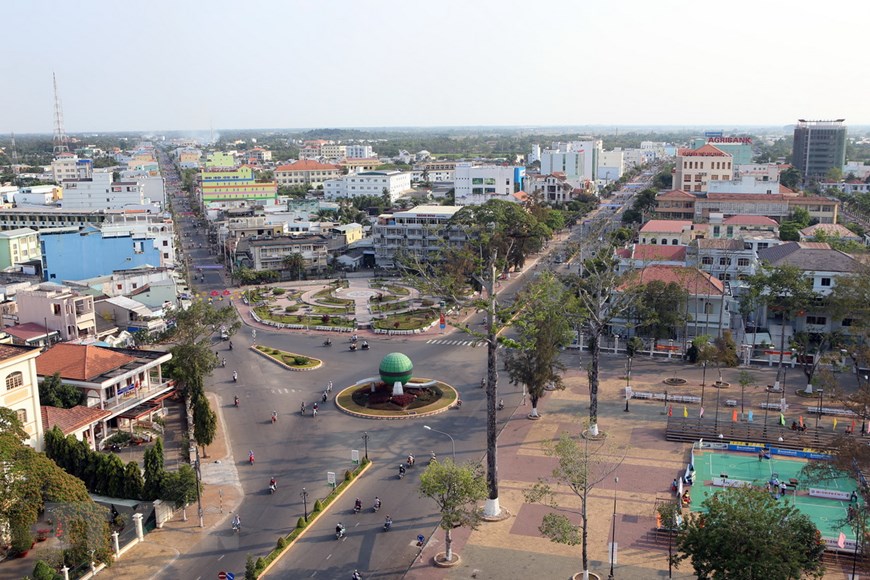
Вид на город Шокчанг. (Фото: ВИА)

Город Шокчанг всегда создает благоприятные условия и привлекает инвесторов для реализации проектов, создавая просторный и современный городской облик. Кроме того, город всегда уделяет внимание работе по планированию и реализации. В настоящее время развитие города было одобрено Народным комитетом провинции в рамках реализации общего планирования строительства города Шокчанг до 2035 года с видением до 2050 года, Положения об управлении планированием, архитектурой, городским ландшафтом и программой городского развития города Шокчанг до 2030 года… для внесения своего вклада в решение задач социально-экономического развития.

В 2021 году в условиях многих трудностей, вызванных воздействием эпидемии COVID-19, экономика города сохранила хорошие темпы роста, доход на душу населения превысил целевой показатель Резолюции и увеличился на 3% за тот же период. Сектор обслуживания и торговли получает все возрастающую долю в структуре экономики и составляет более 54% от общего объема розничной торговли и услуг провинции. На обрабатывающую промышленность приходится более 70% промышленной стоимости и более 53% стоимости промышленного производства провинции.

Промзона Чанде, Шокчанг

В настоящее время Шокчанг является городом провинции, узловым пунктом городской системы провинции; имеет важное стратегическое положение с точки зрения безопасности и обороны, является воротами в провинцию Шокчанг и полюсом развития дельты Меконга. При этом город играет роль транспортного узла провинции, удобно соединяясь с большинством городов региона.

Theo Thứ trưởng Bộ Xây dựng Lê Quang Hùng, thành phố Sóc Trăng đã đạt tiêu chí đô thị loại 2, trực thuộc tỉnh. Trong thời gian tới, thành phố chú trọng thực hiện các giải pháp ứng phó hiệu quả với biến đổi khí hậu, nước biển dâng và hiện tượng xâm nhập mặn trên địa bàn, nghiên cứu các giải pháp tăng cường sử dụng nước mặt, hạn chế và tiến tới dừng khai thác, sử dụng nước ngầm.

Hướng tới đô thị thông minh

По словам заместителя министра строительства Ле Куанг Хунга, город Шокчанг соответствует критериям города 2-го класса в провинции. В ближайшее время город сосредоточится на внедрении эффективных решений в отношении изменения климата, повышения уровня моря и вторжения соленой воды в этом районе, изучения решений по увеличению использования поверхностных вод, ограничению и прекращению эксплуатации и использования подземных вод.

Определяя стратегическую важность в отношении развития города Шокчанг, провинциальный партийный комитет Шокчанга на период 2020-2025 годов издал тематическую резолюцию о строительстве города Шокчанг в направлении устойчивого развития, достигающего критериев города 2-го класса, в направлении умного города в период 2021-2025 гг. и с видением до 2030 г.

По словам секретаря провинциального партийного комитета Шокчанга Лама Ван Мана, цель провинции состоит в том, что построить и развить город Шокчанг для достижения критериев города 2-го класса, создав основные основополагающие факторы для развития умного города, экоэкономического города и города с хорошими условиями жизни, высокой конкурентоспособностью, собственной идентичностью и устойчивым развитием, создающие движущую силу общего развития провинции.

В городе Шокчанг был создан Центр по применению науки и технологий в управлении городом, синхронно подключающим систему камер для управления и решения проблем городского порядка и санитарии, окружающей среды, общественного порядка и безопасности… к центру многозадачной обработки информации и управления Шокчанга.

К 2025 году город Шокчанг достигнет высокий уровень критериев города 2-го класса, подготовит материальные возможности и создаст ключевую базу данных, стремясь к умному городу.

Город Шокчанг стремится к 2030 году завершить необходимые факторы, обслуживающие строительство умного города Шокчанг, отвечающего ряду ключевых критериев города 1-го класса, чтобы повысить свою роль и конкурентоспособность города по сравнению с другими городами в дельте Меконга./.

https://ru.vietnamplus.vn/shokchang-razvivaet-zhivotnovodstvo-16472.vnp

https://ru.vietnamplus.vn/shokchang-uskorenie-grafika-zaversheniya-vetroenergeticheskih-proektov-15493.vnp

https://ru.vietnamplus.vn/samye-krasivye-khmerskie-pagody-v-shokchange-13106.vnp

https://ru.vietnamplus.vn/turizm-vetnama-kulturnyi-obekt-zhiengtien-turisticheskaya-izyuminka-narodnosti-khmerov-797.vnp

Soc Trang city in the Mekong Delta province of the same name is striving to meet the criteria set to become a second-tier city by 2025, while preparing material facilities and building main databases for a smart urban area.

Under a plan for the Mekong Delta from 2021-2030 with a vision to 2050, Soc Trang has been identified as an economic centre of the sub-region along the East Sea, focusing on aquaculture, fishery exports, farm produce and seafood processing, clean energy, and culture and tourism.

After taking rapid, comprehensive and firm strides to meet second-tier city criteria, the city is now striving to create breakthroughs in the time ahead.

During the 2018-2020 period, Soc Trang posted economic growth of 15.81 percent and its structure shifted towards a higher ratio of industry, construction and services, and a reduced reliance on agriculture.

The number of non-agricultural labourers reached 89.9 percent. The average annual income of the city residents was 88.9 million VND (3,870 USD) per person, 1.4 times that of the national average.

A corner of Soc Trang city

Soc Trang has focused on creating favourable conditions for investors, providing a facelift for the city.

The provincial People’s Committee has approved a master plan for Soc Trang city for 2035 with a vision to 2050, which has been put into place, along with urban planning management regulations and the urban development programme in Soc Trang by 2030.

Despite difficulties caused by the COVID-19 pandemic last year, the local economy has maintained its growth and per capita income rose 3 percent from the previous year.

Trade and services accounted for more than 54 percent of the province’s total retail sales. The processing industry also made up over 53 percent of the province’s combined industrial production value.

Tran De Industrial Park in Soc Trang

Soc Trang city holds a strategic position in terms of national defence and security and serves as a gateway to the Mekong Delta..

According to Deputy Minister of Construction Le Quang Hung, Soc Trang should pay more heed to solutions to cope with climate change, rising seal levels and saltwater intrusion, and to increase the use of surface water and cut or even stop the use of underground water.

Towards smart urban area

The provincial Party Committee (2020-2025 tenure) has issued a resolution on building Soc Trang city sustainably, meeting the criteria set for a second-tier city, towards a smart urban status for 2021-2025, with a vision to 2030.

Secretary of the Party Committee Lam Van Mau said the province plans to turn Soc Trang city into an economic-ecological one that offers good living conditions, high competitiveness and sustainable development, creating momentum for the province’s development.

The city is now home to a centre of scientific-technological application in urban management. The camera system in the locality has helped to manage and handle issues regarding urban order, environmental hygiene, and social order and safety.

It is projected that by 2030, Soc Trang will complete all the necessary conditions to become a smart urban area and a first-tier city, and improve its position and role in the Mekong Delta./.

Related news:

https://en.vietnamplus.vn/pm-attends-30th-anniversary-of-soc-trang-reestablishment/227697.vnp

https://en.vietnamplus.vn/prime-minister-pays-working-visit-to-soc-trang/227678.vnp

https://en.vietnamplus.vn/soc-trang-province-launches-5g-network-intelligent-operations-centre/227489.vnp

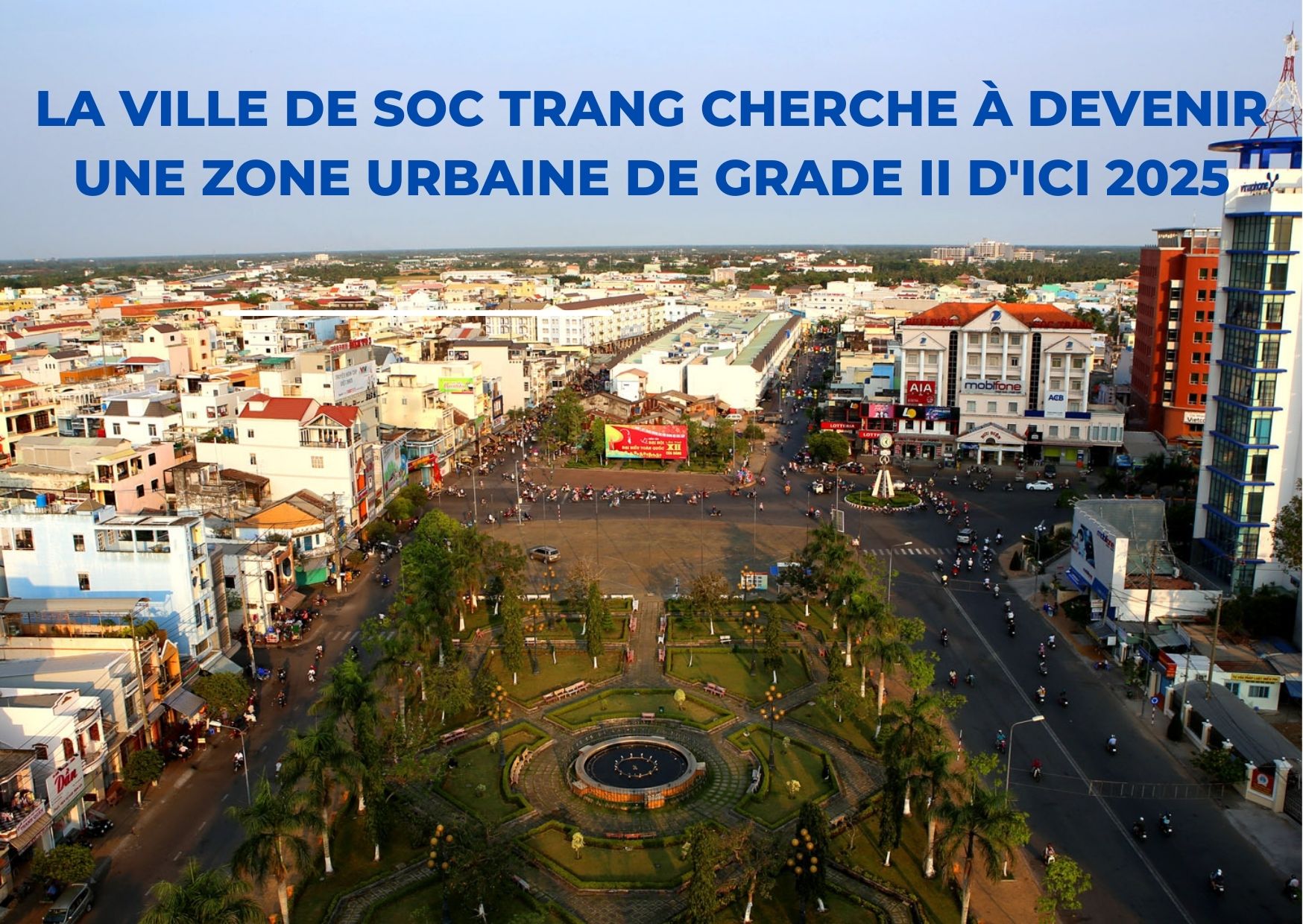
La ville de Soc Trang cherche à devenir une zone urbaine de grade II d’ici 2025

La ville de Soc Trang cherche à répondre d’ici 2025 aux critères d’une zone urbaine de garde II et prépare des infrastructures et bases de données pour devenir une ville intelligente.

Selon la Planification du delta du Mékong pour la période 2021-2030 et vision d’ici 2050 récemment approuvée, la ville de Soc Trang, dans la province méridionale du même nom, a vocation à devenir un pôle économique de la sous-région côtière de l’Est et une zone spécialisée dans l’aquaculture, la pêche, les exportations de produits aquatiques, la transformation des produits agricoles et aquatiques, les énergies renouvelables. Elle jouera également le rôle de pôle culturel et touristique de la région.

Entre 2018 et 2020, la croissance économique moyenne de la ville a été estimée à 15,81%. Le revenu annuel moyen par habitant s’élevait à 88,9 millions de dongs, soit 1,4 fois plus que la moyenne nationale. La proportion de travailleurs dans les secteurs non agricoles a atteint 89,8 %. Soc Trang a toujours créé​des conditions favorables pour attirer des investissements dans ses projets urbains.

Une vue de la ville de Soc Trang. Photo: VNA

Actuellement, cette localité déploie le Plan directeur sur la construction de la ville de Soc Trang jusqu’en 2035 avec  vision pour 2050.

Les règlements sur la gestion de la planification, de l’architecture, du paysage urbain et du programme de développement urbain de la ville de Soc Trang jusqu’en 2030 ont été approuvés par le Comité populaire provincial et sont en cours de mise en œuvre.

En 2021, malgré l’impact du COVID-19, l’économie municipale a maintenu une croissance assez élevée et le revenu moyen par habitant a connu une hausse de 3% en rythme annuel. Les secteurs du commerce et des services ont occupé un rôle de plus en plus important dans la structure économique municipale, représentant plus de 54% du total des ventes au détail de biens et de services de la province. L’industrie manufacturière  a représenté plus de 70 % de la valeur industrielle et plus de 53 % de la valeur de  production industrielle de la province.

Parc industriel de Tran De, ville de Soc Trang

Dans un proche avenir, la ville  se concentrera sur la mise en œuvre de mesures pour répondre au changement climatique, à l’élévation du niveau de la mer et à l’intrusion saline et cherchera à promouvoir l’utilisation des eaux de surface et à limiter l’exploitation et l’utilisation des eaux souterraines, a demandé le vice-ministre de la Construction Le Quang Hung.

Le comité provincial du Parti pour le mandat 2020-2025 a publié une Résolution  sur le développement durable de la ville, répondant aux critères d’une zone urbaine de garde II et s’orientant vers une ville intelligente pour la période 2021-2025 et à l’horizon  2030.

L’objectif de la province est de faire de Soc Trang une zone urbaine de garde II et à plus long terme une ville intelligente, une ville éco-économique, une zone urbaine dotée d’une haute qualité de vie, d’une forte compétitivité, d’une identité culturelle unique, a déclaré le secrétaire du comité provincial du Parti, Lan Van Man.

Un centre d’application des sciences et technologies pour la gestion urbaine a été créé, permettant la connexion synchrone de systèmes de caméras pour gérer et traiter les problèmes en matière de maintien de l’ordre et de protection de l’environnement. Ce centre sera également connecté au Centre provincial de gestion de l’information et de contrôle multi-tâches./.

Ciudad vietnamita de Soc Trang promueve el desarrollo infraestructural

La ciudad sureña vietnamita de Soc Trang trabajará por cumplir los criterios de una zona urbana de nivel 2 en 2025, con vistas a preparar las condiciones materiales y construir una base de datos, apuntando a convertirse en una urbe inteligente.

Según la planificación general del Delta del río Mekong en la etapa 2021-2030, con visión hacia 2050, la ciudad de Soc Trang en la provincia homónima se identifica como el centro económico de la subregión costera en el Mar del Este y zona clave de la acuicultura, pesca y exportación de productos acuáticos, de procesamiento agro-mariscos, de industria de energía limpia y de turismo, cultura e historia.


En los últimos tiempos, la metrópolis ha logrado avances rápidos, integrales y sólidos en aras de lograr los estándares de una zona urbana de nivel 2 y orientar otras metas de desarrollo, con el fin de avanzar más en el futuro.

En el período 2018-2020, la tasa de crecimiento económico promedio de la urbe alcanzó el 15,81 por ciento. La estructura económica municipal ha cambiado hacia el aumento de la proporción de industria, construcción y servicios, y reducción de la proporción de agricultura según el plan previsto.

La tasa de trabajadores no agrícolas en toda el área urbana llegó al 89,8 por ciento y el ingreso promedio de la población municipal fue de casi 3,9 mil dólares por persona al año, 1,4 veces más que el ingreso promedio nacional.

Una esquina de la ciudad de Soc Trang (Fuente:VNA)

La urbe sureña vietnamita siempre ha creado condiciones favorables para atraer a los inversores a desarrollar sus actividades de negocios, como contribución a mostrar un rostro urbano moderno.

Además, las tareas de planificación y ejecución de los proyectos relativos siempre han captado la atención especial de las autoridades municipales.

En la actualidad, la ciudad ha desplegado la planificación general sobre la construcción urbana hasta 2035, con visión hacia 2050, aprobada por el Comité Popular Provincial, y un programa sobre el desarrollo municipal hasta 2030, como aportes a la materialización de los objetivos planteados sobre su progreso socioeconómico.

En 2021, a pesar de diversas dificultades generadas por la pandemia de la COVID-19, la economía de la ciudad mantuvo un buen ritmo de crecimiento, por lo que la renta per cápita superó la meta de la Resolución promulgada por el Comité del Partido Comunista de Vietnam en la provincia y aumentó un tres por ciento en comparación con el año anterior.

La industria de comercio y servicios representa una proporción cada vez mayor en la estructura económica y ocupa más del 54 por ciento del total del comercio minorista –servicios de la provincia.

La industria de procesamiento municipal muestra más del 70 por ciento del valor industrial y refleja más del 53 por ciento del valor de producción industrial de la provincia de Soc Trang.

Parque Industrial Tran De, Soc Trang

Actualmente, la ciudad de Soc Trang figura el punto clave del sistema urbano de la provincia homónima y cuenta con una posición estratégica importante en términos de seguridad y defensa, además deviene un polo de desarrollo en el Delta del río Mekong.

Al mismo tiempo, juega el papel de nudo de transporte de la provincia, conectando convenientemente con la mayoría de las áreas urbanas en la región.

Según el viceministro de Construcción de Vietnam, Le Quang Hung, la ciudad de Soc Trang ha alcanzado los criterios de área urbana de grado 2. En los próximos tiempos, se enfocará en implementar soluciones efectivas al cambio climático, el aumento del nivel del mar y la intrusión salina en la zona, y estudiará medidas para incrementar el uso de aguas superficiales, con vistas a limitar y detener la explotación de aguas subterráneas.

Encaminar hacia una ciudad inteligente

Al determinar la importancia estratégica para el desarrollo de la ciudad de Soc Trang, el Comité partidista provincial en el período 2020-2025 emitió una resolución temática sobre la construcción y desarrollo sostenible de la metrópolis, con miras a lograr los criterios de una zona urbana de nivel 2 y encaminarse hacia una ciudad inteligente en la etapa 2021-2025, con visión hacia 2030.

Según el secretario del Comité partidista provincial, Lam Van Man, el objetivo de la provincia es construir y desarrollar la ciudad de Soc Trang a una zona urbana de nivel 2 y poco a poco convertirla en una metrópolis inteligente con alta competitividad y desarrollo sostenible.

En la ciudad de Soc Trang, se ha establecido un Centro de aplicación de la ciencia y la tecnología en la gestión urbana, conectando sincrónicamente con el sistema de cámaras para controlar y manejar problemas relativos al orden urbano, saneamiento, medio ambiente, seguridad social y reflexión de la escena (IOC).

La ciudad sureña de Soc Trang trabajará por cumplir los criterios de una zona urbana de nivel 2 en 2025, con vistas a preparar las condiciones materiales y construir una base de datos, apuntando hacia una urbe inteligente.

La urbe se esforzará hasta 2030 por completar los elementos necesarios para la construcción de una zona urbana inteligente y cumplir una serie de criterios claves de un área urbana de grado 1, elevando su papel y posición de competitividad en el delta del río Mekong./.

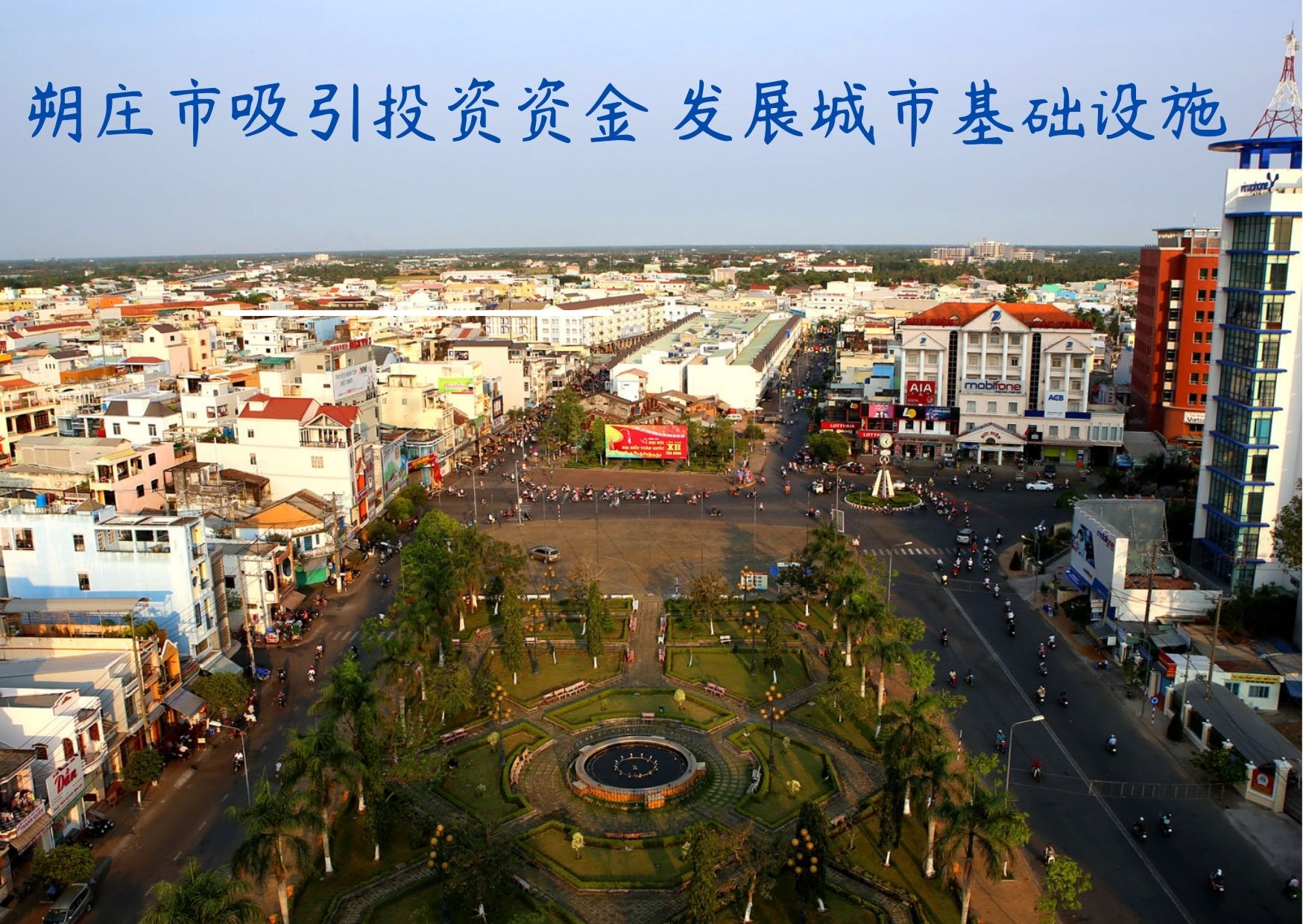
朔庄市吸引投资资金 发展城市基础设施

到 2025 年,朔庄市将完成高水平的二级城市各项标准,准备好物质条件、建立关键数据库,向往发展成为一座智慧城市的目标。

根据刚刚获得批准的《2021~2030年阶段九龙江三角洲地区总体规划和2050年愿景》,朔庄省朔庄市被确定为东海沿海次区域的经济中心,水产海鲜养殖、捕捞和出口中心,农产品、水产品加工业中心,清洁能源工业中心和历史文化旅游中心。

跟随着朔庄全省的同步发展,朔庄市也取得了快速、全面且稳固的进展,达到了二级城市的标准,同时提出多项奋斗目标以今后努力实现跨越式发展。

从2018年至2020年期间,朔庄市经济年均增长率达15.81%,经济结构根据所提出的目标向提高工业、建筑业和服务业比重,降低农业比重的方向转型;全市非农业劳动力比率达89.8%;全市居民年均收入水平为8890万越南盾,是全国平均收入水平的1.4倍。

朔庄市的一角。图自越通社

朔庄市始终创造有利条件,吸引投资商来到朔庄市投资展开各项目,打造城市现代化风貌。与此同时,朔庄市十分着重城市规划工作,并积极主动实施各项城市规划。目前,朔庄市的《到2035年朔庄市建设总体规划和2050 年愿景》;《到2030年朔庄市规划、建筑、城市景观容貌和城市发展计划的管理条例》都已经获批,并正在展开,为实现城市经济社会发展各项任务做出贡献。

2021年,在遭受由新冠肺炎疫情(COVID-19)带来重重困难的背景下,朔庄市经济保持良好增速,人均收入超过之前决议所提出的目标,同2020年相比增长3%;贸易、服务业在经济结构中的比重越来越大,占整个朔庄省零售和服务业营业总额的54%;加工业占工业产值的70%以上,占整个朔庄省工业产值总额的53%以上。

朔庄镇夷工业区

目前,朔庄市为省会城市,是朔庄省城市体系的重点,在安全和国防方面具有重要战略地位,是朔庄省通往外地的门户,是九龙江三角洲地区发展的一极。同时,朔庄市发挥着全省交通枢纽的作用,与本地区大部分城市实现互联互通较为便利。

越南建设部副部长黎光雄先生介绍,朔庄市已达到省直辖市二级城市标准。未来,朔庄市将重点实施应对气候变化、海平面上升和盐水侵入等问题的各项有效解决方案;研究增加地表水利用水平,限制并逐渐停止开采和使用地下水源。

向往智慧城市目标

认定朔庄市发展的战略重要性,2020-2025年任期的朔庄省省委提出关于《2021~2025年阶段建设朔庄市可持续发展、达到二级城市标准、迈向智慧城市和展望2030年》的专项决议。

朔庄省省委书记林文敏同志表示,朔庄省的目标是将朔庄市建设和发展成为二级城市,建设发展智慧城市、经济-生态城市、生活条件良好且竞争力、具特色且可持续发展城市等的基础性要素,为朔庄全省整体发展创造动力。

在朔庄市成立了城市管理科技应用中心,同步连接高清监控摄像头

系统以有效管理和处理城市秩序、卫生、环境、社会安全以及现场监控等问题。进而与朔庄省中央信息处理和管理的多功能中心实现同步连接。

到 2025 年,朔庄市将完成高水平的 2 级城市标准,准备好物质条件、建立关键数据库,向往发展成为一座智慧城市的目标。

朔庄市力争到 2030 年具备服务于智慧城市建设的必要要素,朔庄市的一些关键指标达到一级城市标准,提高朔庄市与九龙江三角洲地区其他城市相比的作用、地位和竞争力。(完)

Lời tòa soạn

Tại Diễn đàn Tri thức Thế giới – World Knowledge Forum 2019 diễn ra ở Seoul (Hàn Quốc) vào ngày 26/09/2019, bà Thái Hương – Nhà sáng lập Tập đoàn TH, Tổng Giám đốc Ngân hàng Bắc Á đã chia sẻ những tri thức điều hành doanh nghiệp trong nhiều lĩnh vực, cũng như những câu chuyện truyền cảm hứng cho người nghe về sức mạnh của nữ giới điều hành doanh nghiệp.

Bà nói: “Mọi người thường nghĩ phụ nữ làm doanh nghiệp sẽ gặp nhiều bất lợi vì phải tìm cách cân bằng giữa sự nghiệp và gia đình. Nhưng tôi lại thấy, là phụ nữ, đặc biệt là người mẹ, là lợi thế rất lớn của nữ doanh nhân. Không gì so sánh được với sức mạnh của một người mẹ. Người mẹ bao giờ cũng muốn con mình chỉn chu nhất, không cho phép sơ suất bất cứ việc gì. Đưa tấm lòng người mẹ vào bất cứ công việc nào cũng sẽ cho chúng ta có được sức mạnh mà không có trở ngại nào ngăn cản được. Muốn thành công với doanh nghiệp của mình, thì người phụ nữ ngoài những nỗ lực, đằng sau các yếu tố trí tuệ, sự thừa hưởng về kỹ thuật và yếu tố chuyên môn, thì cần có cả sức mạnh được hun đúc từ tình yêu dành cho những đứa con của mình, cho gia đình và mái ấm của mình.”

Bà đã lan tỏa triết lý ấy, tinh thần ấy đến các thành viên Hiệp hội Nữ doanh nhân Việt Nam (VAWE) để các “nữ tướng” trong doanh nghiệp tỏa sáng tài năng, trí tuệ.

Việt Nam hiện có hơn 800.000 doanh nghiệp đang hoạt động, trong đó 24% doanh nghiệp do phụ nữ làm chủ, tỷ lệ này đang cao nhất Đông Nam Á.

Trên thực tế, các doanh nghiệp do nữ làm chủ đã đóng góp tích cực cho tăng trưởng GDP của đất nước và tạo ra nhiều việc làm cũng như trách nhiệm xã hội với cộng đồng. Khi đại dịch COVID-19 hoành hành, các nữ doanh nhân thể hiện tinh thần tương thân, tương ái, tổ chức nhiều hoạt động hỗ trợ những phụ nữ vươn lên trong cuộc sống và sự nghiệp. Nhiều doanh nhân nữ gánh nặng gia đình lớn, nhưng vẫn vững tay chèo lái con thuyền doanh nghiệp, làm giàu cho chính mình, làm giàu cho đất nước…

Sau 2 năm kiên cường vận hành doanh nghiệp của mình, cùng đất nước vượt qua cơn bão mang tên COVID-19, mới đây các nữ tướng VAWE đã nhìn lại hành trình đã qua và xác định hướng đi trong thời đại mới là nắm bắt chiến lược chuyển đổi số, xem đây là yếu tố sống còn để các doanh nghiệp Việt Nam, đặc biệt là các doanh nghiệp do nữ làm chủ phục hồi nhanh chóng và phát triển bền vững.

Bài 1: VAWE: Hành trình 7 năm chắp cánh khát vọng của doanh nghiệp nữ

Bài 2: Nữ doanh nhân vững tay chèo ‘con tàu doanh nghiệp’ cưỡi sóng COVID-19

Bài 3: Doanh nhân nữ Việt Nam: Những bông hoa kiên cường ‘đi qua mùa bão’

Bài 4: Doanh nhân Thái Hương: Hạt nhân gắn kết các thành viên VAWE