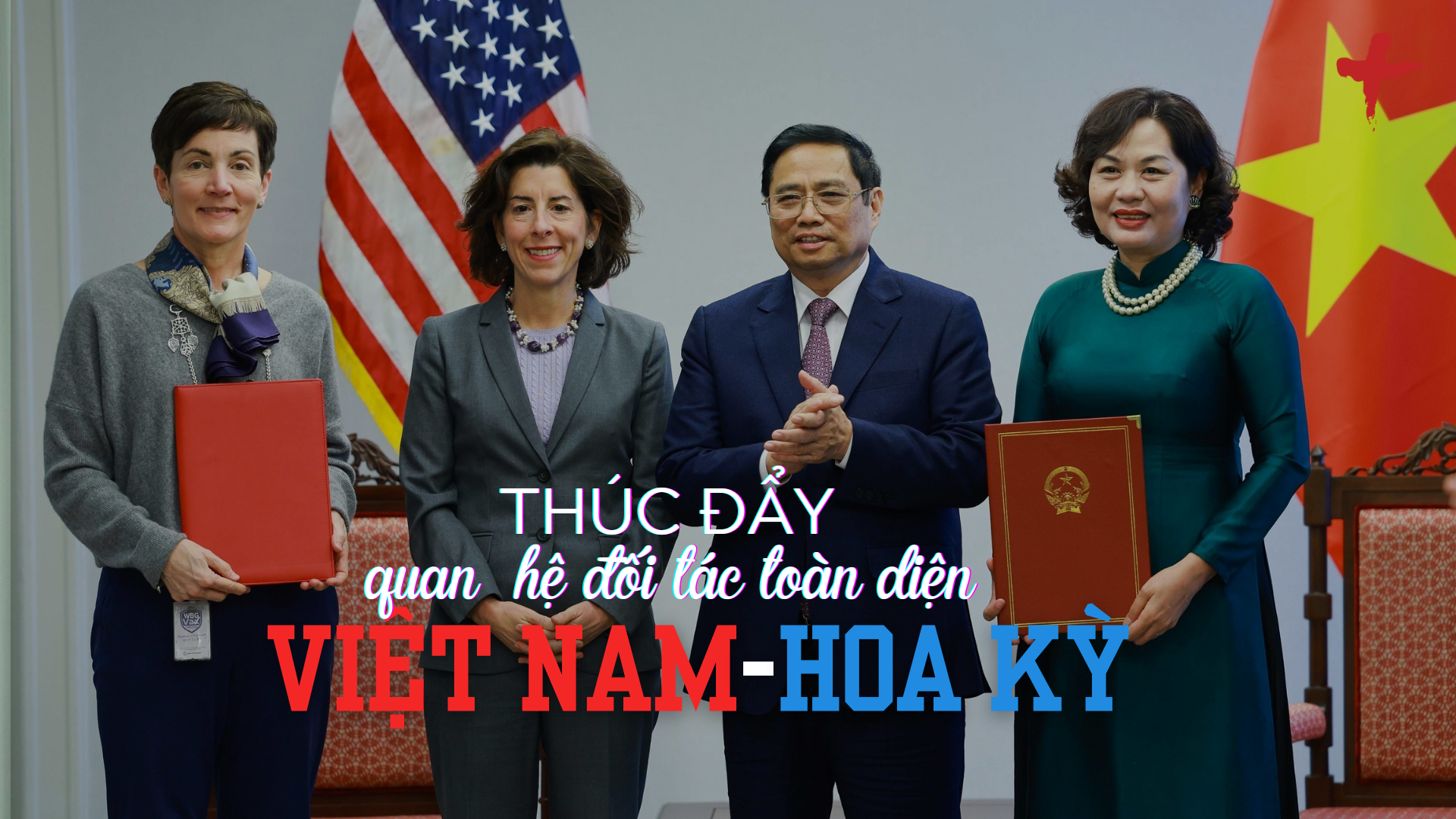
Thủ tướng Chính phủ Phạm Minh Chính dẫn đầu đoàn đại biểu Việt Nam dự Hội nghị Cấp cao Đặc biệt ASEAN-Hoa Kỳ trong hai ngày 12 và 13/5 tại thủ đô Washington D.C., Hoa Kỳ theo lời mời của Tổng thống Hợp chúng quốc Hoa Kỳ Joseph Robinette Biden Jr; đồng thời thăm, làm việc tại Hoa Kỳ và Liên hợp quốc từ ngày 11-17/5.

Chuyến thăm và làm việc tại Hoa Kỳ lần này là chuyến công tác nước ngoài đầu tiên của Thủ tướng Phạm Minh Chính trong bối cảnh Việt Nam đã kiểm soát được dịch bệnh COVID-19 trên phạm vi toàn quốc, tự tin mở cửa trở lại, triển khai chương trình phục hồi nhanh và phát triển bền vững kinh tế-xã hội, tích cực hội nhập quốc tế toàn diện, sâu rộng, thực chất, hiệu quả.

Chuyến thăm tiếp tục góp phần thúc đẩy quan hệ Đối tác toàn diện đang phát triển tốt đẹp, phù hợp với mục tiêu, lợi ích chung của hai nước Việt Nam-Hoa Kỳ.

Kể từ khi Việt Nam-Hoa Kỳ bình thường hóa quan hệ và chính thức thiết lập quan hệ ngoại giao, đến nay, quan hệ Việt Nam-Hoa Kỳ đã trở thành đối tác toàn diện từ chính trị-ngoại giao, kinh tế, giáo dục, khoa học-công nghệ, đến quốc phòng-an ninh; với động lực hợp tác ngày càng củng cố, mạnh mẽ hơn, các lĩnh vực hợp tác ngày càng rộng, sâu, đa dạng, thực chất, hiệu quả và lợi ích hài hòa có tầm quan trọng chiến lược.

Quan hệ Đối tác toàn diện ngày càng phát triển mạnh mẽ

Sau khi tuyên bố bình thường hóa quan hệ và chính thức thiết lập quan hệ ngoại giao, đến ngày 5/8/1995, tại Hà Nội, Bộ trưởng Ngoại giao Hoa Kỳ Warren Christopher và Bộ trưởng Ngoại giao Nguyễn Mạnh Cầm đã ký Nghị định thư, chính thức thiết lập quan hệ ngoại giao Việt Nam-Hoa Kỳ.

Ngay sau đó, hai nước đã khai trương Đại sứ quán tại Washington và Hà Nội (vào tháng 8/1995).

Tháng 11/2000, Tổng thống Hoa Kỳ William J. Clinton thăm Việt Nam. Ông Clinton là Tổng thống Hoa Kỳ đầu tiên thăm chính thức Việt Nam. Ông Clinton được xem là người đóng góp quan trọng vào quá trình bình thường hóa quan hệ Việt Nam-Hoa Kỳ cả khi còn đương chức lẫn lúc đã rời nhiệm sở.
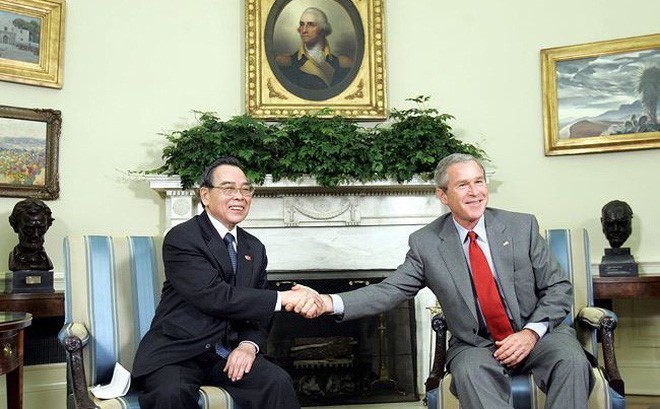
Cái bắt tay lịch sử của Thủ tướng Phan Văn Khải và Tổng thống George W. Bush tại Nhà Trắng, ngày 21/6/2005, trong chuyến thăm chính thức Hoa Kỳ từ ngày 19 – 25/6/2005, đánh dấu sự phát triển mới trong quan hệ song phương sau 10 năm bình thường hoá. Đây cũng là chuyến thăm chính thức Hoa Kỳ đầu tiên của người đứng đầu Chính phủ nước CHXHCN Việt Nam sau 30 năm kết thúc chiến tranh. (Ảnh: AP/TTXVN phát)

Tháng 6/2005, Thủ tướng Phan Văn Khải thăm Hoa Kỳ. Đây là lần đầu tiên một Thủ tướng Việt Nam thăm Hoa Kỳ sau chiến tranh. Trong chuyến thăm này, hai nước đã ký Thỏa thuận Hợp tác Kinh tế và Kỹ thuật cũng như các thỏa thuận về sự phê chuẩn quốc tế, tình báo và hợp tác quân sự. Thủ tướng, cùng với hơn 100 đại diện của khu vực công và tư nhân đến thăm ba thành phố khác và ký kết nhiều hợp đồng kinh doanh lớn.

Tháng 11/2006 Tổng thống Hoa Kỳ George W.Bush có chuyến thăm 4 ngày đến Việt Nam trong khuôn khổ các cuộc họp của các nhà Lãnh đạo Diễn đàn Hợp tác Kinh tế Châu Á Thái Bình Dương (APEC).

Tháng 6/2007, Chủ tịch nước Nguyễn Minh Triết thăm chính thức Hoa Kỳ theo lời mời của Tổng thống George W.Bush. Chủ tịch nước đã hội kiến với Tổng thống George W. Bush để thảo luận về hợp tác kinh tế và thương mại. Thứ trưởng Bộ Thương mại Nguyễn Cẩm Tú và Phó Đại diện Thương mại Karan Bhatia ký kết Hiệp định khung về Thương mại và Đầu tư (TIFA) vào ngày 21 tháng 6.

Kể từ khi Việt Nam-Hoa Kỳ bình thường hóa quan hệ và chính thức thiết lập quan hệ ngoại giao, đến nay, quan hệ Việt Nam-Hoa Kỳ đã chuyển đổi thành công từ đối đầu sang bạn bè, và trở thành đối tác toàn diện với động lực hợp tác ngày càng củng cố, mạnh mẽ hơn.

Tháng 6/2008, Thủ tướng Nguyễn Tấn Dũng thăm Hoa Kỳ theo lời mời Tổng thống George W. Bush. Kết quả chuyến thăm của Thủ tướng đã đánh dấu một mốc son mới trong quan hệ giữa hai nước.

Tháng 7/2013, Chủ tịch nước Trương Tấn Sang thăm Hoa Kỳ theo lời mời của Tổng thống Barack Obama. Kết quả lớn nhất của chuyến thăm là hai bên đã xác lập quan hệ Đối tác toàn diện Việt Nam-Hoa Kỳ, định hình khuôn khổ quan hệ song phương cho giai đoạn mới cũng như hướng phát triển của quan hệ trong những năm tới.

Tháng 7/2015, kỷ niệm 20 năm bình thường hóa quan hệ, Tổng Bí thư Nguyễn Phú Trọng thăm chính thức Hoa Kỳ. Sau cuộc gặp giữa Tổng Bí thư Nguyễn Phú Trọng và Tổng thống Hoa Kỳ Barack Obama, hai bên đã thông qua Tuyên bố Tầm nhìn chung Việt Nam-Hoa Kỳ, cho thấy sự thẳng thắn, cởi mở giữa lãnh đạo Việt Nam và Hoa Kỳ trong trao đổi các vấn đề trước đây được coi là nhạy cảm. Quan hệ Việt Nam-Hoa Kỳ trong tương lai sẽ thực chất hơn, sâu sắc hơn khi hợp tác các mặt không bị cản trở bởi những khác biệt.

Tổng Bí thư Nguyễn Phú Trọng hội đàm với Tổng thống Barack Obama, ngày 7/7/2015, tại Nhà Trắng ở Thủ đô Washington D.C trong chuyến thăm chính thức Hoa Kỳ từ ngày 6-10/7/2015. Đây là chuyến thăm đầu tiên tới Hoa Kỳ của người lãnh đạo cao nhất Đảng Cộng sản Việt Nam kể từ sau khi kết thúc chiến tranh, đánh một dấu mốc quan trọng mới, mở ra một trang mới trong quan hệ giữa hai nước. (Ảnh: Trí Dũng/TTXVN)

Tháng 5/2016, Tổng thống Hoa Kỳ Barack Obama thăm chính thức Việt Nam. Hội đàm với Chủ tịch nước Trần Đại Quang tại Phủ Chủ tịch, Tổng thống Obama thống nhất công bố quyết định quan trọng của Mỹ về việc xóa bỏ lệnh cấm vận vũ khí đối với Việt Nam.

Tuyên bố chung Việt Nam-Hoa Kỳ được ký kết sau cuộc hội đàm cấp nhà nước này thể hiện rất nhiều nội dung cam kết về tăng cường hợp tác giữa hai nước trên tất cả các lĩnh vực. Nhiều văn kiện, dự án quan trọng, quy mô lớn được ký kết.

Tháng 5/2017, Thủ tướng Nguyễn Xuân Phúc thăm chính thức Hoa Kỳ theo lời mời của Tổng thống Donald Trump. Chuyến thăm đã mở ra chương mới trong quan hệ Đối tác toàn diện giữa Việt Nam và Hoa Kỳ. Hai bên cam kết duy trì và phát triển đà quan hệ, đồng thời đạt được nhận thức chung về khuôn khổ mới hợp tác toàn diện Việt Nam-Hoa Kỳ trong thời gian tới, tạo nên những động lực mới góp trong quan hệ Đối tác toàn diện giữa hai nước, góp phần vào hòa bình và thịnh vượng trong khu vực và trên thế giới.

Tháng 11/2017, Tổng thống Hoa Kỳ Donald J. Trump thăm cấp Nhà nước tới Việt Nam và dự Hội nghị Cấp cao APEC 2017 từ 11-12/11.

Trong Tuyên bố chung giữa Hoa Kỳ và Việt Nam được đưa ra nhân chuyến thăm, hai bên nhất trí tiếp tục làm sâu sắc hơn quan hệ Đối tác toàn diện Việt Nam-Hoa Kỳ trên nguyên tắc tôn trọng độc lập, chủ quyền, toàn vẹn lãnh thổ và thể chế chính trị của nhau.

Tháng 2/2019, Tổng thống Hoa Kỳ Donald Trump đã tham dự Hội nghị Thượng đỉnh Hoa Kỳ-Triều Tiên lần hai tại Hà Nội với Chủ tịch Triều Tiên Kim Jong-un và có các cuộc tiếp xúc với lãnh đạo cấp cao của Việt Nam.

Tháng 9/2021, Chủ tịch nước Nguyễn Xuân Phúc và đoàn đại biểu cấp cao Đảng và Nhà nước Việt Nam đã tham dự Phiên thảo luận chung cấp cao Đại hội đồng Liên hợp quốc khóa 76 và có một số hoạt động song phương tại Hoa Kỳ.

Bên cạnh đó, còn có các cuộc gặp của Thủ tướng Chính phủ Phạm Minh Chính với Tổng thống Joe Biden và Đặc phái viên John Kerry bên lề Hội nghị lần thứ 26 các bên tham gia Công ước khung của Liên hợp quốc về biến đổi khí hậu (COP26) tại Anh (tháng 10/2021)…

Các chuyến thăm cấp cao của lãnh đạo hai nước thời gian qua đã thực sự làm sâu sắc thêm quan hệ Đối tác Toàn diện Việt Nam-Hoa Kỳ, thúc đẩy đà phát triển quan hệ trên cơ sở đôi bên cùng có lợi, bình đẳng, tôn trọng độc lập, chủ quyền, thể chế chính trị của nhau.

Thời gian qua, đại dịch COVID-19 diễn biến phức tạp, song hai bên vẫn duy trì các cơ chế đối thoại dưới hình thức trực tuyến và linh hoạt duy trì các trao đổi lẫn nhau thông qua hình thức viết thư và điện đàm.

Trong các cuộc trao đổi, phía Hoa Kỳ tái khẳng định cam kết ủng hộ một Việt Nam “hùng mạnh, độc lập và thịnh vượng,” tiếp tục đánh giá cao vị thế và coi trọng quan hệ với Việt Nam, đề nghị hai bên tiếp tục có các bước đi để tăng cường quan hệ, trong đó ưu tiên hợp tác kinh tế-thương mại, an ninh-quốc phòng, y tế, năng lượng.

Hợp tác kinh tế-thương mại tăng trưởng vượt bậc

Cùng với quan hệ chính trị tốt đẹp, hợp tác kinh tế-thương mại Việt Nam-Hoa Kỳ được coi là lĩnh vực hợp tác thành công nhất, đã và đang trở thành trọng tâm, nền tảng, động lực phát triển cho quan hệ chung giữa hai nước.

Chế biến tôm xuất khẩu. (Ảnh:  Ảnh: Tuấn Kiệt/TTXVN)

Hiện Hoa Kỳ là một trong những đối tác thương mại lớn nhất của Việt Nam. Kim ngạch thương mại hàng hóa hai chiều đã tăng hơn 170 lần, từ 450 triệu USD năm 1995 lên 77,6 tỷ USD vào năm 2019; 90,8 tỷ USD năm 2020 và hơn 111,56 tỷ USD năm 2021. Hoa Kỳ tiếp tục là thị trường xuất khẩu lớn nhất của Việt Nam, còn Việt Nam trở thành đối tác thương mại lớn thứ 9 của Hoa Kỳ.

Đặc điểm quan trọng trong quan hệ kinh tế, thương mại song phương Việt Nam-Hoa Kỳ là tính bổ trợ cho nhau. Cụ thể, Hoa Kỳ có nhu cầu nhập khẩu lớn các sản phẩm nông nghiệp đặc trưng hoặc sản phẩm mà Việt Nam có thế mạnh như: dệt may, da giày, đồ gỗ, máy móc thiết bị điện tử…

Ở chiều ngược lại, Việt Nam có nhu cầu nhập khẩu các loại máy móc, thiết bị công nghệ cao, thiết bị hàng không, viễn thông và nông sản nguyên liệu là những mặt hàng mà Hoa Kỳ có nguồn cung dồi dào.

Hiện Hoa Kỳ là một trong những đối tác thương mại lớn nhất của Việt Nam. Kim ngạch thương mại hàng hóa hai chiều đã tăng hơn 170 lần, từ 450 triệu USD năm 1995 lên hơn 111,56 tỷ USD năm 2021. Hoa Kỳ tiếp tục là thị trường xuất khẩu lớn nhất của Việt Nam, còn Việt Nam trở thành đối tác thương mại lớn thứ 9 của Hoa Kỳ.

Về đầu tư, đến tháng 3/2022, đầu tư trực tiếp của Hoa Kỳ tại Việt Nam đạt 10,3 tỷ USD, đứng thứ 11/141 trong số các nước và vùng lãnh thổ có FDI tại Việt Nam. Các doanh nghiệp lớn của Hoa Kỳ tiếp tục quan tâm, đầu tư vào thị trường Việt Nam, như: Intel thông báo bổ sung đầu tư gần 500 triệu USD vào nhà máy tại Thành phố Hồ Chí Minh; đối tác sản xuất chính của Apple (Foxconn) bổ sung đầu tư 270 triệu USD tại Bắc Giang…

Phía Hoa Kỳ thể hiện sự sẵn sàng thúc đẩy hợp tác trong các lĩnh vực Việt Nam quan tâm như phát triển cơ sở hạ tầng, chuỗi cung ứng, năng lượng, kinh tế số. Mới đây, ngày 29/3/2022, tập đoàn Vinfast cũng đã ký hợp đồng xây dựng nhà máy sản xuất xe điện và pin trị giá 4 tỷ USD tại bang North Carolina (Hoa Kỳ).

Trong thời gian tới, các bộ, ngành Việt Nam và Hoa Kỳ sẽ tiếp tục chủ động hợp tác để giải quyết một cách toàn diện những quan tâm của Hoa Kỳ và Việt Nam, qua đó duy trì quan hệ thương mại ổn định, hướng tới cán cân thương mại hài hòa, bền vững, hai bên cùng có lợi.

Thúc đẩy và duy trì hợp tác quốc phòng-an ninh

Hợp tác quốc phòng-an ninh giữa Việt Nam và Hoa Kỳ được xác lập ngay từ khi bình thường hóa năm 1995 và đã có những tiến triển tích cực, thực chất trong việc xử lý hậu quả chiến tranh và những hợp tác trên các phương diện khác.

Tháng 6/2015, Bộ trưởng Quốc phòng hai nước đã ký Tuyên bố Tầm nhìn chung về hợp tác quốc phòng Việt Nam-Hoa Kỳ. Đặc biệt, ngày 23/5/2016, trong khuôn khổ chuyến thăm chính thức Việt Nam, Tổng thống Mỹ Barack Obama đã tuyên bố dỡ bỏ hoàn toàn lệnh cấm bán vũ khí sát thương cho Việt Nam, thực hiện một bước tiến có ý nghĩa, làm sâu sắc thêm quan hệ đối tác toàn diện Việt Nam-Hoa Kỳ, góp phần quan trọng vào việc củng cố lòng tin giữa hai bên để tăng cường hợp tác đối phó hữu hiệu với các nguy cơ về an ninh trong khu vực.
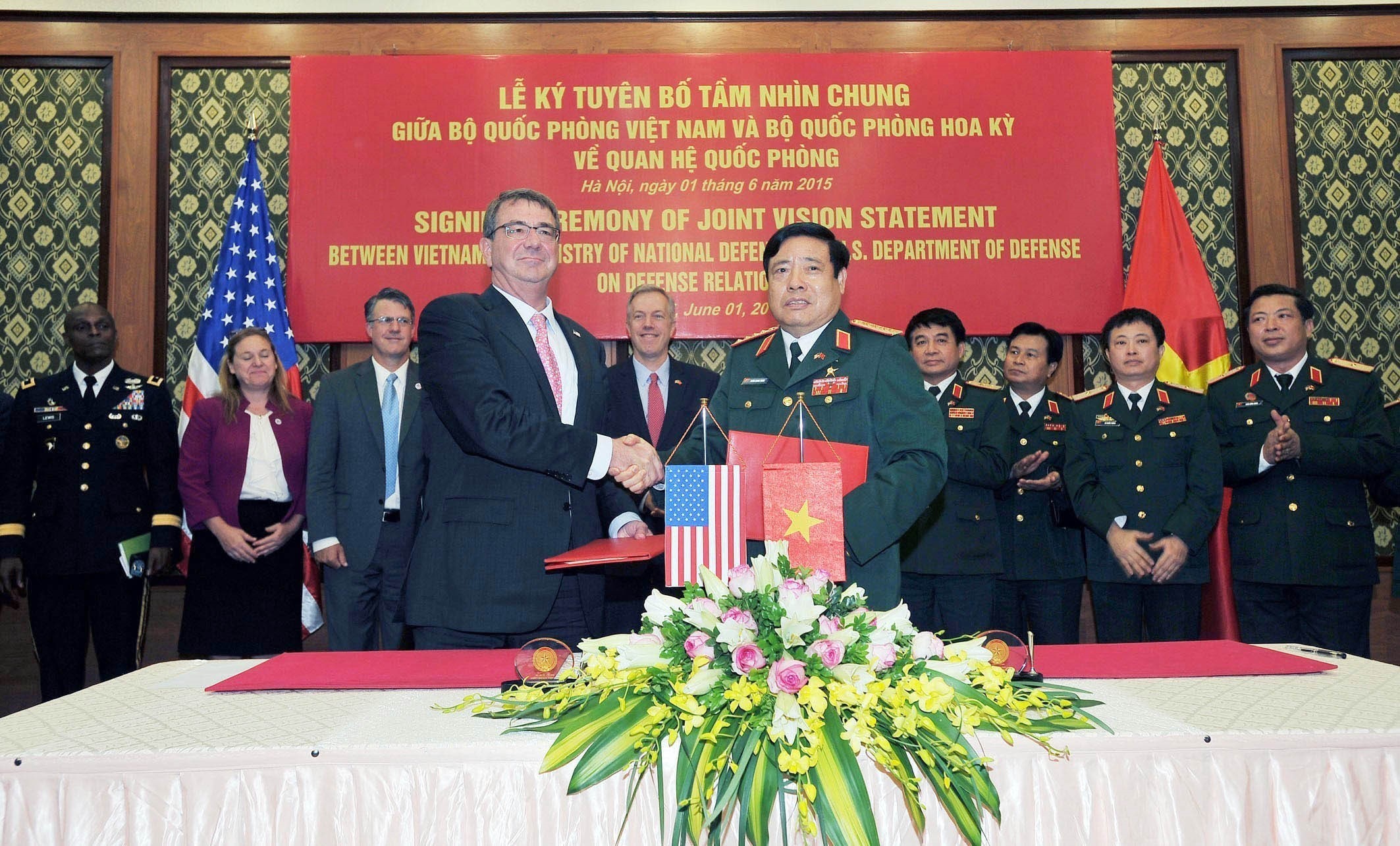
Trong chuyến thăm chính thức Việt Nam, sáng 1/6/2015, tại Hà Nội, Bộ trưởng Quốc phòng Hoa Kỳ Ashton Carter và Bộ trưởng Quốc phòng Phùng Quang Thanh ký Tuyên bố Tầm nhìn chung giữa Bộ Quốc phòng hai nước về quan hệ quốc phòng. (Ảnh: Trọng Đức/TTXVN)

Các lĩnh vực hợp tác song phương đã được mở rộng sang tác đào tạo quân y, hợp tác cứu trợ nhân đạo, hỗ trợ thảm họa, gìn giữ hòa bình, chia sẻ thông tin, nâng cao năng lực phòng chống khủng bố, an ninh mạng, an ninh nguồn nước… Hoa Kỳ đã tích cực hỗ trợ Việt Nam khắc phục hậu quả chiến tranh, nâng cao năng lực lực lượng cảnh sát biển, hải quân Việt Nam, hỗ trợ lực lượng gìn giữ hòa bình quốc tế của Việt Nam.

Việt Nam-Hoa Kỳ cùng các nước tích cực hợp tác duy trì tự do hàng hải và thực thi Công ước Luật Biển của Liên hợp quốc UNCLOS 1982 tại khu vực Biển Đông. Hai bên ủng hộ quan điểm về bảo đảm tự do, an ninh hàng hải, hàng không và tôn trọng luật pháp quốc tế, UNCLOS; giải quyết hòa bình các tranh chấp thông qua các tiến trình ngoại giao và pháp lý, không sử dụng vũ lực hay đe doạ dùng vũ lực; không có những hành động làm leo thang căng thẳng trong khu vực.

Nhiều cơ hội hợp tác trong các lĩnh vực

Năm 2000, Việt Nam-Hoa Kỳ đã ký Hiệp định hợp tác về khoa học-công nghệ vào năm 2000 và thành lập Ủy ban hỗn hợp hợp tác khoa học-công nghệ. Hiệp định hợp tác sử dụng hòa bình năng lượng hạt nhân (Hiệp định 123) chính thức được ký kết ngày 6/5/2014 đã mở ra cơ hội lớn cho hợp tác giữa hai nước trong lĩnh vực hạt nhân dân sự đầy tiềm năng.

Chuyến thăm và làm việc tại Hoa Kỳ lần này của Thủ tướng Chính phủ Phạm Minh Chính được kỳ vọng sẽ tạo động lực thúc đẩy quan hệ Đối tác toàn diện Việt Nam-Hoa Kỳ phát triển, hiệu quả, đi vào chiều sâu, ổn định lâu dài

Hoa Kỳ và Việt Nam bước đầu hợp tác về khoảng không vũ trụ với Tuyên bố ý định chung về trao đổi hợp tác trong lĩnh vực nghiên cứu không gian (tháng 12/2011) của Cơ quan Hàng không Vũ trụ Hoa Kỳ (NASA) và Viện Hàn lâm Khoa học và Công nghệ Việt Nam

Hợp tác về giáo dục-đào tạo, y tế cũng là nhân tố quan trọng trong quan hệ giữa hai nước. Hoa Kỳ đã duy trì và tăng ngân sách cho các hoạt động khắc phục hậu quả chiến tranh ở Việt Nam, trong đó có dự án tẩy độc các điểm nóng nhiễm chất dioxin, hỗ trợ nạn nhân chất độc da cam/dioxin.

Trong thời gian qua, Việt Nam và Hoa Kỳ hợp tác đặc biệt chặt chẽ trong cuộc chiến chống dịch COVID-19 và phục hồi sau đại dịch.

Hoa Kỳ đứng đầu trong số các nước cung cấp vaccine cho Việt Nam thông qua cơ chế COVAX, đã viện trợ gần 39 triệu liều vaccine cho Việt Nam thông qua cơ chế này cùng với nhiều vật tư, thiết bị y tế phòng chống dịch khác. Phía Hoa Kỳ đã chuyển cho Việt Nam 111 tủ lạnh âm sâu để bảo quản vaccine Pfizer; đề xuất viện trợ bộ xét nghiệm nhanh CUE do Hoa Kỳ sản xuất và phối hợp chuyển giao công nghệ vaccine mRNA mới nhất và thuốc điều trị cho đối tác Việt Nam.

Hoa Kỳ cũng đã mở Văn phòng Trung tâm Kiểm soát và Phòng chống Dịch bệnh (CDC) của Hoa Kỳ tại khu vực Đông Nam Á tại Hà Nội, nhân chuyến thăm của Phó Tổng thống Kamala Harris đến Việt Nam (tháng 8/2021).

Ngược lại, khi tình hình chống dịch tại Hoa Kỳ cấp bách, Việt Nam cũng đã hỗ trợ Hoa Kỳ thiết bị bảo hộ cá nhân và khẩu trang vải kháng khuẩn được phía Hoa Kỳ trân trọng và đánh giá cao…

Có thể nói, từ khi bình thường hóa quan hệ, lợi ích chung giữa hai nước đã và đang ngày càng tăng lên, tạo nền tảng và động lực cho sự phát triển quan hệ Việt Nam-Hoa Kỳ.

Tiếp nối những kết quả tốt đẹp đã đạt được, chuyến thăm và làm việc tại Hoa Kỳ lần này của Thủ tướng Chính phủ Phạm Minh Chính và đoàn đại biểu Việt Nam được kỳ vọng sẽ tạo động lực thúc đẩy quan hệ Đối tác toàn diện Việt Nam-Hoa Kỳ phát triển, hiệu quả, đi vào chiều sâu, ổn định lâu dài trên tất cả các lĩnh vực chính trị-ngoại giao, kinh tế-thương mại-đầu tư, khoa học-công nghệ, giáo dục-đào tạo, khắc phục hậu quả chiến tranh./.
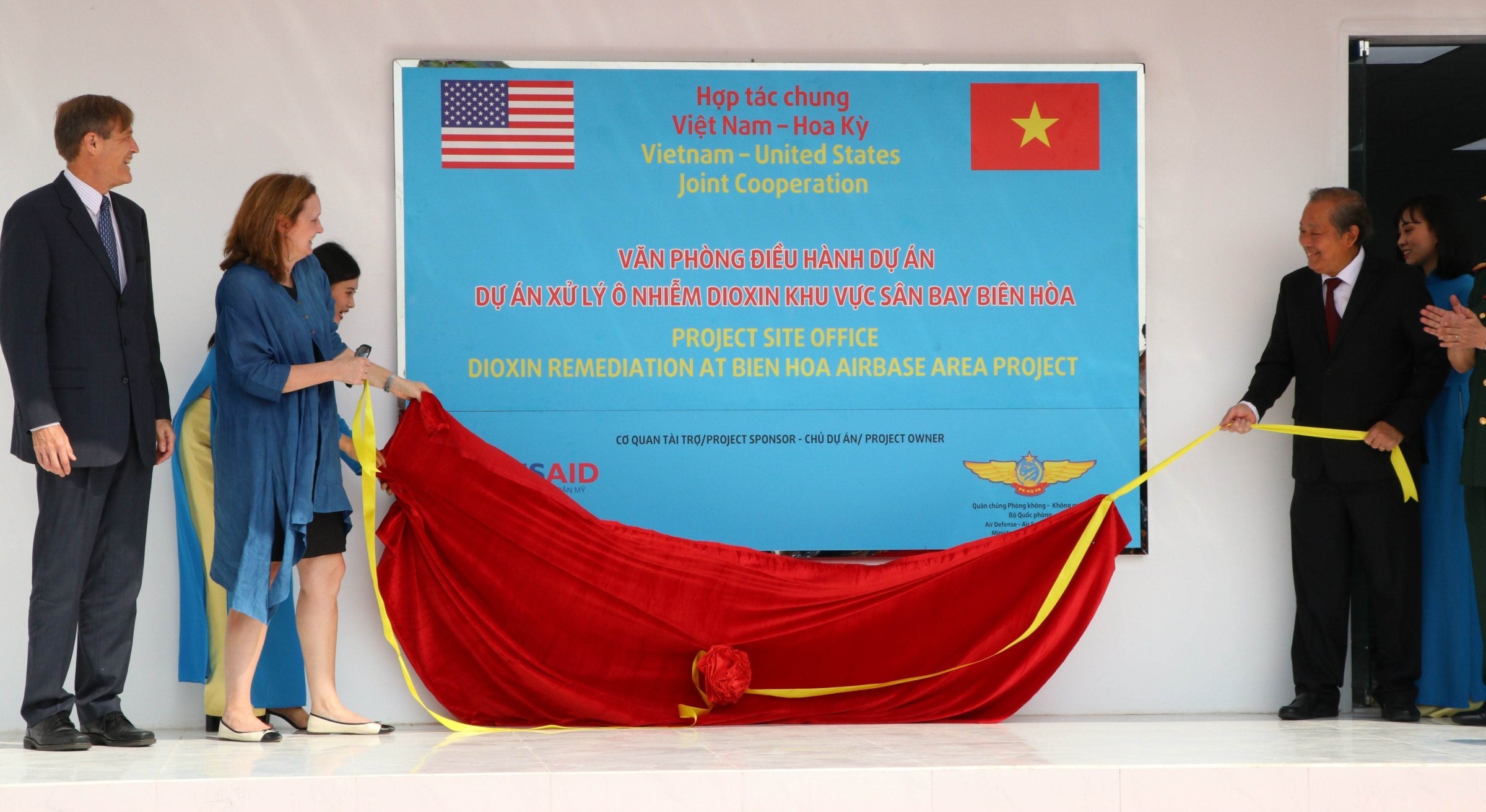
Ngày 5/12/2019, Cơ quan Phát triển Quốc tế Hoa Kỳ (USAID), Quân chủng Phòng không Không quân Việt Nam-Bộ Quốc phòng và Trung tâm Hành động quốc gia khắc phục hậu quả chất độc hóa học và môi trường (NACCET) tổ chức lễ khởi công Dự án xử lý ô nhiễm dioxin tại Sân bay Biên Hòa và ký thỏa thuận triển khai dự án 65 triệu USD nhằm hỗ trợ người khuyết tật. (Ảnh: Sỹ Tuyên/TTXVN)

E-COMMERCE

IMPORTANT PILLAR OF VIETNAM’S DIGITAL ECONOMIC DEVELOPMENT

The Fourth Industrial Revolution is taking place around the world with a boom in digital technology, creating great opportunities for but also challenges to the development of each country, enterprise, and person.

Vietnam’s digital economy has been growing at the fastest pace in ASEAN, about 38 percent annually compared to the region’s average of 33 percent since 2015. The country expects the digital economy will make up 20 percent of its GDP and at least 10 percent in each sector.

Vietnam’s digital economy posts fastest growth in region

E-commerce has proved to be an increasingly useful tool for enterprises to surmount difficulties and grasp chances. (Illustrative photo: VNA)

In a recent interview granted to the Vietnam News Agency, Deputy Minister of Industry and Trade Nguyen Sinh Nhat Tan said local e-commerce has been thriving, playing an important role in economic development as well as in the future of Vietnam’s digital economy. E-commerce development is an inevitable trend in the country, and the COVID-19 pandemic serves as a catalyst for this trend to proceed faster and more strongly.

Despite the pandemic’s adverse impacts in 2020, e-commerce in Vietnam still made great strides to become one of the fastest growing markets in Southeast Asia.

According to the Vietnam E-commerce White Book, e-commerce expanded by 18 percent in 2020 to reach 11.8 billion USD, making the country the only in Southeast Asia to post a double-digit growth rate in this regard. Estimates by some major businesses in the world like Google, Temasek, and Bain & Company indicate that the digital economy of Vietnam is likely to top 52 billion USD and rank third in ASEAN by 2025.

Amid the resurgence of COVID-19 in 2021, e-commerce has proved to be an increasingly useful tool for enterprises to surmount difficulties and grasp chances generated by new demand in the market. Local consumers are strongly shifting from the traditional in-person shopping to online method via electronic platforms.

A survey by the Ministry of Industry and Trade showed that Vietnam had 49.3 million online shoppers in 2020, compared to 32.7 million in 2016.

Hanoi and Ho Chi Minh City are among the largest cities in terms of digital economic development in the region. In HCM City alone, there are currently 567 e-commerce platforms, over 20,680 websites, and 134 apps. Although the lingering COVID-19 pandemic has hindered the flow of goods, many e-commerce platforms and websites still posted fast growth.

Thanks to the digital economy, business activities have become vibrant, from advertising on social networks (Facebook, Instagram), entertainment (Netflix, Pinterest), transport (Uber, Grab, GoViet) to wholesale and retail (Lazada, Shopee).

Vietnam has emerged as one of the largest regional recipients of investment into the companies operating on IT platforms and the internet such as MoMo, Sendo, and Topica, helping turn it into an attractive destination for domestic and foreign investors.

Transboundary e-commerce – useful distribution channel for enterprises to expand market

E-commerce helps people purchase items from international markets via the internet and become “global consumers”. It also assists individuals and businesses to introduce and deliver their products to international buyers.

The engagement in the online export – import system and stages of transboundary e-commerce will generate opportunities for Vietnamese firms to perfect their products, improve capacity, and make Vietnamese brands popular among consumers around the world.

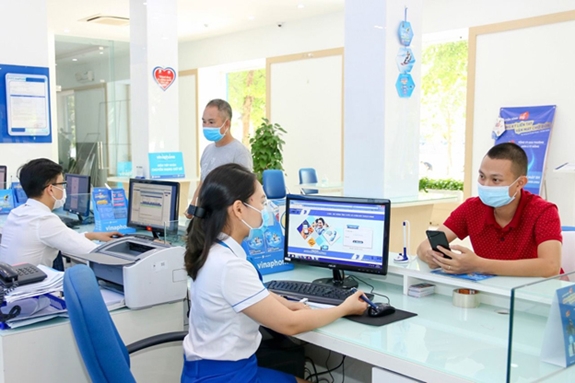
A customer conducts transactions via a mobile banking app. (Photo: VNA)

To help boost the sale of Vietnamese goods via transboundary e-commerce, the Vietnam E-commerce and Digital Economy Agency (iDEA) has launched the Vietnam National Pavilion on JD.com, an international e-commerce platform. Its partners like Vinanutrifood, Viettel Post, VPBank, and Visa also unveiled practical policies related to marketing, transport, and lending interest rates to support Vietnamese manufacturers to carry out this programme.

The Ministry of Industry and Trade has been developing and applying an array of measures such as a certified e-contract authority, guaranteed payment infrastructure for e-commerce, and a platform for managing the e-commerce product flow, which will serve as important bases for the ministry to assist e-commerce platforms and businesses using e-commerce, thus facilitating the healthy, transparent, and sustainable development of the market.

Director of the Vietnam E-commerce and Digital Economy Agency (iDEA) Dang Hoang Hai (Photo: VNA)

Talking about transboundary e-commerce, iDEA Director Dang Hoang Hai said it is relatively new to enterprises in Vietnam but also the start of a long journey with much needing to be done by both authorities and companies.

He expressed his belief that thanks to joint efforts by the ministry and others, central agencies, localities, and the business community, Vietnamese pavilions on foreign e-commerce platforms will be opened soon and prove effective.

Highlighting the benefits from transboundary e-commerce, Nguyen Thi Diem Hang, Chairwoman of the Board of Director of the Vietnam Organic Nutrition Food JSC (Vinanutrifood), said joining the national pavilion helps popularise the image and brand of Vietnam in the global market. It also supports Vietnamese firms to seek exporting and importing partners and build up foreign consumers’ trust in Vietnamese goods.

Developing healthy e-commerce market in Vietnam

Grasping trends and good practices of digital transformation in trade will help promote innovation in Vietnamese enterprises. On November 22, 2021, the Prime Minister issued a decision approving a plan to step up the IT application and digital transformation in trade promotion during 2021 – 2030.

Employees of VietnamPlost handle boxes of fresh lychees farmed in Bac Giang province and sold on its e-commerce platform to prepare for delivery to consumers in June 2021. (Photo: VNA)

However, the ministry’s Competition and Consumer Authority pointed out that e-commerce growth has also been accompanied by the surge in wrongdoings related to consumers’ interests. Data show that there are about 500 – 2,000 complaints from consumers every year, mostly about leaks of buyers’ information and scams by sellers.

To create a legal framework for protecting consumers in the e-commerce market, the Government issued a decree that amended and supplemented another on e-commerce released in 2013.

According to the new decree, sellers must publicise information about products as well as business licences and related certificates when doing business on e-commerce platforms. Besides, business activities on social networks like Facebook, Zalo, and Instagram were also placed under management.

The ASEAN Agreement on Electronic Commerce, signed in Hanoi on January 22, 2019 and taking effect on December 2 last year, set up common principles and rules for facilitating e-commerce development in the region and enhancing the rule enforcement capacity.

The deal implementation is expected to help revive the regional economy in the post-pandemic period.

The launch of the e-commerce week and the Vietnam Online Shopping Day (Online Friday) on November 26, 2021 (Photo: VNA)

Deputy Minister Tan said in the “new normal” context, e-commerce has increasingly shown its indispensable role in society when enterprises and organisations must swiftly apply digital transformation solutions to their business and management activities like switching to multi-channel retailing and using smart order management and logistics tools.

With huge market potential and the Party and State’s favourable policies, e-commerce is expected to be a contributor to the economic recovery in Vietnam when the country is moving to safely adapt to the COVID-19 pandemic.

E-commerce has been present in almost all production and business sectors, helping boost economic development. However, it is still facing a number of challenges related to consumers’ trust in items sold online, delivery and payment methods, and information security. Given this, the Government and relevant agencies should take appropriate actions to protect consumers and fuel e-commerce in the time ahead./.

Related story:

Digital transformation goes mainstream in Vietnam
Cashless society gets closer as Vietnam digital banking gathers pace

Nguyen Minh Hang

Editor

Nguyen Thi Ngoc Thuy

Editor

Вьетнам готов к SEA Games 31

22-е Игры Юго-Восточной Азии (SEA Games 22) открылись 5 декабря 2003 года на Национальном стадионе Мидинь. Тогда Вьетнам впервые стал принимающей страной SEA Games, и это событие оказало сильное влияние на спортивный сектор Вьетнама, а также на процессе экономического развития и интеграции страны с региональными друзьями.

19 лет спустя Вьетнам снова стал принимающей страной SEA Games 31. Чтобы наилучшим образом подготовиться к этому мероприятию, оргкомитет SEA Games, состоящий из 9 подкомитетов и 1 исполнительного отдела, быстро реализовали множество важных мероприятий, готовясь к дням жестких состязаний спортивных делегаций региона.

Премьер-министр Фам Минь Тьинь подтвердил, что Вьетнам успешно организует SEA Games 31 в духе «солидарности, единства, впечатлений, безопасности, эффективности и экономии», а также высочайшей ответственности в соответствии с лозунгом SEA Games 31 «Ради более сильной Юго-Восточной Азии».

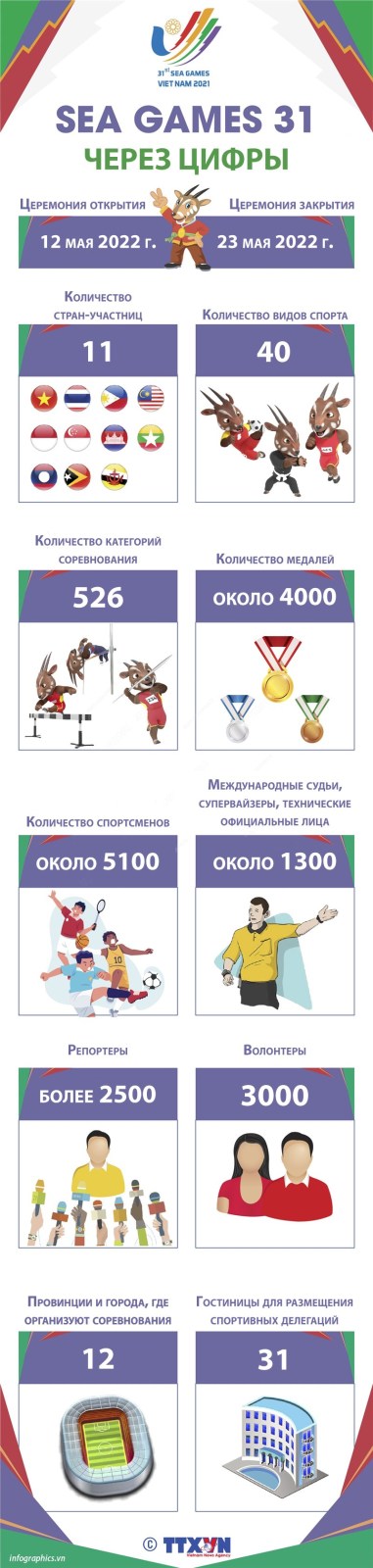
SEA Games 31 проходят с 6 мая, начиная с футбола, а затем официально начнутся соревнованиями по почти 50 видам спорта после церемонии открытия 12 мая на стадионе. Крупнейшее спортивное мероприятие региона проходит в Ханое и 11 соседних провинциях.

Заместитель директора Главного управления физкультуры и спорта г-жа Ле Тхи Хоанг Йен сказала, что Вьетнам приложил большие усилия для подготовки к крупнейшему спортивному событию региона, выразив надежду, что международным друзьям будет максимально комфортно при участии в соревнованиях во Вьетнаме.

Стадион Mидинь был отремонтирован и модернизирован в конце 2021 года в рамках подготовки к SEA Games 31. Стадион Mидинь был отремонтирован и модернизирован в конце 2021 года в рамках подготовки к SEA Games 31. На данный момент самый большой стадион во Вьетнаме завершен и готов к важной задаче: открытию SEA Games 31, финалу мужского футбола и соревнованиям по легкой атлетике.

Между тем, стрельбище в Национальном центре спортивной подготовки было отремонтировано и модернизировано в соответствии с азиатскими стандартами качества. Все оборудование импортировалось из-за рубежа, что делает этот объект одним из лучших стрельбищ в Юго-Восточной Азии, имеющим право на организацию турниров олимпийского стандарта.

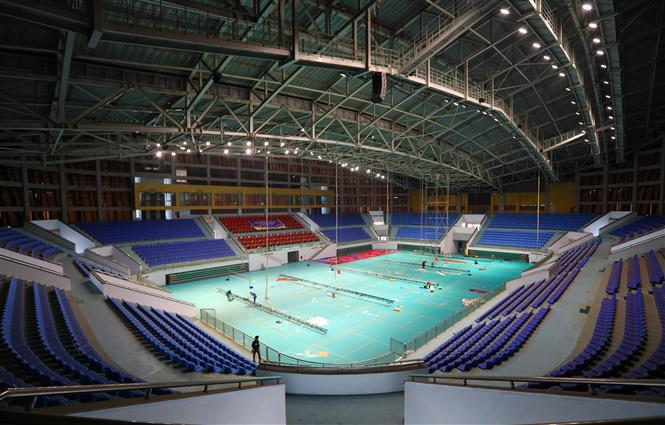
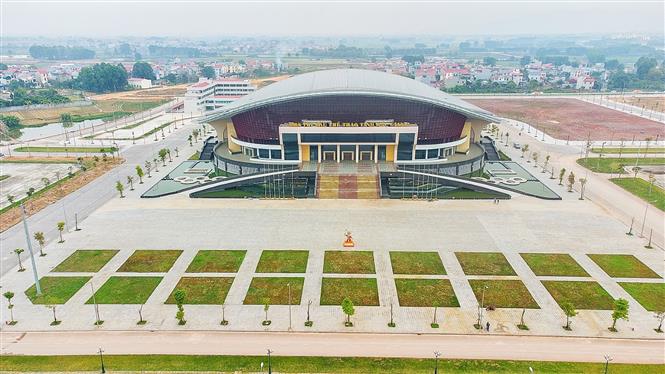
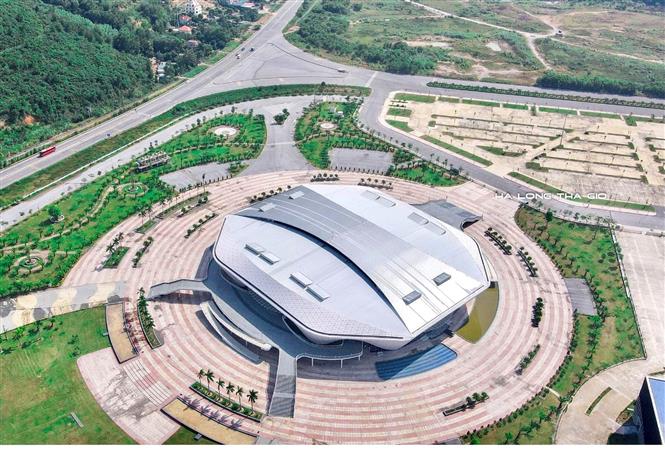
Два спортзала в Бакжанге и Куангнине имеют почти 5.000 мест, обещая полностью удовлетворить друзей региона новейшей системой оборудования для соревнований по бадминтону и волейболу. Оба этих объекта отвечают стандартам высочайшего качества во Вьетнаме. Они были построены 3 года назад и полностью оснащены современным оборудованием.

Под девизом «Ради более сильной Юго-Восточной Азии», SEA Games 31 во Вьетнаме нацелены не только на успех в роли спортивного мероприятия Юго-Восточной Азии, но и фестиваля, демонстрирующего солидарность и дружбу, места культурного обмена между странами региона.

На церемонии проводов вьетнамской спортивной делегации на SEA Games 31 постоянный заместитель премьер-министра Фам Бинь Минь подчеркнул, что «проведение SEA Games Вьетнамом демонстрирует роль и ответственность страны в спортивном движении Юго-Восточной Азии, а также показывает, что Вьетнам является одним из проактивных, активных и ответственных членов, вносящих большой вклад в развитие АСЕАН».

SEA Games 31 во Вьетнаме – спортивная площадка региона для соревнований в духе благородства, храбрости, творчества и честности. Впервые Игры Юго-Восточной Азии будут включать в себя соревновательные содержания всех видов спорта по Олимпийским стандартам, тем самым закладывая основы для честного и привлекательного турнира.

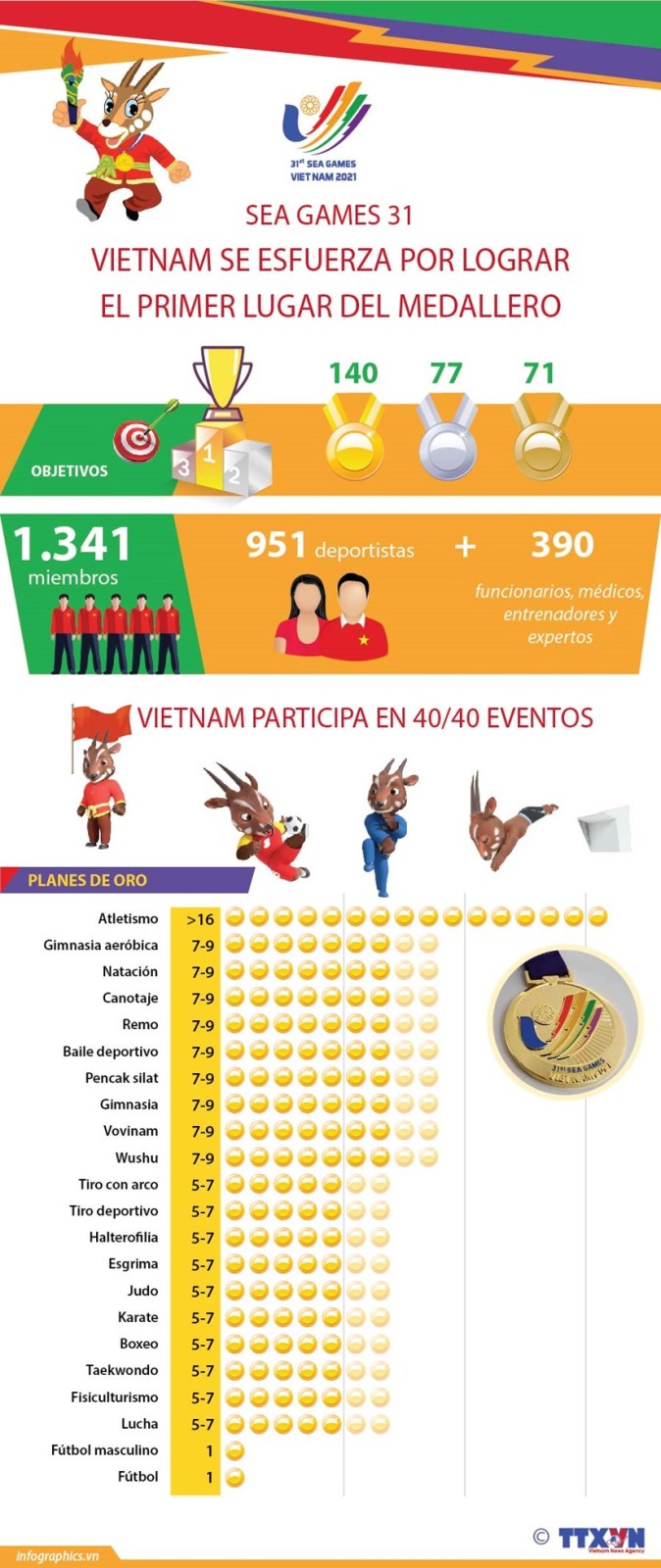
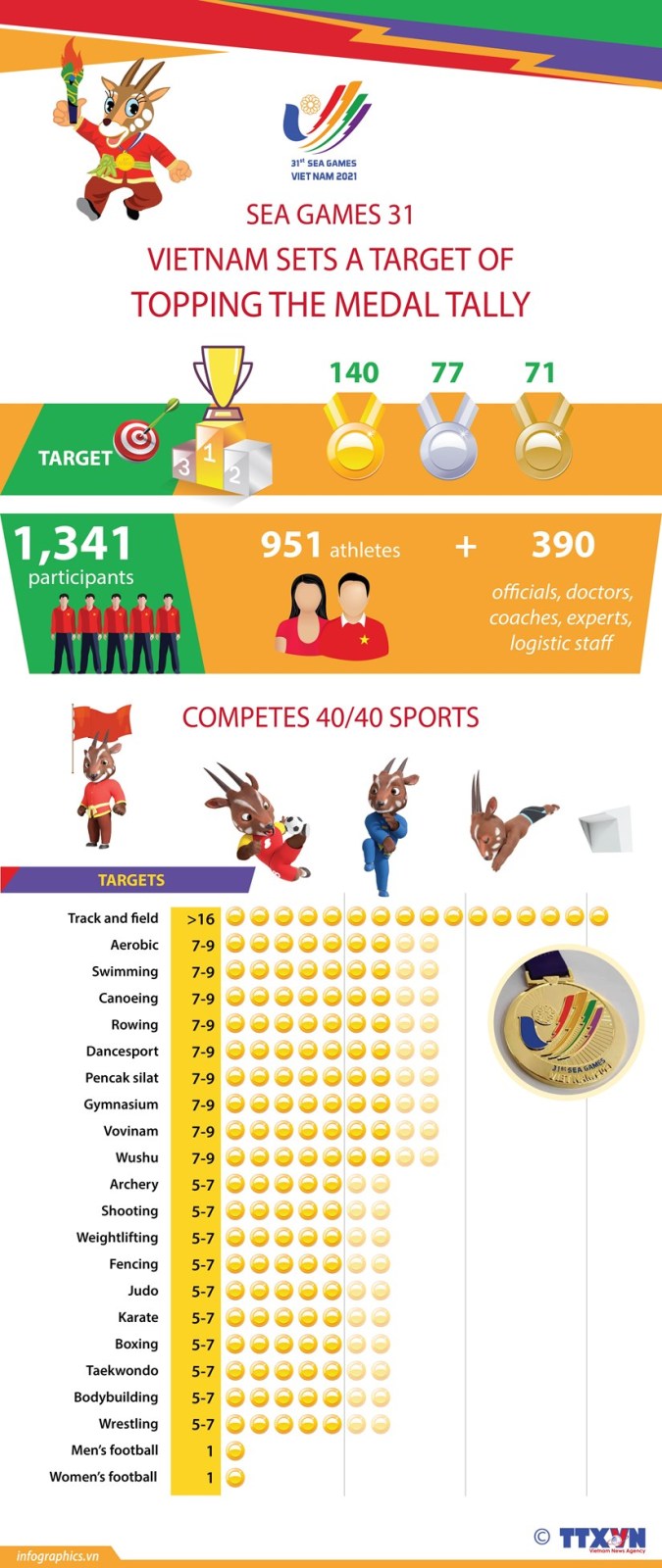
Вьетнамская спортивная делегация, присутствовавшая на SEA Games 31, насчитывает в общей сложности 1.341 члена; в том числе 951 спортсмена, 250 тренеров, 30 специалистов, 46 руководителей команд.

Делегацию возглавляет заместитель директора Главного управления физкультуры и спорта г-н Чан Дык Фан. Вьетнамские спортсмены на SEA Games 31 будут соревноваться по всем 40 видам спорта, 508 из 526 содержаниям и, как ожидается, будут бороться за 140 или более золотых медалей, чтобы возглавить общий медальный зачет. В частности, вьетнамцы полны решимости успешно защитить высокие позиции двух мужских и женских сборных по футболу.

Представитель Главного управления физкультуры и спорта заявил, что агентство сотрудничало с Национальной администрацией туризма, чтобы сделать крупнейшее спортивное мероприятие в Юго-Восточной Азии возможностью для продвижения туризма, а также знакомства международных друзей с образом страны и вьетнамского народа. SEA Games 31 — это приглашение спортсменам, болельщикам, туристам региона и всего мира приехать во Вьетнам – красивую, безопасную, дружелюбную и привлекательную страну./.
Зыонг Чи
Корреспондент ВИА

https://ru.vietnamplus.vn/otkryt-presstsentr-sea-games-31-34843.vnp

https://ru.vietnamplus.vn/vypusk-kollektsii-marok-sea-games-31-34811.vnp

https://ru.vietnamplus.vn/via-zapuskaet-spetsialnyi-informatsionnyi-sait-sea-games-31-34784.vnp

https://ru.vietnamplus.vn/pribyvshie-vo-vetnam-na-sea-games-31-ne-obyazany-delat-deklaratsii-o-sostoyanii-zdorovya-34754.vnp

https://ru.vietnamplus.vn/vypuschen-turisticheskii-videoklip-posvyaschennyi-sea-games-31-34716.vnp

Los XXII Juegos Deportivos del Sudeste Asiático (SEA Games 22) se inauguraron el 5 de diciembre de 2003 en el Estadio Nacional My Dinh en Hanoi. Aquella fue la primera vez que Vietnam albergó los juegos regionales y el evento marcó una impronta en el deporte nacional, así como en el proceso de desarrollo económico e integración del país.
Diecinueve años después, Vietnam es nuevamente sede de los juegos regionales, esta vez la XXXI edición de SEA Games. Con el fin de prepararse mejor para la mayor cita deportiva regional, el Comité Organizador del evento, que consta de nueve subcomités y una junta ejecutiva, llevó a cabo con celeridad los trabajos importantes a fin de habilitar las instalaciones para las competencias.

Vietnam organizará con éxito los SEA Games 31, con el espíritu de “solidaridad, unidad, impresión, seguridad, eficiencia y ahorro” y la más alta responsabilidad, en línea con el lema del encuentro regional: “Por un Sudeste Asiático más fuerte”, afirmó el primer ministro Pham Minh Chinh.

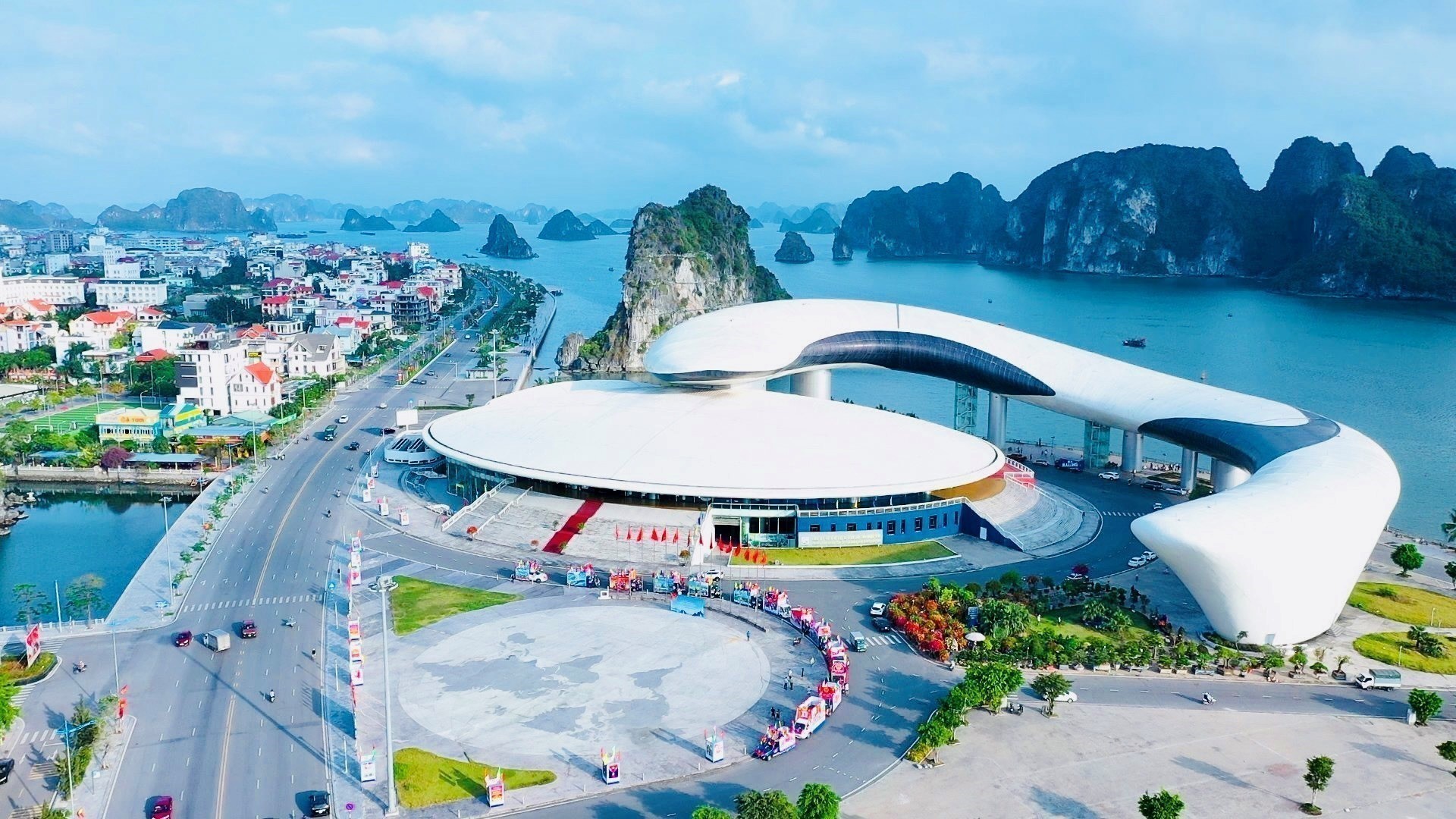
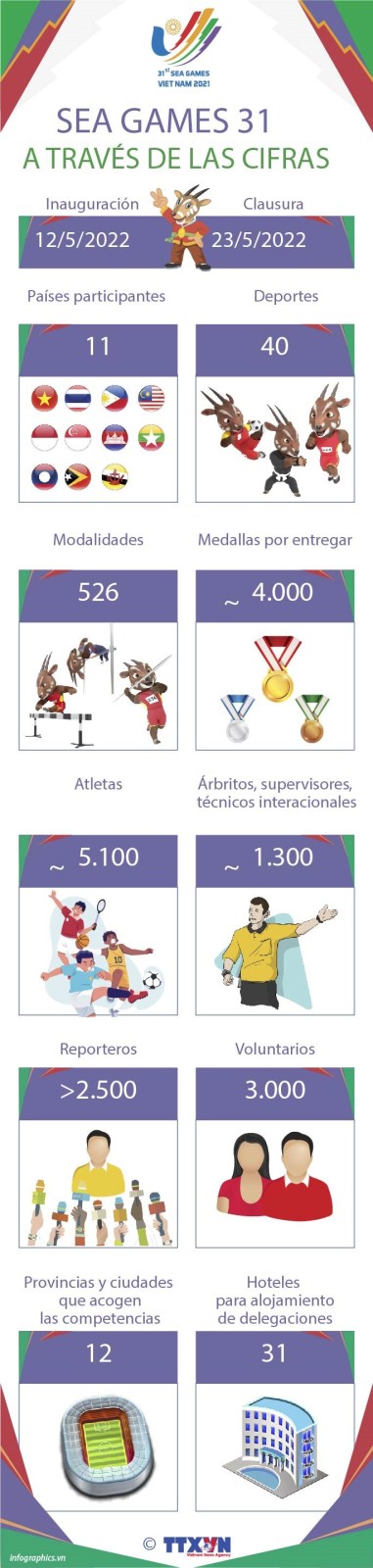
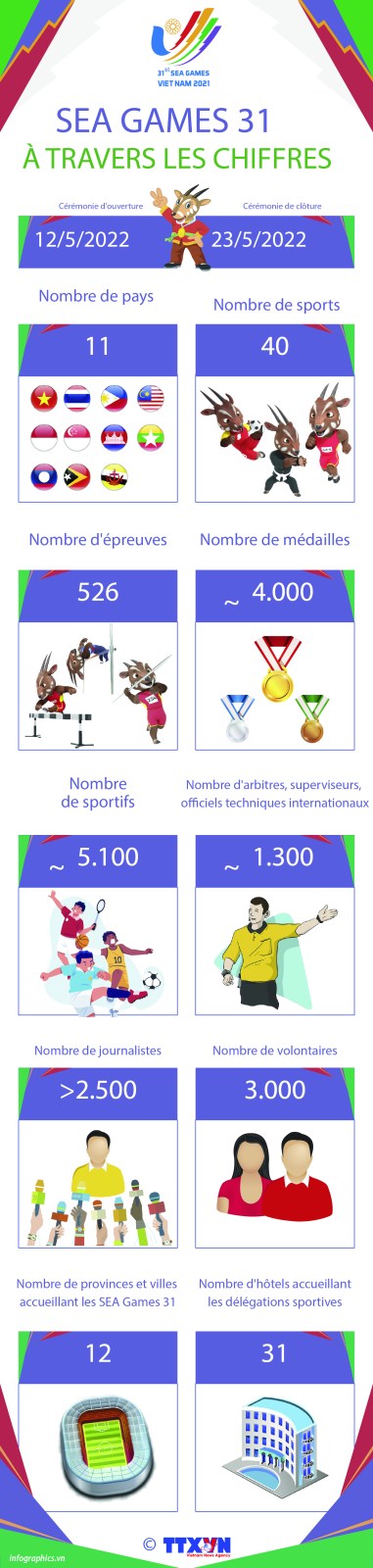
El evento inició el 6 de mayo con los partidos de fútbol y comenzará oficialmente las competencias en casi 50 deportes después de la ceremonia de apertura que se celebrará el 12 de mayo en el Estadio Nacional My Dinh. La mayor cita deportiva regional tiene lugar en Hanoi y otras 11 localidades vecinas.

La subdirectora general del Departamento General de Educación Física y Deporte, Le Thi Hoang Yen, aseguró que Vietnam ha hecho grandes esfuerzos para el evento deportivo, y expresó su esperanza de que los atletas y amigos internacionales se sientan confortables al participar en los juegos.

El Estadio Nacional My Dinh ha sido modernizado desde finales de 2021. Como “sede central” al acoger la ceremonia de apertura, las competencias de atletismo y la final de fútbol masculino, el estadio más grande de Vietnam se puso a tono con la magnitud del acontecimiento.

Mientras, el campo de tiro en el Centro Nacional de Entrenamiento Deportivo fue renovado y actualizado según los estándares de calidad asiáticos. Con los equipos importados del exterior, se ha convertido en uno de los mejores campos de tiro de la región y ahora califica para realizar torneos olímpicos.

Los dos gimnasios de Bac Giang y Quang Ninh, en las respectivas provincias homónimas, tienen una capacidad de casi cinco mil asientos cada uno y prometen acomodar a los espectadores con el sistema moderno de equipamiento para las competencias de bádminton y voleibol. Ambos fueron construidos hace tres años y están completamente dotados de equipos modernos.

Fiel al lema “Por un Sudeste Asiático más fuerte”, los SEA Games 31 en Vietnam no solo apuntan al éxito como un mero evento deportivo, sino también un festival que muestra la solidaridad y la amistad, convirtiéndose en una oportunidad para el intercambio cultural entre los países de la región.

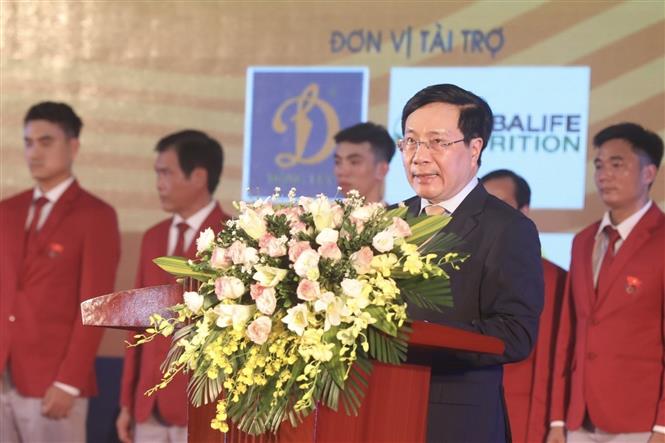
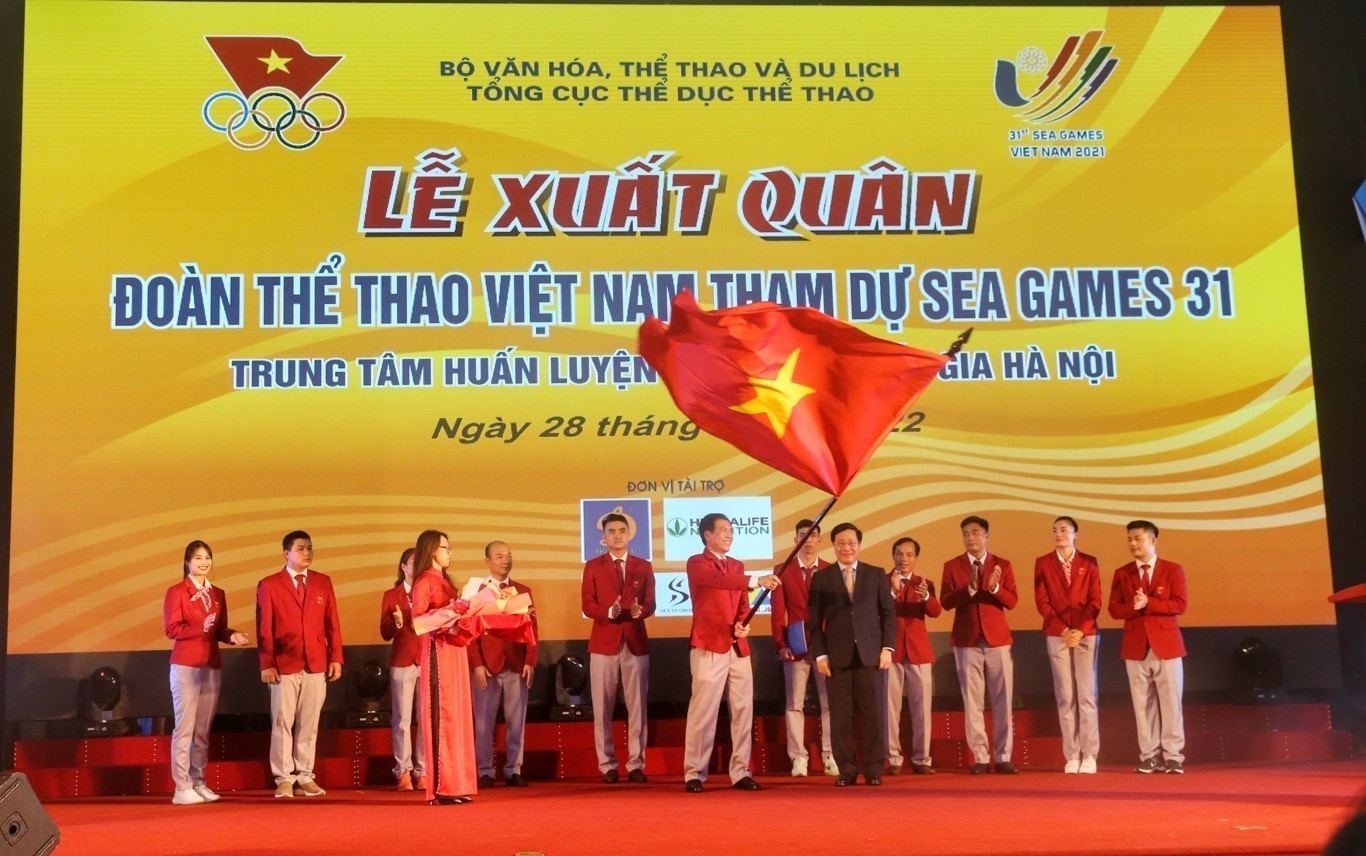
En el acto de abanderamiento de la delegación deportiva vietnamita, el viceprimer ministro Pham Binh Minh subrayó que la organización de SEA Games expone el papel y la responsabilidad de Vietnam en el movimiento deportivo en el Sudeste Asiático y, al mismo tiempo, demuestra que este país es uno de los miembros activos y responsables que contribuye al desarrollo de la ASEAN.

Por primera vez, los Juegos Deportivos del Sudeste Asiático incluirán todos los deportes olímpicos, creando así una competencia justa, de fair play y momentos emocionantes.

La delegación deportiva vietnamita que participa en SEA Games 31 está integrada por un total de mil 341 miembros, incluidos 951 atletas, 250 entrenadores, 30 expertos y 46 jefes de equipos.

El subdirector general a cargo del Departamento General de Educación Física y Deportes, Tran Duc Phan, encabeza la delegación nacional al evento.

Los deportistas vietnamitas competirán en 40/40 deportes en SEA Games 31 y aspiran a ganar 140 medallas de oro o más para encabezar el medallero. En particular, Vietnam está decidido a defender con éxito los títulos regionales en el fútbol masculino y femenino.

Eb

En SEA Games 31, Vietnam se fijó la meta de ocupar el primer lugar del medallero con unas 140 medallas de oro.

Un representante del Departamento General de Educación Física y Deportes dijo que ha cooperado con la Administración Nacional de Turismo para convertir al evento deportivo más grande del sudeste asiático en una oportunidad para promover el turismo y presentar el país y la gente de Vietnam. Esta es una invitación a los atletas, fanáticos, turistas de la región y del mundo para que vengan a Vietnam, un país hermoso, seguro, amigable y atractivo./.

Les 22es Jeux sportifs d’Asie du Sud-Est (SEA Games 22) ont commencé le 5 décembre 2003 à Hanoï. C’était la première fois que le Vietnam  accueillait le plus important événement sportif de la région. Cet événement a laissé auprès des amis régionaux une bonne impression sur le Vietnam et son processus d’intégration dans la région.

Dix-neuf ans après les SEA Games 22, le Vietnam accueille la 31eédition de cet événement. « Le Vietnam organisera les SEA Games 31 avec son plus grand sens des responsabilités, dans l’esprit de +solidarité, unité, impression, sécurité, efficacité, économies+, conformément au slogan +Pour une Asie du Sud-Est plus forte+ », a affirmé le Premier ministre Pham Minh Chinh.

Les matches de football ont déjà débuté le 6 mai. Après la cérémonie d’ouverture le 12 mai au stade national de My Dinh à Hanoï, ce seront les épreuves de plus de 40 disciplines à Hanoï et dans 11 localités voisines.

Selon la directrice générale adjointe de l’Administration des sports du Vietnam, Le Thi Hoang Yen, le Vietnam a fait de grands efforts pour organiser ce plus grand événement sportif de la région.

A côté de la rénovation du stade de My Dinh depuis fin 2021, bien d’autres sites de compétitions ont été modernisés. Par exemple, le stand de tir du Centre national d’entraînement sportif a été mis à niveau pour répondre aux normes de qualité asiatiques. Avec des équipements entièrement importés, il est devenu l’un des meilleurs stands de tir d’Asie du Sud-Est.

De même, les deux gymnases de Bac Giang et  Quang Ninh, chacun d’une capacité de près de 5.000 places, sont munis d’équipements modernes pour les épreuves de badminton et de volley-ball.

Les SEA Games ne sont pas seulement une fête de la solidarité et de l’amitié mais aussi un lieu d’échange culturel entre les pays de la région.

Présent à la cérémonie de participation de la délégation sportive vietnamienne aux SEA Games 31, le vice-Premier ministre permanent Pham Binh Minh a déclaré que l’accueil des Jeux par le Vietnam démontre le rôle et le sens des responsabilités du pays pour le sport régional, ainsi que ses contributions au développement de l’Association des Nations de l’Asie du Sud-Est (ASEAN).

La délégation sportive vietnamienne aux SEA Games 31 est conduite par Tran Duc Phan, directeur général adjoint de l’Administration des sports du Vietnam. Elle compte au total 1.341 membres, dont 951 sportifs et 250 entraîneurs.

Participant à toutes les 40 disciplines des SEA Games 31, la délégation vietnamienne ambitionne de finir première du classement par nations, avec environ 140 médailles d’or.

A cette occasion, l’Administration des sports a coopéré avec l’Administration nationale du tourisme pour faire de ce plus grand événement sportif d’Asie du Sud-Est une occasion de promouvoir le tourisme au Vietnam en tant que destination sûre, hospitalière et attrayante./.

The 31st Southeast Asian Games (SEA Games 31) will be the second time Vietnam has hosted the region’s biggest sporting event, and all preparations are now complete for competitions to start.

SEA Games 22 opened at My Dinh National Stadium in Hanoi on December 5, 2003, and was the first of its kind to be held in Vietnam and also a milestone in the country’s integration into the region.

Nineteen years later, the Games have returned to Vietnam. To prepare for SEA Games 31, the Organising Committee, with nine sub-committees and one operations board, took the initiative early.

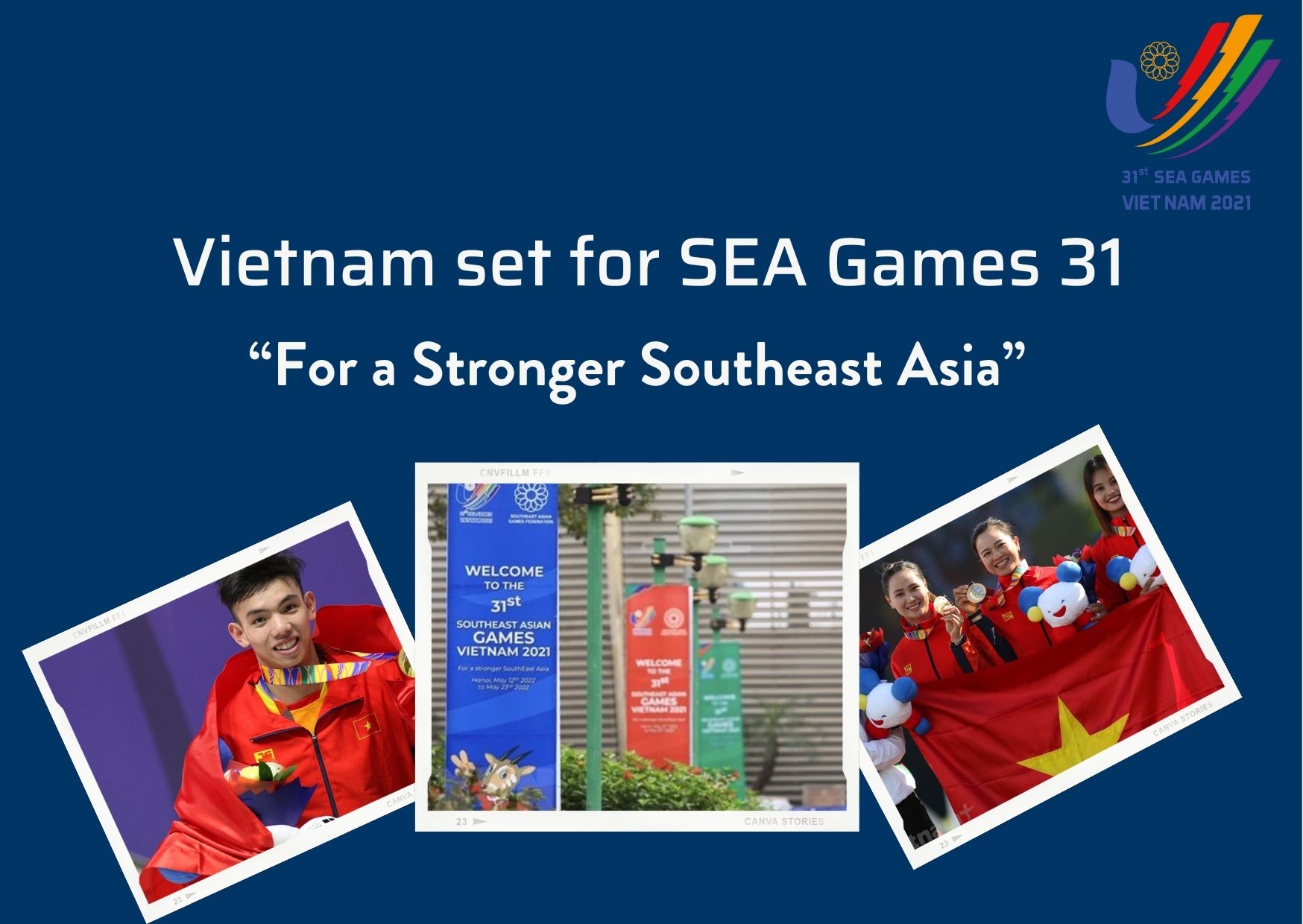
Prime Minister Pham Minh Chinh stated that Vietnam will successfully host SEA Games 31 in the spirit of “solidarity, unity, safety, effectiveness, and thrift” with a high sense of responsibility that conforms with the Games’ theme “For a Stronger Southeast Asia”.

Featuring 40 sports and 523 events to be held in Hanoi and 11 nearby localities, the Games started with the first matches of the men’s football on May 6. The official opening ceremony will be held at My Dinh National Stadium on May 12.

Le Thi Hoang Yen, Deputy General Director of the Vietnam Sports Administration, said the country has been exerting efforts to prepare for the region’s biggest sporting event, expressing her hope that international friends will feel comfortable competing in Vietnam.

My Dinh Stadium will be the venue for the opening and closing ceremonies, athletics, and the men’s football final, so upgrades were started in late 2021. The country’s largest stadium is now ready.

The shooting range at the National Sports Training Centre has also been equipped with modern facilities to meet Asian standards, becoming one of the best of its kind in Southeast Asia and qualified for hosting Olympic-scale competitions, the official noted.

Meanwhile, the nearby 5,000-seater gymnasiums in Bac Giang and Quang Ninh provinces, which also boast modern facilities that make them the best in Vietnam, promise spectators the best views of badminton and volleyball, according to Yen.

Themed “For a Stronger Southeast Asia”, SEA Games 31 looks towards not only the success of a regional sporting event but also an occasion for showing solidarity and friendship, and a platform for cultural exchanges among countries in the region.

At the send-off ceremony for the Vietnamese delegation on April 28, Permanent Deputy Prime Minister Pham Binh Minh said the Games reflect Vietnam’s role and sense of responsibility towards sports in Southeast Asia, and also illustrates the country as a proactive and responsible member of ASEAN that makes wholehearted contributions to the bloc’s development.

SEA Games 31 will feature all the Olympic sports for the first time in the spirit of nobility, undauntedness, creativity, and honesty.

The Vietnamese delegation to SEA Games 31 consists of 1,341 members, including 951 athletes, 250 coaches, and 30 experts, and is led by Deputy General Director of the Sports Administration Tran Duc Phan.

They will compete in 508 events across the 40 sports and are aiming for at least 140 gold medals to top the medal standings. In particular, they are determined to defend the men’s and women’s football crowns.

Yen said the Vietnam Sports Administration is coordinating with the National Administration of Tourism to promote tourism during SEA Games 31 and introduce the country to international friends.

The Games is an invitation to athletes, spectators and tourists from the region and the world at large to come to Vietnam – a beautiful, safe, hospitable and attractive country, she added./.

Vietnam se esfuerza por garantizar bienestar social y promover el crecimiento económico

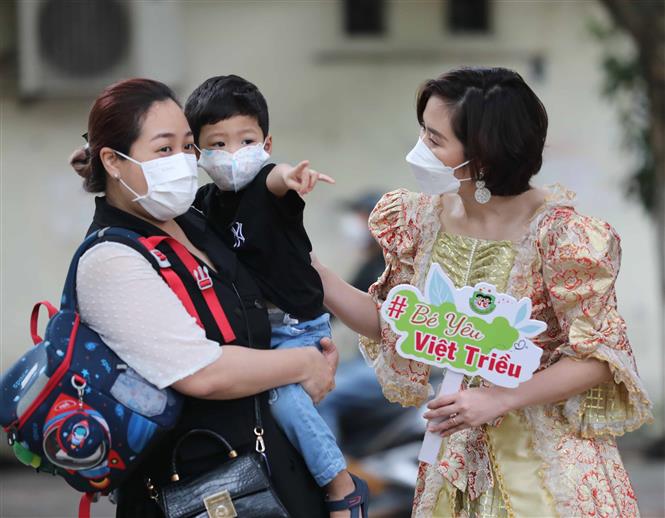
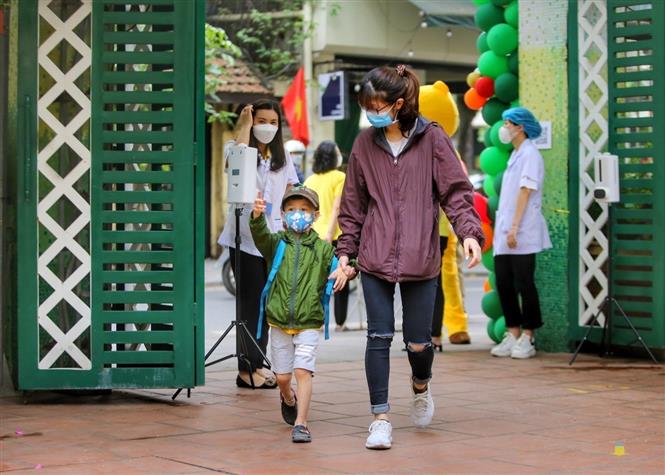
Después de un año del brote de la cuarta ola de la COVID-19, la economía de Vietnam se recuperó y desarrolló gradualmente. El ritmo de vida normal realmente regresó cuando la última localidad del país, Hanoi, decidió permitir el retorno de los niños preescolares a la escuela el pasado 13 de abril.

Vietnam enfrentó la cuarta ola de la pandemia de la COVID-19 desde el 27 de abril de 2021, cuando se acabó de consolidar la nueva dirigencia del Gobierno.

A fines de mayo de 2021, la pandemia se propagó a más de 30 provincias y ciudades. Después de solo un mes y medio, el número de casos infectados aumentó a más de 100 mil, y casi dos meses después, la cifra superó los 700 mil. Muchas localidades implementaron el distanciamiento social, aplicando medidas sin precedentes a gran escala.

Ante la rápida, complicada e impredecible evolución de la situación epidémica, y el gran aumento del número de fallecidos, el Primer Ministro acordó aplicar a partir del 19 de julio medidas de distanciamiento social en 19 provincias y ciudades del sur – región económica clave del país -, después de muchas reuniones entre el Gobierno, su Comité Permanente y el Comité Directivo de Prevención y Lucha contra la COVID-19, sobre el espíritu de anteponer la salud y la vida de los pobladores.

Se trata de una decisión muy difícil, porque conlleva una serie de consecuencias en la economía y el bienestar social, pero fue una medida urgente teniendo en cuenta la poca cantidad de vacunas a las que tenía acceso Vietnam, y la aplicación de las políticas de distanciamiento social y  “cero COVID-19″ para reducir la propagación de la epidemia y proteger la salud y la vida de los ciudadanos.

La propagación de la pandemia provocó el estancamiento de la economía y millones de trabajadores tuvieron que regresar a sus localidades oriundas en circunstancias extremadamente difíciles. Los resultados acumulados de provincias y ciudades muestran que, al 15 de diciembre de 2021, alrededor de 2,2 millones de personas retornaron a sus tierras natales debido al impacto del cuarto brote de la COVID-19.

En concreto, 447 mil 100 trabajadores que retornaron a sus localidades desde Hanoi; 524 mil, desde Ciudad Ho Chi Minh; 594 mil, desde las provincias sureñas; y 676 mil, desde otras provincias y ciudades.

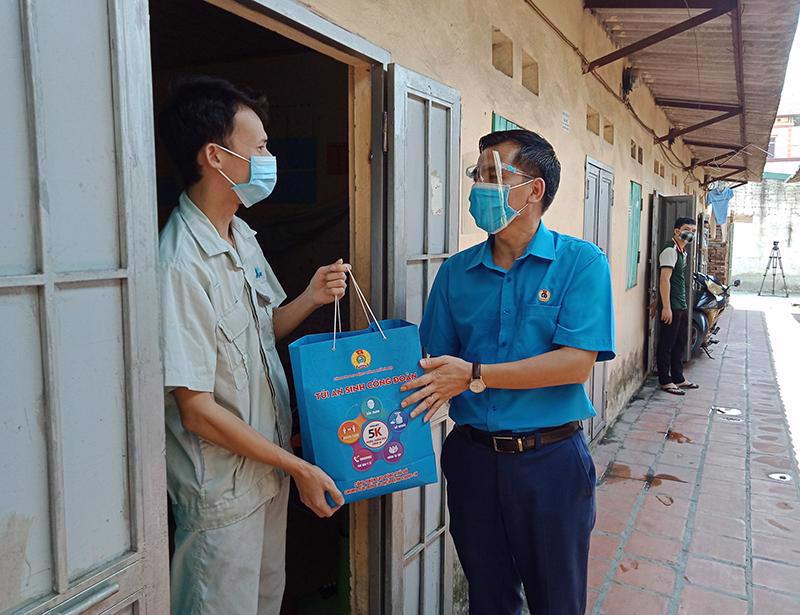
En ese contexto, una serie de políticas “inéditas” se emitieron e implementaron de manera urgente, con la misión principal de garantizar el bienestar social y la vida de los pobladores, especialmente aquellos residentes en zonas de distanciamiento social.

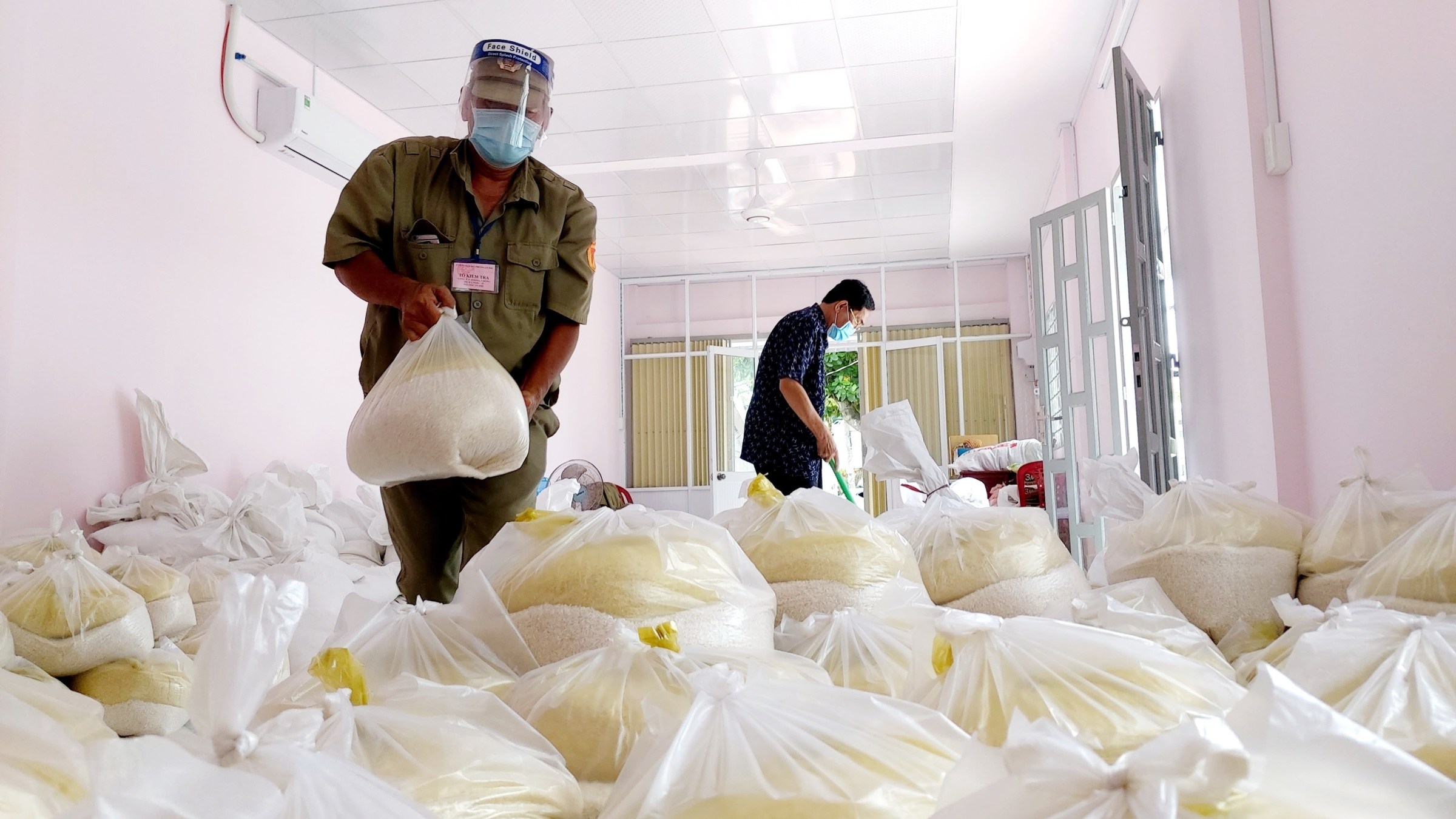
En 2021, el Primer Ministro decidió suministrar más de 158 mil toneladas de arroz de las reservas nacionales para ayudar a los ciudadanos que enfrentan dificultades debido al impacto de la COVID-19.

En la Resolución 68 del Gobierno vietnamita, emitida el 1 de julio de 2021, el Gabinete decidió lanzar un paquete de apoyo de más de 1,13 mil millones de dólares, con 12 grupos de políticas, para apoyar a los empleados y trabajadores afectados profundamente por el impacto de la pandemia, enfocado principalmente en los obreros directos.

De acuerdo con el Seguro Social de Vietnam, en implementación de la Resolución del Gobierno, luego de solo siete días, la agencia completó el ajuste para reducir la contribución al Fondo de seguro de accidentes laborales y enfermedades profesionales para 375 mil unidades, integradas por 11,238 millones de empleados, con un monto de alrededor de 180 millones de dólares. También ayudó a más de 161 mil trabajadores a suspender temporalmente el pago al Fondo de jubilación y sobrevivencia, con un monto de unos 47 millones de dólares.

Casi 3,1 millones de empleados fueron integrados en la lista de beneficiarios de políticas de asistencia, que incluyen el apoyo a la suspensión del trabajo; formación, fomento y mantenimiento de puestos laborales, préstamos y pago de salarios de cesantía de empleo, y créditos para restauración de la producción.

En particular, se desplegó de forma expeditiva un paquete de apoyo de aproximadamente 1,25 mil millones de dólares del Fondo de Seguro de Desempleo para ayudar a los empleados y trabajadores afectados por la pandemia, de acuerdo con la Resolución 116 del Gobierno (emitida el 24 de septiembre de 2021) y la Decisión 28 del Primer Ministro (del 1 de octubre de 2021).

Vietnam implementó muchas políticas de asistencia a los empleadores y trabajadores afectados por la COVID-19

Según el director general del Seguro Social de Vietnam, Nguyen The Manh, este es el paquete de asistencia directa en efectivo más grande de la historia, lo que demuestra el interés del Partido y el Estado en brindar apoyo oportuno y compartir las dificultades de los afectados por la COVID-19.

El pago rápido, conciso y definitivo de esas pólizas evidencia la preocupación y el cuidado del Partido y el Estado por la vida de los trabajadores, especialmente en tiempos difíciles provocados por desastres naturales y epidemias. En general, en 2021, todo el país destinó cerca de 2,98 mil millones de dólares a respaldar 742 mil empleadores y 42,8 millones de asalariados.

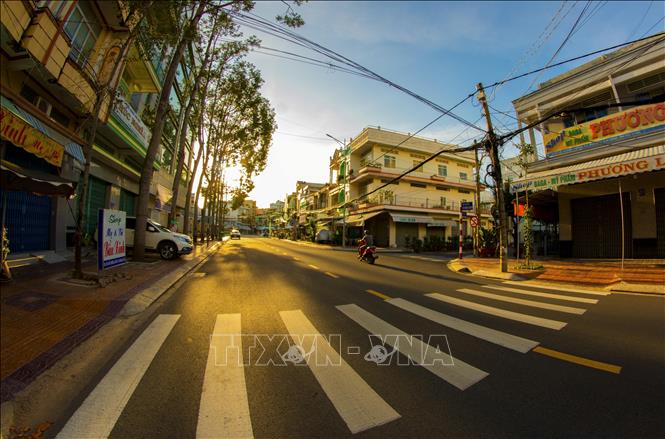
Hoy día, al caminar por las concurridas calles de la capital Hanoi y Ciudad Ho Chi Minh, todas las personas perciben el regreso de las actividades cotidianas a la normalidad.

La Resolución 128 del Gobierno, emitida el 11 de octubre de 2021, sobre adaptación segura y flexible y control efectivo de la COVID-19, allanó el camino para la realización del objetivo “dual” de lucha antiepidémica y recuperación y desarrollo económico.

La decisión del Gobierno respondió a las expectativas de la población, que tuvo que experimentar un largo periodo de distanciamiento social por el cuarto brote del coronavirus. En términos económicos, la Resolución desempeñó un papel fundamental para revertir los resultados del sector en 2021. Gracias a esa medida, Vietnam pudo mantener su ritmo de crecimiento económico.

Para ayudar a la economía a superar pronto las dificultades, sin perder el ritmo con el proceso de recuperación económica mundial, y al mismo tiempo crear una base y condiciones favorables para el desarrollo socioeconómico para todo el período 2021-2025, el Gobierno también promulgó la Resolución 11 del 30 de enero de 2022 sobre el programa de recuperación y desarrollo socioeconómico con una serie de políticas de asistencia a las personas y trabajadores afectados por el mal, así como empresas, cooperativas, negocios familiares y otros sectores. 

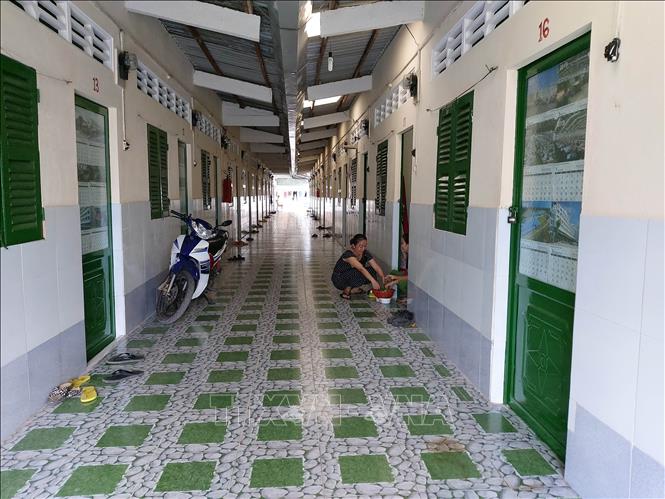
En cuanto a la garantía del bienestar social, se destaca la decisión del Gobierno de apoyar tres meses de alquiler de vivienda para los trabajadores que laboran en parques industriales, áreas de manufactura para exportación y zonas económicas claves; según la disposición los empleados que regresen al mercado laboral y los que trabajen en empresas en esas áreas se beneficiarán de un subsidio de 43,7 y 21,8 dólares al mes, respectivamente.

Además, se otorgaron préstamos para apoyar la generación de empleo, el mantenimiento y la ampliación del trabajo con un capital total de 417 millones de dólares; la compra y alquiler de viviendas sociales y para trabajadores; la construcción, renovación y reparación de casas de acuerdo con la política de vivienda social, con un fondo ascendente a 652 millones de dólares; así como la compra de computadoras, equipos de aprendizaje en línea y el pago de gastos de estudio de los estudiantes, con un monto de 125 millones de dólares.

El Gobierno también destinó 375 millones de dólares en préstamos para la implementación del programa de objetivos nacionales sobre el desarrollo socioeconómico en zonas montañosas y pobladas por minorías étnicas en el período 2021-2030.

El despliegue oportuno y drástico de las políticas, como la adaptación segura y flexible a la epidemia, impulsó la recuperación socioeconómica de Vietnam en el primer trimestre de 2022.

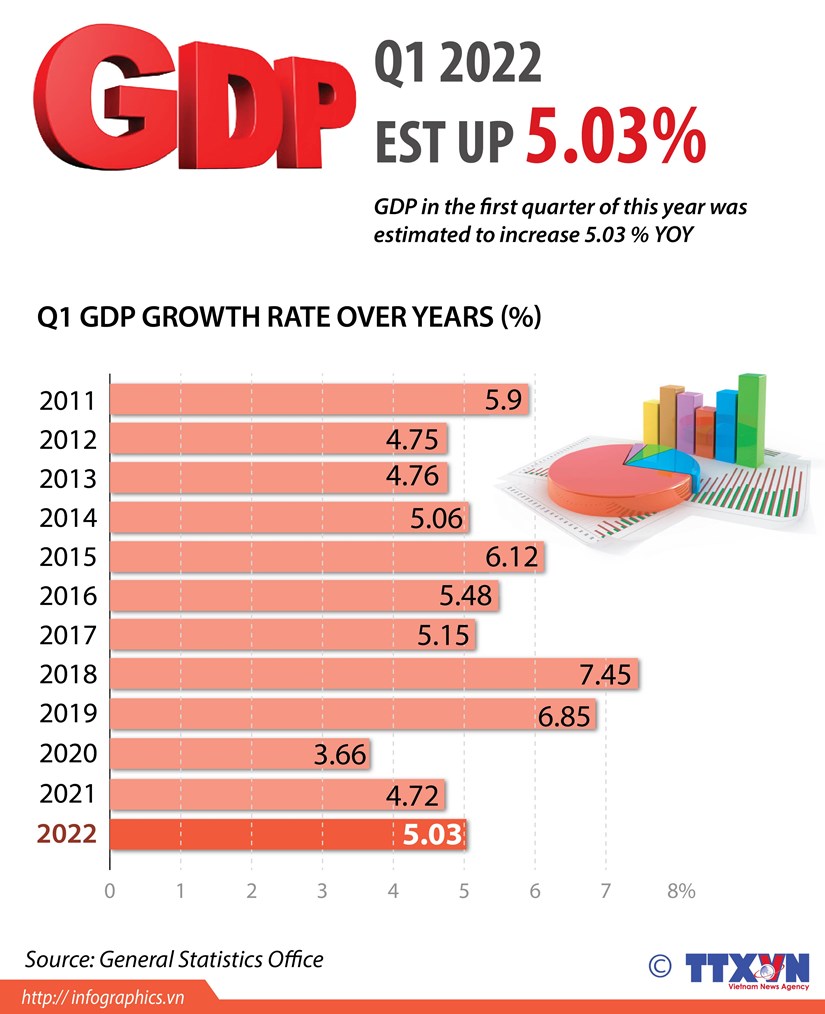
A pesar de que las organizaciones internacionales rebajaron su previsión de crecimiento económico mundial en 2022, la economía de Vietnam mostró signos positivos de recuperación, el crecimiento del Producto Interno Bruto en el primer trimestre alcanzó más del cinco por ciento y el índice de precios al consumidor promedio fue inferior al dos por ciento, pese a la gran presión inflacionaria interna y externa.

El ritmo de vida reanimado en todos los ámbitos consolida la confianza de las personas y empresas en las políticas de recuperación y desarrollo socioeconómico, así como en el positivo crecimiento en el segundo trimestre y todo 2022./.

Усилия по обеспечению социальной защиты и содействию экономическому росту

После года бушующей четвертой волны эпидемии экономика постепенно восстанавливается и развивается, вернулся нормальный ритм жизни и Ханой стал последним населенным пунктом в стране, который принял решение отправить дошкольников обратно в школу 13 апреля прошлого года.

Апрель 2021 года, когда правительство консолидировало все свои усилия, также стал периодом, когда Вьетнам столкнулся с четвертой волной эпидемии COVID-19, которая началась с 27 апреля 2021 года.

К концу мая 2021 года эпидемия охватила более 30 провинций и городов. Всего через полтора месяца количество случаев увеличилось до более чем 100.000, а почти через 2 месяца это число превысило 700.000 случаев. Во многих населенных пунктах было введено социальное дистанцирование и усилено социальное дистанцирование, применяя беспрецедентные крупномасштабные противоэпидемические меры.

Перед лицом быстро развивающейся, сложной и непредсказуемой эпидемической ситуации, когда росло число смертей, после многочисленных заседаний правительства, Постоянного комитета правительства, Руководящего комитета по профилактике и борьбе с эпидемией COVID-19 в духе: «Здоровье и жизнь людей на первом месте», премьер-министр согласился с 19 июля применить меры одновременного социального дистанцирования в 19 южных провинциях и городах — ключевых экономических регионах страны.

Это было очень сложное решение, потому что оно влекло за собой ряд последствий для экономики и социальной безопасности, но это необходимая мера, потому что количество вакцин, к которым Вьетнам имел доступ, невелико.

Эпидемия распространилась, экономика застопорилась, и миллионам иногородних рабочих пришлось вернуться домой в крайне тяжелых экономических условиях. По состоянию на 15 декабря 2021 года около 2,2 млн. человек вернулись в населенные пункты по всей стране из-за воздействия четвертой эпидемии COVID-19.

Количество людей, вернувшихся в провинции и города из Ханоя, составляет 447,1 тыс. человек, из Хошимина — 524 тыс. человек, из южных провинций — 594 тыс. человек, из других местностей и городов — 676 тыс. человек.

В связи с этим был издан и в срочном порядке реализован ряд «беспрецедентных» политик, основной задачей которых было обеспечение социальной безопасности и жизни людей, особенно в сельской местности.

В 2021 году премьер-министр принял решение выделить более 158.000 тонн запасов риса, чтобы поддержать людей, столкнувшихся с трудностями из-за воздействия эпидемии COVID-19.

В Постановлении № 68/NQ-CP от 1 июля 2021 года правительство решило запустить пакет поддержки в размере 26 трлн. донгов, разработали 12 групп политик для поддержки работников и работодателей, сильно пострадавших от воздействия COVID-19.

По данным Службы социального страхования Вьетнама, выполняя постановление правительства, всего через 7 дней Служба завершила корректировку по уменьшению взносов в Фонд страхования от несчастных случаев на производстве и профессиональных заболеваний для 375 тыс. агентств, или 11.238 млн. работников на сумму около 4,322 млрд. донгов (около 180 млн. долл. США), временно отсрочила выплаты в пенсионный Фонд для более чем 161.000 сотрудников на сумму более 1.119 млрд. донгов (47 млн. ​​долл. США).

Был утвержден список из почти 3,1 млн. сотрудников, которым будут предоставлены политики поддержки, в том числе поддержка при прекращении работы, переобучении, выдача заема для выплат заработной платы на время приостановки работы, кредита на восстановление производства.

В частности, реализован пакет поддержки в размере более 30.000 млрд. донгов (1,25 млрд. долл. США) из Фонда страхования по безработице для работников и работодателей, пострадавших от пандемии COVID-19, в соответствии с Постановлением № 116/NQ Правительства (от 24 сентября 2021 г. ) и Постановлением Премьер-министра № 28/2021/QD-TTg (от 1 октября 2021 г.).

Разработаны политики по поддержке пострадавшим работникам и работодателям из-за эпидемии COVID-19

По словам генерального директора Службы социального страхования Вьетнама Нгуен Тхе Маня, это самый крупный пакет прямой денежной поддержки за всю историю, демонстрирующий заинтересованность Партии и государства в оказании своевременной поддержки и разделении трудностей для сотрудников и работодателей, столкнувшихся с трудностями из-за пандемии COVID-19.

Быстрая, краткая и окончательная выплата государственной поддержки работникам и работодателям показала заботу Партии и государства о жизнях работников, особенно в трудные времена из-за стихийных бедствий и эпидемий. В целом в 2021 году потрачено почти 71.500 млрд. донгов (2,979 млрд. долл. США) на поддержку 742.000 работодателей и 42,8 млн. работников.

В эти дни, по оживленным улицам столицы Ханоя и Хошимина каждый чувствует, что жизнь действительно вернулась в нормальное русло.

Постановление № 128/NQ-CP от 11 октября 2021 г. о безопасной, гибкой адаптации и эффективной борьбе с эпидемией COVID-19 проложило путь к реализации «двойной» цели профилактики и контроля, восстановления и развития.

Это решение правительства оправдало ожидания людей в то время, когда им предстояло пройти очень длительный период социального дистанцирования из-за 4-й вспышки эпидемии. В экономическом плане Постановление имеет ключевое значение в восстановлении экономических результатов в 2021 году. Благодаря Постановлению № 128/NQ-CP Вьетнам может держать экономический рост.

Способствуя скорейшему преодолению экономических трудностей, не оставаясь от процесса восстановления мировой экономики, и в то же время создавая основу и благоприятные условия для социально-экономического развития на весь период 2021-2025 гг., Правительство также приняло Постановление № 11/NQ-CP от 30 января 2022 г. о программе социально-экономического восстановления и развития с рядом мер поддержки людей и работников, пострадавших от эпидемии, предприятий, кооперативов, хозяйств, отраслей промышленности и сфер, создающей движущую силу для экономического подъема и развития.

Стоит отметить решение правительства поддержать 3-месячную арендную плату за жилье для работников, которые имеют трудовые отношения, арендуют комнаты, проживают и работают в промышленных парках и зонах экспортной переработки – ключевых областях экономики, при чем уровень поддержки для работников, возвращающихся на рынок труда, составляет 1 млн. донгов в месяц, а для работников, работающих на предприятиях, — 500.000 донгов в месяц.

Выделяется кредит на 10.000 млрд. донгов (417 млн. долл. США) для поддержки создания, сохранения и расширения рабочих мест, кредит на 15.000 млрд. донгов (652 млн. долл. США) для физических лиц и домохозяйств на приобретение жилья, строительство новых домов или ремонт в соответствии с политикой социального жилья, выдаются кредиты учащимся и студентам на покупку компьютеров для онлайн-обучения и на покрытие расходов на учебу с общим капиталом в 3.000 млрд. донгов (125 млн. долл. США).

Правительство также выделило 9 млрд. донгов (375 млн. долл. США) для предоставления кредитов на реализацию Национальной целевой программы социально-экономического развития этнических меньшинств и горных районов на период 2021–2030 годов.

Именно безопасная и гибкая адаптация к эпидемии, а также своевременная и решительная политика способствовали социально-экономическому процветанию в первом квартале 2022 года.

Международные организации понизили свой прогноз роста мировой экономики в 2022 году по сравнению с предыдущим прогнозом, отметив, что восстановиться мировой экономике будет труднее. Однако экономика Вьетнама продемонстрировала положительные признаки восстановления. Рост ВВП в первом квартале достиг более 5 %, средний индекс потребительских цен в первом квартале составил менее 2%, несмотря на сильное внутреннее и внешнее инфляционное давление.

Темп жизни оживился во всех сферах, люди и предприятия твердо верят в политику социально-экономического восстановления и развития, ожидая, что рост продолжит свою положительную динамику во втором квартале и в целом в 2022 году./.

https://ru.vietnamplus.vn/v-2021-godu-bolee-2-mln-bednyh-domohozyaistv-poluchili-dostup-k-kapitalu-sotsialnoi-politiki-30980.vnp

https://ru.vietnamplus.vn/kreditnaya-politika-effektivnyi-instrument-dlya-ustoichivogo-sokrascheniya-bednosti-415.vnp

https://ru.vietnamplus.vn/politika-kreditnogo-kapitala-i-vydelenie-kreditov-bednym-239.vnp

https://ru.vietnamplus.vn/postoyannyi-komitet-pravitelstva-ob-uregulirovanii-dolga-v-banke-sotsialnoi-politiki-13075.vnp

Efforts pour assurer le bien-être social et promouvoir la croissance économique

Un an après les ravages de la 4e vague épidémique, l’économie se redresse progressivement, la normalité est revenue dans le pays. Hanoï a été la dernière localité du pays à autoriser la réouverture des écoles maternelles le 13 avril.

Le 27 avril 2021, la quatrième vague de COVID-19 a commencé à déferler sur le pays.

Fin mai 2021, l’épidémie s’est propagée à plus de 30 villes et provinces. En un mois et demi, le nombre de cas est passé à plus de 100.000 et près de 2 mois plus tard, il a été supérieur à 700.000 cas. De nombreuses localités ont mis en place la distanciation sociale et la distanciation sociale renforcée, en appliquant des mesures sans précédent à grande échelle.

Devant cette situation, notamment l’alourdissement du bilan des décès, après plusieurs réunions, dans l’esprit de mettre au premier rang la santé et la vie des gens, le Premier ministre a accepté d’appliquer des mesures de distanciation sociale dans 19 villes et provinces du Sud – région économique clé du pays, à partir du 19 juillet.

Ce fut une décision très difficile, mais c’était une mesure urgente car la quantité de vaccins dont le Vietnam disposait à ce moment-là était modeste. La politique de « zéro COVID » visait à limiter la propagation de l’épidémie et à protéger la santé et la vie des gens.

L’épidémie a fortement touché l’économie, des millions de travailleurs migrants ont dû rentrer chez eux dans des circonstances extrêmement difficiles. Selon des rapports des localités, au 15 décembre 2021, environ 2,2 millions de travailleurs sont retournés dans leur province natale.

Une série de politiques “sans précédent” ont été lancées et mises en œuvre de toute urgence avec pour tâche principale d’assurer la sécurité sociale, en particulier les conditions de vie des personnes dans les localités mettant en place la distanciation sociale.

En 2021, le Premier ministre a décidé de prélever plus de 158.000 tonnes de riz sur les réserves pour soutenir les personnes en difficulté en raison des impacts de l’épidémie de COVID-19.

Selon la résolution n° 68/NQ-CP, publiée le 1er juillet 2021, le gouvernement a décidé de lancer un programme de soutien de 26 billions de dongs pour soutenir les employés et les employeurs gravement impactés.

En application de cette résolution du gouvernement, en sept jours, la Sécurité sociale du Vietnam a finalisé la réduction des cotisations au Fonds d’assurance des accidents du travail et des maladies professionnelles pour 375.000 unités, soit l’équivalent de 11,238 millions de travailleurs, pour un montant d’environ 4.322 milliards de dongs (environ 180 millions de dollars). Elle a également traité des procédures pour que plus de 161.000 employés arrêtent temporairement de payer le fonds de retraite et d’assurance décès, pour un montant de plus de 1.119 milliards de dongs (47 millions de dollars).

Des procédures ont également été menées pour que près de 3,1 millions de travailleurs puissent avoir accès à des assistances à la suspension d’emplois, à la formation et au maintien d’emplois, au paiement des salaires…  

En particulier, un programme de soutien de plus de 30.000 milliards de dongs (1,25 milliard de dollars) en provenance du Fonds d’assurance-chômage a été rapidement mis en œuvre pour les employés et les employeurs impactés.

Un programme de soutien de plus de 30.000 milliards de dongs (1,25 milliard de dollars) en provenance du Fonds d’assurance-chômage a été rapidement mis en œuvre pour les employés et les employeurs impactés.

Selon le directeur général de la Sécurité sociale du Vietnam, Nguyen The Manh, il s’agissait du plus grand programme d’aide directe en espèces jamais réalisé, qui a témoigné de l’attention du Parti et de l’Etat et de leur volonté de partager les difficultés avec les travailleurs et les employeurs.

De manière générale, en 2021, près de 71.500 milliards de dongs (2,979 milliards de dollars) ont été dépensés pour soutenir 742.000 employeurs et 42,8 millions de travailleurs.

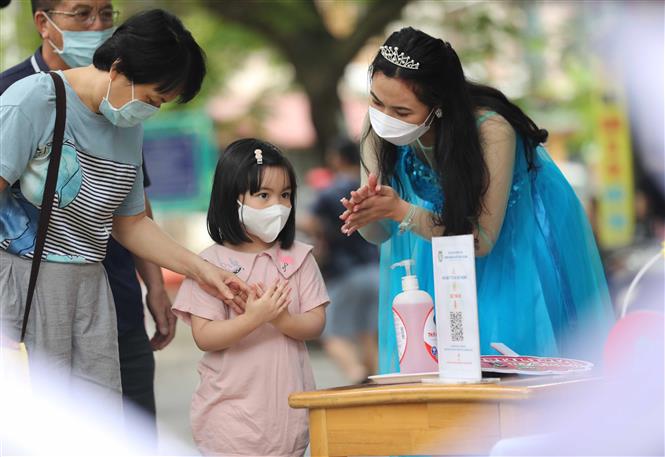
Ces dernière semaines, la normalité est revenue dans les rues de Hanoï et de Ho Chi Minh-Ville.

La résolution 128/NQ-CP, publiée le 11 octobre 2021, sur une adaptation sûre et flexible et un contrôle efficace de l’épidémie de COVID-19, a ouvert la voie à la réalisation du “double” objectif de prévention et de contrôle de l’épidémie, de reprise et de développement économique.

Cette résolution du gouvernement a répondu aux attentes de la population. Sur le plan économique, grâce à la résolution 128/NQ-CP, le Vietnam a pu maintenir sa croissance.

Le gouvernement a également publié la résolution n° 11/NQ-CP, le 30 janvier 2022, sur le programme de reprise et de développement socio-économiques avec une série de politiques visant à soutenir les travailleurs et le milieu des affaires touchés par le COVID-19.

Parmi les politiques de soutien, le gouvernement a décidé d’accorder des aides en matière de loyer pour nombre de travailleurs des zones franches et industrielles, ou zones économiques clés. Environ 10.000 milliards de dongs (417 millions de dollars) ont été destinés à octroyer des prêts pour favoriser la création, le maintien et le développement d’emplois. Environ 15.000 milliards de dongs pour aider les gens à avoir accès aux logements sociaux, environ 3.000 milliards de dongs pour aider les élèves et étudiants à acheter des ordinateurs pour l’apprentissage en ligne et payer les frais scolaires…

Le gouvernement a également réservé 9.000 milliards de dongs (375 millions de dollars) afin de fournir des prêts pour la mise en œuvre du Programme cible national sur le développement socio-économique des zones peuplées de minorités ethniques et des zones montagneuses au cours de la période 2021-2030.

Ce sont l’adaptation sûre et flexible à l’épidémie et des politiques opportunes et drastiques qui ont favorisé l’amélioration de la situation socio-économique au premier trimestre 2022.

Au premier trimestre la croissance du PIB a atteint plus de 5% et l’indice moyen des prix à la consommation était inférieur à 2% malgré la forte pression inflationniste nationale et étrangère.

L’optimisme règne dans tous les secteurs. La population et les entreprises ont  fermement confiance en les politiques de reprise et de développement socio-économiques, et s’attendant à ce que la croissance se poursuive au deuxième trimestre et sur l’ensemble de l’année 2022./.

Government’s pandemic fight efforts pay off

Hard hit by the fourth wave of COVID-19 for almost one year, yet Vietnam’s economy is now rebounding and people’s life has returned to normal.

Starting late April 2021, the latest wave engulfed more than 30 cities and provinces one month later, raising the national caseload to more than 100,000 in mid-May and 700,000 after two months.

Against the backdrop, many localities imposed social distancing and unprecedented measures on a large scale. Nineteen cities and provinces in the south – the country’s key economic region, were placed under social distancing simultaneously from July 19 as ordered by the Prime Minister.

This is a tough decision as it would affect economic activities and social welfare, but it is crucial given the limited supply of COVID-19 vaccines at that time and the ongoing “zero COVID” policy intended to curb the pandemic spread and ensure the people’s health and life.

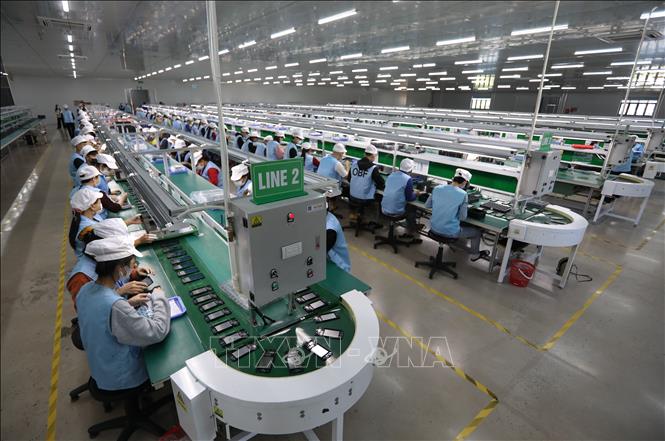
The widespread outbreak of the pandemic disrupted the national economy and forced millions of migrant labourers working in the country’s major economic centres to return home, worries for daily expenses heavy on their shoulders. Localities reported that as of mid-December 2021, they had counted some 2.2 million returning labourers, mainly from Hanoi (447,100), Ho Chi Minh City (524,000), southern cities and provinces (594,000), and other localities (676,000).

A host of unprecedented policies have been adopted and rolled out quickly to ensure social welfare and people’s life, particularly in the localities under social distancing.

Last year, the PM decided to allocate more than 158,000 tonnes of rice to those hit by the pandemic.

Under Resolution No. 68/NQ-CP dated July 1, 2001, the Government decided to implement an aid package worth 26 trillion VND (1.13 billion USD) with 12 groups of policies in support of the affected labourers.

The Vietnam Social Security (VSS) said nearly 3.1 million workhands have benefited from those support policies.

Notably, the aid package worth more than 30 trillion VND sourced from the unemployment insurance fund has been rolled out rapidly in accordance with the PM’s Decision No. 28/2001/QD-TTg dated October 1, 2021.

Nearly 3.1 million workhands have benefited from those support policies.

The biggest-ever aid package demonstrates the attention of the Party and the State to the employees and employers driven into difficulties by the COVID-19, VSS General Director Nguyen The Manh noted.

Last year, up to 71.5 trillion VND was earmarked to support 742,000 employers and 42.8 million employees.

Streets in Hanoi and Ho Chi Minh City have roared back to life after the COVID-19 nadir.

Resolution No. 128/NQ-CP on safely and flexibly adapting to and effectively controlling the pandemic, issued on October 11, 2021, has paved  the way for the realisation of the dual goals of pandemic containment and economic recovery and development.

It met the public’s wish after a long period of social distancing, and played a key role in converting the national economy that experienced a slowdown last year due to the pandemic.

To help the national economy keep up with the global economic recovery and facilitate socio-economic development for 2021-2025, the Government issued another resolution, No. 11/NQ-CP, on January 30, 2022, with a range of incentives for people, pandemic-affected labourers, enterprises, cooperatives, household businesses and sectors.

It is noteworthy that Decision No. 08/2022/QD-TTg on the housing rent support aims to assist workers who face housing difficulties and help enterprises maintain production and attract back employees who left cities for their hometowns during the pandemic.

Accordingly, two groups have received support, labourers working in enterprises and those returning to the labour market, at 500,000 VND and 1,000,000 VND per person each month, respectively.

The Government has also earmarked 9 trillion VND as loans to implement the national target programme on socio-economic development in ethnic minority-inhabited and mountainous areas for 2021-2030.

The shift to safely and flexibly adapting to the pandemic and the timely implementation of policies helped to spur socio-economic development in the first quarter of this year.

Source: VNA

Although international organisations have lowered their forecasts of the global economic growth this year, Vietnam’s gross domestic product (GDP) still grew more than 5 percent and its consumer price index (CPI) was below 2 percent in the first quarter.

Now that life is returning to normal, people and enterprises have been confident in socio-economic recovery and development policies, and hope for stronger growth in the second quarter and the entire year./.

Related news:

Conference reviews 10-year implementation of social welfare policies

Adjustments to social welfare policies needed to not leave anyone behind: Experts

Webinar discusses ways to develop Vietnam’s social security till 2030