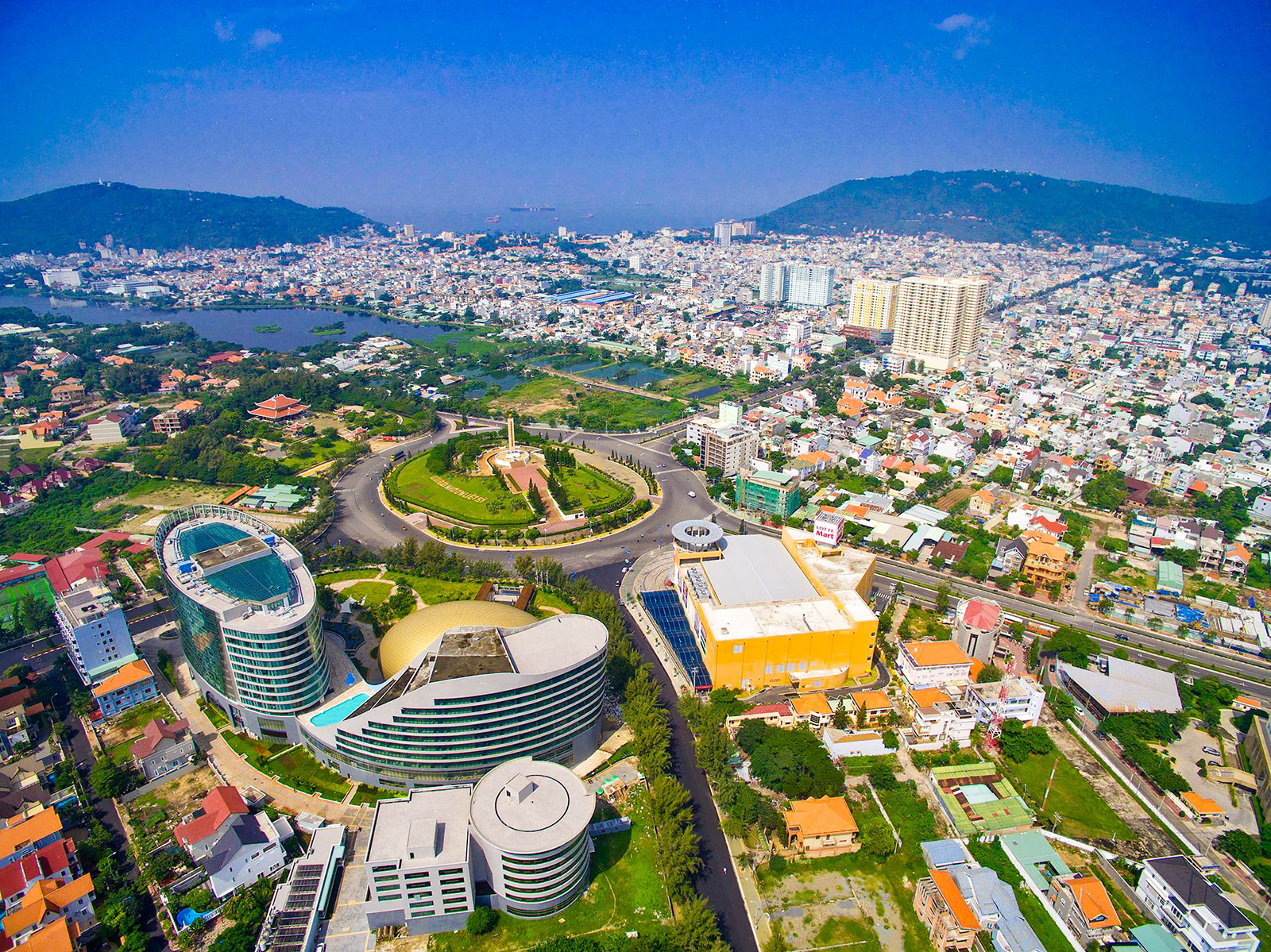
Ba Ria – Vung Tau, a popular tourist destination in the south of Vietnam, is seeing more visitors recently, a reminder of the attractive seaside resort’s potential in the post-pandemic period.
Ha Van Sieu, Deputy General Director of the Vietnam National Administration of Tourism, noted the tourism recovery, saying compared to other localities, a weekend room occupancy rate of over 90% at local accommodations is very high, proving the province’s potential for drawing domestic travellers.
However, Sieu said Ba Ria – Vung Tau still needs to work harder to upgrade its images to attract foreign visitors back.
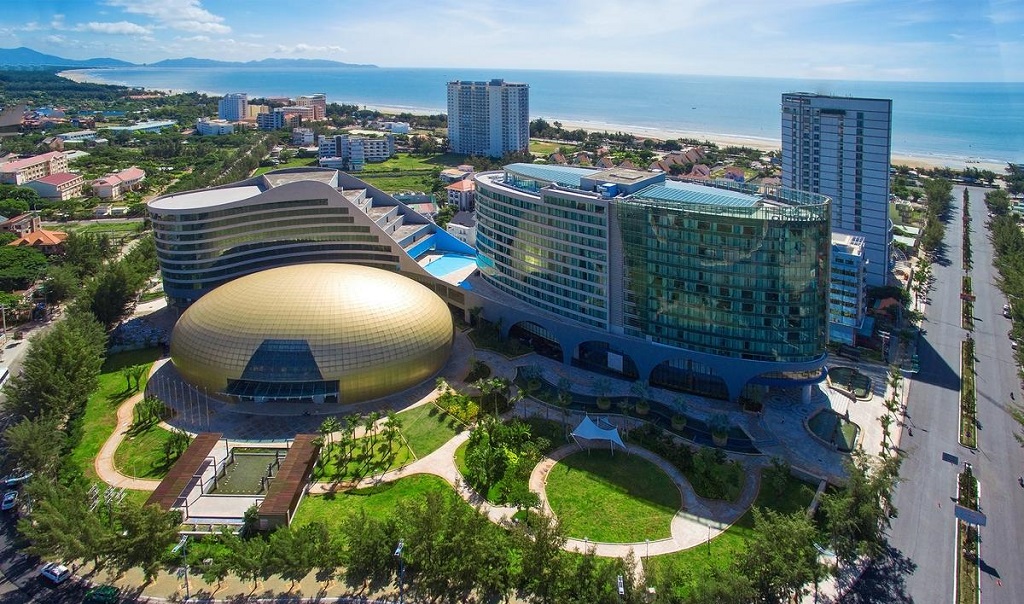
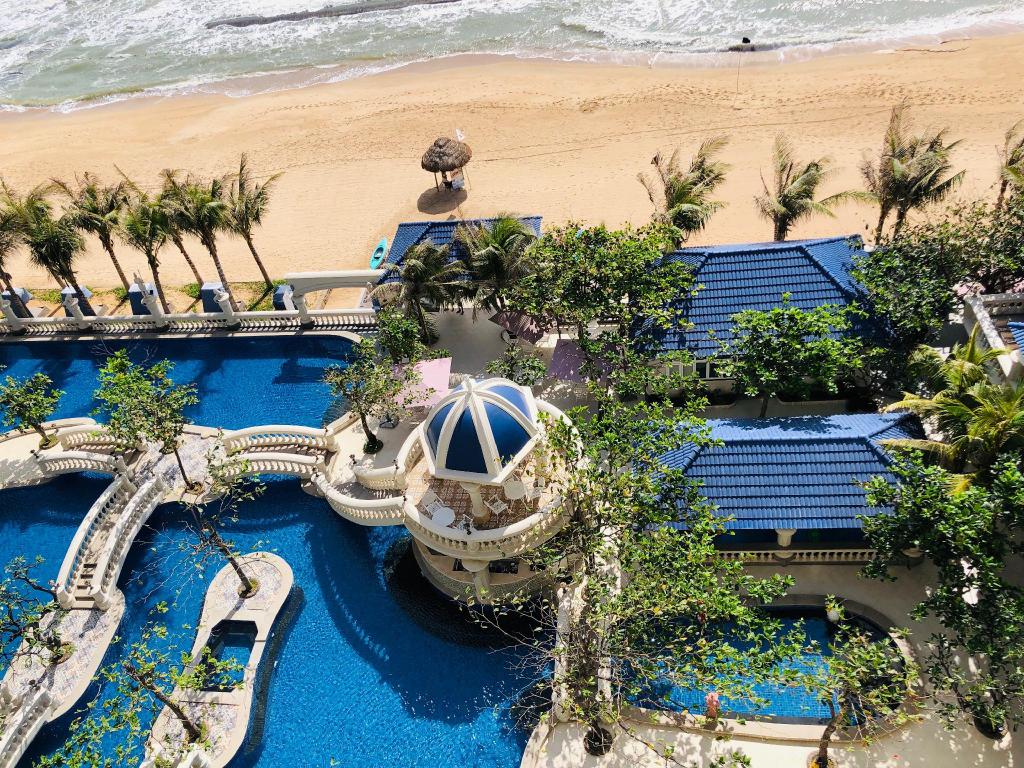
The Grand Ho Tram Resort& Casino
The Grand Ho Tram Resort & Casino has 1,100 rooms, but without booking in advance, tourists will be out of luck to get a room here, especially at the weekend.
Le Thi Thanh Thai, Vice Chairwoman for external relations of The Grand Ho Tram Resort & Casino, said the complex boasts a great seaside view. It has aligned its services with demand of families and small tourist groups, thus its room occupancy is relatively good.
Meanwhile, Vietsovpetro Resort had met 60% of this year’s revenue target by the end of May.
Deputy Director of the resort Nguyen Duc Trong said aside from serving visitors of the oil and gas industry, his resort also reserves about 40% of its rooms for other tourists, noting that its business results have bounced back thanks to strong post-pandemic travel demand.
According to the provincial Tourism Department, seaside resorts and hotels room occupancy has continually surpassed 80% on weekends and holidays. Most of their clientele are families and small tourist groups from the southeastern region.
Since April, there have been more tourist groups from banks, businesses, and schools to Ba Ria – Vung Tau for events, conferences, and workshops.
Director of the department Trinh Hang said the Ministry of Culture, Sports and Tourism predicted it won’t be until 2025 that tourism nationwide can regain the momentum of 2019 pre-pandemic numbers.
However, given the positive signs recorded so far this year, Ba Ria – Vung Tau could regain pre-pandemic numbers and revenue levels in 2023, he added.
To provide better services for visitors, local tourist attractions and hotels have been upgrading infrastructure and improving landscapes.
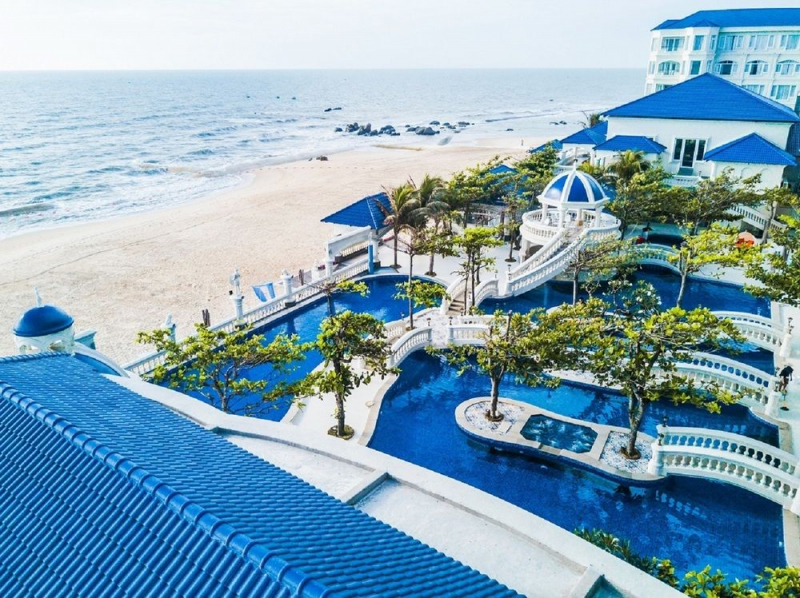
At Lan Rung Resort Phuoc Hai, the staff have been busy decorating the grounds with more ornamental plants, flowers, and vegetables.
Phuong Thanh, manager of the resort’s garden division, said the garden is a place to visit and also provides ingredients for tourists to cook, so the area needs special attention.
Lan Rung Resort Phuoc Hai
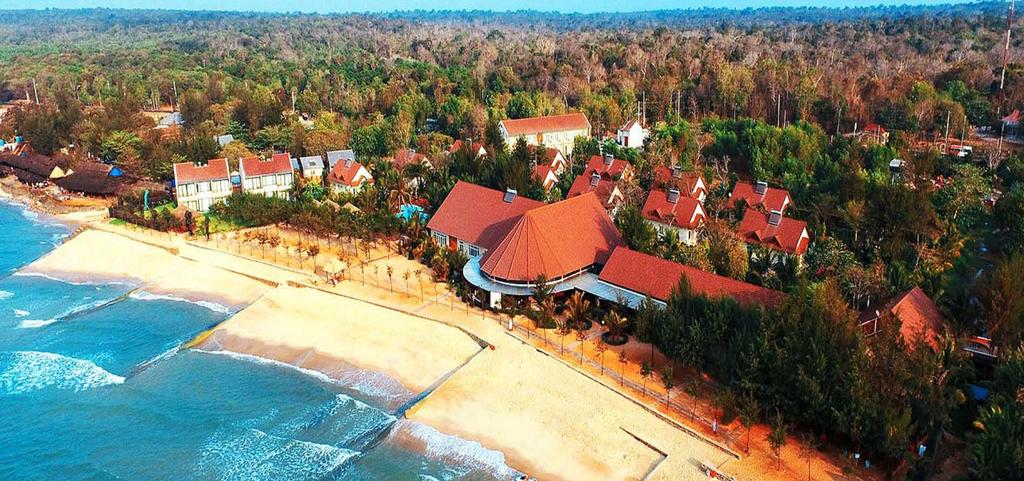
The Ruong Resort has a countryside feel to it by adding greenery, including the plants normally found in rural areas such as bamboo, banana, guava, and lotus.
Vietsovpetro Resort has launched many service packages to attract tourists on weekdays. The Grand Ho Tram Resort & Casino has also been holding numerous events such as a gold tournament, a kite festival, and a culinary festival to attract visitors this summer.
Trinh Hang said the Tourism Department has proposed the provincial People’s Committee organise a food festival and sign tourism cooperation deals with localities in the southeastern and Central Highlands to bring in tourists from other regions.
It also recommended the Tourism Association and travel companies renew services, step up promotion, and launch more stimulus packages. Enhanced management will ensure safety for tourists, develop human resources, and boost digital transformation in the tourism industry.
Hang said the concerted implementation of those plans will generate great returns for local tourism, helping the sector establish itself as a key industry of Ba Ria – Vung Tau./.
Après la pandémie de COVID-19, le tourisme de la province de Ba Ria – Vung Tau (Sud) a connu une reprise rapide, selon le directeur général adjoint de l’Administration nationale du tourisme (ANT) du Vietnam, Ha Van Sieu.
Selon lui, par rapport à l’ensemble du pays, le taux d’occupation des lieux d’hébergement le week-end atteignant plus de 90% est un bon signe, prouvant l’attractivité de Ba Ria – Vung Tau auprès des clients nationaux. Cependant, cette localité doit activement rehausser son image pour attirer à nouveau les visiteurs internationaux.
Le Grand Ho Tram Resort & Casino
Le Grand Ho Tram Resort & Casino dispose de 1.100 chambres. Pourtant, si les visiteurs ne réserve pas à l’avance, il ne leur sera pas facile de trouver une chambre dans ce resort, surtout le week-end. La vice-présidente chargée des relations extérieures du Grand Ho Tram Strip, Le Thi Thanh Thai a déclaré que le complexe exploite un espace marin de qualité, poétique et axé sur les services, adapté au segment des clients familiaux et aux petits groupes. Le taux d’occupation de ce ressort est assez élevé, atteignant toujours plus de 90% le week-end.
Fin mai dernier, Vietsovpetro Resort avait déjà atteint 60% de son objectif de chiffre d’affaires annuel. Le directeur adjoint de Vietsovpetro Resort, Nguyen Duc Trong a informé qu’en plus de servir les clients de l’industrie pétrolière et gazière, le complexe consacre également environ 40% des chambres à l’accueil des touristes. Les activités commerciales prospèrent en cette période post-pandémique où les demandes de voyages explosent.
Selon le Service provincial du tourisme, les stations balnéaires et les hôtels proches de la mer, avec des jardins, de beaux paysages et proches de la nature ont tous connu une croissance impressionnante. Le taux d’occupation des chambres le week-end, les jours fériés et le Têt est supérieur à 80%. La clientèle des centres de villégiature est principalement des familles, de petits groupes venus des provinces de la région du Nam Bô oriental.
Selon le directeur du Service provincial du Tourisme, Trinh Hang, selon la feuille de route de relance du tourisme du ministère de la Culture, des Sports et du Tourisme, ce n’est qu’en 2025 que ce secteur pays pourrait retrouver son élan de croissance de 2019. Néanmoins, le service provincial du Tourisme estime que dès 2023, le secteur touristique pourrait atteindre une forte croissance en termes de nombre de visiteurs et de recettes de la période précédant la pandémie…
Attention aux images promotionnelles
Afin de mieux servir les clients, les centres de villégiature, les sites touristiques et les hôtels se concentrent sur la modernisation des installations, l’embellissement des paysages et l’ajout d’espaces verts. Au Lan Rung Resort Phuoc Hai, ces jours-ci, le personnel du jardinier est occupé à éliminer les mauvaises herbes, à ajouter des fleurs et des plantes ornementales, à tailler les branches de grands arbres, à planter des légumes hydroponiques. “Le potager est à la fois une attraction touristique et fournit également des légumes verts pour le restaurant, nous devons donc y prêter une attention particulière”, a déclaré une responsable du resort.
Lan Rung Resort Phuoc Hai
The Ruong Resort (au hameau de Xom Ray, commune de Phuoc Thuan, district de Xuyen Moc) continue d’entretenir l’espace rural du resort, en prenant soin d’ajouter plus d’espaces verts avec des plantes et arbres des zones rurales comme bambou, bananier, goyavier, et un étang de lotus…
Vietsovpetro Resort a également lancé de nombreux forfaits de services pour attirer les clients dans ce resort en semaine. Le Grand Ho Tram Resort & Casino organise des événements sportifs tels que golf, festival de cerf-volant et lance un menu d’été pour attirer davantage les clients dans la station.
Selon M. Trinh Hang, le Service provincial du tourisme a demandé le Comité populaire provincial d’organiser un festival gastronomique et de signer un accord pour connecter le tourisme avec les provinces et les villes du Nam bô oriental et du Tay Nguyen (Hauts Plateaux du Centre). En outre, ledit Service a également suggéré que l’Association du tourisme et les entreprises renouvellent activement leurs services, se concentrent sur la promotion et le lancement de nombreux plans de relance, renforcent la gestion de l’État afin d’assurer la sécurité des touristes, soutiennent la formation des ressources humaines, la promotion de la transformation numérique dans le tourisme…
Ces plans mis en œuvre de manière synchrone offriront des opportunités pour une forte reprise du tourisme, permettant à ce secteur de retrouver une place majeure dans la structure économique de la province”, a conclu M. Trinh Hang./.
The Grand Ho Tram Resort & Casino共有1000间客房。 但是,如果游客未提前订房,则可能无房可住。The Grand Ho Tram Strip负责对外事务副董事长黎氏清泰女士表示,该度假村打造出清新、诗意的海洋空间和适合家庭和小团体等旅客后疫情时代前来度假并确保精神和健康平衡的服务计划。 因此,该度假村的房间周末入住率一直达到90%以上。
Party General Secretary Nguyen Phu Trong (Source: VNA)
Party General Secretary Nguyen Phu Trong’s article on some theoretical and practical issues on socialism and the path towards socialism in Vietnam, which maps out Vietnam’s future orientations in all fields, has manifested his far-sight vision and strong will to build a socialist country in which no one is left behind. The values, both theoretical and practical, of the article have received great attention and applauses from the international community.
Building a society in which developments are all truly for the people is a core and consistent issue in the Party leader’s writing.
In his article, Trong affirmed that “The socialist society that the Vietnamese people are making all efforts to build is a society where the people are well-off, the nation is strong and the people are owners, a society characterised by democracy, equality and civilisation. It possesses a highly developed economy on the basis of a modern productive force and suitable and progressive production relations. It enjoys an advanced culture imbued with national identity. Its people are entitled to wellbeing, freedom and happiness and are blessed with opportunities for comprehensive development. Ethnic groups in the Vietnamese community are equal, united, respectful and supportive of each other to grow together. It has a rule-of-law socialist state of the people, by the people and for the people under the leadership of the Communist Party. And it maintains friendship and cooperation with all countries in the world.”
“The socialist society that the Vietnamese people are making all efforts to build is a society where the people are well-off, the nation is strong and the people are owners, a society characterised by democracy, equality and civilisation.”
– Party General Secretary Nguyen Phu Trong-
To this end, the Party leader specified a series of tasks to sustain and promote the concerted efforts to steer the entire nation toward socialism.
Reform still key task in Vietnam’s development path toward socialism
According to Trong, the ‘Doi Moi’ (Renewal) – a comprehensive reform programme beginning in 1986, including the development of the socialist-oriented market economy, has truly brought about enormous and positive changes to Vietnam over the past 35 years.
Prior to the ‘Doi Moi’, Vietnam used to be a poor and war-torn country, with devastated human lives, infrastructure, and environment. According to experts, it would take another 100 years or more for Viet Nam to fully remove the remaining post-war unexploded ordnance (UXOs). After the war, the US and the Western imposed economic sanctions on the nation for nearly two decades. That period also saw complex developments in the region and the world, to the country’s detriment. There was a severe shortage of food and essential goods, and people lived in great hardships, with three quarters of the population living under the poverty line.
Thanks to the policy, the economy has begun to thrive, enjoying a relatively high growth rate over the course of 35 years at around 7 percent per year. Its GDP is continually expanding, reaching 342.7 billion USD in 2020 and becomes the 4th largest economy in ASEAN. Per-capita income has also increased seventeen-fold to 3,512 USD. And Vietnam successfully graduated from low-income status in 2008. At present, the nation not only is able to ensure food security, but also has become a leading exporter of rice and various other agricultural products in the world.
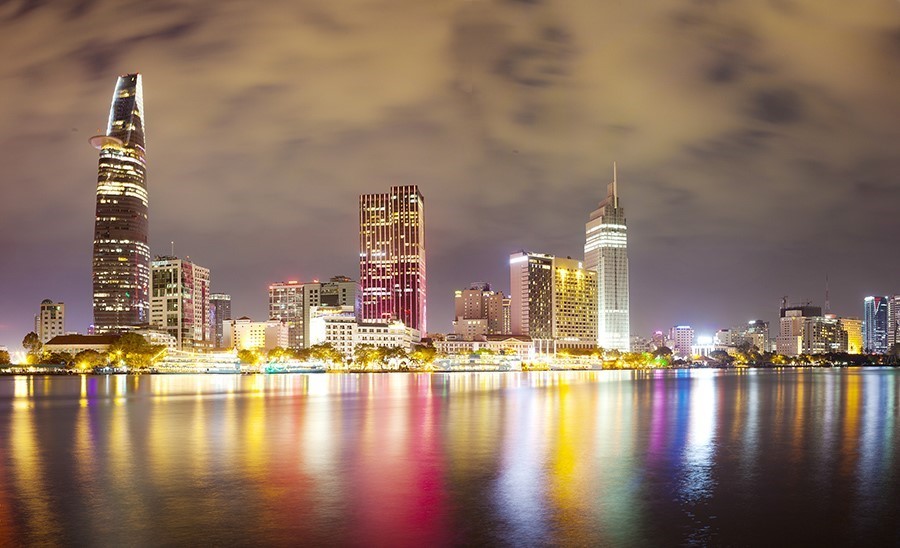
A corner of Hanoi (Source: VNA)
Economic development has also delivered the country from the socio-economic crisis of the 1980s and remarkably improved the people’s living standards. The percentage of poor households falls by 1.5 percent every year on average, from 58 percent in 1993 to less than 3 percent in 2020 according to the multidimensional poverty index (whose standards are higher than previously). Today, more than 60 percent of communes have met the standards of “new-style” rural areas.
While Vietnam is yet able to provide free education at all levels for all, the country has been focusing its efforts on eradicating illiteracy. Currently, 95% of Vietnamese adults are literate. Efforts have also been made for enhancing preventive healthcare, epidemic prevention and control, and providing support for disadvantaged persons. Children malnutrition and infant mortality have been slashed about three fold. Average life expectancy has gone up from 62 years in 1990 to 73.7 years in 2020.
An overview of the 13th National Party Congress (Photo: VNA)
The Party chief also mentioned significant progresses in enriching the cultural life. Seventy percent of the population now have internet access and Vietnam is among the world’s fastest-developing IT countries. The United Nations has recognised Vietnam as one of the leading countries in reaching the Millennium Development Goals. In 2019, the nation’s Human Development Index (HDI) value reached 0.704, putting it in the high human development category.
He said thanks to the programme, political and social stability, defence, and security are well-safeguarded. Vietnam enjoys increasingly broader foreign relations and a more extensive international integration, the national standing and power are growing, and the people’s trust in the Party’s leadership is bolstered, the Party leader added.
Acknowledging that Vietnam is in a transitional period towards socialism, Trong said apart from achievements and positive developments, there will always be negative aspects and challenges that demand rational consideration and prompt and effective resolution.
This is an arduous and gruelling struggle that requires a new vision, new resolve, and new drive for innovation, he stressed.
Guiding the nation’s future
Advancing towards socialism is a period of tirelessly bolstering, augmenting and harnessing socialist elements so that they would become more dominant and superior, and ultimately triumph. Success or failure depends, first and foremost, on the correctness of the Party guideline and its political fortitude, leadership, and combativeness.
“Presently, we are continuing to accelerate the transformation of our growth model and economic restructuring with greater focus on quality and sustainability. In this connection, we have identified the following breakthroughs: the synchronous improvement of development institutions, with priority given to the socialist-oriented market economy; the development of human resources, particularly highly-skilled workers; and the development of synchronized and modern infrastructure, economically and socially,” read the article.
Trong wrote that with regards to social development, Vietnam continues to promote sustainable poverty reduction, improve the quality of healthcare, education and other public services, and further enhance people’s cultural life. The entire Party, people and army are making every effort to study and emulate President Ho Chi Minh’s thoughts, morality and style with the determination to stem and reverse the degeneration in political ideology, morality, and lifestyles among a portion of cadres and Party members, primarily leadership and managerial cadre at all levels. “We shall strive to better implement the principles of Party organisation and building, in order to ensure the Party organisation and the state apparatus will grow stronger and free from taint, maintain the Party’s revolutionary nature and improve its leadership capacity and combativeness.”
Source: VNA
According to the Party chief, both theory and praxis have shown that building socialism means creating a qualitatively new type of society, which is by no means a simple or easy task. This is a grand and innovative endeavour, full of challenges and adversities. It is a self-driven, continuous, long-term and goal-oriented cause that cannot be rushed. “Therefore, in addition to charting the correct Party line and policy and ensuring its leadership role, we must actively harness people’s creativity, support and active participation. The people shall welcome, support and enthusiastically participate in the implementation of the Party lines since they see that such guidelines are in their interest and live up to their aspirations. The ultimate victory and development is deeply rooted in the strength of the Vietnamese people.”
On the other hand, the Party’s leadership and stewardship, in shaping the political line and making decisions, should not refer only to the reality of its own country and nation. It must instead also study and learn from the experience of the world and that of the times. In today’s globalised world, the development of each nation-state cannot stand alone and separate from the impacts of the world and the times, and those of the context and the dynamics.
The Party leader stressed the need for the country to actively engage in international integration, implement a foreign policy of independence, self-reliance, peace, cooperation and development, and multilateralisation and diversification of international relations, on the basis of respect for the independence, sovereignty and territorial integrity of each other, non-interference in each other’s internal affairs, equality and mutual benefit.
And it is of great importance to remain steadfast and firm on the foundation of Marxism – Leninism – the scientific and revolutionary doctrine of the working class and the working people. The scientific and uncompromising revolutionary nature of Marxism-Leninism and Ho Chi Minh’s Thought are enduring values that have been pursued and implemented by generations of revolutionaries. This will continue to develop and prove its vitality in the reality of both the revolutionary movement and scientific development.
Acclamation from international community
The Party leader’s article has attracted attention from public opinions both at home and abroad.It has received great applause from the international community and been held in high regard by foreign experts, researchers and politicians.
Khamvisanh Keosouvanh, Assistant to the Chairman of the Lao People’s Revolutionary Party (LPRP) Central Committee’s Commission for Propaganda and Training, said that the Vietnamese Party leader’s article constitutes an epochal strategic direction on socialism and Vietnam’s path towards socialism, and it matches the real development of the country and the world.
According to him, as the article was published following the 13th National Congress of the CPV, and before the elections of deputies to the 15th National Assembly and all-level People’s Councils for the 2021-2026 tenure, it has helped Vietnamese leaders prepare personnel to implement the Resolution adopted at the Congress with new opportunities and challenges.
Thanks to Doi Moi policy, the economy has begun to thrive, enjoying a relatively high growth rate over the course of 35 years at around 7 percent per year (Source: VNA)
Trong’s affirmation that socialism is the goal and ideal of the CPV and Vietnamese people, and that advancing towards socialism is an objective demand of and the inevitable path of the Vietnamese revolution demonstrates the CPV’s absolute confidence and loyalty to Marxism-Leninism and Ho Chi Minh Thought in the cause of national construction and development towards socialism.
The view on the development of the socialist-oriented market economy is a very basic and creative theoretical breakthrough of the CPV, Khamvisanh said.
He said the LPRP would learn from the CPV’s leadership experience in the cause of national construction and development towards socialism to realise the resolution adopted at the 11th National Congress of the LPRP.
According to Han Fangming, Vice Chairman of the Foreign Affairs Committee of the Chinese People’s Political Consultative Conference, and Chairman of Chahar Institute, a well-known think tank of diplomacy and international relations, the Vietnamese Party leader’s article affirms the soundness of the path towards socialism of Vietnam.
In his recent article on Vietnam’s contributions to human civilisation, he underlined that the article systematically analyses the original ideal and development of socialism in Vietnam from the perspective of its reality.
It points to the origins and goals of as well as persistence and firmness in a number of theories of Vietnam’s socialist-oriented market economy and the human-centered development strategy.
Han wrote that the socialist-oriented market economy initiated by Vietnam is a new plan for the cause of contemporary socialism, a new development in the Vietnamisation of Marxism, and the expansion of Ho Chi Minh Thought.
The Vietnamese Party chief’s article summarises the experience of Vietnam’s socialism development and the essence of his thoughts on governance, which are helpful for theoretical exchanges and wisdom sharing among political parties around the world, and provide more governance solutions for the international community to learn from, Han stressed.
General Secretary of the Mexican Labour Party Alberto Ayana Gutiérrez (Source: VNA)
Agreeing with these above-mentioned opinions, General Secretary of the Mexican Labour Party Alberto Ayana Gutiérrez commented that General Secretary Trong’s article has proven that building socialism is a sound decision suitable with reality in the country by the CPV.
Gutiérrez said the Vietnamese revolution’s glorious victories over the past more than 90 years are the result of many factors, including the CPV’s political platforms, sound policies and guidelines based on creatively applying Marxism-Leninism and Ho Chi Minh’s thought in Vietnam’s reality, inheriting and upholding traditional values, cultural quintessence of humanity and loyal solidarity under the CPV’s leadership.
On the path towards socialism with the goal of a strong country, wealthy people, and a democratic, fair and civilised society, Vietnam needs to grasp opportunities at home and abroad the develop the nation, he suggested.
The leader also expressed his belief that Vietnam’s past achievements together with initiatives in real life and theory that the CPV has put forward will lay a solid foundation to ensure Vietnam’s new successes in the process of building socialism.
Meanwhile, Prof. Dr Vladimir Kolotov of Russia’s Saint Petersburg State University said the Vietnamese Party leader’s article greatly contributes to the development of Ho Chi Minh’s thought.
According to the scholar, in the article, the Vietnamese leader also touched on unsuccessful reforms in the former Soviet Union which resulted in its collapse, as well as weaknesses of the democratic institution, in which the power system is in the hands of a minority of the rich and serves the interests of capitalist groups.
In addition, the top leader also pointed out issues a modern Vietnam is currently facing and solutions to them, Kolotov emphasised.
He shared the Party General Secretary’s view that Party building and rectification are a key task that is vital to the CPV and the socialist regime; and the CPV’s determination to fight corruption, bureaucracy and degradation.
Kolotov noted that the CPV has taken action for the interests of the people, thereby always earning the people’s support, citing the Vietnamese top leader’s article as saying that the CPV’s leadership “is a decisive factor in the cause of the Doi Moi and would ensure the country’s development in accordance with the socialist orientation”.
Also mentioning to the Doi Moi policy, Indian scholar Prof. G. Jayachandra Reddy affirmed that no doubt that the renewal process has been the centre of attraction and a key political development in the history of independent Vietnam.
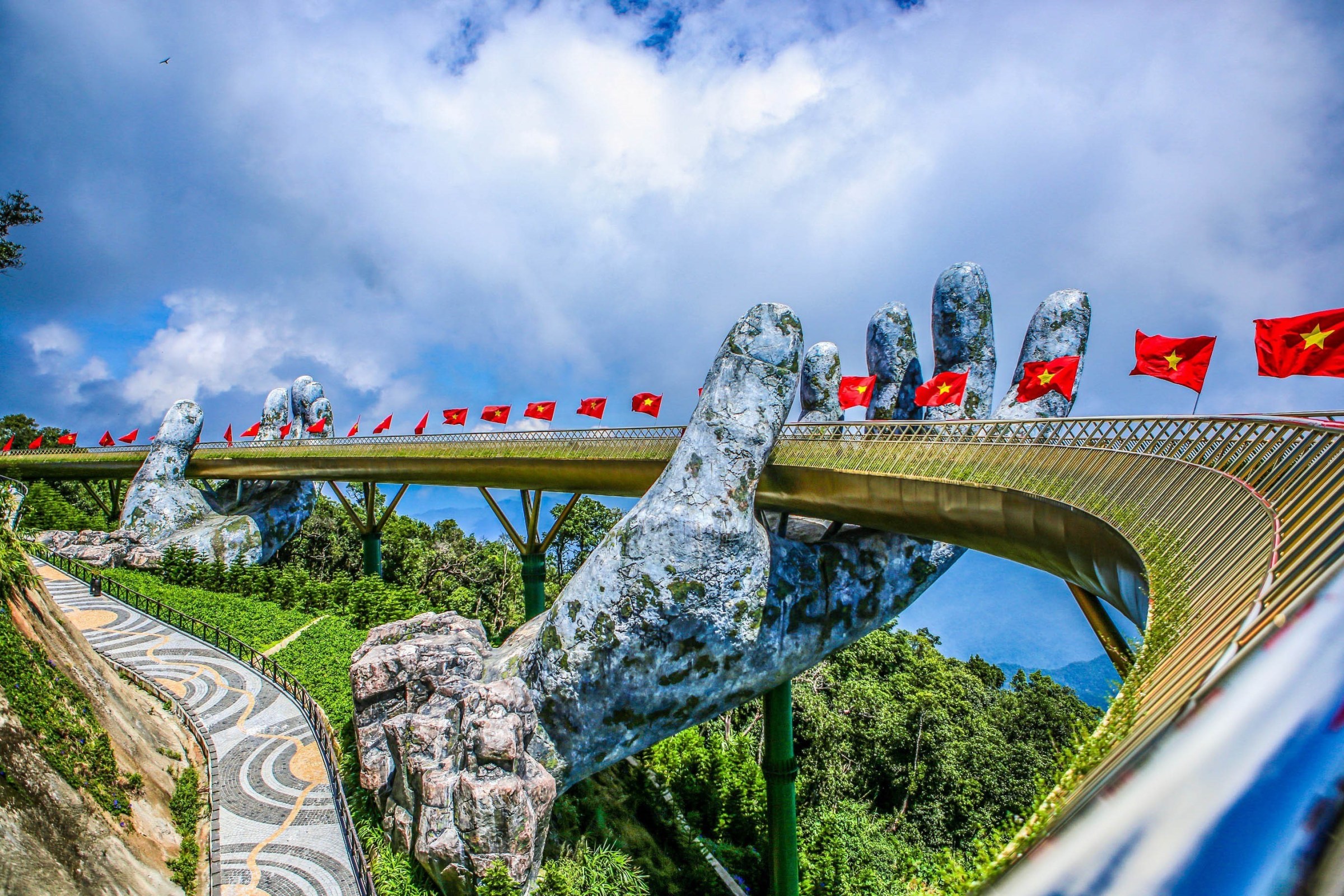
Golden Bridge in Da Nang city (Source: VNA)
Before Doi Moi, Vietnam was labeled as a country sustained simply with foreign aid but the current global perception is totally different. Vietnam is now one of the countries of ASEAN with high GDP growth and is expected to be the strongest economy of the region within a couple of decades.
On the other hand, Vietnam is also emerging as a key player among the ASEAN members, as the country has been instrumental in addressing many issues, specifically the South China Sea (known as East Sea in Vietnam) claims, as the chair of the ASEAN, said Reddy, who is former Director of the Centre for Southeast Asian and Pacific Studies at Sri Venkateswara University in the Indian state of Andhra Pradesh.
He highlighted a prediction by many scholars that the 21st century is of Asia, and no doubt that a country like Vietnam has been burgeoning with its dynamic domestic and international economic policies. He pointed out that no one would have predicted that Vietnam would become one of the largest consumer markets in the world by 2020. Vietnam is one of the very few countries which have registered nearly 3.0 percent of GDP growth rate, whilst surprisingly, the world GDP growth rate is -3.6 percent, as per World Bank data.
Professor Julie Nguyen, President of the Canada – ASEAN Initiatives at York University, said that the article showed the heart of the leader who has deep concern for the people and the wish of leaving no one behind, especially in the context that the country is still poor and has to compete economically with the outside world. This is a decisive factor ensuring the people’s support to the Party, she stressed.
According to the professor, a socialist-oriented market economy is the right way for leaders to achieve the goal for the people.
She expressed interest in the Vietnamese Party chief’s opinion stating that a fundamental characteristic and important feature of the socialist orientation in the Vietnam’s market economy is the combination of economy and society, the coordination of economic and social policies, and the economic growth being accompanied by social progress and equality in every stage, every policy, and throughout the development process.
Dr. Ruvislei González Sáez, head of the Asian team at the Cuban Centr for International Policy Research, also affirmed theoretical and practical values in Party General Secretary Nguyen PhuTrong’s article.
Sáez, who is also Vice Chairman of the Cuba – Vietnam Friendship Association, hailed the article as a helpful reference for countries on the way toward socialism as well as for theory research. It is also instrumental for Vietnam’s future leaders to continue with the socialism path and goals set till 2045.
He said the article took practical approach with a mindset of the era that is close to realities, combining the most reasonable and progressive factors in the current socialism thought.
Dr. Ruvislei González Sáez (Photo: VNA)
In his writing, Trong also outlined jobs that need to be done to look toward strategic social goals by 2045, including narrowing the gap between the rich and the poor; improving the quality of education, health care and other public services; developing culture and spiritual values; combating corruption, wastefulness and moral degradation among officials and Party members; and coping with “peaceful evolution” plots that sabotage socialism.
Sáez said the article also held international values when Trong pointed out that a nation could not grow unilaterally, but should stay active and proactive in global integration, carry out a foreign policy of independence, self-reliance, ensuring territorial integrity and not interfering in other countries’ internal affairs, equality and mutual benefits.
“The article gave a comprehensive, insightful and thorough analysis of the path chosen by Vietnam since the victory of the August Revolution 1945.”
– German historian and journalist Gerhard Feldbauer.
Sharing the same view, German historian and veteran journalist Gerhard Feldbauer hailed the significance of Party chief’s article, underlining that the article gave a comprehensive, insightful and thorough analysis of the path chosen by Vietnam since the victory of the August Revolution 1945. He pointed out that throughout its leadership process, the Communist Party of Vietnam creatively applied Marxism-Leninism in the country’s specific conditions to deal with various complex and difficult issues, providing valuable experience to not only Vietnam but also many countries in the world.
According to him, Vietnam is on the way toward a modern and socialist-oriented industrialised economy. From its starting point as a poor nation due to war aftermaths, Vietnam has become one of the world’s most vibrant and fastest-growing economies in Southeast Asia with an annual growth of 6-8 percent before the COVID-19 pandemic.
About challenges faced by the country on the path toward socialism, Feldbauer said the key point is to affirm the leadership of the CPV and defeat every attempt to lower or eliminate the role of the Party. He also suggested Vietnam crack down on corruption and stay close with the people in all aspects.
He expressed his belief that under the CPV’s leadership, Vietnam will always overcome any difficult periods in history.
Stefan Kühner, President of the Marx-Engels Foundation and member of the German Communist Party (DKP)’s commission for international affairs, underlined that the article has shed light on the path to socialism in the Southeast Asian country. According to him, with this article, the General Secretary of the CPV presented in detail the pathway towards socialism under specific conditions and characteristics of Vietnam.
In conclusion, it can be said that the in-depth theoretical and practical analysis, summaries, and assessments by the Party leader have not only shed light to the nation’s future development path but also inspired the entire Party, army, and people in carrying out their tasks along the journey./.
Индустриальные парки (ИП) в «столице» Биньзыонга становятся рычагом для привлечения инвестиций и развития торговли и услуг для формирования разнообразной экономической экосистемы; в которой внимание уделяется «зеленой» и «умной» экономике. В частности, ИП Биньзыонга 2-го и 3-го поколений, которые появились в стремлении быть экологически чистыми, достигли высокой заполняемости, привлекая множество чистых производств и экономическую ценность.
Как правило, в последнее время в провинции Биньзыонг, привлекающей иностранные инвестиции (ПИИ), наблюдается явное изменение качества проектов. В частности, среди более чем 2,3 млрд. долл. США, привлеченных в первые месяцы 2022 года, есть 2 датских проекта в ИП нового поколения VSIP3.
В частности, к проекту LEGO Group с инвестициями более 1,3 млрд. долл. США, специализирующемуся на производстве игрушек, недавно был добавлен проект с инвестиционным капиталом более 100 млн. долл. США, специализирующийся на производстве ювелирных изделий для международного рынка. Это «чистые» промышленные проекты, которые являются приоритетными для привлечения инвестиций в экосистему «зеленого» ИП.
По словам заместителя председателя народного комитета провинции Биньзыонг Нгуен Ван Заня, правительство провинции в настоящее время координирует свои действия с местными и иностранными подразделениями и организациями для формирования глобальной маркетинговой цепочки для привлечения иностранных инвестиций через онлайн-конференции.
Благодаря чему многие инвесторы знают о стратегии планирования провинции, направленной на развитие «зеленой» и «умной» экономики, а также о планировании централизованной системы ИП для создания новой экосистемы. Примечательно, что «умная» зона Биньзыонг является одним из 21 сообщества с типичной в мире Стратегией развития «умного города» (Smart 21).
По словам г-на Нгуена Ван Заня, зона в Биньзыонге должна соблюдать 6 критериев для попадания в список Smart 21, и это показывает, что Биньзыонг подготовил основу для проекта развития «умного» города на период 2022–2026 гг., в котором основное внимание уделяется инновациям, индустрии 4.0 и факторам «умного» роста.
«Умная» зона Биньзыонг является одним из 21 сообщества с типичной в мире Стратегией развития «умного города» (Smart 21). (Фото: ВИА)
Таким образом, создание экосистемы ИП, стимулирующих привлечение инвестиций в проекты по инновационным технологиям, «зеленой» экономике и применению новых достижений науки и техники, создало площадку для международных инвесторов. Среди них многие привередливые инвесторы стали обращать внимание на Биньзыонг, например, ряд датских инвестиционных проектов на миллиарды долларов; ряд крупных проектов из Сингапура, Японии… Соответственно, местность привлекла проекты с высоким содержанием «мозгов», которые создают большую экономическую ценность, например, проект LEGO Group.
Г-н Нгуен Ван Хунг, председатель совета директоров корпорации Becamex IDC, сказал: «Одной из наиболее заметных экосистем является комплекс провинции Биньзыонг, который формирует сеть концентрированных ИП, связанных с городским развитием и государственными административными единицами. Это центр центрального умного города Биньзыонг».
В настоящее время Комплекс сотрудничает со многими международными партнерами, такими как Tokyu Corporation из Японии, Sembcorp – из Сингапура, … для развития качественных и образцовых городских территорий для инвесторов, частных лиц, экспертов.
Наряду с этим, в Комплексе система обучения всех уровней соответствует международным стандартам, от детского сада до университета. Здесь находится Восточный международный университет, Вьетнамско-немецкий университет… с программами обучения 100% на английском языке, а преподаватели приезжают из страны и из-за рубежа. Образование сосредоточивает внимание на ключевых отраслях, обслуживающих основу промышленного развития провинции, таких как информационные технологии, мехатроника и электроника.
Это столпы в подготовке кадров для современных заводов и в то же время основа для разработки новых производственных инструментов, улучшения и модернизации промышленной базы посредством исследовательских проектов, исследований и разработок. Это формирует самую четкую экосистему, и инвесторы продвигают инвестиции в Биньзыонг.
Г-н Нгуен Ван Хунг также добавил, что во время создания ИП VSIP I в городе Тхуан-ан, который был основой международного совместного промышленного парка, а затем и Комплекса, в сотрудничестве с ведущими предприятиями провинции власти развивают и расширяют национальную магистраль 13. Это первая важная транспортная магистраль, которая соединяет инфраструктуру, и служит рычагом для соединения системы промышленной зоны Биньзыонга с аэропортом Таншоннят.
После формирования регионального плана маршрута Мифыок – Танван – Баубанг, он продолжает развиваться, чтобы завершить транспортную ось, соединяющую международные аэропорты и морские порты, такие как аэропорт Лонгтхань, порт Каймеп-Тхивай.
Кроме того, дороги горизонтальной оси, соединяющей внутренние участки провинции, такие как DT743, DT746, Бактануен – Фужао – Баубанг … и некоторые участки Кольцевых дорог 3 и 4 в Биньзыонге, создают региональную транспортную систему, связывая индустриальные парки друг с другом, а также соединяя систему промышленных зон с международными аэропортами и морскими портами, образуя крупный экосистемный комплекс с конкурентными преимуществами для Биньзыонга.
Транспортное сообщение, связанное с быстрым развитием крупных, хорошо спланированных ИП позже (известных также как индустриальные парки нового поколения), привлекло десятки тысяч отечественных и иностранных компаний, выбравших Биньзыонг в качестве места для инвестиций. Недавно крупные экономические группы мира начали инвестировать в проекты на миллиарды долларов в Биньзыонге, что свидетельствует о стратегии развития «умного» города, повышающей ее эффективность и создающей новую площадку для международных инвесторов.
Заместитель председателя Народного комитета провинции Биньзыонг Нгуен Ван Зань также признал, что на протяжении многих лет правительство провинции Биньзыонг всегда было заинтересовано в поддержке развития инвестиционных предприятий в провинции путем улучшения инвестиционной среды, планирования ИП, повышения конкурентоспособности, применения науки и технологий, упрощения административных процедур, развертывания подготовки кадров, строительства жилья (в том числе социального жилья, жилья для рабочих), предложения рабочей силы для предприятий, инвестирующих в провинцию. Поэтому Биньзыонг считается одной из ведущих провинций и городов страны в социально-экономическом развитии, промышленном развитии и привлечении прямых иностранных инвестиций (ПИИ).
В первые месяцы 2022 года, когда пандемия COVID-19 все еще оказывала значительное влияние на социально-экономическое развитие провинции, но с соответствующими механизмами, политикой и решениями, Биньзыонг по-прежнему привлекал множество компаний, отечественных и иностранных инвестиций. В настоящее время Биньзыонг занимает второе место в стране по привлечению ПИИ после Хошимина. В Хошимине, всего 4.042 проекта из 65 стран и территорий, а общий зарегистрированный капитал составляет примерно 40 млрд. долл. США./.
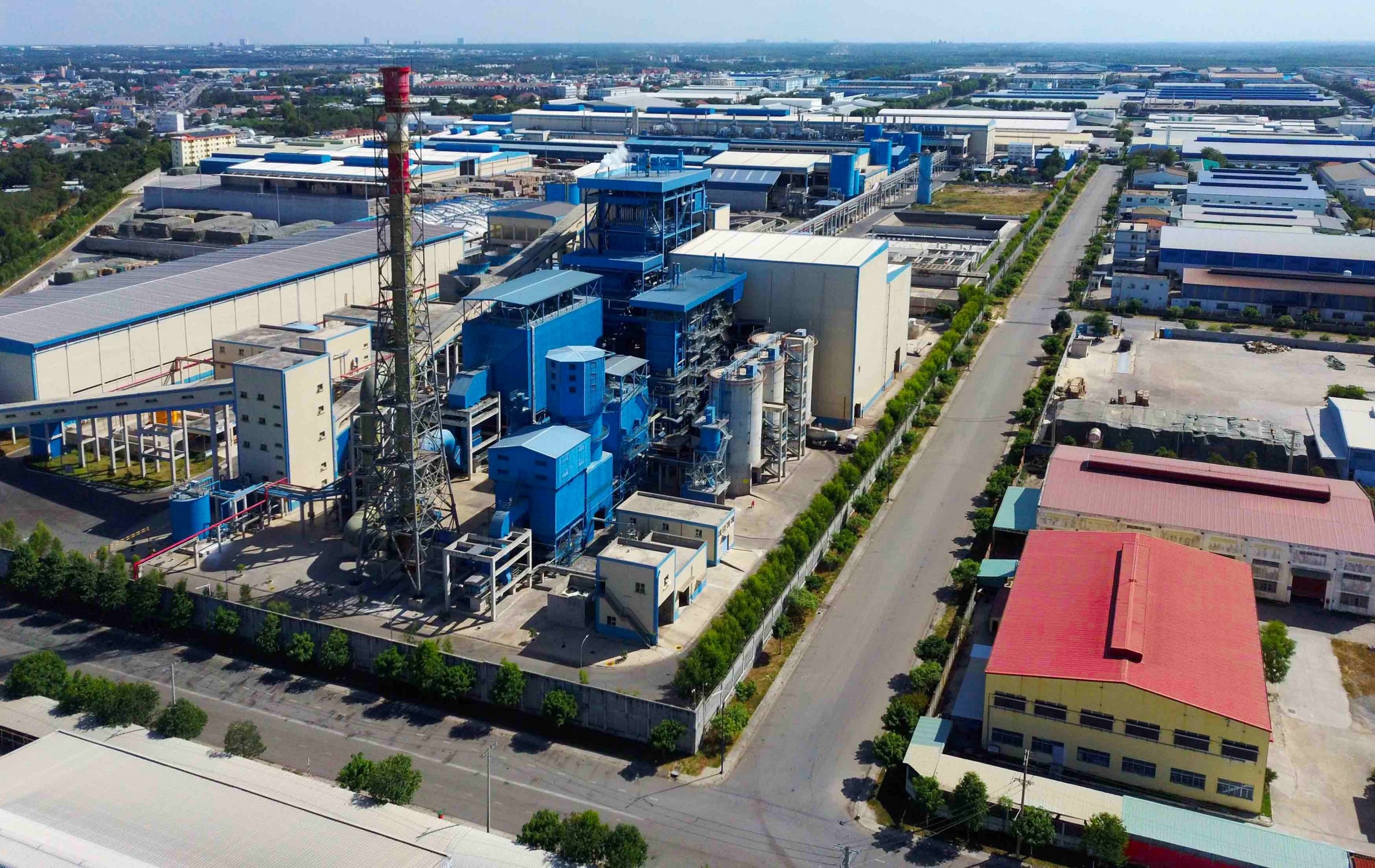
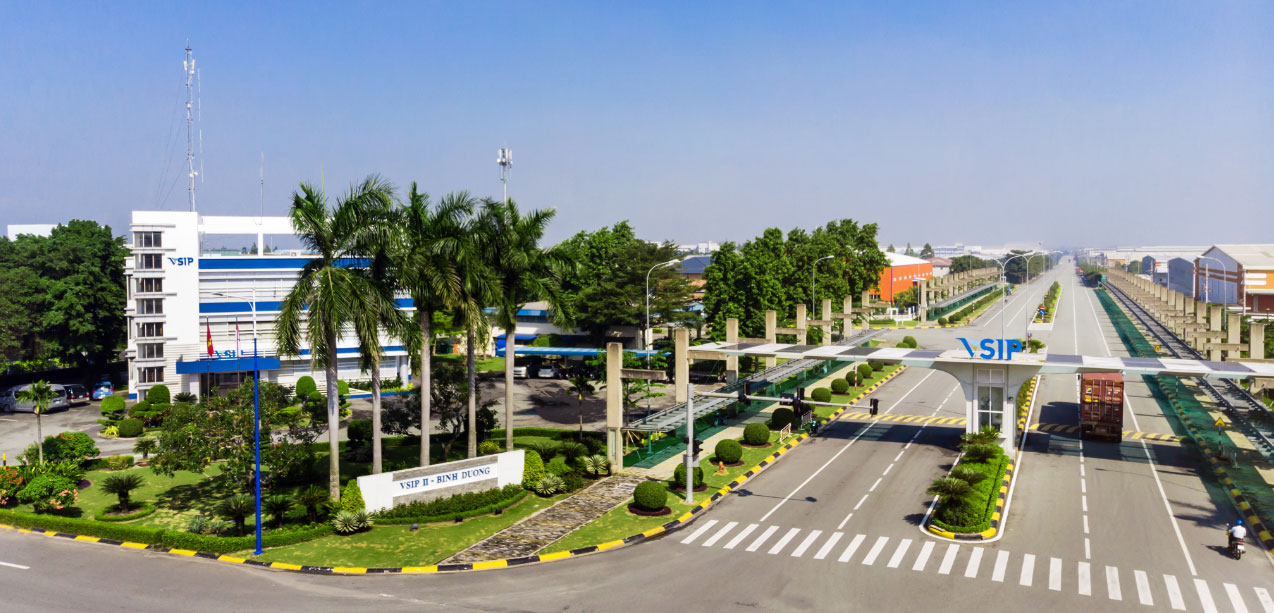
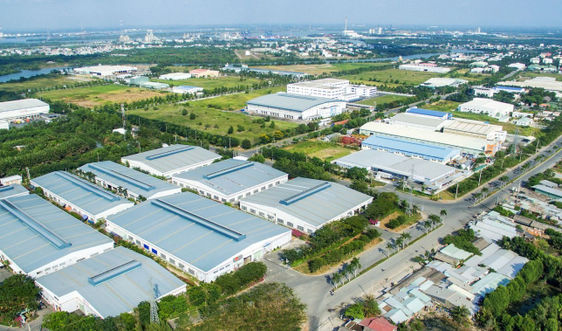
ИП Вьетнам-Сингапура (VSIP1) в городе Тхуан-ан, провинция Биньзыонг. (Фото: ВИА)
The southern province of Binh Duong, a neighbour of Ho Chi Minh City, is leveraging its industrial parks to lure foreign direct investment (FDI) and develop trades and services, building a diverse economic ecosystem that facilitates the formation of a green and smart economy.
Second and third generations of industrial parks in Binh Duong that embrace eco-friendly models have high occupancy and attracted many projects in clean and profitable sectors.
The province has seen strong FDI inflows into higher quality projects, including two by Danish investors approved earlier this year to set up camp at the new-generation Vietnam – Singapore Industrial Park III (VSIP III). Now under construction, the 1,000-ha park will be equipped with uniform, green and smart infrastructure.
One of the projects is a toy production facility worth 1.3 billion USD by LEGO Group, the largest investment in Vietnam ever made by a Danish company. LEGO Group will invest the money in the construction of its first-ever carbon neutral factory, scheduled to start later this year. The other is a 100-million-USD jewellery-making project targeting the international market.
Binh Duong authorities are coordinating with domestic and foreign partners via webinars to establish a global promotion network that helps call for FDI to the province, said Vice Chairman of the provincial People’s Committee Nguyen Van Danh.
The network kept up operations during COVID-19, Danh said, adding that with this network, Binh Duong has become a pioneer in approaching foreign investors by organising promotion webinars on a regular basis.
Danh went on to announce that last week, Binh Duong smart city was listed in the world’s top seven intelligent communities by US-based think tank Intelligent Community Forum (ICF). The list was chosen from the ICF’s Smart21 Communities of 2022.
It was the second consecutive year Binh Duong smart city had been placed in the top seven finalists.
Binh Duong smart city is listed in the world’s top seven intelligent communities by US-based think tank Intelligent Community Forum (ICF) this year. (Photo: VNA)
It shows that Binh Duong has prepared the groundwork for accomplishing its smart city development project for the 2022 – 2026 period in which the province intends to stay focused on innovation, Industry 4.0 and smart growth, the official said.
It has developed an ecosystem of industrial parks prioritising projects that employ innovative technologies and advanced science, and promotes a green economy.
Nguyen Van Hung, Chairman of Becamex IDC, a leading industrial, urban and transport infrastructure developer of the country, said a highlight of the province’s industrial ecosystems is the complex of Binh Duong in which a network of industrial parks has been developed in tandem with urban development and construction of public administrative facilities. It is expected to be the heart of Binh Duong smart city.
The complex is cooperating with major partners, such as Japan’s Tokyu Group and Singapore’s Sembcorp, to build high-quality and model urban zones for the accommodation of foreign investors and experts.
A number of internationally-recognised schools, from kindergartens to universities, have also been founded in the complex. They include the Eastern International University and the Vietnamese-German University which offer various courses taught in English in the most sought-after fields such as IT, mechatronics engineering and electronics engineering. The focus is to provide a skilled workforce for the local industry, according to Hung.
He also noted that transport infrastructure will be further improved to increase the connectivity between local industrial parks and major ports and airports of the region. For example, National Highway 13 is under expansion as it plays a critical part in connecting Binh Duong’s industrial parks and Ho Chi Minh City’s Tan Son Nhat International Airport. Inter-regional roads will also be built to better link the province with Long Thanh International Airport which is under construction, and Cai Mep – Thi Vai Port.
Vice Chairman Danh added that the province has remained among Vietnam’s top performers in socio-economic growth, industrial development and FDI attraction for years.
From being one of the provinces hit the hardest by the COVID-19 pandemic last year, Binh Duong has bounced back to top the country in FDI attraction in the first five months of 2022, raking in nearly 2.5 billion USD in FDI.
It is now the second largest FDI recipient of the country, only after the country’s biggest hub of HCM City, with 4,042 projects by investors from 65 countries and territories, worth a total of around 40 billion USD./.
An aerial view of the first Vietnam – Singapore Industrial Park (VSIP I) in Thuan An City of Binh Duong. (Photo: VNA)
Los parques industriales en la provincia survietnamta de Binh Duong se están convirtiendo en un impulso para captar inversiones y desarrollar el comercio y los servicios con el fin de formar un ecosistema económico diverso hacia la economía verde e inteligente. Especialmente, las zonas, establecidas en concordancia con la tendencia de ser respetuosas con el medio ambiente, han alcanzado altas tasas de ocupación, atrayendo muchas industrias limpias y de alto valor económico.
En los últimos tiempos, Binh Duong ha atraído la inversión extranjera directa (IED) de manera selectiva con un cambio tangible en la calidad de los proyectos. En concreto, entre los más de 2,3 mil millones de dólares captados en los primeros meses de 2022, se encuentran dos proyectos daneses invertidos en VSIP3, un parque industrial de nueva generación.
En concreto, el grupo LEGO, especializado en la producción de juguetes, cuenta hoy con un proyecto de más de 1,3 mil millones de dólares en la localidad. Recientemente, invirtió en otro plan de la fabricación de joyas para el mercado internacional, el cual tiene un capital de 100 millones de dólares.
Según el vicepresidente del Comité Popular de Binh Duong Nguyen Van Danh, el gobierno provincial se coordina con unidades y organismos nacionales y extranjeros para formar una cadena de marketing global con el objetivo de llamar a la inversión foránea a través de conferencias en línea.
Binh Duong es la provincia pionera en acercarse a los inversores internacionales mediante las conferencias en línea con una estrategia metódica. De esta manera, ayuda a ellos a acceder a la información sobre la planificación de las zonas industriales, especialmente la introducción del ecosistema y el entorno de inversión.
Muchos inversores conocen sobre su estrategia del desarrollo de economía verde e inteligente, así como su planificación de un sistema de parques industriales centralizado para crear un nuevo ecosistema. Cabe destacar la formación de la Zona Inteligente de Binh Duong, una de las 21 comunidades con una estrategia de desarrollo de ciudad inteligente típica en el mundo (Smart 21) que acaba de ser honrada en el Foro de la Comunidad Inteligente (ICF, en inglés) de 2022.
La Zona Inteligente de Binh Duong, una de las 21 comunidades con una estrategia de desarrollo de ciudad inteligente típica en el mundo (Smart 21). Foto: VNA
Según Van Danh, para ser honrada en el ICF en la lista Smart 21, Binh Duong ha preparado las bases del Plan de Desarrollo de Ciudad Inteligente para el período 2022 – 2026, en el que el enfoque es el campo de la innovación, la cuarta revolución industrial (4.0) y el crecimiento inteligente.
De este modo, la construcción de un ecosistema de parques industriales para atraer inversiones en proyectos de tecnología innovadora, economía verde y aplicación de nueva ciencia y tecnología, ha creado un campo de juego para inversores foráneos.
Varios inversores de Dinamarca, Singapur y Japón comenzaron a prestar atención a Binh Duong. En consecuencia, la provincia ha atraído proyectos con alto contenido de materia gris que crean un gran valor económico como el del grupo LEGO.
Nguyen Van Hung, presidente de la Junta Directiva de la Corporación Becamex IDC, dijo que uno de los ecosistemas más destacados es el Complejo de la provincia de Binh Duong, que está formando una cadena de parques industriales asociados con el desarrollo urbano y las unidades administrativas estatales. Este deviene el centro de la ciudad inteligente de la provincia.
Además, en esa área el sistema escolar de todos los niveles cumple con los estándares internacionales, desde los jardines de infancia hasta universidades como la Universidad Internacional del Este y la Universidad Vietnam-Alemania con programas de formación completamente en inglés, y maestros nacionales y extranjeros. Esas instituciones se centran en la enseñanza en las industrias claves que sirven a la base del desarrollo industrial de la provincia, como tecnología de la información, mecatrónica y electrónica.
Estas entidades constituyen los pilares en la formación de recursos humanos para las fábricas modernas y, al mismo tiempo, sientan las bases para el desarrollo de nuevas herramientas de producción a través de proyectos de investigación y desarrollo. Se trata de una manifestación más vívida del ecosistema mencionado que atrae más inversiones a Binh Duong.
Van Hung agregó que, el establecimiento del parque industrial VSIP I en la ciudad de Thuan An, fue la base para impulsar la cooperación de empresas líderes de la provincia. Esas firmas han acompañado a la provincia en el desarrollo y la ampliación de la Carretera Nacional 13, una artería importante que conecta las zonas industriales locales con el aeropuerto Tan Son Nhat en Ciudad Ho Chi Minh.
Según el plan de transporte regional, la carretera My Phuoc – Tan Van – Bau Bang continúa formándose para completar el eje de tráfico que conecta los aeropuertos y puertos marítimos internacionales como el aeropuerto de Long Thanh, en la provincia de Dong Nai, y el puerto de Cai Mep- Thi Vai, en la provincia de Ba Ria-Vung Tau.
Además, las vías internas, como DT743, DT746, Bac Tan Uyen – Phu Giao – Bau Bang y algunas secciones de las circunvalaciones 3 y 4 que atraviesan Binh Duong, formarán un sistema de transporte interregional que conecte los parques industriales entre sí y estos con aeropuertos y puertos marítimos internacionales, lo cual generará ventajas competitivas para esta localidad.
La conexión de transporte asociada con el rápido desarrollo de grandes parques industriales (también conocidos como parques industriales de nueva generación) ha atraído a decenas de miles de empresas nacionales y extranjeras para elegir Binh Duong como su destino de inversión. Recientemente, los grandes grupos económicos del mundo han comenzado a invertir en proyectos en la localidad, lo cual muestra que su estrategia de desarrollo de la ciudad inteligente se está promoviendo con eficiencia.
El vicepresidente del Comité Popular local Nguyen Van Danh también señaló que, a lo largo de los años, el gobierno de Binh Duong siempre ha estado interesado en apoyar el desarrollo de empresas mediante la mejora del entorno de inversión, la modernización del sistema de parques industriales, la elevación de la competitividad, la aplicación de la ciencia y tecnología, la simplificación de los trámites administrativos, la formación de recursos humanos, la construcción de viviendas para los trabajadores, y oferta laboral. Gracias a esos esfuerzos, Binh Duong siempre ha sido evaluada como una de las provincias y ciudades líderes a nivel nacional en el desarrollo socioeconómico y la atracción de inversión extranjera.
En los primeros meses de 2022, cuando la pandemia de la COVID-19 todavía tenía un impacto significativo en el desarrollo socioeconómico de la provincia, con mecanismos, políticas y soluciones apropiadas, Binh Duong atrajo a muchos inversores nacionales y extranjeros. Actualmente, ocupa el segundo lugar en el país en términos de atracción de IED, después de Ciudad Ho Chi Minh, con cuatro mil 42 proyectos de 65 países y territorios, por valor total de 40 mil millones de dólares./.
Vista panorámica del parque industrial Vietnam- Singapore (VSIP1) en Binh Duong. Foto: VNA
Les parcs industriels de la province de Binh Duong deviennent un levier pour attirer les investissements et développer le commerce et les services, en vue de bâtir un écosystème diversifié, vers une économie verte et intelligente.
En particulier, les parcs industriels de Binh Duong des 2e et 3e générations ont tendance à être respectueux de l’environnement et ont atteint un taux d’occupation élevé, attirant de nombreuses industries propres et à forte valeur économique.
Ces derniers temps, la qualité des projets d’investissement étrangers dans cette province a connu des changements significatifs.
Sur le total de 2,3 milliards de dollars injectés dans la province au cours des premiers mois de 2022, figurent deux projets danois situés dans le Parc industriel Vietnam-Singapour (VSIP), – un parc industriel de nouvelle génération.
Le groupe danois LEGO a investi plus d’un milliard de dollars pour construire sa toute première usine neutre en carbone, dont un investissement dans l’énergie solaire sur un site de 44 ha à Binh Duong, dans l’objectif de générer 4.000 emplois ces 15 prochaines années. Le projet sera mis en chantier au second semestre 2022 et entrera en service deux ans plus tard.
Le fabricant et détaillant de bijoux danois Pandora a signé un protocole d’accord pour la construction d’une usine dans le Parc industriel Vietnam-Singapour 3 (VSIP 3). D’un investissement de 100 millions de dollars, la nouvelle installation sera construite selon les normes LEED Or, une certification de bâtiment écologique de premier plan, et sera alimentée à 100% par des énergies renouvelables. Elle créera 6.000 emplois et aura une capacité annuelle de 60 millions de pièces de joaillerie.
Selon le vice-président du Comité populaire de la province de Binh Duong, Nguyên Van Danh, les autorités provinciales se coordonnent actuellement avec des unités et des organisations nationales et étrangères pour former une chaîne de marketing mondial afin d’appeler les investissements étrangers par le biais de réunions en ligne.
Durant l’épidémie de Covid-19, seule province maintient l’approche des investisseurs internationaux en organisant de réunions en ligne, ce pour aider les investisseurs à avoir l’accès aux informations sur l’aménagement des zones industrielles et permettre aux dirigeants locaux de présenter l’écosystème et l’environnement d’investissement local, a indiqué Nguyên Van Danh.
Cela a également aidé de nombreux investisseurs à connaître l’orientation de développement d’une économie verte et intelligente et la planification d’un système de parcs industriels centralisés pour créer un nouvel écosystème.
La ville intelligente de Binh Duong avait été nommée dans le Top 7 des communautés intelligentes mondiales 2022. Photo: VNA
Il a également fait savoir que la ville intelligente de Binh Duong avait été nommée dans le Top 7 des communautés intelligentes mondiales 2022. Elle était l’une des 7 meilleures communautés en 2021 et est à nouveau une communauté Smart21 cette année.
Le Forum des communautés intelligentes rassemble près de 200 villes intelligentes prospères dans le monde. Il promeut les meilleures pratiques des communautés intelligentes pour s’adapter aux nouvelles demandes et saisir les opportunités offertes par le haut débit et la technologie numérique.
Il a mené des recherches et évalué des centaines de villes à travers le monde pour sélectionner le Top 21 (Smart 21) de 2022 avec une stratégie de développement de ville intelligente basée sur six critères : connectivité haut débit, main-d’œuvre du savoir, innovation, égalité numérique, durabilité et plaidoyer.
Nguyên Van Hung, président du conseil d’administration de Becamex IDC Corporation, a déclaré que l’un des écosystèmes les plus importants était le Complexe industriel et urbain de la province de Binh Duong, qui forme une chaîne de parcs industriels concentrés associés au développement urbain et aux unités administratives. C’est le centre de la ville intelligente de Binh Duong.
Actuellement, le Complexe a coopéré avec de nombreux partenaires internationaux tels que Tokyu Corporation (Japon), Sembcorp (Singapour), … pour développer des zones urbaines modèles et de haute qualité pour des investisseurs, experts ; des universités internationales avec un contingent d’enseignants provenant des pays du monde, avec les programmes de formation en anglais se concentrant sur les industries clés au service du développement industriel telles que les technologies de l’information, l’ingénierie mécanique l’électricité, l’électronique.
Ce sont les piliers de la formation des ressources humaines pour les usines modernes, contribuant au développement de nouveaux outils de production, à l’amélioration et le rehaussement des bases industrielles à travers des projets de recherche.
Cette province méridionale privilégie également des projets de connectivité entre régions, afin d’élargir l’espace de développement socio-économique, de mieux servir les investisseurs et de favoriser le développement durable.
Le plan d’investissement public de Binh Duong pour la période 2021-2025 représente un fonds de près de 50.000 milliards de dongs (2,15 milliards de dollars). Au cours de cette période, la province compte privilégier la mise en chantier de 40 projets d’infrastructures de transport, avec un capital total de plus de 13.821 milliards de dôngs. Parmi eux figurent les projets d’agrandissement de la Nationale 13, des périphériques 3 et 4.
Ces projets de transport liés au développement des zones industrielles de nouvelle génération ont attiré des dizaines de milliers de projets d’investissement nationaux et étrangers.
Selon Nguyên Van Danh, au fil des ans, les autorités provinciales s’attachent à l’amélioration de l’environnement d’investissement, la compétitivité ; à l’achèvement de la construction des parcs industriels ; à l’application des sciences et technologies et à la simplification des procédures administratives ; à la formation des ressources humaines ; à la construction de logements sociaux pour les travailleurs.
Binh Duong est toujours évaluée comme l’une des principales localités du pays en matière de développement socio-économique, de développement industriel et d’attraction des investissements directs étrangers (IDE).
Durant les premiers mois de 2022, alors que la pandémie de Covid-19 avait de lourds impacts sur le développement socio-économique de la province, Binh Duong a attiré encore de nombreux investisseurs nationaux et étrangers grâce à des mécanismes, des politiques et des mesures appropriées. /.
Une vue du Parc industriel de Vietnam–Singapour (VSIP1), ville de Thuan An, province de Binh Duong. Photo: VNA