1958年5月22日,东南亚半岛体育联合会(简称SEAP Games Federation)成立。1977年,联合会更名为东南亚体育联合会,东南亚半岛运动会(SEAP Games)更名为东南亚运动会(SEA Games)
因此,1958年5月22日,来自东南亚半岛国家的代表参加了在日本东京举行的第3届亚洲体育大会,并商定建立一个体育组织,名为东南亚半岛体育联合会(简称SEAP Games Federation),目的系加强本地区国家之间的友谊、团结和相互了解;不断提高运动成绩、技术和战术;为地区国家运动员训练和比赛创造条件,以更好地参加亚运会和奥运会。
Đại hội thể thao Đông Nam Á lần thứ 31 (SEA Games 31) sẽ chính thức diễn ra từ ngày 12 đến 23/5/2022 tại Hà Nội và một số tỉnh, thành, đánh dấu mốc lần thứ hai Việt Nam có vinh dự được làm nước chủ nhà.
Kể từ khi ra đời đến nay, sau hơn nửa thế kỷ tồn tại, Đại hội thể thao Đông Nam Á (SEA Games) vẫn luôn là món ăn tinh thần không thể thiếu với những người yêu thể thao, đồng thời góp phần làm tăng cường tình đoàn kết, hữu nghị giữa các quốc gia trong khu vực.
63 năm chặng đường hình thành và phát triển
Cách đây hơn nửa thế kỷ, xuất phát từ quan điểm rằng, những quốc gia Đông Nam Á có nhiều điểm tương đồng về lối sống, nền văn hóa, khí hậu và cả thể chất con người; cùng có một trình độ căn bản tương đương nhau về thành tích thể thao, nên cần tập hợp lại, hỗ trợ lẫn nhau tổ chức thường xuyên và định kỳ một đại hội thể thao chung có quy mô thích hợp giữa các quốc gia.
Ngày 22/5/1958, Liên đoàn thể thao Bán đảo Đông Nam Á (viết tắt là SEAP Games Federation) đã được thành lập. Năm 1977, Liên đoàn được đổi tên thành Liên đoàn thể thao Đông Nam Á và Đại hội thể thao Bán đảo Đông Nam Á (SEAP Games) được đổi tên là Đại hội thể thao Đông Nam Á (SEA Games).
Vì vậy, ngày 22/5/1958, đại biểu các nước trong khu vực Bán đảo Đông Nam Á tham dự Đại hội thể thao châu Á lần thứ III ở Tokyo, Nhật Bản, đã nhóm họp và đi đến thống nhất thành lập một tổ chức thể thao riêng của khu vực, mang tên là Liên đoàn thể thao Bán đảo Đông Nam Á (The South East Asian Peninsular Games Federation, viết tắt là SEAP Games Federation), với mục đích tăng cường tình hữu nghị, tình đoàn kết và hiểu biết lẫn nhau giữa các nước trong khu vực; không ngừng nâng cao thành tích, kỹ thuật, chiến thuật các môn thể thao; tạo điều kiện cho vận động viên các nước trong khu vực rèn luyện và thi đấu nhằm tham gia tốt hơn tại các Đại hội thể thao châu Á và Đại hội Olympic.
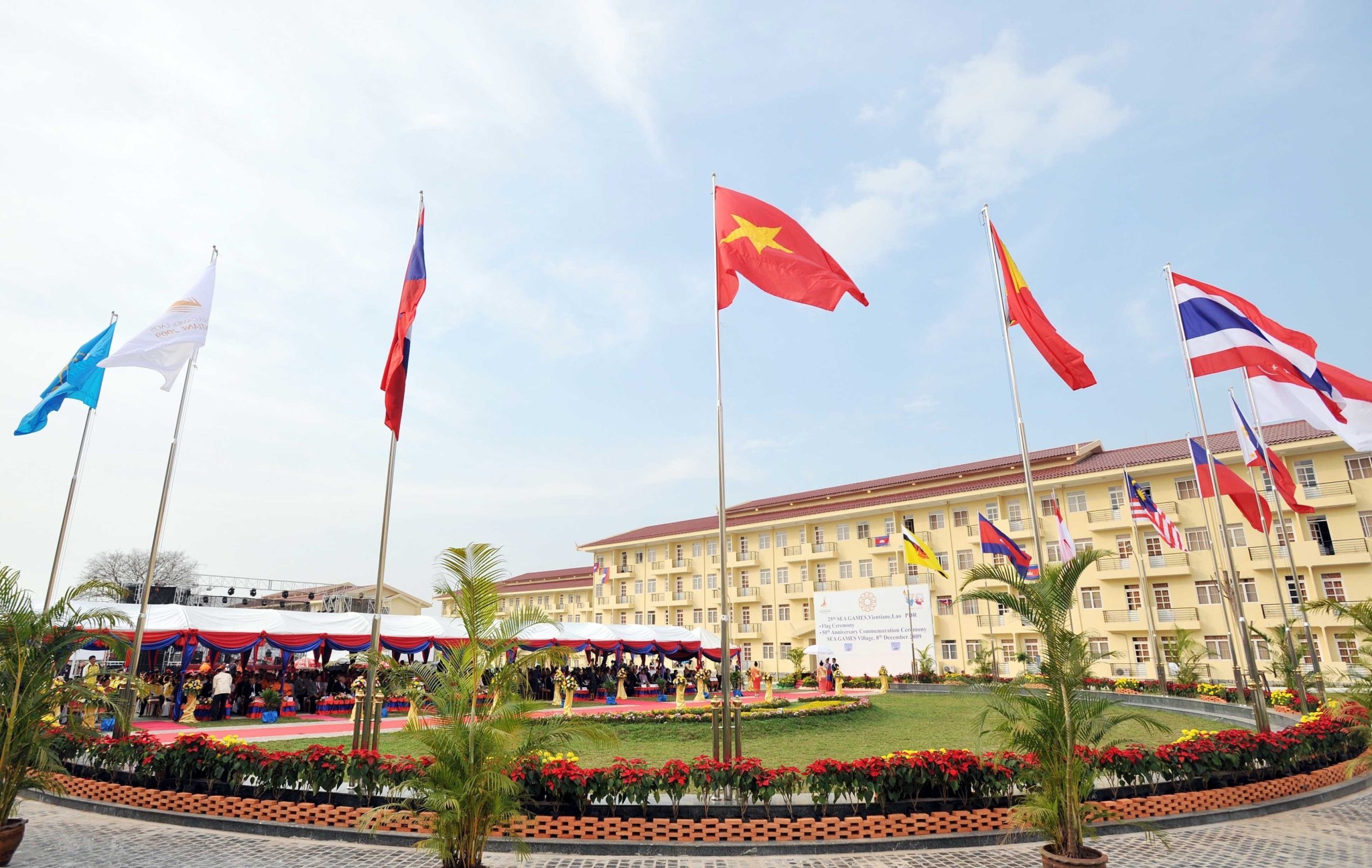
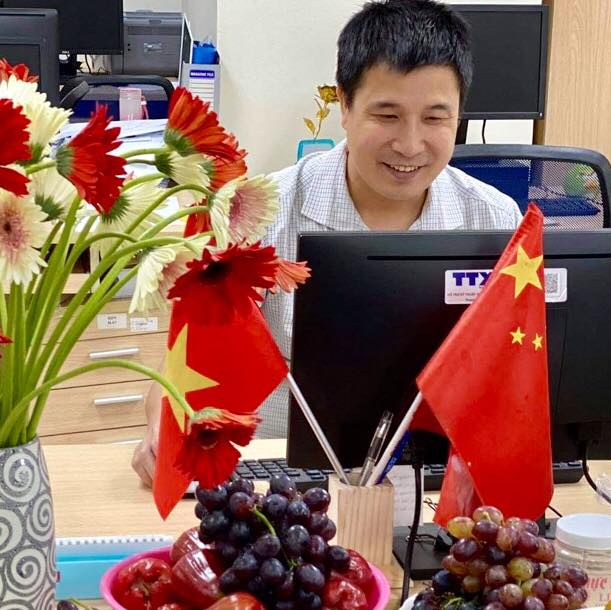
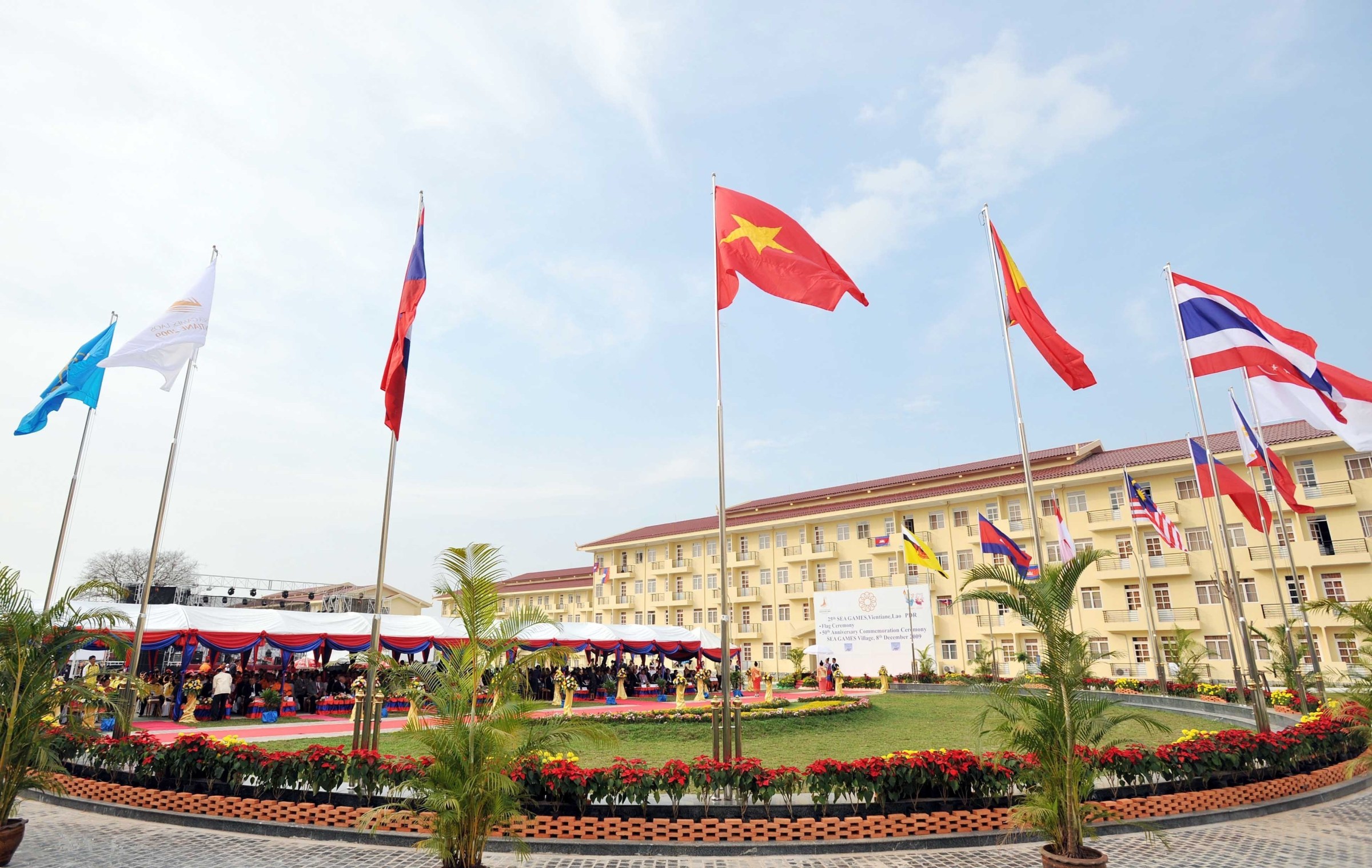
Quốc kỳ của đoàn thể thao Việt Nam cùng các nước Đông Nam Á chính thức tung bay tại SEA Games 25. (Ảnh: TTXVN)
Phiên họp đầu tiên của Liên đoàn thể thao bán đảo Đông Nam Á được tổ chức vào ngày 5/6/1959 tại Hội trường Santidhama ở thủ đô Bangkok, Thái Lan đã thông qua điều lệ và bầu Ban chấp hành của Liên đoàn thể thao Bán đảo Đông Nam Á. Chủ tịch Ủy ban Olympic quốc gia Thái Lan Prabhas Charustiara được bầu làm Chủ tịch đầu tiên của Liên đoàn, các Ủy viên gồm đại biểu các nước Campuchia, Lào, Malaysia, Burma (nay là Myanmar), Thái Lan và Việt Nam.
Các nước tham dự phiên họp đầu tiên này được gọi là nước sáng lập viên của Liên đoàn. Cũng tại phiên họp đầu tiên của Liên đoàn thể thao Bán đảo Đông Nam Á, biểu tượng của Liên đoàn được chấp thuận là 6 vòng tròn màu vàng nhạt gắn vào nhau, tượng trưng cho 6 thành viên sáng lập.
Đại biểu các nước cũng đã quyết định sẽ tổ chức SEAP Games 2 năm/1 lần vào giữa chu kỳ Đại hội Olympic và Đại hội thể thao châu Á. Những môn thể thao tổ chức tại một kỳ đại hội do Liên đoàn thể thao Bán đảo Đông Nam Á quyết định, đặt dưới sự giám sát của Ủy ban Olympic Quốc tế (IOC) và Hội đồng Olympic châu Á.
Hội đồng của Liên đoàn thể thao Bán đảo Đông Nam Á là cơ quan quyền lực cao nhất của Liên đoàn, có thẩm quyền quyết định mọi công việc của Liên đoàn như chương trình đại hội, thời gian tiến hành đại hội, thành phần đăng cai đại hội.
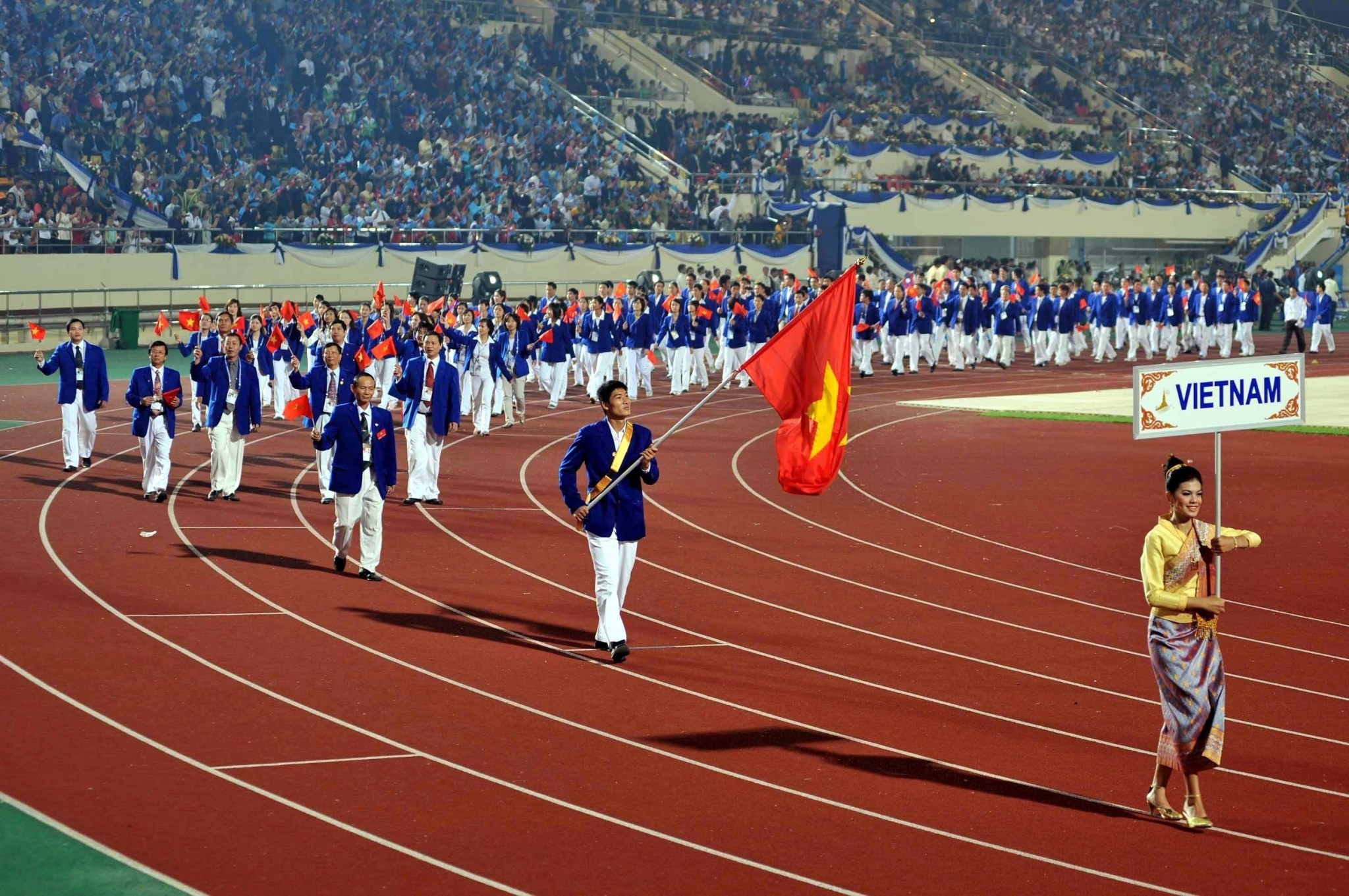
Đoàn thể thao Việt Nam diễu hành qua lễ đài tại lễ khai mạc SEA Games 25 năm 2009. (Ảnh: TTXVN)
Mỗi nước thành viên có quyền cử từ 1 đến 3 người tham gia Hội đồng Liên đoàn thể thao Bán đảo Đông Nam Á. SEAP Games lần đầu tiên được tổ chức tại Bangkok, Thái Lan từ ngày 12 đến 17/12/1959 với sự tham dự của 527 vận động viên thuộc các quốc gia Thái Lan, Burma (nay là Myanmar), Malaysia, Campuchia, Lào và Việt Nam, tranh tài ở 12 môn thể thao.
Năm 1965, Liên đoàn thể thao Bán đảo Đông Nam Á kết nạp thêm thành viên là Singapore sau khi Singapore tách ra khỏi Liên bang Malaysia để thành lập một quốc gia độc lập. Tiếp đó, tại SEAP Games lần thứ 8 tổ chức năm 1975 tại Bangkok, Thái Lan, Liên đoàn thể thao Bán đảo Đông Nam Á đã xem xét kết nạp thêm Indonesia và Philippines.
Hai nước này chính thức được kết nạp năm 1977 và cùng năm đó Liên đoàn thể thao Bán đảo Đông Nam Á đổi tên thành Liên đoàn thể thao Đông Nam Á và Đại hội thể thao Bán đảo Đông Nam Á (SEAP Games) được đổi tên là Đại hội thể thao Đông Nam Á (SEA Games).
Năm 1979, Brunei được kết nạp vào Liên đoàn thể thao Đông Nam Á tại SEA Games lần thứ 10 tổ chức tại Jakarta, Indonesia. Đến Đại hội thể thao Đông Nam Á lần thứ 20 (năm 1999) tổ chức ở Brunei, Hội đồng Olympic Brunei đề nghị sửa đổi biểu tượng của Liên đoàn thể thao Đông Nam Á từ 6 vòng tròn thành 10 vòng tròn màu vàng nhạt gắn vào nhau.
Lá cờ Liên đoàn thể thao Đông Nam Á có nền màu xanh, gồm những vòng tròn kết vào nhau nhằm gửi đi thông điệp hòa bình, đoàn kết, hữu nghị giữa các quốc gia thành viên. Tại SEA Games 22 tổ chức năm 2003 tại Hà Nội (Việt Nam), Đông Timor là quốc gia cuối cùng tham gia vào SEA Games.
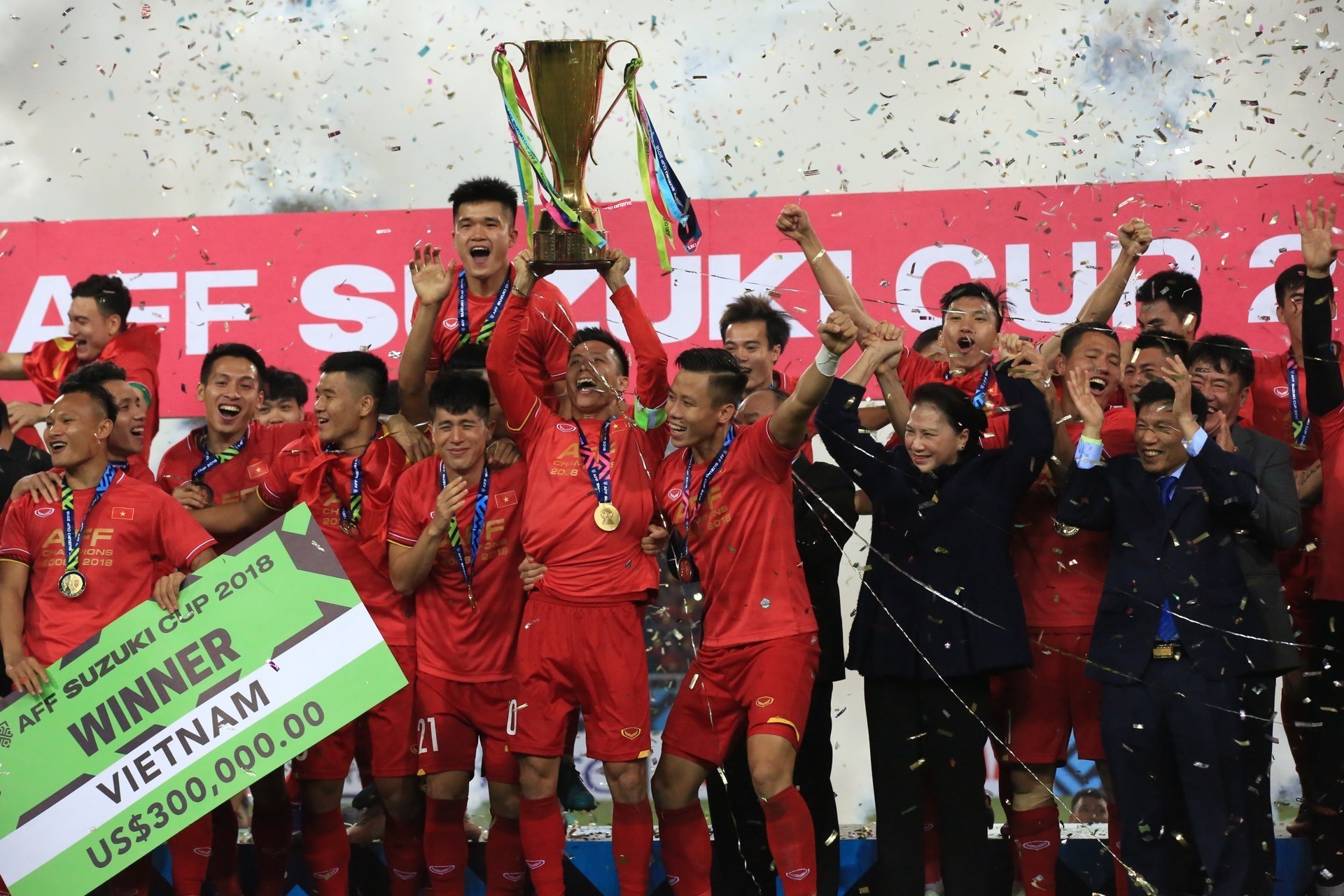
Thủ tướng Nguyễn Xuân Phúc trao cúp vô địch Giải bóng đá Đông Nam Á năm 2018 (AFF Suzuki Cup 2018) cho đội tuyển Việt Nam. (Ảnh: TTXVN)
Tại SEA Games 27 tổ chức tại Myanmar, biểu tượng của Liên đoàn thể thao Đông Nam Á tiếp tục được sửa đổi từ 10 vòng tròn thành 11 vòng tròn màu vàng nhạt gắn vào nhau. Kể từ đó biểu tượng 11 vòng tròn màu vàng nhạt gắn vào nhau tượng trưng cho tình đoàn kết, tình yêu thương giữa các dân tộc trong khu vực Đông Nam Á được lấy làm biểu tượng chính thức cho Liên đoàn thể thao Đông Nam Á.
Trải qua 63 năm kể từ khi thành lập, ngày nay, Đại hội thể thao Đông Nam Á (SEA Games) vẫn luôn là một sự kiện thể thao lớn của khu vực.
Tính cả kỳ SEA Games 31 (năm 2022), Thái Lan và Malaysia là hai quốc gia có số lần tổ chức SEA Games nhiều nhất với 6 lần; Singapore, Indonesia và Philippines xếp thứ hai với 4 lần tổ chức SEA Games; Myanmar xếp thứ ba với 3 lần tổ chức; Việt Nam với 2 lần tổ chức; những quốc gia tổ chức 1 lần là Brunei và Lào.
Việt Nam – thành viên tích cực trong xây dựng và phát triển nền thể thao Đông Nam Á
Đoàn thể thao Việt Nam đã tham dự SEA Games từ những ngày đầu thành lập. Trong đó, thời kỳ trước năm 1975, miền Nam Việt Nam trước đây đã là một trong những thành viên sáng lập Liên đoàn thể thao Bán đảo Đông Nam Á và liên tục đưa đoàn thể thao tham dự từ Đại hội lần thứ nhất (năm 1959) đến Đại hội lần thứ 7 (năm 1973).
Từ chỗ tham dự với mục tiêu hòa nhập, học hỏi bạn bè quốc tế, giờ đây thể thao Việt Nam đã vươn lên xếp thứ 4 khu vực, và đứng thứ nhất ở kỳ SEA Games 22 (với tư cách là nước chủ nhà). Riêng kỳ SEA Games 25 và SEA Games 30, Việt Nam đứng ở vị trí thứ 2 trong bảng tổng kết. SEA Games 31 diễn ra từ ngày 12-23/5/2022 đánh dấu mốc lần thứ hai Việt Nam có vinh dự được làm nước chủ nhà.
Thời kỳ sau năm 1975, sau khi đất nước thống nhất, trải qua một thời gian khắc phục hậu quả chiến tranh, Việt Nam đã từng bước tham gia trở lại vào sinh hoạt chung của Liên đoàn Thể thao Đông Nam Á. Năm 1989, sau 13 năm (từ SEAP Games 8-năm 1975 đến SEA Games 14-năm 1987 không tham dự), đoàn thể thao Việt Nam đã hòa nhập trở lại đấu trường khu vực (SEA Games 15-năm 1989).
Từ chỗ thể thao Việt Nam tham dự với mục tiêu hoà nhập, học hỏi bạn bè quốc tế, giờ đây, thể thao Việt Nam đã có thể tự tin bước vào các trận thi tài quốc tế, đặc biệt là một số môn võ thuật. Tham dự SEA Games, thành tích của Đoàn Thể thao Việt Nam cũng từng bước được nâng dần lên.
Nếu như tại SEA Games lần thứ 15, 16, đoàn Thể thao Việt Nam còn xếp thứ 7 khu vực, thì đến SEA Games 21, đoàn Thể thao Việt Nam đã vươn lên xếp thứ 4 khu vực, và đứng thứ nhất ở kỳ SEA Games 22 (với tư cách là nước chủ nhà). Kể từ đó đến nay, đoàn thể thao Việt Nam luôn giữ vững vị trí thứ 3 trong các bảng tổng kết huy chương. Riêng kỳ SEA Games 25 và SEA Games 30, Việt Nam đứng ở vị trí thứ 2 trong bảng tổng kết.
Năm 2022, Việt Nam vinh dự lần thứ hai là nước chủ nhà tổ chức Đại hội thể thao Đông Nam Á lần thứ 31 (SEA Games 31). Theo kế hoạch ban đầu, SEA Games 31 được tổ chức từ ngày 21/11 đến 2/12/2021, tuy nhiên do ảnh hưởng của dịch COVID-19 nên sự kiện thể thao lớn của khu vực đã được lùi thời gian tổ chức lại và sẽ chính thức diễn ra từ ngày 12 đến 23/5/2022.
Cho tới thời điểm hiện tại, mọi công tác chuẩn bị đều đã được Ban tổ chức, các đơn vị liên quan gấp rút triển khai, thực hiện nhằm đảm bảo đúng tiến độ.
Với khẩu hiệu “Vì một Đông Nam Á mạnh mẽ hơn”, Việt Nam mong muốn tổ chức một kỳ SEA Games 31 thành công và gửi đi thông điệp đến Chính phủ và người dân các quốc gia trong khu vực Đông Nam Á về sự phát triển, đoàn kết, cùng nhau xây dựng Cộng đồng ASEAN hùng cường, phát huy mạnh mẽ hơn vai trò của ASEAN trên trường quốc tế./.
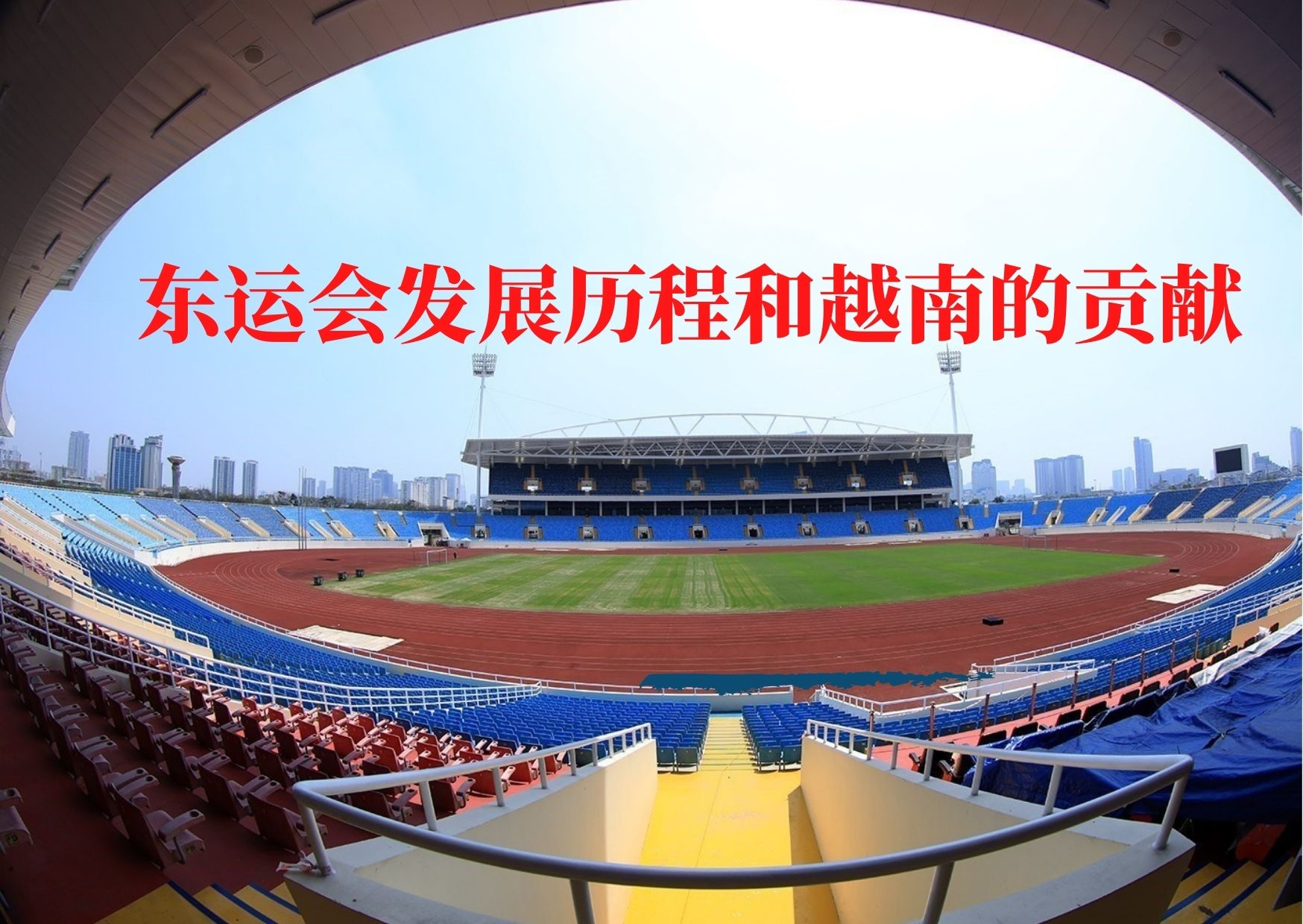
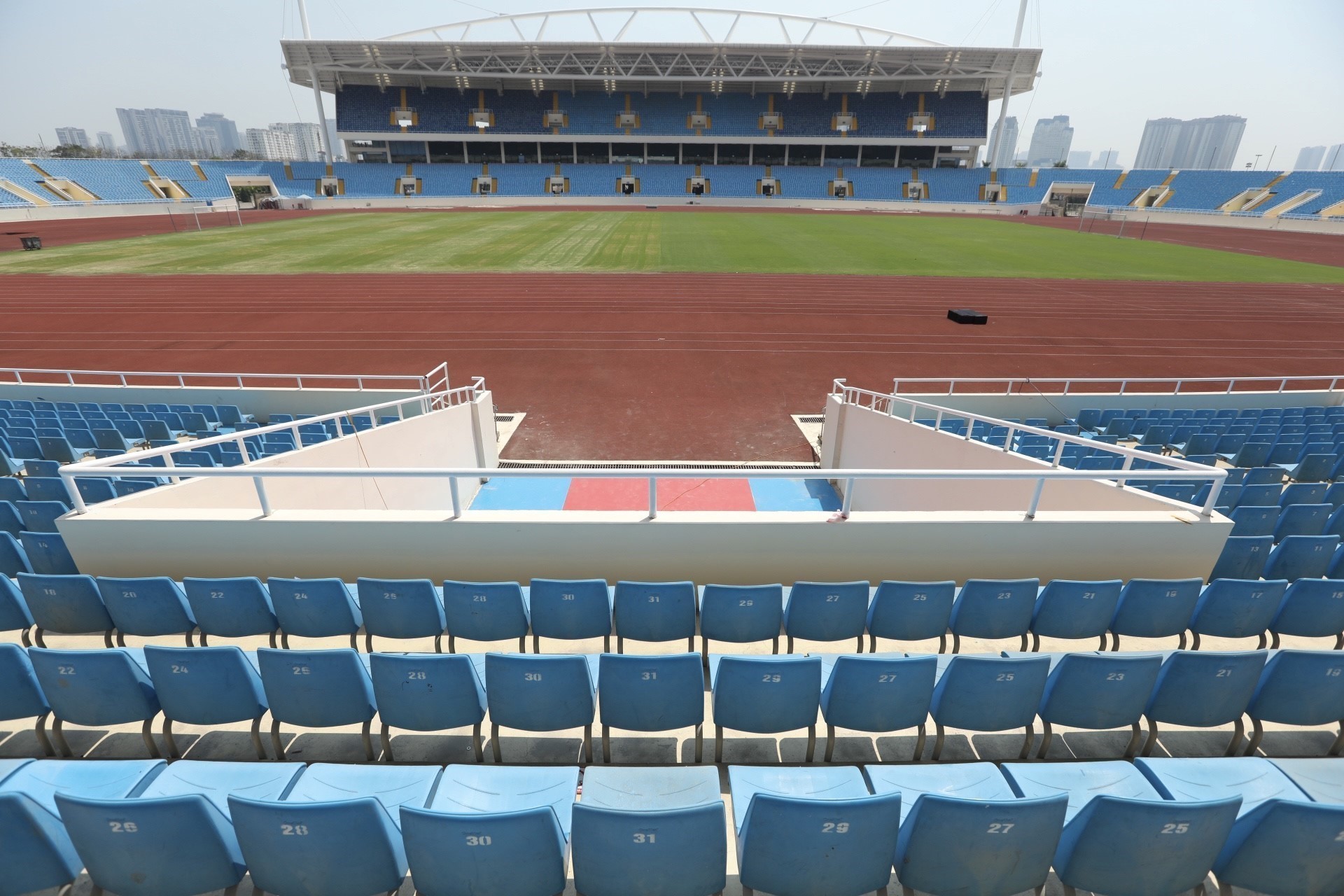
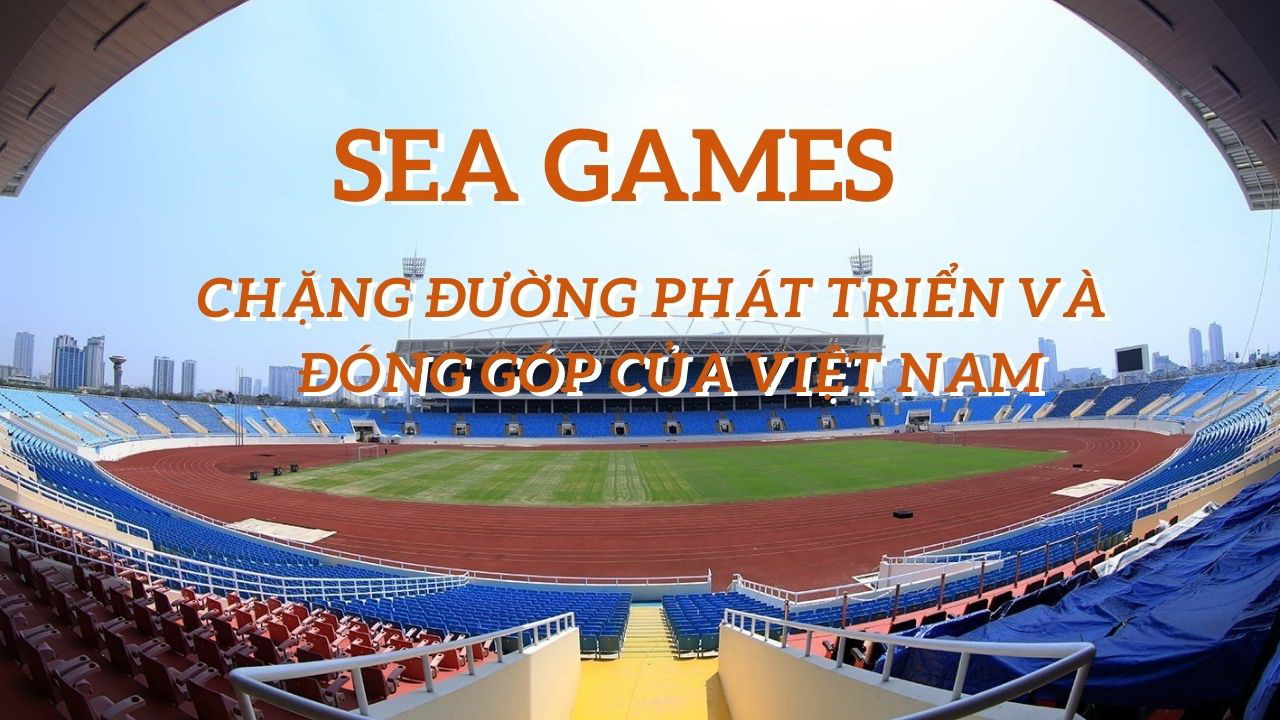
Sân vận động quốc gia Mỹ Đình sẵn sàng phục vụ SEA Games 31
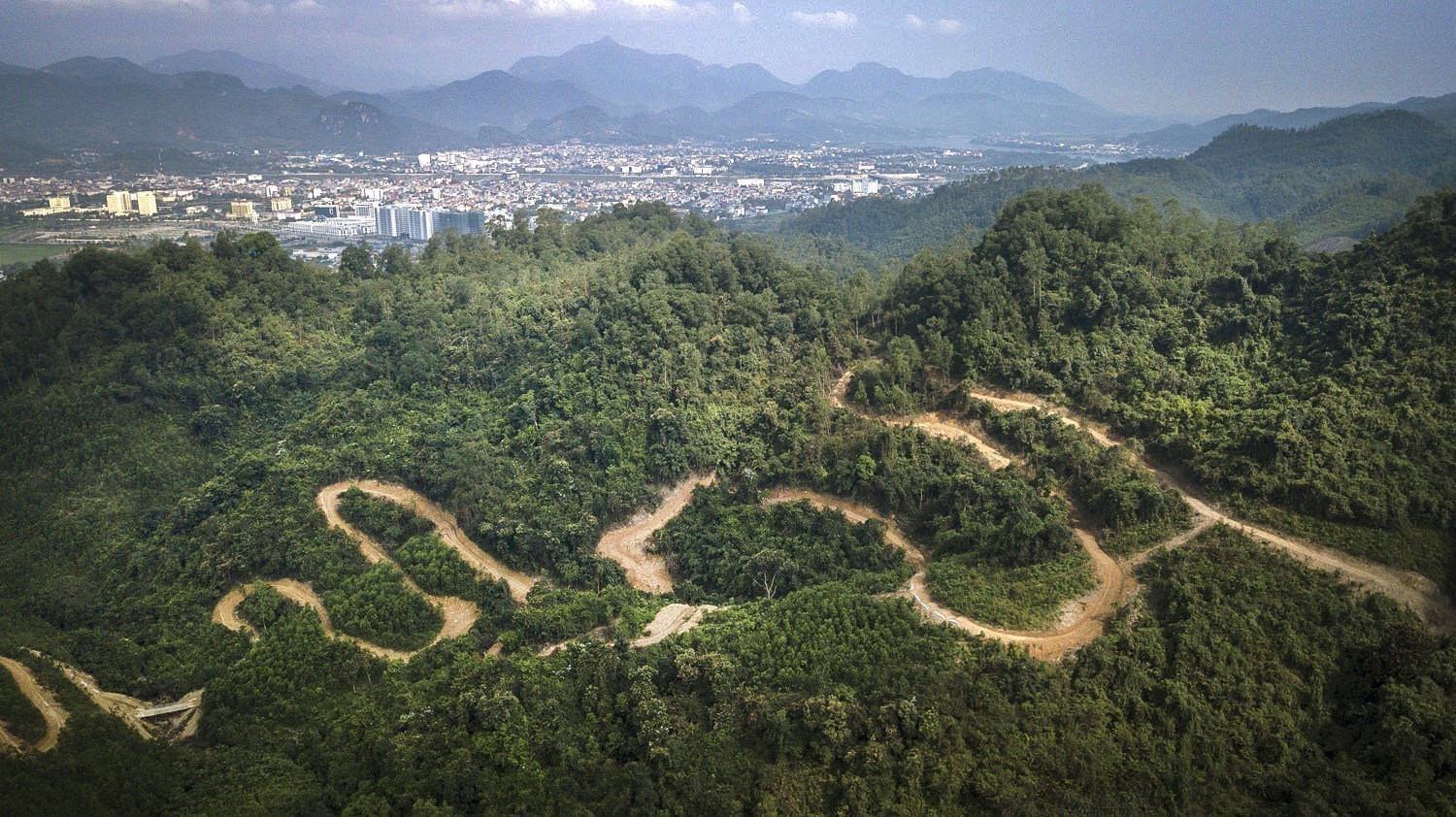
SEA Game 31: Toàn cảnh đường đua nội dung thi đấu xe đạp địa hình tại Hòa Bình
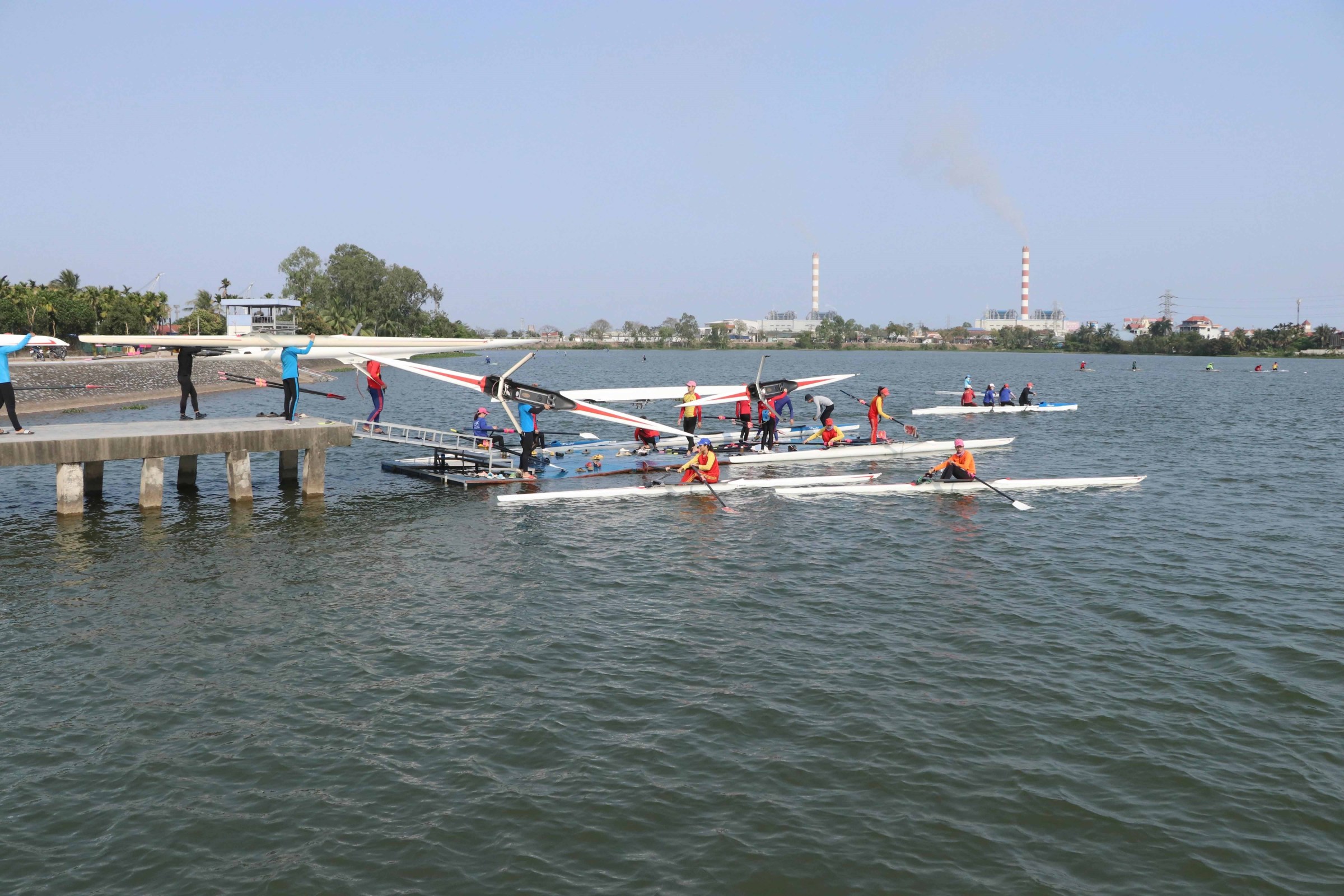
SEA Games 31: Hải Phòng sẵn sàng cho cuộc tranh tài ở môn Rowing và Canoeing
Sàn bowling Hero World ở Hà Nội (Royal City) sẵn sàng phục vụ SEA Games 31
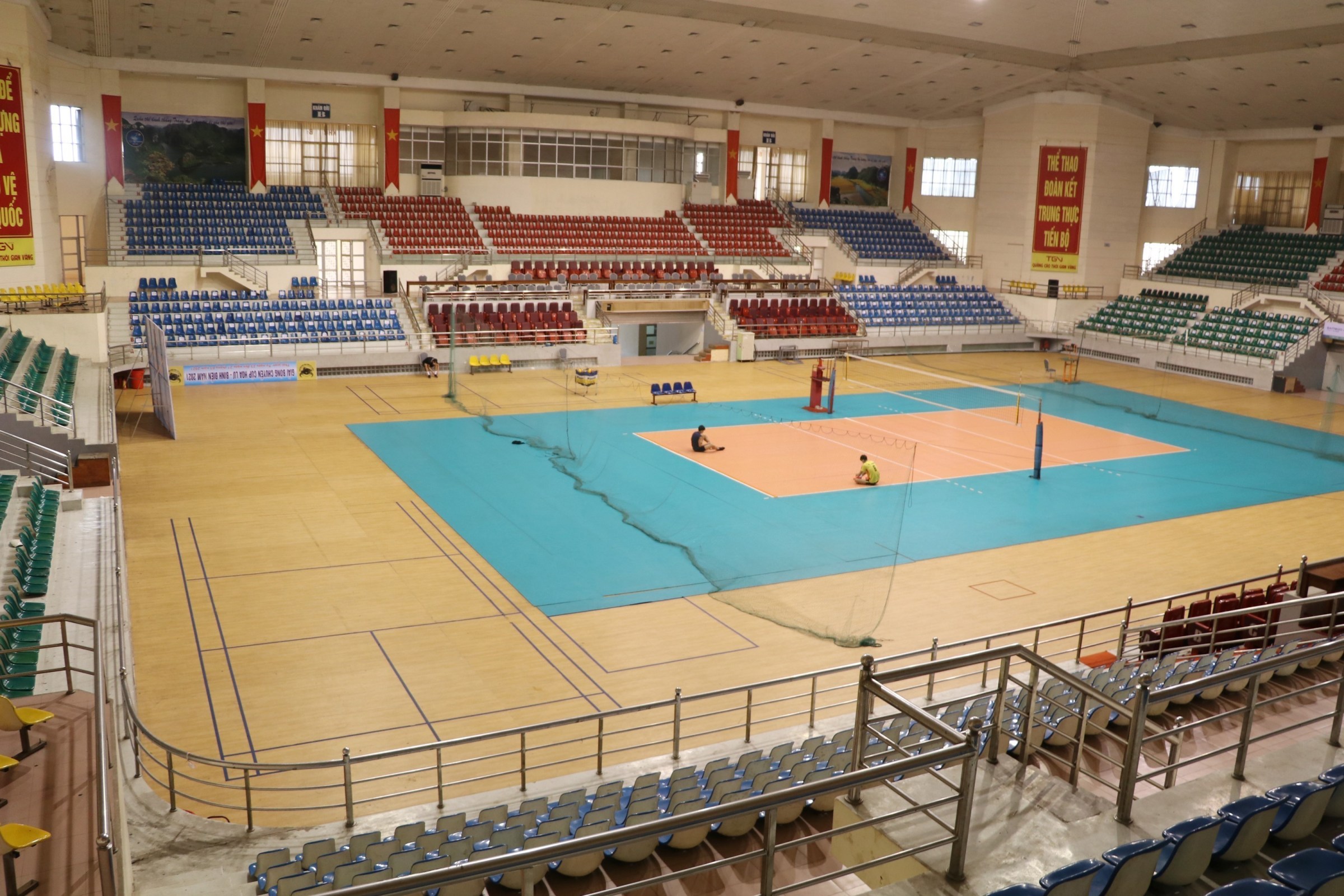
SEA Games 31: Nhà thi đấu quận Hà Đông sẵn sàng cho môn Billiards
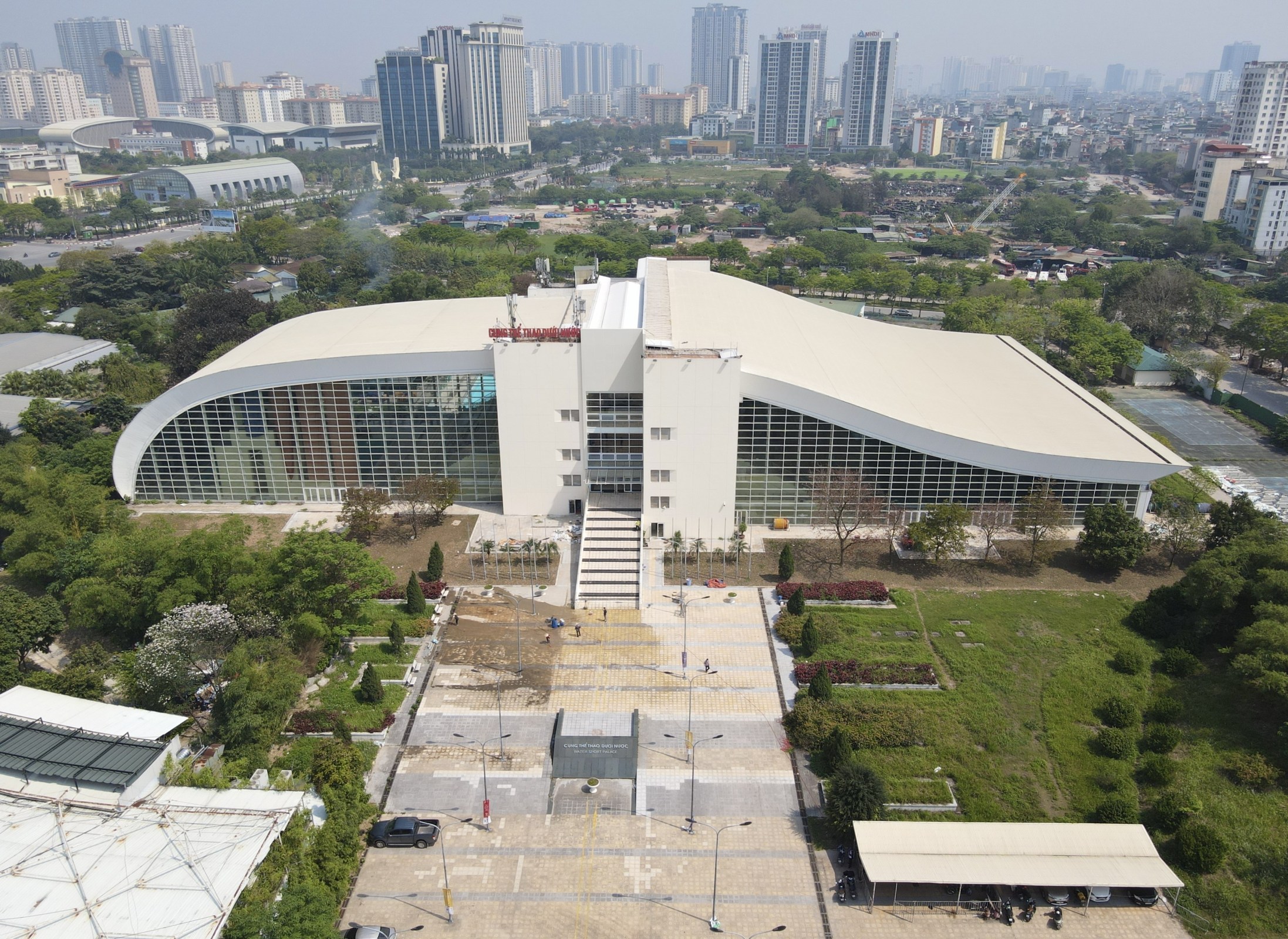
SEA Games 31: Cung thể thao dưới nước sẵn sàng cho bộ môn nhảy cầu, bơi lội
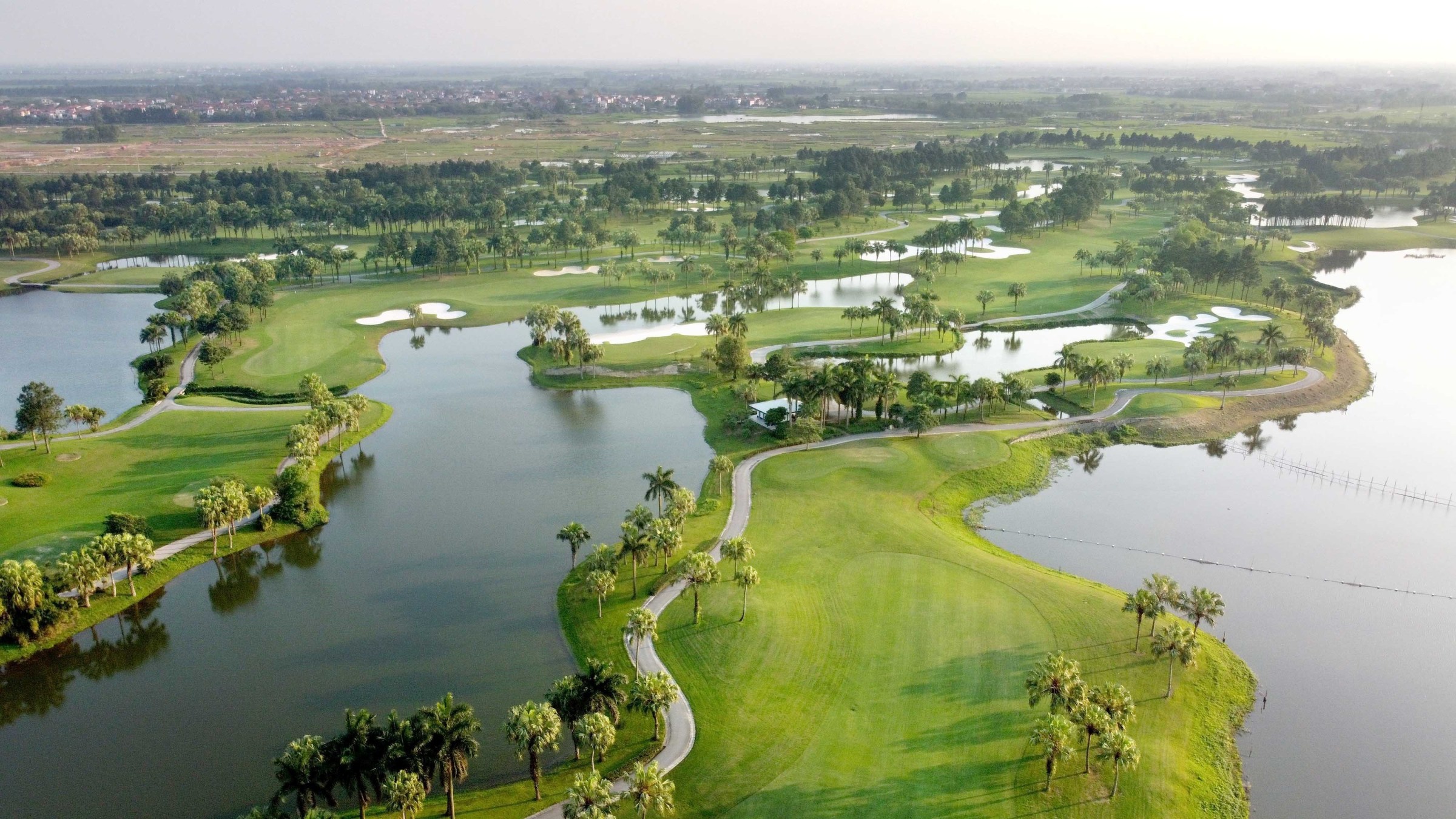
Vĩnh Phúc sẵn sàng các điều kiện thi đấu cho Giải Golf- SEA Games 31
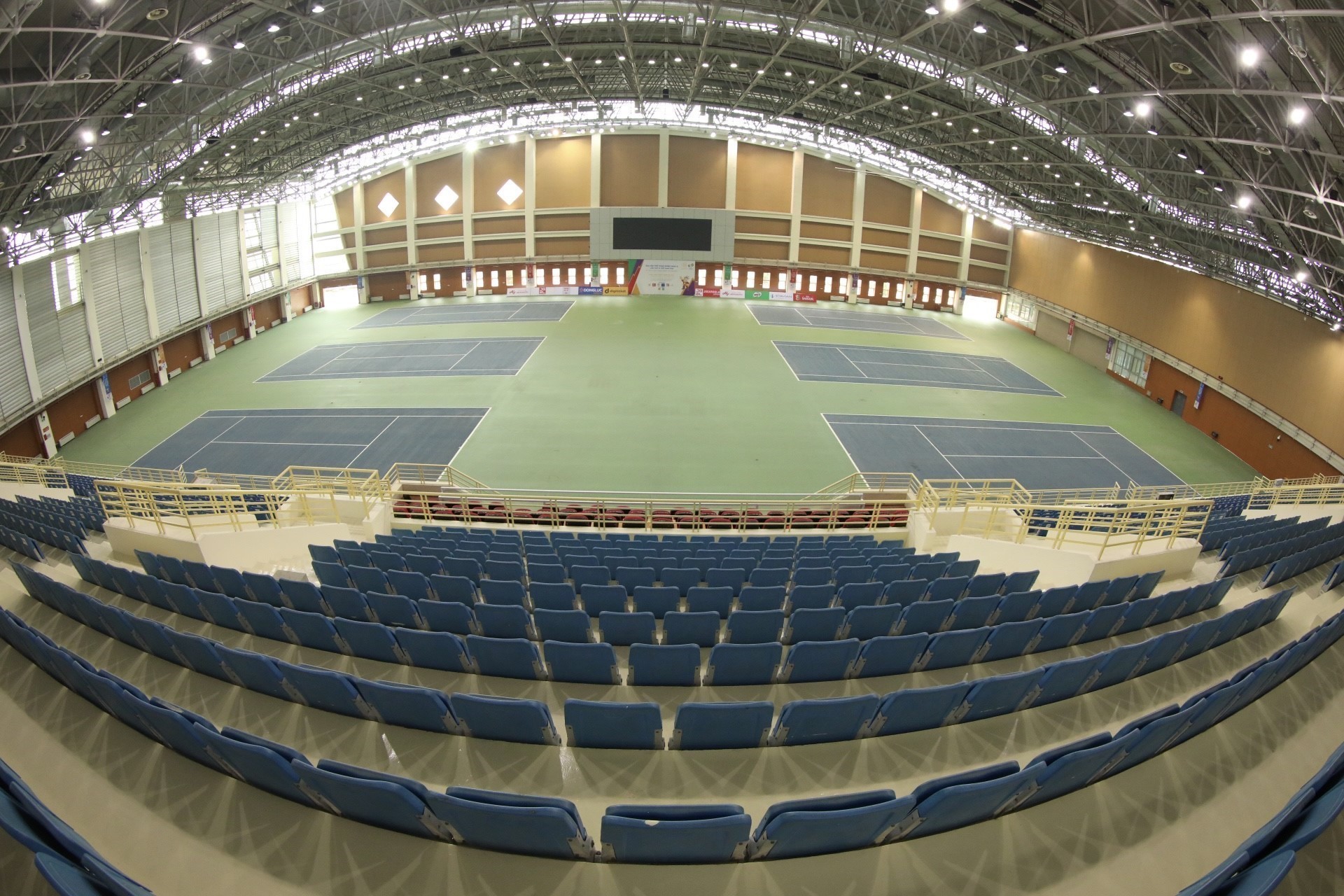
SEA Games 31: Nhà thi đấu Bắc Từ Liêm – nơi tổ chức các nội dung của môn Pencak Silat
SEA Games 31: Nhà thi đấu Ninh Bình – nơi tổ chức môn thi đấu Karate
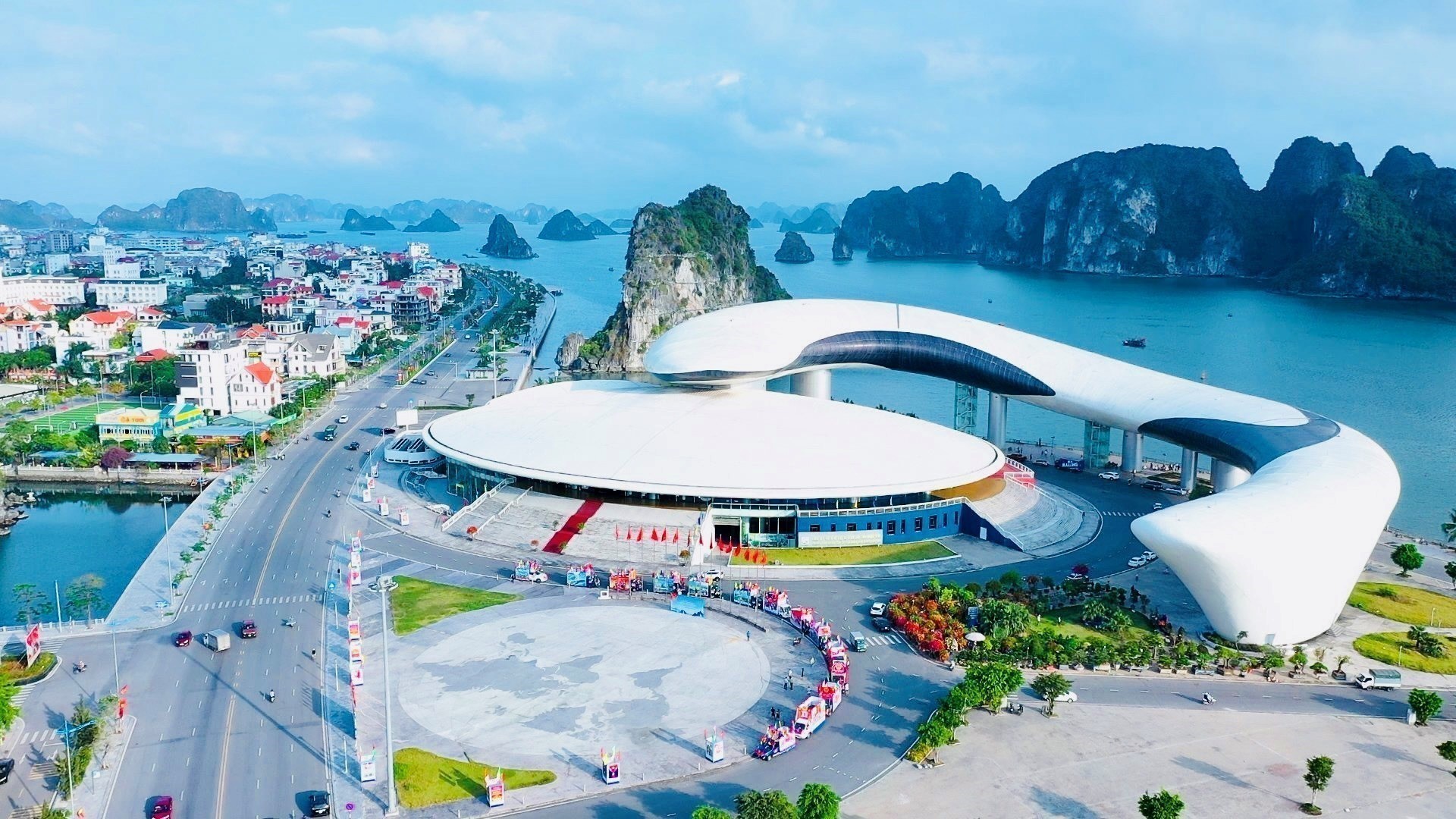
Quảng Ninh tích cực chuẩn bị các điều kiện cho SEA Games 31
Cashless society gets closer as Vietnam digital banking gathers pace
Cashless society gets closer as Vietnam digital banking gathers pace
“There is a heated race towards digital banking going on in Vietnam, with banking services having found their way into every corner of life.”
— Nguyen Quoc Hung, Secretary-General of Vietnam Banks Association
One major “side effect” of the COVID-19 pandemic, amidst the unprecedented toll that it has exacted, is that it has catalysed digital transformation across all sectors, particularly in financial services.
This is a sea change for Vietnam, where the reliance is heavy on physical interaction for most financial transactions.
“Technology has been benefiting banks by promoting process automation, improving productivity, increasing customer experience, and reducing operational costs,” said Nguyen Quoc Hung, Secretary-General of the Vietnam Banks Association (VBA).
“There is a heated race towards digital banking going on in Vietnam, with banking services having found their way into every corner of life,” he added.
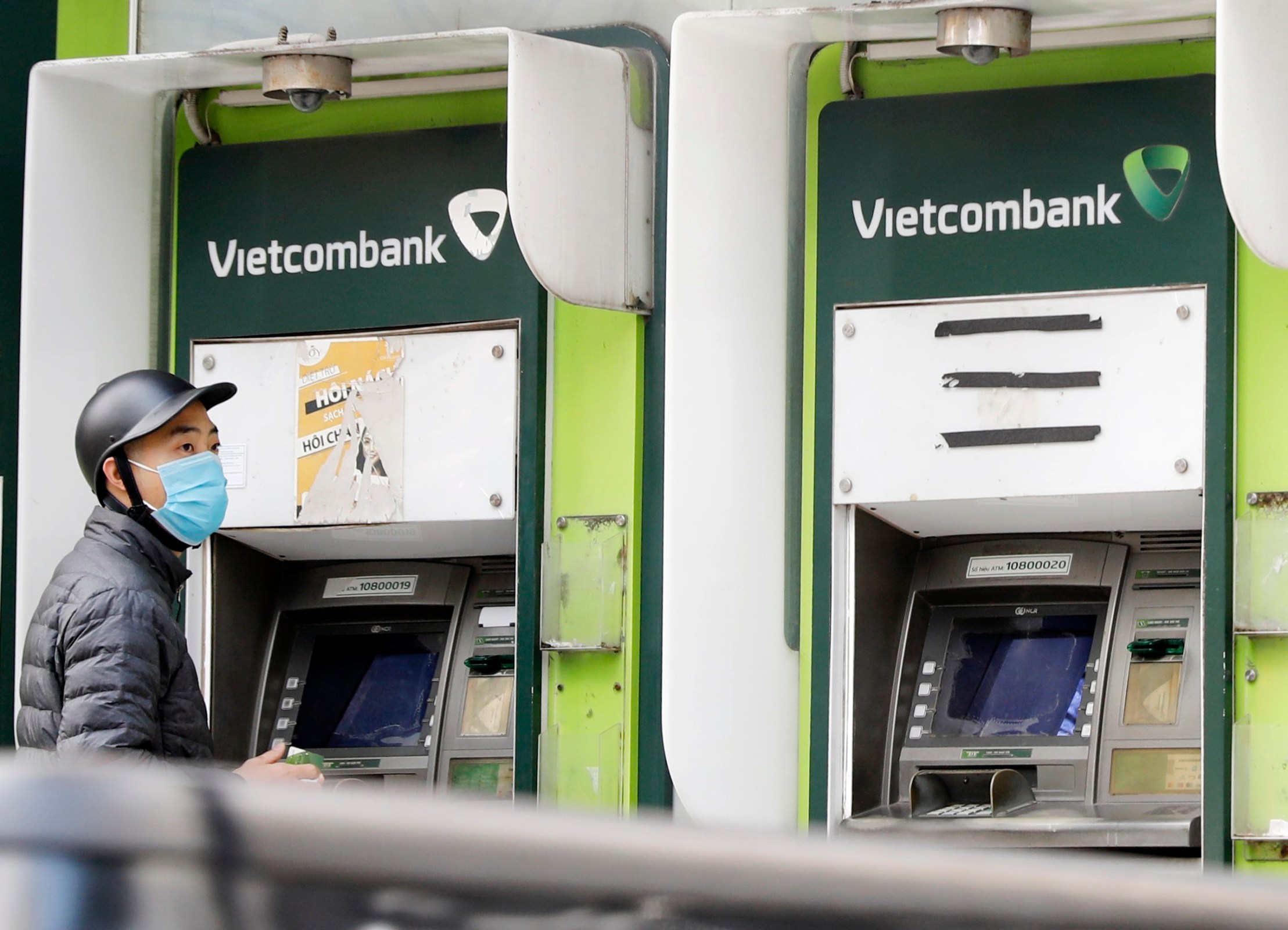
In Vietnam, the reliance is still heavy on physical interaction for most financial transactions. (Photo: VNA)
This process has received a fillip during the pandemic, with people forced to minimize direct contact with each other. And this is markedly evident in banking and payments, critical pillars of the economy, which have experienced a remarkable revolution in digital offerings and adoption.
With a tech-savvy young population and relatively high smartphone penetration rate, Vietnam has seen a surge in digital payment volumes, from online marketplaces, bill payment services, retail outlets, to small convenience stores, and even vegetable and fruit vendors.
“I used to use cash and nothing else for grocery shopping,” Lan, a 30s office worker living in Hanoi, told Vietnam News Agency, “but the pandemic has changed the way I shop.”
“Now I usually have groceries delivered at my door and transfer the money to sellers via mobile banking later. It is safer and more convenient this way.”
I used to use cash and nothing else for grocery shopping,” Mai Lan, a 30s office worker living in Hanoi, told Vietnam News Agency. (Photo: VNA)
Around 85 percent of Vietnamese banking consumers are more likely to use online and digital banking services compared to a year and a half ago, according to a report by SaaS cloud banking platform Mambu.
“I find almost everything I need in my banking app.”
Mai Lan, office worker in Hanoi
The report reveals that globally, nearly 61 percent of consumers have made greater use of digital banking services and 41 percent have started using them for the very first time because of the pandemic. In Vietnam, these numbers are higher, at 70 percent and 54 percent respectively.
“I find almost everything I need in my banking app,” Lan added. “It is no longer just for money transfer; now I can pay bills, top-up phone credits, book flights and do other things with the app.”
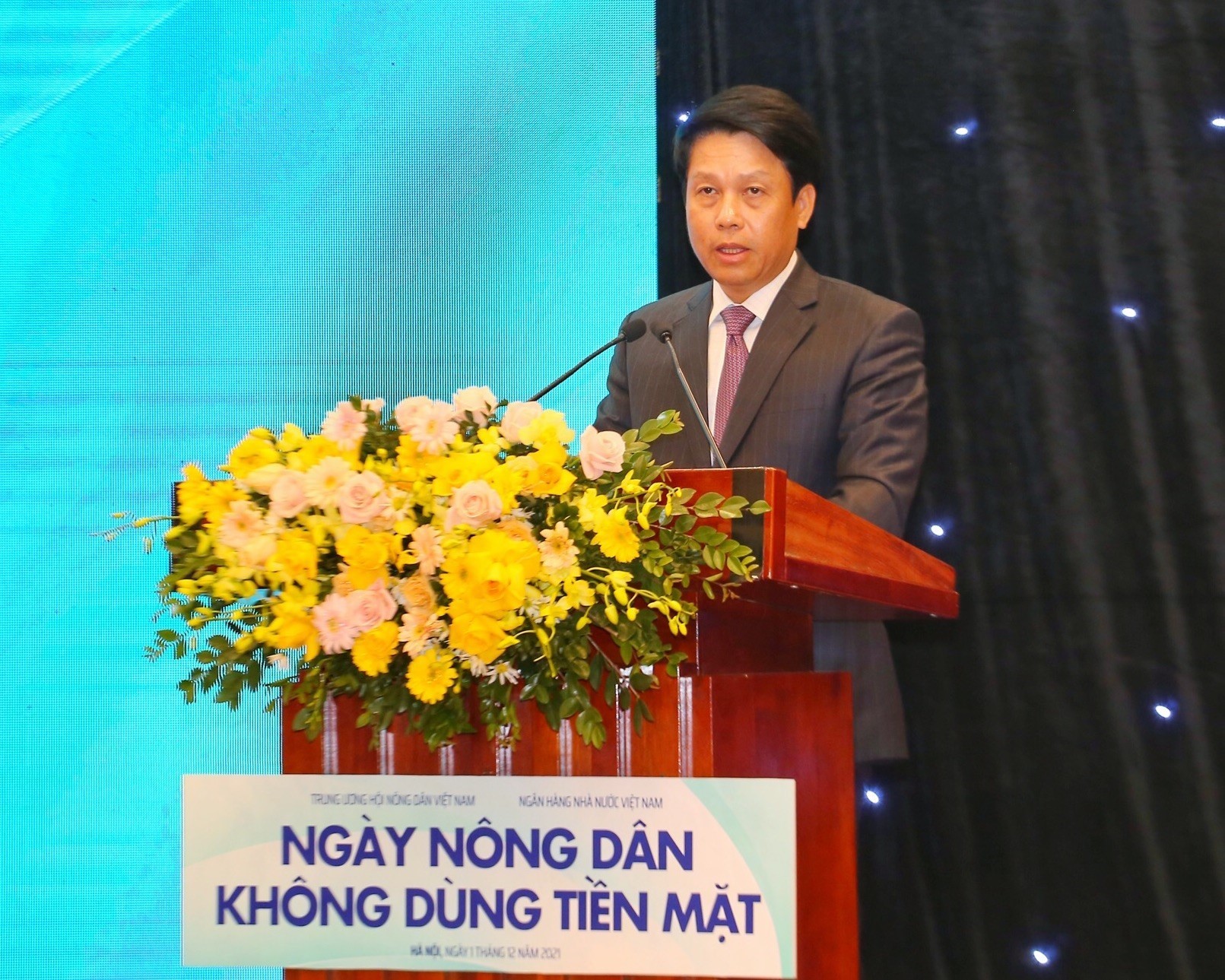
About 95 percent of lenders in Vietnam have been pushing a digital transformation strategy, Deputy Governor of the State Bank of Vietnam (SBV) Pham Tien Dung remarked at a conference on smart banking last month.
Deputy Governor of the State Bank of Vietnam (SBV) Pham Tien Dung delivers a remark at a cashless promotion event in Hanoi in December 2021. (Photo: VNA)
To date, nearly 80 banks offer internet banking solutions and mobile banking services are available at 44 banks. The country has 45 intermediary payment services providers, over 90,000 QR code payment terminals and close to 298,000 point-of-sale (POS) terminals in place, Dung said.
“Digital banking in Vietnam is pretty good,” said Med, a Moroccan-Canadian who has been living in Vietnam for five years.
“You can actually withdraw with your phone. Like you don’t need to have an ATM card, you can just take your phone to the ATM and withdraw,” he said. “When I got here, that option was not there.”
Over 90 percent of transactions in many banks are currently conducted via digital channels, central bank data shows. In the first nine months of 2021, payments via mobile banking soared 76.2 percent in volume and 88.3 percent in value compared to a year earlier. The corresponding figures were 51.2 percent and 29.1 percent for payments via Internet banking.
“So we can safely say that digital transformation in the sector has been making huge strides at the time of COVID-19,” SBV Deputy Governor Dung said, adding that the key point of this was the formation of a digital payment ecosystem, with digital banking solutions integrated into other services of the economy. It allowed users to enjoy seamless experiences across different areas in the digital space, he noted.
Partnerships for a cashless society
In this scenario, the collaboration between banks and fintech firms is evolving, driven by not only increasing customer adoption but also regulatory developments.
The number of fintech companies in Vietnam has almost quadrupled over the last five years, from just about 40 in 2016 to over 150 in 2021, according to the SBV. The fintech landscape in the country is currently dominated by payment firms, which account for 24 percent of the total population, followed by peer-to-peer lending (16 percent) and blockchain, crypto and remittances (14 percent).
This year, 375 million USD in funding was poured into Vietnamese fintech startups, the third largest in Southeast Asia, after Singapore and Indonesia, according to the Fintech in ASEAN 2021 report.
As many as 72 percent of fintech firms in Vietnam have opted to cooperate with banks instead of entering into direct competition, according to a 2018 analysis by the SBV.
“Fintechs and banks are working together in a way that surely benefits both parties and the society also,” said Vietcombank Chairman Pham Quang Dung.
VNPay is one of Vietnam’s tech unicorns and largest digital payment solution providers. (Photo: VNPay)
“Fintechs and banks are working together in a way that surely benefits both parties and the society also.”
— Pham Quang Dung, Vietcombank Chairman
VNPay, one of Vietnam’s tech unicorns and largest digital payment solution providers, is among the most successful stories of a fintech firm partnering with banks to leverage the latter’s extensive customer bases.
Its VNPay-QR, an interoperable cashless payment network, serves around 22 million users and over 150,000 merchants nationwide. Despite having its own mobile platform, a majority of VNPay transactions are done through the QR feature incorporated into its 40 partner banks’ mobile apps.
“Bank-fintech cooperation is an inevitable trend,” Vietcombank’s Dung emphasised, adding that many Vietnamese banks were also actively seeking suitable partnerships with fintechs.
Welcoming this development, VBA Secretary-General Hung said Vietnamese lenders should collaborate with fintech firms to develop a shared ecosystem so they can take advantage of each other’s strengths to improve customers’ experience.
CIMB Vietnam, a subsidiary of CIMB Group, an ASEAN banking venture, launched its digital banking offerings back in 2018. It embraced the partnership strategy early on, teaming up with several fintechs, including the Republic of Korea’s unicorn Toss, EzQ-owned social commerce platform ON and e-wallet SmartPay, to provide users with value-added services.
In October, CIMB Bank and fintech startup Finhay released a co-branded debit card, Vietnam’s first-ever 3-in-1 bank account that can be opened and maintained straight from the Finhay app with the help of eKYC (electronic Know-Your-Customer), a digital solution for remote customer identification and verification.
The Vietnamese government has been encouraging the adoption of advanced technologies by introducing a number of regulations to guide the banking and financial services sectors.
CIMB Bank and fintech startup Finhay release a co-branded debit card in October 2021. (Photo: Finhay)
In March 2017, the SBV established the Steering Committee on Financial Technology, a body dedicated to building an enabling regulatory framework for the development of the fintech ecosystem and creating opportunities for local fintech companies.
Deputy Prime Minister Le Minh Khai has approved a five-year (2021-25) project for the development of cashless payments. The project aims to accelerate the growth of cashless payments with improved security, safety, and confidentiality while making it more accessible to both urban residents and those living in rural, remote and mountainous areas.
Among the project targets are: the value of non-cash payments becoming 25 times higher than the GDP; and the proportion of the payment method in e-commerce accounting for 50 percent by 2025. Additionally, 80 percent of people aged 15 will have bank accounts, while the number of points accepting cashless payments will increase to over 450,000.
Deputy PM Khai said at a recent conference that digital transformation towards a cashless society is an inevitable and growing trend in the era of the Fourth Industrial Revolution. Citing the two birds with one stone adage, he said a cashless society will not only help Vietnam boost economic recovery but also realise the goal of financial inclusion.
Vietnam wants the proportion of non-cash payments in e-commerce to reach 50 percent by 2025. (Photo: VNA)
What’s next?
Digital transformation in the banking system still faces some barriers, said VietinBank Deputy General Director Tran Cong Quynh Lan. One of them is a lack of uniformity in the legal mechanism supporting this process. Lan mentioned the remote opening of a bank account as an example, saying eKYC can be used for customer verification but users were still required to visit physical branches in person for a digital signature to be granted.
“It is very critical because a common ecosystem will allow banks to share data and information.”
— Tran Cong Quynh Lan, , VietinBank Deputy General Director
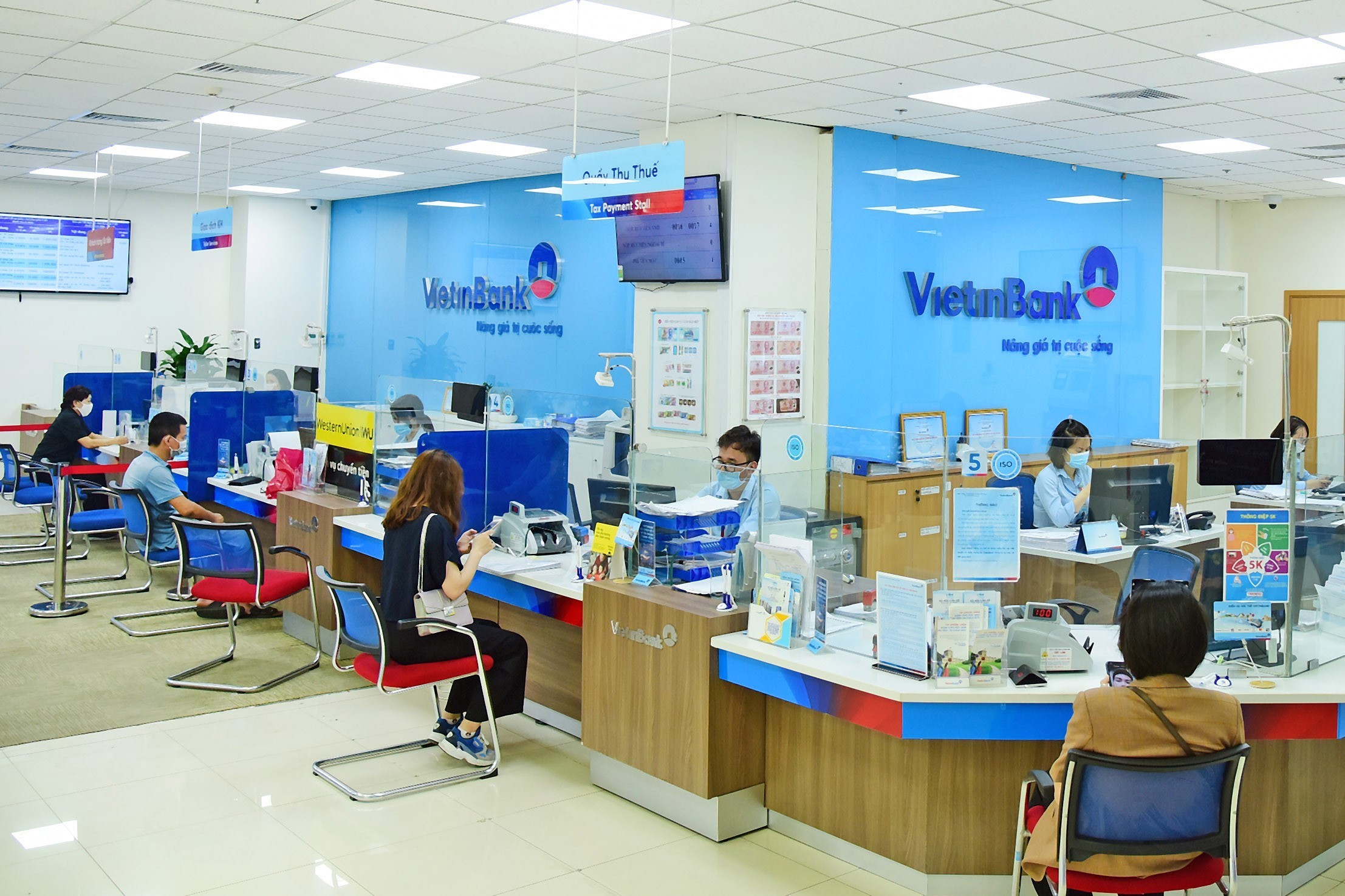
A VietinBank office in Hanoi. One of the barriers hampering the digital transformation in banking is a lack of uniformity in the legal mechanism supporting this process. (Photo: VNA)
This means the process is not completely done digitally, he said. “If a digital signature cannot be issued online, the following steps will be interrupted.”
To go digital successfully, Vietnamese banks must not only develop a digital ecosystem of their own but also act together to build one for the entire industry, said Pham Anh Tuan, Vietcombank board member and Director of Banking and Technology Modernisation.
“It is very critical because a common ecosystem will allow banks to share data and information; particularly if it is connected with ministries, governmental agencies and other sectors, risks can be reduced.”
Furthermore, the current legal environment is not keeping up with the pace of digital transformation in banking, hampering the development of new financial services, VBA Secretary-General Hung said, calling for a comprehensive makeover of the regulatory framework.
Photo: VNA
Recognising such problems, the government is pushing for a regulatory sandbox for fintech in the banking industry that will make it possible for credit institutions, fintech solutions providers and other innovators to directly test products and services in a closely-controlled environment supervised by relevant state bodies.
Regulators should develop the sandbox based on the following principles – encouraging innovation, increasing financial accessibility, protecting rights of borrowers and investors, keeping risks within an acceptable level and promoting financial literacy, suggested Pham Xuan Hoe, former Deputy Director of the Banking Strategy Institute.
The central bank is also building a regulatory framework for the application of fintech enablers, or key Industry 4.0 technologies like eKYC, Open API, big data, artificial intelligence, blockchain and cloud computing./.
La industria aérea de Vietnam ha demostrado signos positivos en los primeros meses de 2022 a medida que se restauran los vuelos domésticos e internacionales, lo cual contribuye al desarrollo del turismo en la etapa posCOVID-19.
El Gobierno de Vietnam está implementando varios mecanismos y políticas para apoyar la industria de la aviación, como la reducción del 50 por ciento de las tarifas de despegue y aterrizaje y de los servicios de control para vuelos domésticos.
Al mismo tiempo, se recorta al 50 por ciento del impuesto de protección ambiental sobre el combustible para aviones en 2022, a la par de mantener o prolongar los plazos de pago de préstamos para las empresas aéreas, y eximir o reducir las tarifas de préstamos.
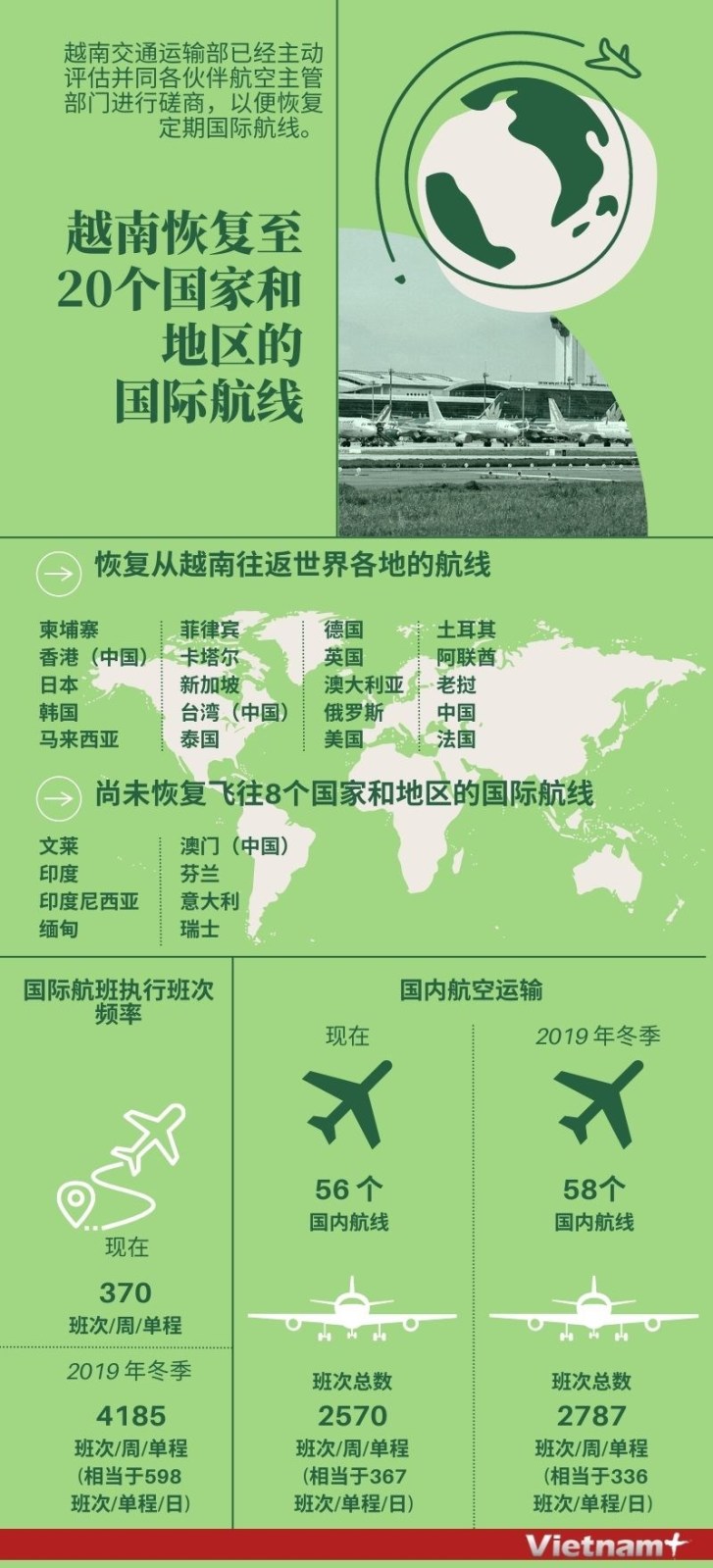
Las compañías también se esfuerzan por optimizar los servicios, actualizar y perfeccionar sus operaciones para brindar las mejores experiencias de vuelo con seguridad y conveniencia a los clientes. En consecuencia, las aerolíneas vietnamitas han reanudado las rutas con muchos países, incluidos Japón, Corea del Sur, Tailandia y Singapur.
Esas señales positivas contribuyen a fortalecer la confianza en el panorama brillante de la industria de la aviación en el futuro, “dando alas” a la recuperación y desarrollo de otros sectores, como el turismo.
Nguyen Phuoc Thang, jefe del Departamento de Ciencia, Tecnología y Medio Ambiente de la Autoridad de Aviación Civil de Vietnam, pronosticó el crecimiento interanual del ocho a 10 por ciento este año del mercado de la aviación.
En tanto, el sector se empeña en elevar el nivel de implementación efectiva del monitoreo de seguridad y protección aérea del 80 al 90 por ciento y garantizar la capacidad para operar de 2,5 a tres millones de vuelos al año, señaló.
La industria de la aviación vietnamita apunta también a mejorar la capacidad operativa del sistema aeroportuario nacional para recibir de 180 a 200 millones de pasajeros en 2025, especificó.
Para el mercado interno, en la temporada turística desde mayo hasta agosto, las aerolíneas vietnamitas centrarán sus recursos en aumentar los vuelos en las rutas nacionales, agregó.
Entre los esfuerzos por agilizar la recuperación de la industria sin humo en el país, el Departamento de Turismo de Ciudad Ho Chi Minh firmó en marzo pasado un acuerdo de cooperación con la Empresa de servicios terrestres aeroportuarios de Vietnam (VIAGS), con el fin de promover el desarrollo del turismo sostenible en la ciudad, en particular, y el mercado nacional, en general, para el periodo 2022-2027.
Nguyen Thi Anh Hoa, directora del Departamento de Turismo de Ciudad Ho Chi Minh
De acuerdo con Nguyen Thi Anh Hoa, directora del Departamento de Turismo municipal, el acuerdo crea una premisa para que el turismo de la metrópoli se transforme gradualmente hacia el desarrollo sostenible.
Mientras, la industria turística de Ciudad Ho Chi Minh también espera cooperar con la VIAGS en la mejoría de los recursos humanos, la promoción de las imágenes de la localidad al mercado internacional, y la elevación de la calidad de los servicios, añadió.
Al referirse sobre la recuperación de la industria aérea en el período actual, Luong Thi Xuan, fundadora de la Exposición Internacional de Aviación de Vietnam, señaló que se debe centrar en atraer más inversiones nacionales y extranjeras, además de ampliar las actividades comerciales internacionales, con el objetivo de crear los nuevos impulsos para el desarrollo del sector./.
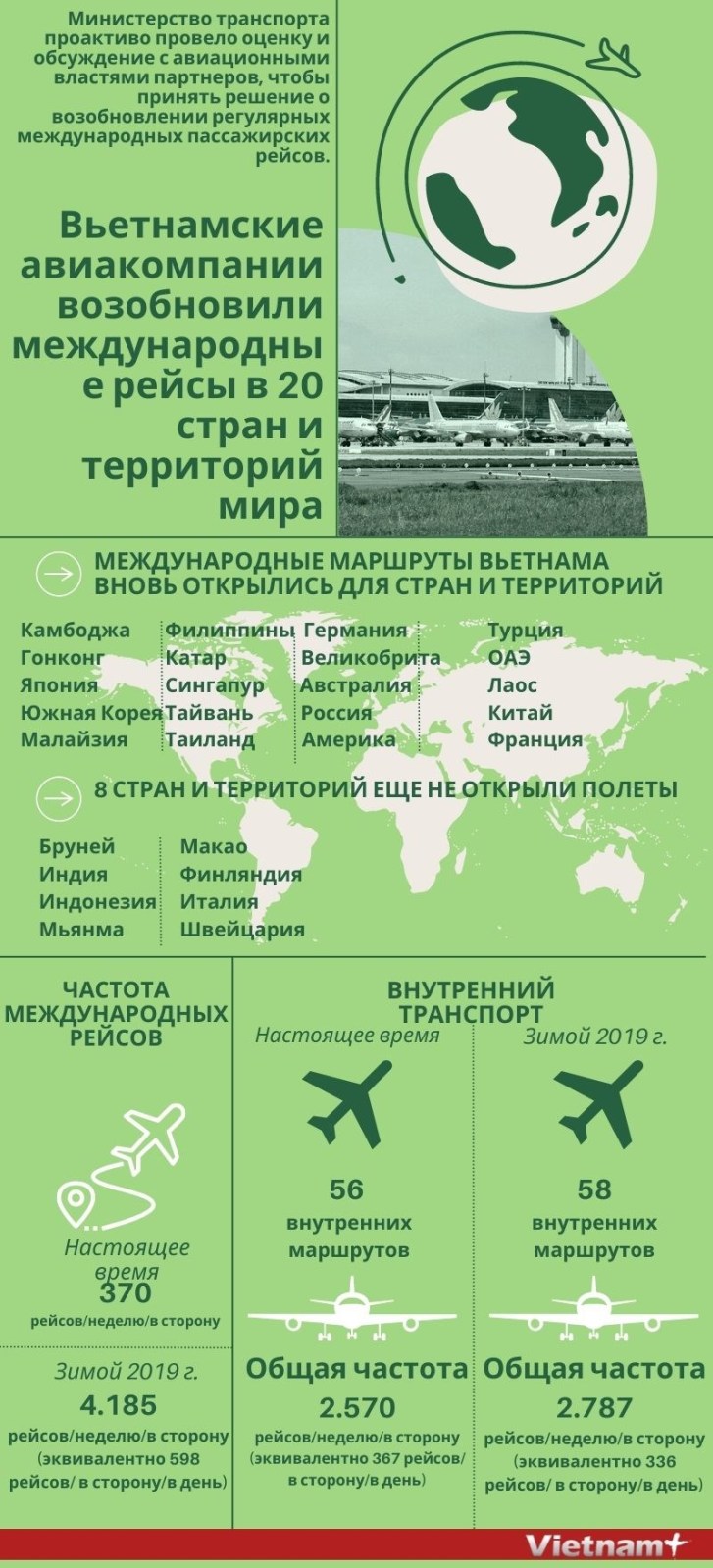
Хотя спрос на авиаперевозки по-прежнему ниже, чем до вспышки пандемии COVID-19, в первые месяцы 2022 года поскольку правительство постепенно открывает границы страны, появились положительные признаки. Прогнозируется, что в этом году авиационная промышленность снова вырастет, что приведет к устойчивому росту многих других областей и отраслей, включая туризм.
Правительство реализует множество механизмов и политик для поддержки авиационной отрасли, таких как снижение на 50% цен на взлет и посадку самолетов, а также на услуги по управлению полетами для внутренних рейсов. Кроме этого, в 2022 году снизится налог на охрану окружающей среды на авиакеросин на 50%, что создает условия для реструктуризации предприятиями срока погашения кредита, освободится и снизится плата за кредит, устранятся трудности с капиталом…
Авиакомпании постепенно вновь открывают все маршруты, увеличивая частоту рейсов, чтобы удовлетворить потребности людей в поездках. Авиаперевозчики также постоянно пытаются максимально удовлетворить потребности пассажиров в поездках, модернизировать и совершенствовать свои операции, чтобы обеспечить безопасные и удобные полеты.
Соответственно, международные рейсы были возобновлены со многими странами, в том числе Японией, Кореей, Таиландом, Сингапуром… Эти позитивные сигналы способствуют укреплению доверия к авиационной отрасли в ближайшее время, росту ряда развитых отраслей и сфер, таких как туризм.
* Увеличить количество рейсов для туристического спроса
Нгуен Фыок Тханг, начальник отдела науки, технологий и окружающей среды Управления гражданской авиации Вьетнама, заявил, что вьетнамский авиационный рынок после пандемии COVID-19, по прогнозам, сохранит темпы роста на уровне 8–10 % в год пассажирских перевозок и на 10-12% грузовых. В то же время отрасль стремится к достижению цели по созданию команды молодых и продвинутых авиапарков с более чем 400 самолетами.
Авиационная отрасль также повысит уровень эффективного внедрения (EI) мониторинга безопасности и защиты до 80-90%, обеспечит пропускную способность с 2,5-3 млн рейсов/год… Кроме этого, сектор повысит эксплуатационную мощность национального аэропорта и аэропортовой системы с 91 млн. до 180-200 млн. пассажиров к 2025 году.
Для внутреннего рынка с конца мая до конца августа каждый год вьетнамские авиалинии будут увеличивать туристических рейсов. Поэтому источник туристов будет играть ключевую роль и развиваться параллельно с авиационной отраслью.
Что касается вопроса отраслевой связи между авиацией и туризмом в Хошимине, городской Департамент туризма и Наземная служба аэропортов Вьетнама (VIAGS) подписали соглашение о сотрудничестве, направленное на содействие восстановлению и устойчивому развитию туризма в городе в частности и на национальном рынке в целом. Соответственно содержание соглашения о сотрудничестве между Департаментом туризма Хошимина и VIAGS в период 2022-2027 годов в основном направлено на цели увеличения количества и качества туристов, способствуя развитию туризма Вьетнама и туристического направления Хошимина.
Г-жа Нгуен Тхи Ань Хоа, директор городского департамента туризма Хошимина.
Г-жа Нгуен Тхи Ань Хоа, директор городского департамента туризма Хошимина также сказала, что это одна из важных вех, создающая предпосылки для того, чтобы туризм Хошимина сильно трансформировался, чтобы восстановиться и развиваться дальше, когда отрасль начнет открываться для иностранных туристов. Кроме этого, туризм Хошимина также получает больше ресурсов для продвижения на мировой рынок, обмена опытом, обучения навыкам… от VIAGS для улучшения качества и обслуживания туристов в целом и иностранных туристов в частности.
В целях продвижения авиационной отрасли в текущий период г-жа Лыонг Тхи Суан, основатель Вьетнамской международной авиационной выставки, отметила, что необходимо провести множество специализированных мероприятий, направленных на привлечение внутренних и иностранных инвестиций, которые станут практическими действиями по продвижению имиджа страны, культуры и народа Вьетнама на международном рынке./.
Bien que la demande pour les voyages en avion soit toujours plus faible qu’avant le déclenchement de la pandémie de COVID-19, de nombreux signes positifs ont été constatés au cours des premiers mois de 2022, grâce à la réouverture progressive du marché touristique. Selon les prévisions, le secteur de l’aviation se développera à nouveau cette année.
Le gouvernement est en train de mettre en œuvre de nombreux mécanismes et politiques pour soutenir le secteur tels que réduction de 50% des prix de décollage et d’atterrissage et des frais de service de contrôle de la circulation aérienne pour les vols intérieurs; l’application d’une réduction de 50 % de la taxe de protection de l’environnement sur le kérosène en 2022; etc.
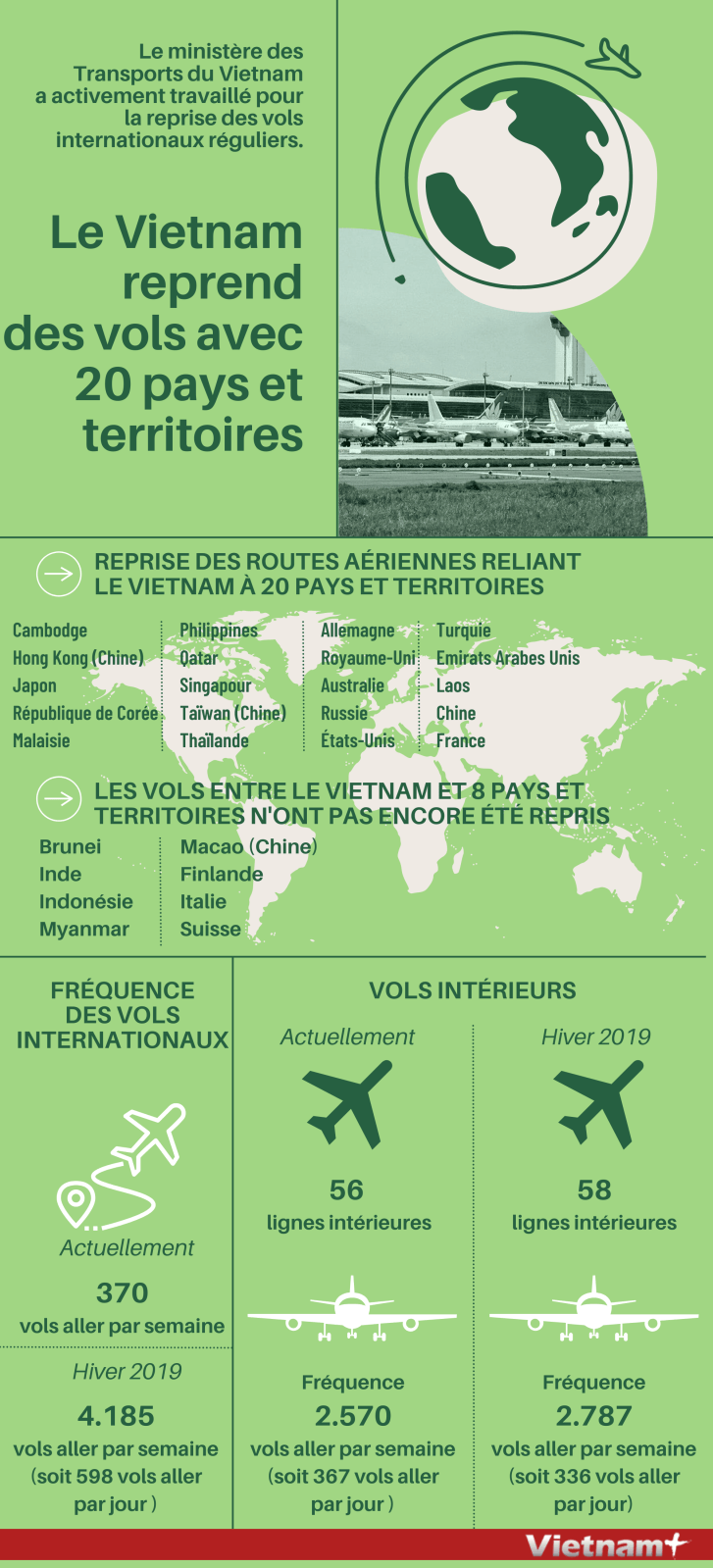
Les compagnies aériennes reprennent progressivement leurs lignes aériennes, augmentent la fréquence des vols pour répondre aux besoins de déplacement de la population. En outre, elles s’efforcent d’améliorer et de perfectionner leurs opérations afin d’offrir des expériences de vol sûres et pratiques aux clients.
Les compagnies aériennes du Vietnam ont repris les lignes aériennes internationales vers des pays tels que le Japon, la République de Corée, la Thaïlande, Singapour, etc. Ces signes positifs contribuent à consolider la confiance de l’industrie aéronautique.
Augmenter les vols au service du tourisme
Selon Nguyen Phuoc Thang, de l’Autorité de l’aviation civile du Vietnam, le marché aérien du Vietnam maintiendrait une croissance de transport de passagers allant de 8 à 10% par an et celle de biens de 10 à 12% par an dans la période post-COVID-19.
Le secteur de l’aviation augmentera également le niveau de mise en œuvre effective de la surveillance de la sûreté et de la sécurité à 80-90 %; assurera la capacité de gestion des vols de 2,5 à 3 millions de vols/an. Notamment, il améliorera sa capacité d’exploitation du système aéroportuaire à l’échelle nationale, passant de 91 millions à 180-200 millions de passagers d’ici 2025.
Pour le marché domestique, de fin mai à fin août chaque année, les compagnies aériennes vietnamiennes se concentreront sur l’augmentation des vols sur les lignes touristiques.
En ce qui concerne la collaboration entre l’aviation et le tourisme, le Service municipal du tourisme et l’EURL des services au sol à l’aéroport du Vietnam (VIAGS) ont signé à Ho Chi Minh-Ville une convention de coopération visant à accélérer la reprise et le développement touristiques dans la ville sur la période 2022-2027.
Nguyen Thi Anh Hoa, directrice du Service municipal du tourisme de Ho Chi Minh-Ville
Selon Nguyen Thi Anh Hoa, directrice du Service municipal du tourisme, il s’agit d’un jalon important pour que le secteur touristique de la mégapole du Sud prenne son essor.
Pour stimuler le secteur de l’aviation, il faut lancer des appels d’investissement dans et hors du pays, renforcer les échanges commerciaux, a déclaré Luong Thi Xuan, fondatrice de Vietnam International Aviation Expo./.
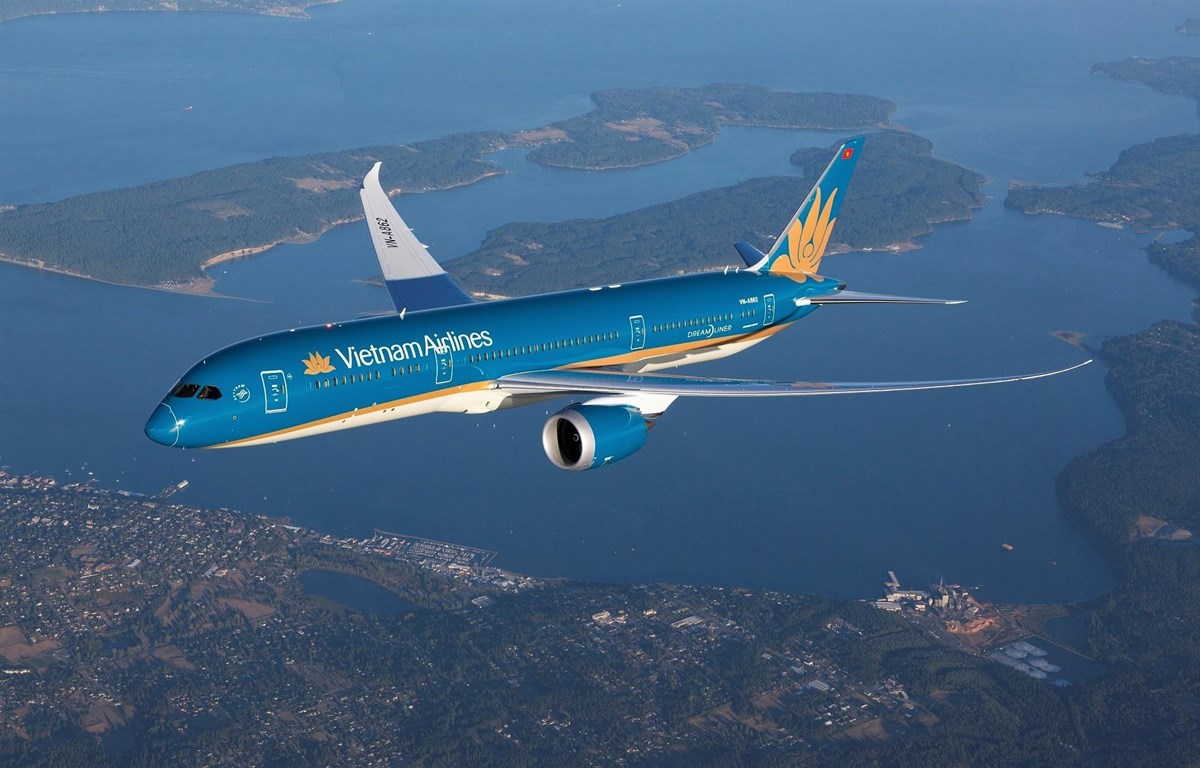
The domestic aviation industry is expected to rebound this year, pushing the recovery of other sectors, including tourism.
Since the beginning of this year, the Government has taken steps to resume both domestic and international flights, while rolling out policies to support the aviation industry. Notably, fees for takeoff and landing and aircraft operating services, and environmental protection tax on jet fuel have been cut by 50 percent this year. Businesses have also received bank loans to overcome the difficult period.
Carriers have gradually restored routes and increased flights, upgraded and consolidated their operations to better meet travel demands.
Flights to countries like Japan, the Republic of Korea (RoK), Thailand, and Singapore have resumed. These positive signs have contributed to strengthening confidence in a brighter picture for the aviation industry this year, and boosting the development of other sectors like tourism.
*Increasing flights to serve tourists
Nguyen Phuoc Thang, head of the Science, Technology and Environment Department of the Civil Aviation Authority of Vietnam, said the Vietnamese aviation market is forecast to grow 8-10 percent in the number of passengers and 10-12 percent in the amount of cargo after the COVID-19 pandemic.
The sector is striving to have a fleet of 400 modern aircraft, raise its effective implementation in safety and security monitoring to 80-90 percent, and operate from 2.5-3 million flights each year. Specifically, the number of passengers served at airports nationwide is set to increase from 91 million to 180-200 million by 2025.
From late May till early August, domestic carriers plan to increase flights to tourist destinations at home.
The Ho Chi Minh City Department of Tourism and the Vietnam Airport Ground Services Company Limited (VIAGS) recently signed a cooperation agreement on boosting sustainable tourism recovery and development in the southern economic hub and nationwide. The 2022-2027 agreement mainly focuses on raising the quantity and quality of tourists, contributing to spurring tourism in Vietnam and HCM City in particular.
Nguyen Thi Anh Hoa, Director of the HCM City Tourism Department
Nguyen Thi Anh Hoa, director of the municipal Tourism Department, described the agreement as a premise for local tourism to strongly recover and develop, adding that VIAGS has assisted the city in tourism promotion and personnel training to better serve holiday-makers.
Luong Thi Xuan, director of Vietnam International Aviation Expo JSC, stressed the need for promotions to attract domestic and foreign investors and expand trade ties.
This will also help promote the land, culture and people of Vietnam to the world, she stressed./.
La situación epidémica en Vietnam se divide hasta el momento en tres etapas: La primera fase se inició el 23 de enero de 2020 cuando se confirmó el primer paciente del COVID-19 en el país, la segunda comenzó a finales de julio del año pasado, la tercera empezó el 25 de enero de 2021 y la cuarta se extiende desde el 27 de abril hasta la actualidad.
El Gobierno de Vietnam ha desplegado de forma oportuna muchas políticas, apoyando gradualmente a las empresas y los ciudadanos a superar las dificultades provocadas por la pandemia. El país sudesteasiático se convirtió en un punto brillante en la materialización del doble objetivo de prevenir y luchar contra el coronavirus, a la par de garantizar el desarrollo socioeconómico.
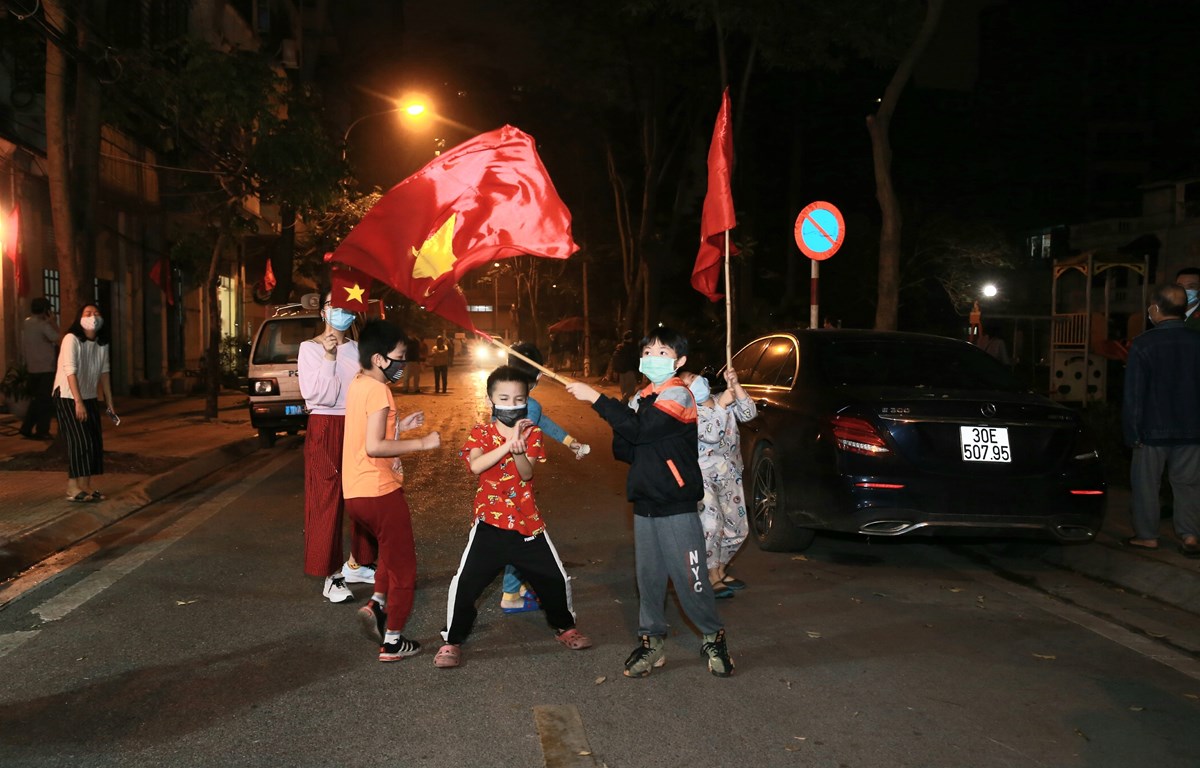
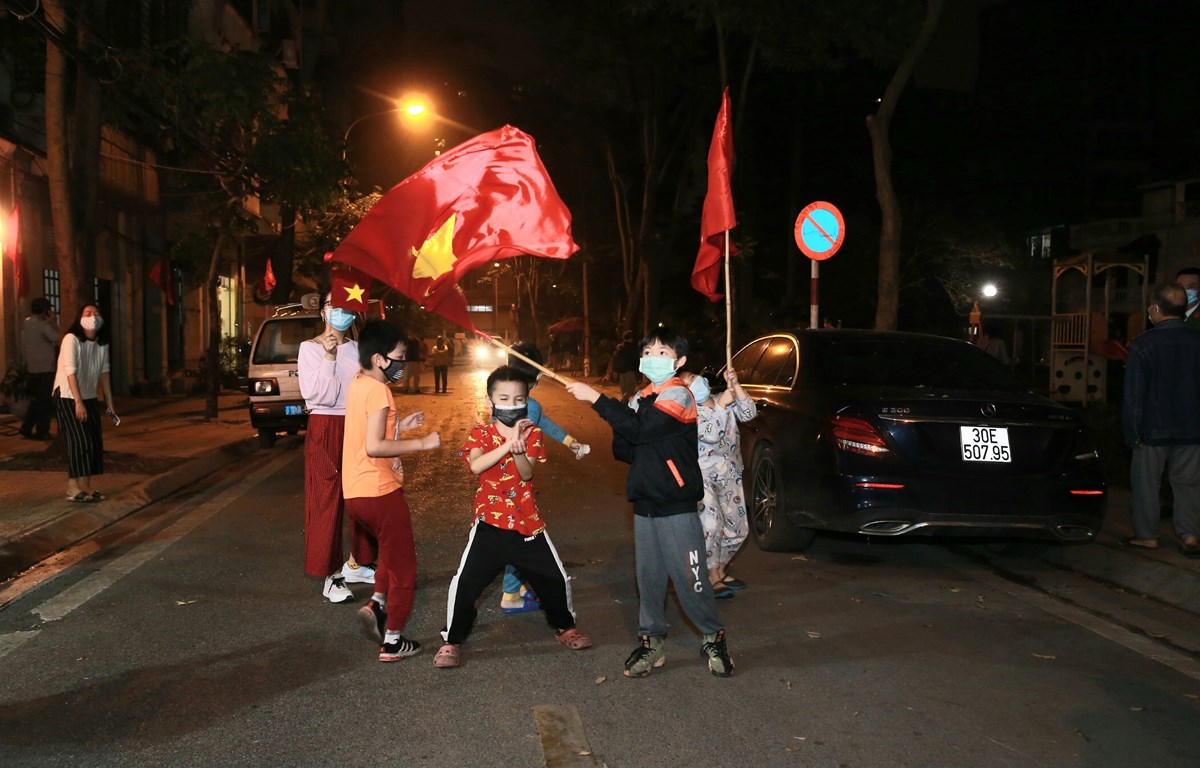
Levantan la cuarentena en un barrio residencial en Hanoi. (Foto: VNA)
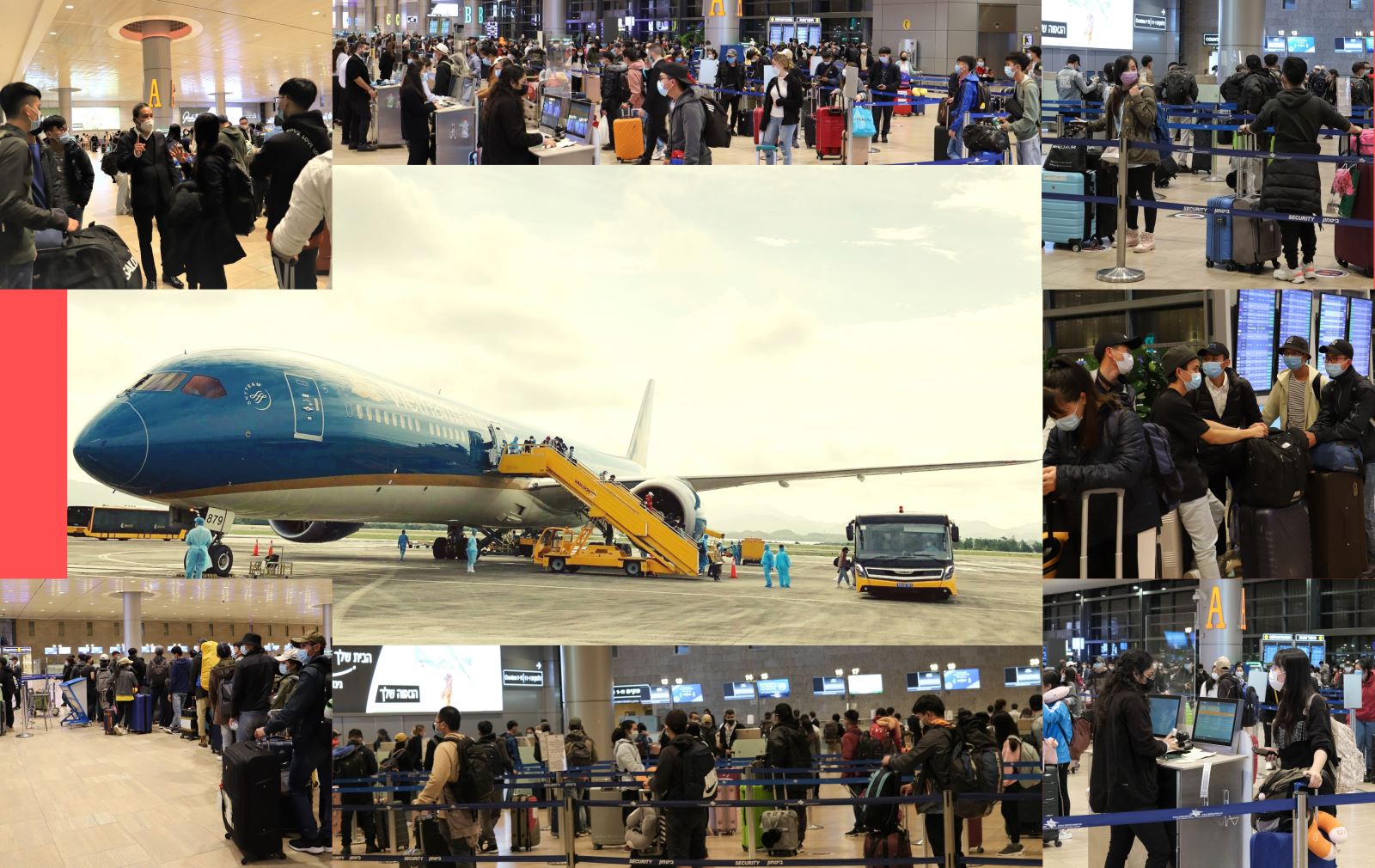
En la primera etapa, el Gobierno vietnamita exigió la aplicación de medidas antiepidémicas a un nivel superior, incluso antes de las recomendaciones de la OMS. En particular, movilizó desde el principio a los militares para las tareas relacionadas con la cuarentena centralizada y el control migratorio en las zonas fronterizas. Vietnam también realizó vuelos para repatriar a los connacionales del exterior y traer inversores, empresarios, expertos y trabajadores calificados al país.
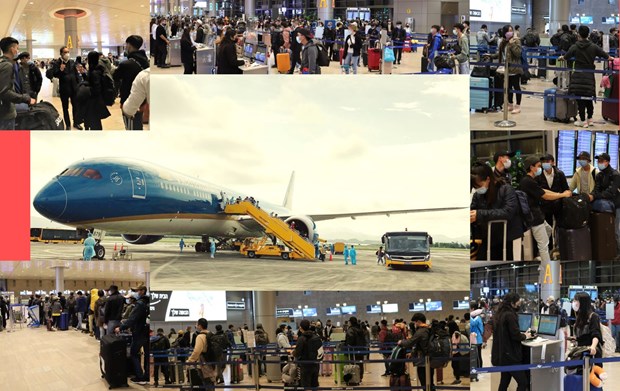
Ciudadanos vietnamitas realizan trámites para vuelos de repatriación. (Foto: VNA)
En el segundo periodo, las medidas de respuesta se implementaron de forma rápida, drástica y sincrónica. Todas las localidades reactivaron el sistema de lucha y prevención antiepidémica, por lo que manejaron con rapidez y oportunamente los brotes del COVID-19.
En la tercera fase, ante la aparición de una nueva cepa del coronavirus que puede propagarse más rápidamente, el Ministerio de Salud de Vietnam orientó de manera eficiente las medidas de rastreo, zonificación, extracción de muestras y restricciones para mitigar al máximo los impactos en la vida y el bienestar social de los pobladores.
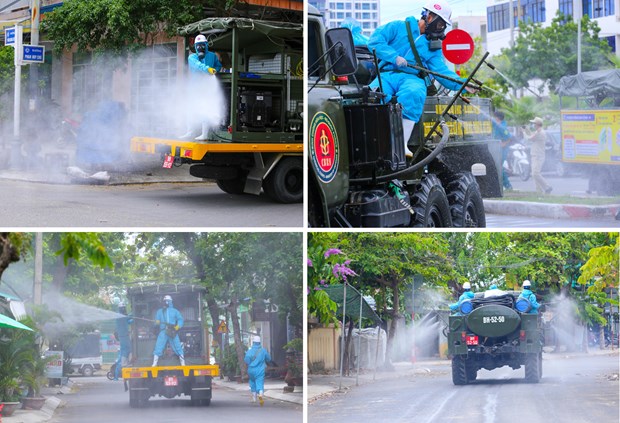
Desinfectan calles en la ciudad central de Da Nang. (Foto: VNA)
Durante el cuarto brote, Vietnam aplica la fórmula “5K+vacunas+tecnologías” en la prevención y control del COVID-19 y cambia gradualmente a la adaptación segura y flexible y el control efectivo de la enfermedad.
Desde el inicio, con el lema “combatir la pandemia como luchar contra el enemigo”, Vietnam cooperó con organizaciones internacionales y otros países para compartir las informaciones, evaluar la situación y proponer soluciones preventivas.
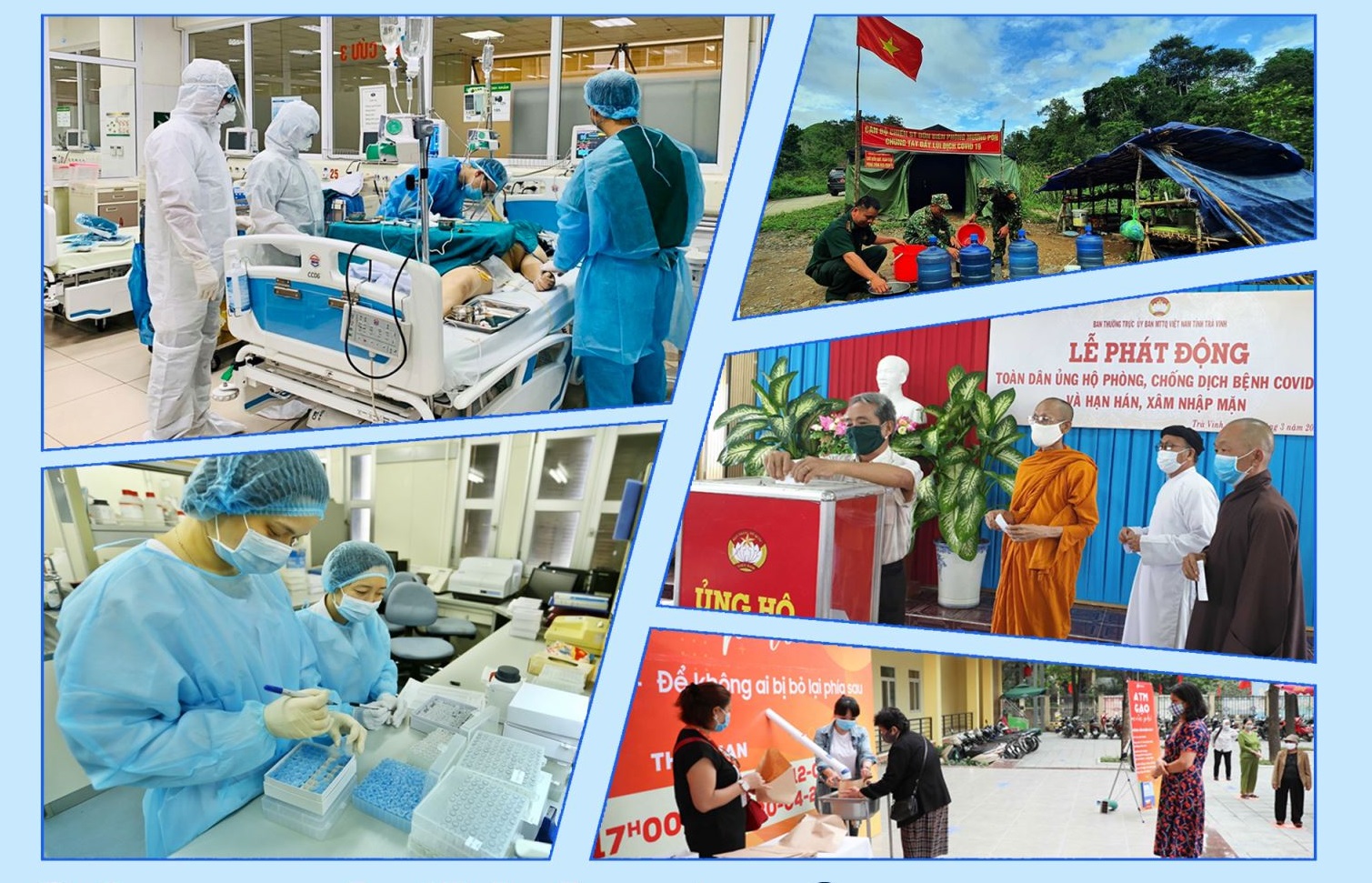
Durante casi dos años, todos los sectores socioeconómicos de Vietnam se vieron gravemente afectados por la pandemia. Desde los primeros días, los líderes del Partido, el Estado y el sistema político del país indochino se centraron con urgencia en la lucha antiepidémica. Gracias a la orientación oportuna y certera del Gobierno, el Comité Directivo Nacional de Prevención y Lucha contra el COVID-19, junto con los esfuerzos de losministerios, sectores y localidades, así como el consenso y la solidaridad de todo el pueblo, el combate contra el coronavirus ha logrado buenos resultados. Vietnam ha controlado con éxito muchos brotes de esa enfermedad y es valorado como un modelo eficiente y de bajo costo para la lucha contra ese mal.
La lucha contra el COVID-19 atrae la participación de todo el sistema político y la sociedad. (Foto: VNA)
Vietnam se centró en el cumplimiento del “doble objetivo” de luchar contra la epidemia y desarrollar la economía para garantizar el bienestar social.
Frente a la nueva evolución de la pandemia, el Comité Directivo Nacional de Prevención y Lucha contra el COVID-19 y el Ministerio de Salud plantearon nuevas estrategias para hacer viables los objetivos establecidos.
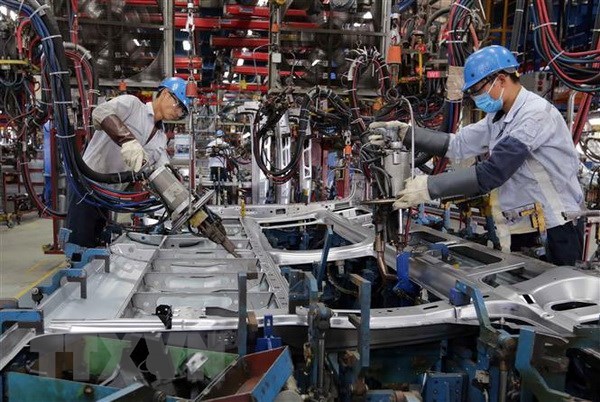
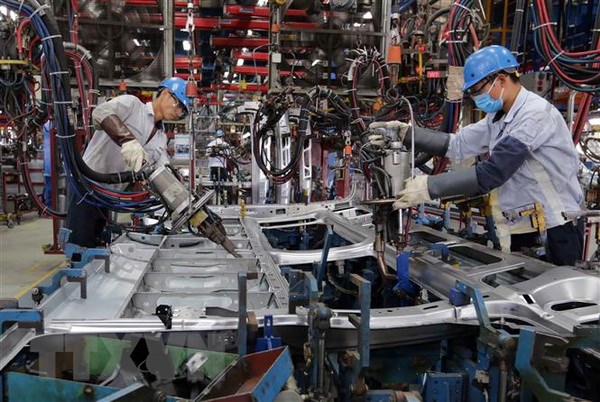
Fábrica de Ford en la provincia de Hai Duong (Foto: VNA)
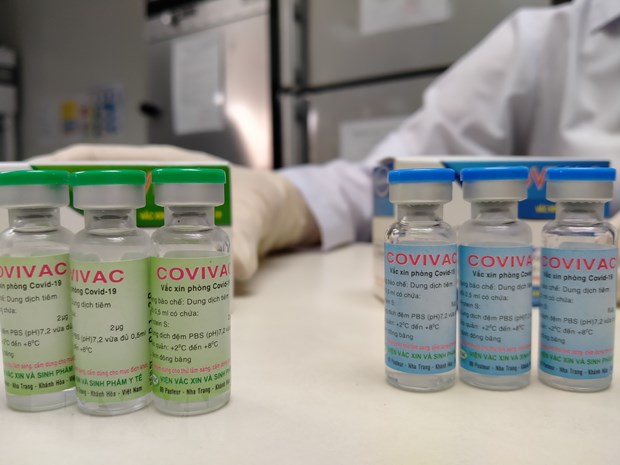
Además de las vacunas importadas, se empeña en promover el estudio y desarrollo de esos fármacos en el país como la vacuna Nanocovax desarrollada por la empresa NANOGEN y la Covivac del Instituto de Vacunas y Biológicos Médicos (IVAC). Se espera que esos fármacos producidos por Vietnam puedan ponerse en uso en 2022.
Vietnam también ha demostrado su responsabilidad ante la comunidad internacional, al apoyar con equipos y materiales de prevención contra el COVID-19 a varios países gravemente afectados por la epidemia.
A medida que la epidemia continúa evolucionado de manera complicada e impacta seriamente a la economía y la sociedad, los ministerios, sectores y localidades vietnamitas se enfocan en la implementación efectiva de las soluciones clave, que incluyen:
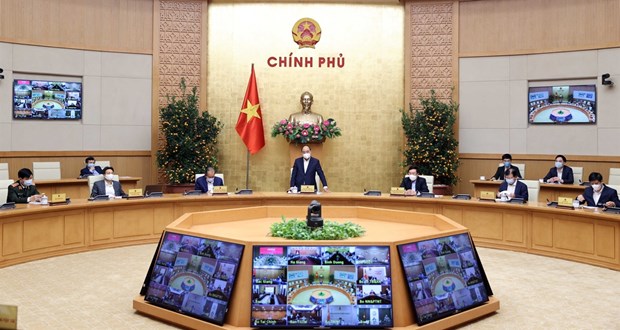
El primer ministro Nguyen Xuan Phuc preside una reunión del gabinete sobre la lucha contra el COVID-19. (Foto: VNA)
– Continuar fortaleciendo el liderazgo y la responsabilidad de los líderes en la prevención y control de la pandemia y calcular cuidadosamente las medidas de prevención y control epidémico para limitar los impactos negativos a las actividades socioeconómicas y la vida de los pobladores.
– Prestar atención a la garantía del bienestar social para la población y continuar revisando las políticas de apoyo a las personas afectadas por la pandemia.
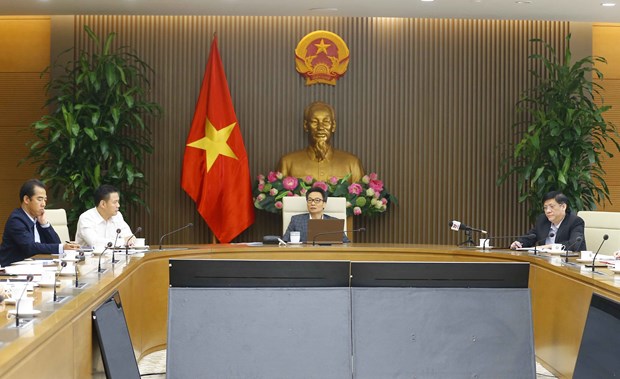
El vicepremier Vu Duc Dam preside una reunión del Comité Directivo Nacional para la prevención y el control del COVID-19. (Foto: VNA)
– Los ministerios, sectores y localidades implementan con eficiencia la Resolución 128 del gobierno para recuperar la producción y negocios, facilitar el comercio de mercancías y estabilizar la vida de la población.
– Las localidades toman iniciativas en la prevención y control del COVID-19, actualizan de forma constante la situación epidémica en sus territorios e impulsan la vacunación masiva.
– Se acelera la campaña de vacunación en todo el país y realiza la inyección de la dosis de refuerzo.
– Se Implementa la conexión entre las bases de datos, a partir del sistema nacional sobre la población y perfeccionan los documentos legales referentes a la prevención y control de la pandemia./.
En Vietnam, la política consecuente del Partido y del Estado es garantizar y promover los derechos humanos, respetar y asegurar la libertad de religión y creencias de los pobladores. Estos derechos están claramente estipulados en la Constitución y las leyes de Vietnam, y se garantizan en la práctica.
La libertad de religión y creencias es uno de los derechos básicos de los seres humanos, reconocido a nivel internacional, así como en las leyes de muchos países del mundo. En Vietnam, la política consecuente del Partido y del Estado es garantizar y promover los derechos humanos, respetar y asegurar la libertad de religión y creencias de los pobladores. Estos derechos están claramente estipulados en la Constitución y las leyes de Vietnam, y se garantizan en la práctica.
Vietnam respeta el derecho a la libertad de culto
El derecho a la libertad de religión y creencias fue reconocido en la Constitución de 1946, la primera de Vietnam, y continuó siendo reafirmado en esta ley suprema en los años 1959, 1980, 1992 y 2013. La Constitución de 2013 afirma: “Toda persona tiene derecho a la libertad de religión y creencias, a profesar una religión o no tener ninguna. Todas las religiones son iguales ante la ley. El Estado respeta y protege el derecho a la libertad de religión y creencias. Nadie puede infringir este derecho o aprovecharse de la religión para violar la ley”.
“Toda persona tiene derecho a la libertad de religión y creencias, a profesar una religión o no tener ninguna. Todas las religiones son iguales ante la ley”
El reconocimiento, respeto y garantía del derecho a la libertad de religión y creencias se ha concretado en numerosos documentos legales, como el Código Civil, el Código de Procedimiento Penal, la Ley de Tierras, Ley de Educación y el Código Penal (modificado), entre otros. En particular, la Asamblea Nacional de Vietnam aprobó la Ley de Creencias y Religión el 18 de noviembre de 2016.
Nguyen Thanh Son, jefe de la Oficina del Comité Directivo del Gobierno para los Derechos Humanos, enfatizó que la Ley de Creencias y Religión ha tenido un impacto positivo en la vida religiosa en Vietnam, creando un marco legal estable para la garantía del ejercicio del derecho de las personas a la libertad de religión y creencias.
Celebran el Día de Vesak en Vietnam (Fuente: VNA)
Se estima que alrededor del 95 por ciento de la población vietnamita profesa alguna religión o creencia, de los cuales hay más de 26,5 millones de seguidores de culto, que representan el 27 por ciento de los habitantes (hasta noviembre de 2021). Según un informe del Comité de Asuntos Religiosos del Gobierno, en 2021, el número de los seguidores religiosos en Vietnam aumentó en más de 57 mil personas en comparación con 2020.
Todo el país cuenta con 43 organizaciones pertenecientes a 16 religiones reconocidas y registradas con 57 mil dignatarios, 157 mil funcionarios religiosos y 29 mil sitios de culto. Hay 46 escuelas que capacitan a dignatarios religiosos equivalentes de nivel intermedio a universitario.
Cada año, el Estado crea condiciones para que cientos de monjes estudien y participen en seminarios en el extranjero para mejorar sus calificaciones. La mayoría de las organizaciones religiosas tienen periódicos, revistas y boletines. Tan solo la Editorial Religiosa saca a la luz más de mil publicaciones relacionadas con la religión cada año.
Además, más de ocho mil 500 festividades religiosas se celebran cada año, las cuales atraen a un gran número de personas y visitantes. Junto a ello, muchos eventos religiosos internacionales importantes se han organizado y celebrado con éxito en Vietnam, reconocidos y apreciados por la comunidad internacional, como el 500 aniversario de la Reforma protestante (2017), el Día de Vesak de las Naciones Unidas (2019), el 290º Capítulo General Electivo de la Orden de Predicadores (2019).
Muchos festivales religiosos no son solo actividades de las personas que profesan culto, sino que también se están convirtiendo en fiestas que atraen la participación de todas las personas. Eso muestra que el Partido y el Estado siempre crean todas las condiciones para que los ciudadanos asistan libremente a las actividades religiosas y de creencias.
En una conferencia de prensa acerca del Libro Blanco sobre la “Religión y Política Religiosa en Vietnam”, el subjefe del Comité Gubernamental de Asuntos Religiosos Nguyen The Doanh afirmó que la comunidad religiosa es una parte inseparable de la nación.
El Libro Blanco reitera que “el Partido y el Estado de Vietnam persisten en la política de gran unidad nacional, sin discriminar por motivos de creencia o religión”.
“El Partido y el Estado de Vietnam persisten en la política de gran unidad nacional, sin discriminar por motivos de creencia o religión”.
Además, Vietnam participa activamente en el mecanismo de diálogo anual sobre la democracia, derechos humanos y religión con socios como Estados Unidos y la Unión Europea. En 2019, defendió con éxito el Informe Nacional en el marco del Tercer Ciclo del Examen Periódico Universal (EPU), el Informe de Estado sobre la implementación del Pacto Internacional de Derechos Civiles y Políticos en el Consejo de las Naciones Unidas sobre Derechos Humanos.
Los logros sobre la garantía de la libertad de religión y creencias de Vietnam se informaron a las delegaciones de parlamentarios, funcionarios gubernamentales y embajadas de otros países en Hanoi. Vietnam también estableció grupos de trabajo en Estados Unidos y algunos países occidentales para dialogar e intercambiar directamente sobre temas religiosos, promovió la divulgación sobre las políticas y logros al respecto y rechazó las informaciones falsas sobre la situación religiosa en el país.
La comunidad religiosa contribuye al desarrollo del país
Las políticas de Estado para garantizar la libertad de culto durante los últimos años crean condiciones favorables para que los dignatarios y creyentes practiquen su religión. Las pautas y políticas acertadas del Partido y el Estado sobre la religión ayudan a las personas a entender sus derechos y responsabilidades, unir sus intereses a los de la nación y el pueblo, y vivir una buena vida religiosa, luchando constantemente por el objetivo de un pueblo rico, y un país poderoso, democrático, justo y civilizado.
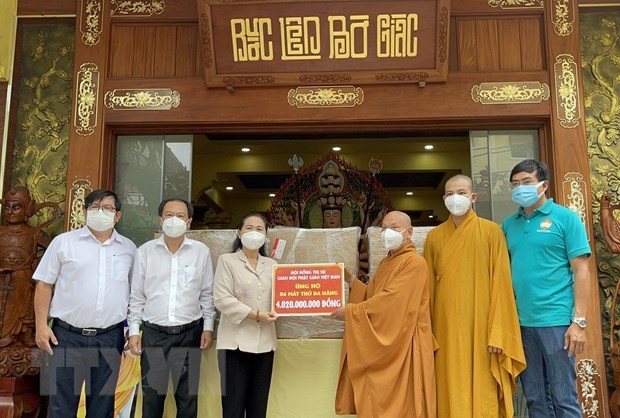
El monje Thich Thien Nhon, presidente del Consejo Administrativo de la Sangha Budista de Vietnam, entregó seis ventiladores multifunción por un valor de más 174 mil dólares a Nguyen Thi Le, subsecretaria del Comité del Partido Comunista de Vietnam en Ciudad Ho Chi Minh y presidenta del Consejo Popular municipal, en julio de 2021 para apoyar a la urbe en la lucha contra el COVID-19 (Fuente: VNA)
La mayoría de los dignatarios, monjes, seguidores y organizaciones religiosas participan activamente en los movimientos de emulación patriótica, actividades benéficas y humanitarias, erradicación del hambre y reducción de la pobreza, asistencia a los desfavorecidos, y contribuyen al desarrollo socioeconómico y la seguridad y defensa nacional.
Según las estadísticas del Comité Gubernamental de Asuntos Religiosos, durante los últimos años, las religiones en Vietnam cuentan con alrededor de 500 instalaciones médicas, casi mil 300 escuelas, más de 50 centros de formación profesional, 800 establecimientos de amparo social que atienden a más de 12 mil huérfanos, niños con discapacidad, ancianos solitarios, enfermos mentales y personas con VIH/SIDA.
La mayoría de los dignatarios, monjes, seguidores y organizaciones religiosas participan activamente en los movimientos de emulación patriótica, actividades benéficas y humanitarias, erradicación del hambre y reducción de la pobreza, asistencia a los desfavorecidos, y contribuyen al desarrollo socioeconómico y la seguridad y defensa nacional.
Según las estadísticas del Comité Gubernamental de Asuntos Religiosos, durante los últimos años, las religiones en Vietnam cuentan con alrededor de 500 instalaciones médicas, casi mil 300 escuelas, más de 50 centros de formación profesional, 800 establecimientos de amparo social que atienden a más de 12 mil huérfanos, niños con discapacidad, ancianos solitarios, enfermos mentales y personas con VIH/SIDA.
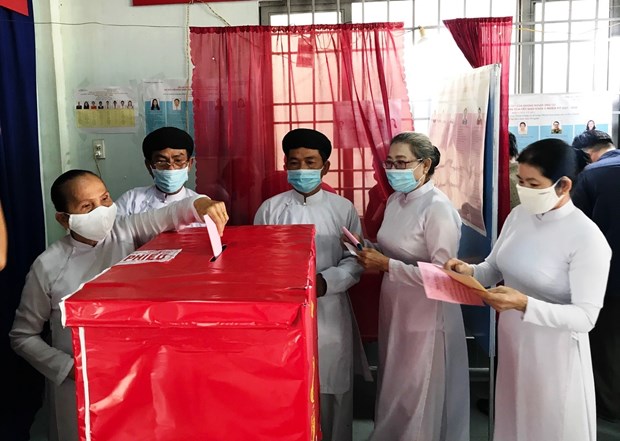
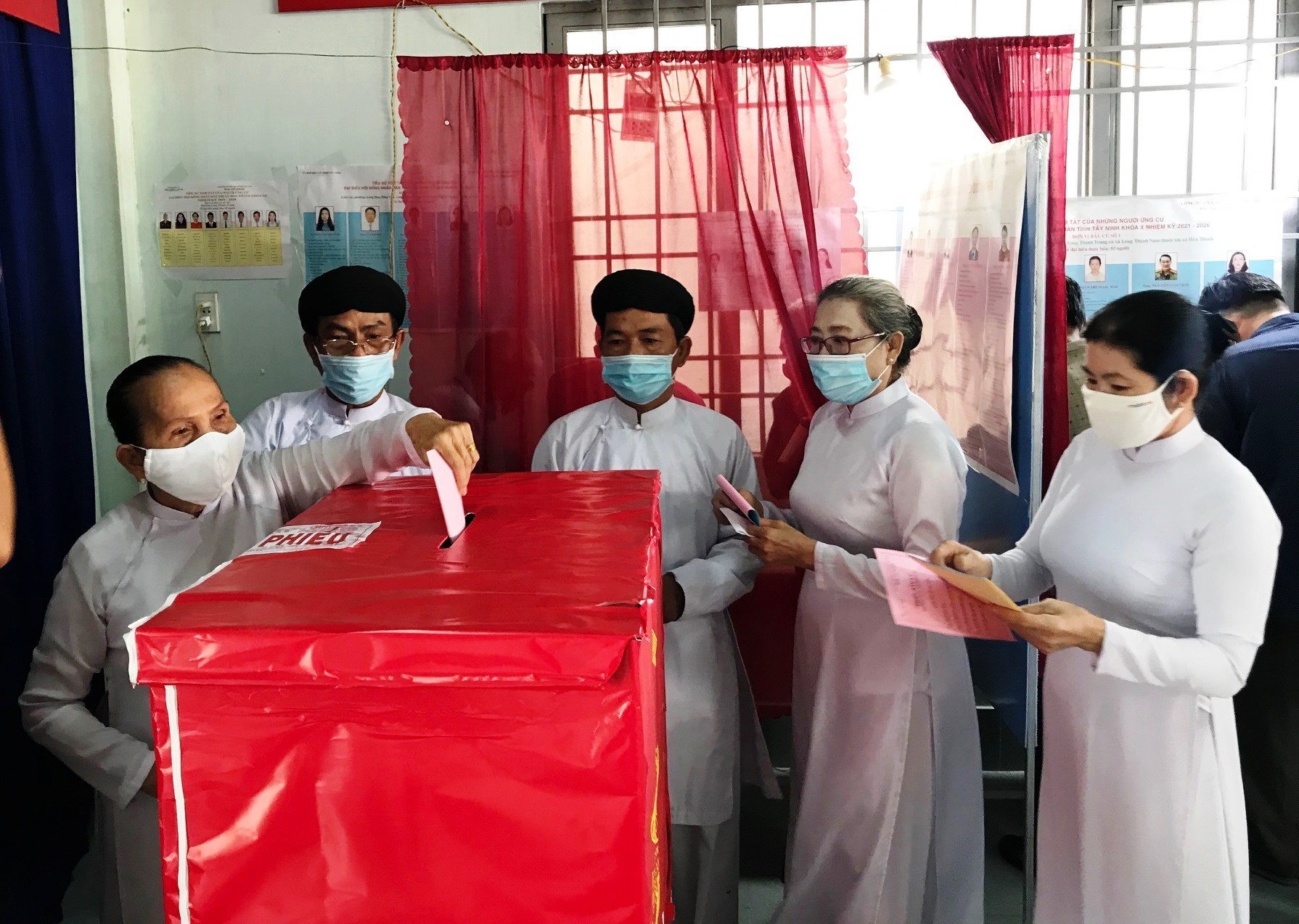
El 23 de mayo de 2021, 16 mil 404 votantes (incluido aproximadamente el 90 por ciento de los votantes que practican el caodaísmo) en el distrito de Long Thanh Trung, ciudad de Hoa Thanh, provincia de Tay Ninh acudieron a las urnas (Fuente: VNA)
En 2021, las organizaciones religiosas movilizaron a dignatarios y seguidores para contribuir a la construcción y consolidación del sistema político en todos los niveles. La mayoría de ellos participó con alto sentido de responsabilidad en las elecciones de diputados a la Asamblea Nacional de la XV legislatura y los Consejos Populares de todos los niveles en el mandato 2021-2026.
Como resultado, fueron elegidos más de seis mil 200 dignatarios, monjes y seguidores religiosos. Ellos son la fuerza que juega un papel importante en la propagación y difusión de los lineamientos y políticas del Partido y las leyes del Estado, y contribuye a fortalecer la relación entre el gobierno y las organizaciones religiosas.
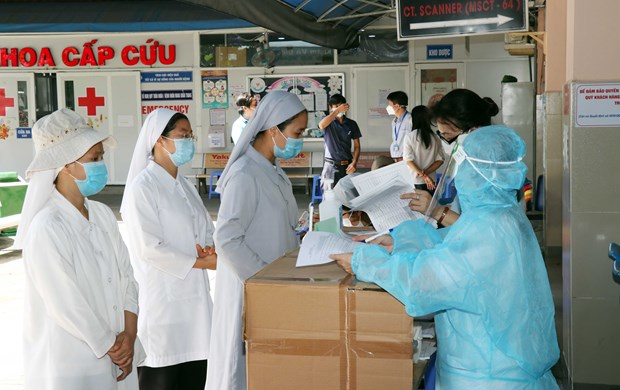
Especialmente, cuando todo el país se esfuerza por luchar contra la pandemia del COVID-19, miles de monjes y creyentes se han ofrecido como voluntarios en los hospitales para brindar apoyo y atención a los pacientes del coronavirus. Las organizaciones religiosas donaron dinero, artículos de primera necesidad y equipos médicos por valor de miles de millones de dongs (moneda nacional) para unir esfuerzos con el gobierno y la sociedad en la lucha contra la epidemia.
Un gran número de dignatarios y seguidores de las principales religiones en Ciudad Ho Chi Minh se registraron para apoyar a las fuerzas de primera línea contra la epidemia. Fuente: VNA
En una carta enviada a dignatarios y seguidores religiosos el 27 de octubre, el primer ministro Pham Minh Chinh reconoció y agradeció las contribuciones de los compatriotas religiosos, a muchos de los cuales no les importaron las dificultades y los peligros, y están listos para unirse a la primera línea contra la pandemia y hacer trabajo voluntario para apoyar a las personas.
“Los dignatarios han movilizado y unido a los religiosos para observar estrictamente las normas estatales sobre la prevención y control de epidemias, manteniendo el sentido de responsabilidad cívica con el país. Muchas actividades y ceremonias religiosas han sido suspendidas o canceladas. Sin embargo, todos los compatriotas religiosos están de acuerdo en hacerlo, todo por la salud de la comunidad y por la seguridad de la sociedad. Esos hechos significativos, como dijo el Presidente Ho Chi Minh, “todas las religiones son compasivas y humanas”.
Actividades Religiosas: Contra la Penetración de las Religiones Malvadas
El Partido y el Estado vietnamitas siempre adoptan una política coherente de respeto y garantía de la libertad de creencias y religión de los ciudadanos y la igualdad entre las religiones. La política ha creado una atmósfera dinámica y progresista de la fe y las actividades religiosas en Vietnam, y es ampliamente reconocida por la comunidad internacional.
Sin embargo, en paralelo con el desarrollo de las religiones que operan de acuerdo con los estatutos, regulaciones y disposiciones de la ley, surgieron en los últimos tiempos algunas organizaciones disfrazadas de nuevas religiones que se han infiltrado en Vietnam para llevar a cabo actividades políticas.
Esas fuerzas hostiles se han aprovechado de los limitados conocimientos de una parte de los pobladores, especialmente de grupos de etnias minoritarias en zonas montañosas y fronterizas, para incitarlos a violar la ley y entrar en conflicto con las religiones tradicionales en el país.
Las actividades de integrantes de la Iglesia Evangélica de Cristo en Vietnam violan la ley (Fuente:VNA)
Según datos del Comité Gubernamental de Asuntos Religiosos, hasta abril de 2021, se han identificado alrededor de 85 de estos cultos nocivos que operan en tres áreas estratégicas para la defensa y seguridad nacional, el noroeste, las tierras altas centrales y el suroeste. Estas organizaciones hostiles realizan actividades contrarias a los estándares morales sociales y tradiciones culturales, fomentan una ideología separatista para socavar el gran bloque de unidad nacional e incitar al disturbio social.
Con el pretexto de la religión, la etnia y los derechos humanos, reúnen fuerzas para oponerse al Partido y al Estado, y promueven la ideología del “separatismo, autonomía”, exigiendo el establecimiento de un “reino propio” del grupo étnico Mong en el noroeste, de los Cham en la Altiplanicie Occidental, y de la comunidad Khmer Krom en el suroeste, para facilitar las intervenciones externas.
Todas esas estratagemas están dirigidas al objetivo final de abolir el socialismo en Vietnam.
En la Altiplanicie Occidental, en 2017, los exiliados de Fulro (Frente Unido para la Lucha de las Razas Oprimidas) establecieron la organización “Iglesia de Cristo vietnamita” para encubrir su complot contra Vietnam. En septiembre de 2020, las autoridades lucharon por disolver y abolir esta organización reaccionaria.
Según el primer teniente Truong Hong Quy, jefe de la División de Seguridad Interna de la Policía de la provincia de Dak Lak, desde el exterior, esta organización dirigió e incitó a las personas en el país a propagar informaciones falsas, distorsionar y calumniar la situación religiosa en Vietnam con el fin de manchar la reputación del país.
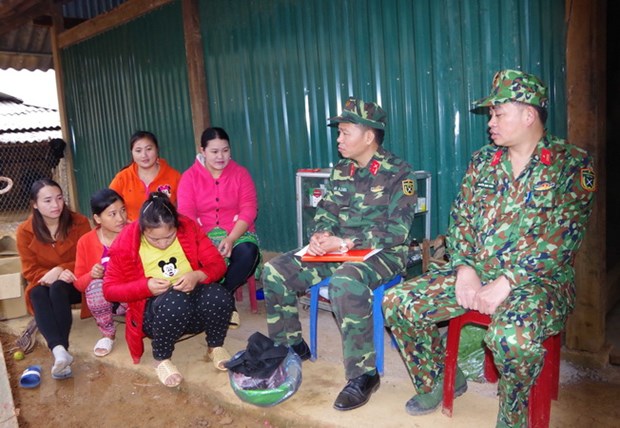
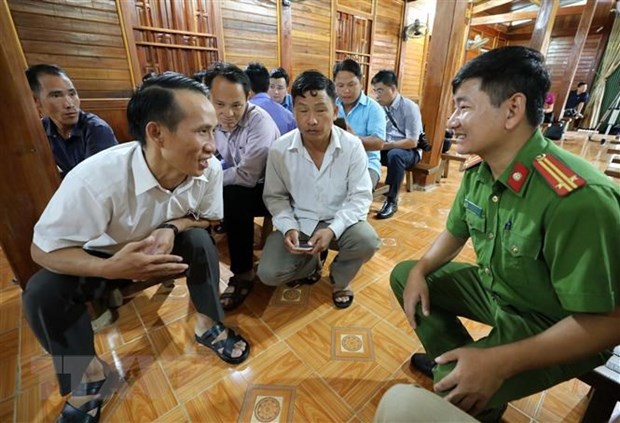
Difunden políticas y leyes del Partido y el Estado a los pobladores en el distrito de Muong Nhe, provincia de Dien Bien. (Fuente: VNA)
Las autoridades han trabajado con decenas de personas para que respondan por su participación en las actividades ilegales de esta organización reaccionaria. Estos últimos han admitido las fechorías que han cometido y que consideran violatorias de la ley y contrarias a los intereses de la nación.
Durante los últimos seis años, ante la fuerte penetración de algunas religiones reaccionarias en la provincia norteña de Dien Bien, principalmente en la zona poblada H’mong de Muong Nhe como “Ba Co Do”, “Gie Sua”, las autoridades se concentraron en la lucha contra estas organizaciones malintencionadas que actúan bajo el disfraz de la religión.
La policía provincial de Dien Bien implementó medidas preventivas contra sus cabecillas radicados dentro y fuera del país. Las autoridades pidieron a las organizaciones protestantes que fortalezcan su gestión de las actividades religiosas y participen y sensibilicen a sus seguidores en la lucha contra las maniobras de los delincuentes.