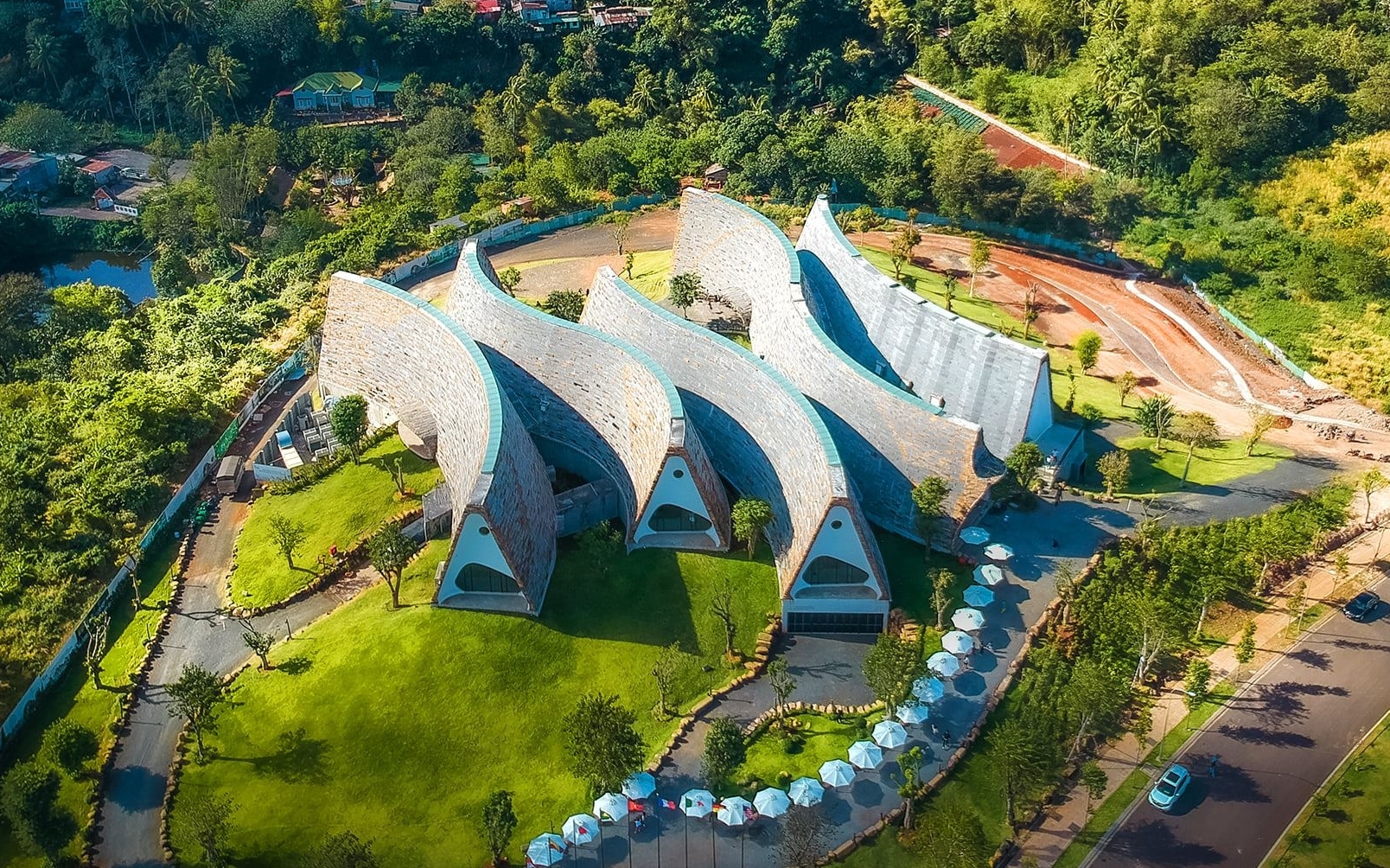
El Museo Mundo del Café es la obra icónica del proyecto Ciudad del Café, construido por Trung Nguyen Legend, que contribuye a hacer realidad la aspiración de convertir a Buon Ma Thuot en la “Ciudad del Café del Mundo”.
Gracias a un delicioso sabor del café favorecido por entusiastas cultivadores de este grano, junto con bellos paisajes naturales y múltiples valores culturales, históricos y artísticos, la ciudad de Buon Ma Thuot, en la provincia altiplana de Dak Lak, tiene todas las ventajas para convertirse en la “ciudad cafetera del mundo”.
Resolución para allanar el camino
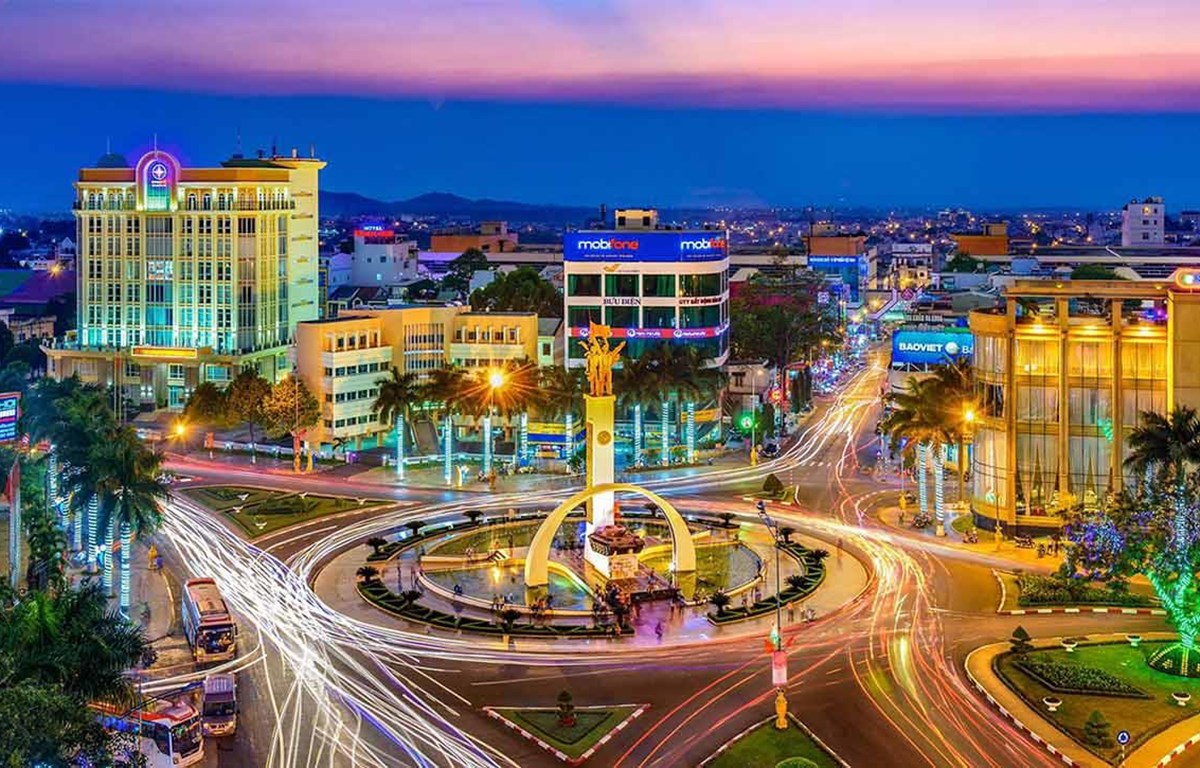
La ciudad de Buon Ma Thuot tiene una importante posición política y económica al situarse en el centro de Tay Nguyen (Altiplanicie Occidental). Especialmente el café robusta de Buon Ma Thuot ha ganado fama por sus ventajas en condiciones ecológicas y agronómicas que dotan a los productos cafetaleros de la localidad de una calidad natural superior a los de muchos otros países productores del café robusta.
La ciudad de Buon Ma Thuot tiene una importante posición política y económica al situarse en el centro de Tay Nguyen (Altiplanicie Occidental). Foto: baodaklak.vn
Además, Buon Ma Thuot también es conocida por sus festivales típicos que atraen a turistas nacionales y extranjeros, como el Festival de la cultura de gongs, la ceremonia de adoración del agua, y el acto de hermanamiento. En particular, la ceremonia del Festival del café Buon Ma Thuot ha sido reconocida como un evento nacional bienal.
Para implementar el programa de acción de la Conclusión Número 67-KL/TW del 16 de diciembre de 2019 del Buró Político sobre la construcción y el desarrollo de la ciudad de Buon Ma Thuot hasta 2030 con visión a 2045, el Gobierno ha asignado, al Comité Popular municipal, elaborar un proyecto para convertir a Buon Ma Thuot en la “ciudad del café del mundo”, desarrollar el ecoturismo y explotar los valores culturales locales asociados a los monumentos nacionales.
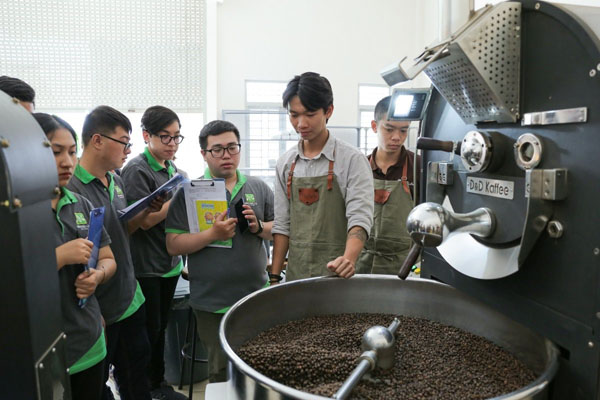
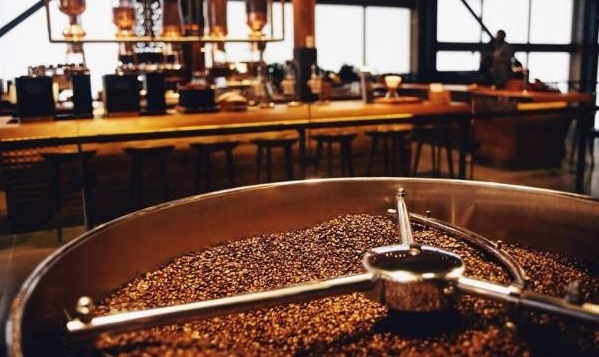
Líneas modernas de producción de café instantáneo en la empresa Trung Nguyen Legend.
En concreto, la recién emitida Resolución Número 72/2022/QH15 de la Asamblea Nacional sobre la aplicación piloto de una serie de mecanismos y políticas específicas para el desarrollo de Buon Ma Thuot crea una base sólida para construir la imagen de “ciudad cafetera del mundo”.
Vu Van Hung, presidente del Comité Popular de Buon Ma Thuot, destacó la determinación de implementar con éxito el proyecto sobre la base de las resoluciones del Buró Político y la Asamblea Nacional.
Desarrollar la ciudad de Buon Ma Thuot para que se convierta en la “Ciudad del café del mundo”. Foto: kinhtenongthon.vn
Este es un trabajo difícil sin precedentes en cualquier localidad y deviene una tarea muy importante y motivadora para el desarrollo socioeconómico de la provincia de Dak Lak, en general, y de la ciudad de Buon Ma Thuot, en particular.
El proyecto tiene como objetivo promover la marca del café Buon Ma Thuot y del café vietnamita, así como el ecoturismo y los productos culturales únicos de Tay Nguyen (Altiplanicie Occidental), lo cual ayudará a concretar el objetivo de convertir a Buon Ma Thuot en la “ciudad del café del mundo”.
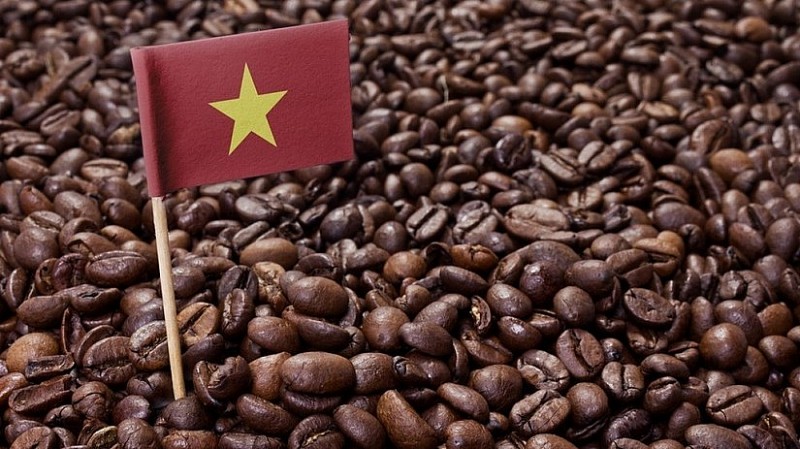
El café vietnamita es apreciada en el mercado mundial, con una calidad estable que satisface las necesidades de muchos mercados. Foto baoquocte.vn.
Empresas acompañan al proceso
Le Duc Huy, director general de Simexco Dak Lak, el mayor comprador y exportador de café verde de Dak Lak, subrayó la necesidad de atraer inversiones en el procesamiento profundo del café en aras de aumentar el valor del producto, además de tener políticas preferenciales para reducir el impuesto de la tierra y de la renta a fin de apoyar a las empresas y exportadores nacionales.
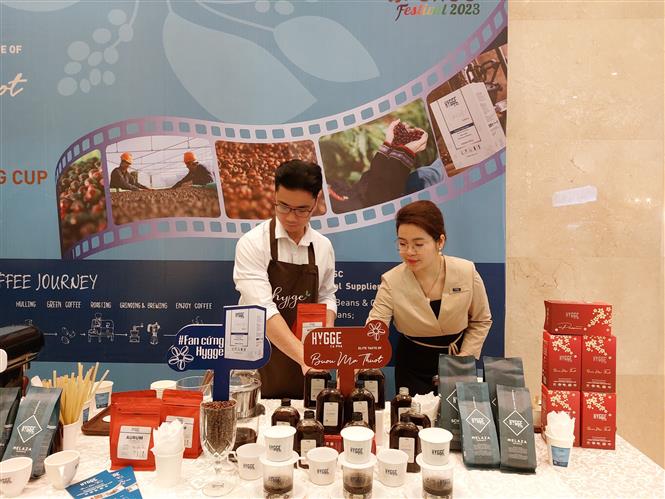
Presentan diferentes productos de café en el Festival del Café Buon Ma Thuot 2023 en Hanoi. Foto: VNA
Además, sugirió promover la marca y la calidad del café vietnamita con el propósito de elevar el precio del rubro.
Al mismo tiempo, se necesita organizar concursos internacionales de café con la asistencia de principales tostadores y expertos de fama mundial, además de participar en las ferias y exposiciones de alimentos y café para presentarlos a los consumidores de todo el mundo.
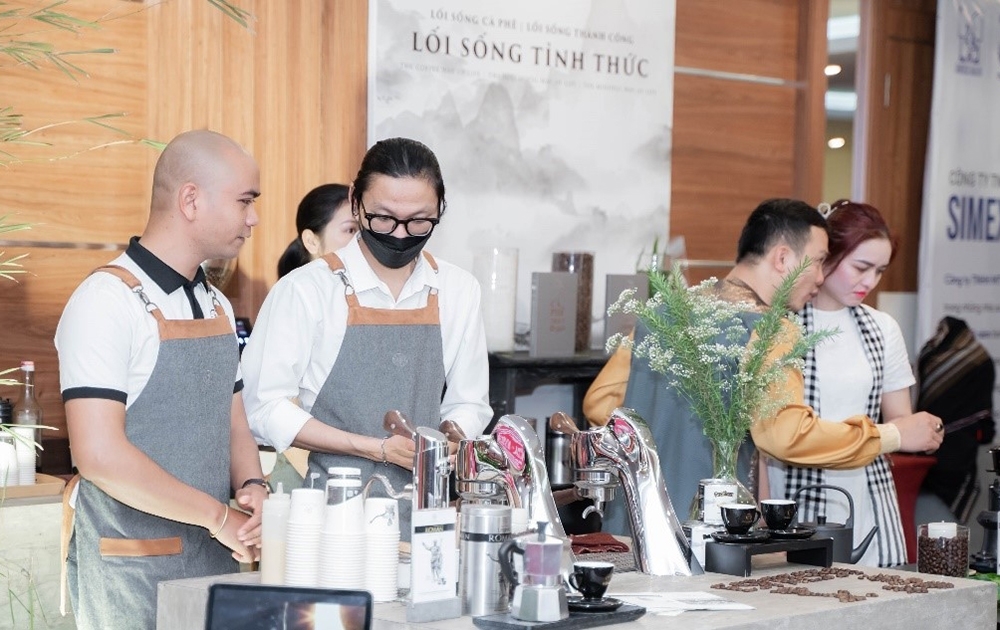
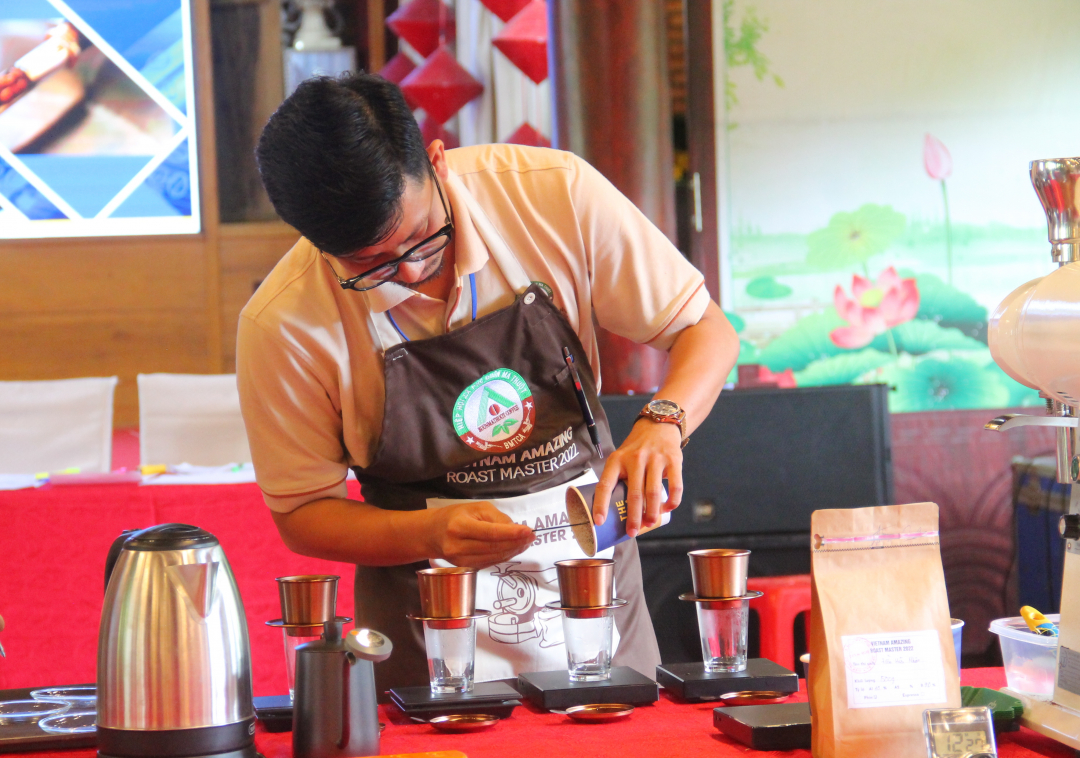
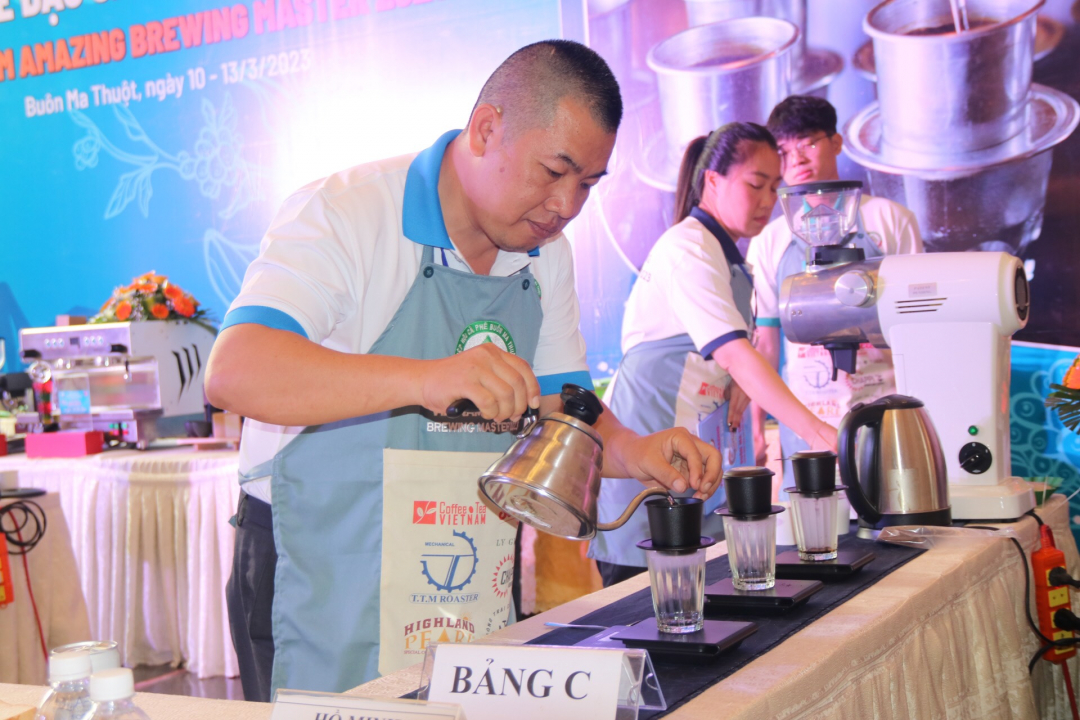
Los concursos de elaboración de café se han convertido en un “patio de recreo” para que los baristas demuestren su pasión por elaborar esta sofisticada y emocionante bebida. Foto: baodaklak.vn
Propuso además construir de inmediato un centro de capacitación en café en la ciudad de Buon Ma Thuot, donde se brinda información completa en todas las etapas de la cadena de valor del café, desde la selección de semillas, las técnicas en cultivo, el procesamiento, el tostado hasta la logística y la exportación.
Un representante del grupo cafetero Trung Nguyen Legend señaló los factores claves para construir la marca de una ciudad temática en Buon Ma Thuot como la comunidad indígena con más de 49 etnias, el espacio cultural diverso y la cultura del café.
Buon Ma Thuot debe diseñarse, construirse y operarse paso a paso y, al mismo tiempo, alcanzar los criterios “Diferente – Especial – Único” de una ciudad cafetera del mundo.
Según el grupo Trung Nguyen Legend, las políticas públicas, la infraestructura, los recursos humanos, las finanzas y la tecnología constituyen los cinco pilares para la transformación de la ciudad de Buon Ma Thuot, los cuales deben ser priorizados por los gobiernos centrales y locales para promover el desarrollo de Buon Ma Thuot, en particular, y la Altiplanicie Occidental, en general; así como para la industria cafetera y los sectores relacionados./.
Музей кофе мира – знаковый объект проекта Кофейного города, построенного компанией Чунгнгуен (Trung Nguyen Legend) в стремлении превратить Буонматхуот в «Всемирный кофейный город».
Благодаря восхитительному кофе, любимому мировым сообществом любителей кофе, элементам природного ландшафта, культурного, исторического и художественного наследия, город Буонматхуот, провинция Даклак, имеет все преимущества, чтобы стать «Всемирным кофейным городом».
Все начинается с политики
Город Буонматхуот имеет важное политическое и экономическое положение, является центром региона Центрального нагорья, где сочетаются элементы природного ландшафта, культурные ценности, история и искусство. Особенно местные экологические и агрономические условия придают кофе Робуста в Буонматхуот натуральное качество, превосходящее многие другие продукты стран-производителей Робусты.
Город Буонматхуот имеет важное политическое и экономическое положение, является центром Центрального нагорья, где слились воедино элементы природного ландшафта, культурные ценности, история, искусство… (Фото: baodaklak.vn)
Кроме того, город Буонматхуот также известен своими самобытными фестивалями, известными местным и иностранным туристам, такими как: фестиваль культуры Гонг, церемония поклонения водной пристани, церемония побратимства. В частности, Фестиваль кофе Буонматхуот был признан национальным фестивалем, который проводится каждые 2 года.
В духе реализации Постановления № 103/NQ-CP «О Программе действий по реализации Заключения Политбюро № 67-KL/TW от 16 декабря 2019 года о строительстве и развитии города Буонматхуот провинции Даклак до 2030 года» с перспективой до 2045 года правительство поручило Народному комитету города Буонматхуот руководить строительством «Проекта по развитию торговой марки города Буонматхуот, чтобы он стал «мировым кофейным городом», развивать экотуризм и использовать местные культурные ценности, связанные с национальными памятниками».
Процесс производства растворимого кофе на современных линиях кофейной компании Чунгнгуен (Trung Nguyen), Вьетнам.
В частности, недавно изданное поставноелние № 72/2022/QH15 Национального собрания «Апробация ряда конкретных механизмов и политик для развития города Буонматхуот, провинции Даклак» является важной вехой и предпосылкой для создания имиджа «Всемирного кофейного города».
Ву Ван Хынг, председатель Народного комитета города Буонматхуот, провинция Даклак, сказал, что Народный комитет Буонматхуота полон решимости успешно реализовать проект по развитию торговой марки города Буонматхуот во «Всемирный кофейный город», развивать экологический туризм с использованием местных культурных ценностей, связанных с национальными реликвиями, что является одним из важных направлений, предусмотренных Постановлением Правительства № 103/NQ-CP от 07.07.2020 г. о Программе действий по реализации Заключения Политбюро от 16 декабря 2019 года № 67- KL/TW о строительстве и развитии города Буонматхуот провинции Даклак до 2030 года, с перспективами до 2045 года.
Развитие бренда города Буонматхуот как «Всемирный кофейный город». (Фото: kinhtenongthon.vn)
Это новая, трудная, беспрецедентная работа в любой местности и является очень важной и мотивирующей задачей для социально-экономического развития провинции Даклак в целом и города Буонматхуот в частности.
Проект будет продвигать кофе Буонматхуот и вьетнамский кофе, а также экотуризм и уникальные культурные продукты, созданные Центральным нагорьем, помогая конкретизировать цель создания «Всемирного кофейного города».
Качество вьетнамского кофе сейчас высоко ценится на мировом рынке за стабильность и удовлетворение потребностей многих рынков. (Фото baoquocte.vn)
Участие предприятий
Ле Дык Хи, генеральный директор компании Simexco Dak Lak, крупнейшего покупателя и экспортера кофейного зерна в Даклаке, сказал, что для того, чтобы Буонматхуот стал мировым кофейным городом, необходимо сосредоточиться на глубокой переработке, чтобы превратить Буонматхуоь и Центральное нагорье в мировой центр обработки кофе. Планирование и создание промышленных кластеров здесь должно осуществляться в направлении объединения, формирования поддерживающих промышленных кластеров для привлечения отечественных и иностранных инвесторов к инвестированию в систему глубокой переработки всех видов качественного кофе в Центральном нагорье. Со стороны Государства требуется преференциальная политика в отношении земельного налога, корпоративного подоходного налога и налога на импорт оборудования, чтобы помочь отечественным предприятиям и экспортерам кофе инвестировать в заводы по глубокой переработке для повышения ценности кофе.
На открытии фестиваля кофе Буонматхуот 2023 в Ханое. (Фото: ВИА)
Кроме того, необходимо продвигать бренд и качество вьетнамского кофе. Качество вьетнамского кофе сейчас высоко ценится на мировом рынке за стабильность, удовлетворяя потребности многих рынков. Но в настоящее время цена вьетнамского кофе все еще находится под давлением из-за ограниченной узнаваемости национального бренда.
В то же время необходимо организовать конкурсы специальных кофе и высококачественного вьетнамского кофе, пригласить ведущих обжарщиков, всемирно известных экспертов. Участвовать во всех основных выставках продуктов питания и кофе, чтобы убедительно представить себя потребителям со всего мира.
Вьетнамские конкурсы по приготовлению спешиэлти кофе стали «площадкой» для баристов, где они могут показать свои техники приготовления этого нежного и волнующего напитка – кофе. (Фото: baodaklak.vn)
Руководители Simexco Dak Lak также предложили срочно построить центр обучения в сфере кофе в городе Буонматхуот, ведь это «столица» Центрального нагорья. Центр будет обеспечивать существенное обучение на всех этапах цепочки создания стоимости кофе, начиная с выбора семян, методов выращивания, предварительной обработки, переработки, обжарки, смешивания, логистики и экспортных операций, обеспечивая квалифицированную рабочую силу для удовлетворения потребностей кофейной индустрии нового времени.
По словам представителя Trung Nguyen Legend Group, коренная община, насчитывающая более 49 этнических групп с множеством культурных особенностей, разнообразным, но единым культурным пространством, местным особенным и уникальным способом обработки, всесторонней интеграции глобальной кофейной цивилизации – культуры в одном Буонматхуоте, включая римскую, османскую кофейную цивилизацию и восточную кофейную цивилизацию Дзен – являются ключевым фактором брендинга тематического города.
Город Буонматхуот должен быть спроектирован, построен и эксплуатироваться шаг за шагом и в то же время достигать «уникального – особенного – единого» уровня «Всемирного кофейного города».
По словам представителя Trung Nguyen Legend Group, пять основных столпов для того, чтобы город Буонматхуот стал «Всемирным кофейным городом», — это государственная политика, инфраструктура, человеческие ресурсы, финансы и технологии. Эти пять столпов должны получить приоритетное внимание от центральных и местных органов власти, чтобы создать прорывную основу для города Буонматхуот в частности и всего Даклака, Центрального нагорья в целом, кофейной промышленности и отрасли сельского хозяйства и услуг с добавленной стоимостью в целом./.
Le Musée mondial du café dans la ville de Buôn Ma Thuôt. Photo: VNA
Grâce à la saveur exquise de son café, prisée des consommateurs tant nationaux qu’étrangers, à ses paysages naturels pittoresques et ses richesses culturelles, la ville de Buôn Ma Thuôt, dans la province de Dak Lak, sur les Hauts Plateaux du Centre, possède tous les avantages pour devenir la “ville mondiale du café”.
Des résolutions pour ouvrir la voie
Au cœur des Hauts Plateaux du Centre, lieu de convergence des facteurs paysagers, culturels, historiques et artistiques, Buôn Ma Thuôt jouit d’une position politique et économique importante. En particulier, les conditions pédologiques et agronomiques ont conféré à son café Robusta une qualité naturelle bien supérieure par rapport à de nombreux autres pays producteurs.
Au cœur des Hauts Plateaux du Centre, lieu de convergence des facteurs paysagers, culturels, historiques et artistiques, Buôn Ma Thuôt jouit d’une position politique et économique importante.Photo: baodaklak.vn
Buôn Ma Thuôt est également connue pour ses festivals typiques connus des touristes nationaux et étrangers tels que le festival de la culture des gongs, le culte de la fontaine, la cérémonie de jumelage et surtout le Festival du café de Buôn Ma Thuôt reconnu comme festival bisannuel au niveau national.
Le gouvernement a promulgué la résolution n°103/NQ-CP sur le programme d’action pour la mise en œuvre de la conclusion n°67-KL/TW du 16 décembre 2019 du Politburo sur la construction et le développement de la ville de Buôn Ma Thuôt, dans la province de Dak Lak jusqu’en 2030 avec une vision à l’horizon 2045.
Le processus de production de café instantané de la société Trung Nguyên.
Dans cet esprit, il a chargé le Comité populaire de la ville de Buôn Ma Thuôt d’assumer la responsabilité principale pour l’élaboration du projet de développement de la marque Buôn Ma Thuôt en une “ville mondiale du café”, de développement de l’écotourisme et d’exploitation des valeurs culturelles autochtones liée aux vestiges nationaux.
Le Comité populaire de Buôn Ma Thuôt est déterminé à mener à bien le projet de développement de la marque de la ville de Buôn Ma Thuôt en une “ville mondiale du café”, un des contenus importants prévus par la résolution n°103/NQ-CP sur le Programme d’action pour la mise en œuvre de la conclusion n°67-KL/TW du 16 décembre 2019 du Politburo, a déclaré son président Vu Van Hung.
Le Vietnam ambitionne de faire de Buôn Ma Thuôt une “ville mondiale du café”. Photo: kinhtenongthon.vn
Il s’agit d’un travail nouveau, difficile et sans précédent dans n’importe quelle localité et d’une tâche très importante et motivante pour le développement socio-économique de la province de Dak Lak en général et de la ville de Buôn Ma Thuôt en particulier.
Le projet promet de promouvoir la marque du café de Buôn Ma Thuôt et le café vietnamien, l’écotourisme et les produits culturels uniques dans les Hauts Plateaux du Centre, aidant à concrétiser l’objectif de construire la ville de Buôn Ma Thuôt pour qu’elle devienne une “ville mondiale du café”.
La qualité du café vietnamien est désormais très appréciée sur le marché mondial, de qualité stable et répond aux besoins de nombreux marchés. Photo: baoquocte.vn
Les entreprises en tant que facilitatrices et accompagnatrices
Lê Duc Huy, directeur général de Simexco Dak Lak, le plus grand acheteur et exportateur de café vert de Dak Lak, a déclaré que pour que Buôn Ma Thuôt devienne une ville mondiale du café, il est nécessaire de se concentrer sur la transformation poussée, transformant Buôn Ma Thuôt en particulier et les hauts plateaux du centre en général dans le centre mondial de traitement du café.
Présentation du café au festival du café de Buôn Ma Thuôt. Photo: VNA
Il faudrait, selon lui, planifier et construire des clusters industriels dans le sens de connexion, créer des clusters industriels de soutien pour appeler les investisseurs nationaux et étrangers à investir dans un système de transformation en profondeur à partir du café de qualité et du café de spécialité dans les Hauts Plateaux du Centre.
L’État est appelé à mettre en place des politiques préférentielles en matière d’impôt foncier, d’impôt sur les sociétés et de taxe à l’importation sur les équipements pour aider les entreprises nationales et les exportateurs de café à investir dans des usines de transformation en profondeur afin d’améliorer la valeur du café.
De plus, il est nécessaire de promouvoir la marque et la qualité du café vietnamien, d’organiser des concours internationaux des cafés de spécialité et cafés de haute qualité auxquels sont invités de grands torréfacteurs et experts mondialement reconnus, de participer à tous les grands salons et expositions de l’alimentation et du café pour présenter les produits au plus grand nombre de consommateurs possible, a-t-il suggéré.
Les concours de fabrication de café de spécialité vietnamiensont devenus un “terrain de jeu” pour les baristas. Photo: baodaklak.vn
Les responsables de Simexco Dak Lak ont également proposé de construire immédiatement un centre de formation sur le café dans la ville de Buôn Ma Thuôt, la “capitale” des Hauts Plateaux du Centre, pour fournir une main-d’œuvre qualifiée à l’industrie du café dans la nouvelle période.
Cet établissement devra alors offrir une formation complète à toutes les étapes de la chaîne de valeur du café, depuis la sélection des semences, la formation à la culture, la prétransformation, la transformation, la torréfaction, le mélange, la logistique et les opérations d’exportation.
Un représentant du groupe Trung Nguyen Legend a observé que la communauté indigène avec plus de 49 groupes ethniques avec de nombreuses caractéristiques culturelles, un espace culturel uni dans la diversité ; l’originalité dans la manière de transformer et de déguster le café dans un même endroit qu’est la ville de Buôn Ma Thuôt, y compris les civilisations du café romaine, ottomane et zen sont autant de facteurs pour contruire la marque d’une ville à thème.
La ville de Buôn Ma Thuôt doit être conçue, construite et gérée pas à pas et progresser en même temps vers le niveau “Différent – Spécial – Unique” d’une “ville mondiale du café”.
À en croire le représentant du groupe Trung Nguyen Legend, les cinq piliers essentiels pour que la ville de Buôn Ma Thuôt devienne une “ville mondiale du café” sont les politiques publiques, les infrastructures, les ressources humaines, les finances et la technologie.
Ces cinq piliers doivent, selon lui, être hiérarchisés et privilégiés par les administrations du niveau central à l’échelon local pour créer des percées pour la ville de Buôn Ma Thuôt en particulier, la province de Dak Lak et les Hauts Plateaux du Centre en général, tout comme pour l’industrie du café, l’agriculture, les industries et services connexes./.
TheCoffee World Museum in Buon Ma Thuot city – the iconic work of the coffee city project built by Trung Nguyen Legend Corporation contributes to realising the goal to turn Buon Ma Thuot into a global coffee centre.
Buon Ma Thuot city of the Central Highlands province of Dak Lak – Vietnam’s largest coffee-producing region – has put plans in place to become a global coffee city with a distinctive identity to place it on the world map for lovers of the drink.
Buon Ma Thuot is known for its coffee products with exquisite and flavourful blends that are highly favoured worldwide.
It also holds an important position in terms of politics and economy, serving as a hub in the Central Highlands region, which boasts beautiful landscapes and cultural, historical, and artistic heritage of significant value.
Particularly, the ecological and agricultural conditions have helped the locality produce Robusta coffee of higher quality than many other old-world robusta coffee-producing countries.
Buon Ma Thuot city holds an important position in terms of politics and economy, serving as a hub in the Central Highlands region, which boasts beautiful landscapes and cultural, historical, and artistic heritage of significant value. (Photo: baodaklak.vn)
In addition, Buon Ma Thuot is also famous for its distinctive festivals that are well-known among both domestic and international tourists. These include the Gong Culture Festival and the water wharf worshipping festival. Notably, the Buon Ma Thuot Coffee Festival, which was recognised as a national-level festival, is held every two years.
Under Resolution No.103/NQ-CP on the Action Programme of implementing Conclusion 67-KL/TW of the Politburo on developing Buon Ma Thuot city to 2030 with a vision to 2045, the Government has assigned the local People’s Committee to build a project for developing Buon Ma Thuot into a global coffee mecca. It has also been advised to promote tourism in an ecological direction and bring into full play local cultural values associated with national relic sites.
Modern instant coffee production lines at plants of Vietnamese coffee maker Trung Nguyen Group, Vietnam.
Resolution No. 72/2022/QH15 of the National Assembly on piloting a number of special mechanisms and policies for the development of Buon Ma Thuot city of Dak Lak province issued recently is an important milestone and creates a significant foundation for building the image of a global coffee centre.
Buon Ma Thuot aims to become a global coffee mecca. – Illustrative image (Photo: kinhtenongthon.vn)
This is a new and challenging endeavor that has no precedence in any city and carries great importance as it serves as a motivation for the socioeconomic development of Dak Lak in general and Buon Ma Thuot in particular.
The project is expected to serve as a firm platform to promote the brand of Buon Ma Thuot coffee and Vietnamese coffee, as well as the unique ecotourism and cultural tourism products of the Central Highlands region.
The quality of Vietnamese coffee is highly valued in the global market, with stable quality and meeting the requirements of many markets. (Photo: baoquocte.vn)
Le Duc Huy, General Director of Simexco Dak Lak – the largest coffee export enterprise in Dak Lak – underlined the need to focus on intensive processing, towards transforming Buon Ma Thuot in particular and the Central Highlands region in general into a global coffee processing hub.
It is necessary to plan and build industrial clusters and foster connectivity between Buon Ma Thuot and localities in the Central Highlands in order to establish supporting industrial clusters, thus attracting domestic and foreign businesses to invest in intensive processing systems for high-quality and specialty coffee products in the region, he added.
Buon Ma Thuot’s coffee products introduced in Hanoi (Photo: VNA)
The government should provide tax incentives related to land, corporate income tax, and import tax to support domestic enterprises and coffee exporters in investing in intensive processing plants, thereby improving the value of the coffee industry, he noted.
The official also emphasised the necessity to pay special attention to promoting the brand and quality of Vietnamese coffee.
Vietnamese coffee is now highly valued in the global marketplace for stable quality and meeting the requirement of many markets, but the price still remains low because the national brand of Vietnamese coffee is still weak, Huy said.
The quality of Vietnamese coffee is highly valued in the global market, with stable quality and meeting the requirements of many markets. However, it is still subjected to price pressure due to the need to grow the national brand.
Coffee-making contests become a “playground” for baristas to show their passion. (Photo: baodaklak.vn)
He stressed that it is necessary to organise international specialty and high-quality coffee contests to draw coffee roasters and renowned experts from around the world.
Vietnamese coffee producers and exporters should also participate in exhibitions and trade fairs in order to widely promote Vietnamese coffee to global consumers, he added.
Huy suggested immediately building a specialised coffee training centre in Buon Ma Thuot city, which will cover all aspects of the coffee value chain, from seed selection, cultivation practice, processing, roasting, and brewing, to logistics, and export. This will help train skilled labourers to meet the demands of the coffee industry in the coming time.
“Buon Ma Thuot city needs to be designed, constructed, and operated in a way that meets the “distinctive – special – unique” criteria for a coffee city of the world”.
According to a representative of Trung Nguyen Legend Group, the five core pillars to develop Buon Ma Thuot into a global centre are public policy, infrastructure, workforce, finance, and technology. These pillars should be prioritised to create a breakthrough foundation for Buon Ma Thuot, and Dak Lak and the Central Highlands region in general, and the coffee industry as a whole.
Vice Chairman of the People’s Committee of Buon Ma Thuot city Tran Duc Nhat said that over the recent years, the locality has paid attention to urban construction management, and infrastructure upgrades.
One of the highlights of the future coffee city will be the maintenance of the existing identities of the more than 40 ethnic groups to attract visitors.
All urban functional areas and architectural works will be turned into tourist destinations, and more efforts made to attract investors and talents to work in the city, he added.
Coffee was first cultivated in Vietnam in 1857. Dubbed as the coffee capital of Vietnam, Dak Lak province has the largest farming area of around 210,000 hectares with an annual output of more than 520,000 tonnes. Meanwhile, Buon Ma Thuot is home to some of the finest coffee in Vietnam./.
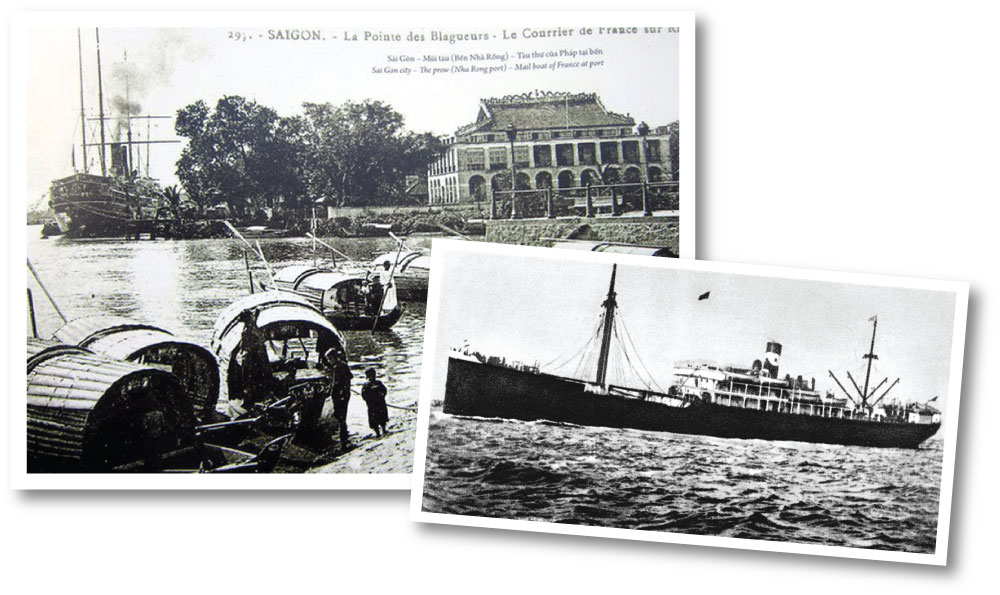
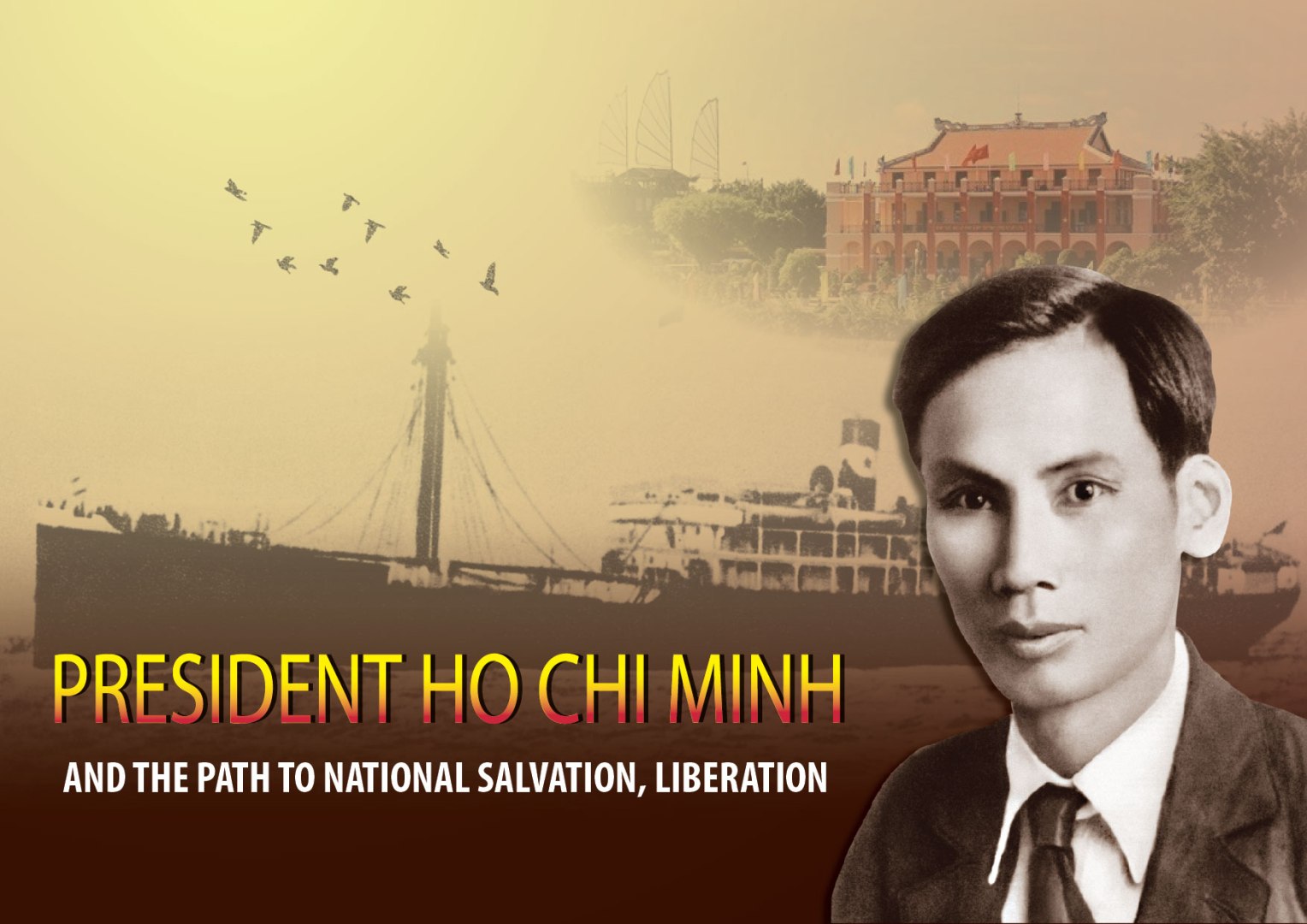
El 5 de junio de 1911, el joven patriota Nguyen Tat Thanh, nombre en la etapa estudiantil del querido Tío Ho del pueblo vietnamita, abordó el crucero Amiral Latouche Tréville, en el puerto de Nha Rong (en actual Ciudad Ho Chi Minh), con el apelativo de Van Ba, para emprender su viaje de búsqueda del camino de salvación nacional que se prolongó por 30 años.
El 5 de junio de 1911, el joven patriota Nguyen Tat Thanh abordó el buque francés Amiral Latouche Tréville para partir del muelle de Nha Rong en Saigon (actual Ciudad Ho Chi Minh) para realizar la ambición de liberar a la patria del yugo del colonialismo (Fuente: Archivo de la VNA).
Al testimoniar el sufrimiento de la patria y del pueblo bajo el yugo del colonialismo, el joven Nguyen Tat Thanh había formado la aspiración de hallar un camino para la liberación nacional y adquirió una visión independiente y creativa en comparación con sus antecesores. Decidió salir del país a buscar el camino de salvación nacional con un anhelo ardiente: “Libertad para mi pueblo, independencia para mi Patria, eso es todo lo que deseo y todo lo que entiendo”.
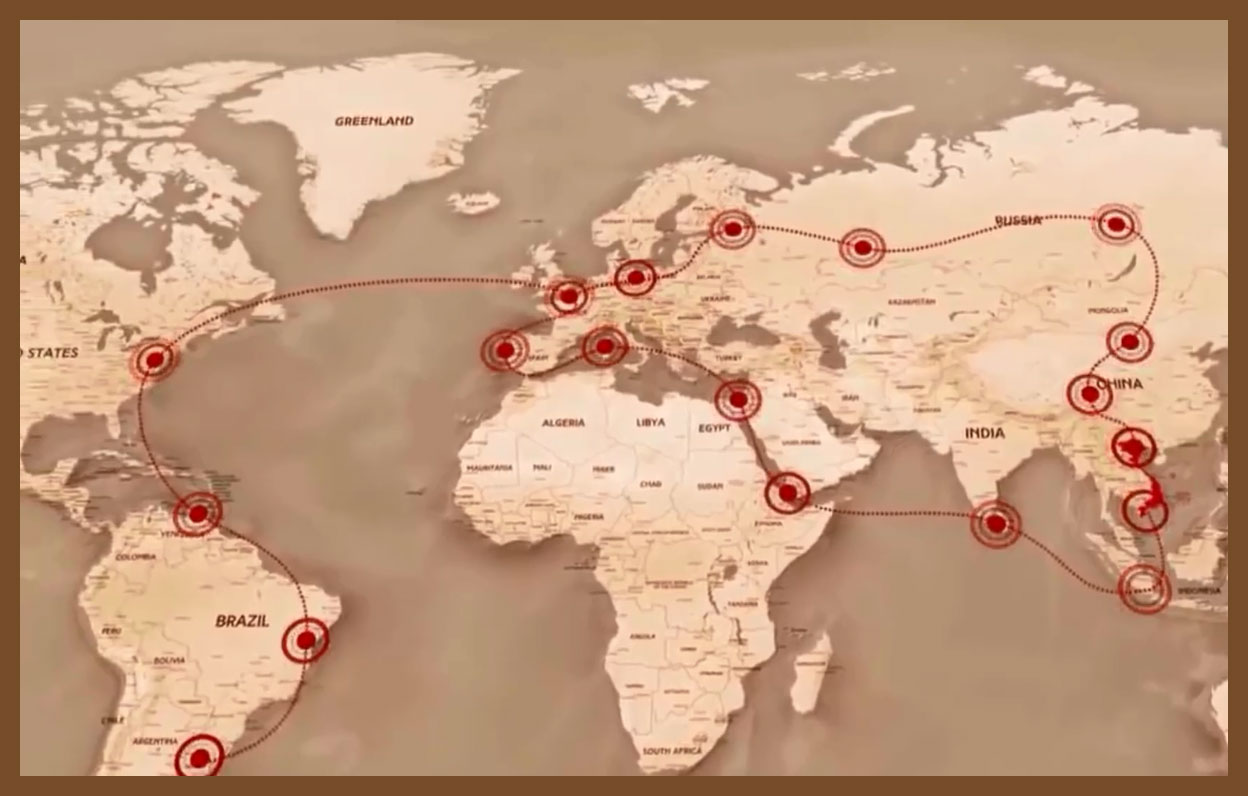
De 1911 a 1920, sus pasos quedaron impresos en muchos continentes diferentes, desde Europa, Asia, África hasta América. Estuvo mucho tiempo en Estados Unidos, el Reino Unido y Francia y realizó cualquier trabajo, ya fueran labores duras, como ayudante de cocina, paleador de nieve, fotógrafo, jardinero, dibujante, entre otros, para ganarse la vida, aprender experiencias y encontrar direcciones para su itinerario.
Los pasos de Nguyen Tat Thanh quedaron impresos en muchos continentes diferentes, desde Europa, Asia, África hasta América (Fuente: media.qdnd.vn)
Durante el período de 30 años de una larga odisea, se comprometió con el sagrado y noble propósito de encontrar un camino para la nación y buscar la independencia, la libertad y la felicidad del pueblo.
Ho Chi Minh: “Este es el camino para liberarnos”
El éxito de la Revolución de Octubre de Rusia, en 1917, tuvo una gran influencia en los sentimientos y la percepción del joven Nguyen Tat Thanh. A principios de 1919, se unió al Partido Socialista Francés. El 18 de junio de 1919, con el apelativo de Nguyen Ai Quoc, en nombre de los patriotas vietnamitas en Francia, envió una solicitud a la Conferencia de Versalles exigiendo los derechos del pueblo vietnamita a la libertad, la democracia y la igualdad. Aunque la reivindicación no fue aceptada, obtuvo amplia difusión y resonó en la opinión pública francesa, despertando así el espíritu de lucha de los países coloniales. Al mismo tiempo, ayudó a Nguyen Ai Quoc a tomar clara conciencia de que, si los pueblos desean ser liberados, sólo pueden confiar en sus propias fuerzas.
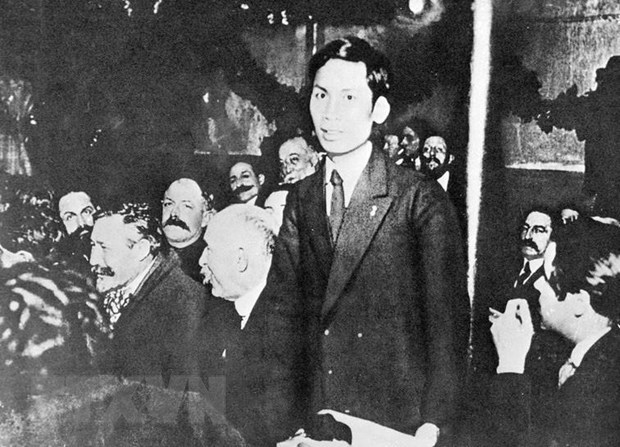
Nguyen Ai Quoc asistió e intervino en el 18º Congreso Nacional del Partido Socialista Francés en la ciudad de Tours, el 26 de diciembre de 1920. (Foto: Archivo de la VNA)
En 1920, Nguyen Ai Quoc se encontró con el marxismo-leninismo a través del “Primer esbozo de las tesis sobre los problemas nacionales y coloniales”. La tesis de Lenin llegó a Nguyen Ai Quoc como una nueva luz que iluminó el camino de salvación nacional que buscaba el joven patriota.
Señaló la certezas de que “para salvar a la nación y liberar al pueblo no hay otro camino que la revolución proletaria”; y “solo el socialismo y el comunismo pueden liberar de la esclavitud a los pueblos y trabajadores oprimidos del mundo”. Esta conclusión refleja el cambio profundo en el pensamiento de Nguyen Ai Quoc, de un verdadero patriota a un comunista, el primer miembro comunista de Vietnam.
De 1921 a 1930, Nguyen Ai Quoc difundió activamente el marxismo-leninismo a los movimientos obreros y patrióticos de Vietnam, preparándose teóricamente para el nacimiento del Partido Comunista de Vietnam. Con las obras “Le Procès de la Colonisation Française” (El juicio de la colonización francesa) y “Duong Kach Menh” (Camino de la Revolución), en especial la publicación del periódico Thanh Nien (Jóvenes), el 21 de junio de 1925, hizo preparativos políticos para encaminarse al establecimiento del Partido.
Del 6 de enero al 7 de febrero de 1930, la Conferencia para la unificación de las organizaciones comunistas se efectuó en la península de Kowloon, en Hong Kong (China), bajo el liderazgo de Ho Chi Minh (Fuente: Archivo de la VNA)
Cuando las condiciones para el establecimiento del Partido estaban maduras, el 3 de febrero de 1930, bajo su presidencia, en Hong Kong (China), la Conferencia para la fusión de tres organizaciones comunistas acordó establecer un partido unificado bajo el nombre de Partido Comunista de Vietnam (PCV). Con la fundación del PCV y la primera plataforma política del Partido, se formó básicamente el camino para la revolución vietnamita y se determinó, básicamente, el camino correcto para la salvación nacional.
Retornando al país, trayendo primaveras al pueblo de Vietnam
El 10 de mayo de 1941 fue la primera jornada del VIII pleno del Comité Central del Partido Comunista de Indochina, que se llevó a cabo en Pac Bo (Cao Bang), bajo la presidencia de Nguyen Ai Quoc (Fuente: VNA).
A principios de 1941, luego de 30 años de viajes por el exterior, Nguyen Ai Quoc regresó a la Patria para dirigir directamente la lucha revolucionaria. Presidió el VIII pleno del Comité Central del PCV (mayo de 1941), decidió cambiar el rumbo de la estrategia revolucionaria en consonancia con los rápidos cambios de la situación interna e internacional, dio máxima prioridad a la tarea de la liberación nacional, reunió todas las fuerzas de la nación; estableció el Frente Viet Minh, emprendió la construcción de fuerzas y bases armadas, así gestó distintosclímax de los movimientos revolucionarios en todo el país.
En agosto de 1945, bajo la dirección del PCV, encabezado por el Presidente Ho Chi Minh, el pueblo vietnamita maximizó la fuerza de toda la nación, logrando la victoria de la Revolución de Agosto de 1945, que significó la derrota de los regímenes colonial y feudal y contribuyó al establecimiento de la República Democrática de Vietnam (actual República Socialista de Vietnam): el primer estado democrático popular en el Sudeste Asiático.
A la luz del pensamiento de Ho Chi Minh, generaciones de vietnamitas han avanzado firmemente en el camino de la independencia nacional y el socialismo, llevando al país y al pueblo vietnamita a superar numerosas dificultades y desafíos, logrando la independencia y la reunificación nacional, realizando el Doi Moi (Renovación) y la industrialización y modernización del país e integrándose activamente al mundo./.
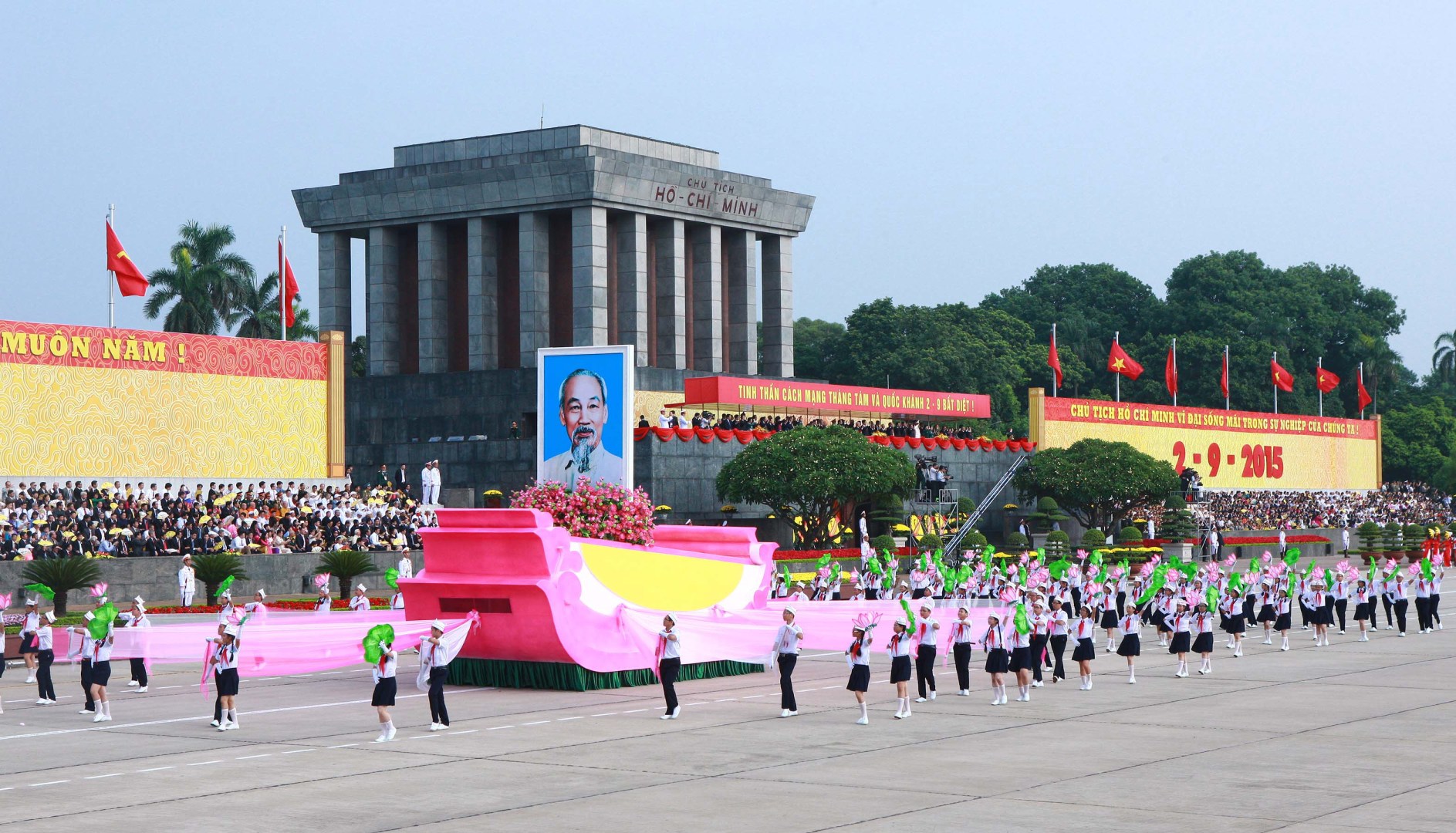
El gran mitin y desfile, desfile para celebrar el 70 aniversario de la Revolución de Agosto y el Día Nacional del 2 de septiembre.
Hanoi (VNA) – On June 5, 1911, a young man named Nguyen Tat Thanh, who later became the beloved President Ho Chi Minh of the Vietnamese people, under the name of Van Ba got on the French ship Amiral Latouche Tréville to depart Nha Rong Wharf in the then Saigon, starting a 30-year odyssey to seek a path for saving the country from colonialism.
On June 5, 1911, the patriotic young man named Nguyen Tat Thanh boarded the French ship Amiral Latouche Tréville to depart Nha Rong Wharf in the then Saigon to realise the ambition of liberating the homeland from the yoke of colonialism. (File photo: VNA)
Witnessing the suffering of the homeland and the people under the yoke of colonialism, Nguyen Tat Thanh nurtured the desire to seek a path for liberating the nation very early and formed his own independent and creative vision compared to predecessors. He decided to leave the country with a burning determination: “Freedom for my compatriots, independence for my Fatherland, those are all I want, those are all I understand.”
From 1911 to 1920, he set foot in various places in different continents, from Europe, Asia, Africa to the Americas. He stayed for quite a long time in the US, the UK, and France and did every job he could, regardless of how strenuous it was such as working at restaurant kitchens, shoveling snow, taking photos, gardening, and drawing in order to earn a living, learn, and find orientations for his journey.
During his journey, Nguyen Tat Thanh set foot in various places in different continents, from Europe, Asia, Africa to the Americas. (Photo: media.qdnd.vn)
He had thrown himself into a 30-year odyssey that was full of hardships and challenges with the noble goal of seeking a path for the nation and searching for independence, freedom, and well-being for the people.
Ho Chi Minh: “This is the path to liberation for us.”
The success of the Russian October Revolution in 1917 had great influence on Nguyen Ai Quoc’s sentiment and perception. In early 1919, he joined the French Socialist Party. On June 18, 1919, using the name of Nguyen Ai Quoc, he represented patriotic Vietnamese to submit an eight-point petition to the Versailles Conference to demand the right to freedom, democracy, and equality for the people of An Nam (a former name of Vietnam under French colonial regime). Though the petition was rejected, it was spread widely, drawing much attention from the public in France, awaking the spirit of struggle in colonial countries, and helping Nguyen Ai Quoc realise that the peoples must stand on their own feet to become independent.
Nguyen Ai Quoc attends and speaks at the 18th National Congress of the French Socialist Party in Tours city on December 26, 1920 (File photo: VNA)
In 1920, Nguyen Ai Quoc came across Marxism-Leninism via the “Preliminary Draft Theses on the National and the Colonial Questions”. The draft theses of Lenin reached Nguyen Ai Quoc as a new light shining on the national salvation path that he had long been searching for.
He concluded: “To save the homeland and liberate the people, there is no other way than the path of proletarian revolution”, and “only socialism and communism can liberate the suppressed peoples and the working class in the world from the yoke of slavery.”
This conclusion marked a profound change in the mindset of Nguyen Ai Quoc, turning him from a true patriot into a communist – the first communist of Vietnam.
From 1921 to 1930, he actively disseminated Marxism-Leninism to the workers’ and patriotic movements in Vietnam and made theoretical preparations for the foundation of the Communist Party of Vietnam. With the works entitled “Le Procès de la Colonisation Française” (French Colonisation on Trial) and “Duong Kach menh” (Revolutionary Path), and especially the publication of the “Thanh nien’ (Young people) newspaper on June 21, 1925, he made political policy preparations for the establishment of the Party.
From January 6 to February 7, 1930, the conference merging three communist organisations in Vietnam to establish the Communist Party of Vietnam took place in the Kowloon Peninsula of Hong Kong (China) under the chair of Nguyen Ai Quoc, who represented the Communist International. (File photo: VNA)
When all the conditions for the Party establishment were ripe, on February 3, 1930, under his chairmanship, a conference merging three communist organisations in Vietnam took place in Hong Kong (China) and agreed to set up a united party named the Communist Party of Vietnam. With the foundation of the Communist Party of Vietnam and its first political platform, the path for the Vietnamese revolution basically took shape and the right path for national salvation was basically identified.
Returning to homeland, bringing springs to Vietnamese people
The 8th session of the Indochinese Communist Party (a former name of the Communist Party of Vietnam) Central Committee opens in Pac Bo, Cao Bang province, on May 10, 1941 under the chair of Nguyen Ai Quoc. (File photo: VNA)
In early 1941, after 30 years of the overseas odyssey, he returned to the homeland to directly lead the revolutionary struggle. He chaired the Party Central Committee’s 8th session in May 1941 that decided to adapt the revolutionary strategy to the swift changes in the international and domestic situations, give the top priority to the task of national liberation, gather all forces of the entire nation; set up the Viet Minh Front (League for the Independence of Vietnam); and developed armed forces and revolutionary bases, creating strong revolutionary high tides across the country.
In August 1945, under the leadership of the Party, led by Ho Chi Minh, the Vietnamese people maximised the strength of the entire nation to successfully carry out the August Revolution, toppling the colonial and feudal regimes and establishing the Democratic Republic of Vietnam (now the Socialist Republic of Vietnam) – the first people’s democratic state in Southeast Asia.
Under the light of Ho Chi Minh’s ideology, generations of Vietnamese people have taken firm steps on the path of national independence and socialism, guiding the country through countless difficulties and challenges to obtain national independence and reunification, carry out Doi moi (Renewal), conduct national industrialisation and modernisation, and actively integrate into the world./.
A parade on Ba Dinh Square in Hanoi in celebration of the 70th anniversary of the August Revolution and the National Day (September 2) in 2015.
Hô Chi Minh, de son vrai nom Nguyên Sinh Cung, également connu sous le nom de Nguyên Tât Thành (Nguyên grandes espérances), Nguyên Ai Quôc (Nguyên le patriote) ou encore Hô Chi Minh plus tard, est né le 19 mai 1890 dans une famille de lettrés attachée aux paysans, au village de Hoàng Trù, commune de Kim Liên, district de Nam Dàn, province de Nghê An (Centre).
Il était un militant communiste et un homme d’État vietnamien, fondateur de l’actuel Parti communiste vietnamien et de la République démocratique du Vietnam.
Dès son adolescence, il fut témoin de la souffrance de son peuple sous le double joug colonial et féodal et en prit conscience très tôt. Il participa à la lutte contre le régime d’impôts du Centre du Vietnam. Animé par son patriotisme ardent et son esprit d’indépendance, il décida de chercher lui-même une nouvelle voie pour la libération nationale, refusant de marcher sur les traces de ses prédécesseurs.
Le 5 juin 1911, au quai de Nhà Rông – port de Sài Gon, le jeune Nguyên Tât Thành quitte sa patrie à bord du navire Amiral Latouche-Tréville pour aller chercher la voie du salut national. Photo: Archives
À l’âge de 21 ans, le jeune Nguyên Tât Thành quitta sa patrie le 5 juin 1911 à bord du navire Amiral Latouche-Tréville sous le nom de Van Ba. Il commença son voyage de travail, d’études et de lutte pour les droits des travailleurs, où il trouva la voie de l’indépendance et de la liberté nationales. Cette date marque un tournant important dans la vie d’un homme et dans l’histoire de toute une nation.
Entre 1911 et 1920, il voyagea sur plusieurs continents différents, de l’Europe à l’Amérique, en passant par l’Asie et l’Afrique où il effectua toutes sortes de petits boulots pour subvenir à ses besoins, apprendre et chercher sa voie.
Le jeune Nguyên Tât Thành voyage sur plusieurs continents différents, de l’Europe à l’Amérique. Photo: media.qdnd.vn
À ce moment-là, ce jeune homme n’avait pas encore conscience de la noble tâche historique qui lui incombait, et rien ne laissait aussi supposer la portée historique de ce départ. Et l’histoire a montré qu’après plusieurs décennies d’activités à l’étranger, un jeune homme à la recherche de la voie du salut national, Nguyên Tât Thành, est devenu le guide de toute une nation…
“C’est la voie de nous libérer”, selon Hô Chi Minh
Le succès de la Révolution d’Octobre 1917 en Russie avait une grande influence sur ses sentiments et son point de vue. Début 1919, il adhéra au Parti socialiste français. Le 18 juin 1919, sous le nom de Nguyên Ai Quôc, au nom des patriotes vietnamiens en France, il envoya à la Conférence de Versailles les “Revendications du peuple annamite”, qui réclamaient la liberté des peuples des pays coloniaux. Les “Revendications du peuple annamite” résonnèrent à travers l’opinion publique internationale, le message le plus important étant que le peuple vietnamien aspire à une indépendance réelle et reconnue par la communauté internationale.
Nguyên Ai Quôc assiste et prend la parole au 18e Congrès national du Parti socialiste français à Tours, le 26 décembre 1920. Photo: Archives
En 1920, après avoir relu plusieurs fois la première ébauche des thèses sur les questions nationale et coloniale de Lénine, Nguyên Ai Quôc affirma: “C’est ce qui nous est nécessaire, c’est la voie de nous libérer”.
Fin 1920, lors du XVIIIe Congrès de la SFIO, organisé à Tours (France), il fut présent en qualité de seul délégué officiel des pays colonisés de l’Indochine. Il vota, comme la majorité des délégués participants, pour la IIIe Internationale (Internationale communiste), et participa à la création de la Section française de l’Internationale communiste (SFIC), futur Parti communiste français (PCF). Cet événement compléta sa quête de la voie du salut national qui passait par la voie de la révolution prolétarienne. Ce fut là un tournant décisif dans la pensée de Hô Chi Minh – du patriotisme au socialisme, et au communisme.
De 1921 à 1930, Nguyên Ai Quôc propagea activement le marxisme-léninisme dans les mouvements ouvriers et patriotiques du Vietnam, préparant les conditions nécessaires pour la fondation du Parti communiste du Vietnam. Avec les œuvres “Le Procès de la colonisation française” et “Duong Kach Menh”, notamment la parution du journal Thanh Niên le 21 juin 1925, il prépara des bases politiques pour la fondation du Parti.
Du 6 janvier au 7 février 1930, une conférence pour fusionner trois organisations communistes au Vietnam pour fonder le Parti communiste du Vietnam a lieu à Hong Kong (Chine) sous l’égide de Nguyên Ai Quôc. Photo: Archives
Le 3 février 1930, Nguyên Ai Quôc présida une conférence pour fusionner trois organisations communistes au Vietnam pour fonder le Parti communiste du Vietnam, marquant une étape importante dans l’histoire de la construction nationale du pays.
Retourner au pays, apporter le printemps au peuple vietnamien
Le 10 mai 1941 est le premier jour où se tient le 8e plénum du Comité central du Parti communiste de l’Indochine, à Pac Po, dans la province de Cao Bang, sous l’égide de Nguyên Ai Quôc. Photo: Archives
En 1941, après près de 30 ans d’activités révolutionnaires à l’étranger, Nguyên Ai Quôc revint au pays pour diriger directement la Révolution vietnamienne. En mai de la même année, il présida le 8e plénum du Comité central du Parti, décidant de changer la stratégie révolutionnaire pour s’adapter aux changements rapides de la situation internationale et nationale, en faisant de la libération du pays la tâche primordiale. Il décida de la fondation de la Ligue pour l’indépendance du Vietnam, ou plus communément appelé le Front Viêt Minh.
En août 1945, sous la direction du Parti et de Hô Chi Minh, le peuple vietnamien se souleva pour mener la Révolution d’août. Révolution qui donna naissance à la République démocratique du Vietnam – le premier Etat d’ouvriers et de paysans en Asie du Sud-Est, ouvrant une ère d’indépendance et de liberté.
À la lumière de la Pensée de Hô Chi Minh, des générations de Vietnamiens se sont engagées fermement sur la voie de l’indépendance nationale et du socialisme, conduisant le pays et le peuple vietnamien à surmonter de nombreuses difficultés pour réussir les luttes pour l’indépendance et la réunification nationales, mener le processus de Renouveau, d’industrialisation, de modernisation du pays et d’intégration internationale./.
Meeting et défilé pour célébrer le 70e anniversaire de la Révolution d’Août 1945 et la Fête nationale du 2 septembre.
5 июня 1911 года молодой Нгуен Тат Тхань, он же любимый Дядя Хо вьетнамского народа, тогда звали Ван Ба, сел на корабль «Амирал Латуш Тревиль», покинул порт Няронг в Сайгоне, отправившись в путь в поиске способа спасения страны, который длился 30 лет.
5 июня 1911 года из пристани Няронг – порта Сайгон патриотически настроенный юноша Нгуен Тат Тхань покинул страну и отправился на корабле “Адмирал Латуш-Тревиль”, чтобы осуществить свои амбиции по освобождению страны от рабства, колониального господства, империализма. (Фото: архив ВИА)
Пожив в колониальной стране, свидетельсвовав страдания трудящихся, молодой Нгуен Тат Тхань кипел стремлением найти способ освобождения народа, у него сформировано независимое и творческое видение по сравнению с его предшественники. Он решил выйти в мир с горящей решимостью: «Свобода для моего народа, независимость для моей страны, это все, чего я хочу, это все, что я понимаю».
С 1911 по 1920 годы он побывал в самых разных местах всех континентов, от Европы, Азии, Африки до Америки. Он подолгу оставался в США, Великобритании и Франции и выполнял любую работу, будь то каторжная работа, такая как помощь на кухне, уборка снега, топка печей, фотосъемка, садоводство, рисование по найму… зарабатывая на жизнь, на учебу и поиск своего пути.
Нгуен Тат Тхань побывал в самых разных местах всех континентов, от Европы, Азии, Африки до Америки. (Фото: media.qdnd.vn)
30 лет со многими испытаниями и трудностями Нгуен Тат Тхань посвятил себя святой и благородной цели: «найти облик страны»; найти «Постоянную позицию всего народа»; добиваться независимости, свободы и счастья для людей.
Хо Ши Мин: «Это путь к нашему освобождению»
Успех Октябрьской революции в России 1917 года оказал большое влияние на его чувства и восприятие. В начале 1919 года он вступил во Французскую социалистическую партию. 18 июня 1919 года под именем Нгуен Ай Куок он от имени вьетнамских патриотов во Франции направил на Версальскую конференцию запрос о правах на свободу, демократию и национальное равенство для народа Ан Нам (название колониального Вьетнама). Хотя этот запрос не был принят, он получил широкое распространение, вызвал большой резонанс во французском общественном мнении, пробудил боевой дух колониальных стран, в то же время также дал Нгуен Ай Куоку осознание того, что народы, которые хотят быть освобожденными, могут полагаться только на свои силы.
Нгуен Ай Куок присутствовал и выступил на 18-м Национальном конгрессе Французской социалистической партии в городе Тур 26 декабря 1920 года. (Фото: архив ВИА)
В 1920 году Нгуен Ай Куок познакомился с марксизмом-ленинизмом через «Первый проект тезисов по национальным и колониальным вопросам». Ленинский тезис пришел к Нгуен Ай Куоку как новый свет, проясняющий путь национального спасения, который долго искал патриотически настроенный молодой человек.
Он указывал на истину: «Чтобы спасти страну и освободить нацию, нет другого пути, кроме пути пролетарской революции» и «Только социализм и коммунизм могут освободить угнетенные народы и трудящихся мира от рабства». Этот вывод подтвердил глубокую перемену в мышлении Нгуен Ай Куока, от истинного патриота до коммуниста – первого коммуниста Вьетнама.
С 1921 по 1930 Нгуен Ай Куок активно распространял марксизм-ленинизм среди рабочих и патриотических движений Вьетнама, теоретически готовясь к рождению Коммунистической партии Вьетнама (КПВ). Работами «Суд над французской колониальной системой» и «Дыонг Кать Мень» («Путь революции»), особенно изданием газеты «Тхань Ниен» 21 июня 1925 г., он политически подготовился к созданию Партии.
С 6 января по 7 февраля 1930 г. на полуострове Цзюлун в Гонконге (Китай) под председательством товарища Нгуен Ай Куока, представляющего Коммунистический Интернационал, проходила Конференция по объединению коммунистических организаций для создания Коммунистической партии Вьетнама. (Фото: архив ВИА)
Когда созрели условия для создания Партии, 3 февраля 1930 г. под его председательством в Гонконге (Китай) объединительная конференция трех коммунистических организаций согласилась создать единую партию, получившую название Коммунистическая партия Вьетнама (потом переименовалась в Коммунистическую партию Индокитая). С рождением Коммунистической партии Вьетнама и первой политической платформы в основном сформировалась вьетнамская революционная линия, в основном определился верный путь национального спасения Вьетнама.
Возвращение в страну, принося весну народу Вьетнама
10 мая 1941 года состоялся первый рабочий день 8-го Пленума ЦК Коммунистической партии Индокитая, который проходил в Пакбо (Каобанг) под председательством Нгуена Ай Куока. (Фото архива: ВИА)
В начале 1941 года, после 30-летней деятельности за границей, Нгуен Ай Куок вернулся во Вьетнам, чтобы непосредственно возглавить революционную борьбу. Председательствовав на 8-м Пленуме ЦК Партии (май 1941 г.), он решил изменить революционную стратегию в соответствии с быстрыми изменениями международной и внутренней обстановки, поставив на первое место задачу национального освобождения, создание Фронта Вьетминь, создание вооруженных сил и военных баз, создание ярких и мощных революционных движений по всей стране.
В августе 1945 г. под руководством Партии во главе с президентом Хо Ши Мином вооруженный национальной солидарностью вьетнамский народ совершил победоносную Августовскую революцию, свергнул колониальный режим, феодализм, создал Демократическую Республику Вьетнам — первое народно-демократическое государство в Юго-Восточной Азии. В свете мышлений Хо Ши Мина поколения вьетнамцев твердо ступили на путь за национальную независимость и социализм, ведя страну через трудности и испытания к национальной независимости, воссоединению страны, осуществлению дела Обновления, реализации индустриализации и модернизации страны и активной интеграции в мир./.
Митинг, парад в честь 70-летия Августовской революции и Дня Независимости 2 сентября.