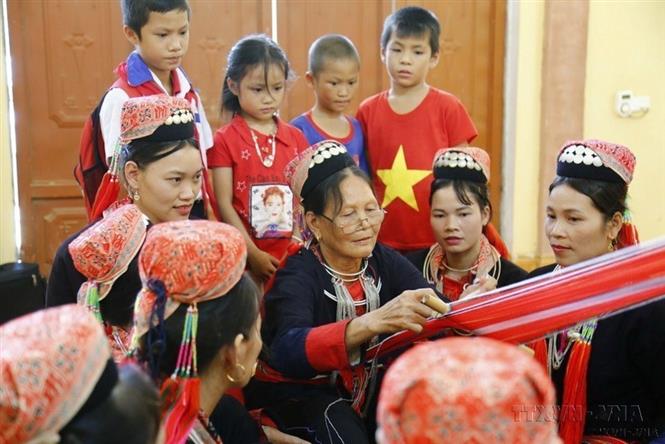
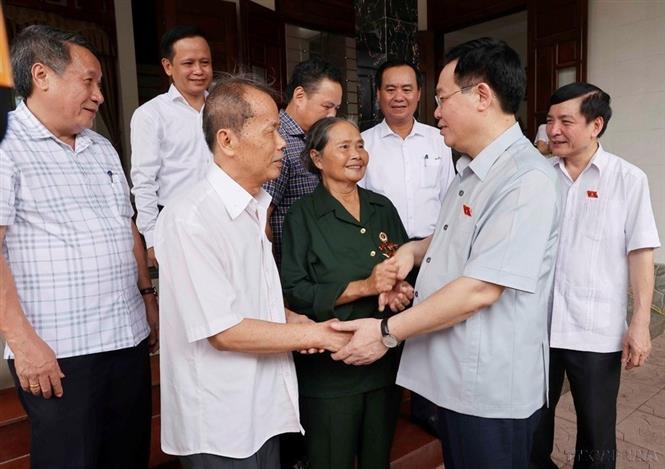
Пожилые члены клуба народной культуры пения Тхэн и игры на цитре в деревне Тхамме городка Нашам (уезд Ванланг, провинция Лангшон. (Фото: ВИА)
Согласно критериям Фонда ООН в области народонаселения (ЮНФПА), с 2011 года Вьетнам вступил в фазу «первого преддверия старости населения» и, как ожидается, перейдет к фазе «демографической старости населения» в 2038 году. Число людей старше 60 лет во Вьетнаме в 2022 году составило 12% от общей численности населения. К 2030 году количество пожилых людей составит около 17%, а к 2050 году – 28%.
Вьетнам войдет в топ-10 стран с самым быстрым темпом старения населения в мире.(Фото: tuyengiao.vn)
Однако Главное управление народонаселения (Министерство здравоохранения) заявило, что период «золотого населения», начавшийся в 2007 году, продлится до 2038 года, одновременно с периодом демографической старости населения.
«Уважение к старшим» — добрая традиция нации. Руководители Партии и государства на протяжении веков придавали большое значение заботе о пожилых людях. При жизни президент Хо Ши Мин всегда уделял внимание и отметил роль пожилых людей».
Премьер-министр Фам Минь Тьинь
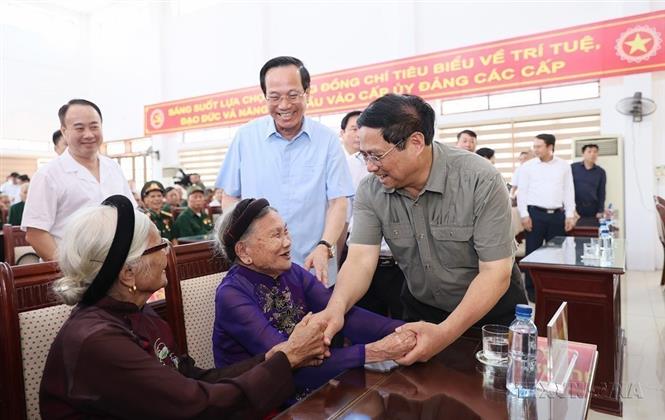
Премьер-министр Фам Минь Тьинь посетил вьетнамских матерей-героев, присутствовавших на конференции чествования заслуженных людей перед революцией в 2023 году (Фото: ВИА)
Кроме того, есть и другие весьма значимые цифры: прогнозируется, что доля иждивенцев (то есть соотношение людей от 60 лет по сравнению с количеством людей трудоспособного возраста от 15 до 59 лет) увеличится более чем в три раза, с 14% в 2014 году до 43% в 2049 году.
Буй Тхи Сонг из города Хойан, провинция Куангнам, которую признали «Самой красивой почтенной вьетнамской женщиной в мире». (Фото: vnexpress.net)
Число пожилых людей во Вьетнаме к 2040 году превысит количество детей (от 0 до 14 лет). Таким образом, у Вьетнама есть 16 лет для перехода из страны «демографической старости» в страну «с высокой демографической старостью» (с быстро растущей долей населения старше 65 лет, для сравнения — у Австралии на этот процесс есть 72 года).
Пожилые люди по-прежнему с энтузиазмом делятся опытом и знаниями с молодежью. (Фото: ВИА)
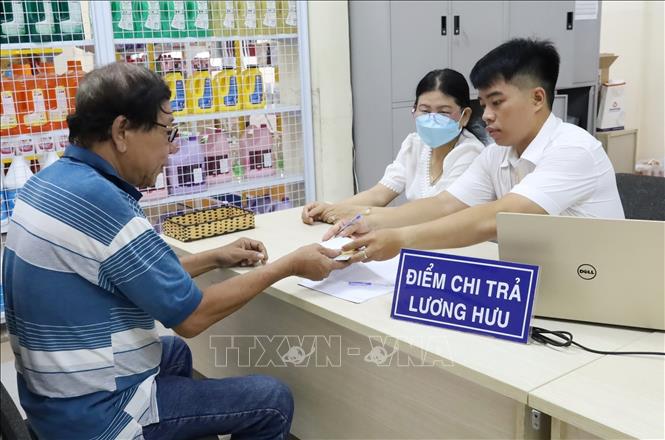
По данным Министерства труда, инвалидов войны и социальной защиты, во Вьетнаме проживает около 12 миллионов пожилых людей. Однако только более 3,1 миллиона человек получают пенсии или пособия по социальному страхованию и более 1,7 миллиона пожилых людей получают ежемесячные пособия из государственного бюджета, из них более 1,4 миллиона – люди старше 80 лет. Более 7 миллионов пожилых людей не имеют регулярного и стабильного дохода.
По данным Министерства труда, инвалидов войны и социальной защиты, в нашей стране проживает около 12 миллионов пожилых людей. Однако служба социального страхования выплачивает пособие и пенсию только более 3,1 миллиона человек, получающих пенсии или пособия по социальному страхованию (Фото: ВИА).
Международная организация труда (МОТ) прогнозирует, что без активной поддержки со стороны государственного бюджета во Вьетнаме к 2030 году более 16 миллионов пожилых людей останутся без пенсий.
По словам доктора Нгуен Чунг Аня, директора Центральной гериатрической больницы, люди в развитых странах подготовили дорожную карту на свое будущее как в финансовом, так и во временном плане, в то время как вьетнамцы «не успели разбогатеть, как старость уже наступила», поскольку большинство людей не имеют возможности финансово подготовиться к этому периоду.
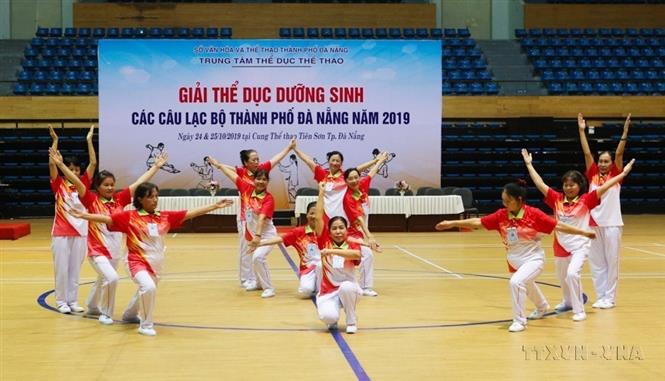
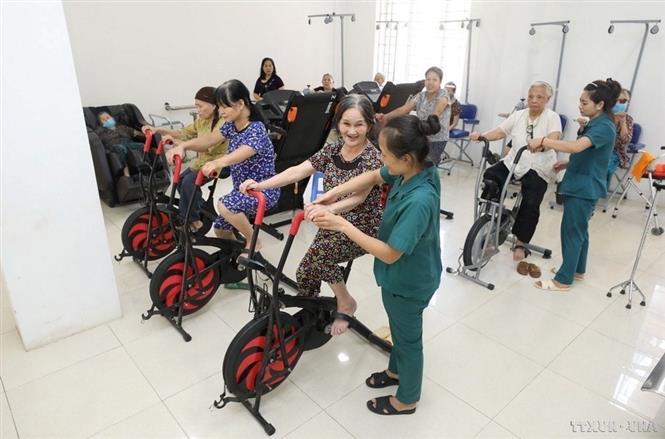
Пожилые люди во Вьетнаме активно участвуют в спортивных мероприятиях, а также регулярно проходят медицинское обследование, чтобы поддержать здоровье и продолжать вносить свой вклад в жизнь общества. (Фото: ВИА)
Закон о пожилых людях 2009 года предусматривает, что пожилыми людьми являются граждане Вьетнама в возрасте 60 лет и старше.
В соответствии с Указом 20/2021/ND-CP пожилые люди имеют право на получение ежемесячных социальных пособий, в том числе: малоимущие пожилые люди, у которых нет кормильца, пожилые люди от 75 до 80 лет, живущие в районах этнических меньшинств и горных районах, люди в возрасте 80 лет и старше, которые не имеют пенсий, ежемесячных пособий или пособий по социальному страхованию.
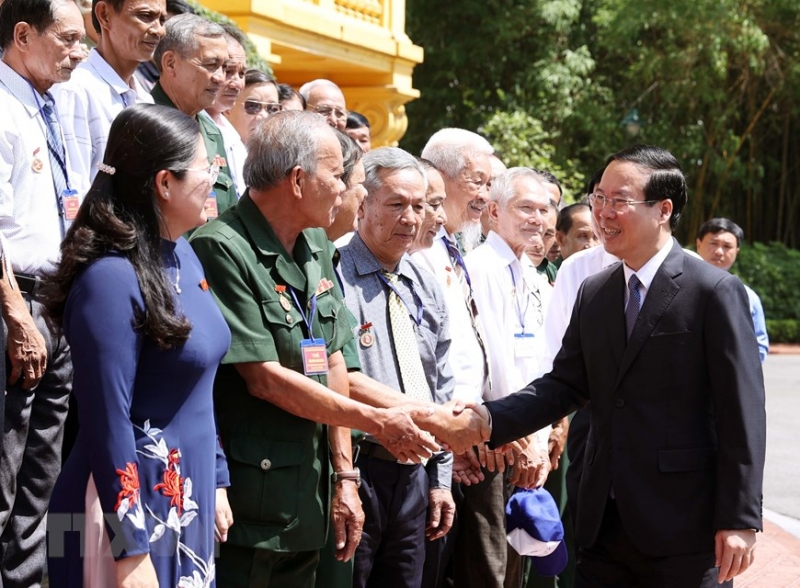
Генеральный секретарь Нгуен Фу Чонг и руководители Партии на встрече с делегатами Вьетнамской ассоциации пожилых людей. (Фото: ВИА)
В настоящее время уровень пособий для пожилых людей в соответствии с вышеуказанным указом колеблется от 360.000 донгов до 1.080.000 донгов в месяц.
Помимо материальной помощи, пожилые люди получают также медицинскую помощь и заботу о духовной жизни. В Законе о пожилых людях 2009 года четко указано, что пожилые люди, указанные в статье 17 этого Закона, имеют право на медицинское страхование, ежемесячные социальные пособия и поддержку расходов на похороны.
Во Вьетнаме существует вид медицинского страхования для пожилых людей от 60 лет и старше. Это страховой продукт, созданный и поддерживаемый государством, поэтому он имеет низкую стоимость и не требует медицинского обследования.
Кроме того, пожилым людям также доступны многие бесплатные или другие льготные программы медицинского обслуживания, реализуемые учреждениями здравоохранения или гуманитарными организациями. По словам репортера ВИА, после 12 лет скоординированной реализации программы «Зрение для пожилых людей» были проверены и предоставлены бесплатные лекарства почти 1 миллиону пожилых людей, а также бесплатно заменены стекловидные тела более чем 5.000 пожилым людям.
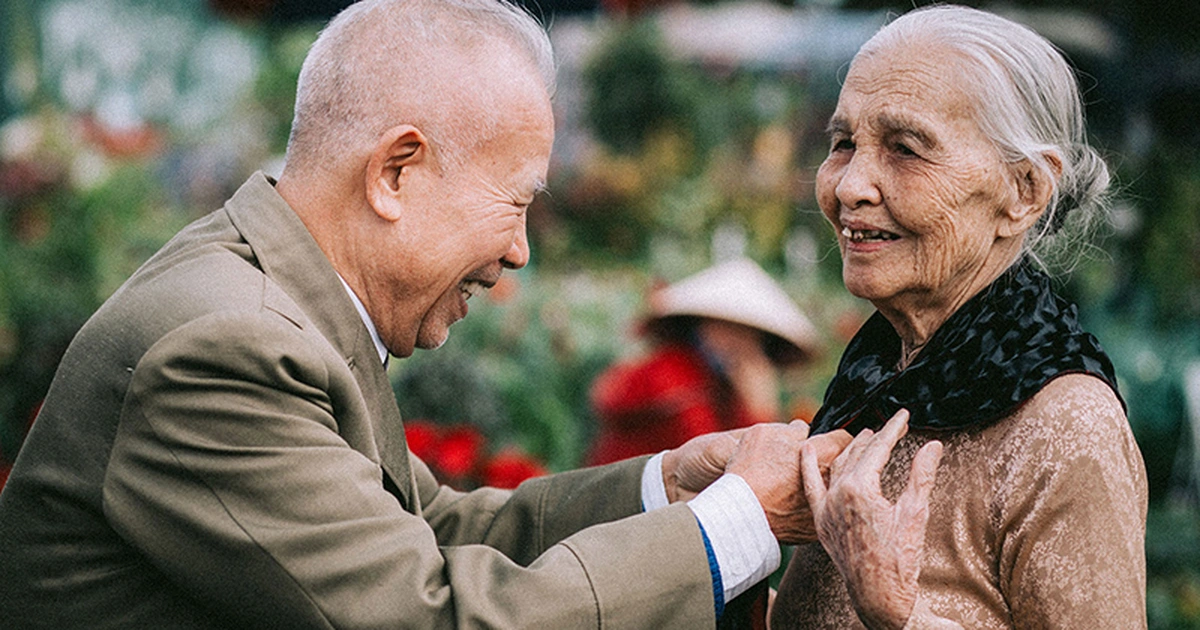
90-летняя пара. Фото: vnexpress.net
Кроме того, пожилые люди во Вьетнаме имеют право участвовать и получать доступ ко всем видам культурной деятельности, искусству, физическим активностям, спорту, туризму, отдыху и другим видам деятельности для улучшения своей духовной жизни.
Статья 21 Закона о пожилых людях 2009 года гласит: «Люди, достигшие 100-летнего возраста, получат пожелания о долголетии и подарки от Президента Социалистической Республики Вьетнам». Людям в возрасте 90 лет председатель Народного комитета провинции или централизованного города также вручит пожелания о долголетии и подарки. Народные комитеты общин, уездов и городков координируют свои действия с местной ассоциацией пожилых людей и их семьями, чтобы поздравить людей в возрасте 70, 75, 80, 85, 90, 95 и 100 лет и старше./.
Пожилые люди участвуют в представлении упражнений на Фестивале йоги 2022 года в Хошимине, октябрь 2022 года (Фото: ВИА)
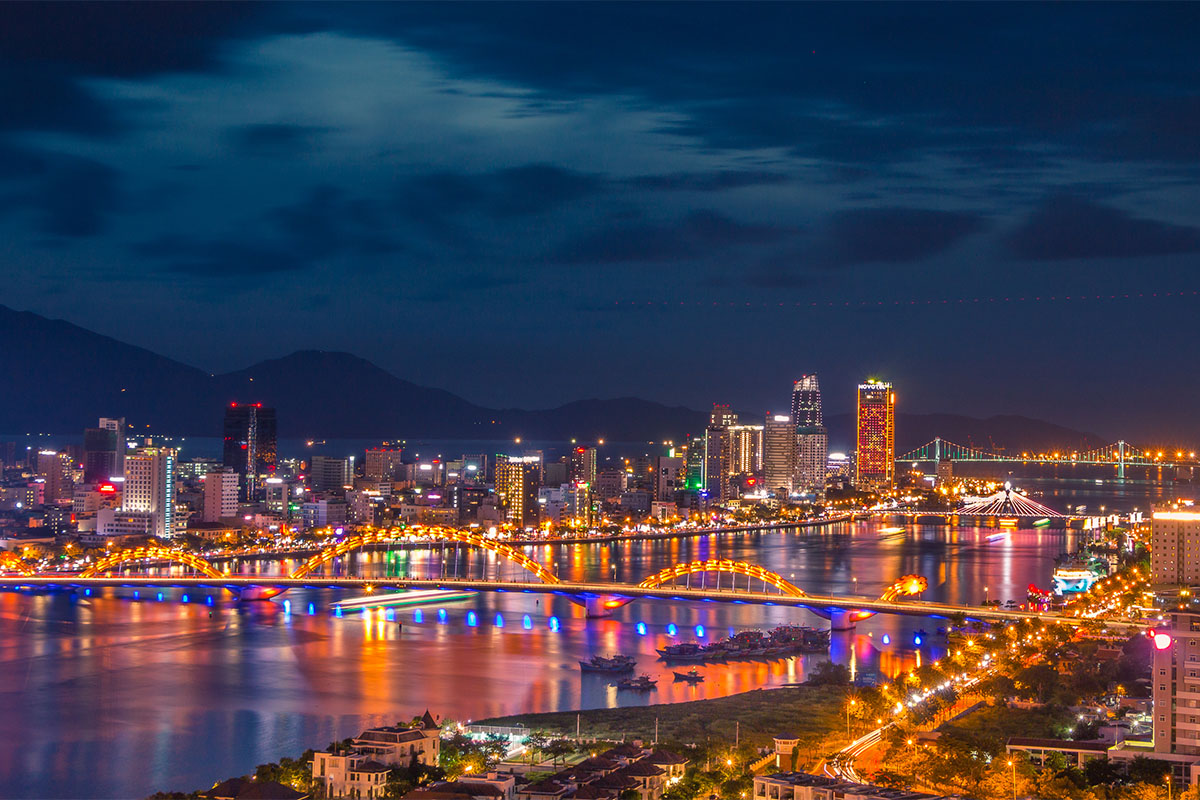
A corner of Da Nang city at night (Photo: baodanang.vn)
The Ministry of Culture, Sports and Tourism recently announced a project to develop night-time tourism, which is gaining popularity in Vietnam. The idea is to develop another revenue stream to contribute to the country’s economic development, popularise the Vietnam brand, improve competitiveness, and provide memorable experiences for visitors.
Accordingly, the project will focus on developing cultural activities, festivals, and nightlife entertainment to contribute to promoting and preserving traditional culture, creating a unique and impressive space for tourists, especially foreigners. This is a direction that many localities, especially key tourist areas, have begun to pilot to promote local strengths.
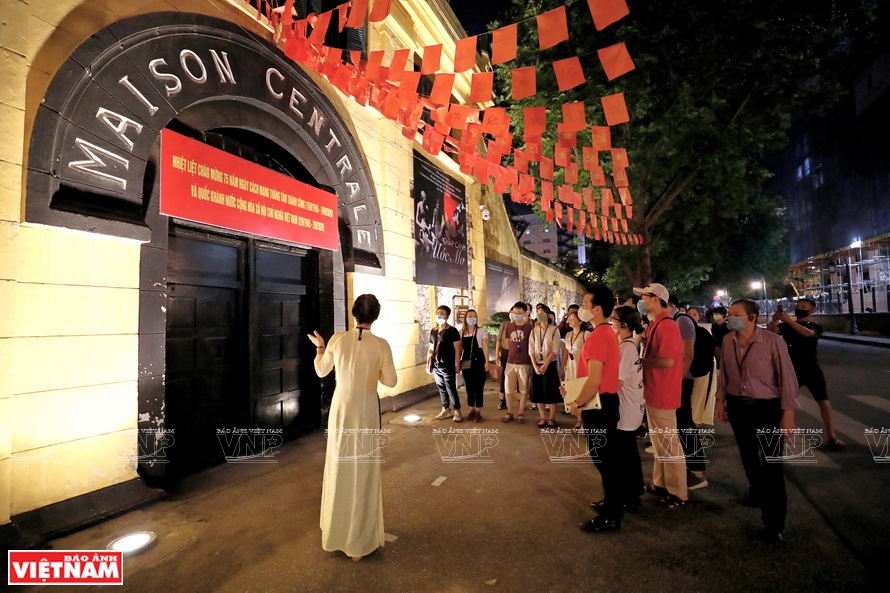
Night tour at Hoa Lo Prison relic site (Photo: VNA)
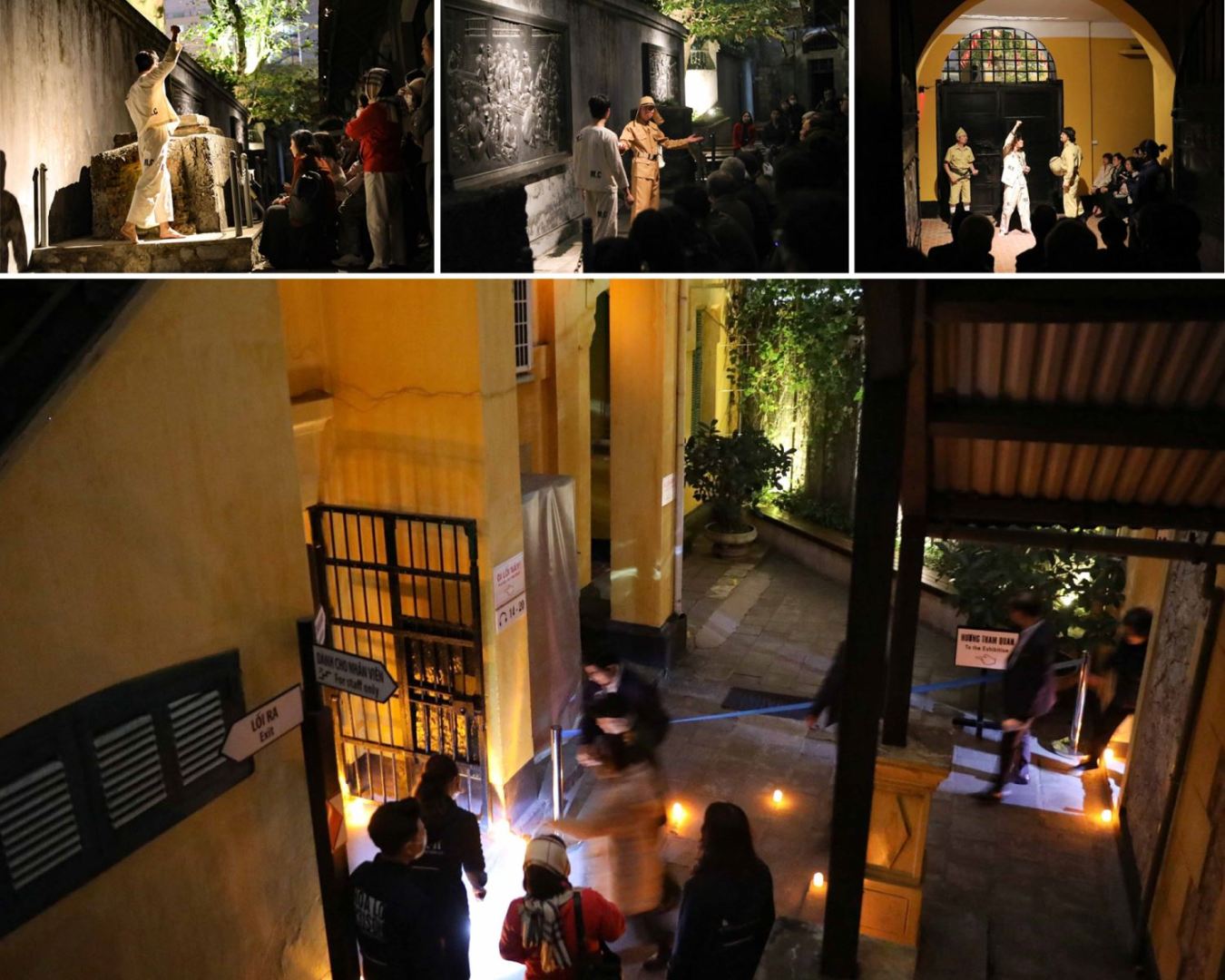
Night tour at Hoa Lo Prison relic site (Photo: VNA)
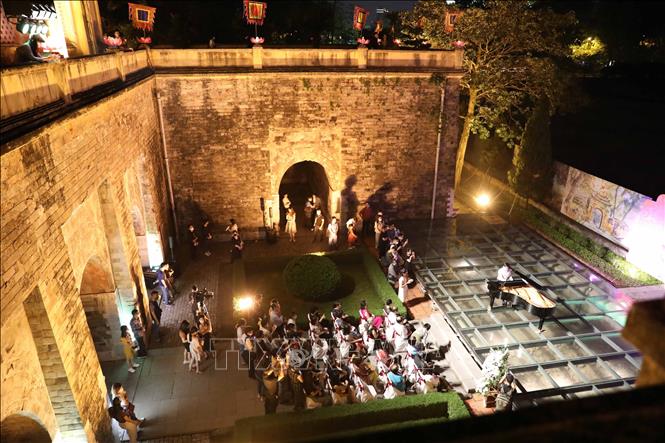
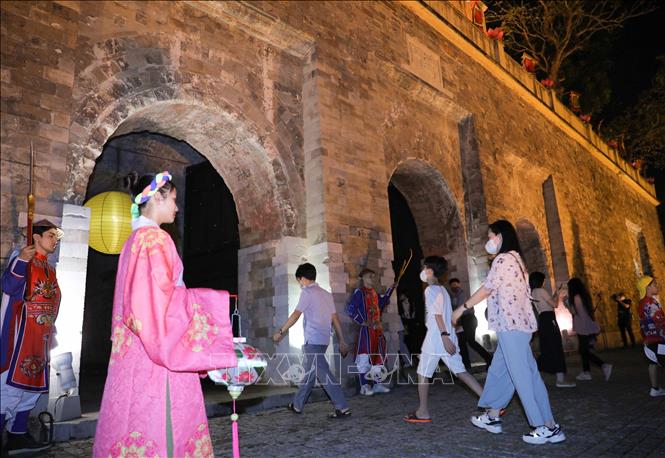
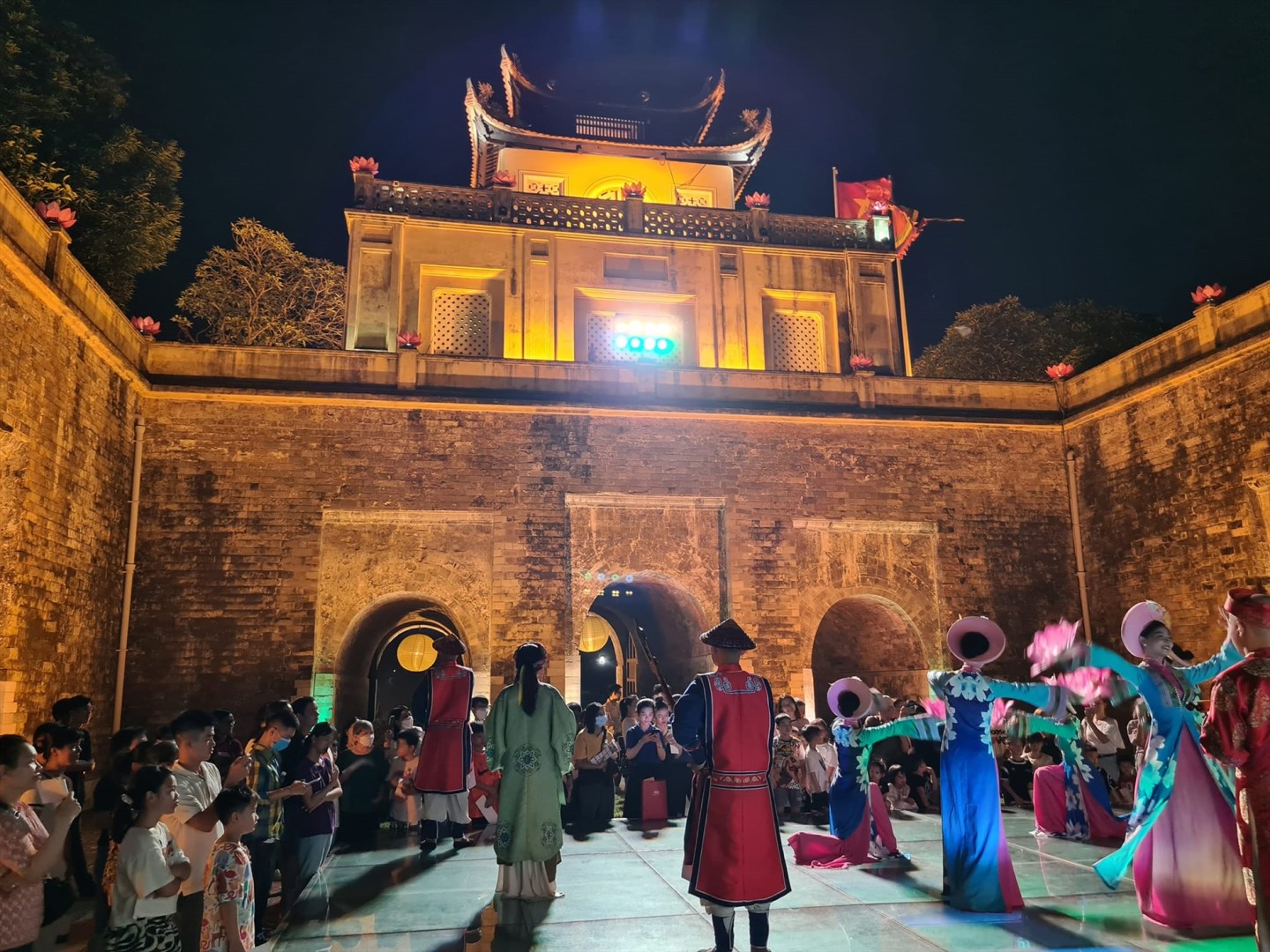
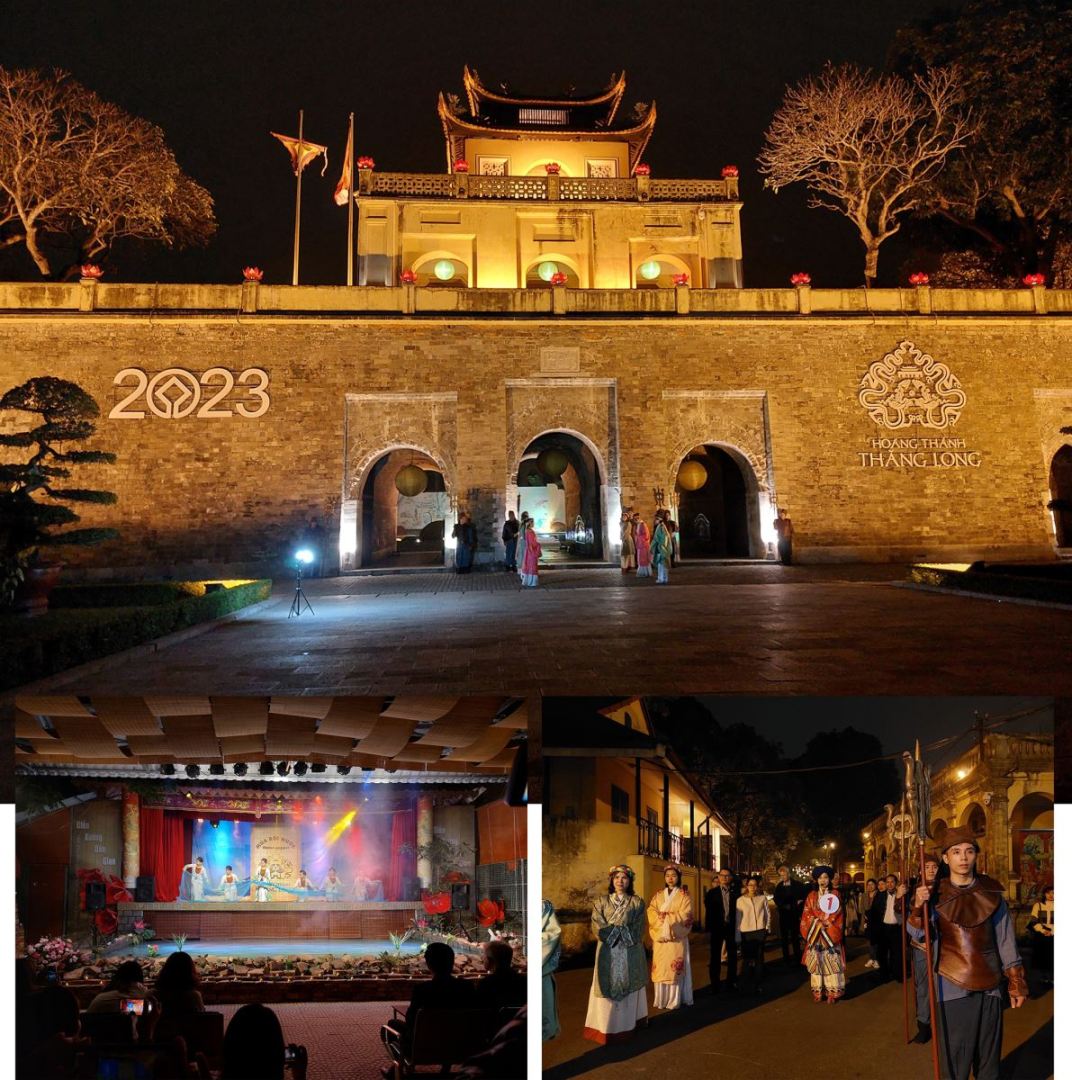
In Hanoi, the night tour “Decoding the Imperial Citadel of Thang Long” made its debut in April 2022 and was well received by domestic visitors at weekends. This is also Hanoi’s second night tour, after that offered by the Hoa Lo Prison relic site.
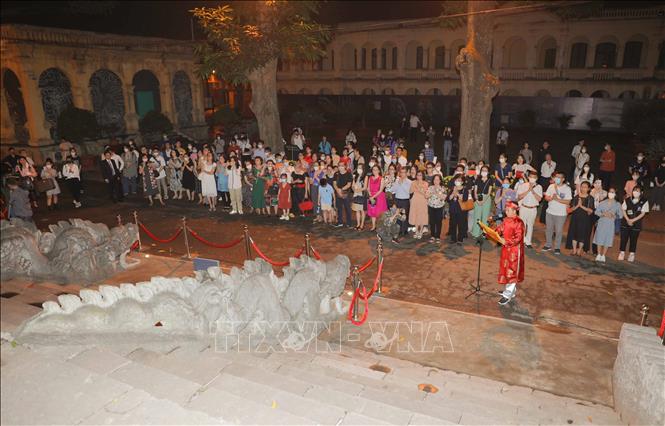
Travellers begin their 1.5-hour tour at Doan Mon (Main Gate), the entrance to Cam Thanh (Forbidden area) – the king’s residence, and learn about the site’s history, architecture, and functions there.
Night tour “Decoding the Imperial Citadel of Thang Long” (Photo: VNA)
They will later enjoy an ancient dance right on the glass covering the archaeological excavation area and gain an insight into this dig from tour guides, that will educate on the vestiges of the Ly, Tran, and Le dynasties. They will also visit an exhibition hall of rare antiquities with some dating back over 1,000 years.
At Kinh Thien Palace, travellers can offer incense to King Ly Thai To, who moved the country’s capital from Hoa Lu in Ninh Binh province to Dai La which he renamed Thang Long in 1010. Tour guides will also dicuss the contributions of other kings to the capital’s development. The last destination of this trip is the archaeological site at No. 18 Hoang Dieu street, where visitors will experience a laser light show of outstanding antiquities of the Thang Long Imperial Citadel. Tourists can take part in a game in which they have to identify typical objects of feudal dynasties in the past.
Night tour for foreign visitors called “Thang Long Imperial Citadel Night – A unique feeling”
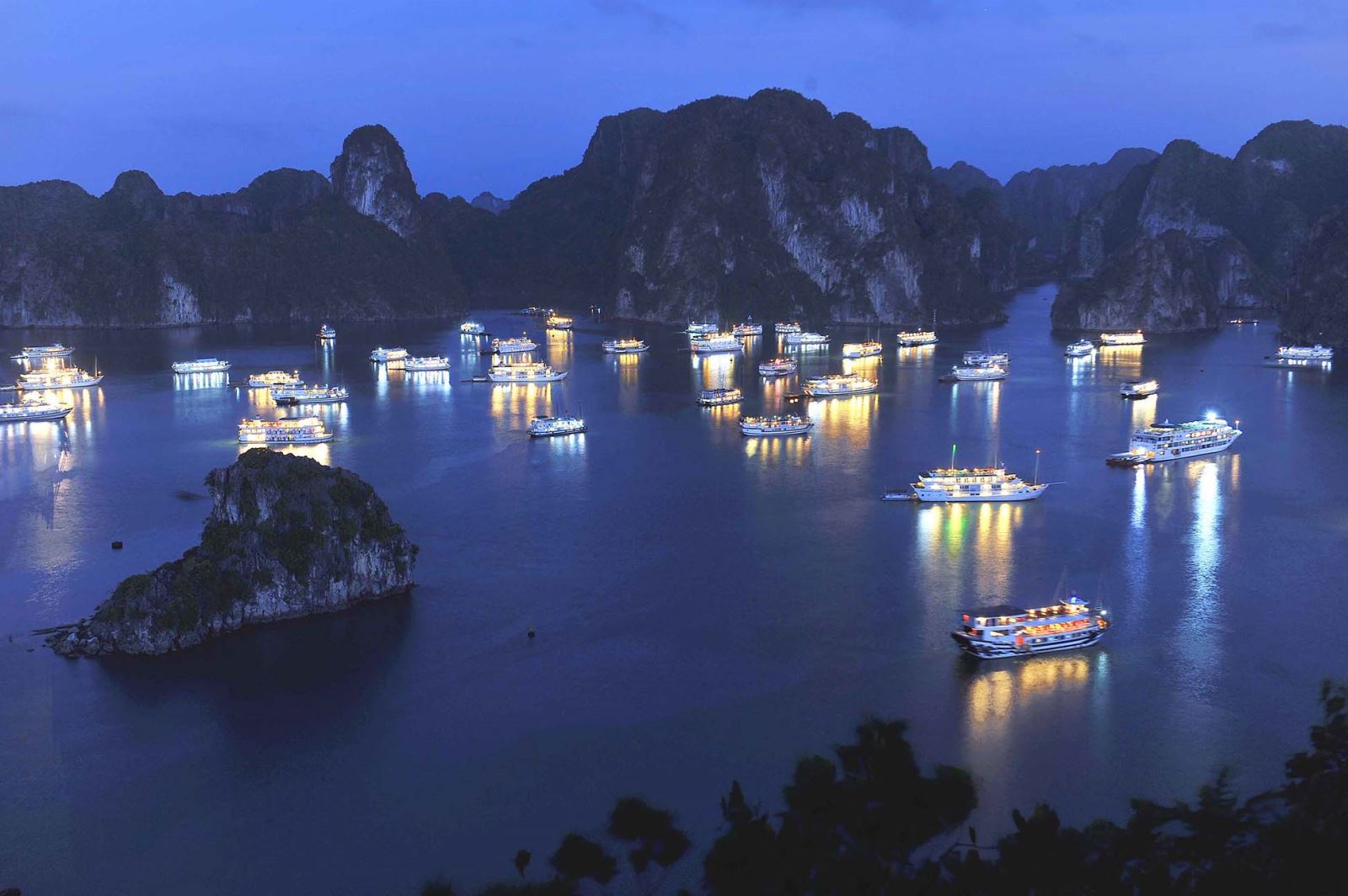
The northern province Quang Ninh, home to UNESCO-recognised world natural heritage site Ha Long Bay, is among the localities pioneering in exploiting night-time tourism products. Director of the provincial Department of Tourism Pham Ngoc Thuy said that night tourism in Quang Ninh is currently focused on several services such as restaurant cruises, music galas on the bay, and night streets.
Thanks to these activities, Quang Ninh welcomed a total of 8.86 million visitors in the first half of this year, earning 16.6 trillion VND (675.3 million USD), ranking it third, after Hanoi and Ho Chi Minh City, in terms of tourism revenue in this period.
Cruise ships on Ha Long Bay (Photo: VNA)
Many other localities such as Ho Chi Minh City, Thua Thien – Hue, Da Nang, Binh Thuan, Khanh Hoa, Binh Dinh, and Can Tho are all exploring available strengths to develop night tourism products to attract more holidaymakers.
Increasing competitiveness to attract more tourists
Experts suggest night-time tourism not only allows tourists to enjoy the unique local culture and culinary specialties, but also helps disperse the number of tourists during the daytime, thus reducing the load on main tourist destinations during peak hours, and enhancing sustainability.
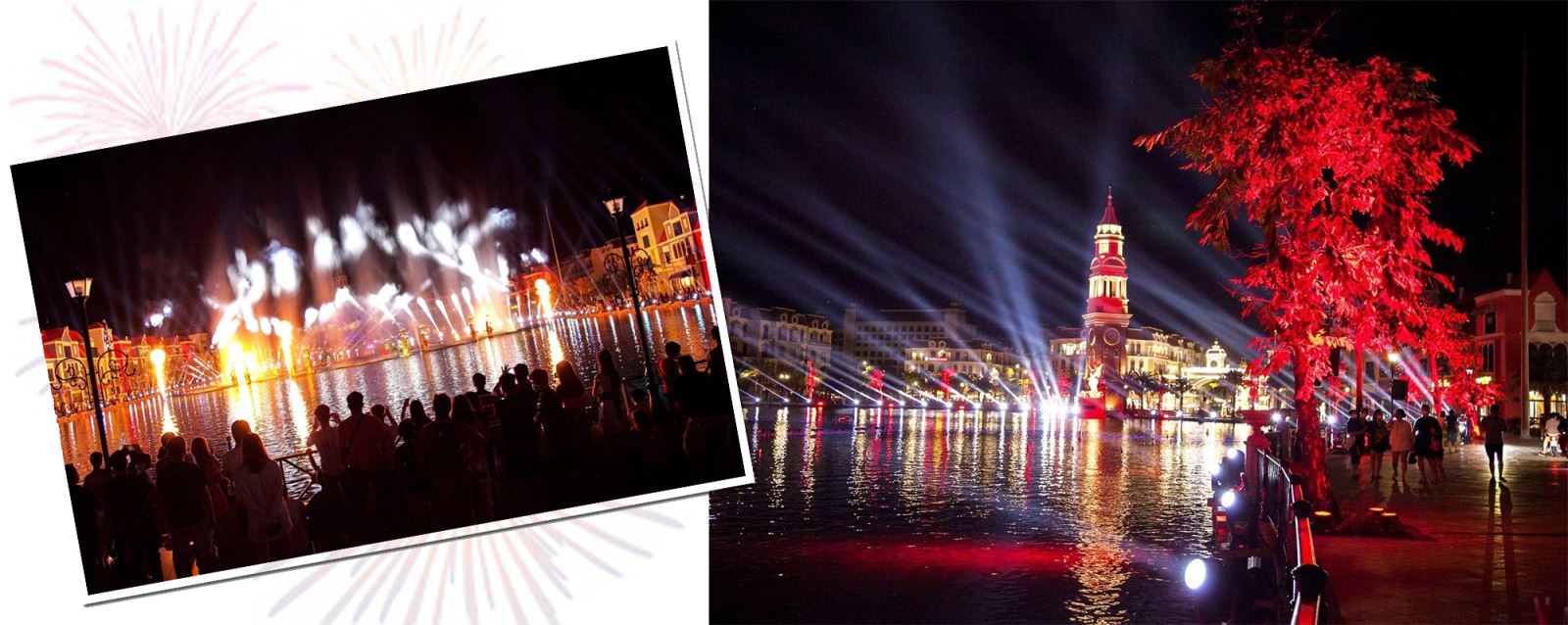
“Sleepless” festival city Grand World (Phu Quoc) (Photo: VNA)
This kind of tourism also contributes to creating more jobs for local people, promoting the local economy, and increasing the competitiveness of the country’s tourism sector. However, there are problems related to night tourism that need to be solved towards sustainable development.
Difficulties need to be solved
In late 2022, the Institute for Tourism Development Research (ITDR) conducted a survey on night services for tourists in Vietnam in Da Nang, Hoi An (Quang Nam), Ho Chi Minh City and Da Lat (Lam Dong). These sites already offer night services and are piloting the application of extending service hours until 6am of the next day.
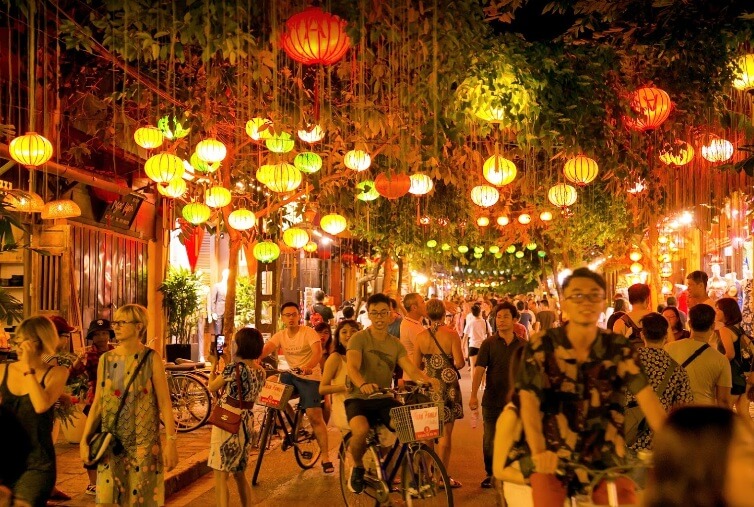
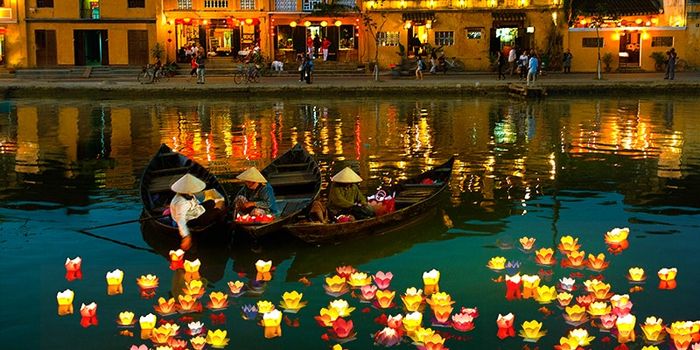
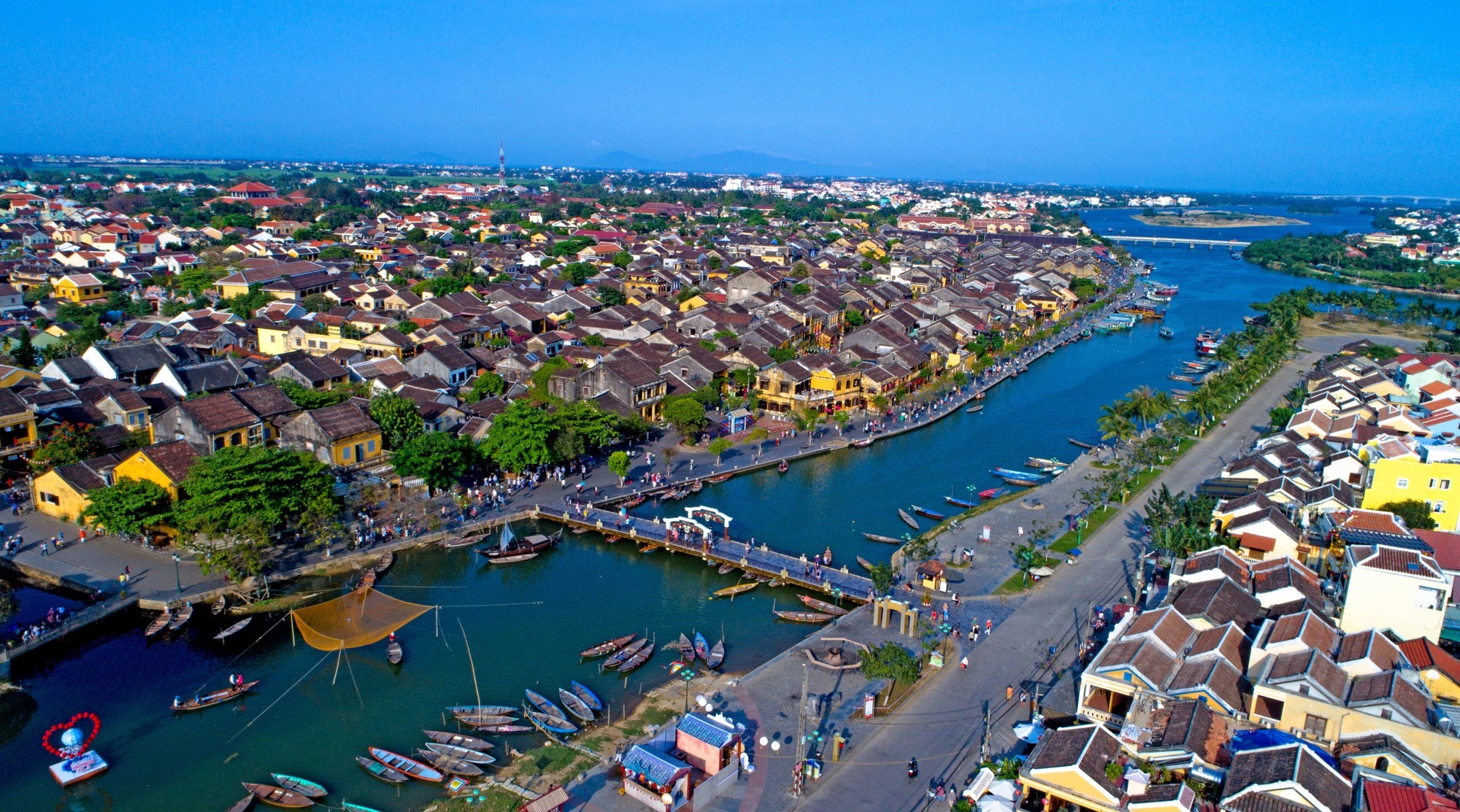
Through the survey they found that in Hoi An, services are still cursory. Tourists mainly come to visit and rarely stay overnight, and the workforce for night activities are hard to find. In addition, Hoi An is an ancient city and a world cultural heritage, so appropriate planning is needed when developing night services.
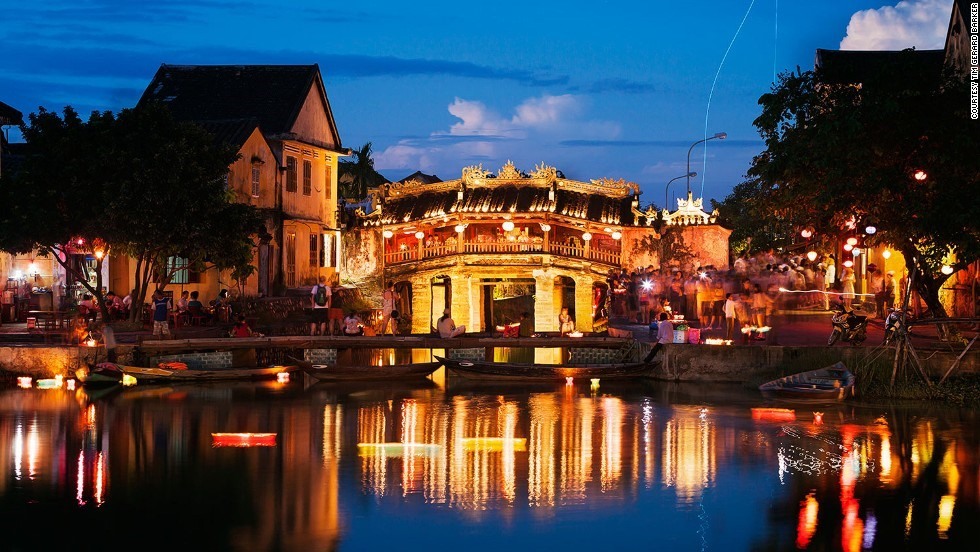
Hoi An ancient city at night (Photo: quangnam.vn)
As for Da Lat, infrastructure and planning do not yet meet the needs of vehicle circulation or walking tours, while service quality is not yet professional, along with environmental and noise pollution.
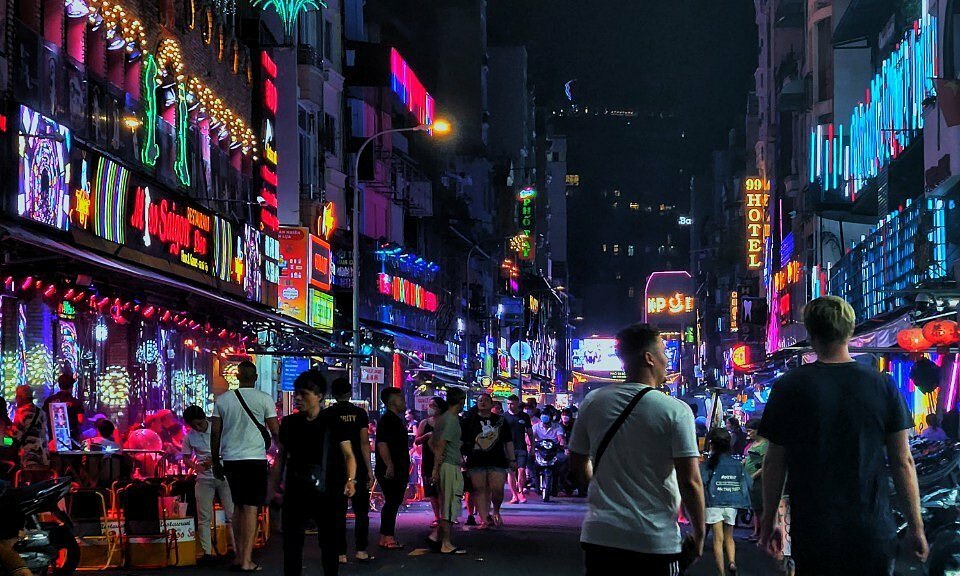
Many night tourism activities in Ho Chi Minh City are still spontaneous (Photo: thanhnien.vn)
Meanwhile, many night tourism activities in Ho Chi Minh City are still spontaneous and issues related to management and environmental pollution also need to be given appropriate attention.
For Hanoi, the difficulty facing the capital city is lack of human resources, mechanisms to encourage households to expand business activities, and clear planning of space and time for night services.
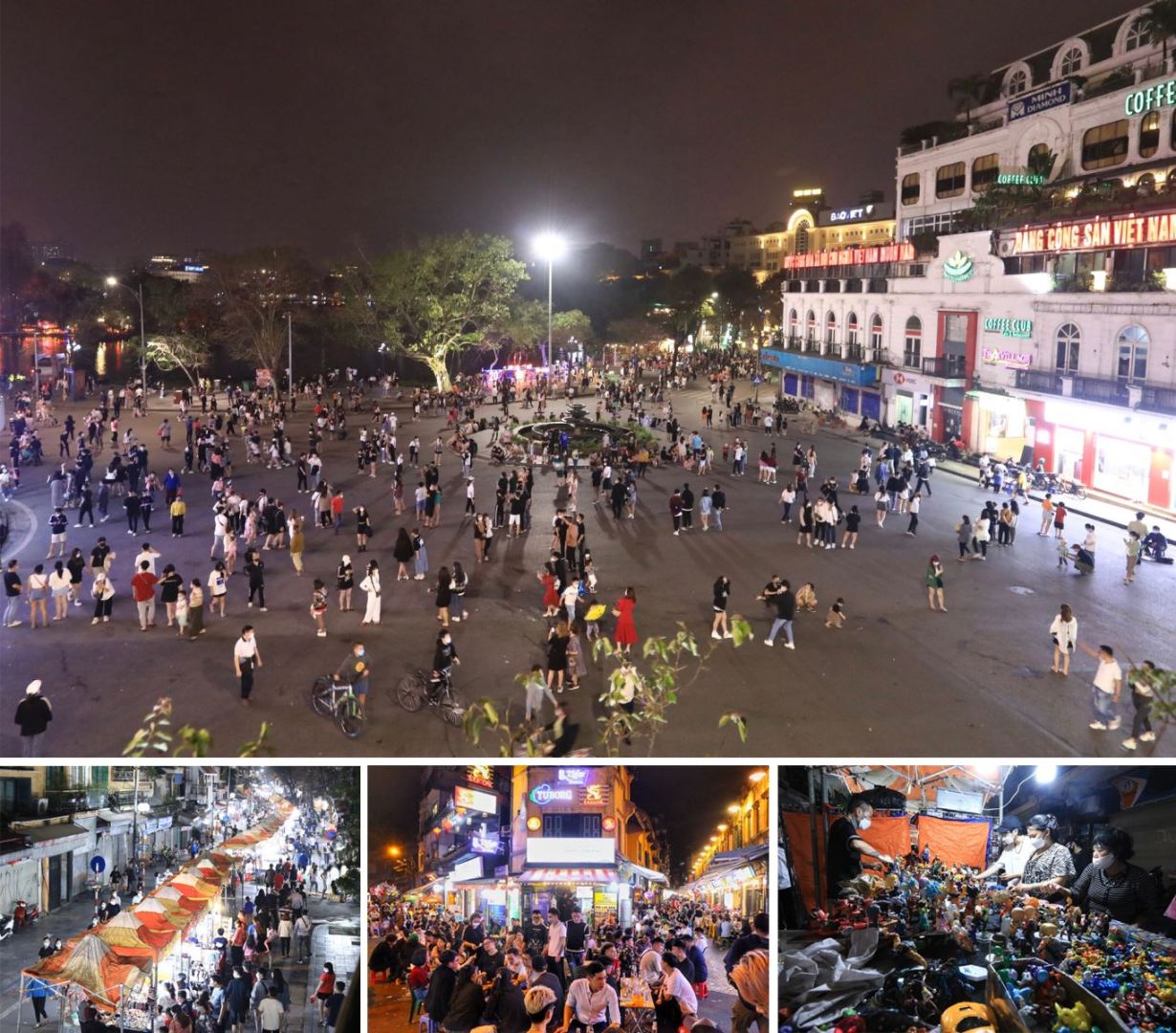
Pedestrian streets in Hanoi attract crowds (Photo: VNA)
Forming night tourism brand of Vietnam
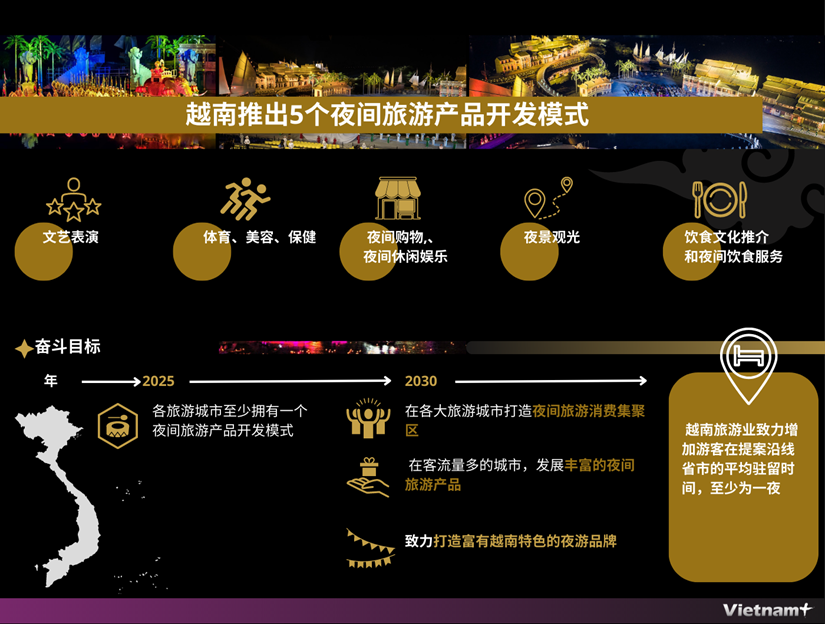
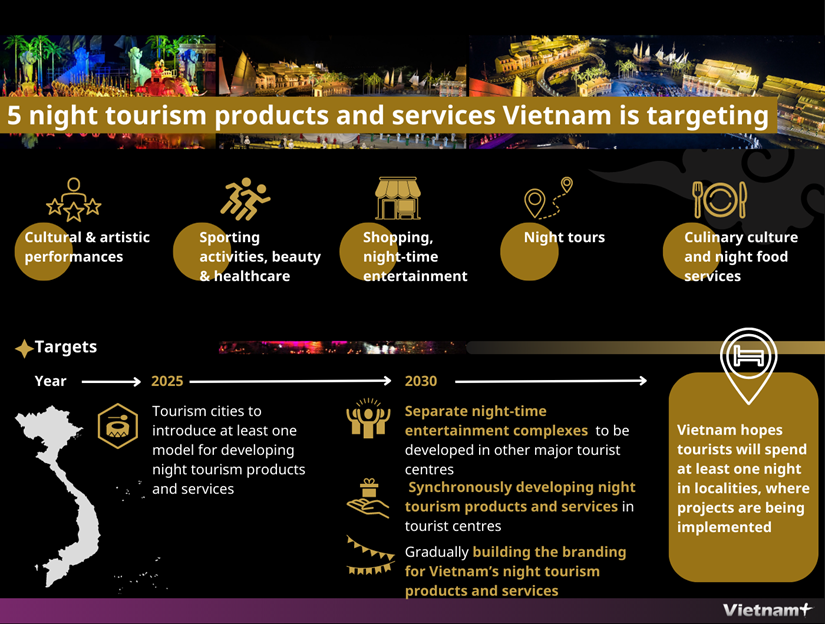
Under the Ministry of Culture, Sports and Tourism’s project, five models of night tourism product development are targeted. These include cultural artistic performances, sports, health care and beauty services, shopping and night entertainment, night tours, and culinary culture.
Bui Hoang Son, permanent member of the National Assembly’s culture and education committee, said that to successfully carry out night-time tourism and bring about high economic efficiency, it needs appropriate investment in infrastructure like lighting, public utilities and transport to ensure safety and convenience for tourists. Night tours also require solid policies and regulations to encourage the engagement of businesses, and protect the environment.
It can be said that there is huge potential to develop night-time tourism. However, to make that move effective, the engagement of management agencies, enterprises and the community is essential./.
Las miembros mayores del club de cultura popular sobre el canto Then en la provincia de Lang Son (Fuente: VNA)
De acuerdo con los pronósticos de la Oficina General de Estadísticas, hasta 2038, los habitantes mayores de 60 años de edad ocuparán el 20% de la población total de Vietnam. Con la actual tendencia, la nación indochina se encontrará entre los diez países con la tasa de envejecimiento más rápida en el mundo.
Esta realidad ha generado nuevos desafíos para el gobierno en lo que respecta al cuidado de la salud de las personas de edad avanzada, en un contexto donde el sistema de atención médica actual carece de infraestructura, personal de enfermería y médicos especializados en geriatría.
Vietnam se ubicará entre los 10 países con la tasa de envejecimiento poblacional más rápida del mundo (Fuente: tuyengiao.vn)
Para hacer frente a estos nuevos desafíos, el 9 de agosto de 2023, el primer ministro Pham Minh Chinh emitió la Resolución No.124/NQ-CP para asignar al Ministerio de Trabajo, Inválidos de Guerra y Asuntos Sociales que coordine con las agencias y localidades para investigar y presentar al Gobierno un proyecto que regule los subsidios y las pensiones sociales para las personas de 75 a 80 años, al mismo tiempo que eleve el estándar de las prestaciones sociales para las personas de la tercera edad.
“El respeto a los ancianos es una antigua tradición cultural del pueblo vietnamita. Los líderes del Partido y del Estado en todas las épocas han valorado el trabajo relacionado con las personas mayores. Durante su vida, el Presidente Ho Chi Minh también se preocupó y valoró el papel de las personas mayores.”-
Primer Ministro Pham Minh Chinh
El primer ministro Pham Minh Chinh saluda a las Madres Heroicas vietnamitas en a la Conferencia Nacional en honor a personas con méritos revolucionarios 2023 (Foto: VNA)
Según el Fondo de Población de las Naciones Unidas (UNFPA), un país entra en la “fase inicial del envejecimiento” cuando las personas mayores representan el 10% de la población total, y comienza la “fase real de envejecimiento” cuando estas representan el 20% de la población total.
Basando en estos criterios, Vietnam ya entró en la etapa de envejecimiento de su población desde 2011, e iniciará la fase de población envejecida para 2038. En 2022, las personas mayores de 60 años representaron el 12% de la población total de Vietnam, o sea alrededor de 11,4 millones de personas. Para el año 2030, se espera que los mayores representen aproximadamente el 17%, y para el año 2050, el 28% de la población.
La señora Bui Thi Xong de la ciudad de Hoi An, provincia de Quang Nam, una vez fue votada como “La mujer vietnamita más bella del mundo”. (Fuente: vnexpress.net)
Cabe destacar que la proporción de personas dependientes (es decir, la relación entre las personas de 60 años o más y las personas en edad laboral, de 15 a 59 años) se espera que se triplique, elevando del 14% en 2014 al 43% en 2049. En 2040, el número de las personas mayores en Vietnam superará a la población infantil (de 0 a 14 años). De acuerdo con los pronósticos, Vietnam tiene 16 años para transformarse de un país “casi envejecido” a uno “envejecido”, o sea, un país con un rápido aumento en la proporción de personas mayores de 65 años.
Las personas mayores siguen aportando con entusiasmo su experiencia y conocimientos a la formación de los jóvenes (Fuente: VNA)
Con esa tasa de envejecimiento de población tan rápida, Vietnam enfrentará varios desafíos, a saber, una escasez de mano de obra, mayor presión sobre los sistemas de atención médica y pensiones, sistemas de seguridad social, y el cuidado de la salud física y mental de los ancianos.
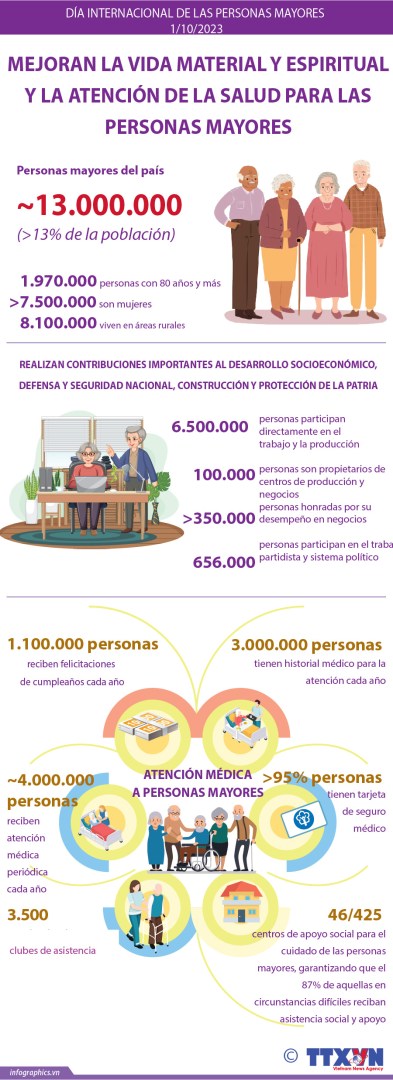
Registros del Ministerio de Trabajo, Inválidos de Guerra y Asuntos Sociales indican que Vietnam cuenta con alrededor de 12 millones de personas mayores. Sin embargo, el sistema de seguro social solo paga pensiones o beneficios del seguro social a más de 3,1 millones de personas. Además, más de 1,7 millones de personas mayores reciben un subsidio mensual del presupuesto estatal, de las cuales más de 1,4 millones tienen 80 años o más. Por lo tanto, más de siete millones de personas mayores no tienen un ingreso regular y estable. La Organización Internacional del Trabajo (OIT) predice que sin un apoyo significativo del presupuesto estatal, para 2030 Vietnam tendrá más de 16 millones de personas mayores sin pensión.
Vietnam cuenta con alrededor de 12 millones de personas mayores, pero el sistema de seguro social solo paga pensiones o beneficios del seguro social a más de 3,1 millones de personas (Fuente: VNA)
Además, según datos de la Oficina General de Estadísticas de Vietnam, desde 1989 hasta 2019, la esperanza de vida promedio de los vietnamitas ha crecido constantemente, aumentando de 65,2 años a 73,6 años. Se trata de una señal alentadora y refleja en cierta medida los esfuerzos del Partido Comunista y el Gobierno en el cuidado de este grupo de población. Sin embargo, también plantea un desafío a nivel macroeconómico.
Por otro lado, al decir del Instituto de Población, Salud y Desarrollo de Vietnam, a pesar del aumento en la esperanza de vida, los años que las personas mayores pasan viviendo con enfermedades siguen siendo relativamente altos. En promedio, los hombres mayores viven con enfermedades durante ocho años, mientras que las mujeres sufren 11 años. La mayoría de estas enfermedades son crónicas y requieren tratamientos a largo plazo, a veces de por vida. Por lo tanto, el gobierno ha implementado varias políticas para cuidar a las personas mayores.
Las personas mayores en Vietnam participan activamente en las actividades deportivas y reciben atención médica regular para mantenerse sanos y seguir contribuyendo a la comunidad y la sociedad (Fuente: VNA)
De acuerdo con la Ley de Personas Adultas Mayores de 2009, una persona mayor es un ciudadano vietnamita de 60 años o más. Según el Artículo 4 de esta ley, las políticas estatales para las personas mayores incluyen la asignación de un presupuesto anual adecuado para implementar políticas de atención y aprovechar el papel de las personas mayores; proporcionar seguridad social según lo establecido; integrar las políticas para las personas mayores en las de desarrollo económico y social; desarrollar el sector de atención médica geriátrica para satisfacer las necesidades médicas de las personas mayores y capacitar a personal para cuidar a las personas de la tercera edad.
El secretario general del Partido Comunista de Vietnam, Nguyen Phu Trong, y los funcionarios se encuentran con representantes de la Asociación de Ancianos de Vietnam (Fuente: VNA)
Basado en la disposición en el punto 5 del Artículo 5 del Decreto No. 20/2021/ND-CP, las personas mayores tienen derecho a recibir asistencia social mensual si cumplen con ciertos criterios, como ser de una familia empobrecida sin un miembro que tenga la obligación legal de mantenerlos; ser de 75 a 80 años y vivir en áreas rurales con dificultades particularmente desfavorecidas; o tener más de 80 años y no recibir una pensión o prestaciones mensuales de seguridad social; o las personas mayores de bajos ingresos que no tienen las condiciones para vivir en la comunidad, pero son elegibles para recibir apoyo social, pueden ser admitidas en instituciones de asistencia social.
El Gobierno vietnamita tiene como objetivo establecer al menos un centro de atención médica en cada provincia para personas mayores antes de 2025. Sin embargo, esto todavía es insuficiente para abordar el rápido envejecimiento de la población.
Además de los esfuerzos del Partido y el Gobierno, se han desarrollado en Vietnam varios servicios para el cuidado de esas personas en los últimos años. Según un informe reciente sobre las perspectivas del mercado de servicios de atención a personas mayores en el país indochino, publicado por la Cámara de Comercio e Industria de Vietnam, se espera que el mercado local cuente con aproximadamente 20 millones de clientes potenciales para 2035.
Un momento de amor entre un par de ancianos de 90 años de edad (Fuente: vnexpress.net)
El mercado de servicios para personas mayores en Vietnam también tiene la oportunidad de atraer a jubilados extranjeros que deseen disfrutar de una jubilación a largo plazo en el país. Según una evaluación de la revista Travel + Leisure, de 2022, Vietnam es un destino de retiro asequible con hermosas playas, paisajes impresionantes, cultura única y costos significativamente bajos. Por ejemplo, el costo de vida en Vietnam es un 49% más bajo que en Estados Unidos, y los alquileres son aproximadamente un 75% más bajos, dependiendo de la ubicación./.
Personas mayores participan en una actuación de ejercicio físico en el Festival de Yoga y Ejercicio 2022, en Ciudad Ho Chi Minh, octubre de 2022 (Foto: VNA)
Des membres d’un club de chant Then dans le village de Tham Me, bourg de Na Sam, district de Van Lang, province de Lang Son (Nord). Photo : VNA
Selon les prévisions de l’Office général des statistiques, d’ici 2038, la proportion de la population vietnamienne âgée de 60 ans et plus devrait atteindre environ 20% de sa population totale. Avec le taux de vieillissement actuel, le Vietnam se classera parmi les 10 pays connaissant le vieillissement démographique le plus rapide au monde. Cette réalité pose de nouveaux défis au gouvernement en matière de soins de santé pour les personnes âgées, notamment en raison du manque d’infrastructures et de professionnels de la santé spécialisés en gériatrie.
Le Vietnam se classera parmi les 10 pays connaissant le vieillissement démographique le plus rapide au monde. Photo: tuyengiao.vn
Le 9 août, le Premier ministre Pham Minh Chinh a signé la résolution n° 124/NQ-CP sur la réunion ordinaire du gouvernement de juillet 2023. Plus précisément, le gouvernement a chargé le ministère du Travail, des Invalides de guerre et des Affaires sociales de présider et de coordonner avec les agences et les localités la recherche et la soumission au gouvernement et aux agences compétentes d’orientations pour résoudre les prestations sociales et les pensions sociales pour les personnes âgées de 75 à 80 ans, et augmenter les niveaux d’aide sociale aux personnes âgées.
“Respecter les personnes âgées” est une tradition de la nation depuis longtemps, témoignant du respect envers les personnes âgées. Les dirigeants du Parti et de l’État attachent toujours une grande importance à la vie et au bien-être des personnes âgées. De son vivant, le Président Hô Chi Minh les a toujours appréciées et leur a toujours prêté une grande attention et considération.
Le Premier ministre Pham Minh Chinh
Le Premier ministre Pham Minh Chinh rend visite à des “mères héroïques” lors d’une conférence pour honorer les personnes exemplaires du pays en 2023. Photo : VNA
Le Fonds des Nations Unies pour la population (FNUAP) définit qu’un pays entre dans la phase de “début de vieillissement” lorsque les personnes âgées représentent 10% de la population totale, et dans la phase de “vieillissement” lorsque cette proportion atteint 20%.
Selon ces critères, le Vietnam est officiellement entré dans la phase de “vieillissement” en 2011 et devrait devenir une société du “vieillissement” d’ici 2038. Les personnes âgées de plus de 60 ans en 2022 représentaient 12%, avec environ 11,4 millions de personnes. Ce chiffre atteindra environ 17% d’ici 2030, et 28% d’ici 2050. Selon le Département général de la population et de la planification familiale du ministère de la Santé, la période de l’âge d’or démographique a commencé en 2007, se poursuivra jusqu’en 2038, parallèlement à la période de vieillissement démographique.
Mme Bui Thi Xong de la ville de Hoi An, province de Quang Nam (Centre), a été élue “la plus belle femme vietnamienne du monde”. Photo vnexpress.net
En outre, il existe d’autres chiffres très significatifs : le nombre de personnes à charge (rapport entre le nombre de personnes âgées de 60 ans et plus et celui de personnes en âge de travailler) devrait être multiplié par trois passant de 14% en 2014 à 43% en 2049. Le nombre de personnes âgées devrait dépasser le nombre d’enfants (de 0 à 14 ans) d’ici 2040. Le Vietnam devrait passer en 16 ans de pays “proche du vieillissement” à pays de “vieillissement”, alors que l’Australie dispose de 72 ans pour ce processus.
Les personnes âgées apportent toujours leurs expériences et leurs connaissances à la formation des jeunes dans de nombreux domaines.Photo: VNA
Le rythme rapide du vieillissement démographique aura un impact sur tous les domaines de la vie socio-économique tels que la crise des ressources humaines, la pression croissante sur les systèmes de santé et de retraite, le système de protection sociale, la prise en charge de la santé physique et mentale des personnes âgées. Par conséquent, le vieillissement de la population et la proposition de politiques sociales pour s’adapter à la situation sont une préoccupation pour les personnes âgées, certains ministères et secteurs concernés, ainsi que pour l’ensemble de la société.
Selon le ministère du Travail, des Invalides de guerre et des Affaires sociales, le pays compte environ 12 millions de personnes âgées. Cependant, le secteur de l’assurance sociale ne rémunère que plus de 3,1 millions de personnes bénéficiant de pensions ou de prestations d’assurance sociale et plus de 1,7 million de personnes âgées reçoivent des prestations mensuelles de l’État. Plus de 7 millions de personnes âgées ne disposent toujours pas d’un revenu régulier et stable.
L’Organisation internationale du travail (OIT) prévoit que, sans un soutien actif du budget de l’État, d’ici 2030, le Vietnam comptera plus de 16 millions de personnes âgées sans pension.
Selon le ministère du Travail, des Invalides et des Affaires sociales, le pays compte environ 12 millions de personnes âgées. Cependant, le secteur de l’assurance sociale ne rémunère que plus de 3,1 millions de personnes bénéficiant de pensions ou de prestations d’assurance sociale. Photo: VNA
Selon l’Office général des statistiques, de 1989 à 2019, l’espérance de vie moyenne des Vietnamiens a continuellement augmenté, passant de 65,2 ans à 73,6 ans. Cela montre que la vie des gens s’est améliorée. Toutefois, l’augmentation de l’espérance de vie pose également un certain nombre de problèmes socio-économiques qui doivent être résolus au niveau macro.
L’Institut de la population, de la santé et du développement du Vietnam a déclaré que malgré la hausse de l’espérance de vie, le nombre d’années pendant lesquelles les personnes âgées doivent vivre avec la maladie est encore assez élevé – 8 ans pour les hommes, et 11 ans pour les femmes. En moyenne, chaque personne âgée souffre de 3 à 5 maladies, principalement des maladies chroniques qui nécessitent un traitement à long terme, voire à vie.
Au Vietnam, les personnes âgées participent activement à des activités sportives et effectuent des examens médicaux réguliers. Photo: VNA
La loi de 2009 sur les personnes âgées stipule que les personnes âgées sont des citoyens vietnamiens âgés de 60 ans ou plus.
L’État a promulgué de nombreuses politiques préférentielles pour les personnes âgées. Selon l’article 4 de la loi de 2009 sur les personnes âgées, les politiques de l’État consacrées aux personnes âgées comprennent : l’allocation d’un budget annuel approprié pour mettre en œuvre des politiques visant à prendre en charge et à promouvoir le rôle des personnes âgées, la protection sociale des personnes âgées, l’intégration des politiques en faveur des personnes âgées dans les politiques de développement socio-économique, le développement du secteur gériatrique pour répondre aux besoins d’examen médical et de traitement des personnes âgées, la formation du personnel chargé des personnes âgées…
Le secrétaire général du Pari Nguyen Phu Trong et des dirigeants lors d’une rencontre avec les délégués de l’Association vietnamienne des personnes âgées.Photo: VNA
En plus des soins matériels, les personnes âgées bénéficient également de soins médicaux, de soins de leur vie spirituelle et sont reconnues pour leur contribution à la société. La loi de 2009 sur les personnes âgées indique qu’elles bénéficient d’une assurance maladie, de prestations sociales mensuelles et d’une aide pour les frais funéraires.
Au Vietnam, il existe un type d’assurance maladie pour les personnes âgées de 60 ans et plus. Il s’agit d’un produit d’assurance soutenu par l’État, ce qui le rend abordable et ne nécessite pas d’évaluation de santé.
De plus, les personnes âgées bénéficient également d’autres programmes de soins de santé gratuits ou préférentiels proposés par des agences de santé ou des organisations humanitaires. Par exemple, le programme “Des yeux brillants pour les personnes âgées” offre des dépistages et fournit gratuitement des médicaments à près d’un million de personnes âgées. Il a également offert des remplacements gratuits de lentilles à plus de 5 000 personnes âgées après 12 ans depuis son lancement.
Moment d’émotion d’un couple de 90 ans. Photo: vnexpress.net
En outre, les personnes âgées vietnamiennes ont le droit de participer et d’accéder à des activités culturelles, artistiques, physiques, sportives, touristiques, de vacances et à d’autres activités visant à nourrir et à améliorer leur vie spirituelle…/.
Des personnes âgées participent à un spectacle lors d’un événement tenu en octobre 2022 à Ho Chi Minh-Ville. Photo : VNA
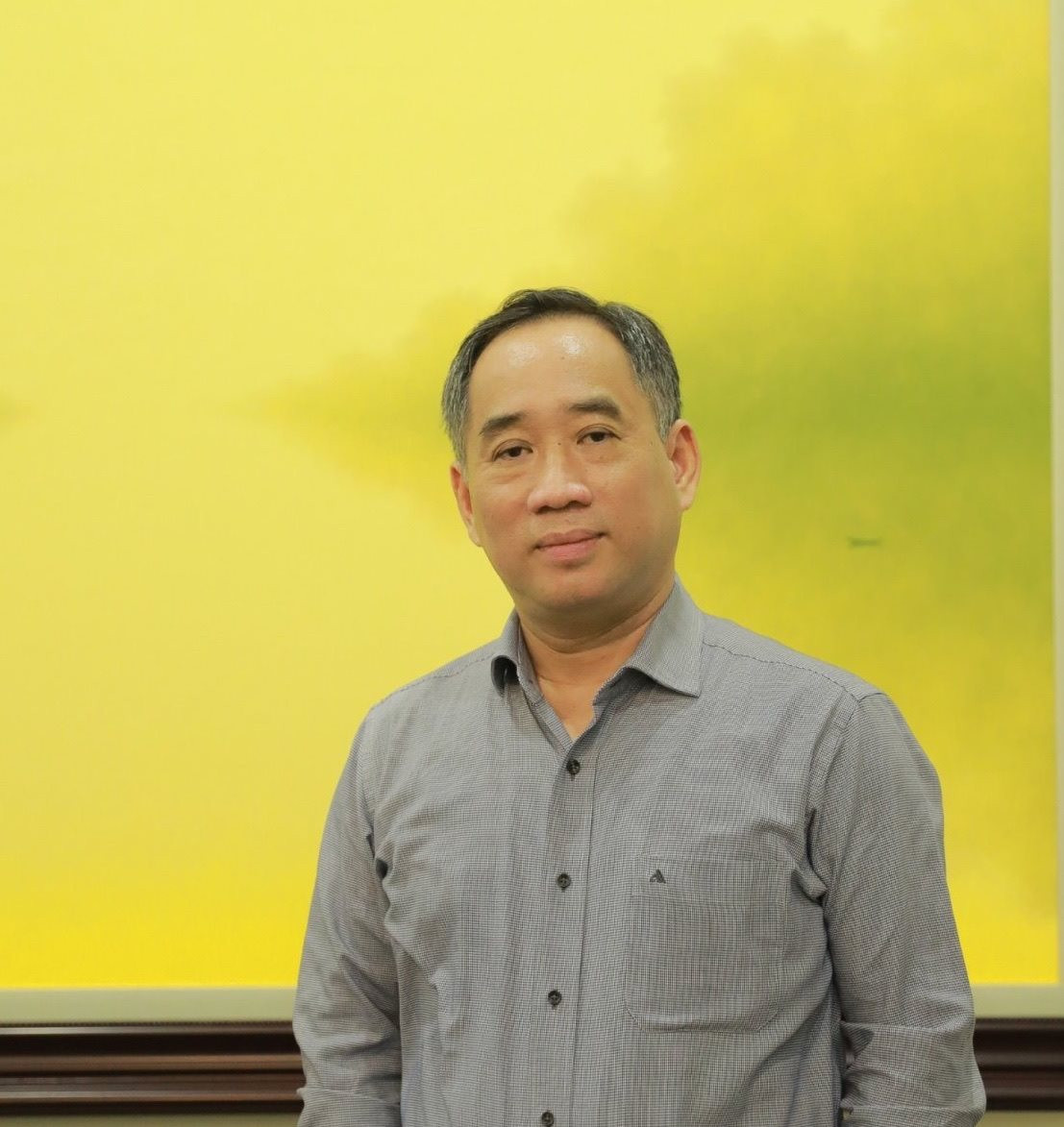
Vietnam Fine Arts Museum is a rendezvous for experts in the sector. (Photo: VNA)
As art-cation is increasingly attracting visitors, the Vietnam Fine Arts Museum has launched a special tour offering in-depth experiences of the country’s lacquer painting, according to the director of the museum Nguyen Anh Minh.
With this tour, visitors will have a chance to admire lacquer paintings by famous artists across the country, learn about the development history of the art through the works from the Indochina period to the years of resistance wars, as well as lacquer-related national treasures.
Helly Tong, a famous travel blogger with many activities promoting Vietnam’s culture and destinations, visits the Vietnam Fine Arts Museum. (Photo: VNA)
A colourful tour
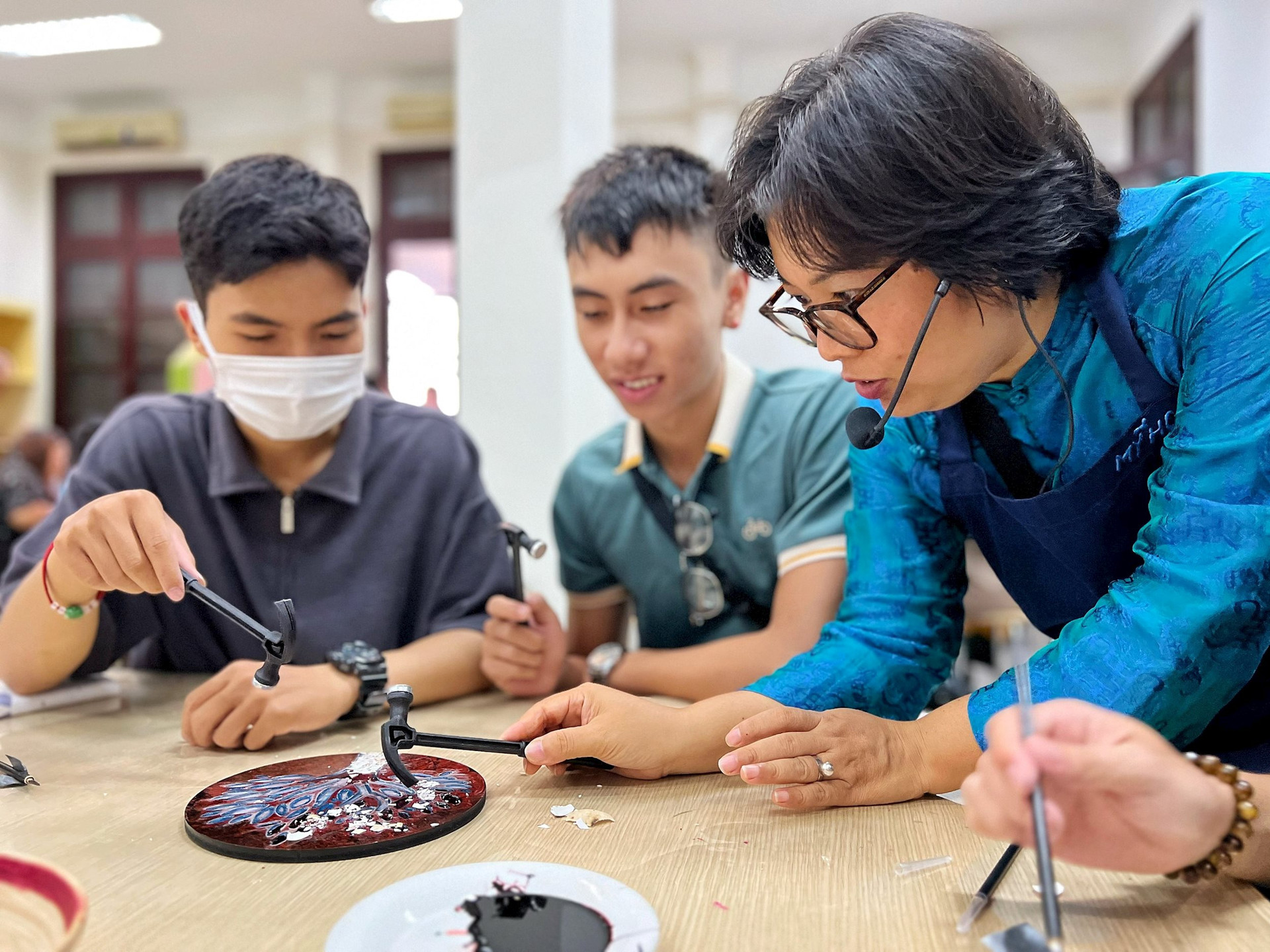
They can also learn about the process of making lacquer paintings, directly experience a step in this process and bring home the product they make by themselves. This is also a unique gift that the museum wants to give to visitors, said Minh.
He expressed his hope that the tour will impress and bring about interesting experiences to tourists on Vietnamese fine arts, especially lacquer materials used in painting.
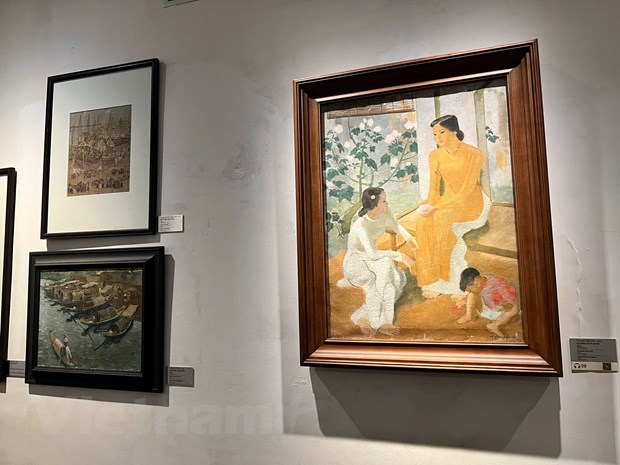
Lacquer painting appeared in Vietnam nearly 100 years ago. Introducing the public to the artistic value of lacquer is also the museum’s responsibility and pride, with a collection of lacquer paintings from 1939 (Indochina fine arts) to 2020 (Contemporary fine arts).
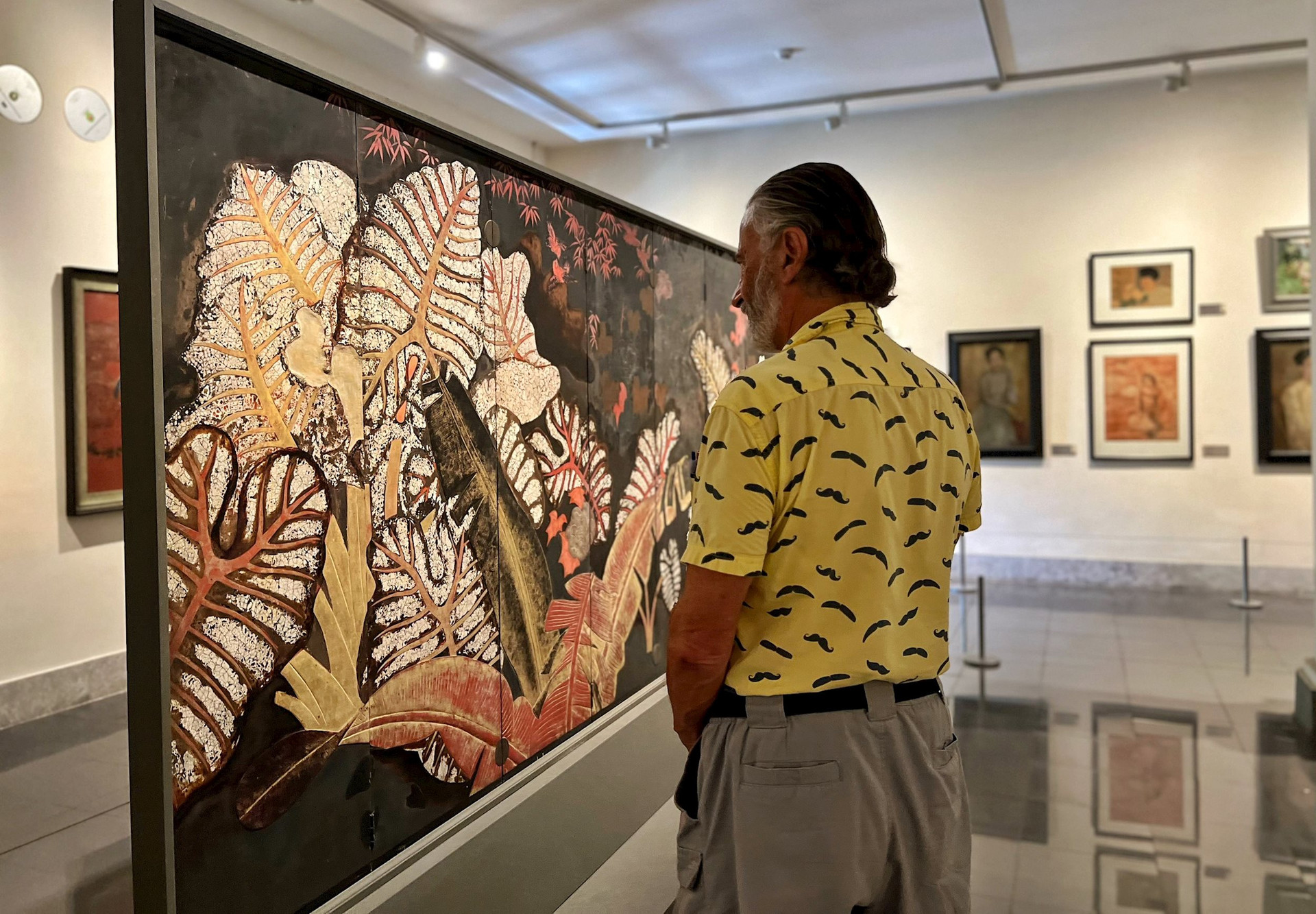
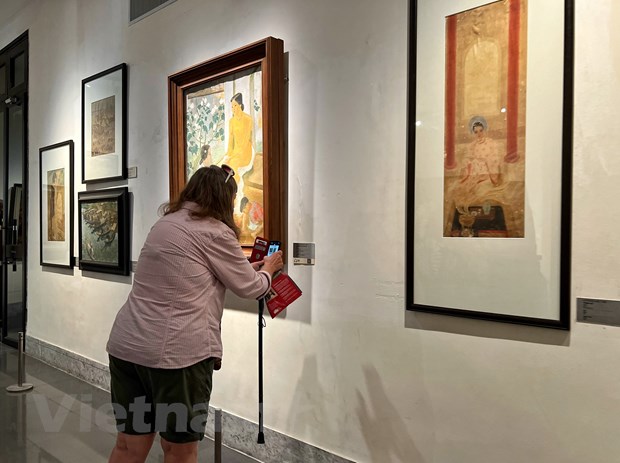
Foreign tourist contemplating “Doc mung” (Colocasia Gigantea) painting (1939) by artist Nguyen Gia Tri. (Photo: VNA)
The Vietnam Fine Arts Museum displays unique lacquer paintings by some of the country’s most famous artists, namely Nguyen Gia Tri, Tran Van Can, Nguyen Sang, and Nguyen Tu Nghiem.
There are six dedicated galleries, with paintings by famous artists, giving visitors a comprehensive view of the diversity of themes, styles and techniques of lacquer painting.
The museum will focus on training and employing a team of collaborators and volunteers, and inviting experts, artists, and artisans to participate in tours to guide visitors with a deep understanding of art and fine arts, Minh said.
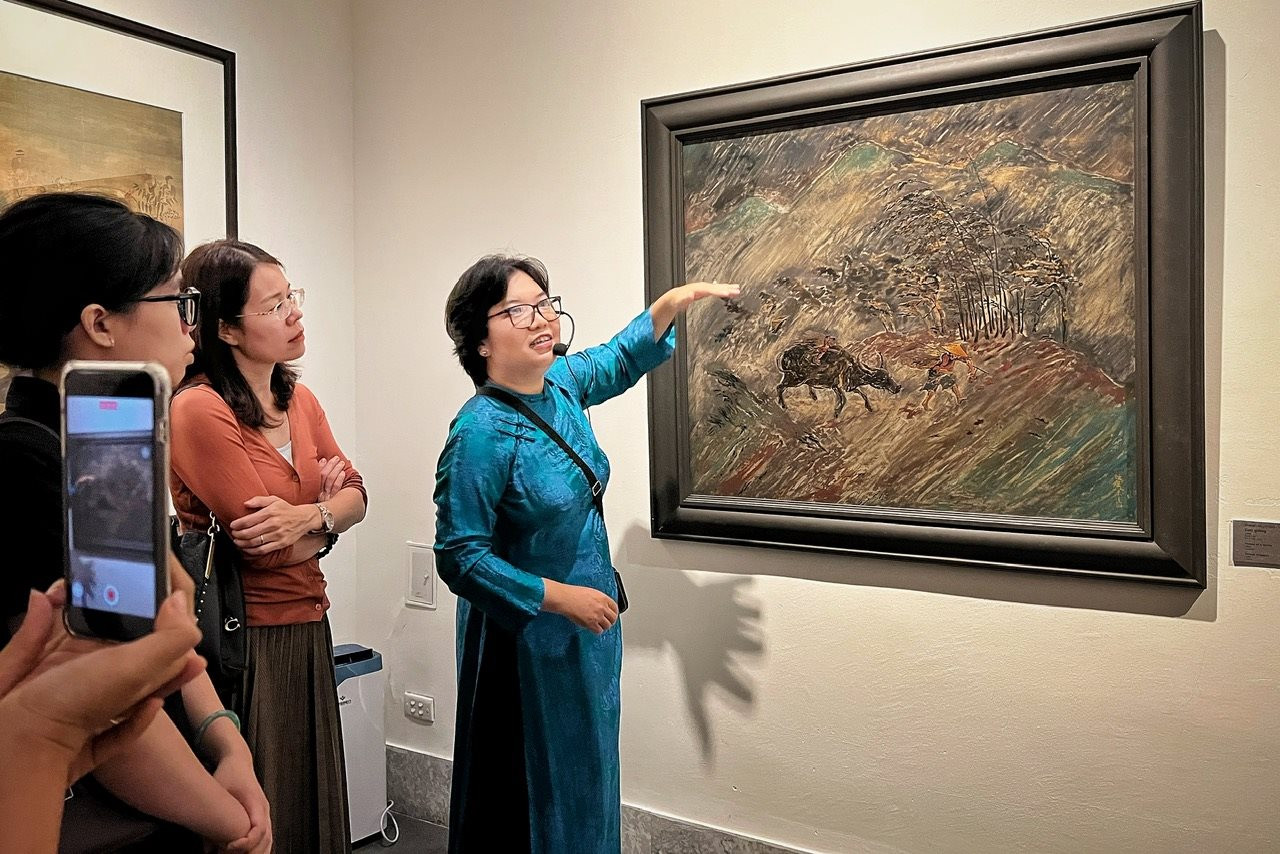
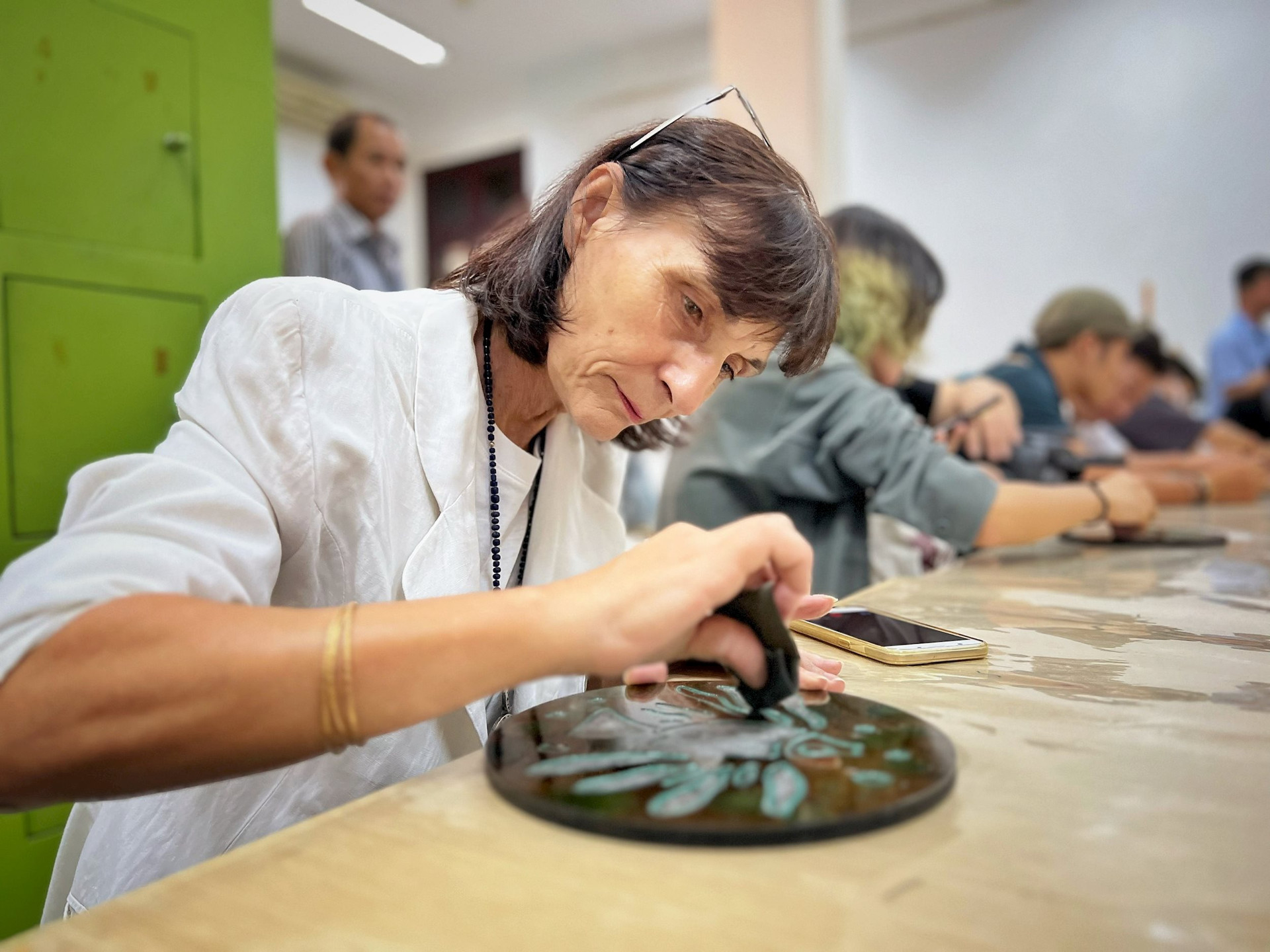
A narrator introduces to visitors a lacquer painting (Photo: VNA)Tourists experiencing a step in the lacquer painting process. (Photo: VNA)Veronique, Production Manager of Easia Travel Company experiences the making of lacquer painting (Photo: VNA)
With the development of technology, the museum has also developed a smart virtual assistant to serve visitors. The iMuseum VFA multimedia interpretation introduces nearly 200 artifacts in eight languages.
It has also designed a Highlight tour flyer with a selection of 10 lacquer works arranged in order to suggest a route to help visitors experience the lacquer tour. Minh said that this is a result of the Museum’s digital transformation efforts to bring art closer to the public and better support visitors.
Regarding difficulties faced before launching the in-depth tour, the museum’s director said that it took more than two years to prepare the content, choose a tour itinerary in different time frames, and balance reasonable tour costs between the museum and partner units.
Some large-sized works on display at the museum (Photo: VNA)
In addition, narrators must also choose words to explain the process of making a lacquer painting, as well as the values of the work and the story associated with its painter.
In particular, choosing suitable stages in the lacquer painting process for visitors to experience must also be considered carefully to ensure both the content and duration of the tour and reasonable costs.
Traditional lacquer materials can cause skin irritation upon contact, so the museum had to learn from the artisans and painters in Ha Thai lacquer craft village and make a few changes to meet customer experience needs as safely as possible.
Creating a space large enough in the museum’s ancient French architecture for groups of visitors to experience stages of lacquer painting is not easy, he added.
Regarding the unpopularity of art-cation in Vietnam, the director of the Vietnam Fine Arts Museum said that in the country, not many people are interested in fine arts, and even in the educational curricula. The role of fine arts in society is also vague.
Fine arts have yet to receive attention from travel companies and tour operators, that is why the awareness of their heritage and beauty is still limited.
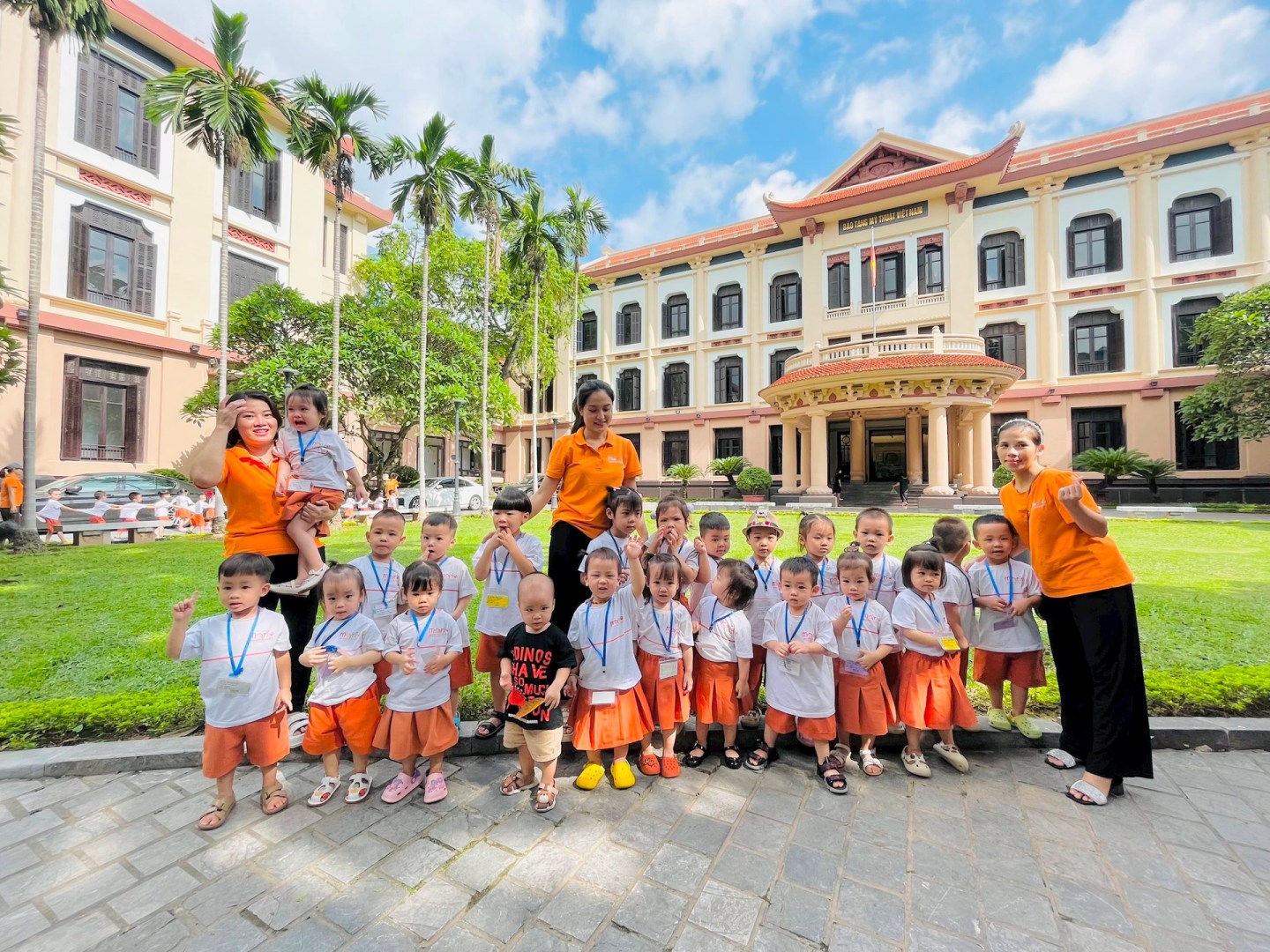
In addition, the Vietnam Fine Arts Museum has yet to become a chosen destination on tour itineraries. Most tourists coming to the museum are individual visitors, Minh said, adding that this is also a motivation for the museum to develop this special tour to introduce to travel and tourism companies and visitors.
In previous years, 90% of visitors to the Vietnam Fine Arts Museum were foreigners.
However, in recent years, the situation has changed in a positive direction, with the number of Vietnamese visitors increasing significantly. At present, 80% are Vietnamese, of whom more than 60% are young people and students.
Bringing art closer to the public is the motto of the Vietnam Fine Arts Museum
Dr. Nguyen Anh Minh
Minh expressed his hope to develop more in-depth tours and diverse experiences to attract more visitors and bring the fine arts closer to the public.
The museum continues to promote the application of digital technology to expand the viewing experience for visitors, step up communication and promotion works, and organise events in the museum space to attract the public.
After downloading the iMuseum VFA app, visitors can scan the code to hear explanations about each work of art. (Photo: VNA)
It addition, it continues to promote research to build a digital database and speed up digital transformation. Minh said that the museum’s recent pilot of 3D Mapping projection technology in exhibitions has received positive feedback, especially from young people. Coming to the museum, besides enjoying works of art, visitors can also experience visual effects thanks to digital technology.
According to the director, bringing art closer to the public is the motto of the Vietnam Fine Arts Museum. Recently, it has diversified its activities so that the public won’t think of the museum as a place only for people who understand arts. But rather, the public will view the museum as a venue for leisure time and viewing the arts.
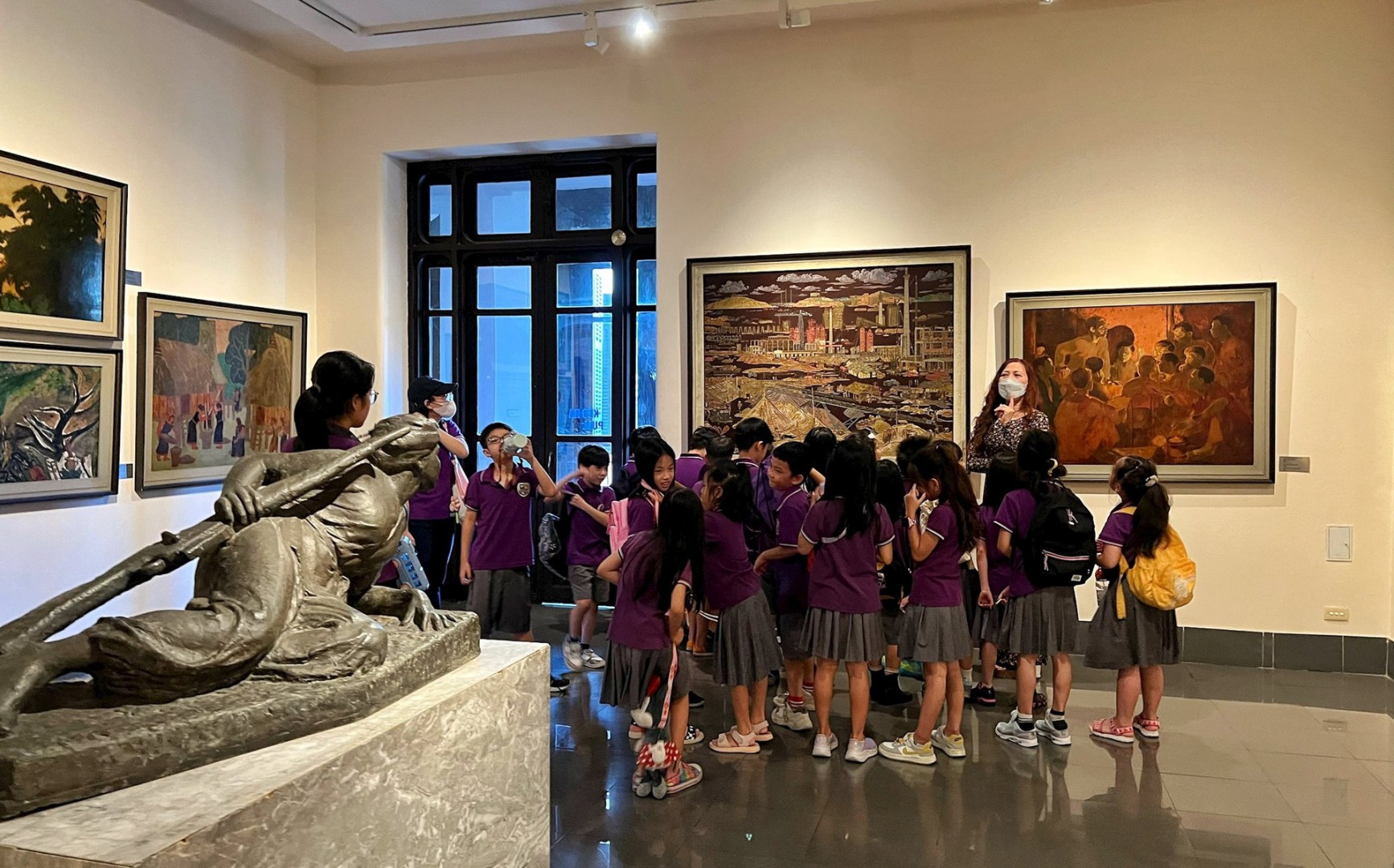
Vietnam Fine Arts Museum becomes a familiar destination of schools in Hanoi (Photo: VNA)
The renovation of facilities will make the museum more inviting, adding more information systems to make it easier for visitors to access the display content. The museum is also organising supplementary art activities such as music to create a connection with schools to bring children to the museum from an early age. They will also hold a quiz on the museum at schools as informal art education by the museum.
Minh stated that in fact, a museum is a cultural institution with an education function. In other words, it is a special school and the students practice their learning through watching, listening, and experiencing at the museum.
It would be difficult for the museum to carry out its tasks without the coordination of the education, culture and tourism sectors, he stressed, adding that aesthetic education takes time and the plan needs to be implemented step by step.
The resources to develop in-depth tours at the museum are still abundant. Lacquer is only part of modern art, but this is the most attractive, unique, and easy to attract visitors, so the museum chooses to start from this genre. In the coming time, the museum will consider developing in-depth tours to give visitors an insight into folk art, applied art, ancient art, silk painting, print, and sculpture.
“Two Maidens and a Little Boy” byTo Ngoc Van (Photo: VNA)
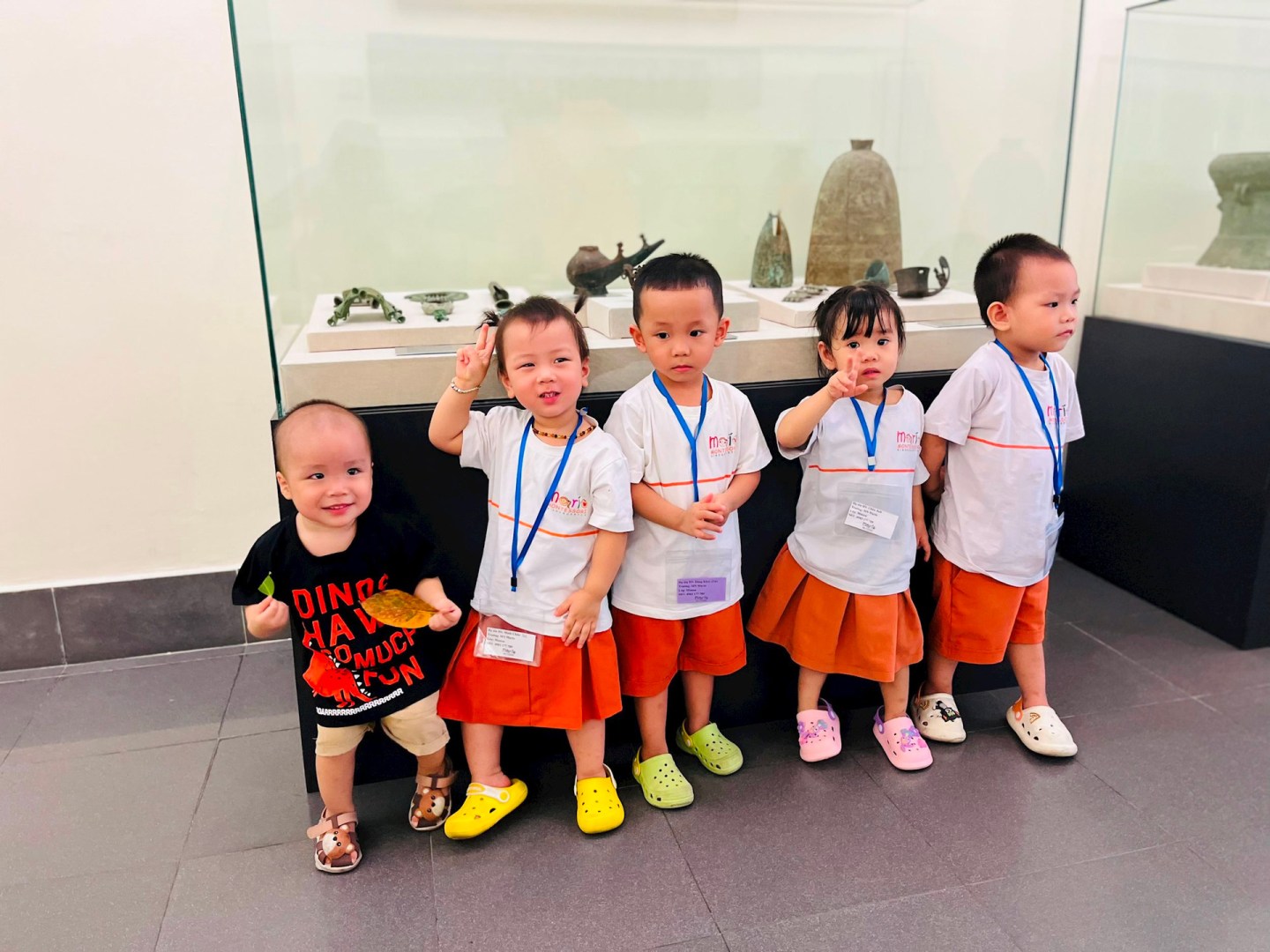
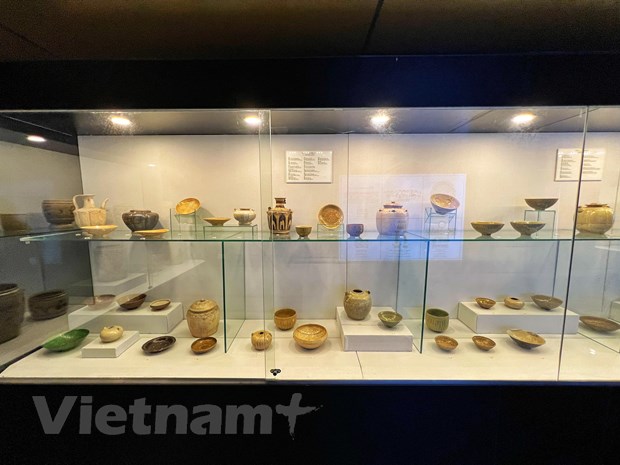
Ceramic objects displayed at the museum (Photo: VNA)
As of October 2022, the museum had 17,404 out of 22,125 art items preserved, of which 3,102 were on display, including painting, graphics, sculpture and ceramics with materials ranging from wood, stone, bronze, oil painting, lacquer, and paper to silk.
According to experts, the first Vietnamese lacquer paintings were made by students at École Superieure des Beaux Arts de I’Indochine (Indochina Fine Art Colleges) in the 1930s.
The Vietnamese people had been using resin from the Japanese wax tree to make crafts and valuable objects for hundreds of years, including objects of religious value.
Vietnamese lacquer paintings are currently covered and ground many times with lacquer resin before the artist inlays crushed egg shells, gold, silver and other materials./.
Old members of a folk cultural club specialising in ‘then singing’ and ‘gourd lute’ from Tham Me village, Na Sam town, Van Lang district, Lang Son province (Photo: VNA)
According to the General Statistics Office (GSO), Vietnamese people aged 60 and above will account for about 20% of the total population by 2038. At the current rate of population aging, Vietnam is expected to be among the top 10 fastest-aging countries globally, posing new challenges for the Government in the care of the elderly, especially at a time when the country is lacking facilities, geriatric nurses and doctors.
Vietnam is projected to be among the top 10 fastest-aging countries globally (Photo: tuyengiao.vn)
In response to these new challenges, Prime Minister Pham Minh Chinh on August 9 signed a Resolution tasking the Ministry of Labour, Invalids and Social Affairs with working with agencies and local authorities to study and propose the provision of social allowances and pension for those aged 75-80, along with a raise in social allowances for the elderly in general.
“Respect for the Elderly” is a long-standing and admirable tradition of the nation, reflecting the deep reverence for the older and wiser citizens of society. Generations of leaders of the Party and State always place importance on the well-being of the elderly. In his lifetime, President Ho Chi Minh always showed great concern and respect for the role of society’s older persons.
Prime Minister Pham Minh Chinh
Prime Minister Pham Minh Chinh visits heroic Vietnamese mothers attending a nationwide conference to honour outstanding contributors to the revolution 2023 (Photo: VNA)
According to the United Nations Population Fund (UNFPA), a population is classified as “aging” when the elderly account for 10% of the total population, and “aged” when the rate reaches 20% of the total population. By this criterion, Vietnam has been in the aging phase since 2011 and is expected to transition to the “aged population” phase in 2038. In 2022, the elderly population (60 years and older) in Vietnam accounted for 12% of the total population, which was about 11.4 million people. The rate will reach some 17% by 2030 and 28% by 2050.
Bui Thi Xong, a resident of Hoi An city in Quang Nam province, was once voted as the world’s most beautiful Vietnamese old woman (Photo: vnexpress.net)
Notably, the dependency ratio (the proportion of people aged 60 and over to the working-age population, typically defined as those aged 15-59) is projected to increase more than threefold, from 14% in 2014 to 43% in 2049. The number of old people in Vietnam is expected to surpass the number of children aged 0-14 by 2040. Vietnam is forecast to have 16 years to transition from an “aging population” to an “aged population” which means a rapid increase in the proportion of the population aged over 65.
The elderly still enthusiastically dedicate their experience and knowledge to educate youngsters in various fields (Photo: VNA)
With such a rapid aging rate, Vietnam is likely to face several challenges, including a labour force crisis, increased pressure on the healthcare, pension and social welfare system, and physical and mental healthcare of the elderly.
The Ministry of Labour, Invalids and Social Affairs reported that Vietnam has around 12 million senior citizens. However, the social security sector only offers pension and social insurance benefits to more than 3.1 million of them. Over 1.7 million others receive monthly allowances from the State budget, more than 1.4 million of them age 80 or above. This means that the remaining 7 million are yet to have a regular and stable source of income. The International Labour Organisation (ILO) predicted that without active support from the State budget, Vietnam will have over 16 million old people without pensions by 2030.
According to the Ministry of Labor, Invalids and Social Affairs, Vietnam has around 12 million elderly people. However, the social insurance sector only provides benefits to more than 3.1 million people receiving pensions or social insurance allowances (Photo: VNA)
Data from the GSO showed that from 1989-2019, the average life expectancy of the Vietnamese people continuously increased from 65.2 years to 73.6 years, which is an encouraging sign that reflects, to some extent, the results of elderly care efforts by the Party and the Government. However, it is also a macro-level issue that needs to be dealt with. According to the Institute of Population, Health and Development, despite the increase in life expectancy, the number of years that Vietnamese elderly people have to live with disease is relatively high – 8 years for elderly men and 11 years for old women. On average, each is affected by 3-5 diseases, mostly chronic illnesses requiring prolonged treatment, and in some cases, life-long care. Due to these challenges, the Government has issued various policies to care for them.
Old people in Vietnam actively join sports activities and undergo regular health check-ups to maintain their health and continue contributing to the community and society (Photo: VNA)
The 2009 Law on the Elderly defines the elderly as Vietnamese citizens aged 60 and above. According to Article 4, State policies for the elderly include allocating an appropriate annual budget for care policies and leveraging their roles, providing social support as per regulations, creating socioeconomic development policies, providing geriatric healthcare services and training a workforce for elderly care.
Party General Secretary Nguyen Phu Trong and leaders meet with representatives of the Vietnam Association of the Elderly (Photo: VNA)
Based on the provisions of Point 5, Article 5 of the Decree 20/2021/ND-CP, the monthly social support policy for the elderly includes those who belong to poor households and have no relatives to support them. Those aged 75-80 who belong to poor or near-poor households and live in ethnic minority and especially disadvantaged mountainous regions qualify for support, as do those aged 80 and above and do not receive pensions or any form of social insurance or monthly social support. The support policies also cover those who cannot live by themselves in the community and qualify for admission to social welfare facilities but are cared for and supported by others in the community.
The Government’s goal of establishing at least one elderly healthcare facility in each province by 2025 is a positive step, but it may not be sufficient to fully address the rapid population aging.
In addition to the efforts of the Party and the Government, various care services targeting the elderly have developed in Vietnam in recent years. The Elderly Care Service Market Outlook Report issued by the Vietnam Chamber of Commerce and Industry (VCCI) indicated that Vietnam shows huge potential in the development of these services, with an estimated 20 million potential customers by 2035.
Tender moment of an elderly couple at the age of 90 (Photo: vnexpress.net)
Vietnam’s elderly care service market is also presented with the opportunity to attract customers from other countries looking for long-term retirement destinations. According to the Travel + Leisure magazine in April 2022, Vietnam is an affordable retirement destination with beautiful beaches, landscapes, culinary experiences, rich history and distinctive culture. For instance, in comparison to the US, the cost of living in Vietnam is 49% lower, and rental housing prices are around 75% lower, depending on the location./.
Old people join a qigong and yoga festival in Ho Chi Minh City in October 2022 (Photo: VNA)
Une vue de la vieille ville de Hoi An. Photo: baoquangnam.vn
À l’ère de la mondialisation, la préservation et la valorisation des valeurs patrimoniales constituent une tâche importante qui contribue à promouvoir l’image du Vietnam et de son peuple, ainsi qu’à édifier le label national.
Le patrimoine culturel démontre son rôle croissant en tant que source de richesse pour la croissance économique. Photo: dangcongsan.vn
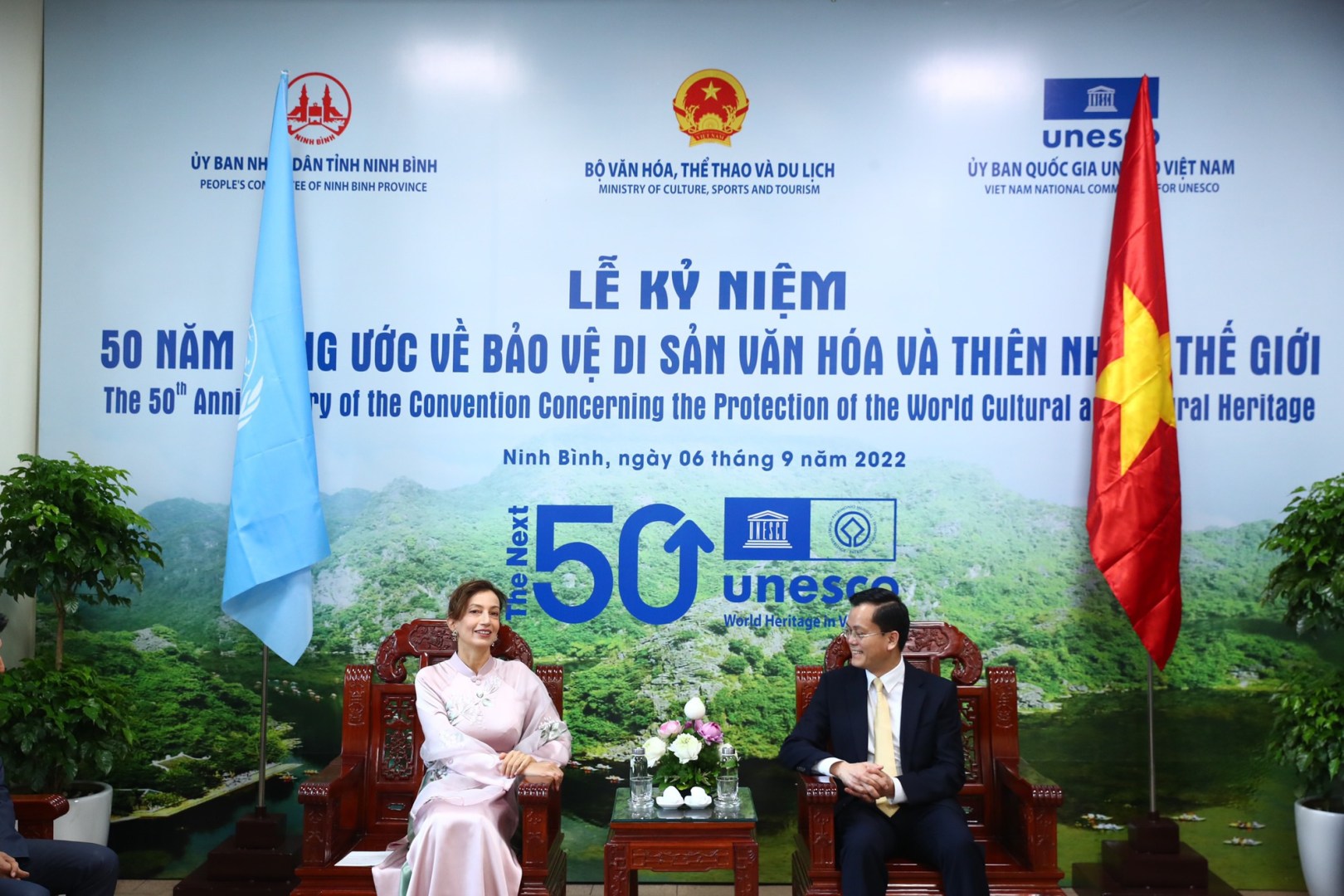
Le 19 octobre 1978, le Vietnam a adhéré à la Convention pour la protection du patrimoine mondial, culturel et naturel (Convention de 1972) de l’Organisation des Nations Unies pour l’éducation, la science et la culture (UNESCO).
Au cours des 35 années de mise en œuvre de la Convention de 1972 de l’UNESCO, le Vietnam a réalisé d’importants progrès dans la protection et la promotion de ses sites du patrimoine mondial, lesquels ont été reconnus par la communauté internationale.
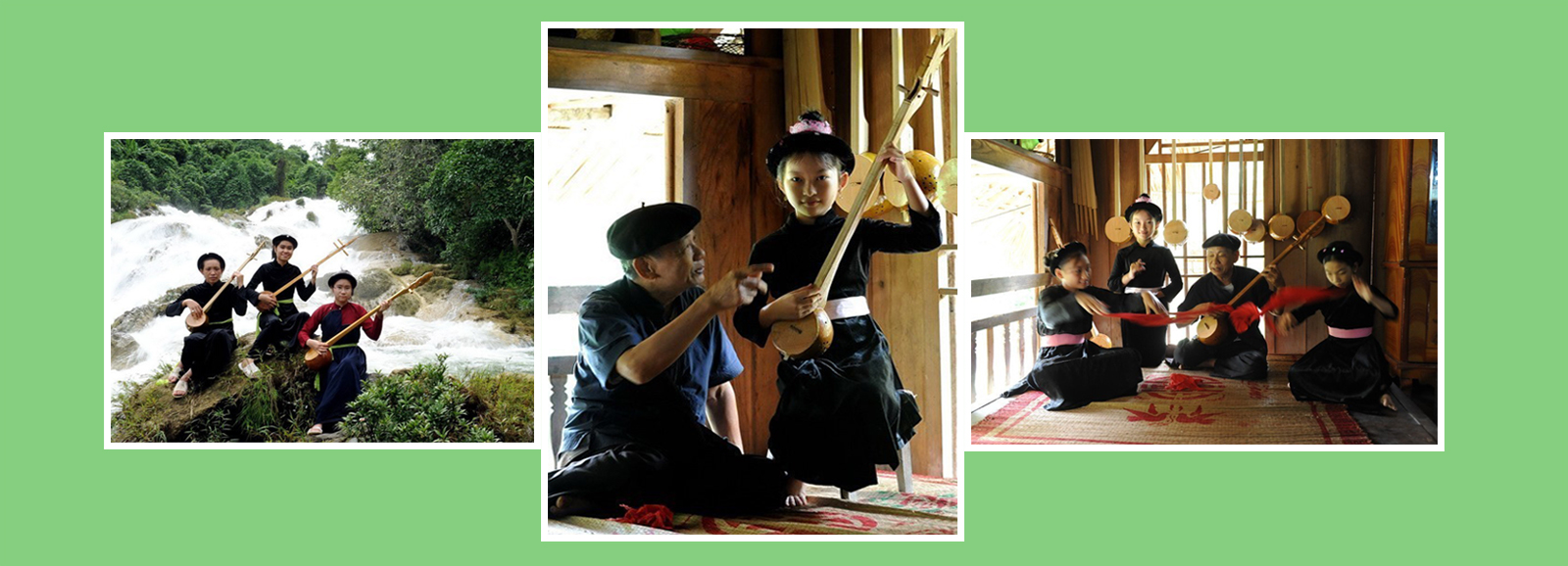
Les pratiques du then par les groupes ethniques Tày, Nùng au Vietnam. Photo: VNA
Depuis son adhésion à la Convention de 1972, le cadre juridique du Vietnam sur le patrimoine culturel s’est progressivement rapproché de l’esprit de la Convention. Les agences de gestion du patrimoine mondial, du niveau central au niveau local, ont été progressivement consolidées. Les ressources pour préserver le patrimoine mondial ont été mobilisées au maximum.
La loi sur le patrimoine culturel a été adoptée par l’Assemblée nationale le 29 juin 2001 avec 74 articles, répartis en sept chapitres. La loi porte sur les activités visant à protéger et promouvoir les valeurs du patrimoine culturel, les droits et obligations des organisations et des particuliers envers celui-ci.
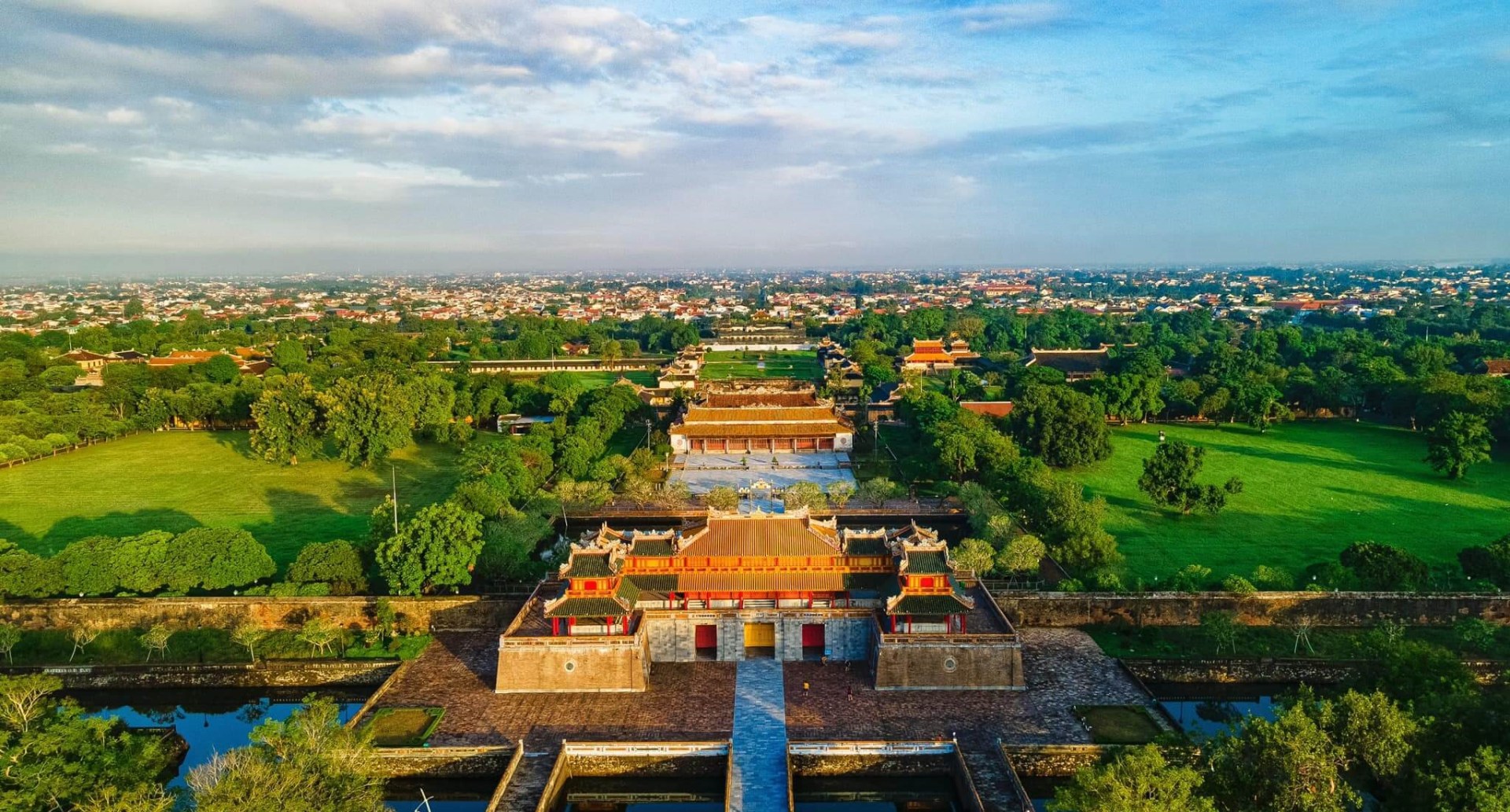
Paysage et architecture dans l’ensemble de monuments de Huê. Photo: VNA
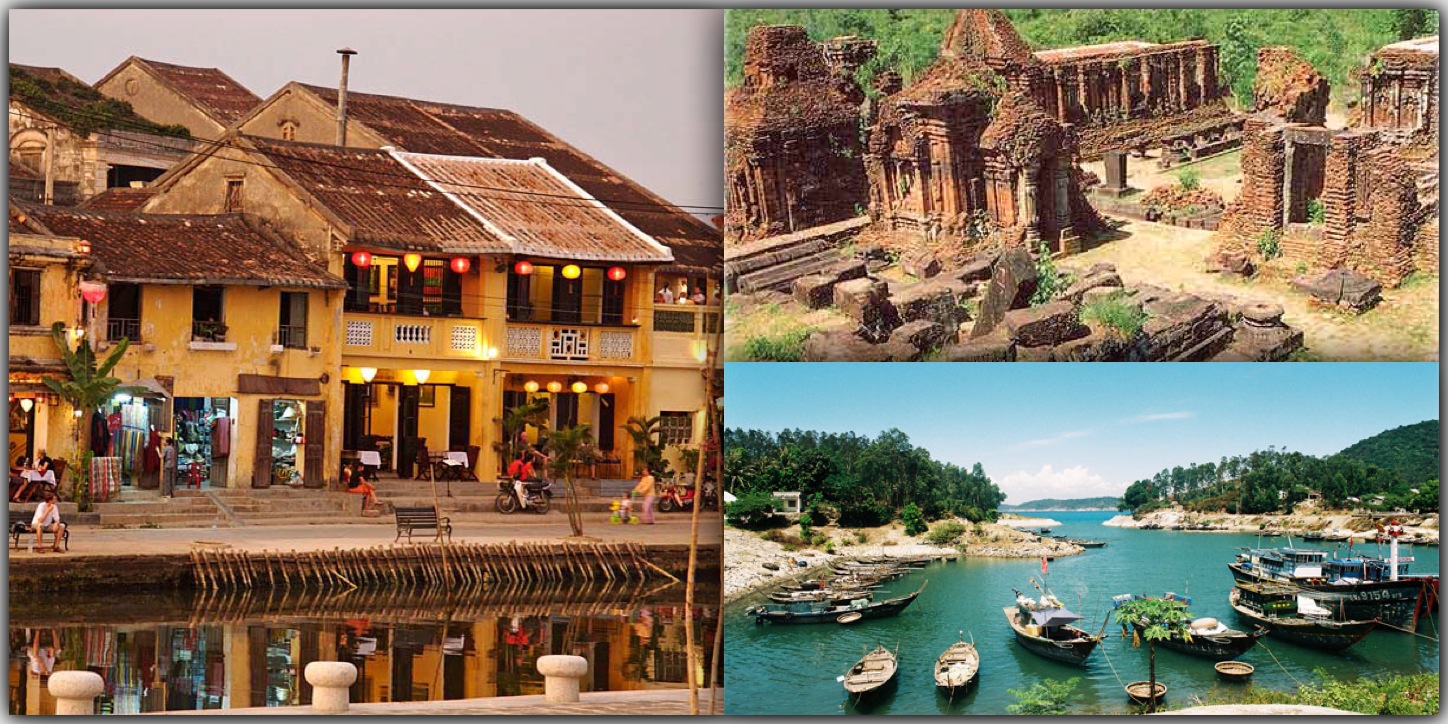
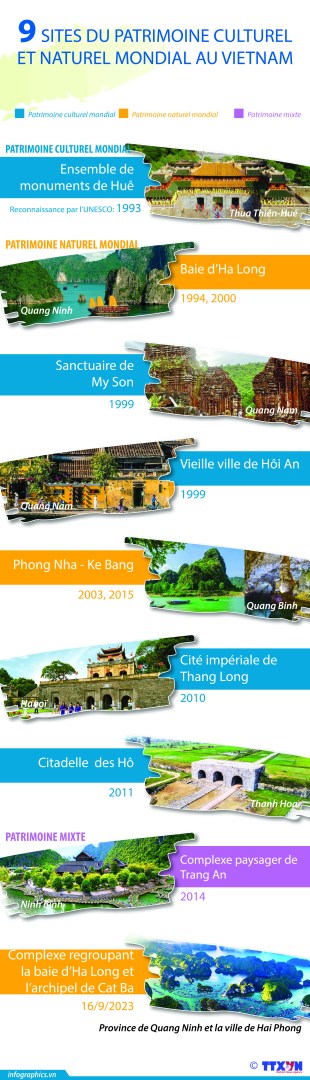
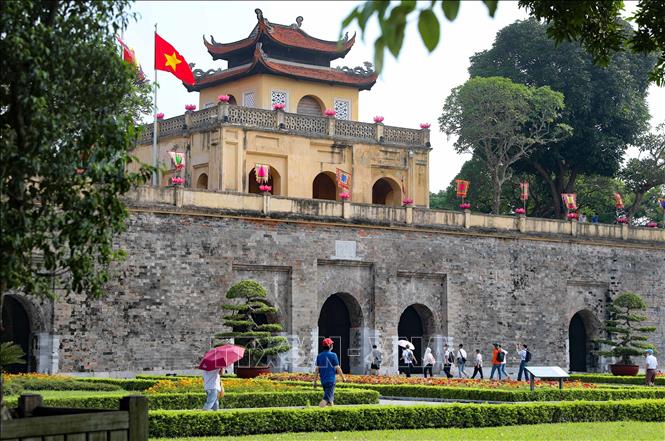
Le Vietnam compte actuellement neuf sites classés au patrimoine mondial par l’UNESCO. Cinq d’entre eux relèvent du patrimoine culturel, trois du patrimoine naturel et un du patrimoine mixte. Le parc national de Phong Nha-Ke Bang et la baie d’Ha Long sont des sites naturels. L’ensemble de monuments de Huê, la vieille ville de Hôi An, le sanctuaire de My Son, le secteur central de la Cité impériale de Thang Long-Hanoï et la Citadelle de la dynastie des Hô sont des sites culturels.
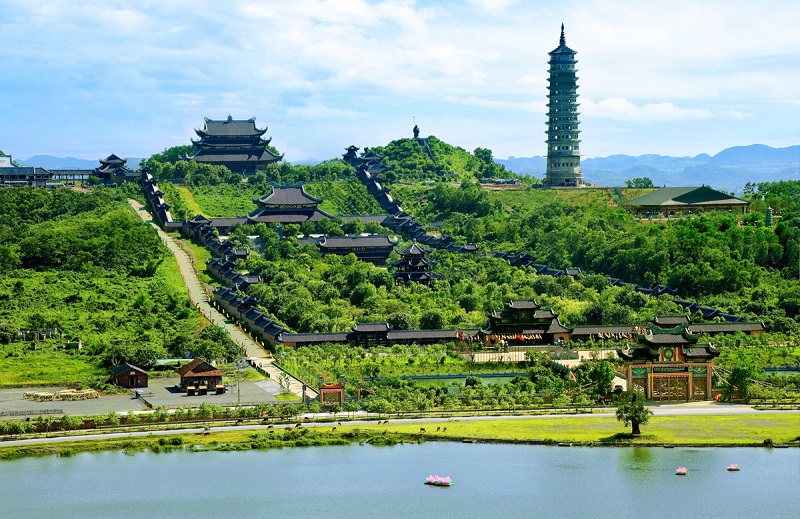
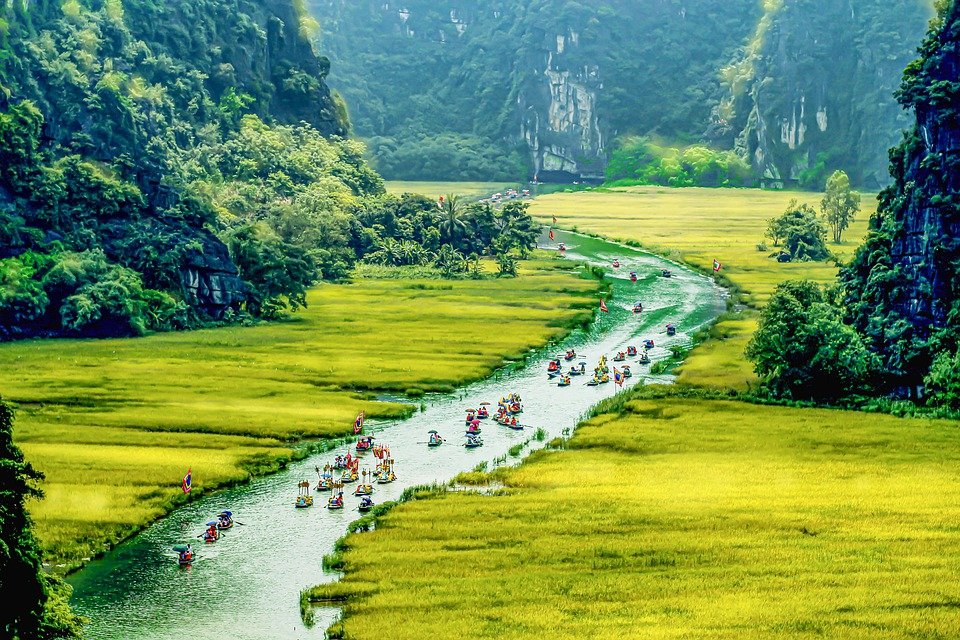
Le complexe paysager de Trang An est le seul site mixte du Vietnam et même de l’Asie du Sud-Est et l’un des 38 sites du patrimoine mixte (culturel et naturel) reconnus par l’UNESCO.
Le complexe paysager de Trang An. Photo: VNA
Ces 30 dernières années, près de 50 patrimoines du Vietnam ont été honorés par l’UNESCO, dont 28 patrimoines culturels matériels et immatériels, huit sites du patrimoine mondial, trois patrimoines documentaires mondiaux, 11 réserves mondiales de biosphère, trois géoparcs mondiaux.
Le géoparc mondial de Dak Nong. Photo: VNA
C’est non seulement la fierté du peuple vietnamien mais aussi une opportunité pour la communauté internationale de partager et d’apprécier les valeurs culturelles et spirituelles du Vietnam.
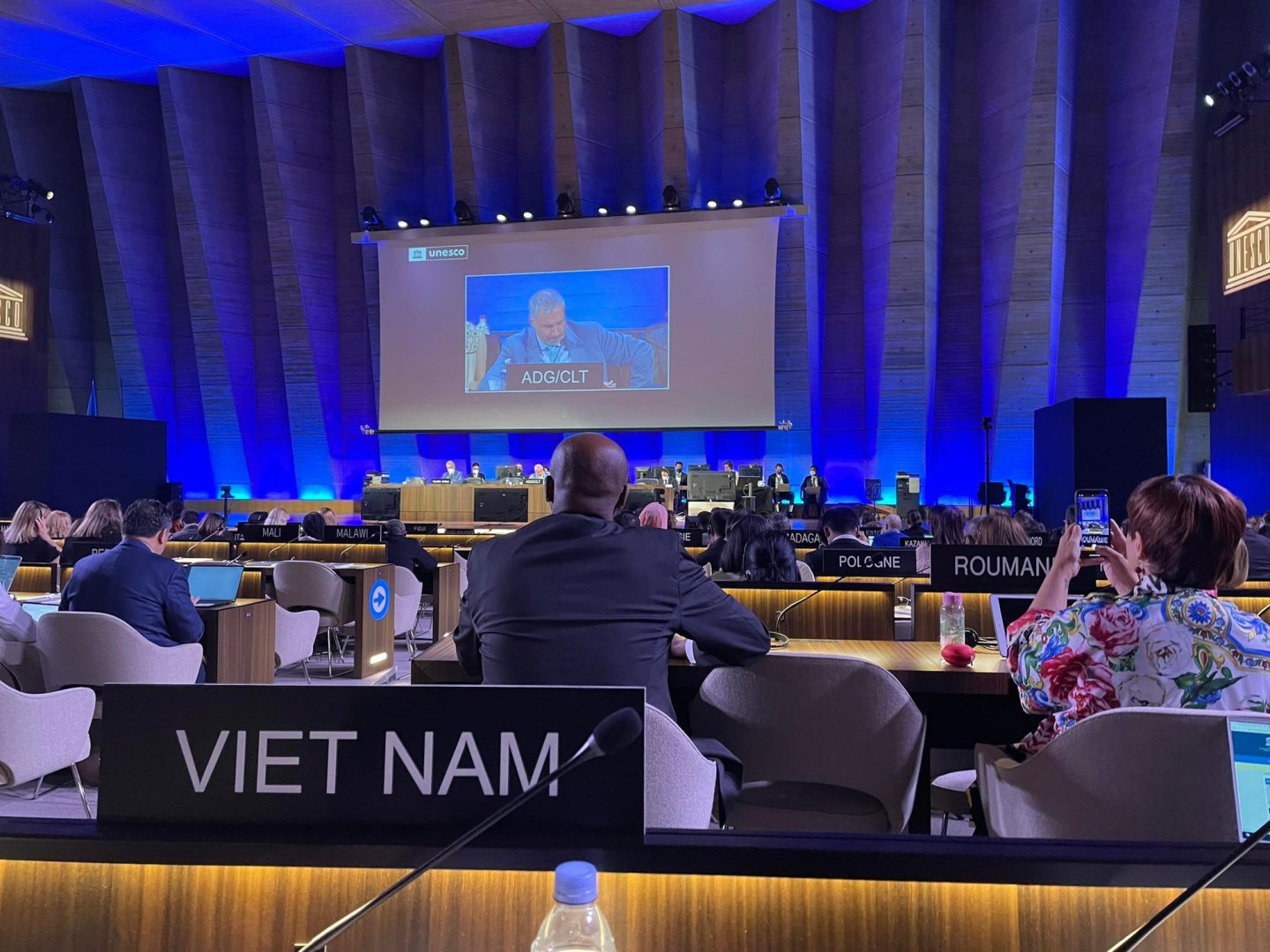
Le Vietnam continue d’affirmer son rôle et sa responsabilité en tant que membre d’organes des conventions internationales de l’UNESCO sur le patrimoine culturel. Photo: icd.gov.vn (Département de la coopération internationale)
Les sites du patrimoine mondial au Vietnam contribuent efficacement et activement au développement socio-économique durable, en créant des emplois, en favorisant le développement du tourisme, du commerce et de l’investissement, ainsi que la promotion de l’image nationale, de la culture, de l’histoire et des traditions du Vietnam auprès des amis internationaux.
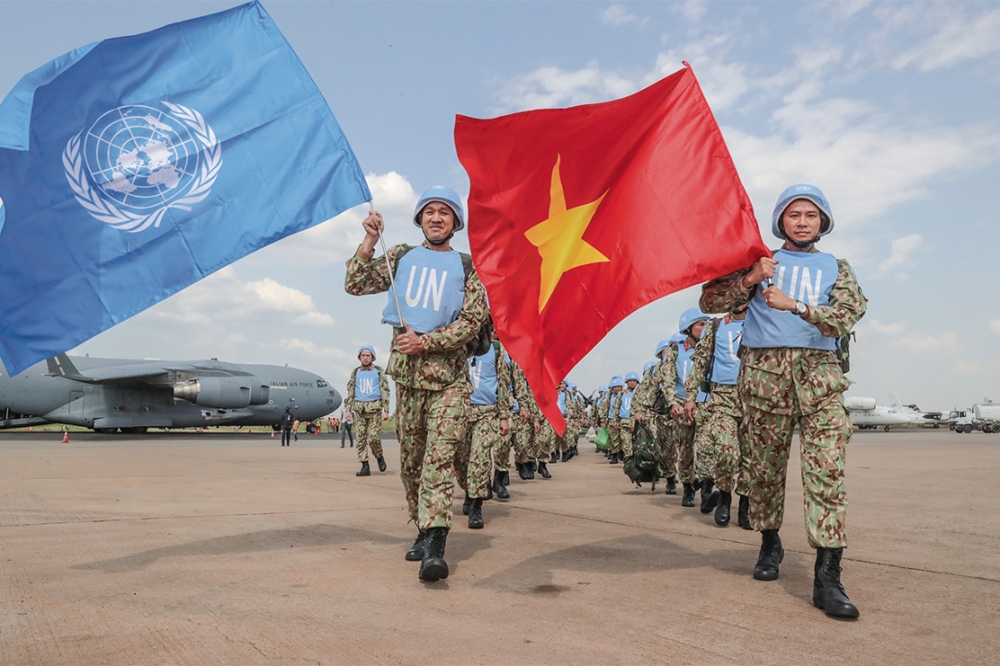
Dans le cadre de l’UNESCO en général et de la Convention pour la protection du patrimoine mondial, culturel et naturel en particulier, le Vietnam est un membre responsable et prestigieux, reconnu et hautement apprécié par la communauté internationale.
Le Vietnam est fier d’être un membre responsable des Nations Unies. Photo: VNA
Notamment, pendant la période 2013-2017, le Vietnam a été élu membre du Comité du patrimoine mondial, une agence composée de 21 pays représentant les pays membres de la Convention de 1972, pour promouvoir la conservation et les valeurs des patrimoines culturels et naturels mondiaux à l’échelle mondiale.
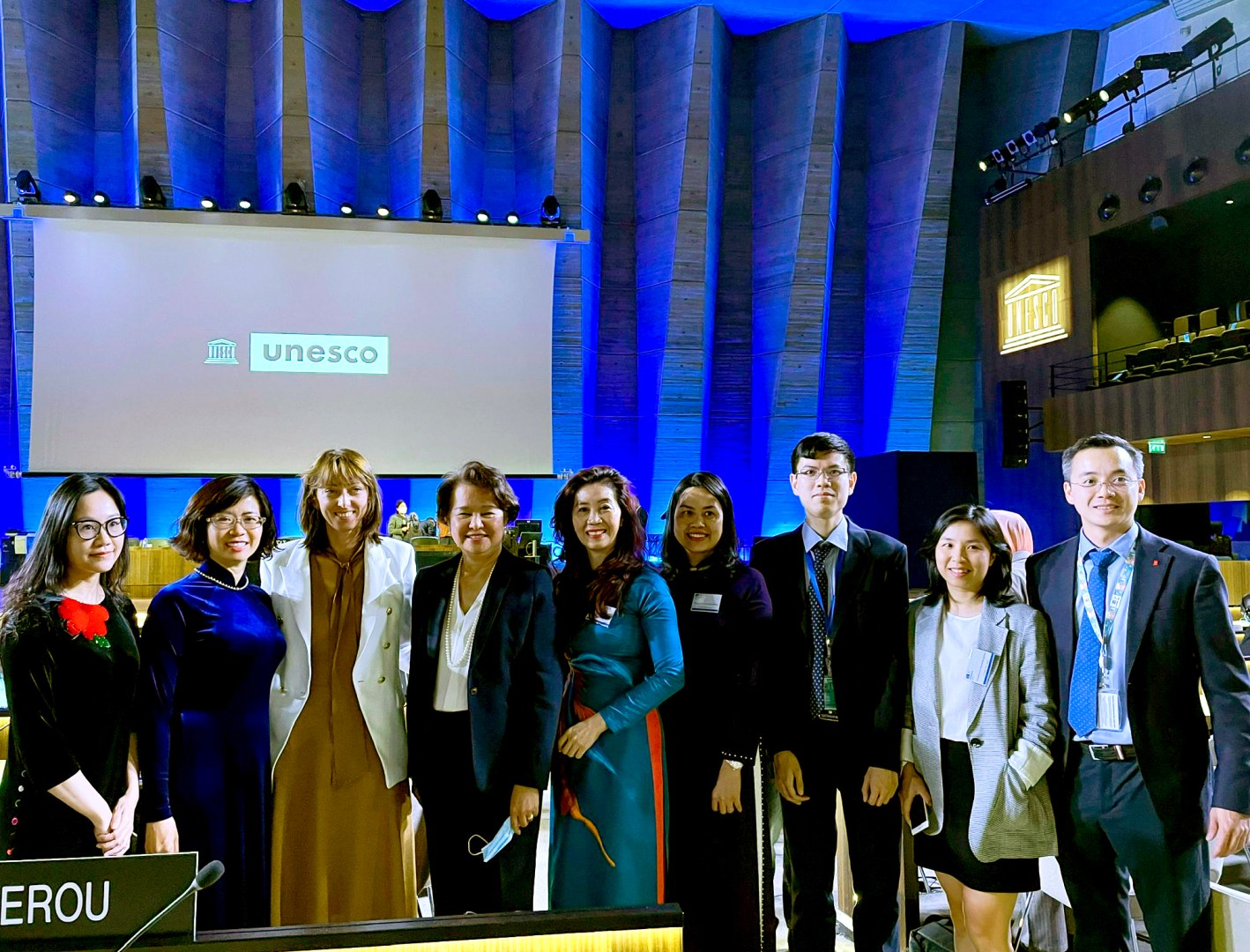
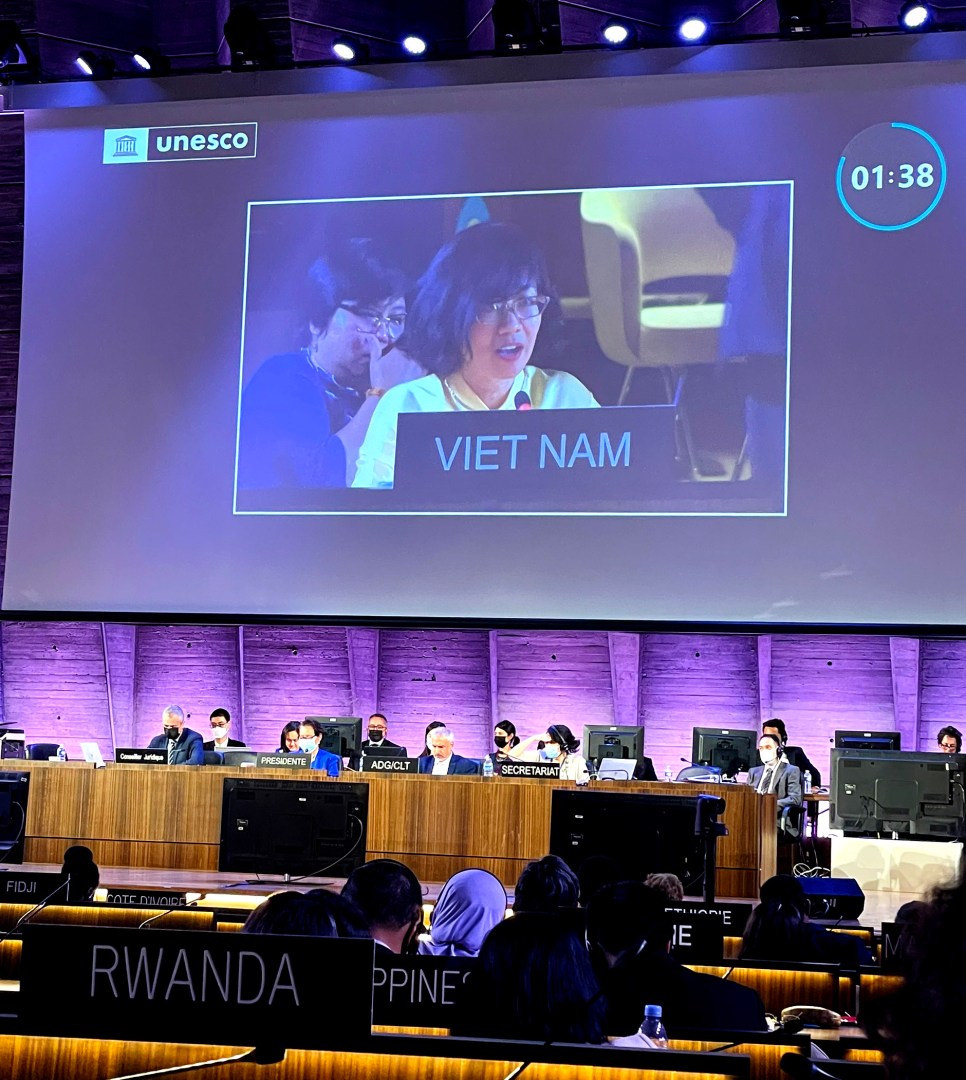
Récemment, dans le cadre de la 9e session de l’Assemblée générale des États parties à la Convention pour la sauvegarde du patrimoine culturel immatériel (Convention de 2003), le Vietnam a été élu au Comité intergouvernemental de la Convention de 2003 pour le mandat 2022-2026 avec 120 voix, le plus haut nombre de voix parmi les pays élus.
Des touristes visitent la Cité impériale de Thang Long. Photo : VNA
C’est la deuxième fois que le Vietnam assume cette responsabilité. Ceci est important à bien des égards, démontrant la position et le prestige croissants du pays sur la scène internationale, ainsi que la confiance de la communauté internationale pour ses capacités de contribuer et d’opérer dans les institutions multilatérales mondiales.
Les pays membres de la Convention de 2003 estiment que les expériences, la compréhension et les efforts du Vietnam en matière de préservation et de promotion du patrimoine culturel immatériel, tant dans les aspects théoriques, juridiques que pratiques, devraient inspirer de nombreux pays.
Le Vietnam peut contribuer davantage à la mise en œuvre de la Convention, à la protection urgente du patrimoine en péril, à la préservation du patrimoine qui représente l’humanité et à la promotion des exemples de patrimoines bien protégés dans le monde./.
L’ensemble de monuments de Huê reconnu par l’UNESCO comme patrimoine culturel mondial. Photo: VNA
Un rincón de la antigua ciudad de Hoi An visto desde arriba. Foto baoquangnam.vn
En la era de la globalización, preservar y promover los valores patrimoniales son tareas importantes que contribuyen a difundir la imagen de Vietnam y su pueblo, coadyuvando a la construcción de la marca nacional.
El patrimonio cultural demuestra cada vez más su papel como rico recurso para el crecimiento económico. Foto dangcongsan.vn
El 19 de octubre de 1978, Vietnam se adhirió a la Convención para la Protección del Patrimonio Mundial Cultural y Natural (Convención de 1972) de la Organización de las Naciones Unidas para la Educación, la Ciencia y la Cultura (UNESCO).
Durante los 35 años de implementación de la Convención de 1972 de la UNESCO, Vietnam ha logrado importantes avances en la protección y promoción de los valores de los patrimonios mundiales reconocidos por la comunidad internacional.
La práctica Then de las etnias Tay, Nung y Thai en Vietnam. Foto VNA
Desde que Vietnam se convirtió oficialmente en miembro de ese mecanismo, el sistema jurídico del país sobre el patrimonio cultural se ha ido acercando gradualmente al espíritu de la Convención; el aparato de gestión del patrimonio mundial desde el nivel central hasta el local se ha consolidado gradualmente, y los recursos para el trabajo de preservación de las herencias se han priorizado y movilizado al máximo.
La Ley de Patrimonio Cultural fue aprobada por la Asamblea Nacional de Vietnam el 29 de junio de 2001, con 74 artículos, divididos en siete capítulos que regulan las actividades de proteger y promover los valores del patrimonio cultural, los derechos y obligaciones de las organizaciones y los individuos en este campo.
Paisaje y arquitectura en la antigua capital de Hue. Foto VNA
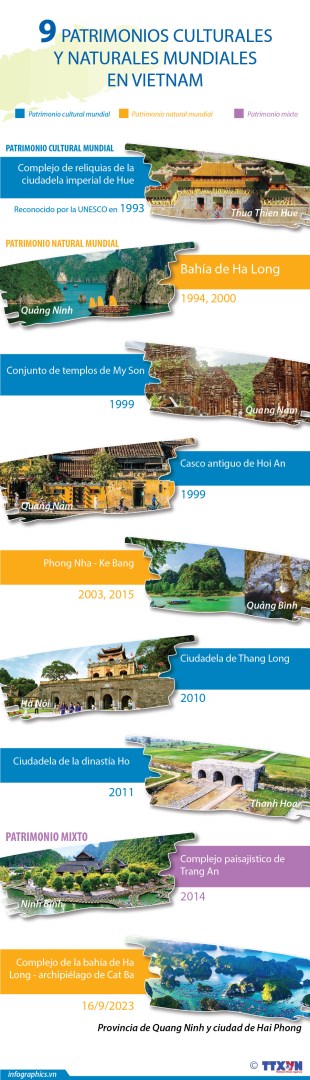
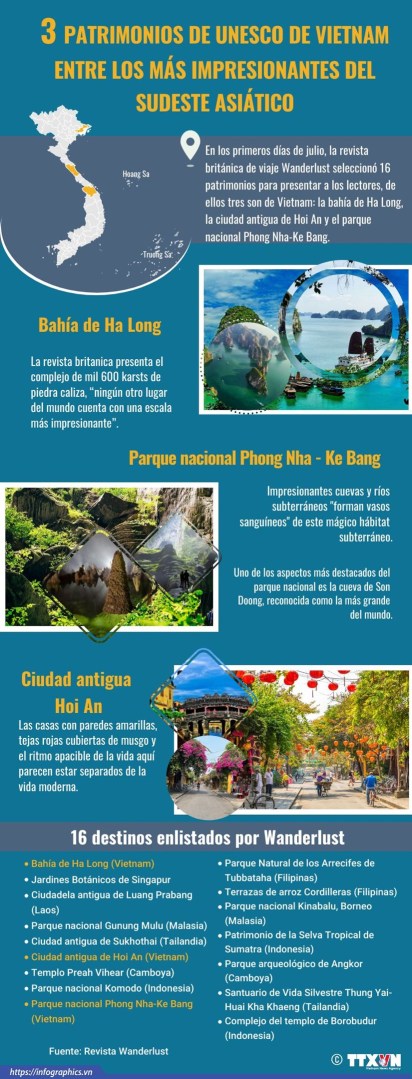
Vietnam cuenta actualmente con nueve sitios reconocidos por la UNESCO como patrimonio mundial, cinco de ellos constituyen herencias culturales, tres son naturales y uno es mixta. El Parque Nacional de Phong Nha-Ke Bang y la Bahía de Ha Long devienen patrimonios naturales. El complejo de monumentos de Hue, la ciudad antigua de Hoi An, el santuario de My Son, el área central de la ciudadela imperial de Thang Long y la ciudadela de la dinastía Ho son patrimonios culturales.
El complejo paisajístico escénico de Trang An es el único patrimonio mixto en Vietnam y el Sudeste Asiático, y uno de los pocos 38 reconocidos por la UNESCO. Trang An se convirtió en el primer patrimonio dual (patrimonio cultural y natural) en Vietnam y el Sudeste Asiático.
El complejo paisajístico escénico de Trang An. Foto: VNA
Gracias a una buena implementación de la conservación y promoción de los valores patrimoniales, en los últimos 30 años, Vietnam ha tenido cerca de 50 sitios honrados por la UNESCO, incluidos 28 culturales tangibles e intangibles reconocidos por la entidad como patrimonio cultural mundial; ocho como patrimonio mundial; tres como patrimonio documental mundial; 11 reservas mundiales de biosfera; y tres geoparques globales.
El Geoparque Global de Dak Nong. Foto VNA
Esto no se trata sólo del orgullo del pueblo vietnamita, sino también de una oportunidad para compartir con la comunidad internacional los valores culturales y espirituales del país indochino.
Vietnam participa efectivamente y continúa afirmando su papel y responsabilidad como miembro de organizaciones y comités de las convenciones internacionales de la UNESCO sobre patrimonio cultural. Foto icd.gov.vn (Departamento de Cooperación Internacional)
Los patrimonios mundiales en Vietnam han contribuido de manera efectiva y positiva al avance socioeconómico sostenible; creando empleos, contribuyendo al desarrollo del turismo, el comercio y el turismo, y promoviendo la imagen nacional, la cultura, la historia y las tradiciones del país entre amigos internacionales.
En el marco del mecanismo de la UNESCO, en general, y de la Convención de 1972, en particular, Vietnam es un miembro responsable y prestigioso, que siempre cumple bien y con calidad sus obligaciones, reconocido y altamente apreciado por la comunidad internacional.
Vietnam está orgulloso de ser un miembro responsable de las Naciones Unidas. Foto VNA
En particular, en el período 2013-2017, Vietnam fue elegido como miembro del Comité del Patrimonio Mundial, una agencia compuesta por 21 países que representan a los países miembros de la Convención de 1972 para promover la conservación y el desarrollo del patrimonio natural a escala global.
En el marco de la novena Asamblea General de los países miembros de la Convención para la Salvaguardia del Patrimonio Cultural Inmaterial (Convención de 2003), Vietnam fue elegido miembro del Comité Intergubernamental de la Convención de 2003 para el período 2022-2026 con 120 votos a favor, el más alto entre los países electos.
Los turistas visitan la Ciudadela de Thang Long. (Foto: VNA)
Los países miembros de la Convención de 2003 creen que la experiencia y los esfuerzos de Vietnam en la protección y promoción del patrimonio cultural inmaterial, tanto en los aspectos teóricos, legales como prácticos, son lecciones buenas para muchos países de la región y a nivel internacional.
Los países miembros de la Convención de 2003 creen que la experiencia y los esfuerzos de Vietnam en la protección y promoción del patrimonio cultural inmaterial, tanto en los aspectos teóricos, legales como prácticos, son lecciones buenas para muchos países de la región y a nivel internacional.
Vietnam puede contribuir más a la implementación de la Convención de manera efectiva y práctica, aportando a la protección urgente de patrimonios en riesgo de pérdida, en aras de preservar las herencias representativas de la humanidad y promover los modelos patrimoniales bien protegidos en todo el mundo./.
El complejo de monumentos de Hue reconocidos por la UNESCO como patrimonio cultural mundial. Foto VNA