Vietnam’s economic diplomacy in 2024 has asserted a leading role with remarkable breakthroughs, achieving key objectives and opening up a “grand path” full of hope for fast and sustainable development.
Prime Minister Pham Minh Chinh and Jensen Huang, NVIDIA President and CEO enjoy Hanoi street food on December 5, 2024. (Photo: VNA)
In the final days of the year, the impact of economic diplomacy has become even more evident through cooperation agreements with global tech giants. NVIDIA, a leading company in artificial intelligence (AI), has committed to establishing an AI research and development centre and an AI data centre in Vietnam. Meanwhile, Apple has announced plans to increase investment in its supply chain, adding another crucial piece to solidify Vietnam’s position on the global technology manufacturing map. These are vivid demonstrations of Vietnam’s “technology diplomacy” approach, opening doors for its economy to enter the era of global innovation.
Vietnam Semiconductor Industry Exhibition 2024, the first and largest of its kind in Vietnam, is held by the National Innovation Centre (NIC) under the Ministry of Planning and Investment (Photo: VNA)
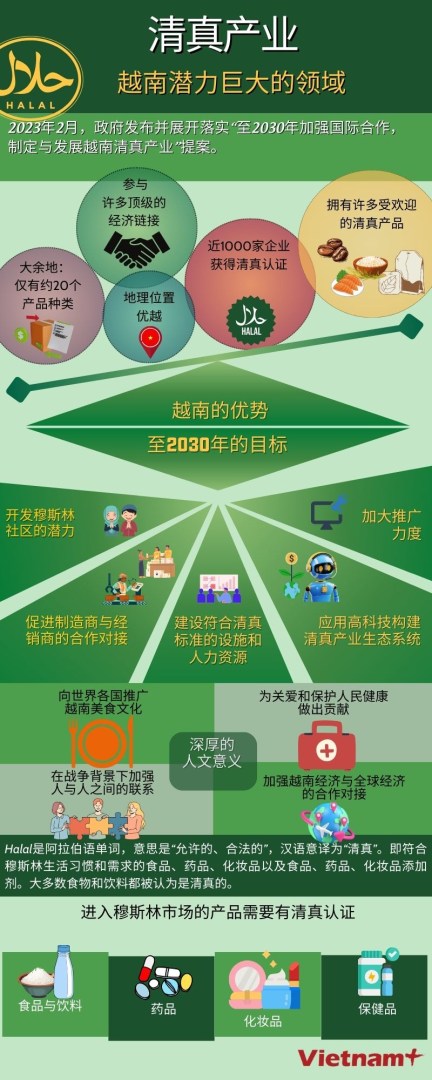
Economic diplomacy in Vietnam is focused not only on maintaining growth momentum but also on renewing drivers of growth, from traditional pillars such as exports and investment to new areas like the digital economy, green economy, and circular economy, as well as breakthrough sectors like high-tech, innovation, semiconductor, hydrogen, AI, and the Halal industry. Through nearly 60 diplomatic activities by the Party and State leaders and over 170 cooperation agreements throughout the year, Vietnam has connected with global partners, particularly unlocking new growth drivers from Latin America to the Middle East, Africa, and members of the Group of Seven (G7).
The working visit by To Lam, in his position as Party General Secretary and State President, to the US in September to attend the High-Level Week of the 79th session of the United Nations General Assembly, during which he meets with leaders of top global groups such as Apple, Meta, and Google lays a solid foundation for FDI attraction, technology transfer, and the development of innovative sectors (Photo: VNA)
A key highlight in 2024 was the working visit by To Lam, in his position as Party General Secretary and State President, to the US in September to attend the High-Level Week of the 79th session of the United Nations General Assembly. His meetings with leaders of top global groups such as Apple, Meta, and Google laid a solid foundation for foreign direct investment (FDI) attraction, technology transfer, and the development of innovative sectors such as AI, digital transformation, and the Internet of Things (IoT). These opportunities will promote sustainable growth for Vietnam’s economy but also lay the groundwork for the country to enter an era of comprehensive innovation and integration into global supply chains.
President Luong Cuong (L) holds talks with Peruvian President Dina Ercilia Boluarte Zegarra.
State President Luong Cuong holds talks with Chilean President Gabriel Boric.
The visit by State President Luong Cuong to Chile and Peru in November has helped enhance economic and trade relations, particularly within the framework of the Comprehensive and Progressive Agreement for Trans-Pacific Partnership (CPTPP), as well as in areas like information technology, digital transformation, and smart city building.
Prime Minister Pham Minh Chinh’s trip to Brazil has contributed to elevating the two countries’ relations to a strategic partnership (Photo: VNA)
Meanwhile, Prime Minister Pham Minh Chinh’s trip to Brazil has contributed to elevating the two countries’ relations to a strategic partnership, opening up broader cooperation opportunities. Brazil will serve as a gateway for Vietnam to access Latin American markets and the Southern Common Market (MERCOSUR), as Vietnam is negotiating a free trade agreement with this bloc.
Prime Minister Pham Minh Chinh (L) meets with Emir of Qatar Sheikh Tamim Bin Hamad Al ThaniPrime Minister Pham Minh Chinh witnesses the signing of a cooperation agreement between the Vietnam Oil and Gas Group and Saudi Aramco.Prime Minister Pham Minh Chinh holds talks with Vice President and Prime Minister of the UAE Sheikh Mohammed bin Rashid Al
Prime Minister Pham Minh Chinh’s visits to the United Arab Emirates (UAE), Qatar, and Saudi Arabia in October 2024 bring breakthroughs in cooperation on clean energy, green transition, and Halal industry development. (Photos: VNA)
Vietnam’s economic diplomacy has also left a bold mark in the Middle East. The Government leader’s visits to the United Arab Emirates (UAE), Qatar, and Saudi Arabia have brought breakthroughs in cooperation on clean energy, green transition, and Halal industry development. The signing of the Comprehensive Economic Partnership Agreement (CEPA) between Vietnam and the UAE is seen as a historic milestone, not only paving the way for Vietnam to enter the Middle Eastern and African markets but also serving as a solid stepping stone for bilateral strategic cooperation.
CEPA will promote the transfer of technical and managerial expertise, support human resources training, and facilitate investment in Halal certification centres in Vietnam.
Vietnam’s Ambassador to the UAE Nguyen Thanh Diep
According to Vietnam’s Ambassador to the UAE Nguyen Thanh Diep, the CEPA will promote the transfer of technical and managerial expertise, support human resources training, and facilitate investment in Halal certification centres in Vietnam. These steps not only contribute to building a domestic Halal ecosystem but also help Vietnam integrate more deeply into global supply chains, affirming its new position on the international trade map.
(Source: VNA)
Regarding the Halal industry, Malaysia has become an ideal strategic partner to support Vietnam in developing this sector, following the official visit to the country by Party General Secretary To Lam on November 21 – 23, during which the two countries upgraded their relations to a comprehensive strategic partnership.
Party General Secretary To Lam (left, second row) and Malaysian Prime Minister Anwar Ibrahim witness the exchange of cooperation documents between the two countries during the former’s visit to Malaysia in November 2024. (Photo: VNA)
Jamilah Haji Hassan, Senior Director of ASEAN Economic Integration at Malaysia’s Ministry of International Trade and Industry, stated that Malaysia is ready to assist Vietnamese businesses in improving production processes and obtaining Halal certificates, helping Vietnam penetrate the Muslim market. On the last days of this year, around 1,000 Vietnamese companies were awarded Halal certificates, with over 3,000 products showcased at the Halal Melaka Festival 2024 in Malaysia, paving the way for connections between Vietnamese businesses and international partners.
Hal Hill, an emeritus professor at the Crawford School of Public Policy at the Australian National University, talks to Vietnam News Agency reporter.
The upgrade of ties with Australia, France, and Malaysia to comprehensive strategic partnerships in 2024 has enabled Vietnam to expand cooperation in strategic fields such as renewable energy, innovation, and climate change response. In an interview with the Vietnam News Agency’s correspondent in Sydney, Hal Hill, an emeritus professor at the Crawford School of Public Policy at the Australian National University, emphasised that these partnerships will help Vietnam remain resilient in the face of global fluctuations while effectively implementing its economic diversification strategy.
Professor Chu Hoang Long, also from the Australian National University, affirmed that these developments present an opportunity for Vietnam to attract additional key investments in renewable energy, foster innovation, and strengthen its position on the global economic map.
For France, the upgrade of bilateral relations has created momentum to drive cooperation in such areas as nuclear technology, energy transition, urban transportation, and railways. In the photo: A delegation from the Vietnamese Embassy in France led by Ambassador Dinh Toan Thang works with HDF Energy Company on the prospects of Vietnam-France cooperation in the field of new energy. (Photo: VNA)
For France, the upgrade of bilateral relations has created momentum to drive cooperation in such areas as nuclear technology, energy transition, urban transportation, and railways. In addition, both sides are also looking to expand collaboration in satellite technology and the digital economy – sectors with significant potential to support Vietnam in modernising its infrastructure and achieving sustainable development.
With Malaysia, Collins Chong Yew Keat, an expert from the University of Malaya, said that the two countries will further strengthen cooperation in key industries that are crucial to addressing regional and global geopolitical and geoeconomic issues, including semiconductor, green energy, and the digital economy.
Collins Chong Yew Keat, an expert from the University of Malaya, in an interview with Vietnam News Agency reporter (Photo: VNA)
Modern production line of Korean-invested Hana Micron Vina Co., Ltd. in Van Trung Industrial Park (Bac Giang) (Photo: VNA)
Vietnam is also continuing to reinforce and elevate its comprehensive strategic partnerships with key partners such as China, Russia, India, the Republic Korea, the US, and Japan, while advancing trade links with the European Union (EU). These efforts not only affirm its position on the global stage but also generate significant opportunities to deepen collaboration in various strategic sectors.
(Source: VNA)
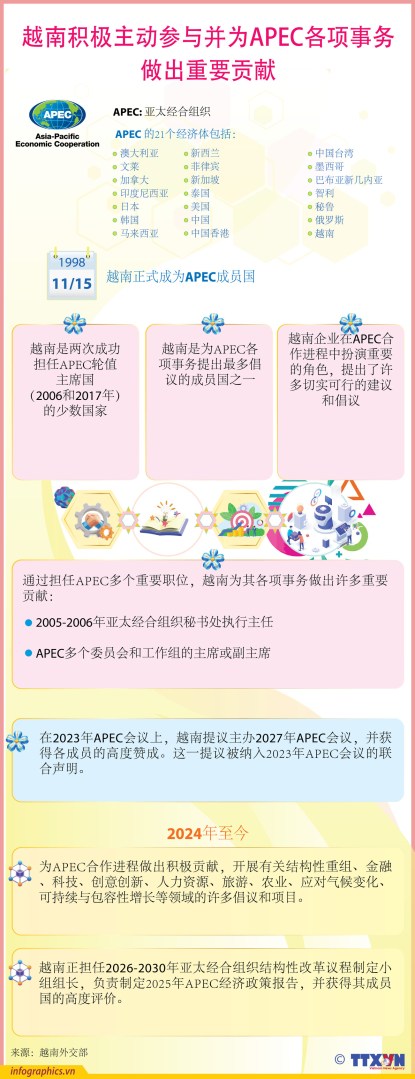
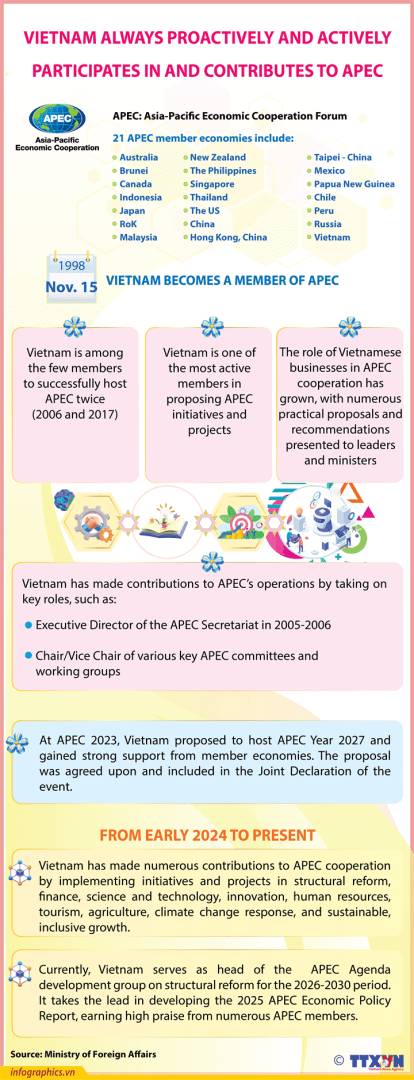
The enhanced multilateral economic cooperation is paving the way for Vietnam to firmly establish its position in the global economy. In 2024, the country has made significant strides in deepening its strategic relationships, especially at major multilateral forums such as the UN, the Asia-Pacific Economic Cooperation (APEC), the Association of Southeast Asian Nations (ASEAN), the G7, and the Group of Twenty (G20). Vietnam’s proposals and initiatives on digital transformation, green transition, global governance, and sustainable supply chains have helped shape the regional and global economic orders in a more open and sustainable direction.
A “grand path” is opening up for the country to promote “infrastructure diplomacy”. In the photo: Nhon – Hanoi station metro line (Photo: VNA)
Through multilateral activities, Vietnam’s image as a dynamic economy, ready to cooperate in and contribute to global issues, has been reinforced. As a result, a “grand path” is opening up for the country to promote “infrastructure diplomacy”, particularly in high-speed rail, seaport, and airport projects to attract preferential loans from strategic partners such as Japan, the RoK, and international financial institutions.
Sustainable links in strategic sectors continue to promise prospects for economic diplomacy to make strong breakthroughs in the coming year, particularly in areas such as aerospace, marine space, and emerging sectors like the sharing economy and the night economy. The grand path has been paved for Vietnam to prepare for further strategic advances in the era of the nation’s rise./.
Sustainable links in strategic sectors continue to promise prospects for economic diplomacy to make strong breakthroughs in the coming year (Photo: VNA)
Vinamilk es una de las marcas nacionales más valiosas de Vietnam en 2024. En la imagen: la granja verde de Vinamilk. Fuente: VNA
Siendo uno de los países con el crecimiento más rápido en valor de Marca Nacional a nivel mundial, Vietnam consolida cada vez más su posición en el mapa económico global. Este éxito refleja no solo los esfuerzos del Gobierno y la comunidad empresarial, sino también el reconocimiento de organizaciones internacionales de prestigio.
Las 10 marcas más valiosas de Vietnam en 2024
Las 10 marcas más valiosas de Vietnam en 2024 según el informe de Brand Finance, empresa de consultoría de valoración de marcas global. Fuente: Brand Finance.
El 9 de abril de 2024, en Hanoi, el primer ministro Pham Minh Chinh visitó y sostuvo una reunión de trabajo con el Grupo de Industria Militar y Telecomunicaciones (Viettel) sobre sus actividades de investigación y producción en la industria de alta tecnología. Foto: VNA.
El complejo tecnológico de clasificación inteligente Viettel Post se encuentra en el Parque Industrial de Quang Minh, en las afueras de Hanoi. Este es el primer complejo tecnológico de clasificación inteligente de Vietnam. Foto: VNA
En Vietnam, antes de 1986, el concepto de “marca” era prácticamente inexistente para la comunidad empresarial. En los primeros años de la reforma económica, las marcas no recibían mucha atención, ya que las empresas se centraban principalmente en el mercado interno y apenas participaban en comercio y exportación a otros países.
Desde 1995, junto con el proceso de renovación e integración económica global, el concepto de “marca nacional” comenzó a ser discutido y aplicado ampliamente en Vietnam, inicialmente en el comercio y la exportación, para luego expandirse a sectores como la cultura, el turismo, los medios de comunicación y la tecnología.
Más de mil personas participaron en la carrera “Orgullosos de los productos vietnamitas” el 10 de diciembre de 2023, en el área peatonal del Lago Hoan Kiem, Hanoi. Foto: VNA
La presentación del libro “Marca Vietnam – Momento Dorado” del autor Tran Tue Tri, realizada en Hanoi el 17 de abril de 2023. Foto: VNA
En 2003, Vietnam lanzó el “Programa de Marca Nacional” según la Decisión Nº 253/2003/QĐ-TTg del Primer Ministro que aprobó el proyecto para construir y desarrollar la Marca Nacional hasta 2010. Este programa fue una iniciativa única y de largo plazo del Gobierno, enfocada en valores fundamentales: “Calidad – Innovación, Creatividad – Capacidad Pionera”. Su objetivo es promover la imagen del país y construir una marca nacional a través de sus productos.
La línea de producción de leche de frutos secos de Vinamilk, moderna y destinada a la exportación, cumple con los estándares de varios países como Singapur, Corea del Sur, China, entre otros. Fuente: VNA
La Corporación Nacional de Correos y Telecomunicaciones inauguró el Centro de Datos IDC Hoa Lac, Hanoi, el 6 de diciembre de 2024. Fuente: VNPT Instalación de infraestructura y estaciones de transmisión VinaPhone 5G en todo el país. Foto: VNA
En 2008, el Primer Ministro declaró el 20 de abril de cada año como el Día de la Marca Nacional de Vietnam para honrar y promocionar las marcas y la imagen del país. El número de empresas galardonadas con el Premio de Marca Nacional ha aumentado constantemente, pasando de 30 compañías en 2008 a 190 en 2024, con 359 productos que cumplen los requisitos establecidos.
El primer ministro Pham Minh Chinh asiste a la novena ceremonia de anuncio de los productos que alcanzaron la Marca Nacional de Vietnam en Hanoi, el 4 de noviembre de 2024. Foto: VNA
Durante más de 20 años, el Programa de Marca Nacional ha contribuido significativamente a apoyar a las empresas en la construcción y promoción de su imagen, fortaleciendo las actividades de producción, negocios y exportación. Esto ha afirmado la posición de Vietnam como un país con bienes y servicios de alta calidad, con una fuerte competitividad en el mercado internacional.
Las empresas con productos que lograron la Marca Nacional no solo son modelos de calidad, sino que también están a la vanguardia en la adopción de modelos de desarrollo verde y sostenible. En la imagen: línea de producción de productos biológicos completamente biodegradables en una planta en la provincia de Hai Duong. Foto: VNA
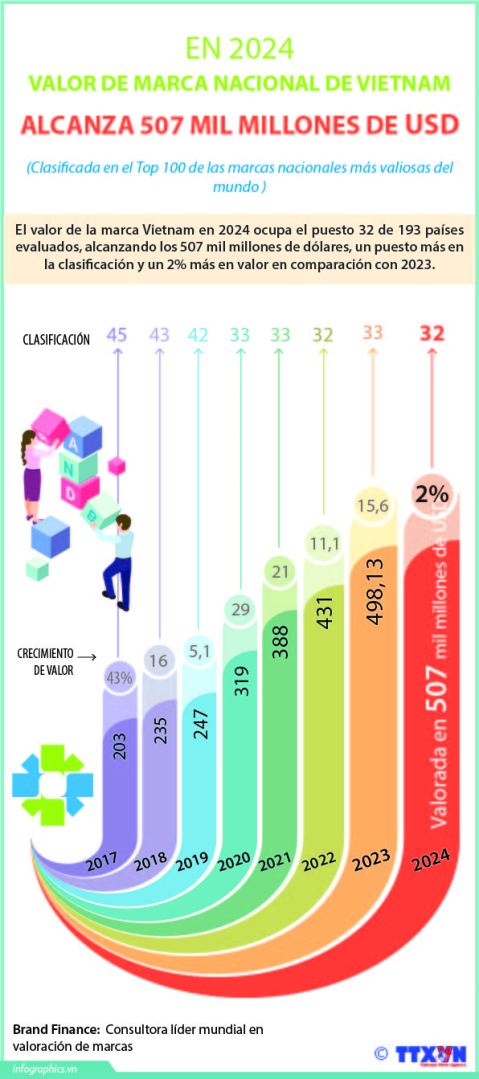
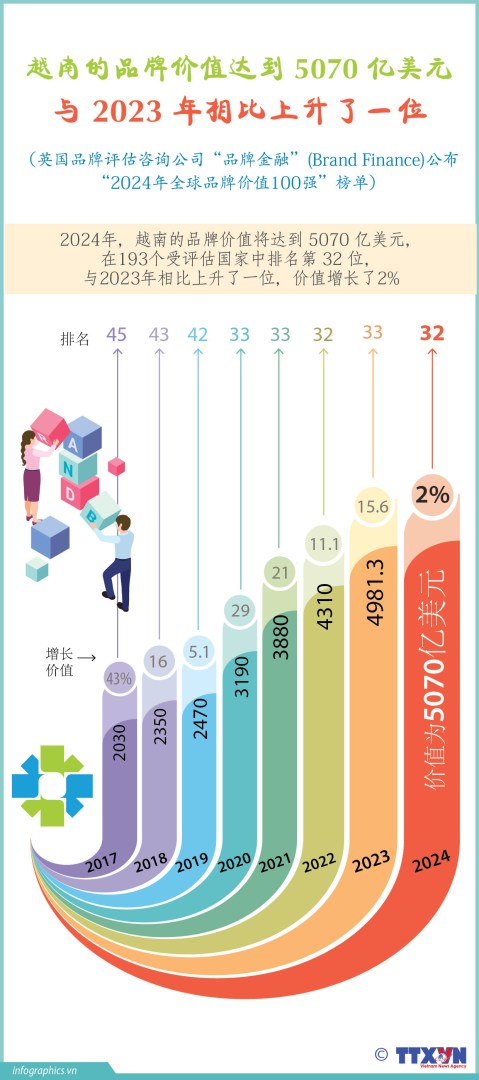
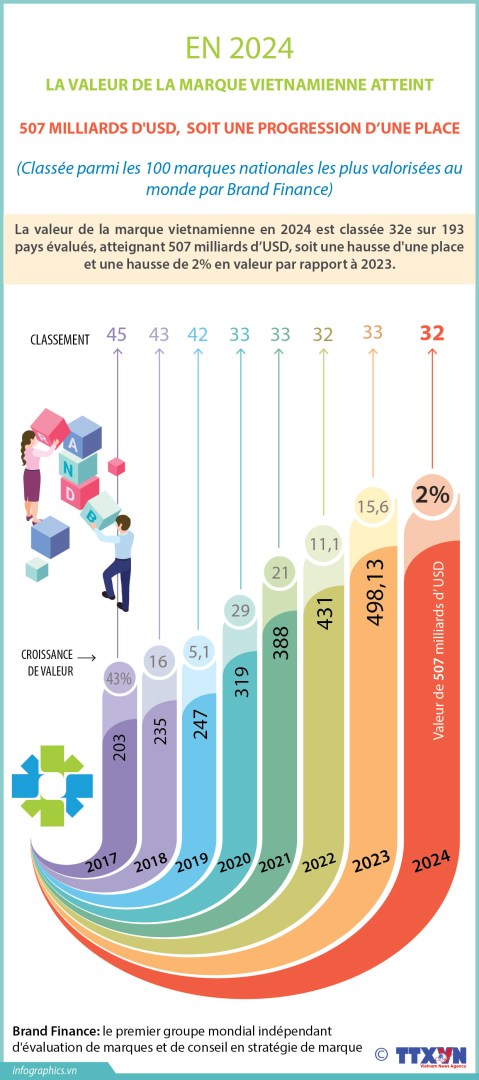
La Marca Nacional de Vietnam ha logrado avances extraordinarios, dejando una fuerte huella en el mapa global de marcas. En 2023, Brand Finance (la principal organización mundial en valoración de marcas) calificó la Marca Nacional de Vietnam en 498,13 mil millones de dólares, un aumento del 15,6 % en comparación con 2022, ubicando al país en la posición 33 entre las 121 marcas nacionales más fuertes del mundo. Especialmente, en el período 2019-2023, el valor de ese indicador de la nación indochina creció un 102 %, convirtiéndose en una de las economías de crecimiento más rápido en el mundo.
Soluciones innovadoras
Para seguir elevando la Marca Nacional, Vietnam necesita estrategias innovadoras que aprovechen al máximo su potencial y sus valores esenciales.
Aunque ha logrado resultados impresionantes, el enfrenta desafíos para mantenerla y desarrollarla. Algunos problemas incluyen marcas que no están vinculadas a productos de exportación de alta calidad, artículos que se exportan en forma cruda o sin marca propia, y una creciente competencia regional e internacional a medida que las grandes economías globales también se enfocan en construir sus marcas.
Visitantes internacionales en el stand de Vietnam en la Feria Internacional de Argel (FIA) 2023. Foto: VNA
En el evento del Día del Pho Vietnamita (sopa de fideos con carne de res o pollo) en Sudáfrica 2023, que se celebró el 9 de diciembre de 2023 en Pretoria (Sudáfrica), además de este plato, que fue disfrutado y elogiado por muchos, el sombrero cónico vietnamita también recibió la atención y el cariño de los amigos internacionales. Foto: VNA
Para materializar el objetivo de llevar la Marca Nacional a un nuevo nivel, se requieren soluciones innovadoras que pongan a las empresas en el centro de la estrategia, además de una coordinación integral entre las agencias gubernamentales y el apoyo de la sociedad.
Uno de los factores clave para desarrollar la Marca Nacional de Vietnam es aumentar la conciencia de las empresas y la sociedad sobre la importancia del tema.
Visitantes en el programa “Identificación de productos vietnamitas” realizado en Hanoi el 9 de diciembre de 2023. Foto: VNA
Según Hoang Minh Chien, subdirector del Departamento de Promoción Comercial, del Ministerio de Industria y Comercio, las marcas no solo agregan valor a los productos, sino que también son herramientas para posicionar a las empresas en el mercado internacional. Por ello, es fundamental organizar programas de comunicación, talleres especializados y campañas de concienciación.
Además, se debería integrar la educación sobre marcas en las universidades, especialmente en las áreas de economía y administración de empresas, para que las nuevas generaciones estén preparadas para participar en este proceso.
Dado que las empresas son el núcleo de la estrategia de desarrollo de la Marca Nacional, es crucial apoyarlas en la construcción y gestión de sus identidades para fortalecer su competitividad.
FPT es una de las 10 marcas más fuertes de Vietnam en 2024 según el informe de Brand Finance. En la imagen: estudiantes de las escuelas primaria y secundaria de FPT Da Nang experimentando el Día de Ciencia y Tecnología OPEN STEM DAY 2024. Foto: VNA
Hoang Minh Chien enfatizó la necesidad de brindar apoyo continuo a las empresas, especialmente a las pequeñas y medianas, mediante programas de capacitación especializada, apoyo financiero y técnico. También se debe orientar a las compañías hacia la aplicación de tecnología moderna en la gestión de marcas y la mejora de la calidad de los productos, para construir marcas sólidas y competitivas a nivel global.
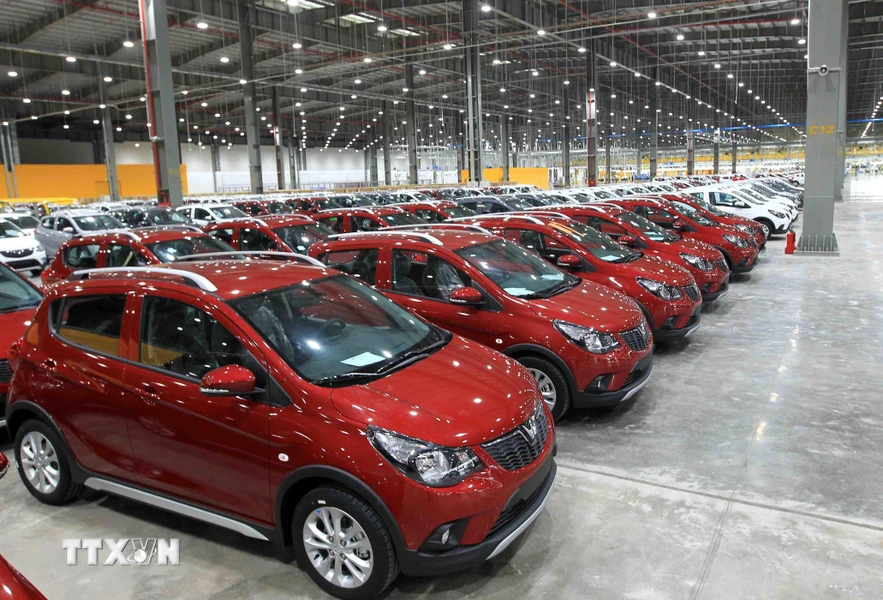
Una fábrica de automóviles de VinFast. Fuente: VNA
En el contexto del cambio climático y el aumento de las tendencias de consumo sostenible, construir marcas vinculadas a valores ecológicos es esencial para que Vietnam eleve su posición.
El viceministro de Industria y Comercio, Nguyen Sinh Nhat Tan, afirmó que la Marca Nacional debe definirse no solo por la calidad, sino también por criterios de protección ambiental y desarrollo sostenible. Por lo tanto, las empresas deben adoptar modelos de economía circular, utilizar materiales reciclados y minimizar los desechos.
El viceministro de Industria y Comercio, Nguyen Sinh Nhat Tan
Según el Ministerio de Industria y Comercio, el consumo de productos ecológicos en el país creció un promedio del 15 % anual en el período 2021-2023. El 72 % de los consumidores vietnamitas están dispuestos a pagar más por productos ecológicos, lo que refleja una mayor conciencia e interés en la protección ambiental. Esto representa una gran oportunidad para que las empresas aumenten el valor de sus productos y mejoren la imagen de la Marca Nacional en el mercado internacional.
Los productos ecológicos son cada vez más elegidos por los consumidores. Foto: VNA
Alex Haigh, director ejecutivo de Brand Finance para Asia-Pacífico, destacó que una Marca Nacional sólida no solo proviene de la calidad de los productos, sino también de los valores que representa.
Para transmitir esos valores a los consumidores, las empresas deben aprovechar al máximo las plataformas digitales, como las redes sociales y las plataformas electrónicas, para promocionar sus productos. Además, participar activamente en ferias internacionales y programas de promoción comercial es una forma efectiva de que los productos certificados bajo la Marca Nacional de Vietnam lleguen al mercado global y afiancen su valor.
Venta en vivo en el mercado nocturno de Tua Chau, en la provincia de Dien Bien. Foto: VNA
Minh Chien subrayó que proteger las marcas es una condición imprescindible para el desarrollo sostenible. Las empresas deben registrar sus derechos de propiedad intelectual no solo en el mercado interno, sino también en los mercados internacionales, especialmente en los principales países socios comerciales. Las agencias gubernamentales también deben fortalecer las capacidades legales para resolver disputas relacionadas con marcas y establecer un sistema robusto de protección de la propiedad intelectual.
Con soluciones innovadoras y los esfuerzos de la comunidad empresarial, Vietnam puede alcanzar su objetivo de convertirse en una de las marcas nacionales más fuertes de la región en el futuro cercano. Esto contribuirá a elevar la posición del país y a generar oportunidades de desarrollo económico, cultural y social sostenible./.
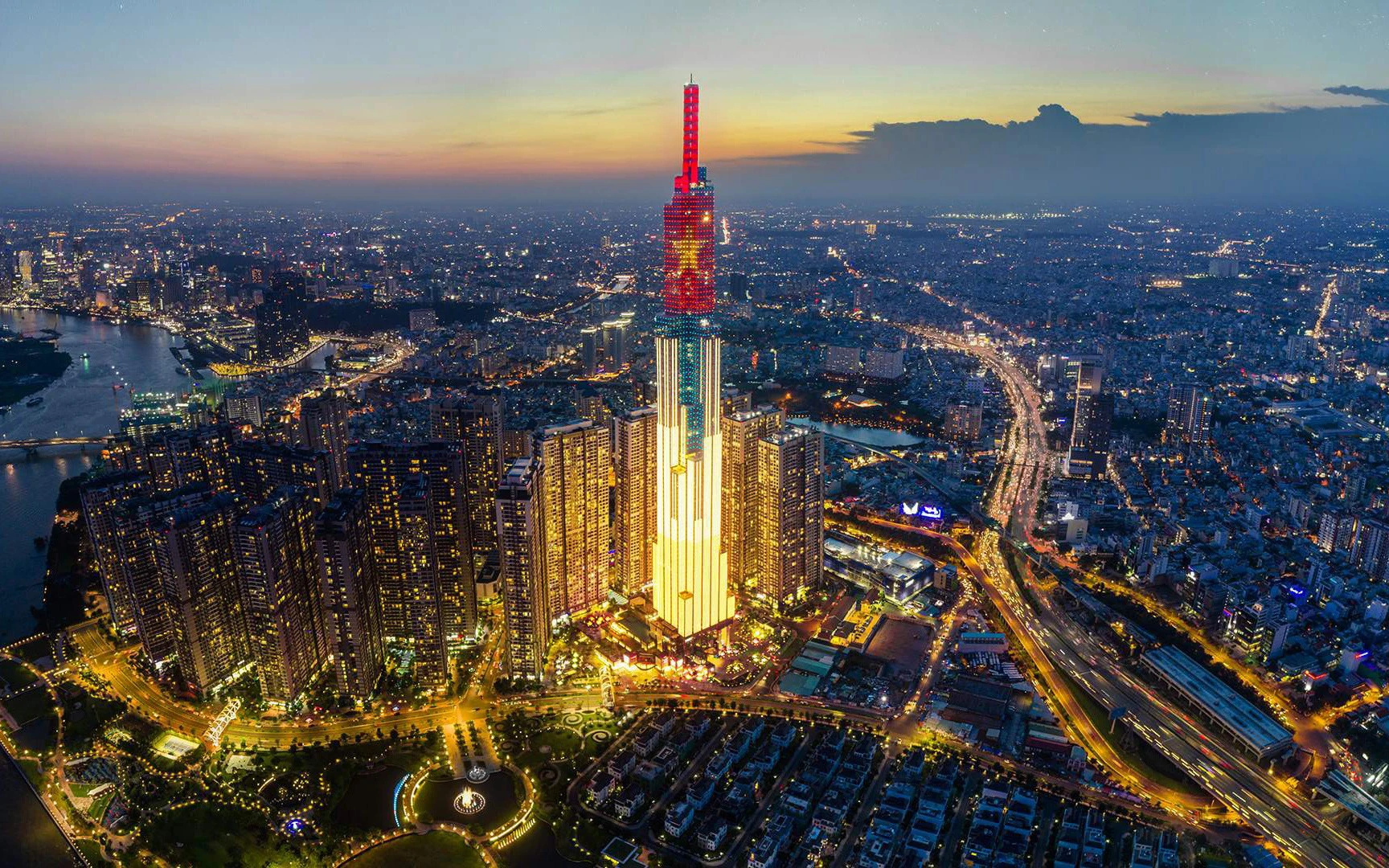
Como uno de los países con el crecimiento más rápido del valor de la Marca Nacional en el mundo, Vietnam sigue consolidando su posición en el mapa económico global. Foto: VNA
A green farm of Vinamilk, one of Vietnam’s most valuable national brands in 2024. (Photo: VNA)
As one of the countries with the fastest-growing national brands globally, Vietnam is cementing its position on the global economic map. This remarkable achievement reflects the relentless efforts of the Government and business community, as well as recognition from prestigious international organisations.
100 most valuable Vietnamese brands in 2024
Some of the 100 most valuable Vietnamese brands in 2024 listed by Brand Finance – the world’s leading brand valuation consulting company. (Photo: Brand Finance)
Prime Minister Pham Minh Chinh holds a working session with the military-run telecommunications service provider Viettel in Hanoi on April 9 to look into the group’s research and production activities (Photo: VNA)
Viettel Post’s smart sorting technology complex is located in the Quang Minh Industrial Park in Hanoi’s Me Linh district. This is the first smart sorting technology complex in Vietnam. (Photo: VNA)
Before 1986, the concept of “branding” was virtually nonexistent among Vietnamese businesses. During the early years of the Doi moi (renewal) process, branding was largely overlooked, as enterprises focused primarily on the domestic market, with minimal involvement in international trade or export activities.
From 1995 onwards, as Vietnam embraced economic reforms and international integration, the concept of “national brand” began to take hold. Initially limited to trade and import-export sectors, the concept gradually expanded to include culture, tourism, media, and technology.
More than 1,000 people participate in the “Pride of Vietnamese Products” race on December 10, 2023, on the pedestrian street around Hoan Kiem Lake in Hanoi. (Photo: VNA)
The launching ceremony of the book “Vietnamese Brands – Golden Moment” by author Tran Tue Tri in Hanoi on April 17, 2023. (Photo: VNA)
The Vietnam Value Programme, a distinctive and long-term trade promotion initiative, was launched under the Prime Minister’s Decision No. 253/2003/QD-TTg, issued on November 25, 2003. Focused on three core values – quality, innovation, and pioneering capacity – the programme aims to showcase Vietnam’s image and build a strong national brand through high-quality products,
The modern nut milk production line of Vinamilk meets the standards of many countries such as Singapore, the Republic of Korea and China (Photo: VNA)
Vietnam Posts and Telecommunications Group launches the IDC Hoa Lac Data Centre in Hanoi on December 6, 2024 (Photo: VNPT)Workers install VinaPhone 5G infrastructure and base stations nationwide. (Photo: VNA)
In 2008, April 20 was designated as “Vietnam Brand Day,” an annual event to honour and promote the country’s brands. The number of businesses receiving the Vietnam Value title has grown significantly, from 30 in 2008 to 190 in 2024, representing 359 products that embody Vietnam’s national brand.
Prime Minister Pham Minh Chinh attends the National Brand Award 2024 in Hanoi on November 4 (Photo: VNA)
Over the past 20 years, the Vietnam Value Programme has played a pivotal role in helping enterprises build and promote their brands, boosting production, business growth, and exports. These efforts have established Vietnam’s reputation as a nation producing high-quality goods and services with strong competitive edge in international markets.
A production line of completely biodegradable biological products at a factory in Hai Duong province. Enterprises with products earning national brand titles are not only models of quality standards but also pioneers in applying green and sustainable development models.(Photo: VNA)
Vietnam’s national brand has achieved remarkable heights, leaving an indelible mark on the global branding landscape. In 2023, Brand Finance, the world’s leading independent brand valuation consultant, valued Vietnam’s national brand at 498.13 billion USD, a 15.6% increase from 2022. This ranking placed Vietnam 33rd among the world’s 121 strongest national brands. Between 2019 and 2023, the value of Vietnam’s national brand grew by 102%, making it one of the fastest-growing in the world.
Breakthrough solutions
To further elevate Vietnam’s national brand, the country must implement groundbreaking strategies while maximizing its core potential and values.
Despite its impressive achievements, Vietnam faces challenges in sustaining and developing its national brand. These include a lack of linkages between certain brands and high-quality export products, reliance on raw or unbranded exports, and increasing competition from neighbouring and global economies prioritising brand development.
Foreign visitors at the Vietnamese booth at the Algiers International Fair (FIA) 2023 (Photo: VNA)
Besides pho (noodle soup), the Vietnamese conical hat also attract the interest of South African and international friends at the Vietnamese Pho Day in South Africa, taking place in Pretoria capital of South Africa on December 9, 2023. (Photo: VNA)
To take Vietnam’s national brand to new heights, breakthrough solutions are needed. These solutions must centre on enterprises while ensuring concerted collaboration among governmental agencies and support from society.
A crucial step in advancing Vietnam’s national brand is raising awareness among businesses and society about the significance of branding.
Visitors to the Vietnamese Goods Identification programme held in Hanoi on December 9, 2023 (Photo: VNA)
According to Hoang Minh Chien, Deputy Director of the Vietnam Trade Promotion Agency (Vietrade) under the Ministry of Industry and Trade (MoIT), branding not only adds value to products but also serves as a strategic tool for businesses to position themselves in the global market.
Organising communication campaigns, specialised seminars, and awareness-raising initiatives is therefore vital. Additionally, integrating branding education into university curricula, particularly in economics and business administration, can lay a solid foundation for future generations to contribute to national brand development .
As enterprises are at the centre of Vietnam’s national brand development strategy, supporting businesses in brand building and management is essential for strengthening their internal capabilities.
Students from FPT School take part in OPEN STEAM DAY 2024, the largest science and technology festival of the year. FPT is one of the top 10 strongest brands in Vietnam in 2024, according to Brand Finance. (Photo: VNA)
Chien emphasised the importance of ongoing support for small and medium-sized enterprises (SMEs) through specialised training programmes, financial assistance, and technical support. He also said that encouraging the adoption of modern technologies for brand management and improving product quality will empower Vietnamese businesses to establish strong, globally competitive brands.
A series of photos of VinFast’s automobile manufacturing factory(Photo: VNA)
In the context of climate change and the increasing trend of sustainable consumption, building the manufacture of products aligned with green values is critical to enhancing Vietnam’s national brand.
Vietnam’s national brand must be defined by quality, and its commitment to environmental protection and sustainable development. Thus, businesses are encouraged to adopt circular economic models, use recycled materials, and minimise waste.
Deputy Minister of Industry and Trade Nguyen Sinh Nhat Tan
According to the MoIT, demand for green products in Vietnam grew by an average of 15% annually from 2021 to 2023. Furthermore, 72% of Vietnamese consumers are willing to pay more for eco-friendly products, signaling an opportunity for enterprises to enhance product value while improving Vietnam’s global brand image.
Environmentally friendly products are increasingly popular among consumers. (Photo: VNA)
Alex Haigh, Managing Director of Brand Finance Asia-Pacific, emphasised that a strong national brand is defined not only by product quality but also by the values it represents. To effectively promote these values, businesses should fully utilise digital platforms such as social media and e-commerce for product promotion.
Participation in international trade fairs and trade promotion programmes provides another venue to introduce Vietnam’s national brand-certified products to global markets, affirming their values and positioning.
Selling goods through live streaming at the Tua Chua night market in Dien Bien province (Photo: VNA)
Chien stressed that protecting intellectual property is a prerequisite for sustainable development. Businesses must register their intellectual property rights both domestically and internationally, particularly in major trading partner countries, he said. Governmental agencies should also strengthen legal frameworks to address brand disputes and enhance the intellectual property protection system.
With innovative solutions and the concerted efforts of the business community, Vietnam is poised to achieve its goal of becoming one of the region’s strongest national brands. This advancement will elevate the country’s standing while fostering sustainable economic, cultural, and social development./.
As one of the countries with the fastest growing national brand value in the world, Vietnam is increasingly asserting its position in the global economy. (Photo: VNA)
Vinamilk est l’une des marques nationales les plus valorisées du Vietnam en 2024. Sur la photo : la ferme verte de Vinamilk. Photo : VNA
Avec l’un des taux de croissance les plus élevés au monde, la valeur de la marque nationale du Vietnam a connu une ascension spectaculaire ces dernières années.
Les 10 marques les plus valorisées au Vietnam en 2024
Les 10 marques les plus valorisées au Vietnam en 2024. Photo :Brand Finance
Le Premier ministre Pham Minh Chinh travaille avec le Groupe de l’industrie militaire et des télécommunications (Viettel) le 9 avril 2024, à Hanoï. Photo : VNA
Le complexe technologique de tri intelligent de Viettel Post, situé dans le parc industriel de Quang Minh (Me Linh, Hanoï), est le premier du genre au Vietnam. Photo : VNA
Au Vietnam, avant 1986, la “marque” était presque un concept qui n’existait pas pour le monde des affaires. Au début de la période de « Doi Moi » (Renouveau), la marque n’était toujours pas prise en compte parce que les entreprises se concentraient principalement sur le marché intérieur au lieu des échanges commerciaux ou les activités d’exportation avec les pays du monde entier.
Depuis 1995, parallèlement au processus de Doi Moi (Renouveau), le concept de “marque nationale” connaît une ascension fulgurante au Vietnam, s’immisçant progressivement dans tous les secteurs de l’économie, du commerce à la culture, en passant par le tourisme et la technologie.
Plus de 1.000 personnes ont participé à la course « Fierté des produits vietnamiens » le 10 décembre 2023, dans l’espace piétonnier du lac Hoan Kiem, à Hanoï. Photo : VNA
Cérémonie de présentation du livre « Marque vietnamienne – Moment d’or » de l’auteur Tran Tue Tri, tenue à Hanoï le 17 avril 2023. Photo : VNA
En 2003, le Vietnam a lancé le « Programme de marque nationale » conformément à la décision n° 253/2003/QD-TTg du 25 novembre 2003 du Premier ministre approuvant le Projet de construction et de développement de la marque nationale jusqu’en 2010. Ce programme gouvernemental constitue une initiative stratégique à long terme visant à renforcer l’image du Vietnam à l’international en misant sur la promotion des marques nationales. Il s’agit d’un projet ambitieux qui vise à associer l’identité du pays à la qualité et à la diversité de ses produits.
La chaîne de production moderne de lait de noix au service de l’exportation de l’usine Vinamilk répond aux normes de nombreux pays tels que Singapour, la République de Corée, la Chine… Photo : VNA
Le Groupe des postes et télécommunications du Vietnam (VNPT) inaugure le centre de données IDC Hoa Lac, à Hanoï, le 6 décembre 2024. Photo : VNPTInstallation de l’infrastructure VinaPhone 5G et de stations de transmission dans tout le pays. Photo : VNA
En 2008, le Premier ministre a décidé de faire du 20 avril de chaque année la Journée de la marque vietnamienne afin d’honorer et de promouvoir la marque et l’image du Vietnam. Le Prix de la marque nationale a connu un essor spectaculaire, passant de 30 lauréats en 2008 à 190 en 2024, propulsant 359 produits au rang de symboles de la qualité vietnamienne.
Le Premier ministre Pham Minh Chinh à la cérémonie d’annonce des produits inscrits sur la Liste des marques nationales 2024, tenue le le 4 novembre à Hanoï. Photo : VNA
Lancé il y a plus de deux décennies, le Programme de marque nationale s’est révélé être un catalyseur pour le développement des entreprises vietnamiennes. En valorisant les produits locaux, il a non seulement renforcé leur compétitivité sur les marchés internationaux mais a également contribué à bâtir une image de marque positive pour le Vietnam, synonyme de qualité et d’innovation.
Les entreprises dont leurs produits obtiennent des marques nationales ne sont pas seulement des modèles de normes de qualité, mais également des pionnières dans l’application de modèles de développement vert et durable. Sur la photo : la chaîne de production de produits biologiques entièrement biodégradables dans une usine de la province de Hai Duong. Photo : VNA
La marque nationale vietnamienne a fait de grands progrès, laissant des empreintes fortes sur la carte mondiale des marques. En 2023, la valeur de la marque nationale vietnamienne est évaluée par Brand Finance (la principale organisation mondiale en matière de valorisation de marques) à 498,13 milliards de dollars, soit une augmentation de 15,6% par rapport à 2022, plaçant le Vietnam à la 33ème position dans le classement des 121 marques nationales les plus fortes du monde. En particulier, au cours de la période 2019-2023, la valeur de la marque nationale vietnamienne a connu une hausse de 102%, devenant ainsi l’un des pays ayant le taux de croissance le plus rapide au monde.
Solution révolutionnaire
Pour consolider sa marque nationale, le Vietnam doit adopter des stratégies innovantes qui lui permettront de tirer pleinement parti de ses atouts et de ses valeurs fondamentales.
Les progrès réalisés par le Vietnam dans la construction de sa marque nationale sont indéniables. Toutefois, le pays doit relever plusieurs défis pour consolider ses acquis et se positionner comme un acteur incontournable sur la scène internationale. En effet, certaines marques vietnamiennes ne sont pas encore perçues comme synonymes de produits haut de gamme et de qualité supérieure. De plus, de nombreux produits sont exportés sous forme de matières premières ou de produits semi-finis, limitant ainsi la valeur ajoutée générée pour l’économie nationale. La concurrence régionale et internationale s’intensifie, avec des pays voisins et des puissances économiques mondiales qui investissent massivement dans la construction de leurs marques respectives.
Des visiteurs internationaux au stand vietnamien à la Foire internationale d’Alger (FIA) 2023. Photo : VNA
Lors de la Journée du “pho” vietnamien en Afrique du Sud 2023, tenue le 9 décembre 2023 dans la capitale Pretoria (Afrique du Sud), outre le “pho” apprécié par de nombreuses personnes, le chapeau conique vietnamien a également reçu l’attention et l’intérêt des amis sud-africains et internationaux. Photo : VNA
Atteindre l’objectif d’amener la marque nationale à une nouvelle hauteur nécessite des solutions révolutionnaires, une coordination synchrone des organes compétents et le soutien de la société.
L’un des facteurs clés pour développer la marque nationale vietnamienne est de sensibiliser les entreprises et la société à l’importance des marques.
Des visiteurs au programme « Identifier les produits vietnamiens » organisé à Hanoï le 9 décembre 2023. Photo : VNA
Selon Hoang Minh Chien, directeur adjoint de l’Agence vietnamienne de promotion du commerce (Vietrade), relevant du ministère de l’Industrie et du Commerce, les marques jouent un rôle de catalyseur dans la valorisation des produits et constituent un atout stratégique pour les entreprises souhaitant se positionner sur la scène internationale. Pour maximiser cet atout, il est indispensable de mettre en place des programmes de communication ciblés, des séminaires de formation et des campagnes de sensibilisation à grande échelle.
Par ailleurs, l’intégration de l’enseignement de la gestion de marque dans les cursus universitaires est essentielle pour former une nouvelle génération de professionnels capables de relever les défis de la mondialisation et de contribuer activement au développement de la marque nationale.
Les entreprises sont au centre de la stratégie de développement de la marque nationale, il est donc nécessaire de les soutenir dans le processus de création et de gestion des marques.
FPT est l’une des 10 marques les plus fortes au Vietnam en 2024 selon Brand Finance. Sur la photo : les élèves de l’école primaire et le collège FPT Da Nang au festival scientifique et technologique OPEN STEM DAY 2024. Photo : VNA
Hoang Minh Chien a souligné la nécessité de continuer à soutenir les entreprises, en particulier les PME, à travers des programmes de formation et un soutien financier et technique. La technologie est un levier stratégique pour les entreprises qui souhaitent bâtir des marques fortes et durables. Son intégration dans la gestion de marque et l’amélioration des produits est essentielle pour répondre aux attentes d’une clientèle de plus en plus exigeante.
Série de photos : usine automobile VinFast. Photo : VNA
Dans le contexte du changement climatique et de la tendance croissante à la consommation durable, la construction d’une marque associée aux valeurs vertes est un facteur important pour aider le Vietnam à élever sa marque nationale.
La marque nationale doit être façonnée non seulement sur la base de la qualité, mais doit également répondre aux critères de protection de l’environnement et de développement durable. Par conséquent, les entreprises doivent veiller à appliquer le modèle d’économie circulaire, à utiliser des matériaux recyclés et à minimiser les déchets,
a affirméle vice-ministre de l’Industrie et du Commerce, Nguyen Sinh Nhat Tan.
La hausse de 15% par an de la demande en produits verts, couplée à la volonté de 72% des consommateurs de payer un prix supérieur pour des produits durables, témoigne d’une véritable mutation des comportements d’achat au Vietnam. Les consommateurs vietnamiens sont de plus en plus sensibles aux enjeux environnementaux et sont prêts à agir en conséquence.
Des produits respectueux de l’environnement sont de plus en plus populaires auprès des consommateurs. Photo : VNA
Quant à Alex Haigh, directeur exécutif de Brand Finance dans la région Asie-Pacifique, une marque nationale forte repose sur des fondations solides : la qualité de ses produits et la cohérence de ses valeurs.
Pour transmettre efficacement ces valeurs aux consommateurs, les entreprises doivent optimiser leur présence sur les plateformes numériques, notamment les réseaux sociaux et les plateformes de commerce électronique. De même, en participant à des foires internationales, les entreprises vietnamiennes bénéficient d’une visibilité accrue auprès d’un public international, ce qui leur permet de nouer de nouveaux contacts commerciaux et de se faire connaître sur de nouveaux marchés.
Vente en direct au marché nocturne de Tua Chua dans la province de Dien Bien. Photo : VNA
Hoang Minh Chien a souligné que la protection des marques était une condition préalable au développement durable. Les entreprises doivent enregistrer leur propriété intellectuelle non seulement sur le marché intérieur mais également sur les marchés internationaux, en particulier dans les principaux pays partenaires commerciaux. Les autorités doivent également renforcer leur capacité juridique à résoudre les litiges relatifs aux marques et mettre en place un système strict de protection de la propriété intellectuelle.
En misant l’accent sur des solutions innovantes et en intégrant des pratiques durables dans tous les secteurs, le Vietnam peut atteindre son objectif de devenir dans un avenir proche l’une des marques nationales les plus fortes de la région et offrir des opportunités de développement économique, culturel et social durable.- VNA
En tant que l’un des pays où la valeur de la marque nationale connaît la croissance la plus rapide au monde, le Vietnam affirme de plus en plus sa position sur la carte économique mondiale. Photo : VNA
Деревня Виньтыонг, община Фыокдинь, уезд Тхуаннам в южно-центральной провинции Ниньтхуан, расположена в районе остановленного проекта АЭС Ниньтхуан-1. (Фото: ВИA)
30 ноября 2024 года Национальное собрание одобрило резолюцию 8-й сессии о возобновлении проекта атомной энергетики в Ниньтхуане и продолжении изучения ядерной энергетической программы во Вьетнаме.
Чтобы удовлетворить руководящий принцип о развитии этого источника энергии, требующего применения передовых технологий, Вьетнаму необходимо заранее подготовить высококвалифицированные человеческие ресурсы, готовые к эксплуатации атомной электростанции в ближайшие 10–15 лет.
Премьер-министр Фам Минь Тьинь излагает направление развития ядерной энергетики на сессии вопросов и ответов в Национальном собрании. (Фото: ВИA)
30 ноября 2024 года Национальное собрание 15-го созыва приняло резолюцию о перезапуске проекта АЭС Ниньтхуан и продолжении изучения воздействия на окружающую среду программы развития ядерной энергетики во Вьетнаме. (Фото: ВИA)
Иллюстративное изображение, созданное ИИ
Вьетнам принял решение возобновить развитие ядерной энергетики на фоне необходимости постепенного отказа от угольной энергетики из-за экологических проблем и в рамках выполнения обязательств по достижению нулевого уровня выбросов к 2050 году. В то же время сжиженный природный газ не может обеспечить стабильные поставки и разумные цены, а потенциал крупной гидроэнергетики уже полностью исчерпан.
Согласно VIII энергетическому плану, к 2030 году общая энергетическая мощность Вьетнама должна составить около 150 ГВт, это означает, что ежегодно необходимо вводить в эксплуатацию более 10 ГВт новых источников электроэнергии. К 2050 году общая мощность электростанций составит от 490 529 до 573 129 ГВт.
По данным Международного агентства по возобновляемым источникам энергии, потенциал использования возобновляемых источников энергии во Вьетнаме составляет 1,2 тераватта, что в 15 раз превышает текущую установленную мощность. Во Вьетнаме уже реализуются проекты в благоприятных регионах, где строительство электростанций является технически и экономически целесообразным. Однако нестабильные характеристики возобновляемых источников энергии, таких как энергия ветра и солнечная энергия, позволяет им обеспечивать лишь определённый процент от общего объёма электроснабжения любой страны.
Вьетнам использует разнообразный энергетический потенциал для поддержки национального развития. (Фото: ВИA)
Бегуны участвуют в марафоне Coteccons Quang Binh Marathon 2022 на территории комплекса ветряной электростанции B&T в центральной провинции Куангбинь. (Фото: Организационный комитет марафона Coteccons Quang Binh)
“Развитие атомной энергетики поможет диверсифицировать поставки, обеспечит энергетическую безопасность и переход на зеленую энергетику … Реализация проекта ядерной энергетики также дает нашей стране возможность развивать высококвалифицированные человеческие ресурсы, повышать национальный научно-технологический потенциал, участвовать в глобальной цепочке поставок ядерной энергии. В будущем Вьетнам сможет изучить и освоить мировые ядерные технологии.”
Генеральный секретарь ЦК КПВ То Лам
В мае 2024 года генеральный секретарь партии То Лам посещает место строительства атомной электростанции Ниньтхуан-1 в уезде Тхуаннам. (Фото: ВИA)
Человеческие ресурсы для ядерной энергетики были проблемой с тех пор, как Вьетнам впервые исследовал проект ядерной энергетики в Ниньтхуане в 2009 году. Согласно информации, полученной от Вьетнамского института ядерной энергии, за последние 50 лет Вьетнам подготовил около 1000 ядерных специалистов. В период с 2005 по 2020 год было подготовлено около 400 сотрудников для сферры ядерной энергетики.
Хоанг Ань Туан, бывший глава Департамента ядерной энергетики (Министерство науки и технологий), сказал, что Вьетнам объединяет многие важные ресурсы для развития ядерной энергетики. К этим ресурсам относятся: местоположение ядерной электростанции, хорошо подготовленныечеловеческие и институциональная система, а также полный правовой коридор.
Ниньтхуан инвестирует в развитие инфраструктуры в уездах, отведенных под строительство атомной электростанции, в деревне Тхайан, община Виньхай, уезд Ниньхай, и деревне Виньчыонг, община Фыокдинь, уезд Тхуаннам. (Фото: ВИA)
Во Вьетнаме также существует правовая система в ядерной сфере, закон об ядерной энергетике и нормативные документы по ядерной энергетике для строительства атомных электростанций, которые были одобрены Национальным собранием в рамках двух ядерных энергетических проектов в Ниньтхуане впервые в 2009 году, но затем было принято решение приостановить и не развивать ядерную энергетику на тот момент.
Хоанг Ань Туан, бывший глава Департамента ядерной энергетики (Министерство науки и технологий)
Однако Хоанг Ань Туан также отметил, что сейчас, когда ядерно-энергетическая программа возобновлена, человеческие ресурсы, отвечающие требованиям обеспечения безопасности, эффективности и устойчивости в соответствии с международным опытом, остаются неотложным вызовом для Вьетнама.
Вьетнам считает подготовку высококачественных кадров ключом к развитию, особенно в секторе атомной энергетики. (Фото: ВИA)
Переподготовка кадров, привлечение сильных человеческих ресурсов
Директор Института ядерной энергии Вьетнама (Министерство науки и технологий) Чан Чи Тхань заявил, что привлечение человеческих ресурсов в ядерную энергетику является сложной задачей. Это связано с особенностями отрасли, которая не вызывает большого интереса у молодежи, а также у студентов, так как доходы в этой сфере не такие высокие, как в других профессиях. Поэтому подготовка квалифицированных кадров становится непростой задачей. В ближайшем будущем проблема кадровых ресурсов станет еще более актуальной, особенно в связи с возобновлением проекта атомной электростанции в Ниньтхуане. Наряду с этим, также рассматриваются и продвигаются многие ключевые проекты для инвестирования.
Директор Вьетнамского института ядерной энергии Чан Чи Тхань.
“Развитие ядерной энергетической программы во Вьетнаме требует учета потребностей в обучении и подготовке дополнительных кадров, а также переподготовке специалистов, прошедших обучение в области ядерной энергетики в Российской Федерации и Японии. Также необходимо разработать механизмы привлечения подготовленных специалистов, которые в настоящее время работают в других областях, обратно в ядерную энергетику с целью формирования сильных человеческих ресурсов и подготовки ведущих специалистов в этой области. Потому что человеческие ресурсы — это ключ к успеху.”
По словам Чан Чи Тханя, Вьетнамский институт ядерной энергии (VINATOM) сформировал сильную исследовательскую группу в области технологий, анализа ядерной безопасности и областях, связанных с ядерной энергетикой. Эта группа продолжит проходить подготовку и они станут сильными экспертами, котрые будуть развивать свою роль в строительстве ядерной электростанции Ниньтхуан.
В апреле 2023 года заместитель председателя правительства РФ Дмитрий Чернышенко (второй слева) и российская делегация высокого уровня посещают Институт атомной энергии Вьетнама (VINATOM). (Фото: VINATOM)Атомный реактор Далат в провинции Ламдонг на Центральном нагорье. (Фото: ВИA)
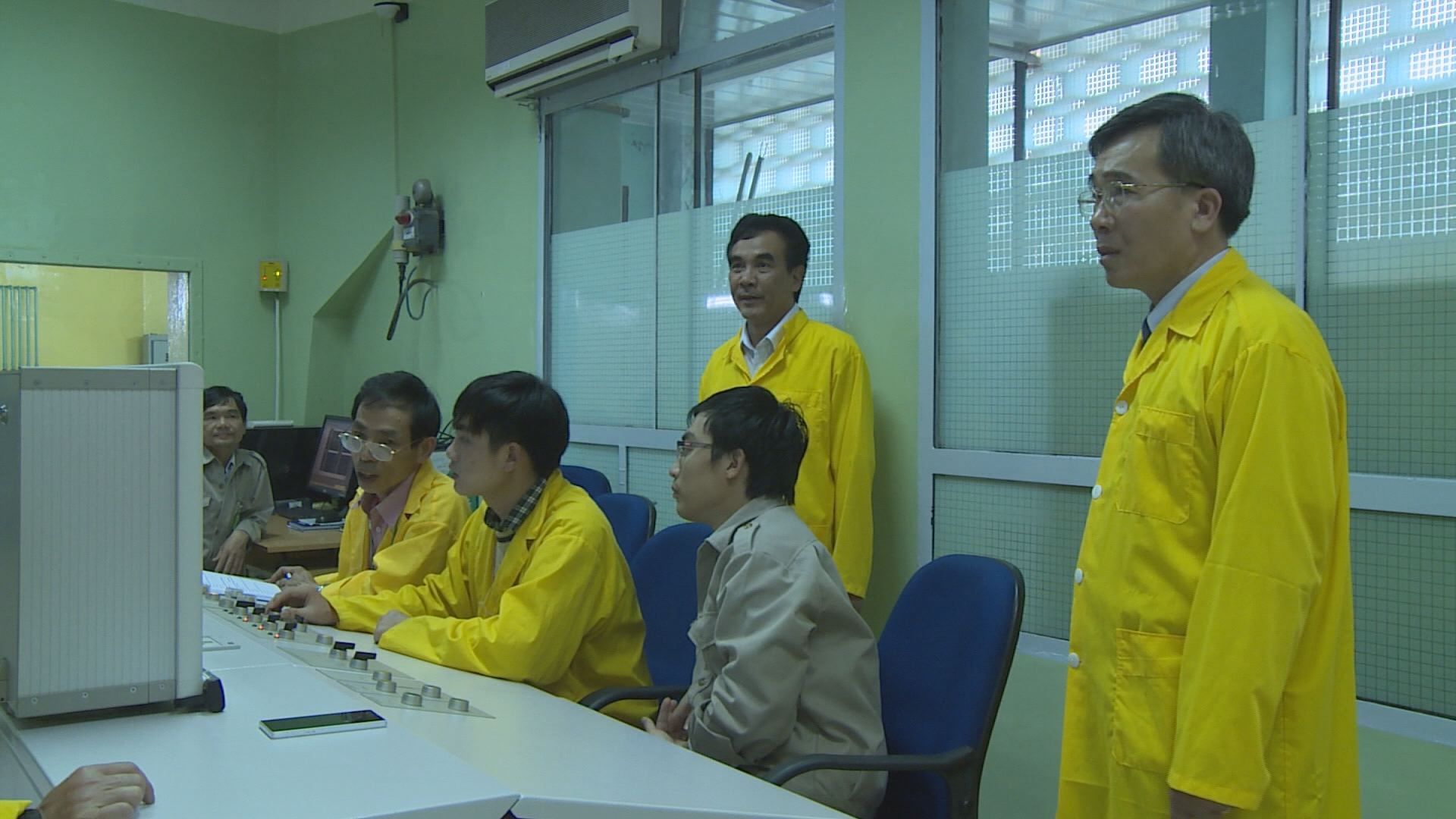
Тренировка персонала на ядерном реакторе Далат в провинции Ламдонг на Центральном нагорье. (Фото: ВИA)
Учения по ликвидации последствий аварии на ядерном реакторе в Далате в июне 2023 года. (Фото: ВИA)
Нгуен Ньи Диен, бывший заместитель директора Института ядерной энергии, бывший директор Института ядерных исследований в Далате, сказал: «В соответствии с решением № 1558/QD-TTg премьер-министра от 18 августа 2010 года об одобрении проекта «Обучение и развитие людских ресурсов в области ядерной энергии», Вьетнам был нацелен на обучение и развитие человеческих ресурсов, особенно высококвалифицированных специалистов, которые отвечают требованиям Программы развития атомной энергетики.
Вьетнам направил в Российскую Федерацию для обучения почти 400 человек, Японию – почти 100 человек и другие страны – почти 100 человек, наряду со специалистами, работающими в атомной энергетике. Вьетнамская электроэнергетическая группа (EVN) также отправила сотрудниоков на обучение за рубежом, но позже Вьетнам приостановил реализацию руководящего принципа инвестиций в проект ядерной энергетики, и эти специалисты вернулись в страну. Многие из них работают в различных агентствах, некоторые поступили на работу в EVN, а другие были наняты Российской Федерацией для участия в проектах по ядерной энергетике в России и Бангладеш.»
Премьер-министр Фам Минь Тьинь встречается с генеральным директором Российской государственной корпорации по атомной энергии (Росатом) Алексеем Лихачевым в октябре 2024 года в Казани, Россия. (Фото: ВИA)Заместитель премьер-министра Чан Лыу Куанг принимает заместителя генерального директора Международного агентства по атомной энергии (МАГАТЭ) Хуа Лю в Ханое в марте 2024 года. (Фото: ВИA)Делегация Министерства науки и технологий посещает известные лаборатории Объединенного института ядерных исследований (ОИЯИ) в сентябре 2024 года. (Фото: любезно предоставлено министерством)
“Вьетнам может в полной мере продолжать использовать эти хорошо подготовленные человеческие ресурсы, проводя политику их привлечения в ядерную энергетику, а также переподготовку для повышения их квалификации и способностей.“”
Нгуен Ньи Диен, бывший директор Далатского института ядерных исследований
«На самом деле, исходя из международного опыта, для эксплуатации ядерных электростанций необходимы тысячи высококвалифицированных специалистов, и Вьетнаму необходимо продолжить разработку планов подготовки человеческих ресурсов в области ядерной энергетики в ближайшее время», – сказал Нгуен Ньи Диен./.
Атомная энергия поможет Вьетнаму реализовать многие важные цели экономического развития. На фотографии порт Бариа – Вунгтау. (Фото: ВИA)
Le hameau de Vinh Truong, commune de Phuoc Dinh, district de Thuân Nam, province de Ninh Thuân (Centre), se trouve dans la zone désignée pour le projet de centrale nucléaire de Ninh Thuân. Photo : VNA
Hanoi (VNA) – Le 30 novembre 2024, la 15e Assemblée nationale a adopté la Résolution de la 8ᵉ session relative à la relance du projet de centrale nucléaire de Ninh Thuận et à la poursuite des études sur le programme nucléaire au Vietnam.
Afin de répondre aux exigences de développement de cette source d’énergie nécessitant une technologie de pointe, le Vietnam doit rapidement préparer une main-d’œuvre de haute qualité, prête à exploiter les centrales nucléaires d’ici 10 à 15 ans.
Le Premier ministre Pham Minh Chinh répond aux interpellations pour clairement indiquer la direction du développement de l’énergie nucléaire, créant ainsi les conditions propices au développement. Photo : VNA
Le 30 novembre 2024, la 15e Assemblée nationale a adopté la Résolution de la 8e session sur la relance du projet d’énergie nucléaire de Ninh Thuan et la poursuite du projet d’énergie nucléaire au Vietnam. Photo : VNA
Photo d’illustration par AI
Soucieux de limiter son empreinte carbone et de diversifier son mix énergétique, le Vietnam a choisi de relancer le nucléaire, une source d’énergie bas carbone et stable, en remplacement progressif du charbon, dans le but de tenir l’engagement gouvernemental de neutralité carbone (Net Zero) à l’horizon 2050. Par ailleurs, le gaz naturel liquéfié ne peut garantir une offre stable à des coûts raisonnables et le potentiel de l’hydroélectricité a déjà été entièrement exploité.
Conformément au Plan énergétique VIII, la capacité totale de production électrique du Vietnam devra atteindre environ 150 GW d’ici 2030, ce qui signifie que plus de 10 GW de nouvelles capacités devront être mises en service chaque année. D’ici 2050, la capacité totale des centrales électriques devra se situer entre 490,529 et 573,129 GW.
Selon l’Agence internationale pour les énergies renouvelables, le Vietnam dispose d’un potentiel estimé à 1,2 térawatt d’énergies renouvelables, soit 15 fois la capacité installée actuelle, et le pays a déjà des projets sur des sites favorables à la construction de centrales. Cependant, le caractère intermittent des énergies renouvelables, comme l’éolien et le solaire, limite leur part dans le système d’approvisionnement énergétique de tout pays, nécessitant le recours à des sources d’énergie de base, telles que le nucléaire, pour assurer une production d’électricité stable et continue.
Série de photos : Le Vietnam exploite un potentiel énergétique diversifié au service du développement du pays. Photo : VNA
Les athlètes participent au marathon Coteccons Quang Binh 2022 au parc éolien B&T (Quang Binh). Photo : Comité d’organisation
« Le développement de l’énergie nucléaire contribuera à diversifier les sources d’approvisionnement, à garantir la sécurité énergétique et à faciliter la transition vers une énergie verte… La mise en œuvre de projets nucléaires est également une opportunité pour notre pays de développer une main-d’œuvre hautement qualifiée, d’accroître le potentiel scientifique et technologique national, de s’intégrer à la chaîne d’approvisionnement industrielle nucléaire mondiale, d’apprendre et de maîtriser les technologies nucléaires. »
le secrétaire général du Parti Tô Lâm
En mai 2024, le secrétaire général du CC du PCV To Lam inspecte l’emplacement prévu de la centrale nucléaire de Ninh Thuan 1 dans le district de Thuan Nam. Photo : VNA
La question des ressources humaines pour l’énergie nucléaire a été soulevée dès les premières recherches visant à développer le projet de centrale nucléaire de Ninh Thuận en 2009. Selon l’Institut vietnamien de l’énergie atomique, le Vietnam a formé environ 1 000 spécialistes nucléaires au cours des 50 dernières années. Entre 2005 et 2020, environ 400 experts ont été formés.
Ninh Thuan investit dans le développement des infrastructures dans la région du projet de construction de centrales nucléaires dans le village de Thai An, commune de Vinh Hai (district de Ninh Hai) et le village de Vinh Truong, commune de Phuoc Dinh (district de Thuan Nam). Photo : VNA
Le Vietnam dispose aujourd’hui d’un socle solide pour développer l’énergie nucléaire. En effet, le pays a identifié des sites potentiels pour l’implantation de centrales nucléaires, formé des ressources humaines spécialisées et mis en place un cadre institutionnel et juridique robuste. Ce dernier comprend notamment une loi sur l’énergie atomique et des réglementations spécifiques encadrant la construction et l’exploitation de ces installations. Ces fondations avaient été jetées lors de l’approbation initiale des projets de centrales nucléaires de Ninh Thuận en 2009, avant que leur réalisation ne soit suspendue.
Hoàng Anh Tuấn, ancien directeur du Département de l’énergie atomique au sein du ministère des Sciences et des Technologies
Hoàng Anh Tuấn met en avant que, face à la relance du programme nucléaire, le Vietnam doit impérativement disposer d’une main-d’œuvre hautement qualifiée, répondant aux normes internationales en matière de sécurité, de sûreté, d’efficacité et de durabilité. Une telle expertise est essentielle pour assurer le succès du développement de l’énergie nucléaire dans le pays
Le Vietnam met l’accent sur la formation de ressources humaines de haute qualité – la clé du développement, en particulier dans le domaine de l’énergie nucléaire. Photo : VNA
Former et attirer des ressources humaines qualifiées
Trân Chi Thành, directeur de l’Institut vietnamien de l’énergie atomique du ministère des Sciences et des Technologies, souligne que les ressources humaines dans le domaine de l’énergie nucléaire sont particulièrement “difficiles à trouver”. En raison de la complexité et des exigences spécifiques de ce secteur, il n’attire pas suffisamment les jeunes talents ni les étudiants. De plus, les salaires sont souvent moins compétitifs que dans d’autres secteurs, ce qui rend la formation et le recrutement encore plus ardus.
Avec la relance imminente du projet de centrale nucléaire de Ninh Thuân et l’étude d’investissements dans d’autres projets stratégiques, la question des ressources humaines devient encore plus urgente. Il est impératif de mettre en place des stratégies efficaces pour former, reconvertir et attirer des professionnels qualifiés capables de répondre aux exigences techniques et de sécurité élevées du secteur nucléaire.
Trân Chi Thanh, directeur de l’Institut vietnamien de l’énergie atomique
““Pour développer un programme d’énergie nucléaire, le Vietnam doit également envisager des stratégies pour former et préparer de nouvelles ressources humaines, tout en assurant la reconversion des experts déjà formés à l’énergie nucléaire dans des pays comme la Russie et le Japon. Par ailleurs, il est crucial de mettre en place des mécanismes attractifs pour inciter les professionnels déjà formés, actuellement actifs dans d’autres domaines, à revenir au secteur nucléaire. Cela permettra de constituer une force de travail solide, composée d’experts de premier plan dans le domaine de l’énergie nucléaire, car les ressources humaines représentent la clé du succès.”
Selon Trân Chi Thanh, directeur de l’Institut vietnamien de l’énergie atomique, l’Institut a constitué une équipe solide de chercheurs spécialisés dans les technologies nucléaires, l’analyse de la sûreté nucléaire et d’autres domaines liés à l’énergie atomique. Grâce à une formation continue et approfondie, cette équipe se positionnera comme un vivier d’experts de haut niveau, prêts à jouer un rôle central dans la construction de la centrale nucléaire de Ninh Thuận
En avril 2023, le vice-Premier ministre russe Dmitry Nikolaevich Chernyshenko (2e à gauche) et la délégation de haut rang du sous-comité russe ont visité l’Institut vietnamien de l’énergie atomique (VINATOM). Photo: VINATOMRéacteur nucléaire de Da Lat, Lam Dong. Photo : VNA
Formation des ressources humaines au réacteur nucléaire de Da Lat, Lam Dong. Photo : VNA
Exercice de réponse aux incidents au réacteur nucléaire de Da Lat en juin 2023. Photo : VNA
Nguyên Nhi Điên, ancien vice-directeur de VINATOM et ancien directeur de l’Institut de recherche nucléaire de Đà Lat, a rappelé que, conformément à la Décision n° 1558/QĐ-TTg du Premier ministre du 18 août 2010, approuvant le projet de “Formation et développement des ressources humaines dans le domaine de l’énergie nucléaire”, le Vietnam a envoyé près de 400 personnes en formation en Russie, près de 100 au Japon et une centaine dans d’autres pays.
Par ailleurs, des experts du secteur de l’énergie atomique ainsi que du Groupe d’électricité du Vietnam (EVN) ont également été envoyés à l’étranger pour se former. Cependant, après l’abandon du projet de développement de l’énergie nucléaire, une partie de ces ressources humaines est revenue au Vietnam pour travailler dans divers organismes, tandis que d’autres ont intégré l’EVN. En outre, un certain nombre d’experts ont été retenus par la Russie pour travailler sur des projets de centrales nucléaires en Russie et au Bangladesh.
Par ailleurs, afin de renforcer leurs compétences, des experts du secteur de l’énergie atomique et du Groupe Electricité du Vietnam (EVN) ont bénéficié de formations à l’étranger. Néanmoins, suite à la suspension du projet nucléaire, une partie de ces experts a été réintégrée dans d’autres organismes au Vietnam ou au sein de l’EVN, tandis que d’autres ont poursuivi leur carrière dans le secteur nucléaire, notamment en Russie et au Bangladesh.
Le Premier ministre Pham Minh Chinh rencontre Alexeï Likhachev, directeur général de l’Agence fédérale de l’énergie atomique de Russie (Rosatom) en octobre 2024, à Kazan, en Russie. Photo : VNALe vice-Premier ministre Tran Luu Quang (droite) reçoit Hua Liu, directeur général adjoint de l’Agence internationale de l’énergie atomique (AIEA) en mars 2024, à Hanoï. Photo : VNAEn septembre 2024, la délégation du ministère des Sciences et des Technologie visite le laboratoire exceptionnel de l’Institut unifié de recherches nucléaires (JINR). (Photo : Ministère des Sciences et des Technologies)
“Le Vietnam peut capitaliser sur ces ressources humaines hautement qualifiées en mettant en place des politiques attractives pour les inciter à réintégrer le secteur de l’énergie nucléaire. Parallèlement, une formation continue permettra de maintenir et d’améliorer leurs compétences, afin de les préparer aux défis futurs.”
Nguyên Nhi Điên, ancien directeur de l’Institut de recherche nucléaire de Dà Lat
“Les expériences internationales démontrent qu’une centrale nucléaire requiert l’expertise de milliers de spécialistes hautement qualifiés. En conséquence, le Vietnam doit poursuivre ses efforts de formation afin de constituer un vivier de compétences suffisant dans le domaine de l’énergie nucléaire pour les années à venir”, a affirmé Nguyên Nhi Điên./.
L’énergie nucléaire aidera le Vietnam à atteindre de nombreux objectifs majeurs de développement économique. Sur la photo : Port de Ba Ria – Vung Tau. Photo : VNA
La aldea de Vinh Truong, comuna de Phuoc Dinh (distrito de Thuan Nam, Ninh Thuan), está ubicada en el área del proyecto donde se ha suspendido la construcción de la central nuclear Ninh Thuan 1 y se han invertido en obras de infraestructura esenciales. (Foto: VNA)
El 30 de noviembre de 2024, la Asamblea Nacional en su XV Legislatura aprobó la Resolución del octavo período de sesiones sobre la reanudación del Proyecto de Energía Nuclear de Ninh Thuan y la continuación de la investigación del Programa de Energía Nuclear en Vietnam.
Para cumplir con los requisitos de la política de desarrollo de esta fuente de energía de alta tecnología, Vietnam necesita preparar pronto recursos humanos de alta calidad para operar centrales nucleares en los próximos 10 a 15 años.
El primer ministro Pham Minh Chinh describe la dirección que tomará el desarrollo de la energía nuclear en una sesión de interpelaciones de la Asamblea Nacional. (Foto: VNA)
El 30 de noviembre de 2024, la Asamblea Nacional de la XV Legislatura aprobó una resolución sobre la reanudación del proyecto de energía nuclear de Ninh Thuan y la continuación del estudio del impacto ambiental de un programa de energía nuclear en Vietnam. (Foto: VNA)
Imagen ilustrativa generada por IA
Vietnam decidió reiniciar este programa para avanzar hacia la eliminación de la energía a base de carbón y para lograr el compromiso Net Zero del Gobierno para 2050. Mientras tanto, la energía del gas licuado no puede garantizar un suministro estable y precios razonables, y las grandes centrales hidroeléctricas han explotado todo su espacio.
De acuerdo con el Plan de Energía VIII, para 2030, la capacidad total de fuentes de energía de Vietnam debe alcanzar aproximadamente 150 GW, lo que significa que cada año es necesario poner en funcionamiento más de 10 GW de nuevas fuentes de energía. Para 2050, la capacidad total de las centrales eléctricas será de 490, 529 a 573,129 GW.
Según la Agencia Internacional de Energías Renovables, se estima que Vietnam tiene 1,2 teravatios de potencial de energía renovable, 15 veces la capacidad instalada actual, y el país tiene proyectos en ubicaciones favorables y fáciles para construir fábricas. Sin embargo, las características inestables de las energías renovables como la eólica y la solar hacen que este suministro de energía solo represente un cierto porcentaje del sistema de suministro de energía de cualquier país.
Vietnam aprovecha su potencial energético para apoyar el desarrollo nacional. (Foto: VNA)
Los corredores participan en el Maratón Coteccons Quang Binh 2022 en el complejo de parques eólicos B&T en la provincia central de Quang Binh. (Foto: Comité organizador del Maratón Coteccons Quang Binh)
“El desarrollo de la energía nuclear ayudará a diversificar el suministro, garantizar la seguridad energética y promover la energía verde. El proyecto de energía nuclear también es una oportunidad para que el país desarrolle recursos humanos de alta calidad, mejore las capacidades científicas y tecnológicas nacionales, participe en la cadena de suministro nuclear mundial y aprenda a dominar la tecnología nuclear.”
Secretario general del Partido Comunista To Lam
En mayo de 2024, el secretario general del Partido Comunista, To Lam, visita el sitio donde se construirá la planta nuclear Ninh Thuan 1 en el distrito de Thuan Nam. (Foto: VNA)
Los recursos humanos para la energía nuclear son un problema que se ha planteado desde que Vietnam investigó e implementó por primera vez el proyecto de energía nuclear de Ninh Thuan en 2009. Según el Instituto de Energía Atómica de Vietnam, en los últimos 50 años, Vietnam ha capacitado a unos mil técnicos para el sector de la energía nuclear, y unos 400 fueron capacitados entre 2005 y 2020.
Hoang Anh Tuan, exdirector del Departamento de Energía Atómica del Ministerio de Ciencia y Tecnología, dijo que Vietnam ha reunido muchos recursos importantes para el desarrollo de la energía nuclear, incluidos lugares de construcción, recursos humanos bien capacitados y un sistema de energía nuclear completo.
Ninh Thuan está invirtiendo en el desarrollo de infraestructura en áreas designadas para la construcción de la planta de energía nuclear en la aldea de Thai An, comuna de Vinh Hai, distrito de Ninh Hai y la aldea de Vinh Truong, comuna de Phuoc Dinh, distrito de Thuan Nam. (Foto: VNA)
Vietnam también cuenta con un sistema regulatorio nuclear, una ley de energía atómica y documentos regulatorios para la construcción de plantas de energía nuclear, luego de que la Asamblea Nacional aprobara los dos proyectos nucleares de Ninh Thuan en 2009, aunque el desarrollo fue posteriormente detenido.
Hoang Anh Tuan, exdirector del Departamento de Energía Atómica del Ministerio de Ciencia y Tecnología
Reiteró que cuando se reinicia el programa de energía nuclear, los recursos humanos que cumplan con los requisitos de garantizar la seguridad, la eficiencia y la sostenibilidad según la experiencia internacional siguen siendo un desafío clave para Vietnam.
Vietnam considera que la formación de recursos humanos de alta calidad es clave para el desarrollo, especialmente en el sector de la energía nuclear. (Foto: VNA)
Reentrenamiento y atracción de recursos humanos cualificados
El director del Instituto de Energía Atómica de Vietnam (Ministerio de Ciencia y Tecnología), Tran Chi Thanh, subrayó que es difícil encontrar personal para el sector de la energía nuclear debido a que esta industria no es atractiva para los jóvenes y estudiantes. Además, los salarios suelen ser más bajos que en muchos otros campos, lo que dificulta la atracción de talentos. La cuestión de los trabajadores se vuelve aún más urgente cuando el Proyecto de Energía Nuclear de Ninh Thuan está a punto de reiniciarse y muchos otros proyectos clave también están siendo investigados y promovidos para inversión.
Tran Chi Thanh, director del Instituto de Energía Atómica de Vietnam. (Foto: cortesía de VINATOM)
“Mientras Vietnam desarrolla su programa de energía nuclear, también necesita planificar la capacitación de recursos humanos adicionales y atraer a personas con experiencia nuclear de otros países, incluidos Rusia y Japón. También es crucial contar con mecanismos para atraer a profesionales capacitados que actualmente trabajan en campos relacionados”.
Según Tran Chi Thanh, VINATOM ha creado un sólido equipo de investigación en tecnología, análisis de seguridad nuclear y campos relacionados con la energía atómica. Este equipo seguirá formándose para convertirse en expertos y promover su papel en la construcción de la planta de Ninh Thuan.
En abril de 2023, el viceprimer ministro ruso, Dmitri Chernyshenko (segundo desde la izquierda) y una delegación rusa de alto nivel visitan el Instituto de Energía Atómica de Vietnam (VINATOM). (Foto: VINATOM) El reactor nuclear de Da Lat en la provincia altiplana de Lam Đong. (Foto: VNA)
Entrenamiento de personal en el reactor nuclear de Da Lat, en la provincia de Lam Dong. (Foto: VNA)
Simulacro de respuesta a emergencias en el reactor nuclear de Da Lat en junio de 2023. (Foto: VNA)
Nguyen Nhi Dien, ex director del Instituto de Investigación Nuclear de Da Lat, dijo que Vietnam envió a casi 400 personas a Rusia para capacitarse, alrededor de 100 a Japón y casi 100 a otros países. Además, también se brindó capacitación a expertos en el sector de la energía nuclear y del Grupo de Electricidad de Vietnam (EVN). Sin embargo, después de que Vietnam detuviera su política de inversión en energía nuclear, estas personas capacitadas regresaron a Vietnam para trabajar en otras agencias, mientras que algunas se quedaron en Rusia para trabajar en proyectos nucleares en Rusia y Bangladesh.
El primer ministro Pham Minh Chinh se reúne con Alexey Likhachev, director general de la Corporación Estatal de Energía Atómica de Rusia (Rosatom), en octubre de 2024 en Kazán, Rusia. (Foto: VNA)El viceprimer ministro Tran Luu Quang recibe al subdirector general del Organismo Internacional de Energía Atómica (OIEA), Hua Liu, en Hanoi en marzo de 2024. (Foto: VNA)Una delegación del Ministerio de Ciencia y Tecnología visita importantes laboratorios del Instituto Conjunto de Investigación Nuclear (JINR) en septiembre de 2024. (Foto: Cortesía del Ministerio)
“Vietnam puede seguir utilizando esta fuerza laboral bien capacitada a través de políticas que los atraigan de nuevo a la energía nuclear y, al mismo tiempo, los capaciten para mejorar sus habilidades y capacidades.”
Nguyen Nhi Dien, ex director del Instituto de Investigaciones Nucleares de Da Lat
De hecho, según la experiencia internacional, la operación de una planta de energía nuclear requiere miles de trabajadores técnicos altamente calificados. Vietnam necesita seguir desarrollando un plan de capacitación de recursos humanos para el sector de energía nuclear en el futuro, afirmó Nguyen Nhi Dien./.
La energía nuclear ayudará a Vietnam a alcanzar muchos objetivos importantes de desarrollo económico. En la foto, el puerto de Ba Ria – Vung Tau. (Foto: VNA)