A PILLAR OF PEOPLE’S TRUST: LIFE REBORN

Residents of Lang Nu Village (Phuc Khanh commune, Bao Yen district), Nam Tong Village (Nam Luc commune), and Kho Vang Village (Coc Lau commune, Bac Ha district) settle in their new homes. (Photo: VNA)

Hanoi (VNA) – The remarkable recovery of Hoang Thao Ngoc, an 11-year-old Mong ethnic girl and the last survivor of the devastating flash flood that engulfed Lang Nu village in Bao Yen District, Lao Cai Province, in September 2024, has reignited hopes in a grieving community.

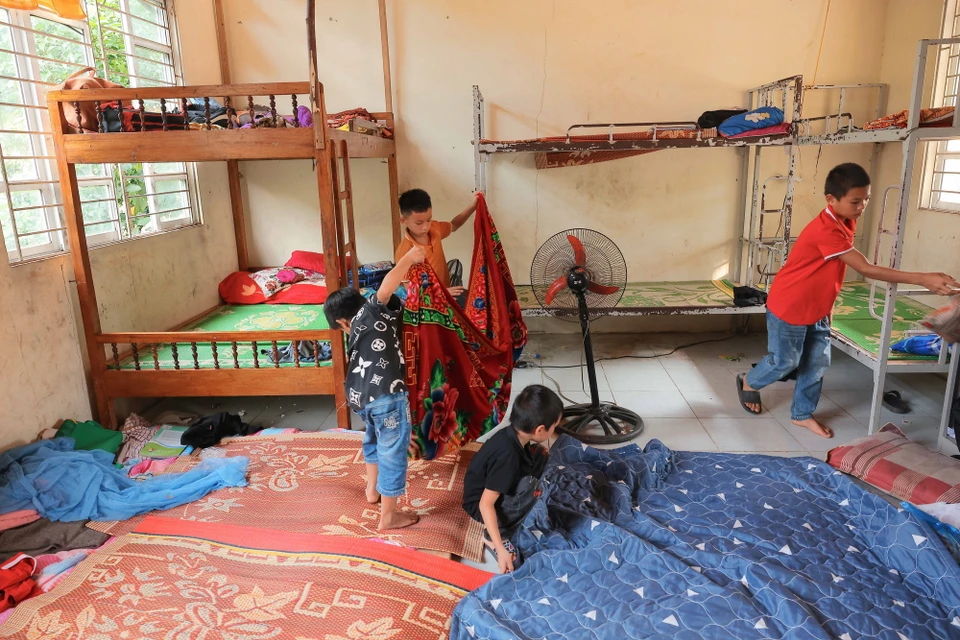
More than just a narrow escape from death, Ngoc’s survival is a testament to the unwavering resilience and determination of those who shoulder the responsibility of protecting the nation and its people—especially in times of hardship and adversity.

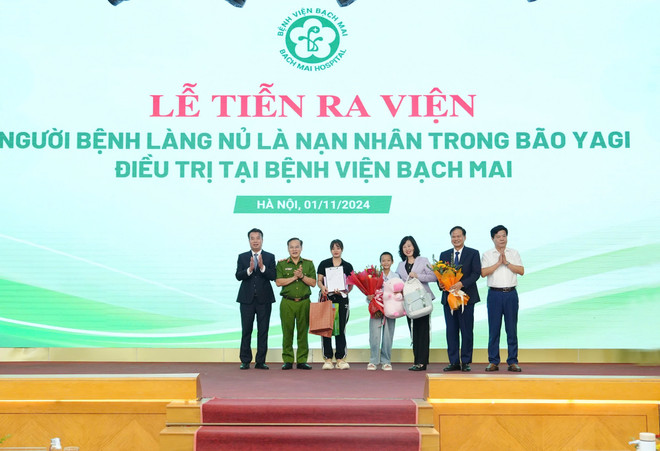
Hoang Thao Ngoc on the day of discharge from Bach Mai Hospital on November 1, 2024. (Photo: VNA)

People’s trust tested in hardship

The tranquil autumn days of September turned into a time of sorrow and devastation when Super Typhoon Yagi made landfall, battering northern Vietnam. Regarded as the most destructive storm to hit the East Sea in 30 years, Yagi left behind catastrophic losses. In total, there was 345 people dead or missing and nearly 82 trillion VND (over 3.2 billion USD) in economic damage.

Among the hardest-hit areas was Lang Nu village, where flash floods and landslides claimed 52 lives, with 14 others still unaccounted for, equal to more than half of the village’s population.

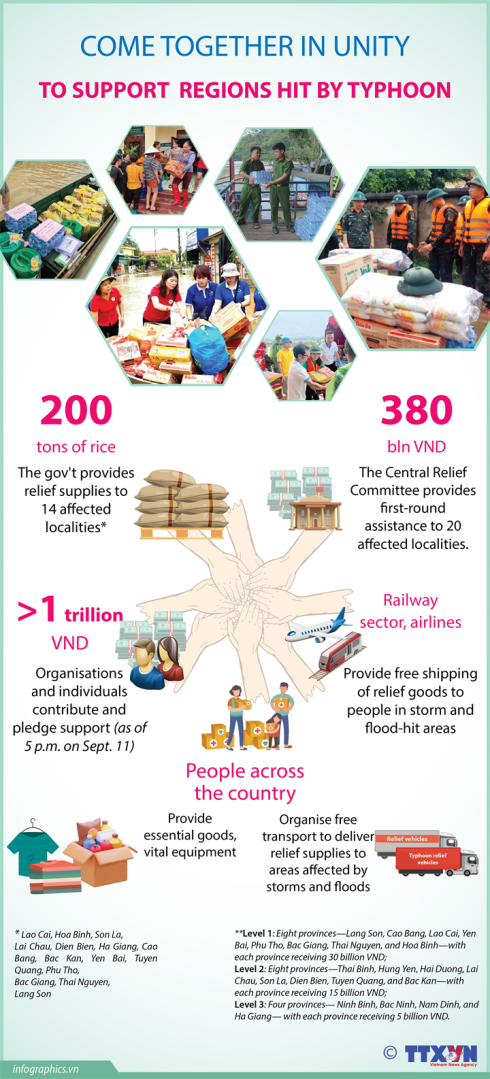
In the wake of this disaster, the entire political system, under the leadership of the Party and the State, sprang into action. Rescue teams braved raging floodwaters, risking their own lives to save others and protect what remained.

A total of 450,000 military personnel and 150,000 police officers are mobilised to aid in Yagi disaster relief and recovery efforts. (Photo: VNA)

As the saying goes: “Gold is tested by fire, leadership shines through crisis”, the devastation caused by the historic typhoon underscored the steadfast role of the Party and the State as the people’s strongest pillar of support, an unshakable foundation they rely on in times of distress. Every decision, every action taken during this critical time reinforced the Party’s guiding principle: “No one is left behind.”

What has unfolded once again reaffirms that this policy is not mere rhetoric, but a deep expression of empathy, a testament to compassion and solidarity, and a rallying call that resonates in the hearts of every Vietnamese citizen.

No one left behind

According to official figures, a total of 450,000 military personnel and 150,000 police officers were mobilised to aid in Yagi disaster relief and recovery efforts, safeguarding lives and livelihoods across affected localities. Their actions were bolstered by the collective spirit of millions across the country and overseas Vietnamese who rallied behind their compatriots in distress.
As for the case of Hoang Thao Ngoc, she was found by rescue teams in critical condition—her lungs filled with mud, her body battered by severe injuries. She was immediately airlifted to Bach Mai Hospital in Hanoi, where doctors fought relentlessly to keep her alive. Every second, every effort was a battle for survival. After nearly 50 days of intensive treatment, with the assistance of Japanese and French specialists and multi-hospital consultations, Ngoc finally recovered and was discharged.

For her mother, Hoang Thi Dip, seeing her daughter return from the brink of death was an overwhelming moment of joy and gratitude.

In an interview with the Vietnam News Agency, Dip said: “To see my child alive and well today is beyond my words. I am deeply grateful to the doctors, the rescue teams, and the authorities who did everything to save her, including covering the entire cost of her treatment. Our family will never forget this kindness.”

Having been given a second chance of life, Ngoc longed to return to her village, to the arms of her family, teachers, friends, and neighbors. Yet, she knew that many of them had not been as fortunate.
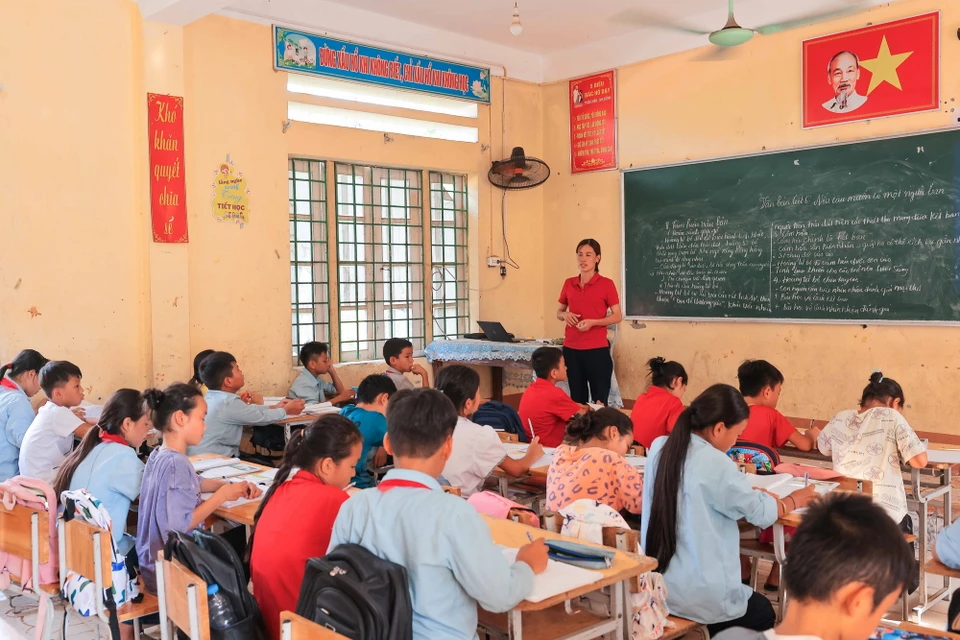
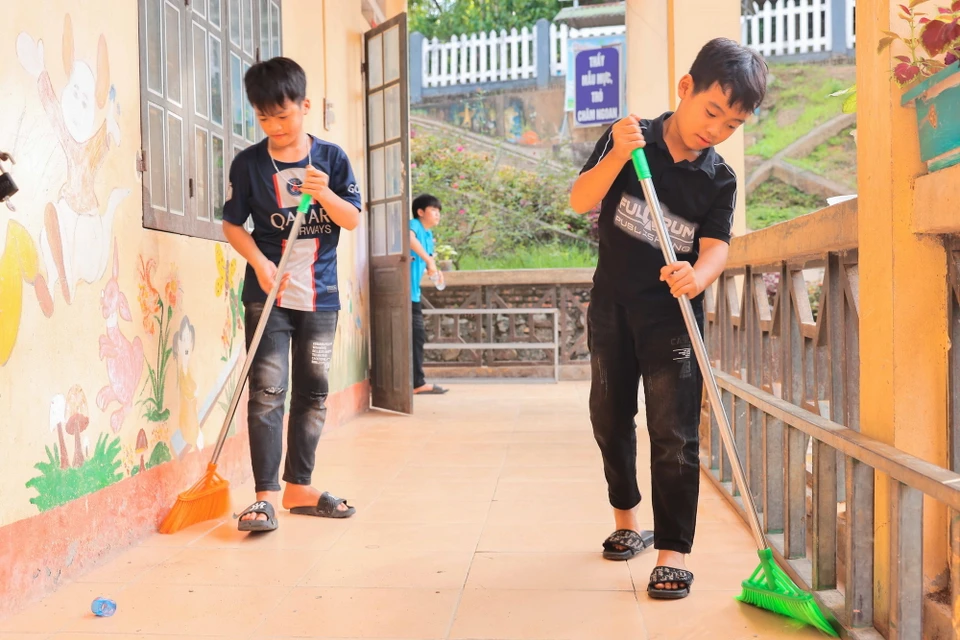
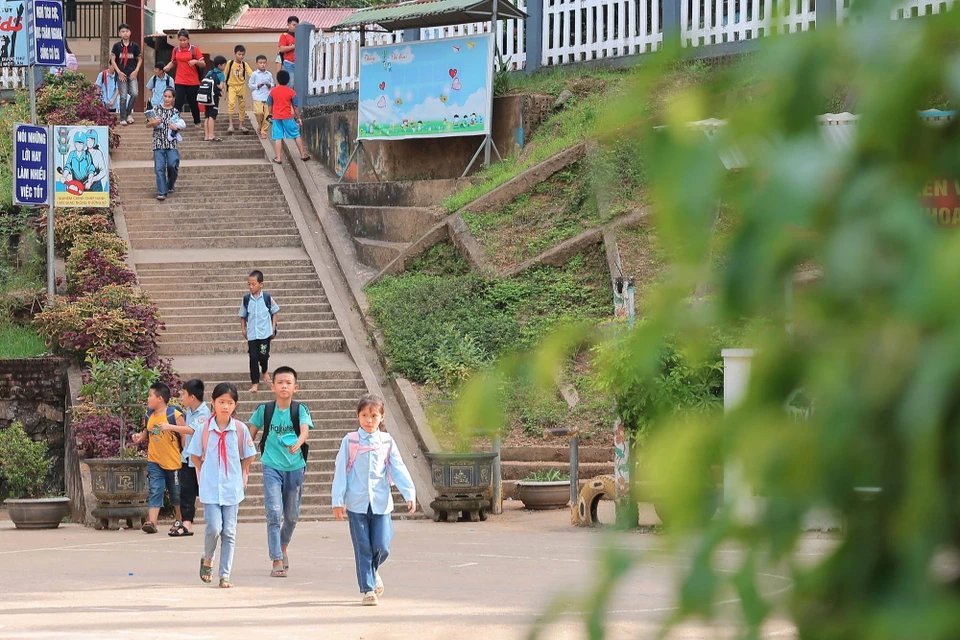
On Septempber 19, 2024, 107 students from Lang Nu Village resume their study at Phuc Khanh commune’s Primary and Secondary School. (Photo: VNA)

As the floodwaters receded, Lang Nu village began rebuilding from ashes. The land itself may have been reshaped by the nature’s wrath, the unity and spirit of its people remained unshaken. Their determination to restore the village and preserve its traditions burned brighter than ever.

Chairman of the Lao Cai Provincial People’s Committee Trinh Xuan Truong said: “We may have lost part of Lang Nu village, but we will rebuild it stronger, safer, and better. We will do it in honor of those we lost and to preserve the cultural heritage of the village. Now more than ever, let’s stand together, and support one another through these difficult times.”

People’s welfare top priority

Storm No. 3 and its aftermath left an unprecedented trail of destruction across northern Vietnam, with Lao Cai bearing the heaviest toll. In Lang Nu, Nam Tong, and Kho Vang villages alone, 84 people died, some families were wiped out entirely. The loss was immeasurable.

In response, the Party and State leaders promptly visited the affected areas, offering support and overseeing relief efforts.
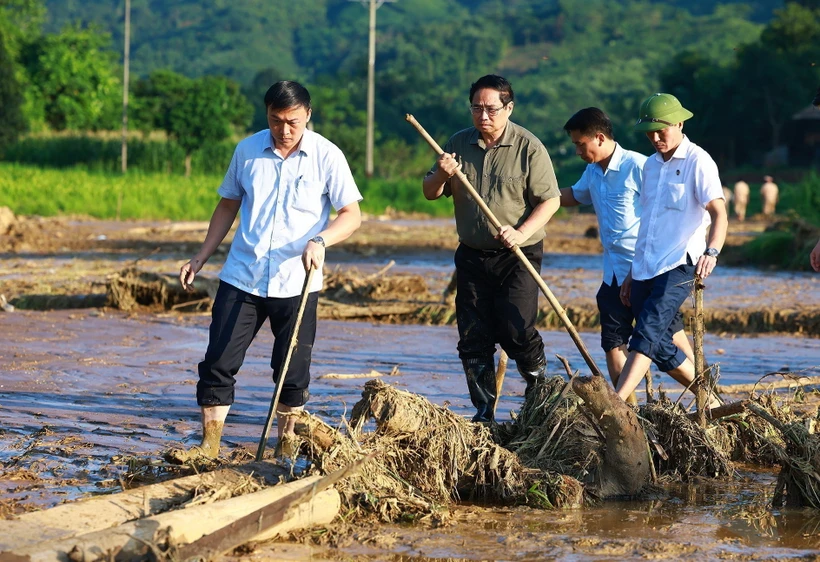
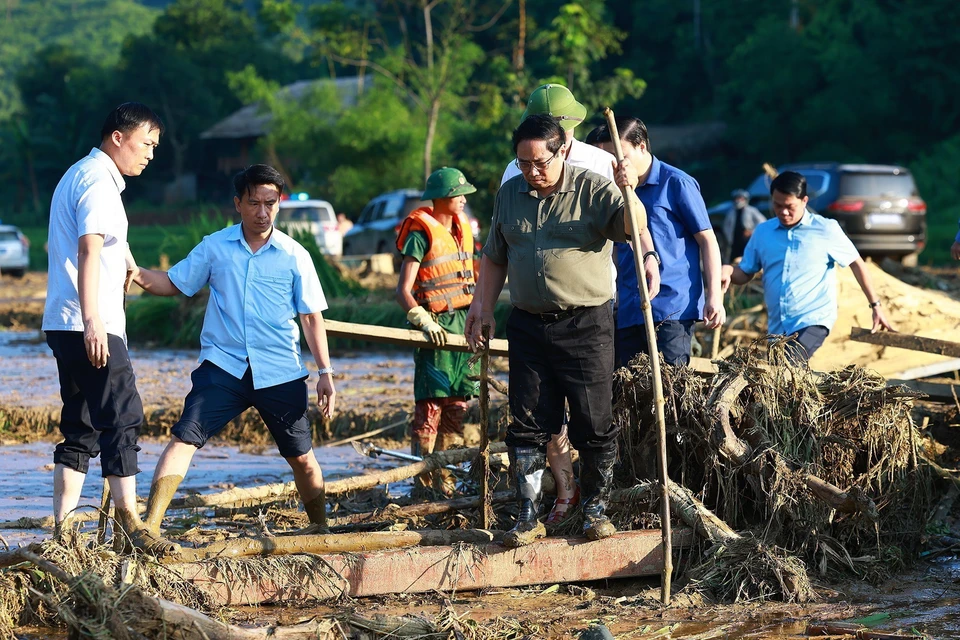
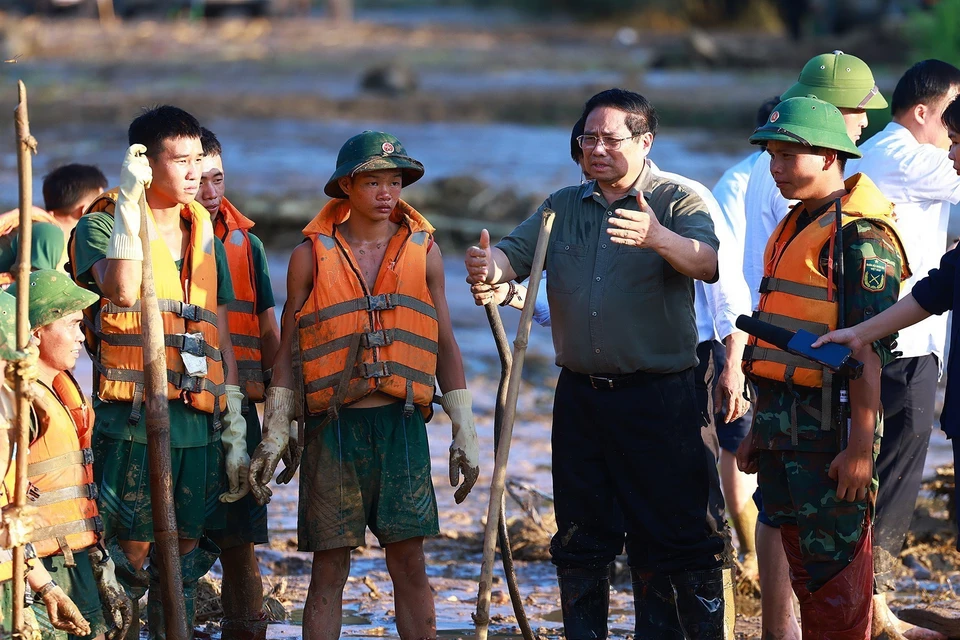
Prime Minister Pham Minh Chinh personally visited the disaster site on September 12, directing relief efforts and offering words of comfort to the victims. (Photo: VNA)

Prime Minister Chính’s presence in the heart of the crisis reflected the deep concern and care of the leadership for its people in their darkest moments. It was a powerful affirmation of the “for the people” ideology at the core of Vietnam’s governance.

The Prime Minister outlined a total of seven key recovery initiatives, setting an ambitious deadline that by December 31, 2024, the reconstruction of Lang Nu, Nam Tong, and Kho Vang must be completed.

Within just 10 days following the disaster, thanks to the unwavering commitment of the entire political system and the contributions of sponsors, reconstruction projects in Lao Cai, including the three devastated villages, were underway.

With a spirit of resilience—”conquering the heat, overcoming the rain,” “no excuses, only action,” “working day and night”—authorities and builders pushed through all obstacles to accelerate construction, turning the impossible into reality. The pace of progress exceeded all expectations.

With the efforts of Military Corps 12, we completed three resettlement areas in less than three months—well ahead of the PM’s deadline. This was a monumental achievement by local authorities, the armed forces, and all those involved.”PM Pham Minh Chinh.

On December 22, Prime Minister Pham Minh Chinh attends the inauguration ceremony of the resettlement area projects in three villages of the northern mountainous province of Lao Cai which had been severely affected by flash floods and landslides caused by Typhoon Yagi in early September, 2024. (Photo: VNA)

On December 22, a deeply emotional inauguration ceremony was held for the resettlement areas in Lang Nu, Nam Tong, and Kho Vang. For the people who had lost everything, it was more than just new homes—it was the promise of a fresh start.

The new Lang Nu Resettlement Area features 40 stilt houses built in the traditional Tay ethnic architectural style, alongside 15 houses in Nam Tong and 35 in Kho Vang. Each community is equipped with essential infrastructure, including schools, community centers, and telecommunications networks—gifts from the Party, the State, and the people of Vietnam to their fellow countrymen.

The new Lang Nu Resettlement Area features 40 stilt houses built in the traditional Tay ethnic architectural style, equipped with essential infrastructure (Photo: VNA)

“Three months and ten days ago, I stood here, directing the province and relevant ministries on seven measures to overcome the disaster. The goal was clear. By December 31, no residents should be without shelter, no child without a classroom, and no patient without medical care. Today, we have delivered on that promise.” – PM Pham Minh Chinh speaks at the inauguration of the Lang Nu, Nam Tong, and Kho Vang resettlement areas.

The sturdy new homes rising from the mountains are more than just buildings; they symbolize resilience, solidarity, and an unyielding commitment to ensuring no one is left behind. Lang Nu’s rebirth is not just about reconstruction—it marks the beginning of a new journey, one that embodies the enduring strength of a nation determined to rise, together, into a new era./.

A bird’s-eye view of the resettlement area of Lang Nu Village (Photo: VNA)

Author: Phuong Vu / Editor: Hoang Nhuong

Батьлонгви– Вечный символ морского суверенитета Вьетнама

Вид на Батьлонгви с высоты. Фото: ВИА.

Островной уезд Батьлонгви (город Хайфон) с его первозданной красотой и историческим значением является не только местом проживания рыбаков, добровольных молодежных бригад и патриотических жителей Хайфона, посвятивших себя защите острова, но и «живым маяком», утверждающим священный и неприкосновенный морской суверенитет Вьетнама.

Результат трудных усилий и постоянных жертв

По словам секретаря партийного комитета уезда Батьлонгви, Буй Чунг Тьена, этот островной уезд является символом стойкости и вечного существования среди морских просторов. Батьлонгви – самый удаленный от берега остров Вьетнама в Тонкинском заливе, расположенный в 15 морских милях от демаркационной линии Тонкинского залива между Вьетнамом и Китаем и в 110 км от острова Хондау (уезд Дошон, Хайфон).

Уезд Батьлонгви был официально образован 9 декабря 1992 года и подчиняется городу Хайфон. Батьлонгви находится на передовой позиции, играя особую роль в экономике, обороне и безопасности.

С самого начала, когда 25 сотрудников и 62 члена добровольных молодежных бригад прибыли для строительства островного уезда, политическая система уезда была сформирована достаточно полно, ориентируясь на эффективность. Партийная организация уезда включает 16 низовых партийных организаций с 296 партийными членами. Население островного уезда составляет 326 домохозяйств и 1.152 человека (по данным переписи населения и жилья от 1 апреля 2019 года), основная часть которых занимается рыболовством и предоставлением логистических услуг для рыболовецкой отрасли. В дни сильных штормов, когда многие суда прячутся в портовых бухтах, численность населения на острове может увеличиваться до 2.000 – 3.000 человек.

Офицеры и солдаты Командования 1-го региона Береговой охраны вручают Государственный флаг рыбакам на судах, стоящих на якоре в порту острова Батьлонгви. Фото: ВИА.
Суда стоят на якоре в порту острова Батьлонгви. Фото: ВИА.

В ходе визита и работы на островном уезде Батьлонгви в середине ноября 2024 года Генеральный секретарь партии То Лам высоко оценил вклад различных поколений сотрудников, военнослужащих, добровольных молодежных бригад, а также всей местной общины в совместную работу по строительству передового острова Родины.

Генеральный секретарь партии отметил, что это был его первый визит на остров Батьлонгви, и что он давно ждал этого путешествия. Он охарактеризовал остров как нетронутую, но очень красивую землю. Более чем через 30 лет после основания островного уезда Батьлонгви, этот когда-то заброшенный, бесплодный остров превратился в зелёный, чистый и полный жизни остров с оживлённым портом и причалом, а также с постоянно развивающейся инфраструктурой. Это стало результатом упорных усилий и постоянных жертв. Здесь царит дух активизма, добровольчества, креативности и энтузиазма молодёжи, что отражает крепкую связь и единство местных жителей и военнослужащих. Он отметил, что этот дух должен быть примером для подражания и распространения.

Генеральный секретарь То Лам выступает на рабочей встрече с руководством и дислоцированными подразделениями на островном уезде Батьлонгви в ноябре 2024 года. Фото: ВИА.

На сегодняшний день в уезде построено более 60 объектов и проектов, большинство из которых принесло значительную экономическую и социальную пользу, тесно связаны с выполнением задач в области обороны, безопасности и защиты суверенитета морских и островных территорий страны. Особые трудности, с которыми сталкивался островной уезд с момента его основания, постепенно решаются, в том числе проблемы транспортного сообщения между островом и материковой частью. С июля 2020 года введен в эксплуатацию корабль «Красный цветок феникса», который способен перевозить 200 пассажиров и 50 тонн груза, что в целом удовлетворяет потребности в перевозке пассажиров и товаров между островом и материком для военных и местных жителей уезда.

Также был введен в эксплуатацию Центр логистики, причал для кораблей и пункт посадки/высадки пассажиров на маршруте Хайфон – Батьлонгви (порт Хоалонг) с марта 2023 года. Были построены объекты и системы обеспечения чистой водой, которые удовлетворяют повседневные потребности на острове и обеспечивают рыболовные суда, выходящие в море. Система производства и поставки электроэнергии на острове обеспечивает стабильное электроснабжение 24 часа в сутки и гарантирует удовлетворение потребностей в электроэнергии на острове в течение следующих 10-15 лет.

Секретарь партийного комитета уезда Батьлонгви Буй Чунг Тиен сообщил, что в 2024 году экономико-социальная ситуация на острове стабилизировалась, и все основные показатели и задачи были выполнены в соответствии с планом. Общая стоимость производства в экономических секторах составила 467,19 миллиарда донгов, что на 8,97% больше по сравнению с аналогичным периодом прошлого года. Работы по улучшению государственного управления, усилению обороны, безопасности и защите суверенитета островов продолжаются, политическая безопасность и общественный порядок в районе остаются стабильными. Управление государственными делами в ряде областей было усилено, а также укреплены национальная безопасность, оборона, защита суверенитета морских и островных территорий, политическая безопасность и общественный порядок на территории уезда были обеспечены.

Напоминание о духе патриотизма
Флаг Родины развевается на ветре, становясь символом “живого рубежа”, который подтверждает священный и неприкосновенный суверенитет моря и островов Родины. Фото: ВИА.
Общий вид острова Батьлонгви с высоты, на котором срочно завершается строительство двух укрытий для кораблей от бурь на севере и юге. Фото: Иллюстрированный журнал Вьетнам

Каждый раз, преодолевая волны и направляясь на остров Батьлонгви, журналист Нгуен Ань Ту, председатель Ассоциации журналистов города Хайфон, чувствует, что изображение флага Компартии и флага Родины, развевающегося на флагштоке в центре Батьлонгви, действительно священно и полно смысла. Для всех людей Вьетнама флаг, развевающийся над морем, является не только символом страны, но и мощным заявлением о священном и неприкосновенном суверенитете морских и островных территорий Родины. Он символизирует гордость и дух единства вьетнамского народа.

Наблюдая за тем, как молодые добровольцы день и ночь охраняют остров, проявляя инициативу и добровольный дух, Буй Чунг Тьен был глубоко впечатлен и тронут. Вклад поколений молодых добровольцев не только улучшил материальные условия на острове, но и создал прочную стену для защиты суверенитета морских территорий родины. «Это заставляет нас еще больше гордиться и восхищаться духом и решимостью жителей Хайфона.», подтвердил он.

Для командира Главного отряда молодежных добровольцев Хайфона Нгуен Бить Хоп каждый раз, когда он ступает на остров, его охватывает волнение и гордость. Он видит лодки с красным флагом с золотой звездой, развевающимся на просторах океана. Этот флаг символизирует не только стойкость рыболовов, но и передает мощное послание о любви к родной земле.

«Каждый день рыбаки, сражаясь с бурей на открытом море, не боятся трудностей и опасностей, защищая и сохраняя ценные ресурсы морских территорий нашей родины. Они — молчаливые стражи, вносящие свой вклад в защиту и развитие страны в новой эре»,

отметил командир Главного отряда молодежных добровольцев Хайфона Нгуен Бить Хоп.

Церемония поднятия флага на памятнике суверенитета на острове Батьлонгви. Фото: Иллюстрированный журнал Вьетнам.

В ходе рабочей встречи с властями острова Батьлонгви, Генеральный секретарь То Лам подчеркнул, что остров играет важную роль как ворота, контролирующие важный международный морской маршрут, а также как центр логистики и транспортировки для военно-морских операций, являясь форпостом контроля за безопасностью и порядком на море. Море Батьлонгви является одним из восьми крупнейших рыболовных районов Тонкинского залива, с разнообразной и богатой морской экосистемой.

Генеральный секретарь, исходя из реального потенциала, положения и преимуществ острова, предложил властям города Хайфон и уезда Батьлонгви подумать о конкретных планах и способах превращения этого места в крепость, защищающую морские и воздушные пространства Вьетнама в Тонкинском заливе, центр рыбной промышленности, развитие аквакультуры и привлечение туристов в соответствии с духом Резолюции 45-NQ/TW Политбюро о строительстве и развитии города Хайфона до 2030 года с видением до 2045 года.

Маяк Батьлонгви, несущий особую миссию, стойко противостоит штормам и ни одной ночью не гаснет в водах Восточного моря. Фото: ВИА.

Дух Резолюции Политбюро был и остаётся усвоен партией, властями, армией и народом уезда Батьлонгви и воплощается в конкретных действиях в 2025 году и в последующие годы.

В соответствии с этим власти Батьлонгви прилагают усилия для реализации Национальной программы по созданию нового и уникального сельского уезда с постепенным переходом к цифровизации; усиливают защиту ресурсов и окружающей среды морских островов, связывая это с развитием и продвижением культурных ценностей и особенностей жителей Батьлонгви в приморском регионе. В то же время активно проводится реформа государственного управления, направленная на открытость, прозрачность и соответствие реальным условиям островного уезда; уделяется внимание поддержке и помощи населению, в том числе рыбакам, отправляющимся в море./.

Суда и лодки, пришвартованные в порту Батьлонгви. Фото: ВИА.


Vietnam promoting sustainable economic growth

The tireless efforts of the Party, State, and Government of Vietnam over the past four decades have yielded significant achievements, bringing prosperity and happiness to the local people. From a nation with a GDP of just 8 billion USD in 1986, Vietnam has risen to rank 34th economy in the world last year with a GDP of 450 billion USD.

The country’s increasing potential and strengthened position in the global arena have fostered strong confidence among both domestic and foreign investors, as well as the broader Vietnamese population.

Building on this glorious yet challenging journey, Vietnam is stepping into a new era – the era of the nation’s rise – striving to create economic breakthroughs in the coming years.

From a nation with a GDP of just 8 billion USD in 1986, Vietnam has risen to rank 34th economy in the world last year with a GDP of 450 billion USD. (Photos: VNA)

Internal economic strength

In 2024, despite numerous challenges and difficulties, Vietnam’s economy maintained a steady growth rate of 7.09%, achieving significant results that have been highly appreciated by the international business community. 

According to Professor Hoang Van Cuong, former Vice Rector of the National Economics University, Vietnam’s economy has remained stable across multiple sectors, particularly in exports.

Despite the global decline in consumer demand, the growth rate of export turnover in the domestic economic sector still increased by 19.8%, surpassing the 12.3% growth rate of the foreign direct investment (FDI) sector, according to data from the General Statistics Office of Vietnam. 

Cuong noted that domestic consumers now strongly prefer Vietnamese products, to the extent that some foreign goods are being mislabeled as Vietnamese to be sold in the local market.

According to Brand Finance, a leading global brand valuation consultancy, Vietnam’s brand value in 2024 ranked 32nd out of 193 countries, reaching 507 billion USD – an increase of one step and 2% in value compared to 2023.

In recent years, Vietnam’s national brand has made remarkable progress. The country has not only entered the Top 100 strongest national brands, but also recorded the fastest brand value growth in the world from 2019 to 2022.

Viettel Post’s smart sorting technology complex is located in the Quang Minh Industrial Park in Hanoi’s Me Linh district. This is the first smart sorting technology complex in Vietnam. (Photo: VNA)

Promoting green transition for sustainable development

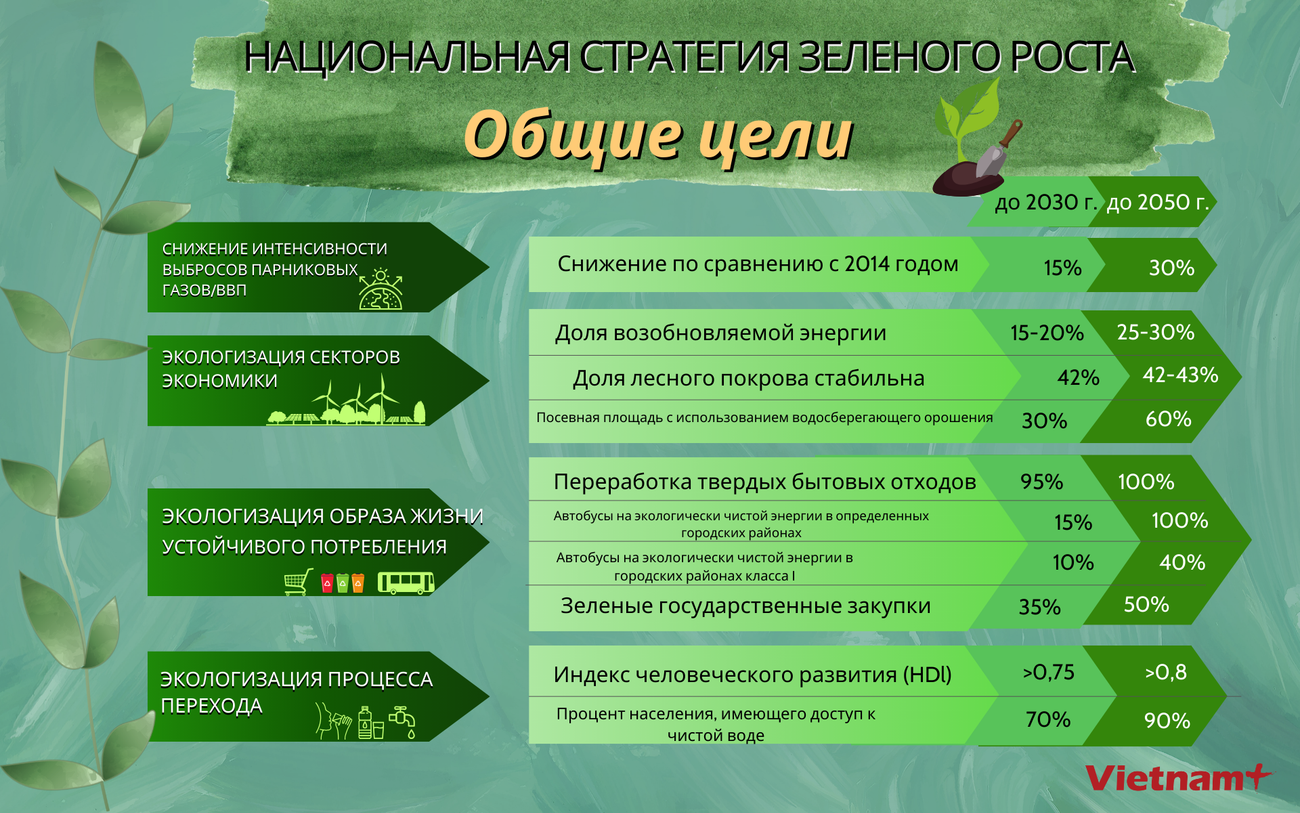
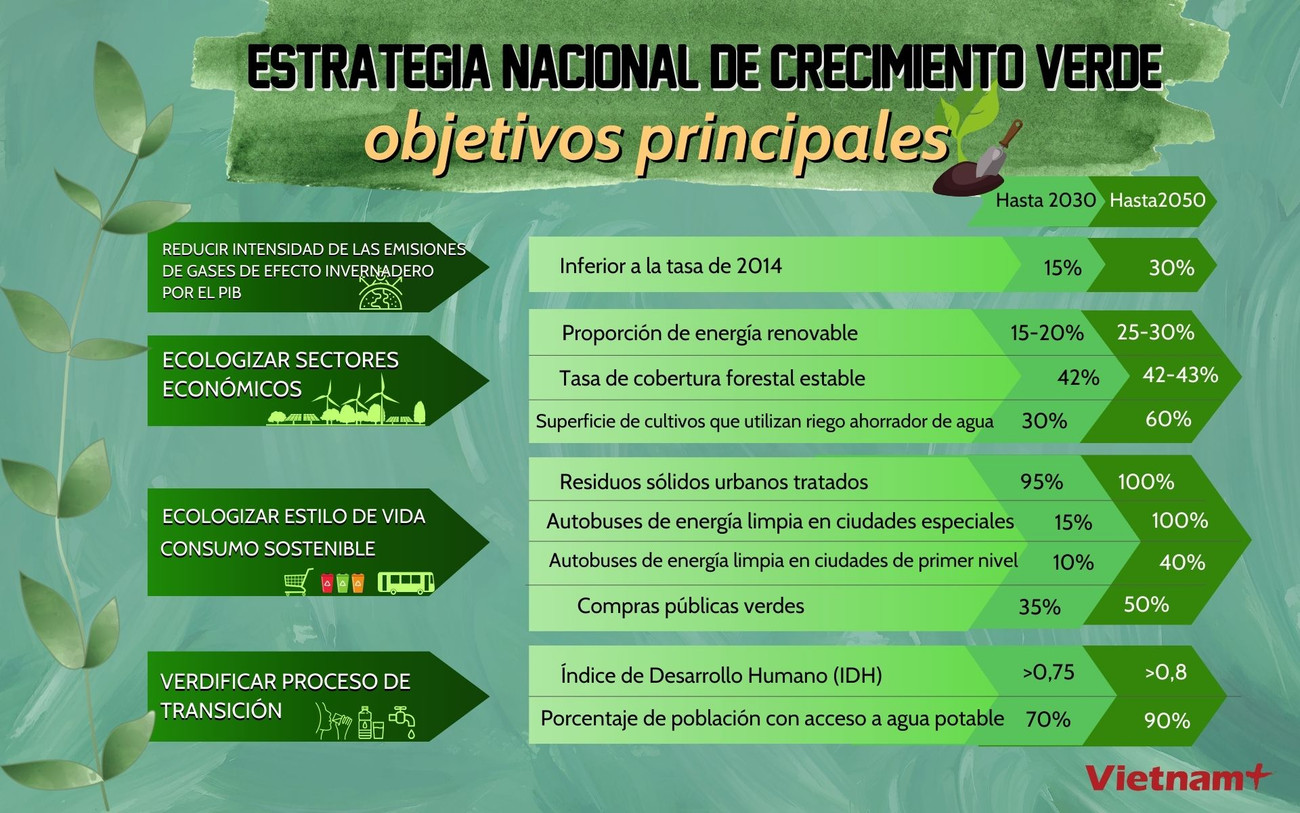
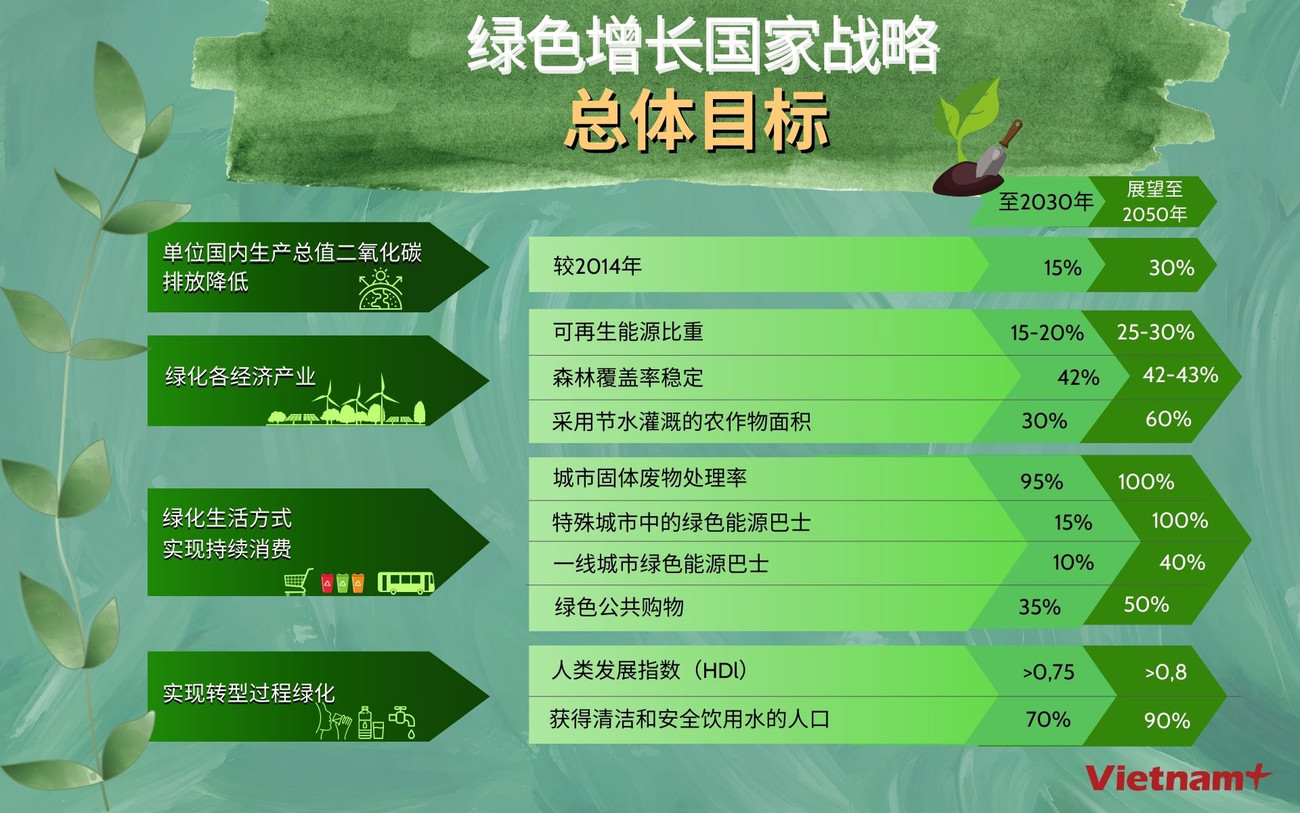
To achieve sustainable development, Vietnam has outlined major strategic directions, including a national strategy for green growth and commitments to reducing emissions. 

This transition is a complex process that requires coordinated efforts from the government, businesses, and society, especially in the context of globalisation and increasing pressures from climate change. Despite challenges, this process also offers opportunities for Vietnam. 

A production line of completely biodegradable biological products at a factory in Hai Duong province. Enterprises with products earning national brand titles are not only models of quality standards but also pioneers in applying green and sustainable development models. (Photo: VNA)

According to Vu Trung Kien, Director of the Climate Change Response Support Center under the Ministry of Natural Resources and Environment, one of the challenges that Vietnam is facing is the high transition costs and difficulties in capital mobilisation.

Additionally, an incomplete legal framework and policy mechanisms remain significant barriers, Kien added.

However, he noted that Vietnam also has numerous opportunities to capitalise on to become a regional leader in green economic development.

“Strong commitments at international conferences, particularly the 26th UN Climate Change Conference (COP26), where Vietnam pledged to achieve net-zero emissions by 2050, not only demonstrate determination but also facilitate the mobilisation of international resources.”

Support from organisations such as the United Nations, the World Bank, and developed nations, provides opportunities for green technology transfer and capacity building, he added.

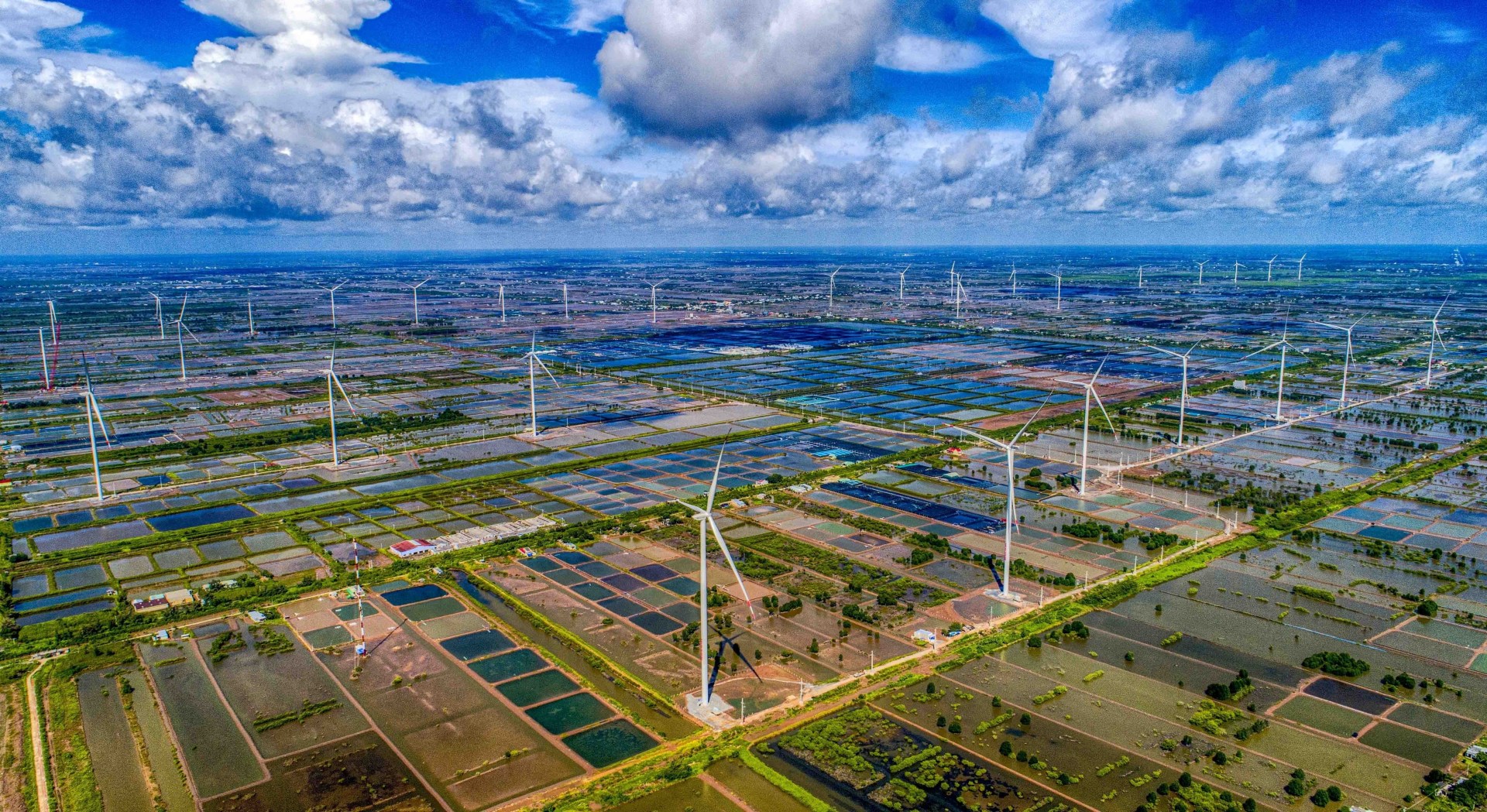
Furthermore, Vietnam also boats a lot of natural advantages, with vast potential for solar and wind energy development, which is sufficient to establish itself as Southeast Asia’s renewable energy hub, Kien noted.

Vietnam boats a lot of natural advantages, with vast potential for solar and wind energy development (Photos: VNA)

Foreign investors’ confidence

Alongside a stable political and social environment, Vietnam’s strong commitment to green and sustainable development has fostered growing confidence among businesses. 

According to the latest Business Confidence Index (BCI) report released by the European Chamber of Commerce in Vietnam (EuroCham Vietnam), the confidence of European firms in Vietnam’s business environment reached its highest level in more than two years. The index surged to 61.8% in Q4/2024 from 46.3% in the same period of 2023.

Explaining this increase, Chairman of EuroCham Vietnam, Bruno Jaspaert, attributed it to various factors, including Vietnam’s ongoing economic reforms and its central role in the global sustainable development trend.

He further noted that survey respondents highlighted the importance of Vietnam’s digital and green transformation as key drivers of their positive outlook on the country. 

On March 19, 2024, in Hanoi, Prime Minister Pham Minh Chinh attends the 2024 Vietnam Business Forum (VBF). Photo: VNA

Stephen Nagy, Director of Policy Studies at the Yokosuka Council on Asia-Pacific Studies (YCAPS), stated that: “Vietnam is seen as a reliable, flexible and geographically critical country in Southeast Asia and the broader Indo-Pacific region.” This critical position allows Vietnam to share common interests and a thriving economic ecosystem with many other nations in the region, Nagy added.

With wise leadership decisions, Vietnam can deliver tangible benefits to its people by continuing to leverage its “bamboo diplomacy” approach, navigating challenges while fostering a self-reliant and resilient economy, and deepening its integration into the global market, Nagy said.

Meanwhile, Csaba Bundik, former EuroCham Vietnam Executive Director, who has lived and worked in Vietnam for over 15 years, shared that Vietnam has long been an attractive destination for foreign investors, as evidenced by strong foreign direct investment (FDI) inflows.

Recent news, such as Nvidia’s growing interest in the country, has further underscored Vietnam’s increasing appeal to foreign investors. “With its large economy, young population, and strategic geographic location, Vietnam is truly an ideal destination for businesses,” Bundik said./.

Linh Ha, Trang Nhung,
Vu Phuong, Hoang Nhuong

白龙尾——越南海洋岛屿主权的永恒象征

鸟瞰白龙尾岛。图自越通社

白龙尾岛位于海防市,因其原始之美和深厚的历史意义,不仅是渔民和坚守海岛的青年冲锋队和海防人的家园,更是一座不可侵犯的“活界碑”,证明越南神圣的海洋岛屿主权。

艰辛劳动,不懈奉献的成果

白龙尾县委书记裴忠进表示,该岛县矗立于茫茫大海之中,象征着坚韧与永存。白龙尾岛是越南在北部湾最远的离岸岛屿,距离越中北部湾划界线15海里,距海防市由岛(Hòn Dáu)110公里。

白龙尾县于1992年12月9日正式成立,隶属于海防市。其地理位置十分重要,兼具经济、国防安全等方面的战略意义。 

最初,白龙尾岛上仅有25名干部和62名青年冲锋队员前往该岛建设岛县,迄今,该岛县已建立起完整的政治体系,县委下设16个基层党组织296名党员。根据2019年4月1日的全国人口与住房普查数据,该县有326户家庭、1152名居民,主要从事海洋捕捞和渔业后勤服务。在恶劣天气或风暴期间,大量船只驶入避风港停泊,岛上人口一度增加至2000至3000人。

越南海警第一区司令部的干部、战士向停泊在白龙尾岛港湾的渔民赠送国旗。图自越通社
各类船只停泊在白龙尾岛港湾。图自越通社

2024年11月中旬,越共中央总书记苏林视察白龙尾岛,并高度评价各代干部、战士、青年冲锋队、青年志愿者及全体人民为建设这一国家海洋前哨作出的贡献。 

苏林总书记表示,此次访问白龙尾岛是他期待已久的行程,并对岛屿的自然景观赞不绝口。他回顾,经过30多年的发展,白龙尾从一座荒芜贫瘠的小岛,逐步发展成环境整洁、生机勃勃的海岛,港口码头繁忙,基础设施日趋完善。这一成就离不开一代代建设者们的艰苦奋斗、无私奉献。特别是在这里,军民团结的精神、青年冲锋队的拼搏与创新精神尤为突出,这种精神值得推广和学习。

2024年11月,越共中央总书记苏林在白龙尾岛与主要领导和单位举行工作会议并发表讲话。图自越通社

目前,白龙尾县已完成60多个建设项目,大部分项目在促进经济社会发展的同时,也为巩固国防安全、维护国家海洋岛屿主权作出贡献。建县以来,该岛面临的特殊困难正逐步得到解决,其中之一便是与大陆的交通问题。自2020年7月起,白龙尾县投入使用“红凤凰花”客货船,载客量达200人,并可运输50吨货物,基本满足岛上军民往返需求。 

此外,2023年3月正式投入使用的海防—白龙尾(花洞港)航线后勤中心、船舶停泊及客运码头进一步提升了岛上的交通便利性。岛上供水工程已基本满足居民日常用水需求,并能为远海渔船提供补给。岛上电力供应体系已实现24小时不间断供电,并可保障未来10至15年的用电需求。 

白龙尾县委书记裴忠进介绍,2024年,该县经济社会保持稳定,各项发展指标基本完成既定计划。全县经济总产值估计达4671.9亿越盾,同比增长8.97%。对国防安全、海洋岛屿主权保护等方面的国家管理工作得到进一步加强,确保了政治安全与社会治安。 

唤醒爱国精神
迎风飘扬的国旗成为象征国家神圣海洋与岛屿主权的“界碑”。图自越通社
俯瞰白龙尾岛全景,北部和南部两个避风港正在加紧建设。图自越通社

每次乘船穿越波涛前往白龙尾岛,海防市记协主席阮英秀都会被岛上中央旗杆迎风飘扬的党旗和国旗形象深深震撼。这不仅是越南国土的象征,更是对祖国神圣、不可侵犯的海洋岛屿主权的庄严宣示,展现了越南民族的自豪感和团结精神。 

裴忠进表示,青年冲锋队员们昼夜坚守海岛,发扬先锋精神,为改善岛上生活条件作出巨大贡献的同时,也筑起一道坚不可摧的主权屏障。这种奉献精神令人感佩,更加坚定了海防人民的骄傲与信念。

海防市青年冲锋队队长阮碧合表示,每次踏上白龙尾岛,看到船只在海洋中飘扬着金星红旗形象,她都感到无比自豪。这不仅展现了渔民的顽强斗志,更向世界传递了深厚的爱国情怀。 

“渔民们每日迎风破浪,在海上艰苦奋斗,不畏风险,守护祖国的宝贵海洋资源。他们是无声的卫士,为国家的可持续发展贡献力量。”

海防市青年冲锋队队长阮碧合

白龙尾岛主权碑前的升旗仪式。图自《越南画报》 

在访问白龙尾岛县期间,苏林总书记强调,该岛是控制重要国际海运通道的门户,在国防安全方面发挥着至关重要的作用。它不仅是海上军事活动的中转中心,还是维护海洋秩序的前哨阵地。同时,白龙尾海域是北部湾八大渔场之一,生态资源丰富多样,具有巨大的经济发展潜力。 

基于这一现实,苏林总书记指出,海防市及白龙尾县应充分发挥该岛的区位和资源优势,制定具体规划,将其建设成为越南北部湾海洋和空域的坚固堡垒,发展成为渔业后勤中心和水产养殖基地,并吸引游客,助力旅游经济发展。这一战略目标与越共中央政治局关于建设与发展海防市至2030年、远景至2045年的第45号决议精神高度契合。 

白龙尾岛灯塔肩负特殊使命,不惧风暴,夜夜照亮东海。图自越通社

白龙尾县党部、政府、军民正积极贯彻中央决议,并将其转化为具体行动计划,以实现2025年及未来几年的发展目标。

其中,该县正全力推进国家新农村建设目标计划,结合数字化转型,逐步改善岛上基础设施。同时,注重海洋资源和环境保护,弘扬海岛文化特色,提升白龙尾岛的独特吸引力。此外,岛上还在加快行政改革,确保管理透明、高效,以适应实际发展需求;鼓励人民和渔民继续出海捕捞,坚定守护国家海洋岛屿主权。(完)

船只停泊在白龙尾岛港湾。图自越通社

BACH LONG VI – TIMELESS SYMBOL OF VIETNAM’S SEA AND ISLAND SOVEREIGNTY

A view of Bach Long Vi from above (Photo: VNA)

With its pristine beauty and historical importance, the Bach Long Vi island district in the northern port city of Hai Phong is not only home to fishermen, youth volunteers, and residents who have volunteered to stay on the island, but also serves as a “landmark” affirming Vietnam’s sacred and inviolable sea and island sovereignty.

Results of hard work, perseverance, and continuous dedication

According to Bui Trung Tien, Secretary of the Bach Long Vi district Party Committee, the island district stands as a symbol of endurance and resilience amid the vast sea. Bach Long Vi, located in the Gulf of Tonkin, is the furthest island from Vietnam’s mainland, about 15 nautical miles from the boundary between Vietnam and China in the Gulf of Tonkin, and 110 km from Hai Phong’s Hon Dau.

The island district of Bach Long Vi was established on December 9, 1992, directly under Hai Phong city. It is located in a forefront position, playing a crucial role in terms of economy, national defence, and security.

After more than three decades of development, the political system of the district is now relatively complete. The district Party Organisation consists of 16 grassroots Party units with 296 members. The island district is home to 326 households with 1,152 people, who primarily engage in fishing and fisheries-related services. Fishing vessels often seek shelter in the island’s harbour during rough seas.

.

Officers and soldiers of the Coast Guard Region 1 Command present national flags to local fishermen aboard vessels anchored at Bach Long Vi island’s harbour. (Photo: VNA)

Vessels anchored at Bach Long Vi island’s harbour. (Photo: VNA)

During his visit to Bach Long Vi island in mid-November 2024, Party General Secretary To Lam praised the efforts of local residents, officers, soldiers, and young volunteers, for building the frontline island of the nation.

The Party leader applauded their efforts to transform Bach Long Vi from a barren, remote island into a green, clean, vibrant and thriving one with complete socio-economic infrastructure, over the past 30 years. He stressed that this is the outcome of tireless efforts, hard work, and relentless dedication.

He highlighted the spirit of enthusiasm, volunteerism, creativity, and passion of the youth on the island, as well as the close-knit relationship between the military and the people, noting that this spirit should be spread widely.

Party General Secretary To Lam speaks at a working session with key leaders and representatives of units stationed on Bach Long Vi island in November 2024. (Photo: VNA)

Bach Long Vi has made significant strides in political, social, and infrastructural advancement. Local authorities reported that over 60 key projects have been completed, contributing positively to the region’s economy and national security and defence, and firmly protecting Vietnam’s sea and island sovereignty.

Thanks to great efforts, challenges faced by the island district since its establishment have gradually been addressed, particularly in terms of transportation between the island and the mainland.

In July 2020, the Hoa Phuong Do (Red Phoenix Flower) ship, with a capacity of 200 passengers and 50 tonnes of goods, was put into service with three trips per month, shortening the travel time from Hai Phong to Bach Long Vy to six hours compared to the previous dozens of hours, meeting the travel demand of both civilians and military personnel.

A logistics centre, docking stations, and a passenger terminal for the Hai Phong – Bach Long Vi route (Hoa Dong port) have been put into operation since March 2023. Additionally, clean water supply systems and related infrastructure have been built, meeting the island’s daily demand and partially supporting offshore fishing vessels.

The power supply, provided through a combination of diesel generators, wind, and solar energy, delivers more than 5 MW of power, ensuring that energy needs are met for the next 10-15 years.

According to Tien, the island district recorded stable socio-economic development in 2024, with key indicators and tasks basically meeting the set targets. Bach Long Vi’s total production value reached an estimated 467.19 billion VND, up 8.97% year-on-year. State management in national defence, security, and protection of sea and island sovereignty, has been strengthened.

Reminding people of patriotism
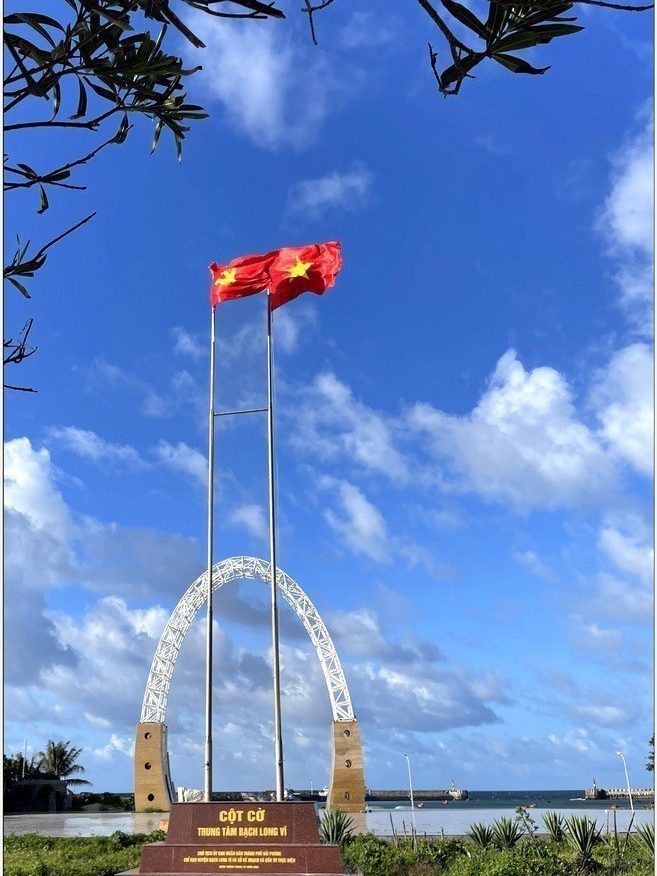
The image of the national flag flying in the wind becomes a “living border marker”, affirming Vietnam’s sacred and inviolable sovereignty over its seas and islands. (Photo: VNA)
A panoramic view of Bach Long Vi island from above (Photo: Vietnam Pictorial)

Journalist Nguyen Anh Tu, Chairman of the Hai Phong Journalists’ Association, is always deeply moved whenever he visits Bach Long Vi island and witnesses the Party flag and the national flag fluttering on the central flagpole of the island.

For the  Vietnamese people, the image of the national flag fluttering over the national waters is not only a symbol of the nation but also a resolute affirmation of Vietnam’s sacred and inviolable sovereignty over its seas and islands. The flag further embodies the pride and solidarity of the Vietnamese people.

Tien was also deeply impressed and moved when witnessing young volunteers working tirelessly day and night on the island, demonstrating their voluntary role. The contributions made by generations of young volunteers have not only improved the material life on the island but also created a solid wall to protect the country’s sea and island sovereignty.

For Nguyen Bich Hop, head of the Hai Phong Youth Volunteer Corps, every time she sets foot on the island, she feels deeply moved and proud to see the image of boats with the national flag flying proudly amidst the vast ocean. This not only reflects the resilience of fishermen but also sends a powerful message about the love for the nation.

According to Hop, the fishermen, who brave the rough seas every day, fearlessly face hardships and dangers to protect the precious resources of their homeland’s seas and islands. They are the silent sentinels, contributing to the national defence and development in the new era

“The fishermen, who brave the rough seas every day, fearlessly face hardships and dangers to protect the precious resources of their homeland’s seas and islands. They are the silent sentinels, contributing to the national defence and development in the new era.”

Nguyen Bich Hop, head of the Hai Phong Youth Volunteer Corps

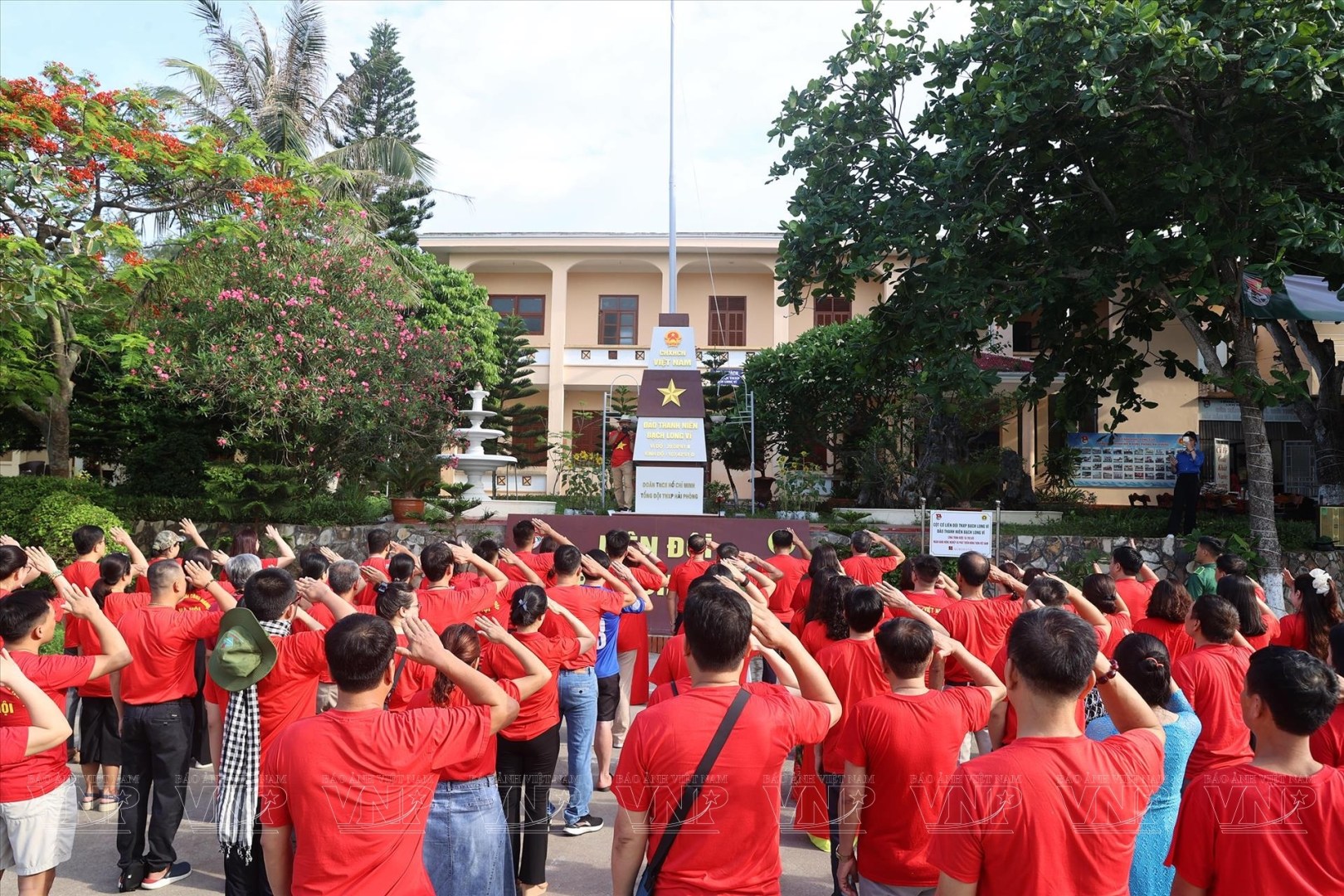
A flag-raising ceremony on Bach Long Vi island. (Photo: Vietnam Pictorial)

Party General Secretary To Lam praised the island’s strategic importance, pointing out that Bach Long Vi serves as a key maritime gateway, controlling vital shipping lanes in the Gulf of Tonkin and providing logistics services for military activities at sea. He also highlighted the island’s rich marine ecosystem and its role as a hub for fisheries.

He urged Hai Phong and Bach Long Vi to focus on developing a concrete strategy for the island, ensuring that it becomes a fortress for defending Vietnam’s maritime sovereignty while also fostering economic growth, particularly in fisheries, aquaculture, and tourism, in accordance with the Politburo’s Resolution 45-NQ/TW on building and developing Hai Phong city by 2030, with a vision to 2045.

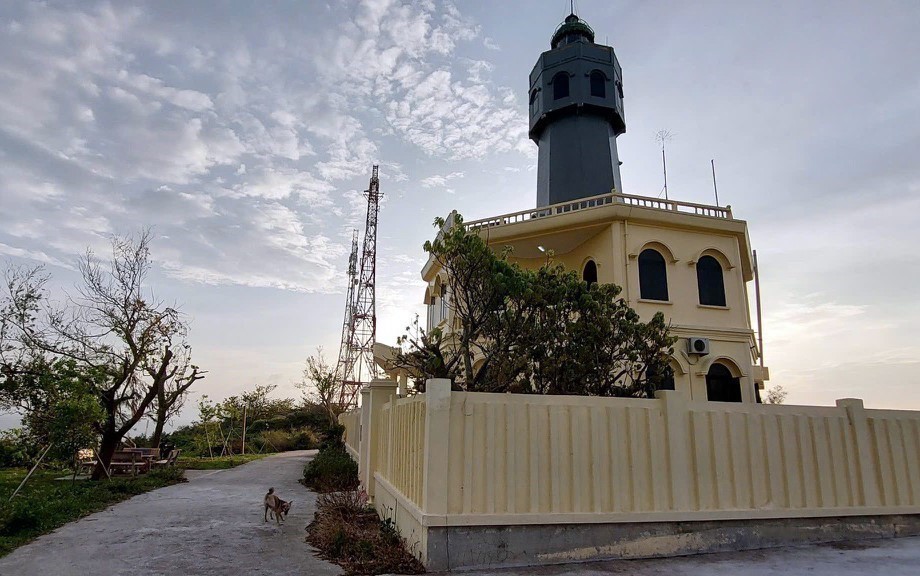
The Bach Long Vi lighthouse, which carries a special mission, stands firm amid storms and winds and never fails to shine over the East Sea.  (Photo: VNA)

Bach Long Vi should focus on implementing the national target programme on new-style rural area building; speeding up digital transformation; and enhancing the protection of marine resources and the environment, while also building and promoting the values of culture and people, he said.

The Party leader also urged the locality to accelerate administrative reforms in a transparent and public manner, tailored to the island district’s conditions, and support its fishermen to maintain fishing activities./.

Vessels anchored at Bach Long Vi island’s harbour. (Photo: VNA)

Bach Long Vi: símbolo eterno de la soberanía de Vietnam sobre el mar y las islas

Bach Long Vi desde una vista aérea. (Foto: VNA)

Con su belleza prístina y su profundo valor histórico, el distrito insular de Bach Long Vi, en la ciudad norteña de Hai Phong, no solo acoge a pescadores, jóvenes voluntarios y residentes de Hai Phong comprometidos con la isla, sino que también representa un “hito viviente” que afirma la soberanía inalienable y sagrada de Vietnam sobre sus mares e islas.

Un fruto del trabajo arduo y la dedicación constante

Según Bui Trung Tien, secretario del Comité del Partido del distrito de Bach Long Vi, esta isla es un símbolo de resistencia y longevidad en medio del vasto océano. Bach Long Vi es la isla más distante de la costa vietnamita en la Bahía del Golfo de Tonkín, situada a 15 millas náuticas de la línea de demarcación de la bahía entre Vietnam y China, y a 110 km de la isla de Hon Dau (distrito de Do Son, Hai Phong).

El distrito de Bach Long Vi fue establecido el 9 de diciembre de 1992, bajo la jurisdicción de Hai Phong, y desempeña un papel clave en la economía, la defensa y la seguridad nacional.

Desde sus inicios, con tan solo 25 funcionarios y 62 jóvenes voluntarios que llegaron para construir el distrito, hasta la actualidad, el sistema político de Bach Long Vy se ha consolidado; la organización del Partido cuenta con 16 células y 296 miembros. La población local está conformada por 326 hogares y mil 152 personas, según el censo nacional de 2019. La mayoría se dedica a la pesca y a los servicios relacionados, y en días de mal tiempo, cuando muchos barcos buscan refugio en el puerto, la población puede llegar a ser de dos mil a tres mil personas.

El personal del Comando de la Zona 1 de la Guardia Costera entrega la bandera nacional a los pescadores en los barcos atracados en el puerto de la isla Bach Long Vi. (Foto: VNA)
Barcos atracados en el puerto de la isla Bach Long Vi. (Foto: VNA)

En su visita al distrito de Bach Long Vi en noviembre de 2024, el secretario general del Partido Comunista de Vietnam, To Lam, destacó las contribuciones de los funcionarios, soldados, voluntarios y la comunidad en la construcción de esta isla clave para la nación.

Comentó que esta era su primera visita a Bach Long Vi, un lugar que siempre había querido conocer. Subrayó cómo, más de 30 años después de su creación, la isla ha pasado de ser un sitio árido y deshabitado a una isla verde y vibrante, con un puerto y muelle activos, y una infraestructura económica y social en constante expansión. Este progreso es resultado de un esfuerzo continuo de trabajo y dedicación, impulsado por el espíritu de acción, creatividad y entusiasmo de los jóvenes, reflejando la unidad entre el ejército y la población. Este espíritu debe ser compartido y aprendido por todos.

 El secretario general del Partido, To Lam, pronunció un discurso durante una reunión con los líderes clave y las unidades destacadas en el distrito insular de Bach Long Vi en noviembre de 2024. (Foto: VNA)

Hasta la fecha, el distrito ha invertido en más de 60 proyectos e instalaciones, la mayoría de los cuales han tenido un impacto positivo en la economía y la sociedad, a la vez que se alinean con las tareas de defensa y protección de la soberanía marítima nacional. Las dificultades iniciales del distrito, como el transporte entre la isla y la tierra firme, se han ido superando. Desde julio de 2020, el barco Hoa Phuong Do, con capacidad para 200 pasajeros y 50 toneladas de carga, ha facilitado el transporte de personas y mercancías.

Además, el centro logístico, el muelle y la terminal de pasajeros de la ruta Hai Phong-Bach Long Vi (Puerto Hoa Dong), en funcionamiento desde marzo de 2023, han mejorado la conectividad, y proyectos como la provisión de agua potable y la infraestructura eléctrica aseguran la calidad de vida en la isla. El sistema local de producción y suministro de electricidad ha garantizado el suministro de energía las 24 horas del día, cubriendo las necesidades energéticas de la isla durante los próximos 10 a 15 años.

El secretario del Comité del Partido de Bach Long Vi, Bui Trung Tien, indicó que, en 2024, el distrito mantuvo su estabilidad socioeconómica, alcanzando un valor de producción de 18,38 millones de dólares, un aumento del 8,97% con respecto al mismo período del año anterior. Se fortaleció la gestión estatal en la defensa, seguridad y protección de la soberanía marítima, y la estabilidad política y el orden público fueron asegurados.

Recordando el espíritu patriótico
La bandera nacional ondeando se convierte en un “hito viviente” que reafirma la soberanía sagrada e inviolable de los mares y las islas de la Patria. (Foto: VNA)
Vista panorámica de la isla Bach Long Vi desde el aire, con dos puertos de refugio contra tormentas del norte y sur que están siendo rápidamente construidos. (Foto: VNA)

Cada vez que el reportero Nguyen Anh Tu, presidente de la Asociación de Periodistas de Hai Phong, cruza el mar hacia Bach Long Vi, siente que la imagen de las banderas del Partido y de la República ondeando en el mástil central es un símbolo sagrado, un reflejo de la soberanía nacional sobre los mares y las islas. Para todos los vietnamitas, la bandera que ondea frente al mar es un emblema de orgullo y unidad.

Bui Trung Tien, profundamente impresionado por el trabajo de los jóvenes voluntarios en la isla, significó que sus contribuciones no solo han mejorado la vida material en Bach Long Vi, sino que también han creado una muralla sólida en defensa de la soberanía del país. Esta actitud refleja la voluntad y el espíritu de los habitantes de Hai Phong.

Nguyen Bich Hop, capitana del equipo de jóvenes voluntarios de Hai Phong, expresó su orgullo al ver las embarcaciones con la bandera roja con la estrella amarilla ondeando en medio del océano. Esto representa la resistencia de los pescadores y su amor por la patria.

“Los pescadores, que enfrentan las duras condiciones del mar, protegen los valiosos recursos marinos de la nación. Son los soldados invisibles que defienden y desarrollan la nación en esta nueva era”.

Nguyen Bich Hop, capitana del equipo de jóvenes voluntarios de Hai Phong.

Ceremonia de izamiento de la bandera en el hito de soberanía en la isla Bach Long Vi. (Foto: VNA)

En una reunión de trabajo con las autoridades locales, el secretario general To Lam destacó que Bach Long Vi es clave para el control de las rutas marítimas internacionales y para las actividades militares en el mar. La zona marítima de Bach Long Vi es una de las ocho principales áreas pesqueras de la Bahía del Golfo de Tonkín, con un ecosistema marino diverso y abundante.

El líder partidista sugirió que, aprovechando las potencialidades de la isla, Hai Phong y el distrito de Bach Long Vi deben desarrollar un plan para convertirla en una fortaleza que proteja las aguas y el cielo de Vietnam, promoviendo la acuicultura, los servicios logísticos pesqueros y el turismo, tal como se establece en la Resolución 45-NQ/TW sobre el desarrollo de Hai Phong para 2030, con visión a 2045.

El faro Bach Long Vi tiene una responsabilidad especial y sigue firme ante tormentas, nunca ha dejado de iluminar en el Mar del Este. (Foto: VNA)

El espíritu de esta Resolución ya está siendo adoptado por el Comité partidista, el Gobierno, las fuerzas armadas y la población de Bach Long Vi, con acciones concretas programadas para 2025 y los años siguientes.

En consecuencia, Bach Long Vi se compromete a implementar el Programa de Objetivos Nacionales de Construcción de Zonas Rurales, avanzar en la transformación digital, proteger los recursos y el medio ambiente marino, y promover los valores culturales y humanos del distrito. Además, se fortalecerá la reforma administrativa para mejorar la transparencia y apoyará a los pescadores para que continúen trabajando en el mar./.

Barcos atracados en el puerto de Bach Long Vi. (Foto: VNA)

Bach Long Vi, symbole éternel de la souveraineté maritime et insulaire du Vietnam

Bach Long Vi vue d’en haut. Photo: VNA

Avec sa beauté sauvage et son importance historique, le district insulaire de Bach Long Vi, à Hai Phong, n’est pas seulement un lieu de résidence pour les pêcheurs, les jeunes volontaires et les citoyens de Hai Phong engagés à y vivre, mais aussi une “borne vivante” affirmant la souveraineté maritime sacrée et inviolable du Vietnam.

Le fruit d’un travail acharné et de l’engagement

Selon Bui Trung Tien, secrétaire du Comité du Parti du district de Bach Long Vi, cette île est un symbole de pérennité et de résilience au cœur de l’immensité maritime. Située à 110 km de Hon Dau (Do Son – Hai Phong) et à 15 milles marins de la ligne de démarcation du golfe du Tonkin entre le Vietnam et la Chine, Bach Long Vi est l’île la plus éloignée du pays dans cette région.

Le district de Bach Long Vi a été officiellement créé le 9 décembre 1992 et placé sous l’administration de la ville de Hai Phong. Situé en première ligne du pays, il joue un rôle crucial en matière d’économie, de défense et de sécurité nationale.

Dès ses débuts, avec seulement 25 cadres et 62 jeunes volontaires envoyés pour y établir une présence stable, le système politique du district s’est progressivement consolidé, comptant aujourd’hui 16 cellules du Parti communiste avec 296 membres. La population insulaire comprend 326 ménages, soit 1 152 habitants (selon les données de l’enquête du 1ᵉʳ avril 2019), principalement engagés dans la pêche et les services de logistique maritime. Lors des tempêtes, le port d’abri de l’île accueille temporairement un afflux de bateaux et de marins, faisant grimper la population à 2 000 – 3 000 personnes.

Des officiers et des soldats du commandement de la région 1 des Garde-côtes offrent le drapeau national aux pêcheurs sur les bateaux ancrés au port de l’île de Bach Long Vi. Photo : VNA

Les navires sont ancrés au port de l’île de Bach Long Vi. Photo : VNA

Lors de sa visite officielle à Bach Long Vi en novembre 2024, le secrétaire général du Parti, To Lam, a salué les contributions des générations successives de cadres, soldats, jeunes volontaires et citoyens engagés dans la construction de cette île.

Il a été impressionné par la transformation de l’île en plus de 30 ans. Autrefois déserte et aride, elle est aujourd’hui verdoyante, propre et pleine de vitalité, avec des infrastructures socio-économiques de plus en plus développées. Ce progrès est le fruit d’un travail acharné et d’un dévouement sans relâche, illustrant le volontarisme, la créativité et l’engagement des résidents et des volontaires venus du continent, ainsi que la forte cohésion entre l’armée et la population.

Le secrétaire général du PCV To Lam prend la parole lors d’une séance de travail avec les dirigeants du district insulaire de Bach Long Vi en novembre 2024. Photo: VNA

Aujourd’hui, plus de 60 projets et ouvrages ont été réalisés, dont la plupart ont apporté des bénéfices concrets sur le plan socio-économique, tout en renforçant la défense et la sécurité nationale, et en protégeant fermement la souveraineté maritime et insulaire du Vietnam. Les défis spécifiques de l’île, notamment en matière de transport entre le continent et l’île, sont progressivement surmontés. Le navire Hoa Phuong Do, mis en service en juillet 2020, peut transporter 200 passagers et 50 tonnes de marchandises, répondant ainsi aux besoins de déplacement et de transport de l’armée et de la population du district insulaire.

Par ailleurs, le centre logistique maritime, le quai d’ancrage des navires et le terminal passagers sur la ligne Hai Phong – Bach Long Vi (port de Hoa Dong), opérationnels depuis mars 2023, ont considérablement amélioré les conditions de vie des habitants. L’île bénéficie désormais d’un approvisionnement en eau potable suffisant pour ses habitants et les navires de pêche hauturiers. L’électricité est fournie en continu 24 heures sur 24, garantissant un approvisionnement stable pour les 10 à 15 prochaines années.

Selon Bui Trung Tien, en 2024, la situation socio-économique de l’île est restée stable, avec des indicateurs atteignant les objectifs fixés. La valeur totale de la production économique est estimée à 467,19 milliards de dongs, soit une augmentation de 8,97 % par rapport à l’année précédente. L’administration publique, la défense, la sécurité sociale et la protection de la souveraineté maritime et insulaire ont été renforcées. La sécurité politique et l’ordre social local sont maintenus.

Un rappel du patriotisme
Le drapeau national flottant au vent est devenu un symbole de “borne vivante” affirmant la souveraineté sacrée et inviolable de la mer et des îles de la Patrie. Photo : VNA
Vue panoramique de l’île de Bach Long Vi avec deux abris anti-tempête au nord et au sud en cours d’achèvement urgent. Photo : Vietnam illustré 

Chaque visite à Bach Long Vi suscite un profond sentiment de patriotisme. Pour Nguyen Anh Tu, président de l’Association des journalistes de Hai Phong, le drapeau rouge frappé de l’étoile dorée flottant fièrement sur l’île est un puissant symbole de la souveraineté nationale et de l’unité du peuple vietnamien.

L’engagement des jeunes volontaires sur l’île est une source d’inspiration pour Bui Trung Tien. Leur contribution améliore non seulement les conditions de vie, mais aussi renforce la défense de la souveraineté maritime.

Pour Nguyen Bich Hop, cheffe de l’équipe de volontaires de Hai Phong, voir les navires arborer fièrement le drapeau vietnamien en mer est une image émouvante et symbolique du courage des pêcheurs.

“Chaque jour, les pêcheurs naviguent en haute mer, affrontant difficultés et dangers, pour protéger et préserver les précieuses ressources marines et insulaires de leur patrie. Ils sont des sentinelles silencieuses, contribuant à la protection et au développement du pays dans cette nouvelle ère”.

Nguyen Bich Hop, cheffe de l’équipe de volontaires de Hai Phong.

Cérémonie de lever du drapeau sur l’île de Bach Long Vi. Photo : Vietnam illustré

Lors d’une séance de travail avec les autorités locales, le secrétaire général To Lam a souligné que l’île de Bach Long Vi joue un rôle stratégique en tant que porte d’entrée d’importantes routes maritimes internationales, servant de centre logistique et de transit pour les activités militaires en mer, et constituant un avant-poste pour le contrôle de la sécurité maritime. La zone maritime de Bach Long Vi est l’une des huit principales zones de pêche du golfe du Tonkin, avec un écosystème marin riche et diversifié.

Le secrétaire général a suggéré que, compte tenu du potentiel, de la position et des avantages stratégiques de l’île, la ville de Hai Phong et le district de Bach Long Vi doivent élaborer des plans et des stratégies spécifiques pour transformer l’île en une forteresse protégeant la mer et l’espace aérien du Vietnam dans le golfe du Tonkin, tout en développant un centre de services logistiques pour la pêche, l’aquaculture et le tourisme, conformément à la résolution 45-NQ/TW du Politburo sur la construction et le développement de Hai Phong à l’horizon 2030, avec une vision jusqu’en 2045.

Le phare de Bach Long Vi reste inébranlable face aux tempêtes, n’ayant jamais cessé de briller une seule nuit en Mer Orientale. Photo : VNA

L’esprit de cette résolution a été pleinement intégré par le Comité du Parti, le gouvernement, l’armée et le peuple du district de Bach Long Vi, qui la mettront en œuvre à travers des actions concrètes en 2025 et au-delà.

En conséquence, Bach Long Vi s’efforce d’appliquer le programme national de modernisation rurale, d’accélérer la transition numérique, de renforcer la protection des ressources marines et de l’environnement, et de valoriser les atouts culturels et identitaires de l’île. Parallèlement, une réforme administrative axée sur la transparence et l’adaptation aux conditions locales sera encouragée pour garantir un développement durable du district insulaire./.

Navires ancrés au port de Bach Long Vi. Photo: VNA

Реализация циркулярной экономики для достижения целей устойчивого развития

Ферма по выращиванию кукурузы, сорго и трав с применением передовых технологий в провинции Нгеан. Фото: ВИА.

В последние годы развитию циркулярной экономики во Вьетнаме уделяется пристальное внимание со стороны Партии и Государства, сопровождаемое четкими направлениями и единым руководством. В Резолюции 13-го съезда Партии циркулярная экономика определена как одно из ключевых направлений развития страны на период 2021–2030 годов с перспективой до 2045 года.

Технологии и капитал – решающие факторы

Развитие циркулярной экономики рассматривается как одно из приоритетных направлений для достижения общей цели – управления отходами, эффективного использования ресурсов, охраны окружающей среды, предотвращения стихийных бедствий и адаптации к изменению климата в следующем этапе развития страны.

Фермеры Хайзыонга применяют передовые технологии в сельскохозяйственном производстве, стремясь к устойчивому развитию. Фото: ВИА.

Многие фермерские хозяйства в коммуне Тьендык, уезд Хынгха, провинция Тхайбинь инвестируют в сетевые теплицы и автоматические системы полива, что дает высокую эффективность. Фото: ВИА.
Модель выращивания японской дыни Киpo с применением передовых агротехнологий в коммуне Мишон, уезд Ниньшон, провинция Ниньтхуан. Фото: ВИА.

По словам доцента, доктора наук Нгуен Динь Тхо, директора Института стратегии и политики в области природных ресурсов и окружающей среды (Министерство природных ресурсов и окружающей среды), Закон «О защите окружающей среды» 2020 года, содержащий правовые нормы, направленные на продвижение циркулярной экономики, получил широкую поддержку и внимание со стороны министерств, ведомств, отраслевых ассоциаций, делового сообщества, организаций и заинтересованных лиц. Статья 142 Закона «О защите окружающей среды» 2020 года четко определяет критерии для реализации циркулярной экономики, среди которых выделяются четыре ключевых критерия : Эффективное использование сырья, материалов и энергии; продление жизненного цикла продукции; снижение выбросов и отходов в окружающую среду; отсутствие негативного воздействия на окружающую среду.

Уезд Тхойбинь (провинция Камау) уделяет особое внимание развитию сельскохозяйственного и рыбного производства, начиная от планирования подзон и изменения структуры посевов и животноводства до внедрения новых технологий в производство. Фото: ВИА.

На основе этих критериев в постановлениях, разъясняющих Закон «О защите окружающей среды» 2020 года, подробно регламентированы принципы циркулярной экономики, ответственность за её внедрение, поэтапный план реализации, а также механизмы стимулирования её развития. Кроме того, элементы циркулярной экономики интегрированы в стратегии, программы, проекты и планы развития различных отраслей, секторов и регионов.  

На третьем Вьетнамском форуме по циркулярной экономике в 2024 году эксперты отметили, что технологии и капитал являются основными узкими местами, сдерживающими развитие циркулярной экономики. Данг Хи Донг, директор Института исследований планирования и развития, бывший заместитель министра планирования и инвестиций, подчеркнул, что инновации и применение научно-технических решений в области экологии, снижение выбросов углерода станут ключом к переходу Вьетнама на циркулярную экономику. При этом внедрение новых технологий должно обеспечивать экономическую устойчивость. Экспериментальные технологические решения требуют начальной поддержки.

Выступающие делятся мнениями на дискуссионной сессии: «Продвижение циркулярной экономики во Вьетнаме – от планирования к действию». Фото: ВИА.

По его мнению, хорошие и передовые технологии должны обладать достаточным потенциалом для коммерциализации на рынке. Необходимо обеспечить справедливый подход при оценке и отборе технологий, используемых для «зеленого» перехода. Технологии, которые уже доказали свою эффективность как в охране окружающей среды, так и в экономическом потенциале, должны масштабироваться и внедряться в широких масштабах, а не ограничиваться лишь отдельными небольшими проектами.

Согласившись с этим мнением, Выонг Тхи Минь Хиеу, заместитель директора Департамента управления экономическими зонами Министерства планирования и инвестиций, отметила, что технологические решения должны признаваться и оцениваться на равных условиях.

«Мы с нетерпением ждем, когда отечественные технологии смогут широко коммерциализироваться, принося прибыль предприятиям, чтобы бизнес сам осознал их выгоды и проактивно внедрял их»,

поделилась Выонг Тхи Минь Хиеу, заместитель директора Департамента управления экономическими зонами Министерства планирования и инвестиций

В процессе перехода к циркулярной экономике предприятия сталкиваются со значительными трудностями в доступе к финансированию, особенно малые и средние предприятия. Хотя банки и кредитные организации уже внедрили специальные программы финансирования зеленого перехода и устойчивого развития, административные процедуры и доступ к капиталу по-прежнему сталкиваются с множеством препятствий.

Модель экологической промышленной зоны Deep C в Хайфоне привлекает иностранных инвесторов. Фото: ВИА.

Ле Тхань Тунг, член совета директоров Коммерческого банка промышленности и торговли Вьетнама (VietinBank), отметил, что правовая база для доступа бизнеса к финансированию была принята достаточно согласованно, однако по сравнению с реальными потребностями все еще существуют определенные разрывы. На основе практической реализации VietinBank выделяет три ключевых фактора, способствующих эффективному доступу к финансированию и его освоению.

Во-первых, важную роль играет осознание. Только когда предприятие понимает, что циркулярная экономика – это неизбежная тенденция и ключевой фактор развития, оно сможет самостоятельно разработать соответствующую бизнес-стратегию, заложить основу для роста и убедить инвесторов в необходимости финансирования.

Во-вторых, важна возможность сотрудничества в управлении, технологиях и кадровом обеспечении. Помимо программ поддержки, упрощающих предприятиям переход к циркулярной экономике, VietinBank предлагает льготные условия по процентным ставкам и комиссиям, способствуя устойчивому развитию.

В заключение, благодаря общественному вниманию и скоординированному управлению со стороны регулирующих органов, Вьетнам сделает значительные шаги вперед в реализации циркулярной экономики.

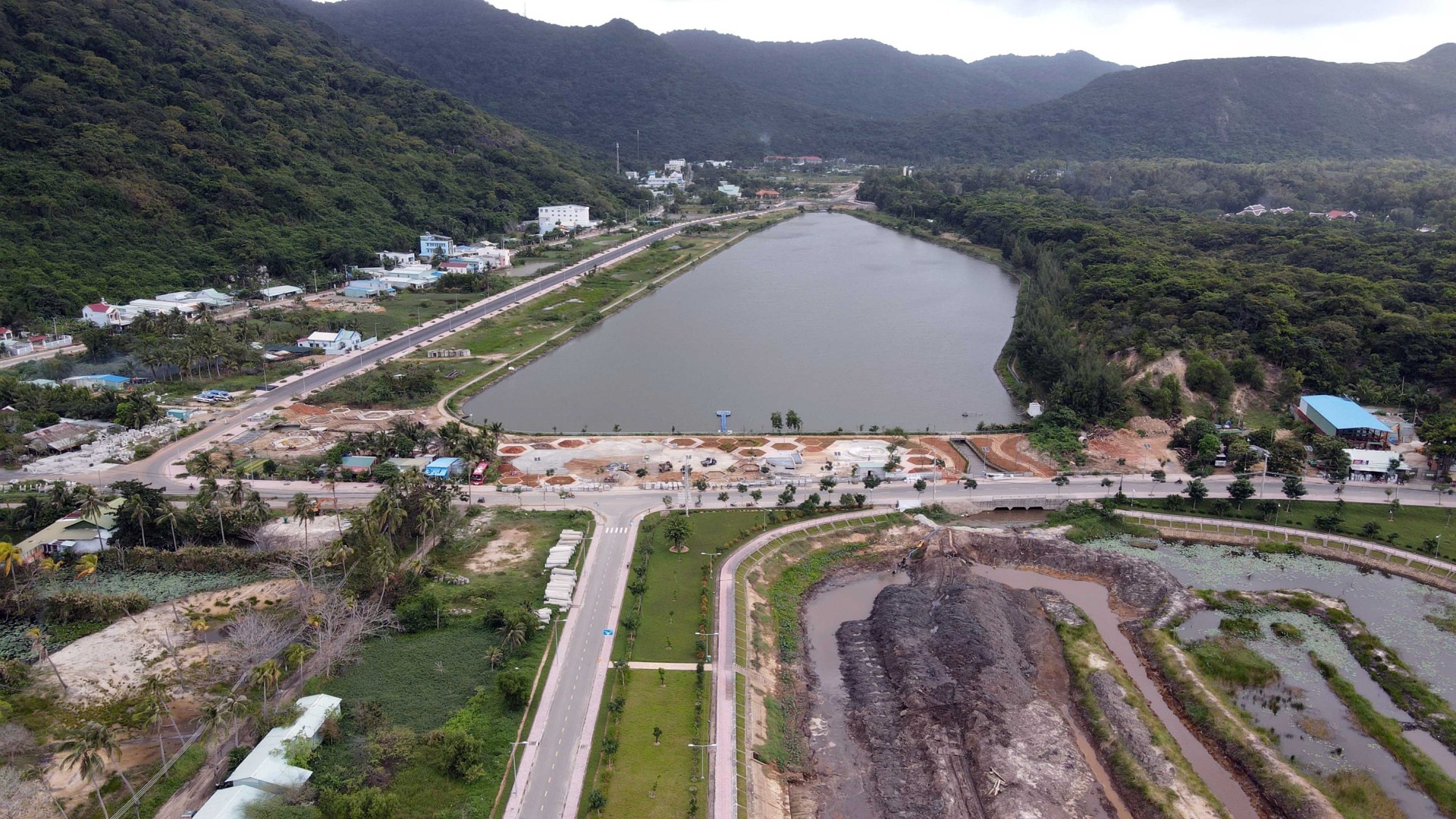
Водохранилище Куангчунг 2 в уезде Кондао, провинция Бариа-Вунгтау, было тщательно инвестировано и строго охраняется для накопления воды для Кондао по модели циркулярной экономики. Фото: ВИА.
Электростанция Ан Хой (Кондао) построена и развивается в соответствии с принципами экологичности и устойчивости. Фото: ВИА.
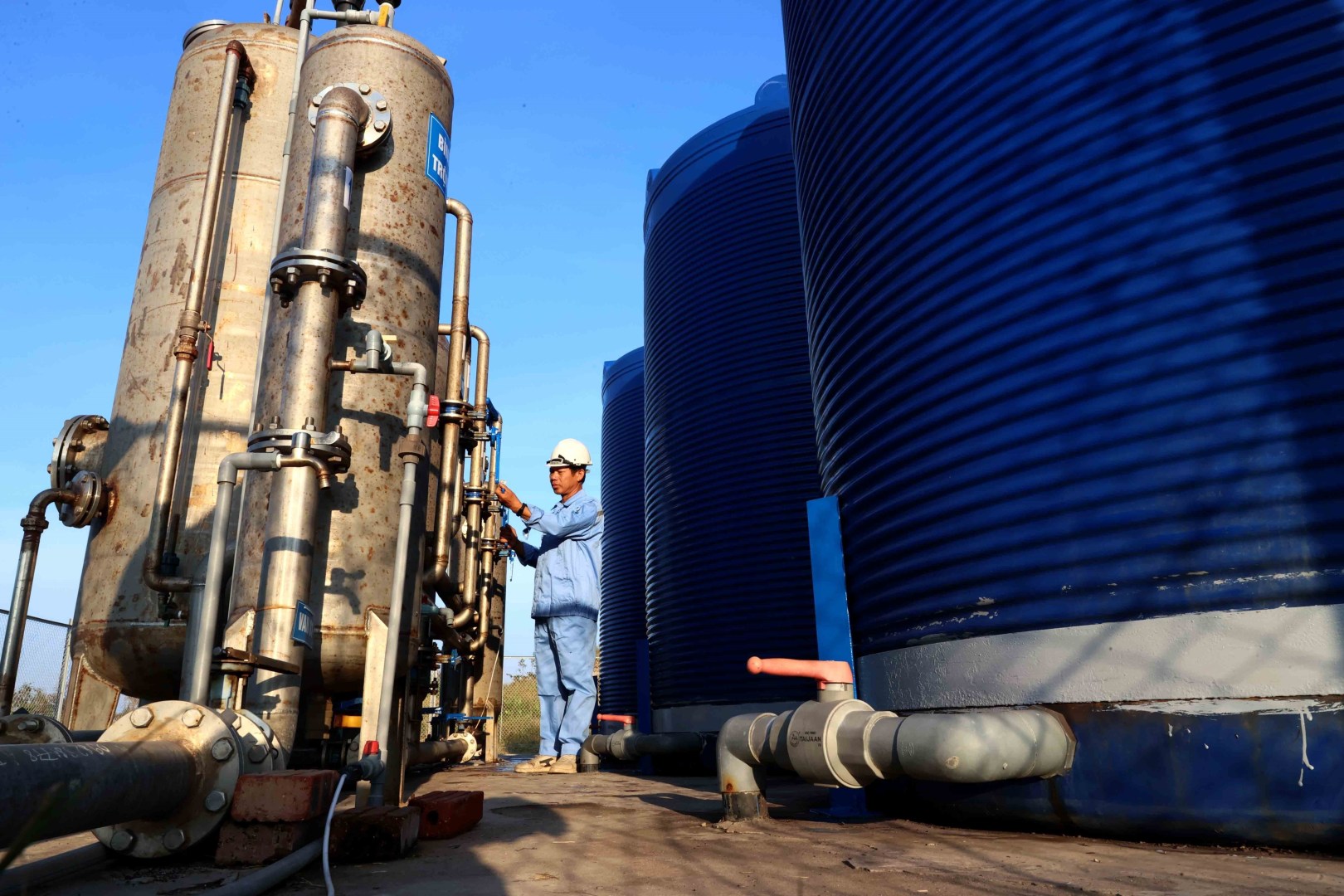
Водозавод уезда Кондао (провинция Бариа-Вунгтау) построен в соответствии с планом развития циркулярной экономики. Фото: ВИА.

Переход от планирования к действию

Вьетнам рассматривает внедрение циркулярной экономики как межотраслевую задачу и общую ответственность всего общества c участием органов власти всех уровней, министерств, ведомств, местных властей, организаций и частных лиц. Министерство природных ресурсов и окружающей среды, в координации с министерствами и ведомствами министерского уровня, разработало проект Национального плана действий по внедрению циркулярной экономики и представило его на утверждение премьер-министру.

Выступая на третьем Вьетнамском форуме по циркулярной экономике в 2024 году, заместитель министра природных ресурсов и окружающей среды Чан Куи Киен подчеркнул, что реализация Национального плана действий по внедрению циркулярной экономики будет способствовать инновациям и повышению производительности труда, развитию передовых практик, формированию зеленой культуры и зеленого образа жизни, а также созданию «зеленых» рабочих мест и новых цепочек стоимости.

Модель зеленой экономики и циркулярной экономики корпорации TH в уезде Нгиадан, провинция Нгеан. Фото: ВИА.

Доцент, доктор наук Нгуен Динь Тхо отметил, что в плане действий определены отрасли, производственные сферы и продукты, которым следует уделить приоритетное внимание при внедрении циклической экономики в ближайшее время. Особое внимание уделяется девяти важным и перспективным секторам, включая транспорт, сельское хозяйство, строительство, управление отходами, промышленность, химическую отрасль и другие.

Ninh Thuận nỗ lực giải tỏa công suất các dự án điện năng lượng tái tạo. Нинь Тхуан прилагает усилия для высвобождения мощности проектов возобновляемой энергетики. Фото: ВИА.

Для реализации плана действий в проекте предусмотрены пять ключевых групп решений и задач. Цели плана сопровождаются конкретными показателями, которые будут использоваться для мониторинга и оценки на этапах до 2030 и 2035 годов. В соответствии с этими пятью ключевыми группами решений и задач проект предусматривает 38 конкретных мероприятий, возложенных на министерства, ведомства и народные комитеты провинциального уровня, с четко установленными сроками выполнения. Для достижения целей Национального плана действий по внедрению циркулярной экономики, помимо решающих факторов усилий со стороны бизнеса и осведомленности населения, требуется активное и эффективное участие министерств, ведомств, народных комитетов провинций и общественных организаций.

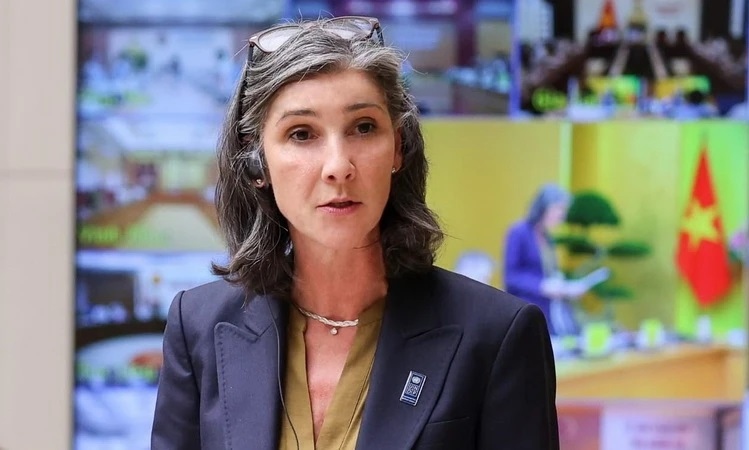
Как подразделение, поддерживающее разработку Национального плана действий по внедрению циркулярной экономики, Рамла Халиди, постоянный представитель Программы развития ООН во Вьетнаме, отметила, что приверженность Вьетнама циркулярной экономике направлена не только на реагирование на экологические вызовы, но и является способом достижения климатических целей и устойчивого развития.

«Циркулярная экономика предоставляет мощные возможности для решения этих вызовов, но Вьетнаму необходимо действовать быстро и срочно переходить от планирования к действиям»,

подчеркнула Рамла Халиди, постоянный представитель Программы развития ООН во Вьетнаме

Рамла Халиди считает, что для перехода к циркулярной экономике Вьетнаму необходимо реализовать четыре ключевых приоритета. Во-первых, интегрировать экологическое и циркулярное проектирование в политику, а также включить измеримые цели в дорожную карту развития циркулярной экономики, способствуя инновациям и повышению конкурентоспособности. Во-вторых, уделять приоритетное внимание таким ключевым отраслям, как сельское хозяйство, электроника, пластмассы, текстильная промышленность и строительные материалы, чтобы помочь Вьетнаму соответствовать международным стандартам и открыть новые возможности для устойчивого роста. В-третьих, обеспечить эффективные институты и разумную систему управления, которая снизит барьеры и будет стимулировать инновации. Наконец, переход к циркулярной экономике должен стать усилием всего общества, при этом приоритет должен отдаваться человеку и социальной справедливости../.

Провинция Ниньтхуан считается столицей возобновляемой энергетики. Фото: ВИА.

Vietnam promueve economía circular para lograr desarrollo sostenible

Una granja de maíz, sorgo y pasto de alta tecnología en la provincia de Nghe An (Foto: VNA)

En los últimos años, el desarrollo de la economía circular en Vietnam ha recibido la atención, orientación y directrices unificadas del Partido y del Estado. La Resolución del XIII Congreso del Partido Comunista identificó la economía circular como una de las orientaciones de desarrollo del país para el período 2021-2030, con visión hacia 2045.

Tecnología y recursos financieros son factores decisivos

El desarrollo de la economía circular se ha identificado como una de las principales direcciones prioritarias para alcanzar los objetivos generales de gestión de desechos, uso eficiente de los recursos, protección del medio ambiente, prevención de desastres naturales y respuesta al cambio climático en la próxima fase de desarrollo del país.

Los agricultores de la provincia de Hai Duong aplican alta tecnología a la producción agrícola con miras al desarrollo sostenible (Foto: VNA)

Muchas familias de agricultores de la comuna de Tien Duc, distrito de Hung Ha, provincia de Thai Binh, invierten en invernaderos y tecnología de riego automático para lograr una mayor eficiencia (Foto: VNA)
Un modelo de cultivo de melón japonés de alta tecnología Kiiro en la comuna de My Son, distrito de Ninh Son, provincia de Ninh Thuan (Foto: VNA)

Según el profesor asociado, doctor Nguyen Dinh Tho, director del Instituto de Estrategias y Políticas de Recursos Naturales y Medio Ambiente, la Ley de Protección del Medio Ambiente de 2020, con sus disposiciones legales que promueven la implementación de la economía circular, ha recibido el apoyo y la atención de los ministerios, agencias, asociaciones industriales, comunidades empresariales, organizaciones e individuos involucrados. El artículo 142 de la Ley establece criterios específicos para implementar la economía circular; entre ellos se destacan cuatro criterios clave, como la eficiencia en el uso de materiales y energía, la extensión de la vida útil de los productos, la reducción de emisiones y desechos al medio ambiente, y no provocar impactos negativos en el entorno.

El distrito de Thoi Binh, en la provincia más meridional de Ca Mau, se centra en la reestructuración de la agricultura y la ganadería y en la aplicación de nuevas técnicas de producción (Foto: VNA)

Los Decretos que guían la implementación de esta ley han establecido criterios específicos sobre economía circular; responsabilidades; la hoja de ruta; y mecanismos de incentivos para su realización. Además, la economía circular ha sido integrada en diversas estrategias, programas, proyectos, planes y programas de desarrollo en los sectores y las localidades del país.

En el tercer Foro de Economía Circular de Vietnam 2024, los expertos coincidieron en que la tecnología y los recursos financieros son los principales obstáculos para el desarrollo de la economía circular. Dang Huy Dong, director del Instituto de Investigación de Planificación y Desarrollo y ex viceministro del Ministerio de Planificación e Inversión, destacó que la innovación y la aplicación de tecnologías ambientales para reducir las emisiones de carbono serán la clave para la transición hacia una economía circular en Vietnam. La adopción de nuevas tecnologías también debe garantizar la sostenibilidad económica. Las tecnologías y soluciones experimentales necesitan un apoyo inicial.

Los oradores comparten sus opiniones en una sesión de debate titulada “Promoción de la economía circular en Vietnam: de la planificación a la acción”. (Foto: VNA)

Según Huy Dong, las tecnologías avanzadas deben tener la capacidad de ser comercializadas en el mercado, y necesita una evaluación y selección justa de las tecnologías aplicadas en el proceso de transición verde. Las tecnologías que han demostrado ser eficaces tanto en la protección del medio ambiente como en su potencial económico deben ser ampliadas a gran escala en lugar de aplicarse solo en pequeños proyectos.

Al respecto, Vuong Thi Minh Hieu, subdirectora del Departamento de Gestión de Zonas Económicas, señaló que las soluciones tecnológicas deben ser reconocidas y tratadas de manera equitativa.

Esperamos que las tecnologías nacionales puedan ser comercializadas ampliamente, generando beneficios para las empresas, de modo que ellas mismas reconozcan los beneficios y tomen la iniciativa en su implementación”

Vuong Thi Minh Hieu, subdirectora del Departamento de Gestión de Zonas Económicas

En el proceso de transición hacia la economía circular, las empresas también enfrentan numerosas dificultades para acceder a los recursos financieros, especialmente las pequeñas y medianas empresas. A pesar de que los bancos y las instituciones financieras han implementado programas destinados a la transición verde o al desarrollo sostenible, los procedimientos, trámites y accesos al financiamiento aún presentan diversas deficiencias.

El modelo de parque ecoindustrial Deep C en la ciudad de Hai Phong atrae a inversores extranjeros. (Foto: VNA)

Le Thanh Tung, miembro del Consejo Administrativo del Banco de Comercio Industrial de Vietnam (VietinBank), opinó que el marco legal para que las empresas accedan a los recursos financieros se ha emitido de manera relativamente coherente, pero en comparación con las normas y las necesidades reales aún existen brechas. A través de su implementación práctica, VietinBank ha identificado tres factores importantes que ayudan a acceder y desembolsar eficazmente los recursos financieros.

En primer lugar, la conciencia, ya que solo cuando las empresas reconozcan que la economía circular es una tendencia inevitable y un asunto importante para el desarrollo, tomarán la iniciativa de construir estrategias comerciales adecuadas y convencerán a los proveedores de recursos financieros.

En segundo lugar, la capacidad de cooperación en áreas como gestión, tecnología o personal. Además de los paquetes de apoyo que facilitan el acceso de las empresas a la economía circular, VietinBank también ofrece paquetes con tasas de interés y tarifas preferenciales.

Finalmente, la atención de la sociedad combinada con la gestión integral por parte de las agencias reguladoras permitirá que Vietnam avance de manera positiva en la implementación de la economía circular.

El lago Quang Trung 2 en el distrito de Con Dao, provincia de Ba Ria-Vung Tau, está diseñado para almacenar agua dulce para la localidad de acuerdo con el modelo económico circular. (Foto: VNA)
La planta de energía de An Hoi (Con Dao) se ha construido y desarrollado con una orientación ecológica y sostenible. (Foto: VNA)
La planta de agua del distrito de Con Dao en Ba Ria-Vung Tau se ha construido de acuerdo con el plan de desarrollo económico circular. (Foto: VNA)

De la planificación a la acción

Vietnam ha identificado la implementación de la economía circular como una tarea interinstitucional, una responsabilidad de toda la sociedad con la participación de los niveles gubernamentales, ministerios, agencias, localidades, organizaciones e individuos. El Ministerio de Recursos Naturales y Medio Ambiente ha liderado y coordinado con otros ministerios y agencias del Gobierno para desarrollar el borrador del Plan de Acción Nacional para implementar la economía circular, que será presentado al Primer Ministro para su promulgación.

En su intervención en el tercer Foro de Economía Circular de Vietnam 2024, el viceministro de Recursos Naturales y Medio Ambiente, Tran Quy Kien, afirmó que la materialización de dicho Llan generará impulso para la innovación y mejorará la productividad laboral; además permitirá desarrollar buenas prácticas, crear una cultura y estilo de vida verde; y promover la creación de empleos verdes y el desarrollo de nuevas cadenas de valor.

Modelo económico verde y circular del Grupo TH en el distrito de Nghia Dan, provincia de Nghe An. (Foto: VNA)

El profesor asociado, doctor Nguyen Đinh Tho, indicó que el Plan define las industrias, sectores y productos que deben ser priorizados para implementar la economía circular en el futuro cercano. En particular, se centrará en nueve sectores clave con gran potencial, como el transporte, la agricultura, la construcción, la gestión de residuos, la industria y los productos químicos, entre otros.

La provincia de Ninh Thuan se esfuerza por utilizar al máximo la capacidad de sus proyectos de energía renovable. (Foto: VNA)

Para materializar el Plan de Acción, el borrador propone cinco grupos de soluciones y tareas principales, cuyos objetivos están vinculados a indicadores específicos para monitorear y evaluar los avances en las etapas hasta 2030 y 2035. Se establecen 38 tareas y actividades específicas que se asignarán a ministerios, agencias y gobiernos provinciales, con plazos de ejecución concretos. Para alcanzar los objetivos establecidos, además del esfuerzo de las empresas y la conciencia de los ciudadanos, se requiere la participación activa y efectiva de los ministerios, agencias, gobiernos locales, organizaciones y grupos sociales.

Como unidad que apoya la elaboración del Plan de Acción Nacional sobre Economía Circular, Ramla Khalidi, representante residente del Programa de las Naciones Unidas para el Desarrollo (PNUD) en Vietnam, evaluó que el compromiso del país indochino con este tema no solo tiene como objetivo enfrentar los desafíos ambientales, sino también lograr sus metas en términos de cambio climático y desarrollo sostenible.

“La economía circular ofrece una oportunidad poderosa para abordar estos desafíos, pero Vietnam debe actuar con rapidez, pasando de la planificación a la acción”.

Ramla Khalidi, representante residente del Programa de las Naciones Unidas para el Desarrollo en Vietnam

La funcionaria agregó que para lograr la transición hacia una economía circular, el país sudesteasiático debe centrarse en cuatro prioridades, como incorporar el diseño ecológico y circular en las políticas, así como introducir objetivos medibles en la hoja de ruta de la economía circular para promover la innovación y la competitividad; priorizar sectores clave como la agricultura, la electrónica, el plástico, el textil y los materiales de construcción para ayudar a Vietnam a cumplir con los estándares internacionales y abrir nuevas oportunidades para un crecimiento sostenible; asegurar que las instituciones eficaces y la estructura de gobernanza adecuada reduzcan las barreras y fomenten la innovación; y, finalmente, estimular la participación de toda la sociedad, colocando a las personas y la justicia en el centro./.

La provincia costera de Ninh Thuan se ha convertido en la localidad líder de Vietnam en energía renovable. (Foto: VNA)


 实现循环经济转型以达到可持续发展目标

乂安省的一个应用高科技的 农场。图自越通社

近年来,越南循环经济发展计划早已得到党和国家的关注、定向和统一性指导。越共十三大决议中已将循环经济建设视为2021-2030年时期及愿景展望到2045年国家发展战略的重要方向。

科技与资金是决定性因素

循环经济发展被确立为实现国家在下一个发展时期中的废弃物管理、资源高效利用、环境保护、防灾减灾和应对气候变化等目标的优先发展方向。

海洋农民将高科技应用在农业生产中,以促进可持续发展。图自越通社

太平省兴河县进德乡许多农户投资建设大棚和自动灌溉技术,以提高种植效率。图自越通社
宁顺省宁山县美山乡以高科技农业方向开展日本Kiro甜瓜种植模式。图自越通社

越南自然资源与环境部下属资源与环境战略政策研究院院长阮廷寿副教授指出,2020年《环保法》中已将循环经济纳入法制化轨道,得到了有关部委、行业协会、企业界、组织和个人的支持与关注。2020年《保护法》第142条具体规定了实施循环经济的标准,其中强调四大核心标准,包括:提高原材料、燃料和能源的利用效率;延长产品生命周期;减少废弃物排放;不对环境造成影响。

金瓯省太平县注重促进农渔业发展,推进农作物和牲畜结构调整并将新技术应用于生产中。图自越通社

基于这些标准,2020年《环保法》的相关议定已进一步具体化循环经济的标准、履行循环经济责任、实施循环经济路线图;鼓励推进循环经济的机制。此外,循环经济已被纳入多个行业、领域和地方的战略、计划、方案和发展规划之中。

各位专家在2024年第三届越南循环经济论坛上指出,科技和资金短缺是当前制约循环经济发展的瓶颈。越南规划与发展研究院院长、原计划与投资部副部长邓辉东强调,环境和减碳领域中的创新与科技应用是促使越南迈进循环经济的关键。新技术应用必须保持经济可持续性。试验性的技术和解决方案需要在初期得到扶持。

各位专家在“促进越南循环经济发展——从计划到行动转变”讨论会上交换意见。图自越通社

邓辉东指出,优质、先进的技术应具备市场化能力。公平地评估和选择适用于绿色转型的技术。已被证明在环保和经济效益方面均具优势的技术应得到大规模应用,而非仅限于一些小型项目。

对此问题,计划与投资部经济区管理司副司长王氏明孝表示,各项技术解决方案应得到公平的认可和对待。

“我们期待国内技术能够广泛商业化,为企业带来收益,使企业自主认识到其利益,并主动实施相关计划。”

计划与投资部经济区管理司副司长王氏明孝

在循环经济转型过程中,企业,特别是中小企业在资金获取方面遇到许多困难。尽管各家银行和信贷组织已制定绿色转型或可持续发展的相关专项融资计划,但审批流程和资金获取渠道仍存在诸多障碍。

海防市Deep C生态工业区模式吸引外国投资商的眼球。图自越通社

越南工商股份商业银行(VietinBank)董事会成员黎青松表示,目前,针对企业的融资法框架相对完善,但与实际需求仍存在一定差距。根据实践经验,该银行指出提升资金获取和到位效率的三个关键因素。

第一是企业的认识,只有当企业认识到循环经济是必然趋势,并视其为发展核心问题,企业才会主动制定合理而具有潜力的经营战略,并能够争取资金供应者的支持。

其次是企业在管理、技术和人事队伍等方面的合作能力。除了支持企业容易融入循环经济体系的优惠政策外,VietinBank还推出利率和费用优惠政策。

最后,在社会整体关注及政府部门协调推进的情况下,越南将在循环经济实施过程中取得积极进展。

巴地头顿省昆岛县的2号光中湖采用循环经济模式运行。图自越通社
昆岛县的安会电力厂以绿色、可持续方向建设与发展。图自越通社
巴地头顿省昆岛县的水厂是按照循环经济发展计划建造的。图自越通社

从计划到行动的转化

越南确定实施循环经济是一项跨部门任务,是全社会的共同责任,需要各级政府、各部委、地方、组织和个人的积极参与。自然资源与环境部牵头,与相关部门和机构协调,起草了《国家循环经济行动计划》,并提交政府总理批准发布。

自然资源与环境部副部长陈贵坚在2024年第三届越南循环经济论坛上强调,实现《国家循环经济行动计划》将有助于推动创新,提高劳动生产率,符合良好生产规范,营造绿色文化和生活方式,同时推动绿色就业和新的价值链发展。

TH集团设在乂安省乂坛县的绿色、循环经济模式。图自越通社

阮廷寿副教授表示,该计划确定了未来应优先实施循环经济的行业、领域和产品,其中重点关注九个具有潜力的重要行业,包括交通运输、农业、建筑、废物管理、工业、化学等。

宁顺省努力释放可再生能源电力项目的产能。图自越通社

为了实现《行动计划》,草案提出了五个核心解决方案和任务。为达到《国家循环经济行动计划》中所设定的目标,除了企业界的努力和人民的意识外,还需要各部委、省级人民委员会及相关组织团体的积极、有效参与。

作为支持制定《国家循环经济行动计划》的单位,联合国开发计划署(UNDP)常驻越南代表拉姆拉·阿勒哈利迪(Ramla Khalidi)表示,越南对循环经济的承诺不仅是应对环境保护挑战的措施,更是实现气候目标和可持续发展的解决方案。

“循环经济为解决这些挑战提供了巨大的机遇,但越南必须迅速行动,加快从规划向行动的转变。”

联合国开发计划署(UNDP)常驻越南代表拉姆拉·阿勒哈利迪

拉姆拉·阿勒哈利迪认为,为实现循环经济转型,越南需要考虑四个优先事项:一是将生态设计、循环设计纳入政策中,并在循环经济路线图中制定可衡量的目标,推动创新和提高竞争力;二是优先促进农业、电子、塑料、纺织和建材等重点行业,以助力越南满足国际标准并创造可持续增长机遇;三是确保有效的制度和合理的治理结构,以减少障碍并促进创新;最后,循环经济转型必须是全社会的共同努力,以人为本,并将社会公平置于核心位置。(完)

宁顺省被视为可再生能源基地。图自越通社