Thi công trên tuyến cao tốc Diễn Châu – Bãi Vọt. Ảnh: Huy Hùng – TTXVN
Thi công xuyên Tết trên công trường cao tốc Bắc – Nam đoạn qua tỉnh Hà Tĩnh. Ảnh: Huy Hùng – TTXVN
Hàng loạt dự án giao thông không ngơi tiếng máy trên công trường. Ảnh: Huy Hùng – TTXVN
Trong dịp Tết Giáp Thìn, trên công trường cao tốc Quảng Ngãi – Hoài Nhơn, Tập đoàn Đèo Cả sẽ tổ chức 14 mũi thi công với gần 300 nhân sự cùng 168 đầu máy thiết bị. Ảnh: Huy Hùng – TTXVN
Thi công trên tuyến cao tốc Bắc-Nam đoạn Hàm Nghi – Vũng Áng (Hà Tĩnh). Ảnh: Huy Hùng – TTXVN
El tren del metro Ben Thanh – Suoi Tien funcionó la mañana del primer día del Nuevo Año Lunar 2025. Foto: VNA
Vietnam está entrando en la nueva primavera con aspiración y fuerte determinación. El 2025 se considera un hito importante del país en el proceso de ejecución del Plan Quinquenal 2021-2025, hacia el El XIV Congreso Nacional del Partido Comunista de Vietnam (PCV), a celebrarse en enero de 2026. Más que eso, este año representa un punto de inflexión para la nación con el fin de entrar en la nueva era de desarrollo y prosperidad.
Durante los días feriados del Año Nuevo Lunar (Tet) de 2025, en las obras importantes de nivel nacional, incluido el Proyecto del Aeropuerto Internacional de Long Thanh, la terminal de pasajeros en el aeropuerto internacional de Tan Son Nhat y la meta de completar la construcción de tres mil kilómetros de autopistas, miles de obreros trabajaron duro para asegurar el progreso de las tareas asignadas.
Las obras del aeropuerto de Long Thanh continuaron durante los días feriados del Año Nuevo Lunar (Tet). Foto: VNA
La construcción “no duerme” en el proyecto del aeropuerto de Long Thanh. Foto: VNA
Estas obras no sólo demuestran la voluntad y responsabilidad, sino también un espíritu de trabajo entusiasta que corre contra el tiempo para culminar los proyectos en el tiempo previsto, satisfaciendo los requisitos de desarrollo nacional para el año en curso.
Obra de construcción en la carretera Dien Chau – Bai Vot.
Obra de construcción en la carretera Norte-Sur a través de la provincia de Ha Tinh durante el Tet.
Una obra de transporte durante el Tet
Durante el Tet, en el sitio de construcción de la autopista Quang Ngai – Hoai Nhon, Deo Ca Group organizará la construcción con casi 300 empleados.
Sitio de construcción de la carretera Norte-Sur, tramo Ham Nghi – Vung Ang (Ha Tinh)
El Gobierno se esfuerza por lograr un crecimiento del Producto Interno Bruto (PIB) de 8% o más en 2025, superando el objetivo del 7%-7,5% establecido por la Asamblea Nacional. Esta es la aspiración revolucionaria de todo el sistema político, de la comunidad empresarial y de la sociedad. Sin embargo, en el volátil contexto internacional, Vietnam tendrá que enfrentar numerosas dificultades y desafíos.
La base para alcanzar este objetivo se desprende claramente del pensamiento estratégico y la visión de desarrollo a largo plazo de los líderes del PCV y del Estado sobre la nueva era de desarrollo y prosperidad de la nación. Las localidades del país, especialmente las dos locomotoras económicas, Hanoi y Ciudad Ho Chi Minh, se esfuerzan por lograr un crecimiento del 8-10%, con el fin de liderar el impulso para un desarrollo innovador.
Hanoi y Ciudad Ho Chi Minh lideran el impulso del desarrollo nacional. Foto: VNA
En ese contexto, el Gobierno sigue aplicando firmemente los tres avances estratégicos, haciendo hincapié en que el perfeccionamiento del marco institucional se considere “el avance de los avances” con el fin de maximizar los recursos para el desarrollo.
La innovación es la clave para que el país se transforme y avance hacia una nueva era llena de oportunidades. En todo el mundo, los centros de innovación han demostrado desempeñar un papel vital a la hora de impulsar el crecimiento económico basado en el conocimiento, la tecnología y las capacidades creativas. Vietnam no es una excepción en esta tendencia y está poniendo la innovación en el centro de su estrategia de desarrollo nacional.
Vietnam promueve el crecimiento económico basado en el conocimiento, la tecnología y la innovación. Foto: VNAProducción de componentes de medición en la empresa Sankoh Vietnam con inversión japonesa en la provincia norteña de Hoa Binh. Foto: VNAModelo de cultivo de camarones que aplica tecnología de alta calidad en la provincia de Ninh Binh. Foto: VNA
El modelo de cultivo de arroz inteligente con bajas emisiones asociado con el crecimiento verde se está implementando en la provincia de Hau Giang. Foto: VNA
De acuerdo con la Resolución No. 52-NQ/TW de 2019 sobre una serie de políticas y estrategias para participar de manera proactiva en la Cuarta Revolución Industrial, el Buró Político recalcó la importancia de un enfoque abierto y creativo que permita la experimentación de nuevas cuestiones prácticas, creando todas las condiciones favorables para la invención con el fin de promoverla en todos los sectores y campos.
“Es necesario obtener un enfoque abierto, creativo y experimental hacia nuevos problemas prácticos, creando todas las condiciones favorables para la innovación; en lo cual promueve la innovación en todos los sectores y campos.”
Según la Resolución No. 52-NQ/TW de 2019 sobre una serie de políticas y estrategias para participar de manera proactiva en la Cuarta Revolución Industrial
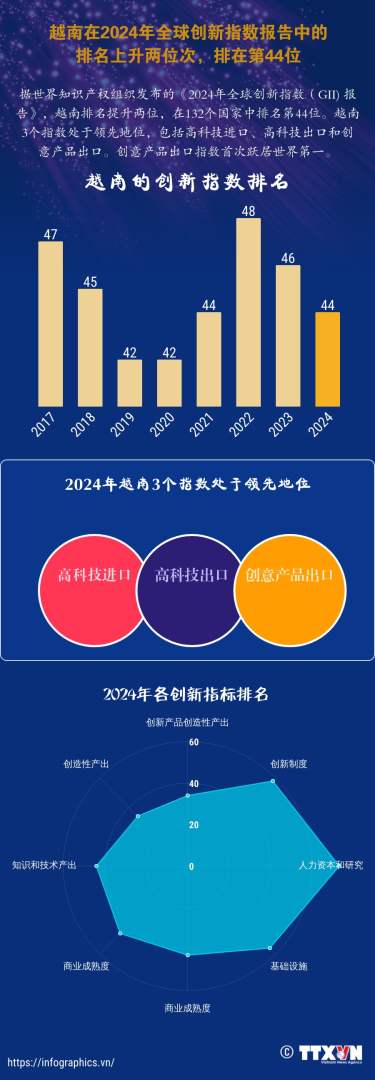
Los importantes logros en este campo, como el hecho de que Vietnam se sitúe en el puesto 44 de 133 países en el Índice Global de Innovación (GII, por sus siglas en inglés) en 2024, subiendo dos niveles respecto a 2023, son testimonio de los esfuerzos incansables de todo el sistema político, la comunidad empresarial y personas de todos los sectores de la vida.
El Gobierno se ha centrado en construir un sólido ecosistema, fundamentalmente a través del establecimiento del Centro Nacional de Innovación (NIC). Este no es solo un lugar para conectar las nuevas empresas e institutos de investigación, atrayendo a investigadores y expertos nacionales e internacionales, sino que también crea un entorno atractivo para los inversores y fondos de capital de riesgo extranjeros a Vietnam.
a
El primer ministro Pham Minh Chinh asistió a la ceremonia de inauguración del Centro Nacional de Innovación (NIC) y visitó el centro a fines de 2023. Foto: VNA
Exposición Internacional de Innovación de Vietnam 2023. Foto: VNA
La innovación ayudará a la nación del sudeste asiático a pasar de una economía basada en mano de obra intensiva a una basada en el conocimiento, la tecnología y un alto valor añadido. Esto ayuda al país a aumentar la productividad laboral y mejorar la calidad del producto y abre oportunidades para entrar mejor en la cadena de valor global y atraer capital de inversión de calidad.
“La innovación no es sólo una estrategia económica sino también una misión nacional, que ayuda a mejorar la vida de las personas, promover el espíritu emprendedor y construir un Vietnam fuerte y próspero”, enfatizó el ministro de Planificación e Inversión, Nguyen Chi Dung
El 2025 es una etapa para medir logros, y también el inicio de un camino de desarrollo fuerte y sostenible. Con nuevo impulso, nuevo pensamiento y los esfuerzos conjuntos de todo el sistema político y la población, Vietnam puede realizar plenamente su aspiración de convertirse en una nación rica, civilizada y próspera./.
La zona turística de Sun World Ba Na Hills decoró con unas 100 banderas nacionales el Puente Dorado con una longitud total de 148,6 metros. Foto: VNA
Парад и торжественное шествие в честь 70-й годовщины Победы при Дьенбьенфу.
Ровно 95 лет назад, 3 февраля 1930 года, была основана Коммунистическая партия Вьетнама (КПВ), которая быстро стала политическим авангардом рабочего класса и трудового народа Вьетнама. За 95 лет формирования и развития КПВ оставалась верной своим высшим и неизменным целям: служению Родине и народу.
Генеральные секретари Коммунистической партии Вьетнама в разные исторические периоды
Президент Хо Ши Мин (1890-1969 гг.)
Товарищ Чан Фу (1904-1931 гг.)
Товарищ Ле Хонг Фонг (1902-1942 гг.)
Товарищ Ха Хи Тап (1906-1941 гг.)
Товарищ Нгуен Ван Кы (1912-1941 гг.)
Товарищ Чыонг Чинь (1907-1988 гг.)
Товарищ Ле Зуан (1907-1986 гг.)
Товарищ Нгуен Ван Линь (1915-1998 гг.)
Товарищ До Мыой (1917-2018 гг.)
Товарищ Ле Кха Фиеу (1931-2020 гг.)
Товарищ Нонг Дык Мань (1940 г.)
Товарищ Нгуен Фу Чонг (1944-2024 гг.)
Товарищ То Лам (1957 г.)
Благодаря правильной революционной стратегии, подходящим и творческим революционным методам КПВ успешно возглавила народ всей страны в проведении всеобщеговосстания для захвата власти в августе 1945 года, создав Демократическую Республику Вьетнам – первое народно-демократическое государство в Юго-Восточной Азии, превратив Вьетнам из полуфеодальной колониальной страны в свободное и независимое государство, где вьетнамский народ из рабов превратился в хозяев своей судьбы.
С 6 января по 7 февраля 1930 года в Гонконге (Китай) состоялся съезд по объединению коммунистических организаций и созданию Коммунистической партии Вьетнама, который возглавил товарищ Нгуен Ай Куок от имени Коминтерна. (Фото: ВИА)
КПВ уверенно провела народ через испытания девятилетней затяжной войны, разгромив французских колонизаторов в исторической битве при Дьенбьенфу в 1954 году, а затем одержав победу над американскими империалистами и воссоединив страну в 1975 году.
Девятилетняя война с Францией, кульминацией которой стала Победа при Дьенбьенфу 7 мая 1954 года, создала условия для проведения Женевской конференции, на которой обсуждался вопрос Индокитая. (Фото: ВИА)
30 апреля 1975 года танки освободительной армии пронесли через железные ворота и захватили президентский дворец марионеточного правительства Сайгона, знаменуя победу в долгом 30-летнем пути борьбы народа за независимость. (Фото: ВИА)
«В деле строительства и защиты Родины наша Партия вывела страну из экономического кризиса и уверенно направила её по пути социализма, который был выбран Партией, президентом Хо Ши Мином и нашим народом. Внешнеполитическое положение страны с каждым годом неуклонно возрастает. Эти достижения создали основу и силу для вьетнамской революции с целью «активизации индустриализации и модернизации ради богатства народа, могущества страны, справедливого, демократического и цивилизованного общества».
Под руководством партии Вьетнам движется вперед, строя жизнь, которая становится все более благополучной и счастливой. (Фото: ВИА)
Прошедшие 95 лет стали героическим и славным периодом в истории народа Вьетнама, поскольку страна постепенно избавлялась от бедности и отсталости, уверенно продвигаясь к построению всё более благополучной и счастливой жизни.
Для достижения этих исторически значимых успехов Коммунистическая партия Вьетнама всегда держалась за курс единства и сплоченности, которые стали основой для боевой силы партии.
Президент Хо Ши Мин. (Фото: ВИА)
Коммунистическая партия Вьетнама всегда уделяет внимание строительству и укреплению единства в партии, чтобы партия действительно стала авангардом, крепким штабом, лидером и верным слугой народа. Великое национальное единство стало революционной стратегией, лозунгом действия всей партии и всего народа. Именно поэтому, несмотря на все трудности и испытания, вьетнамская революция достигла окончательной победы, как подтвердил президент Хо Ши Мин:
«Благодаря тесному единству, единодушному служению рабочему классу, служению народу, служению Родине, с момента своего основания наша партия сплотила, организовала и возглавила наш народ в активной борьбе, шаг за шагом переходя от одной победы к другой».
президент Хо Ши Мин
Единство вступает в новую эру нации
Наша партия мобилизовала силу великого национального единства. На фото: Руководство партии и государства участвуют в празднике Великого национального единства. (Фото: ВИА)
Весна на Родине в Осаке, ЯпонияГенеральное консульство Вьетнама в Перте привезло “Весну на Родине” для вьетнамской диаспоры в штате Западная АвстралияВесна на Родине в Шри-ЛанкеЯркое звучание национальной музыки на “Весне на Родине” в Чешской РеспубликеПрограмма “Весна на Родине” в Камбодже
Наша партия мобилизовала силу великого национального единства. На фото: Программа «Весна на Родине» для вьетнамской диаспоры за рубежом. (Фото: ВИА)
КПВ продвигала силу великого национального единства, сочетая мощь всего народа с мощью эпохи, чтобы провести Вьетнам через все трудности и вызовы, укрепить независимость, суверенитет, единство и территориальную целостность Родины, успешно реализовать реформы.
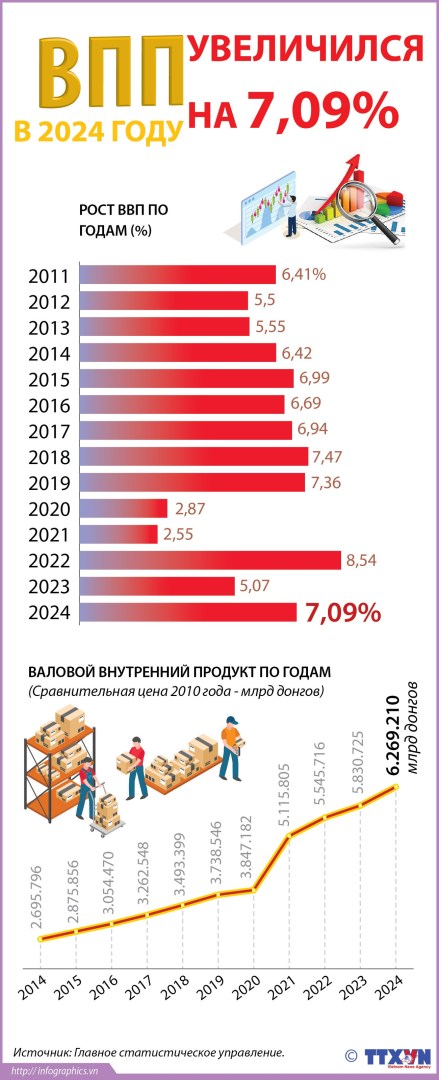
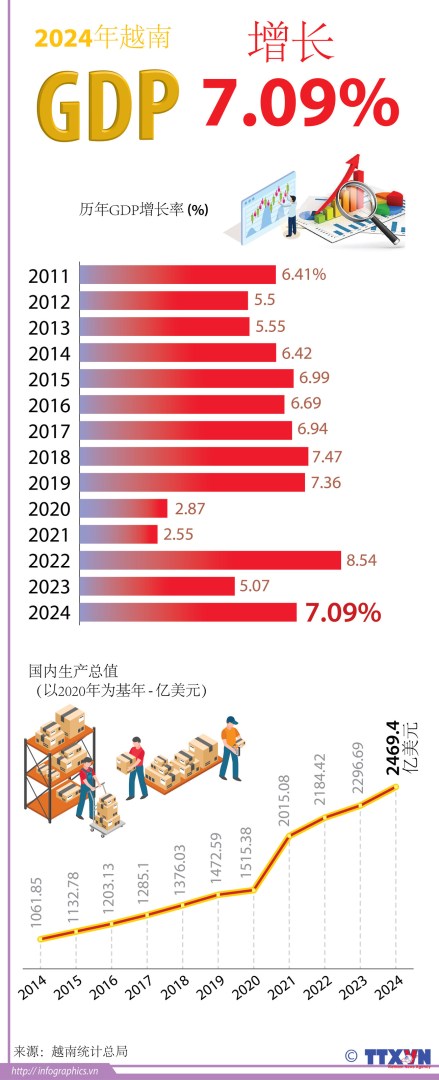
Из бедной страны с отсталой экономикой и низким уровнем развития Вьетнам стал развивающимся государством со средним доходом. Особенно в 2024 году, в условиях нестабильной мировой экономики, Вьетнам продемонстрировал впечатляющий рост ВВП на уровне 7,09%, что превысило прогнозы и сделало страну ярким примером роста в регионе; ВВП на душу населения составил примерно 114 миллионов донгов (около 4.700 долларов США), что на 377 долларов больше, чем в 2023 году.
Качество жизни постепенно улучшается благодаря вниманию и инвестициям в развитие здравоохранения, образования, подготовки кадров, науки и технологий. (Иллюстративное фото: ВИА)
Уровень жизни населения значительно улучшился. Качество жизни постепенно повышается благодаря вложениям в развитие таких отраслей, как здравоохранение, образование, обучение, наука и технологии. Работа по укреплению партии и политической системы уверенно продвигается вперёд, национальное единство продолжает укрепляться. Политическая и социальная стабильность, обороноспособность и безопасность, независимость и суверенитет страны надёжно обеспечены. Внешний статус и авторитет Вьетнама на международной арене ежегодно неуклонно растут.
Позиции и престиж страны на международной арене неуклонно растут. (Фото: ВИА)
На протяжении 95 лет своей истории победы в борьбе за власть, в деле строительства и защиты государства, а также достижения в строительстве социализма, особенно успехи почти 40 лет политики обновления, стали результатом единства всей партии, армии и народа Вьетнама.
Достижения почти 40 лет процесса обновления страны являются результатом единства и сплочённости всей партии, всей армии и всего народа Вьетнама. (Фото: ВИА)
Генеральный секретарь, тогдашний Президент То Лам подтвердил на пресс-конференции после пленума Центрального комитета Коммунистической партии Вьетнама XIII созыва партии 3 августа 2024 года:
Генеральный секретарь партии, Президент государства То Лам на пресс-конференции после пленума Центрального комитета Коммунистической партии Вьетнама XIII созыва 3 августа 2024 года. (Фото: ВИА)
«Нет ничего более важного, чем единство и сплоченность. Единство и сплоченность – наша сила. Единство в партии, Политбюро, Центральном комитете будет продолжать распространяться и развиваться. Это ценная традиция, сила партии и государства, которая помогает преодолевать трудности и испытания, достигать побед и целей, поставленных нашей партией».
Генеральный секретарь То Лам
За 95 лет, под руководством Коммунистической партии Вьетнама, основанной и воспитанной председателем Хо Ши Мином, вьетнамский народ пережил несколько славных эпох.
Утром 2 сентября 1945 года на исторической площади Бадинь Президент Хо Ши Мин зачитал Декларацию независимости, провозгласив создание Демократической Республики Вьетнам. (Фото: ВИА)
Первая эпоха – это эпоха независимости, свободы и строительства социализма (1930-1975 гг.), начавшаяся в 1930 году, когда была основана Коммунистическая партия Вьетнама, что привело к великой победе Августовской революции 1945 года и великим подвигам в антиколониальных и антиимпериалистических войнах (1946-1975), а также важным достижениям в строительстве социализма на севере Вьетнама в 1954-1975 годах.
Карнавал “Женщины столицы Ханой: интеграция и развитие”.
Вторая эпоха – Эпоха воссоединения страны, обновления и развития (1975-2025 гг.), начавшаяся с великой победы в войне против американского империализма, воссоединения страны и движения к социализму в 1975 году, создавшая прочную основу для страны, под руководством партии, для осуществления процесса обновления, начавшегося с VI созыва партии в 1986 году, что дало мощный и всесторонний импульс для развития во всех областях.
Третья эпоха – это настоящая эпоха подъема вьетнамской нации, начало которой ознаменовано XIV созывом партии, который подчеркивает 40 лет процесса обновления (1986-2026 гг.).
Генеральный секретарь партии То Лам. (Фото: ВИА)
«Эпоха подъеманации – это эпоха прорывного и ускоренного развития под руководством партии, успешного строительства социалистического Вьетнама — богатого, сильного, демократичного, справедливого, цивилизованного, процветающего и счастливого. Вьетнам уверенно догоняет мировые державы и движется с ними в ногу…»,
заявил генеральный секретарь партии То Лам.
Генеральный секретарь партии То Лам подчеркнул, что ведущим приоритетом в новой эпохе является успешная реализация стратегических целей до 2030 года, когда Вьетнам станет развивающейся страной с современной промышленностью и высоким средним доходом; к 2045 году станет развитой социалистической страной с высоким доходом, а у всех граждан будет возможность всесторонне развиваться, жить в достатке и цивилизованности, быть свободными и счастливыми.
Лидер Коммунистической партии Вьетнама отметил, что период с 2023 по 2030 год является наиболее важным этапом, этапом «финиша» в революции Вьетнама для достижения стратегической цели столетия под руководством партии, создания прочной основы для достижения целей столетия со дня основания страны.
«Важно, чтобы мы максимально использовали силу великого национального единства, высокую решимость и усилия всей партии, всего народа, всей армии и всей политической системы, чтобы реализовать стремление к процветанию и счастью страны»,
подчеркнул Генеральный секретарь партии То Лам.
Оглядываясь на 95 лет с момента появления во Вьетнаме партии, возглавившей страну, можно увидеть, какой путь она прошла – от бедности и отсталости до динамичного развития и растущего международного авторитета. Этот факт доказывает, что во Вьетнаме нет политической силы, кроме Коммунистической партии Вьетнама, которая обладает достаточной стойкостью, мудростью, опытом, авторитетом и способностью привести страну к преодолению всех трудностей и вызовов, ведя революционное движение народа от одной победы к другой./.
Улицы Ханоя сверкают флагами и цветами. Иллюстративное фото: ВИА.
Desfile conmemorativo por el 70 aniversario de la Victoria de Dien Bien Phu
Hace exactamente 95 años, el 3 de febrero de 1930, se fundó el Partido Comunista de Vietnam (PCV), que rápidamente se consolidó como la vanguardia política de la clase obrera y el pueblo trabajador de la nación indochina. A lo largo de más de nueve décadas de existencia y desarrollo, la organización política sigue perseverando su objetivo noble: Servir a la Patria y al pueblo.
Đồ họa 3/2
Secretarios generales del Partido Comunista de Vietnam
Presidente Ho Chi Minh (1890-1969)
Tran Phu (1904-1931)
Le Hong Phong (1902-1942)
Ha Huy Tap (1906-1941)
Nguyen Van Cu (1912-1941)
Truong Chinh (1907-1988)
Le Duan (1907-1986)
Nguyen Van Linh (1915-1998)
Do Muoi (1917-2018)
Le Kha Phieu (1931-2020)
Nong Duc Manh (1940)
Nguyen Phu Trong (1944-2024)
To Lam (1957)
Con un lineamiento correcto y metodología revolucionaria idónea y creativa, el Partido lideró a todo el pueblo en la Revolución de Agosto de 1945, que indujo al establecimiento de la República Democrática de Vietnam (ahora la República Socialista de Vietnam), el primer Estado democrático popular en el sudeste asiático. Así, Vietnam pasó de ser una colonia semifeudal en una nación libre e independiente, mientras que el pueblo vietnamita dejó de ser esclavo para convertirse en dueño de su destino.
Del 6 de enero al 7 de febrero de 1930 se celebró en Hong Kong (China) la conferencia para unificar las organizaciones comunistas y fundar el Partido Comunista de Vietnam, bajo el liderazgo de Nguyen Ai Quoc (pseudónimo del Presidente Ho Chi Minh) en representación de la Internacional Comunista. (Foto: VNA)
El PCV también guió a la nación a través de los difíciles años de lucha, superando las adversidades de una resistencia de nueve años para derrotar a los colonialistas franceses con la contundente victoria de Dien Bien Phu en 1954, venciendo al imperialismo estadounidense y logrando la reunificación del país en 1975.
La guerra de resistencia contra el colonialismo francés, que culminó con la Victoria de Dien Bien Phu el 7 de mayo de 1954, creó las condiciones para que las partes asistentes a la Conferencia de Ginebra discutieran la cuestión de Indochina. (Foto: VNA)
El 30 de abril de 1975, los tanques del Ejército de Liberación cruzaron la puerta de hierro y ocuparon el Palacio Presidencial del gobierno títere de Saigón, poniendo fin gloriosamente a una contienda de 30 años de la nación contra los invasores extranjeros. (Foto: VNA)
En la labor de construcción y salvaguarda de la Patria, el Partido lideró al país para salir de la crisis económica, avanzar firmemente por el camino del socialismo elegido por el PCV, el Presidente Ho Chi Minh y el pueblo, gracias a lo cual la posición de Vietnam se ha elevado incesantemente en la arena internacional. Estos logros han creado la base y la fuerza para que la revolución vietnamita “promueva la industrialización y la modernización por un pueblo próspero, un país fuerte y una sociedad justa, democrática y civilizada”.
Bajo el liderazgo del Partido, Vietnam avanza hacia la construcción de una vida cada vez más próspera y feliz. (Foto: VNA)
Los últimos 95 años han sido un período extremadamente heroico y glorioso para el pueblo vietnamita, ya que el país erradicó gradualmente la pobreza y el atraso, avanzando hacia la construcción de una vida cada vez más próspera y feliz.
Para alcanzar tales hazañas históricas, el PCV siempre defiende el principio rector de Solidaridad y Unidad para consolidar el temple y la combatividad de la fuerza política.
Presidente Ho Chi Minh (Foto: VNA)
El PCV ha dedicado siempre esfuerzos a construir y consolidar la unidad interna dentro de la organización política, con el objetivo de que este sea una verdadera vanguardia, un Estado Mayor sólido, un líder y un servidor fiel del pueblo. La gran unidad nacional constituye una estrategia revolucionaria, una consigna de acción de todo el Partido y el pueblo. Por ello, a pesar de las dificultades y desafíos, la Revolución vietnamita obtuvo la victoria final, como afirmó el Presidente Ho Chi Minh:
“Gracias a la estrecha solidaridad y al servicio incondicional a la clase obrera, al pueblo y a la Patria, desde su fundación, nuestro Partido ha logrado unificar, organizar y liderar al pueblo a luchar enérgicamente para avanzar de una victoria a otra”
Presidente Ho Chi Minh
Entrar unidos en una nueva era de la nación
Líderes del Partido y el Estado vietnamitas asisten a las Fiestas de Gran Unidad Nacional. (Foto: VNA)
El programa Primavera de la Patria se celebra en muchos países para reunir a los vietnamitas residentes en el extranjero. (Foto: VNA)
El PCV ha promovido la fuerza del gran bloque de unidad nacional y combinado la fuerza de toda la nación con la de la época, en aras de sacar al país de todas las dificultades y desafíos, mantener la independencia, la soberanía, la unidad y la integridad territorial de la Patria, y llevar a cabo exitosamente el proceso de Doi moi (Renovación).
De ser un país pobre con un estatus socioeconómico atrasado, Vietnam ha pasado a convertirse en uno en vías de desarrollo con ingresos medios. En particular, en 2024, en el contexto de las fluctuaciones en la economía mundial, Vietnam dejó una fuerte impresión con un admirable crecimiento del Producto Interno Bruto (PIB) del 7,09%, que superó las previsiones y lo convirtió en un punto brillante en la región. Se estima que su PIB per cápita alcanzó los 114 millones de VND por persona, equivalente a cuatro mil 700 dólares, un aumento de 377 dólares en comparación con 2023.
La calidad de vida mejora gradualmente con la inversión en el desarrollo de la atención sanitaria, la educación, la ciencia y la tecnología. (Foto de ilustración: VNA)
La vida de la población ha mejorado significativamente. La calidad de vida se elevó gradualmente con la inversión en el desarrollo de la atención sanitaria, la educación, la ciencia y la tecnología. La construcción del Partido y del sistema político han logrado avances; el gran bloque de unidad nacional se consolida constantemente. Se mantienen la estabilidad política y social, la defensa-seguridad, la independencia y la soberanía. La posición y el prestigio del país aumentan con creces en el ámbito internacional.
La posición y el prestigio de Vietnam aumentan constantemente en el ámbito internacional. (Foto: VNA)
Durante estos 95 años de historia, las victorias en la lucha por construir y salvaguardar la Patria, y los logros en la construcción del socialismo, especialmente en casi 40 años de Renovación, son el resultado de la solidaridad y la unidad de todo el Partido, el ejército y el pueblo de Vietnam.
Los logros de casi 40 años de Renovación nacional son resultado de la solidaridad y unidad de todo el Partido, el ejército y el pueblo de Vietnam. (Foto: VNA)
El secretario general y presidente To Lam afirmó en la rueda de prensa posterior a la reunión del Comité Central del PCV del 3 de agosto de 2024:
El 3 de agosto de 2024, el secretario general del PCV, To Lam, quien también se desempeñaba como presidente del país, asistió a la conferencia de prensa después de la reunión del Comité Central del Partido del XIII mandato. (Foto: VNA)
“No hay nada más importante que la unidad. La unidad es nuestra fuerza. La unidad dentro del Partido, el Buró Político y el Comité Central continuará expandiéndose y fortaleciéndose. Esta es una tradición noble, la fortaleza del Partido y la nación, que nos ha permitido superar muchas dificultades y desafíos, alcanzando grandes victorias y cumpliendo los objetivos trazados por nuestro Partido”.
Secretario general To Lam
En los 95 años transcurridos, bajo el liderazgo del PCV, fundado y guiado por el Presidente Ho Chi Minh, la nación ha vivido épocas gloriosas.
En la mañana del 2 de septiembre de 1945, en la histórica plaza capitalina de Ba Dinh, el Presidente Ho Chi Minh leyó la Proclamación de la Independencia, declarando el nacimiento de la República Democrática de Vietnam (ahora República Socialista de Vietnam). (Foto: VNA)
La primera era fue la de la Independencia, la Libertad y la Construcción del Socialismo (1930-1975), iniciada en 1930 con la fundación del PCV, lo que condujo a la gran victoria de la Revolución de Agosto de 1945 y a los logros en las luchas de resistencia contra la invasión (1946-1975), junto con los avances importantes en la construcción del socialismo en el norte del país entre 1954 y 1975.
Un carnaval de Ao Dai, túnica tradicional vietnamita. (Foto: VNA)
La segunda era es la de la Reunificación Nacional, la Renovación y el Desarrollo (1975-2025), que comenzó con la victoria en la guerra de resistencia contra el imperialismo estadounidense, la reunificación del país en 1975 y el avance hacia el socialismo. Este peróodo estableció una base sólida para que el país, bajo la dirección del Partido, comenzara el proceso de Renovación a partir del VI Congreso del PCV en 1986, lo que impulsó un desarrollo fuerte y sostenido en diversos sectores.
La tercera es la Era Actual, la de ascenso de la nación, que comenzó con el XIV Congreso del Partido, marcando los 40 años de Renovación (1986-2026).
El secretario general del PCV, To Lam (Foto: VNA)
“La era de ascenso de la nación es una era de desarrollo acelerado bajo el liderazgo del Partido, construyendo con éxito un Vietnam socialista, próspero, democrático, justo, civilizado y feliz, que aspira a alcanzar el nivel de las potencias del mundo…”.
Secretario general To Lam
El secretario general To Lam subrayó que la prioridad en esta nueva es cumplir con éxito los objetivos estratégicos para 2030, transformando al país en uno desarrollo con una industria moderna y un nivel de ingresos medio alto; y para 2045, convertir a Vietnam en un país socialista desarrollado con altos ingresos, donde todos los ciudadanos tengan un desarrollo integral y disfruten de una vida próspera, libre, feliz y civilizada.
El líder partidista afirmó que el período hasta 2030 será crucial, el momento decisivo de la revolución vietnamita para alcanzar los objetivos estratégicos del centenario bajo la dirección del Partido, y crear las bases para los logros del centenario de la fundación del país.
“Lo más importante es aprovechar al máximo la fuerza de la gran unidad nacional, el esfuerzo y la determinación de todo el Partido, el pueblo, el ejército y el sistema político para hacer realidad el deseo de un país próspero y feliz”.
Secretario general To Lam
Mirando retrospectivamente estos 95 años de liderazgo del Partido, desde ser un país pobre y atrasado, Vietnam ha logrado convertirse en una nación dinámica, con una posición cada vez más destacada en el escenario internacional. Esto demuestra que en Vietnam no existe otra fuerza política fuera del PCV que tenga la valentía, la sabiduría, la experiencia, el prestigio y la capacidad para guiar al país a superar todas las dificultades y desafíos, llevando a nuestra revolución a lograr victoria tras victoria./.
Las calles de Hanoi muestran dinamismo con banderas y flores. (Foto ilustrativa: VNA)
Défilé marquant le 70e anniversaire de la Victoire de Dien Bien Phu. Photo : VNA
Il y a 95 ans, jour pour jour, le 3 février 1930, le Parti communiste du Vietnam (PCV) a été fondé et est rapidement devenu l’avant-garde politique de la classe ouvrière, laborieuse et de toute le la nation. À travers ses 95 ans de fondation et de développement, le PCV reste résolu dans son objectif noble et récurrent: servir la patrie et le peuple.
Secrétaires généraux du PCV au fil des ans
Président Hô Chi Minh (1890-1969)
Camarade Trân Phu (1904-1931)
Camarade Lê Hông Phong (1902-1942)
Camarade Hà Huy Tâp (1906-1941)
Camarade Nguyên Van Cu (1912-1941)
Camarade Truong Chinh (1907-1988)
Camarade Lê Duân (1907-1986)
Camarade Nguyên Van Linh (1915-1998)
Camarade Dô Muoi (1917-2018)
Camarade Lê Kha Phiêu (1931-2020)
Camarade Nông Duc Mạnh (1940)
Camarade Nguyên Phu Trong (1944-2024)
Camarade Tô Lâm (1957)
Fort de sa ligne révolutionnaire correcte, ses méthodes révolutionnaires appropriées et créatives, le PCV a conduit le peuple de tout le pays à mener l’insurrection générale pour prendre le pouvoir en août 1945, fonder la République démocratique du Vietnam, le premier État démocratique populaire en Asie du Sud-Est. D’un pays colonial et semi-féodal, le Vietnam est devenu un pays libre et indépendant. Le peuple vietnamien est passé du statut d’esclave à celui de maître de son pays et de son destin.
Du 6 janvier au 7 février 1930, la conférence d’unification des organisations communistes en vue de fonder le Parti communiste du Vietnam s’est tenue dans la péninsule de Kowloon, à Hong Kong (Chine), sous la présidence de Nguyên Ai Quôc, au nom de l’Internationale communiste. Photo : VNA
Le PCV a dirigé le peuple à mener une longue résistance de neuf ans contre les colonialistes français qui s’est achevée gloriseuement par la victoire de Diên Biên Phu qui “résonna à travers les cinq continents et ébranla le monde”, à poursuivre la lutte pour vaincre les impérialistes américains et réunifier le pays en 1975.
Le PCV a dirigé le peuple à mener une longue résistance de neuf ans contre les colonialistes français qui s’est achevée gloriseuement par la victoire de Diên Biên Phu qui “résonna à travers les cinq continents et ébranla le monde”. Photo : VNA
La prise du Palais de l’Indépendance, le 30 avril 1975. Photo : VNA
Dans l’oeuvre d’édification et de défense de la patrie, le PCV a conduit le pays à sortir de la crise économique, à avancer à pas sûrs sur la voie du socialisme choisie par le PCV, le président Hô Chi Minh et le peuple vietnamien, à élever d’année en année le statut du Vietnam sur la scène internationale. Ces réalisations ont créé la position et la force permettant à la révolution vietnamienne de “promouvoir l’industrialisation et la modernisation pour rendre le peuple riche, le pays prospère, la société équitable, démocratique et civilisée”.
Sous la direction du Parti, la vie des habitants du Vietnam est de plus en plus prospère et heureuse. Photo : VNA
Les 95 dernières années ont été des années héroïques et glorieuses pour le peuple vietnamien, car le Vietnam a progressivement éliminé la pauvreté et l’arriération, avancé vers la construction d’une vie de plus en plus aisée et heureuse.
Pour parvenir à de telles réalisations historiques, le PCV a toujours maintenu le principe directeur de solidarité et d’unité pour forger son caractère et sa combativité.
Président Hô Chi Minh. Photo : VNA
Le PCV veille toujours à construire et à renforcer la solidarité et l’unité internes, afin qu’il soit véritablement l’avant-garde, l’état-major fort, le serviteur loyal du peuple. La grande union nationale est devenue une stratégie révolutionnaire, un slogan d’action de l’ensemble du PCV et du peuple. Ainsi, malgré de nombreuses difficultés et défis, le PCV a amené la révolution vietnamienne à la victoire finale.
“Grâce à l’union étroite qu’il a réalisée dans son sein, grâce au dévouement total à la classe ouvrière, au peuple, à la Patrie, notre Parti depuis sa fondation, a pu unir, organiser, diriger notre peuple, l’amener à lutter avec ardeur et le conduire de victoire en victoire.”
Le président Hô Chi Minh
Unis pour entrer dans une nouvelle ère de la nation
Le PCV a promu la force du grand bloc d’union nationale. Sur la photo : les dirigeants du Parti et de l’État assistent à la Fête de grande union nationale. Photo : VNA
Programme « Printemps du pays natal » à Osaka, au JaponProgramme « Printemps du pays natal » en Australie occidentaleProgramme « Printemps du pays natal » au Sri LankaProgramme « Printemps du pays natal » en République tchèqueProgramme « Printemps du pays natal » au Cambodge
Le PCV a promu la force du grand bloc d’union nationale. Sur la photo : des programmes «Printemps du pays natal» pour les Vietnamiens d’outre-mer. Photo : VNA
Le PCV a fait valoir la force du bloc de grande union nationale, a uni la force de la nation entière à la force de l’époque, a amené le pays à surmonter toutes les difficultés et défis, à maintenir l’indépendance, la souveraineté, l’unité et l’intégrité territoriale de la patrie; et à mettre en œuvre avec succès l’oeuvre de rénovation.
D’un pays pauvre disposant d’infrastructures techniques et socio-économiques arriérées, le Vietnam s’est élevé pour devenir un pays en développement à revenu intermédiaire. En particulier, en 2024, dans le contexte écomique mondial en pleine mutation, le Vietnam a affiché une croissance impressionnante de 7,09%, dépassant les prévisions et devenant un point lumineux en termes de croissance dans la région.
Le PIB par habitant est estimé à 114 millions de dôngs, soit l’équivalent de 4.700 dollars, soit une augmentation de 377 dollars par rapport à 2023. La vie de la population s’est considérablement améliorée grâce aux investissements dans le développement des secteurs de la santé, de l’éducation et de la formation, de la science et de la technologie.
La vie de la population s’est considérablement améliorée grâce aux investissements dans le développement des secteurs de la santé, de l’éducation et de la formation, de la science et de la technologie. Photo : VNA
Le travail d’édification du parti et du système politique a connu des percées, le bloc de grande union nationale ne cesse de se consolider. La stabilité politique et sociale est restée stable, la défense et la sécurité nationales, l’indépendance et la souveraineté sont maintenues. La position et le prestige du pays sont de plus en plus renforcés sur la scène internationale.
La position et le prestige du pays sont de plus en plus renforcés sur la scène internationale. Photo : VNA
Tout au long des 95 ans d’histoire, les victoires dans la lutte pour reconquérir le pouvoir, construire et défendre le pays, et les réalisations dans la construction du socialisme, en particulier les réalisations de près de 40 ans de rénovation du pays sont le résultat de l’union et de l’unité de l’ensemble du Parti, de l’armée et du peuple vietnamiens.
Les réalisations de près de 40 ans de rénovation du pays sont le résultat de l’union et de l’unité de l’ensemble du Parti, de l’armée et du peuple vietnamiens. Photo : VNA
Affirmation du secrétaire général du PCV et président, Tô Lâm, à la presse à l’issue du plénum du 13e Comité central du PCV, à Hanoi, le 3 août 2024:
Le secrétaire général du PCV et président, Tô Lâm, à la presse à l’issue du plénum du 13e Comité central du PCV, à Hanoi, le 3 août 2024. Photo : VNA
“Il n’y a rien de tel que l’union et l’unité. L’union et l’unité font notre force. L’union dans le sein du Parti, du Politburo, du Comité central du Parti continuera d’être diffusée et promue. C’est une très belle tradition, la force du Parti et de la nation, qui a surmonté de nombreuses difficultés et défis, et obtenu les victoires et les objectifs que notre Parti s’est fixés.”
Au cours des 95 dernières années, sous la direction du PCV fondé et forgé par le président Hô Chi Minh, le peuple vietnamien a connu des ères glorieuses.
Le 2 septembre 1945, sur la place Ba Dinh à Hanoï, le Président Hô Chi Minh lut la Déclaration d’indépendance proclamant à tous ses compatriotes et au monde la naissance de la République démocratique du Vietnam. Photo : VNA
La première ère est celle de l’indépendance, de la liberté et de la construction du socialisme (1930-1975), qui débuta en 1930 avec la naissance du PCV, conduisant à la grande victoire de la Révolution d’Août 1945 et aux grands exploits militaires dans les guerres de résistance contre les envahisseurs (1946-1975) et les réalisations importantes dans la construction du socialisme au Nord dans les années 1954-1975.
Le Festival del'”Ao dai” 2024 sous le thème “Femmes de la capitale : intégration et développement”. Photo: VNA
La deuxième ère est celle de la réunification nationale, de la rénovation et du développement (1975-2025), qui s’ouvre avec la grande victoire de la guerre de résistance contre les impérialistes américains, réunifiant le pays et conduisant le pays vers le socialisme en 1975, créant une base solide pour le pays, sous la direction du PCV, de réaliser l’oeuvre de rénovation à partir du 6e Congrès national du PCV en 1986, générant des développements vigoureux et globaux dans tous les domaines.
La troisième ère est l’ère actuelle, l’ère d’ascension nationale, qui a commencé avec le 14e Congrès national du PCV, marquant 40 ans de rénovation (1986-2026).
Secrétaire général du PCV Tô Lâm. Photo : VNA
“L’ère d’ascension nationale est l’ère de développement révolutionnaire et accéléré sous la direction du Parti, pour construire avec succès un Vietnam socialiste, puissant, démocratique, équitable, civilisé, prospère et heureuse’, rattraper, progresser côte à côte, rivaliser avec les puissances des cinq continent…”
Secrétaire général Tô Lâm
Le secrétaire général Tô Lâm a souligné que la priorité absolue de la nouvelle ère est de mettre en œuvre avec succès les objectifs stratégiques d’ici 2030, faisant du Vietnam un pays en développement avec une industrie moderne et un niveau de revenu moyen supérieur d’ici 2030, un pays socialiste développé avec un revenu élevé à l’horizon 2045, faisant en sorte que chacun bénéficie des conditions pour se développer pleinement, ait une vie épanouissante à tous égards, aisée, libre, heureuse et civilisée.
Le leader du PCV a affirmé que la période d’ici 2030 est la plus importante, la période d’accélération pour atteindre les objectifs stratégiques au centainaire de la fondation du PCV et créer une base solide pour atteindre les objectifs au centenaire de fondation de la République démocratique du Vietnam, aujourd’hui République socialiste du Vietnam.
“L’important, c’est que nous maximisions la force de grande union nationale, les efforts et la détermination du Parti, du peuple, de l’armée et du système politique entiers pour s’engager ensemble dans la matérialisation de l’aspiration à développer un pays prospère et heureux.”
Secrétaire général du PCV Tô Lâm
En jetant un regard rétrospectif sur les 95 ans du pays sous la direction du PCV, d’un pays pauvre, arriéré, le Vietnam est devenu une nation dynamique avec une position de plus en plus élevée sur la scène internationale. Cette réalité prouve une vérité: au Vietnam, il n’y a pas d’autre force politique que le PCV qui ait de caractère, sagesse, expérience, prestige et capacité suffisants de diriger le pays à surmonter toutes les difficultés et défis et de conduire l’œuvre révolutionnaire du peuple vietnamien d’une victoire à l’autre./.
Les rues de Hanoi sont remplies de drapeaux et de fleurs. Photo : VNA
A parade celebrating the 70th anniversary of the Dien Bien Phu Victory in 2024. Photo: VNA)
Exactly 95 years ago, on February 3, 1930, the Communist Party of Vietnam was founded, quickly becoming the political vanguard of the working class and the labouring people of Vietnam. Over the past nine and a half decade, the Party has remained steadfast in its noble and consistent goal, which is to serve the Fatherland and its people.
Đồ họa 3/2
General Secretaries of the Communist Party of Vietnam
Ho Chi Minh (1890-1969)
Tran Phu (1904-1931)
Le Hong Phong (1902-1942)
Ha Huy Tap (1906-1941)
Nguyen Van Cu (1912-1941)
Truong Chinh (1907-1988)
Le Duan (1907-1986)
Nguyen Van Linh (1915-1998)
Do Muoi (1917-2018)
Le Kha Phieu (1931-2020)
Nong Duc Manh (1940)
Nguyen Phu Trong (1944-2024)
To Lam (1957)
With a right revolutionary path and appropriate and creative methods, the Party led the people to carry out the August 1945 General Uprising to seize power, establishing the Democratic Republic of Vietnam (now the Socialist Republic of Vietnam), the first people’s democratic state in Southeast Asia. This momentous achievement transformed Vietnam from a semi-feudal colonial state into an independent and free nation, and its people from slaves into masters of their own destinies.
Nguyen Ai Quoc (pseudonym of President Ho Chi Minh), chairs a conference to merge communist organisations into a single party organisation, the Communist Party of Vietnam, in Hong Kong (China) from January 6 – February 7, 1930. (Photo published by VNA)
The Party led the nation through nine years of arduous resistance to defeat the French colonialists with the globe-shaking Dien Bien Phu Victory in 1954, and then beat the American imperialists to reunite the country in 1975.
The nine-year resistance against the French colonialists, with the peak being the Dien Bien Phu Victory on May 7, 1954, created favourable conditions for the parties involved in the Geneva Conference to discuss Indochina-related issues. (Photo: VNA)
On April 30, 1975, Vietnam’s liberation tanks knocked down the iron gate of the Saigon puppet government’s presidential palace, marking the glorious end of the 30-year national resistance against foreign invaders. (Photo: VNA)
In the nation building and defence journey, the Party has guided the country out of economic crises, progressing steadily on the path towards socialism chosen by the Party, President Ho Chi Minh, and the people. Vietnam’s international standing has risen year by year. These achievements have fortified the position and power of the Vietnamese revolution to promote industrialisation and modernisation for the sake of prosperous people, a strong nation, and an equal, democratic, and civilised society.
Under the leadership of the Party, Vietnam is on track to secure prosperity and happiness for its people. (Photo: VNA)
The past 95 years have formed a glorious and pride-worthy period for the Vietnamese people as they have gradually eliminated poverty and backwardness, steadily moving towards a wealthier and happier future.
To achieve such historic milestones, the Party has consistently upheld the principle of solidarity and unity, which have constituted its strength and mettle.
President Ho Chi Minh (Photo published by VNA)
The Party has always focused on building and reinforcing internal solidarity and unity to ensure that it is truly a strong, cohesive political vanguard, a leader and a loyal servant to the people. Great national solidarity has become a revolutionary strategy and a motto driving actions of the entire Party and people. Thanks to this, despite numerous difficulties and challenges, the Vietnamese revolution has achieved the ultimate victory, as President Ho Chi Minh affirmed:
“Thanks to its strong solidarity and wholehearted dedication to the working class, the people and the Fatherland, our Party has been able, since its foundation, to unite, organise and lead our people from one success to others in resolute struggles”.
PRESIDENT HO ChI Minh
Solidarity helps advance nation into new era
The Party has harnessed the strength of the great national solidarity bloc. In the photo: Party and State leaders join people in the Great National Solidarity Festival. (Photo: VNA)
The Homeland Spring programme in Osaka, JapanThe Vietnamese Consulate General in Perth brings the Homeland Spring programme to the expatriates in West Australia.The Homeland Spring programme in Sri LankaThe Homeland Spring programme in the Czech RepublicThe Homeland Spring programme in Cambodia
The Party has harnessed the strength of the great national solidarity bloc. In the photo: The Homeland Spring programmes for overseas Vietnamese communities (Photo: VNA)
The Party has harnessed the strength of the great national solidarity bloc, combining the power of the entire people with that of the era, guiding Vietnam through all difficulties and challenges to firmly safeguard the Fatherland’s independence, sovereignty, unity and territorial integrity, while successfully implementing the Doi Moi (Renewal) scheme.
From an underdeveloped country with a backward socio-economy, Vietnam has emerged as a developing nation with middle income. In 2024, amidst global economic headwinds, the country made an impressive mark with a GDP growth rate of 7.09%, surpassing forecasts and becoming a bright spot for growth in the region. The average per capita GDP reached 114 million VND (4,700 USD), an increase of 377 USD compared to 2023.
The quality of people’s life has significantly improved, with gradual advances in health care, education, training, science, and technology. (Photo: VNA)
The quality of people’s life was significantly improved, with gradual advances in health care, education, training, science, and technology. The building of the Party and political system saw breakthroughs, while the great national solidarity bloc was continually reinforced. The country’s political and social stability, defence – security, independence, and sovereignty was guaranteed firmly. Its international reputation and standing continued to grow.
Vietnam’s international reputation and standing are growing. (Photo: VNA)
Over the 95-year course, the victories in the struggles to seize power, establish and safeguard the nation, achievements in socialism building, as well as the attainments gained during the nearly 40 years of Doi Moi are all the fruits of the solidarity and unity of the entire Party, military, and people.
The achievements of nearly 40 years of the Doi Moi (Renewal) process are the result of the unity and solidarity of the entire Party, army, and people of Vietnam. (Photo: VNA)
At a press conference following the 13th Party Central Committee’s session on August 3, 2024, Party General Secretary To Lam, who then also served as the State President, affirmed:
Party General Secretary and State President To Lam speaks at a press conference following the 13th Party Central Committee’s session on August 3, 2024. (Photo: VNA)
“Nothing can compare to solidarity and unity. Solidarity and unity are the stem of our strength. The solidarity within the Party, the Politburo, and the Party Central Committee will continue to spread and be promoted. This is a very beautiful tradition and the strength of the Party and the nation, enabling us to overcome numerous difficulties and challenges to achieve the victories and goals set by our Party”.
Party General Secretary To Lam
Through 95 years, under the leadership of the Communist Party of Vietnam, founded and trained by President Ho Chi Minh, the Vietnamese people have experienced three glorious eras.
On the morning of September 2, 1945, at the historic Ba Dinh Square, President Ho Chi Minh reads the Declaration of Independence, founding the Democratic Republic of Vietnam. (Photo: VNA)
The first was the era of independence, freedom, and socialism building (1930–1975), which began in 1930 with the establishment of the Communist Party of Vietnam, leading to the monumental August Revolution of 1945 and great victories in the wars against foreign invaders (1946–1975), as well as attainments in the building of socialism in the North (1954–1975).
The Ao Dai Carnival themed “Hanoi Women’s Integration and Development”
The second is the era of national reunification, renewal and development, which is from 1975 to 2025. It started with the victory over the American imperialists and the reunification of the country in 1975 to guide the whole country towards socialism, laying a firm foundation for the country, under the Party’s leadership, to carry out Doi Moi, launched at the sixth National Party Congress in 1986, and secure strong and comprehensive development across all sectors.
The third, the current era, is that of the nation’s rise, to be marked by the 14th National Party Congress and the 40th anniversary of the Doi Moi scheme (1986–2026).
Party General Secretary To Lam(Photo: VNA)
“The era of the nation’s rise is the one of breakthrough development and acceleration under the leadership of the Party, successfully building a powerful, democractic, equitable, civilised, prosperous, and happy socialist Vietnam that can catch up with, advance alongside, and stand shoulder to shoulder with powers across the five continents...”
Party General Secretary To Lam
The top priority in this new era is to successfully achieve the strategic goals of turning Vietnam into a developing nation with a modern industrial base and upper-middle income by 2030; and a developed socialist country with high income by 2045, where every citizen enjoys comprehensive development and a prosperous, free, happy, and civilised life.
The Party leader underlined that from now to 2030 is the most important period, the final stage for the Vietnamese revolution to fulfil the strategic centenary goal under the Party’s leadership, creating a solid cornerstone for reaching the goal for the 100th anniversary of the country’s foundation in 2045.
“The important thing is that we maximise the strength of the great national solidarity bloc, and the efforts and strong determination of the entire Party, people, army, and political system to realise the aspiration for a prosperous and happy country”.
Party General Secretary To Lam
Looking back on the 95-year journey under the Party’s leadership, Vietnam has transformed from a poor and backward nation into a dynamic country with an increasingly prominent position on the world stage. This proves that, in Vietnam, no other political force than the Communist Party of Vietnam possesses sufficient mettle, intellect, experience, reputation, and leadership capabilities to guide the country through every difficulty and challenge, bringing the national revolutionary cause from one victory to others./.
Streets of Hanoi are adorned with flags and flowers. (Illustrative photo.: VNA)
Внешняя политика Вьетнама: Активность и проактивность для вступления страны в новую эру. (Фото: ВИА)
2024 год стал годом активного расширения внешнеполитической деятельности Вьетнама с многочисленными партнёрами на многих важных многосторонних форумах и в различных механизмах. В этом году было проведено около 60 внешнеполитических мероприятий с участием руководства страны, включая 21 визит в другие страны и участие в крупных многосторонних конференциях, а также прием 25 иностранных делегаций лидеров во Вьетнаме.
Заместитель премьер-министра, министр иностранных дел Вьетнама Буй Тхань Шон. (Фото: ВИА)
Заместитель премьер-министра, министр иностранных дел Вьетнама Буй Тхань Шон отметил, что эти визиты и внешнеполитические мероприятия принесли стратегически важные и долгосрочные результаты, повысив уровень отношений с ключевыми партнерами и сделав их более глубоким и эффективным.
На сегодняшний день Вьетнам установил дипломатические отношения с 194 странами, поднял уровень отношений до Всеобъемлющего стратегического партнёрства с Австралией, Францией и Малайзией, до Стратегического партнёрства с Бразилией, а также установил отношения Всеобъемлющего партнёрства с Монголией и ОАЭ, увеличив общее количество партнёров Вьетнама в рамках двусторонних отношений до 32 и подписав более 170 соглашений о сотрудничестве в различных областях.
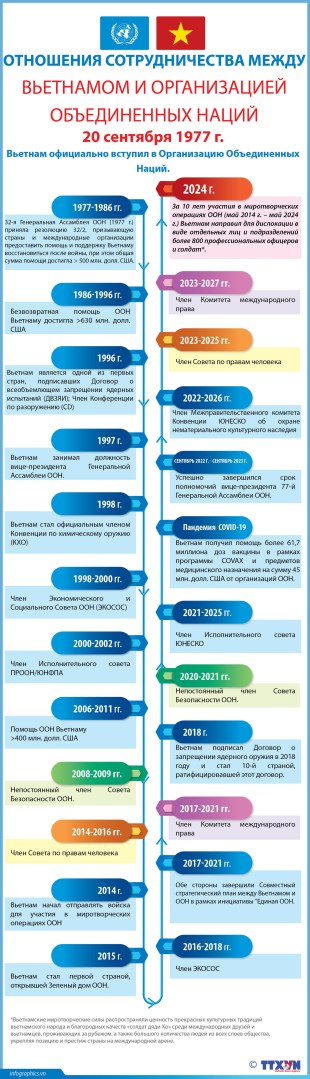
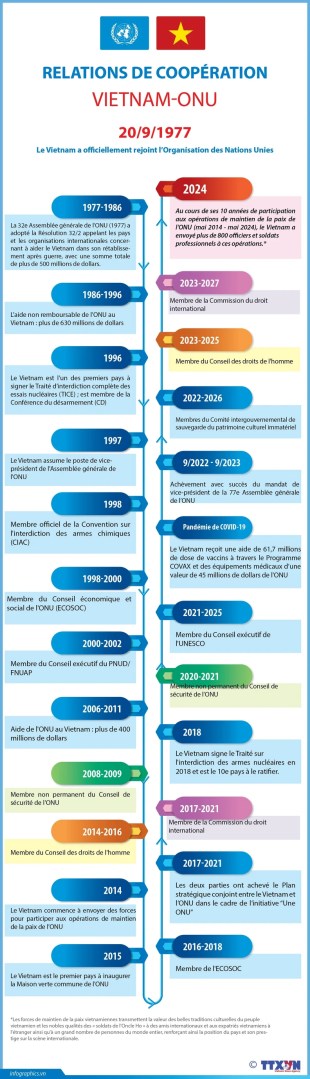
На многостороннем уровне Вьетнам все больше утверждает свои возможности, роль и ответственность в международных вопросах. Иллюстративное фото: Сотрудничество Вьетнама с Организацией Объединенных Наций почти за 50 лет. (Источник: ВИА)
На многосторонней арене Вьетнам продолжает укреплять свои возможности, роль и ответственность в международных вопросах. Вьетнам активно продвигает свою роль на таких международныхфорумах, как АСЕАН, ООН, Меконгская субрегиональная инициатива, АТЭС, G20, BRICS, AIPA, Движение неприсоединения, Франкофония. Впервые Вьетнам успешно провел Форум будущего АСЕАН, создав механизм обмена для продвижения роли страны в формировании будущего АСЕАН после 2025 года с видением до 2045 года.
Делегация Вьетнама во главе с министром иностранных дел Буй Тхань Шон на 55-ю регулярной сессии Совета по правам человека ООН, 26-28 февраля 2024 года. (Фото: ВИА)
Недавнее принятие Генеральной Ассамблеей ООН Конвенции ООН по борьбе с киберпреступностью и выбор Вьетнама в качестве места для подписания Конвенции ознаменовали новую веху в интеграции Вьетнама в международное правовое пространство в частности и в многостороннюю дипломатию в целом, подтвердив, что Вьетнам является активным, надежным и ответственным партнером международного сообщества.
Военно-морские силы Вьетнама и Камбоджи провели 76-е совместное патрулирование, 27 сентября 2024 годаПарусник 286 – Ле Куи Дон прибыл в Индонезию, 17 июля 2024 годаВоенно-морские силы Вьетнама и Таиланда провели 49-е совместное патрулирование, 10 апреля 2024 годаСилы морской полиции Вьетнама и Китая провели совместное патрулирование в северной части Тонкинского залива 29 августа 2024 года
Иллюстративное фото: ВИА
В условиях крупных мировых изменений Вьетнам правильно выстроил отношения с партнерами, сохраняя мирные и стабильные сухопутные границы, добился прогресса в переговорах с другими странами, содействуя созданию эффективного, реального и соответствующего международному праву Кодекса поведения в Восточном море, особенно Конвенции ООН по морскому праву 1982 года.
«Мы подчёркиваем политику мирного разрешения нерешённых вопросов на основе международного права, и внешнеполитические органы уже предоставили Политбюро, Секретариату ЦК КПВ и правительству эффективные рекомендации по решению многих проблем на фоне сложных мировых событий»,
Министр иностранных дел Буй Тхань Шон заявил
Вьетнам становится одной из ведущих стран по привлечению прямых иностранных инвестиций (FDI) в мире. (Иллюстративное фото: ВИА)
Вьетнам эффективно использует 17 Соглашений о свободной торговле (FTA) с более чем 60 партнерами, устраняя рыночные барьеры, что способствовало восстановлению экспорта. Ожидается, что объем торговли достигнет рекордной отметки в почти 800 миллиардов долларов США. Вьетнам активно привлекает инвестиции, становясь одной из ведущих стран по привлечению прямых иностранных инвестиций (FDI) в мире. Страна эффективно использует преимущества международных соглашений и договоров, активно работает над стимулированием стран ЕС к ратификации Соглашения о защите инвестиций (EVIPA), а также осваивает новые рынки, такие как экспорт халяльной продукции.
Премьер-министр Фам Минь Тьинь председательствовал на совещании премьер-министра с главами дипломатических представительств Вьетнама за рубежом, 18 июля 2024 года. (Фото: ВИА)
Экономическая дипломатия способствовала развитию технологического сотрудничества с ключевыми партнерами и крупными корпорациями, что позволило наладить связи и привлечь партнеров в таких областях, как цифровая трансформация, зеленая трансформация, полупроводники и искусственный интеллект. Вьетнам активно привлекает высококачественные инвестиции в новые технологии, способствуя развитию полупроводниковой промышленности, созданию центров инноваций в области ИИ, обучению высококвалифицированных кадров в области технологий для достижения целей развития страны до 2030 и 2045 годов.
Делегация ЮНЕСКО посетила бывшую столицу Хоалы 29 октября 2024 года. (Фото: ВИА)Посол Нгуен Тхи Ван Ан, постоянный представитель Вьетнама при ЮНЕСКО, и мэр Марием Тамата-Варен посетили выставку Вьетнама на Дне франкофонии 2024 года в городе Йеблес. (Фото: ВИА)Группа экспертов ЮНЕСКО проверила досье Геопарка Лангшон, 6-10 июля 2024 года. (Фото: ВИА)
Дипломатическая деятельность способствовала успешной регистрации 6 новых объектов в списке Всемирного наследия ЮНЕСКО, что увеличило общее количество объектов ЮНЕСКО до 71, став новым ресурсом для устойчивого экономического, культурного и социального развития населенных пунктов.
Иллюстративное фото: Посольство Вьетнама в Польше посетило соотечественников после пожара в торговом центре в Польше. (Фото: ВИА)
Работа с вьетнамцами, проживающими за рубежом, эффективно реализует политику заботы партии и государства о почти 6 миллионах граждан, мобилизуя ресурсы для развития через тысячи инвестиционных проектов и десятки миллиардов долларов в виде денежных переводов. Активная защита граждан обеспечила безопасность, законные права и интересы граждан и предприятий Вьетнама, особенно в районах конфликтов, природных катастроф и нестабильности, а также эвакуировала тысячи граждан на родину. Внешняя информационная работа активно продвигает имидж Вьетнама, его народ, культуру и достижения обновления страны по всему миру.
Вьетнам принял участие в 220-й сессии Исполнительного совета ЮНЕСКО. (Фото: ВИА)
Создание основы для вступления страны в новую эру
Генеральный секретарь То Лам подчеркнул, что 2025 год будет важным и особенным для Вьетнама, когда страна отмечает 80-летие со дня основания и 50-летие воссоединения страны. Это последний год, в котором будет решаться успешная реализация Резолюции съезда Коммунистической партии 13-го созыва, а также важный момент на пути вступления в эру подъема нации
Генеральный секретарь То Лам. (Фото: ВИА)
«Дипломатическая работа должна повысить статус, расширить вклад Вьетнама в мировую революцию, в дело мира, сотрудничества, развития и прогресса человечества», а также «широко распространять образ Вьетнама как независимой, суверенной, мирной, сотрудничественной, дружелюбной, развивающейся, процветающей и счастливой страны»,
сказал Генеральный секретарь То Лам.
По словам Министра иностранных дел Буй Тхань Шона, дипломатическая работа Вьетнама в 2025 году будет продолжать наследовать цели, принципы, подходы и методы внешней политики, подтвержденные в 80-летней истории вьетнамской дипломатии, при этом будут внесены существенные обновления, которые будут соответствовать требованиям нового этапа.
Во-первых, укрепление благоприятной внешнеполитической ситуации для страны, создание стабильных рамок отношений на фоне глубоких изменений эпохи.
Во-вторых, создание динамики и открытие новых возможностей для страны, соединение внутренних и внешних сил, при этом чтобы внутренние силы являлись основными и долгосрочными, а внешние силы – важными и прорывными.
Иллюстративное фото: Церемония вручения Указа Президента и Приказа Министра обороны 8 офицерам, направляемым для выполнения задач в рамках миротворческих миссий Организации Объединенных Наций, 2 января 2025 года. (Фото: ВИА)
Вьетнам активно выполняет задачи в рамках миротворческих миссий Организации Объединенных Наций. (Фото: ВИА)
В-третьих, переход к новому подходу внешней политики – от восприятия к внесению вклада, от обучения к лидерству, от глубокой интеграции к полной интеграции, от отстающей страны к быстро развивающейся, готовой взять на себя новые обязанности. Вьетнам активно участвует в построении и защите справедливого и равного международного порядка, основанного на международном праве, и усиливает свой вклад в решение глобальных проблем.
Иллюстративное фото: Культурное и художественное выступление членов Организации культурного обмена Вьетнам-Австралия (VACEO) в Австралии. (Фото: ВИА)
В-четвертых, усиление «мягкой силы» нации в соответствии с историческим и культурным масштабом, политическим и экономическим статусом страны. «Мягкая сила» Вьетнама – это культура с ярко выраженным национальным колоритом, великие и исторически значимые достижения в процессе обновления, мирная внешняя политика, гармоничное решение международных вопросов, уважение к международному праву, а также поддержка и одобрение со стороны мирового сообщества.
И, наконец, в-пятых, построение всесторонней, современной и профессиональной внешней политики и дипломатии Вьетнама./.
2024 год ознаменует активное и широкомасштабное продвижение внешнеполитической деятельности Вьетнама. (Иллюстративное фото: ВИА)
L’année 2024 marque une étape significative pour le Vietnam dans la mise en œuvre d’activités diplomatiques approfondies avec de nombreux partenaires à travers divers forums et mécanismes multilatéraux clés. Photo: VNA
L’année 2024 marque une étape significative pour le Vietnam dans la mise en œuvre d’activités diplomatiques approfondies avec de nombreux partenaires à travers divers forums et mécanismes multilatéraux clés. Environ 60 activités diplomatiques ont été menées par les dirigeants du pays, comprenant 21 visites officielles à l’étranger et participations à de grandes conférences multilatérales, ainsi que l’accueil de 25 délégations de dirigeants étrangers en visite au Vietnam.
Le vice-Premier ministre et ministre des Affaires étrangères, Bùi Thanh Sơn. Photo: VNA
Le vice-Premier ministre et ministre des Affaires étrangères, Bùi Thanh Sơn, a souligné que ces visites et activités diplomatiques ont donné des résultats d’une importance stratégique et durable. Elles ont renforcé les relations avec des partenaires clés, tout en approfondissant leur contenu de manière efficace et substantielle.
Le Vietnam a établi des relations diplomatiques avec 194 pays, élevant ses partenariats stratégiques intégrals avec l’Australie, la France et la Malaisie. Il a également rehaussé ses relations au niveau de partenariat stratégique avec le Brésil et a établi des partenariats globaux avec la Mongolie et les Émirats arabes unis. Cela porte à 32 le nombre de partenaires stratégiques et globaux du Vietnam, avec plus de 170 accords de coopération signés dans divers domaines. Ces avancées témoignent non seulement du dynamisme et de la proactivité de la diplomatie vietnamienne, mais aussi de la reconnaissance internationale de la valeur stratégique et du rôle géopolitique du Vietnam.
Le Vietnam continue de jouer un rôle central et de renforcer ses responsabilités dans les affaires internationales. Photo: VNA
Le Vietnam continue de jouer un rôle central et de renforcer ses responsabilités dans les affaires internationales. Sur des forums majeurs comme l’ASEAN, les Nations Unies, l’APEC, le G20, l’AIPA ou la Francophonie, le Vietnam a démontré un engagement actif et a pris des initiatives stratégiques. En 2024, le Vietnam a organisé pour la première fois le Forum sur l’avenir de l’ASEAN, établissant un mécanisme d’échange visant à renforcer le rôle de l’ASEAN au-delà de 2025, avec une vision jusqu’en 2045.
La délégation vietnamienne conduite par le ministre des Affaires étrangères Bui Thanh Son a laissé une forte impression lors de la 55e session ordinaire du Conseil des droits de l’homme de l’ONU, du 26 au 28 février 2024. Photo: VNA
Le pays a également été choisi pour être l’hôte de la signature de la Convention des Nations Unies sur la cybercriminalité, marquant une nouvelle étape dans son intégration juridique internationale.
Le Vietnam a activement contribué aux discussions mondiales sur des enjeux majeurs tels que le changement climatique, la paix et la cybersécurité. Ses engagements et initiatives sont de plus en plus reconnus par la communauté internationale, ce qui le positionne comme un partenaire fiable et responsable. Le pays a également montré sa capacité à influencer les décisions et à proposer des solutions lors de son implication dans des organismes comme le Conseil des droits de l’homme des Nations Unies et plusieurs mécanismes de gouvernance de l’UNESCO.
76e patrouille conjointe des marines vietnamienne et cambodgienne, le 27 septembre 2024TLe voilier 286 – Le Quy Don arrive en Indonésie, le 17 juillet 202449e patrouille conjointe des marines vietnamienne et thaïlandaise, le 10 avril 2024Patrouille conjointe des garde-côtes vietnamien et chinois dans les eaux du nord du golfe du Bac Bo, le 29 août 2024
Photo: VNA
Face aux bouleversements mondiaux, le Vietnam a habilement géré ses relations avec ses partenaires, maintenant des frontières terrestres pacifiques et stables. Des progrès ont été réalisés dans les négociations bilatérales, et le Vietnam a poursuivi ses efforts pour établir un Code de conduite en Mer de Chine méridionale (COC) conforme au droit international, notamment à la Convention des Nations Unies sur le droit de la mer (CNUDM) de 1982.
“Nous avons mis en avant le principe de résolution des problèmes existants par des moyens pacifiques, sur la base du droit international… Les organes de la diplomatie ont conseillé le Bureau politique, le Secrétariat et le gouvernement dans le traitement efficace de nombreuses questions face aux évolutions complexes de la situation internationale.”
Le ministre des Affaires étrangères Bùi Thanh Son
Le Vietnam reste l’un des pays recevant le plus d’IDE au monde en exploitqnt efficacement les avantages des engagements et accords internationaux. Photo: VNA
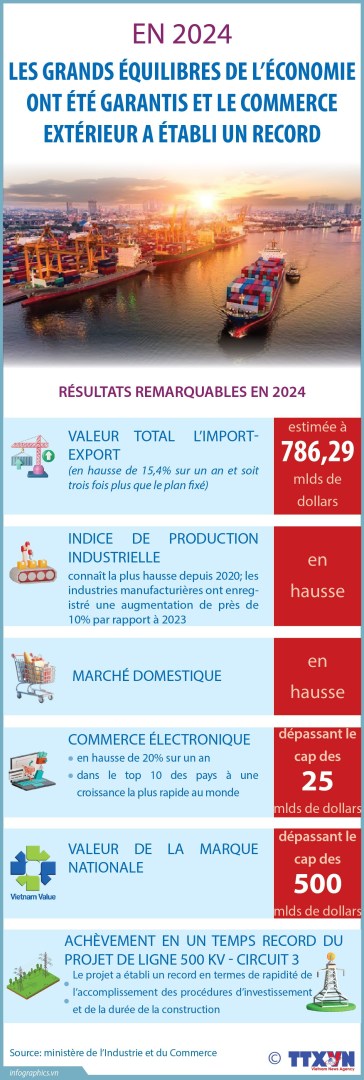
Le Vietnam a exploité efficacement 17 accords de libre-échange (ALE), couvrant plus de 60 partenaires, et a supprimé de nombreuses barrières commerciales, contribuant à un commerce extérieur record estimé à près de 800 milliards de dollars en 2024.
Le Premier ministre Pham Minh Chinh préside une conférence avec les chefs des agences représentatives du pays à l’étranger sur le renforcement de la diplomatie économique pour promouvoir la croissance au cours des six derniers mois de 2024 et des années suivantes, le 18 juillet 2024. Photo: VNA
La diplomatie économique a également favorisé l’attraction d’investissements dans les domaines de la technologie, de l’innovation et des semi-conducteurs. Le Vietnam a intensifié ses efforts en matière de transformation numérique, de transition verte, d’intelligence artificielle (IA) et de fabrication de semi-conducteurs, attirant des investissements de haute qualité dans ces secteurs.
Đoàn công tác UNESCO thăm quan Phố cổ Hoa Lư, 29/10/2024. Ảnh: TTXVNĐại sứ Nguyễn Thị Vân Anh, Đại diện thường trực Việt Nam bên UNESCO, và thị trưởng Marième Tamata-Varin, tham quan gian hàng Việt Nam tại Ngày hội Pháp ngữ 2024 ở thành phố Yèbles. Ảnh: TTXVNĐoàn chuyên gia UNESCO thẩm định hồ sơ Công viên địa chất Lạng Sơn, 6-10/7/2024. (Ảnh: TTXVN)
La diplomatie a joué un rôle clé dans l’inscription de 6 nouveaux titres et patrimoines vietnamiens au registre de l’UNESCO, portant le total à 71.
Des responsables de l’ambassade du Vietnam rend visite aux personnes touchées par l’incendie d’un centre commercial en Pologne. Photo : VNA
Ces distinctions constituent des atouts précieux pour le développement économique, culturel et social des régions concernées, tout en renforçant l’image internationale du Vietnam.
Le Vietnam participe à la 220e session du Conseil exécutif de l’UNESCO. Photo: VNA
Créer un élan pour propulser le pays dans une nouvelle ère
Le Secrétaire général Tô Lâm a souligné que l’année 2025 sera décisive pour le Vietnam, marquant le 80ᵉ anniversaire de la fondation de la République et le 50ᵉ de la réunification nationale. Cette année sera également cruciale pour la mise en œuvre des résolutions du XIIIᵉ Congrès national du Parti et pour entamer une nouvelle ère de développement national.
Le secrétaire général du Parti et président To Lam travail avec le Comité chargé des affaires du Parti du ministère des Affaires étrangères, le 29 août 2024. Photo: VNA
“Le travail diplomatique et extérieur doit ‘élever et élargir la contribution du Vietnam à la révolution mondiale, à la paix, à la coopération, au développement et au progrès de l’humanité’, et ‘diffuser fortement la version du Vietnam, indépendante, autonome, pacifique, coopérative, amicale, développée, prospère et heureuse”.
Sectétaire général To Lam
Selon le ministre des Affaires étrangères Bùi Thanh Son, la diplomatie du Vietnam en 2025 continuera de s’appuyer sur les objectifs, principes, lignes directrices et méthodes qui ont été affirmés au cours des 80 années de la diplomatie révolutionnaire du Vietnam, tout en apportant des changements fondamentaux pour répondre aux exigences de la nouvelle ère.
Premièrement, il s’agit de valoriser le rôle essentiel et permanent de la diplomatie dans la consolidation d’un environnement extérieur favorable au pays. Cela passe par l’établissement de cadres de coopération solides face aux bouleversements profonds de notre époque.
Deuxièmement, la diplomatie joue un rôle de catalyseur et de moteur pour ouvrir de nouvelles opportunités, en connectant les forces internes et externes. L’interne constitue la base fondamentale et durable, tandis que l’externe apporte des éléments clés et stratégiques pour des percées décisives.
Cérémonie marquant la remise des décisions du président de la République à huit officiers qui prendront leurs fonctions dans les missions des Nations Unies au Soudan du Sud (MINUSS) et en République centrafricaine (MINUSCA), le 2 janvier 2025. Photo: VNA
Le Vietnam s’acquitte activement de ses fonctions dans les missions de maintien de la paix des Nations Unies. Photo: VNA
Troisièmement, une nouvelle approche diplomatique est adoptée : passer de la réception à la contribution, de l’apprentissage à la direction, de l’intégration approfondie à l’intégration complète, et d’un pays suiveur à un pays en ascension, prêt à assumer de nouvelles responsabilités. La position et les capacités nouvelles du Vietnam permettent désormais une participation plus profonde et plus responsable aux affaires internationales, tout en suscitant des attentes accrues quant à sa contribution à la résolution des problèmes mondiaux.
La diplomatie culturelle promeut le « soft power » de la nation. Sur la photo : Performance des membres de l’Organisation d’échanges culturels Vietnam-Australie (VACEO) en Australie. Photo : VNA
Quatrièmement, valoriser le soft power national en adéquation avec son envergure historique et culturelle, ainsi qu’avec son statut politique et économique. Le soft power vietnamien repose sur une culture riche d’identité nationale, les réalisations historiques de la rénovation, une politique étrangère pacifique et harmonieuse, respectueuse du droit international, ainsi que sur l’appui et la sympathie des peuples du monde. Et enfin, pour réaliser ces objectifs, il est essentiel de construire une diplomatie vietnamienne intégrale, moderne et professionnelle./.
Le soft power vietnamien repose sur une culture riche d’identité nationale, les réalisations historiques de la rénovation, une politique étrangère pacifique et harmonieuse, respectueuse du droit international, ainsi que sur l’appui et la sympathie des peuples du monde. Photo: VNA
Vietnam’s robust activities boosting external relations have contributed to bringing the country into a new era. (Illustrative photo: VNA)
2024 saw Vietnam significantly expanding its diplomatic activities with numerous partners and at various important multilateral forums and mechanisms. The country’s key leaders conducted a total of 60 external activities, including paying 21 visits to foreign countries and attend major multilateral conferences, as well as hosting 25 delegations of foreign leaders to Vietnam.
Deputy Prime Minister and Minister of Foreign Affairs Bui Thanh Son (Photo: VNA)
Deputy Prime Minister and Minister of Foreign Affairs Bui Thanh Son affirmed that these visits and diplomatic activities achieved strategically important and long-term results, especially in elevating and upgrading relationships with key partners, and developing them in a substantive and effective manner.
Vietnam has established diplomatic ties with 194 countries. Last year, it upgraded relations to the Comprehensive Strategic Partnership level with Australia, France, and Malaysia, to a Strategic Partnership with Brazil, and to a Comprehensive Partnership with Mongolia and the United Arab Emirates (UAE). These moves brought the total number of partners with which Vietnam has formal frameworks of relations to 32. The country has also signed more than 170 cooperation agreements across various sectors. This not only reflects the dynamism and proactivity of Vietnam’s foreign policy and diplomacy but also highlights the importance other countries place on Vietnam’s strategic geographical value and their desire to deepen relations with the Southeast Asian nation.
On the multilateral front, Vietnam continues to affirm its capable role and responsibility in handling international issues. In the VNA infographic: Highlights of nearly-50-year cooperation between Vietnam and the United Nations.
On the multilateral front, the Deputy Prime Minister and Foreign Minister highlighted that Vietnam continued to affirm its capacity, role, and responsibility in handling international issues. At international forums such as the Association of Southeast Asian Nations (ASEAN), the United Nations, the Greater Mekong Subregion, the Asia-Pacific Economic Cooperation (APEC), G20, BRICS, the ASEAN Inter-Parliamentary Assembly (AIPA), the Non-Aligned Movement, and the Francophonie, Vietnam continued to promote its active and positive role. For the first time, it successfully hosted the ASEAN Future Forum, establishing a mechanism for exchanges and promoting its role in shaping the future of ASEAN post-2025, with a vision toward 2045.
The Vietnamese delegation led by Foreign Minister Bui Thanh Son leaves strong impressions at the 55th regular session of the UN Human Rights Council from February 26-28, 2024. (Photo: VNA)
The United Nations General Assembly’s recent approval of the UN Convention against Cybercrime, with Vietnam chosen as the host country for the signing ceremony, marked a new milestone in the country’s international legal integration and multilateral diplomacy, demonstrating it as a responsible, reliable, and responsible partner of the international community. In the organisations where Vietnam is holding membership such as the UN Human Rights Council and six out of the seven key governing mechanisms of UNESCO, it has demonstrated its ability to contribute effectively and has introduced many initiatives that received broad support. Furthermore, Vietnam’s responsible contributions to global issues like climate change response, peacekeeping, and cybersecurity have been increasingly recognised and appreciated by the international community.
Vietnam, Cambodia Navies conduct 76th joint patrol, on September 27, 2024Sailing vessel 286 – Le Quy Don arrives in Indonesia on July 17, 2024 Vietnam, Thailand Navies conduct 49th joint patrol on April 10, 2024 Vietnam, China Coast Guards conduct joint patrol in the northern waters of the Gulf of Tonkin on August 29, 2024
Illustrative photos: VNA
In the face of major global upheavals, Vietnam has appropriately handled relations with its partners; maintained land borders of peace, stability, and cooperation; made progress in negotiations with other countries; and advanced efforts to establish an efficient and substantive Code of Conduct in the East Sea (COC) in line with international law, particularly the 1982 UN Convention on the Law of the Sea (UNCLOS).
At the same time, it has upheld its policy and actively promoted the peaceful settlement of outstanding problems based on international law. Diplomatic agencies have advised the Politburo, the Secretariat, and the Government in properly addressing many issues in the face of complex international developments.
“Helping to protect the Fatherland early and from afar before dangers occur, the diplomatic sector has effectively coordinated with other forces to carry out the critical and regular task of firmly safeguarding the country’s independence, sovereignty, and territorial integrity, while ensuring the national interests at the best.”
Foreign Minister Bui Thanh Son
Vietnam continues to be one of the largest FDI recipients in the world and effectively exploits the benefits of international commitments and agreements. (Illustrative photos: VNA)
In the new era, diplomacy, especially economic diplomacy, holds a focal role, significantly helping to create momentum for growth breakthrough. Traditional growth drivers such as trade, investment, tourism, and labour have been renewed, becoming more effective, especially with major markets and key investment partners in Northeast Asia and the Americas, and paving the way for making inroads into the Middle East and African markets.
With a new approach, Vietnam has fruitfully tapped 17 free trade agreements (FTAs) with more than 60 partner and removed market barriers, thus contributing to export recovery. As a result, the trade value is expected to reach a record high of nearly 800 billion USD. This approach has also enabled Vietnam to make use of the global investment shift, maintaining its position as one of the top FDI recipients in the world.
Prime Minister Pham Minh Chinh chairs his conference with Heads of Vietnamese representative agencies abroad on promoting economic diplomacy and boosting economic growth in the last six months of 2024 and the following years on July 18, 2024. (Photo: VNA)
The country has successfully capitalised on the benefits from international agreements and commitments, promoted EU member nations’ ratification of the EU – Vietnam Investment Protection Agreement (EVIPA), and explored new export markets for Halal products.
At the same time, economic diplomacy has also promoted new drivers, particularly in technology, innovation, and semiconductor cooperation with key partners and major corporations, thus facilitating connections with partners in digital transformation, green transition, semiconductors, and artificial intelligence.
UNESCO delegation visits Hoa Lu Ancient Town on October 29, 2024. (Photo: VNA)Ambassador Nguyen Thi Van Anh, Permanent Representative of Vietnam to UNESCO, (R) and Mayor of Yèbles city Marième Tamata-Varin (second from right) visit the Vietnamese pavilion at the Francophonie Festival 2024 in Yèbles. (Photo: VNA) UNESCO delegation appraises Lang Son Geopark dossier on July 6-10, 2024. (Photo: VNA)
Attracting high-quality investment in emerging technologies, especially from leading global tech giants, plays a crucial role in supporting the development of the semiconductor industry, establishing AI, chip design and innovation centres, training hi-tech human resources, and leveraging opportunities presented by the 4th Industrial Revolution to make breakthroughs and accomplish the country’s development goals for 2030 and 2045.
Alongside with this, the nation’s stature and strength have been enhanced through the effective synergy of external communications, cultural diplomacy, and the working for overseas Vietnamese as well as citizen protection affairs. Diplomacy has helped successfully persuade UNESCO to add six more titles/heritages, lifting the total number of UNESCO-recognised titles to 71, which serves as a new resource for sustainable socio-economic and cultural development in localities.
The citizen protection work has contributed to actively safeguarding the security, safety, and rights and legitimate interests of Vietnamese citizens and businesses. Illustrative photo: The Vietnamese Embassy in Poland visits people affected by the fire at a shopping mall in the European country. (Photo: VNA)
The Vietnamese community abroad, with nearly 6 million people, has benefited from the Party and State’s policies, which have mobilised resources for development through thousands of investment projects and remittances amounting to tens of billions of USD.
The citizen protection work has contributed to actively safeguarding the security, safety, and rights and legitimate interests of Vietnamese citizens and businesses, especially in conflict, natural disaster-hit and unstable areas where thousands of citizens were evacuated back to Vietnam. The external information work has served as an effective channel to vigorously promote the image of the country, its people, culture, and achievements in the “Doi moi” (renewal) process to the world.
The sector is building a comprehensive, modern and professional diplomacy through the rearrangement of its units in accordance with Resolution No.18 adopted by the 12th Party Central Committee. Operational methods have been unceasingly refined towards professionalism, efficiency, and modernity to meet requirements in the new context.
The significant achievements in 2024 reflect the astute and timely leadership of the Party Central Committee, Politburo and Secretariat. They also represent the collective efforts and unity from all sectors and the whole political system, with notable contributions from the forces working in diplomatic affairs.
Vietnam attends the 220th session of the UNESCO Executive Board. (Photo: VNA)
Propelling the nation into a new era
The year 2025 holds significant importance to Vietnam. It marks the 80th anniversary of national independence and the 50th anniversary of reunification. Additionally, it represents the final year to achieve the goals set forth by the 13th National Party Congress while serving as a pivotal milestone for advancing into the era of national rise. On the threshold of a new historical point of time, new tasks arise for the diplomatic sector.
Party General Secretary To Lam speaks at his meeting with the Party Civil Affairs Board of the Ministry of Foreign Affairs on August 29, 2024 (Photo: VNA)
“The diplomatic sector should also elevate and expand Vietnam’s contributions to the global revolutionary cause, to peace, cooperation, development, and the progress of humanity, while powerfully promoting the image of Vietnam as an independent, self-reliant, peaceful, cooperative, friendly, developing, prosperous, and happy nation“.
Party General Secretary To Lam
Therefore, the overarching mission of Vietnam’s foreign affairs and diplomacy in 2025 as well as the new era is to continue building on the goals, principles, strategies, and methods established over 80 years of the country’s revolutionary diplomacy. At the same time, it is important to implement fundamental innovations to meet the requirements of the new phase.
First, it is essential to enhance the “critical and consistent” role of the sector by consolidating a favourable external landscape for the country and establishing resilient relationship frameworks capable of withstanding profound changes of the era. Simultaneously, diplomacy, in coordination with national defence and security, must proactively safeguard the Fatherland early and from afar, and maintain a peaceful and stable environment conducive to national development.
Second, foreign affairs must act as a creator and driving force, opening up new opportunities for the nation and connecting internal strengths with external resources. Internal capacity serves as the foundation and long-term asset, while external resources provide critical, transformative breakthroughs. These external resources include trade and investment flows, emerging development and economic connectivity trends, a multipolar and multicentric world order based on international law, and the power of the era of sci-tech and knowledge-driven revolutions.
A new diplomatic approach must shift from passive reception to active contribution, from learning to leadership, from deep integration to full integration. Illustrative photo: Ceremony to hand over the President’s Decision and the Minister of National Defence’s Decision to eight officers to carry out missions at United Nations peacekeeping missions on January 2, 2025. (Photo: VNA)
Vietnam actively performs its duties in United Nations peacekeeping missions. (Photo: VNA)
Third, a new diplomatic approach must shift from passive reception to active contribution, from learning to leadership, from deep integration to full integration, and from being a follower to becoming a nation on the rise, ready to assume new responsibilities. Vietnam will actively participate in building and safeguarding a fair and equitable international order based on international law, elevating its contributions to global issues. The country will not only engage in the construction and shaping of multilateral institutions but also play a pivotal and leading role in key strategic issues and mechanisms that align with its national interests.
Cultural diplomacy promotes the nation’s “soft power”. Illustrative photos: Art performances by members of the Vietnam Australia Culture Exchange Organisation (VACEO) in Australia. (Photo: VNA)
Fourth, the “soft power” of the nation must be brought into play to match its historical and cultural stature, as well as its political and economic positions. Vietnam’s “soft power” lies in its rich cultural heritage, significant and historic achievements of its Doi Moi process, its foreign policy of peace, the harmonious resolution of international issues with respect for international law, along with the widespread support of the global community toward the country.
Fifth, an important goal is to build a comprehensive, modern, and professional diplomatic sector. In organisational structure, efforts are focused on streamlining and optimising for greater efficiency and effectiveness while building a clean, strong Party. Regarding the personnel work, adhering to the principle that “cadres are the root of every work”, the diplomatic staff in the new era must not only possess expertise, competence, and political mettle but also demonstrate the ability to think critically, act decisively, embrace innovative approaches, and increasingly professionalise their methods, practices, and work styles.
Under the Party’s clear-sighted leadership and basing on the achievements obtained in 2024, Vietnam’s diplomacy will continue making worthy contributions to the successful implementation of the foreign policy identified at the 13th National Party Congress, helping lead the country to a new era./.
2024 marks a year when Vietnam extensively implements foreign affairs activities. (Illustration photos: VNA)