


Residents of Lang Nu Village (Phuc Khanh commune, Bao Yen district), Nam Tong Village (Nam Luc commune), and Kho Vang Village (Coc Lau commune, Bac Ha district) settle in their new homes. (Photo: VNA)
Hanoi (VNA) – The remarkable recovery of Hoang Thao Ngoc, an 11-year-old Mong ethnic girl and the last survivor of the devastating flash flood that engulfed Lang Nu village in Bao Yen District, Lao Cai Province, in September 2024, has reignited hopes in a grieving community.
More than just a narrow escape from death, Ngoc’s survival is a testament to the unwavering resilience and determination of those who shoulder the responsibility of protecting the nation and its people—especially in times of hardship and adversity.

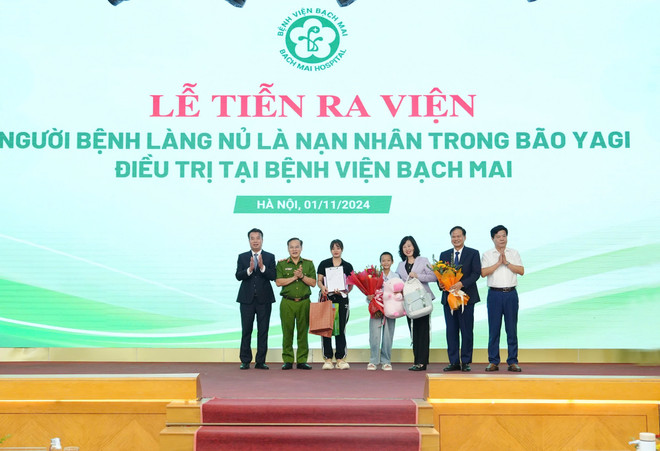
Hoang Thao Ngoc on the day of discharge from Bach Mai Hospital on November 1, 2024. (Photo: VNA)
People’s trust tested in hardship
The tranquil autumn days of September turned into a time of sorrow and devastation when Super Typhoon Yagi made landfall, battering northern Vietnam. Regarded as the most destructive storm to hit the East Sea in 30 years, Yagi left behind catastrophic losses. In total, there was 345 people dead or missing and nearly 82 trillion VND (over 3.2 billion USD) in economic damage.
Among the hardest-hit areas was Lang Nu village, where flash floods and landslides claimed 52 lives, with 14 others still unaccounted for, equal to more than half of the village’s population.
In the wake of this disaster, the entire political system, under the leadership of the Party and the State, sprang into action. Rescue teams braved raging floodwaters, risking their own lives to save others and protect what remained.


A total of 450,000 military personnel and 150,000 police officers are mobilised to aid in Yagi disaster relief and recovery efforts. (Photo: VNA)
As the saying goes: “Gold is tested by fire, leadership shines through crisis”, the devastation caused by the historic typhoon underscored the steadfast role of the Party and the State as the people’s strongest pillar of support, an unshakable foundation they rely on in times of distress. Every decision, every action taken during this critical time reinforced the Party’s guiding principle: “No one is left behind.”
What has unfolded once again reaffirms that this policy is not mere rhetoric, but a deep expression of empathy, a testament to compassion and solidarity, and a rallying call that resonates in the hearts of every Vietnamese citizen.
No one left behind
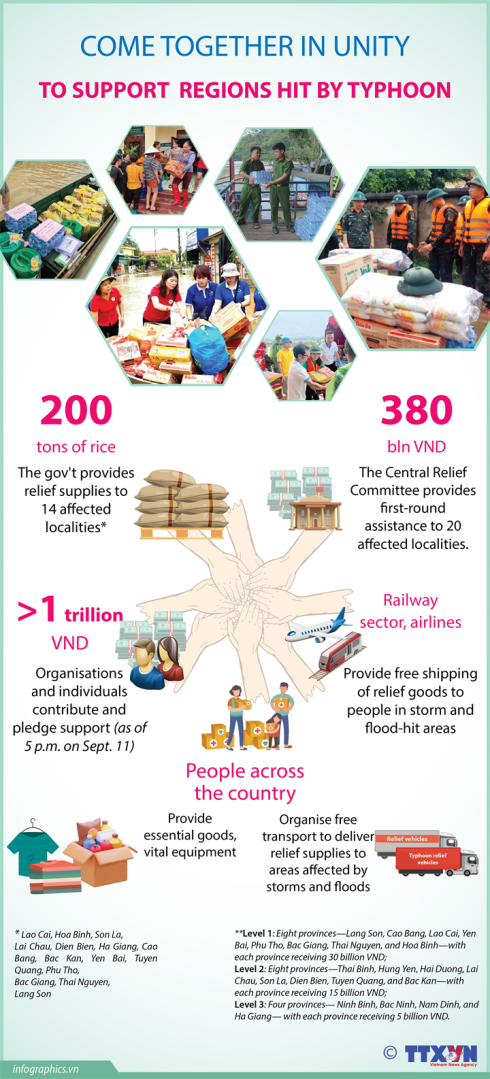
According to official figures, a total of 450,000 military personnel and 150,000 police officers were mobilised to aid in Yagi disaster relief and recovery efforts, safeguarding lives and livelihoods across affected localities. Their actions were bolstered by the collective spirit of millions across the country and overseas Vietnamese who rallied behind their compatriots in distress.
As for the case of Hoang Thao Ngoc, she was found by rescue teams in critical condition—her lungs filled with mud, her body battered by severe injuries. She was immediately airlifted to Bach Mai Hospital in Hanoi, where doctors fought relentlessly to keep her alive. Every second, every effort was a battle for survival. After nearly 50 days of intensive treatment, with the assistance of Japanese and French specialists and multi-hospital consultations, Ngoc finally recovered and was discharged.
For her mother, Hoang Thi Dip, seeing her daughter return from the brink of death was an overwhelming moment of joy and gratitude.
In an interview with the Vietnam News Agency, Dip said: “To see my child alive and well today is beyond my words. I am deeply grateful to the doctors, the rescue teams, and the authorities who did everything to save her, including covering the entire cost of her treatment. Our family will never forget this kindness.”
Having been given a second chance of life, Ngoc longed to return to her village, to the arms of her family, teachers, friends, and neighbors. Yet, she knew that many of them had not been as fortunate.
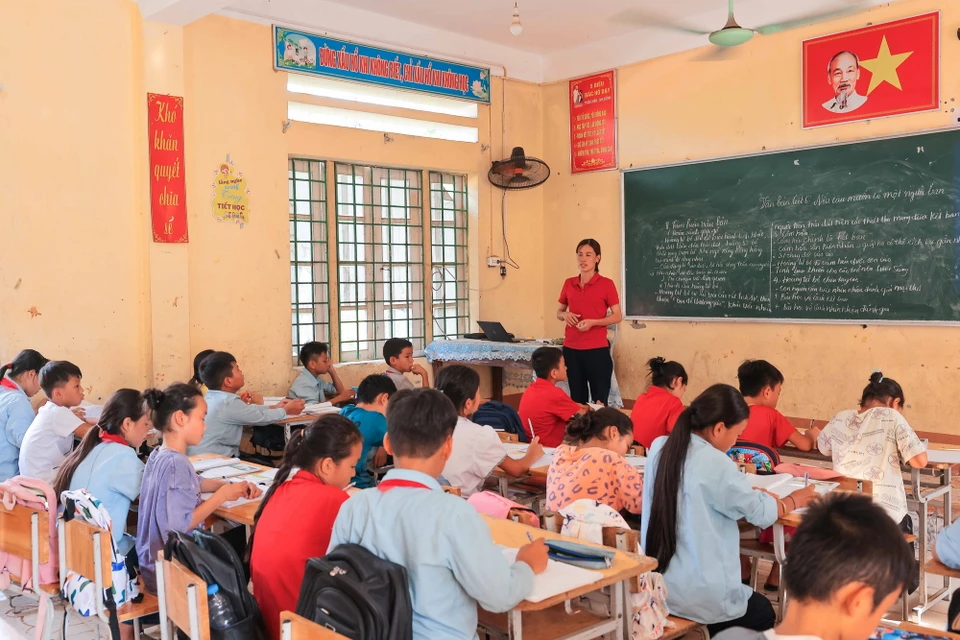
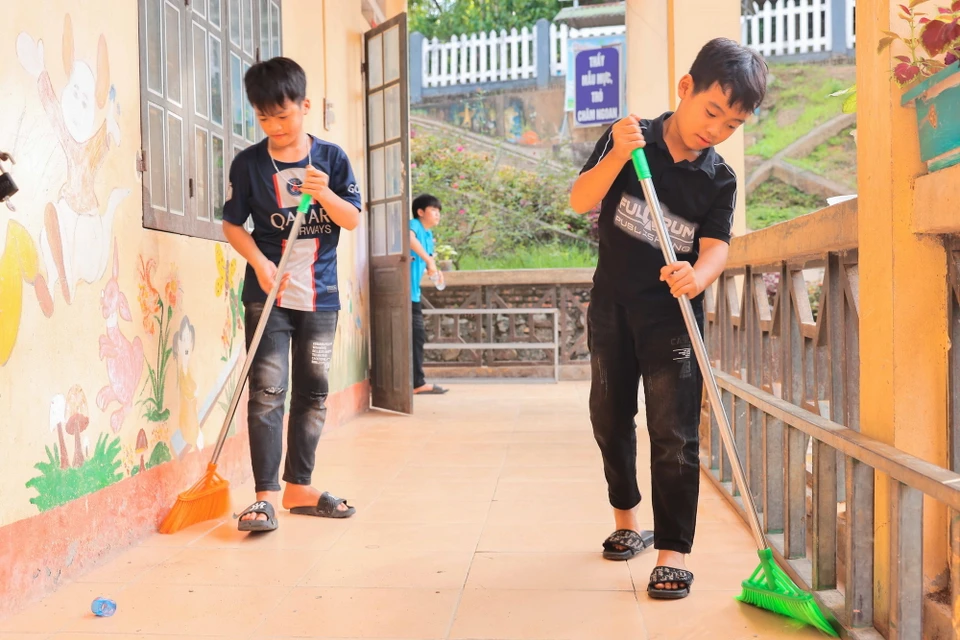


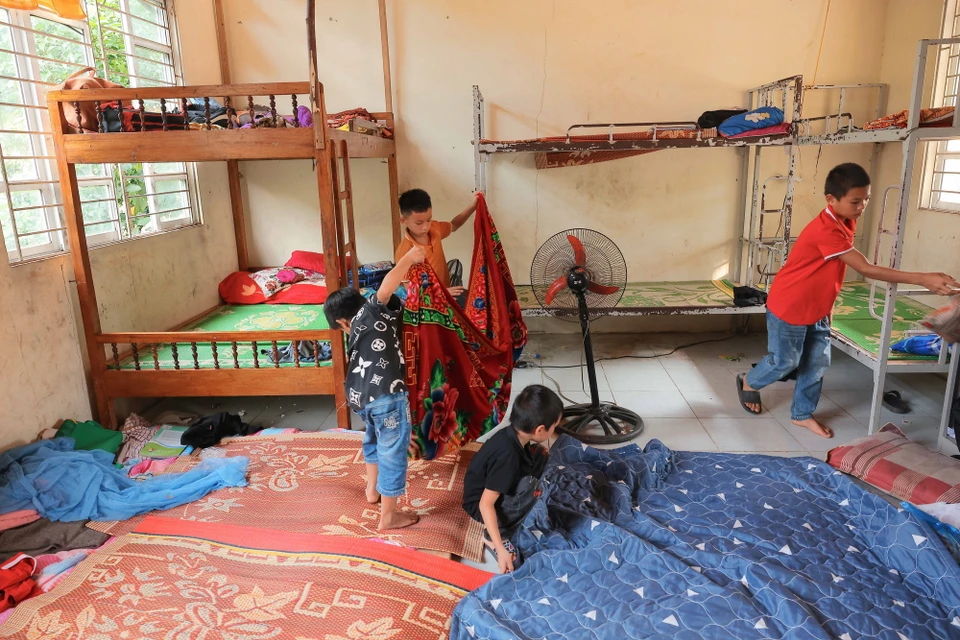
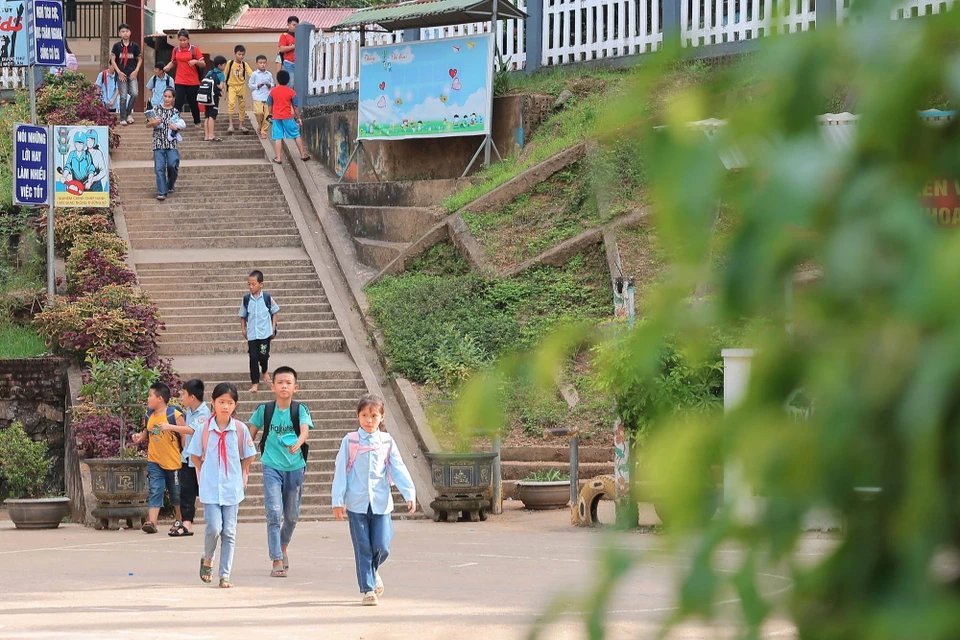
On Septempber 19, 2024, 107 students from Lang Nu Village resume their study at Phuc Khanh commune’s Primary and Secondary School. (Photo: VNA)
As the floodwaters receded, Lang Nu village began rebuilding from ashes. The land itself may have been reshaped by the nature’s wrath, the unity and spirit of its people remained unshaken. Their determination to restore the village and preserve its traditions burned brighter than ever.
Chairman of the Lao Cai Provincial People’s Committee Trinh Xuan Truong said: “We may have lost part of Lang Nu village, but we will rebuild it stronger, safer, and better. We will do it in honor of those we lost and to preserve the cultural heritage of the village. Now more than ever, let’s stand together, and support one another through these difficult times.”
People’s welfare top priority
Storm No. 3 and its aftermath left an unprecedented trail of destruction across northern Vietnam, with Lao Cai bearing the heaviest toll. In Lang Nu, Nam Tong, and Kho Vang villages alone, 84 people died, some families were wiped out entirely. The loss was immeasurable.
In response, the Party and State leaders promptly visited the affected areas, offering support and overseeing relief efforts.
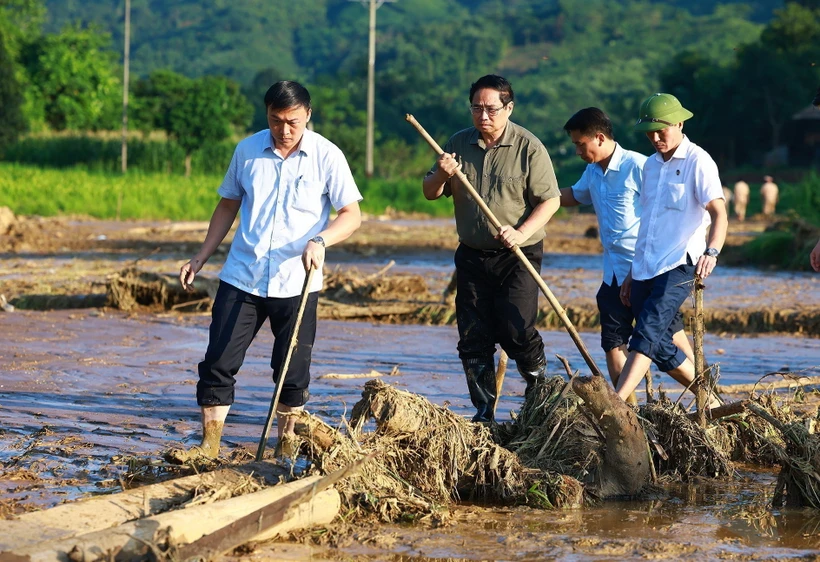
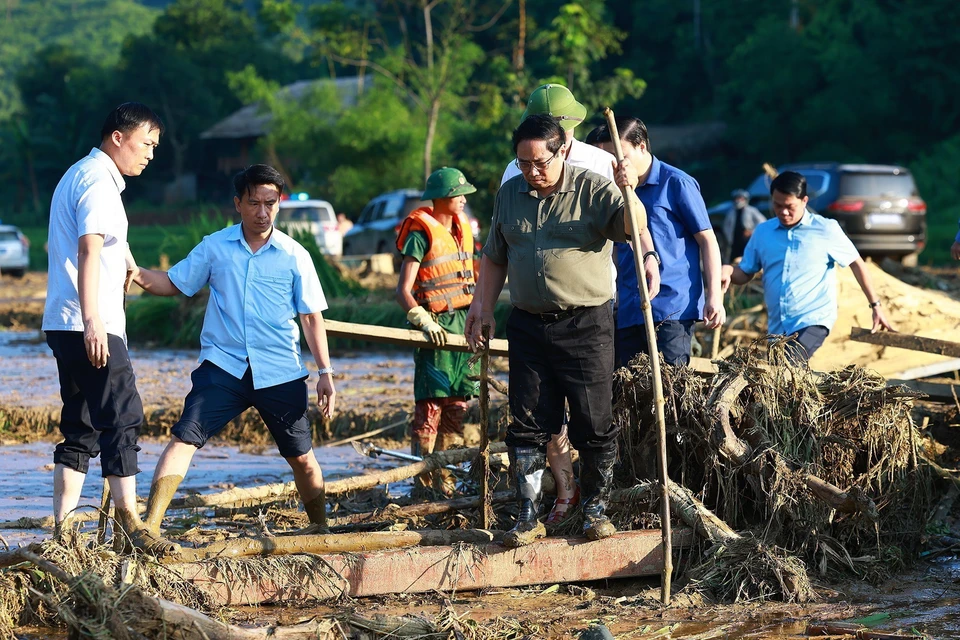
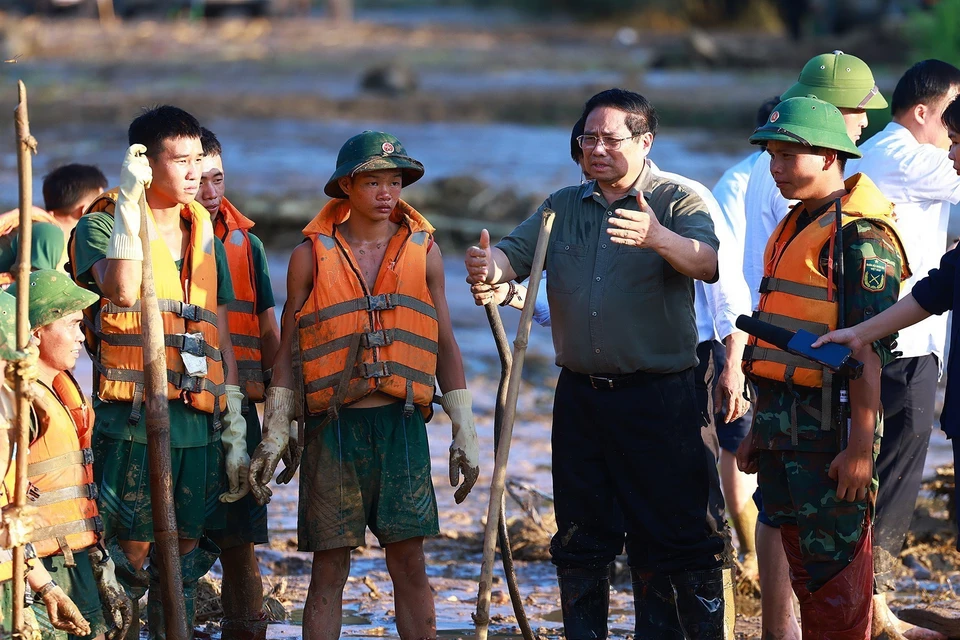
Prime Minister Pham Minh Chinh personally visited the disaster site on September 12, directing relief efforts and offering words of comfort to the victims. (Photo: VNA)
Prime Minister Chính’s presence in the heart of the crisis reflected the deep concern and care of the leadership for its people in their darkest moments. It was a powerful affirmation of the “for the people” ideology at the core of Vietnam’s governance.
The Prime Minister outlined a total of seven key recovery initiatives, setting an ambitious deadline that by December 31, 2024, the reconstruction of Lang Nu, Nam Tong, and Kho Vang must be completed.
Within just 10 days following the disaster, thanks to the unwavering commitment of the entire political system and the contributions of sponsors, reconstruction projects in Lao Cai, including the three devastated villages, were underway.
With a spirit of resilience—”conquering the heat, overcoming the rain,” “no excuses, only action,” “working day and night”—authorities and builders pushed through all obstacles to accelerate construction, turning the impossible into reality. The pace of progress exceeded all expectations.
With the efforts of Military Corps 12, we completed three resettlement areas in less than three months—well ahead of the PM’s deadline. This was a monumental achievement by local authorities, the armed forces, and all those involved.” – PM Pham Minh Chinh.
–


On December 22, Prime Minister Pham Minh Chinh attends the inauguration ceremony of the resettlement area projects in three villages of the northern mountainous province of Lao Cai which had been severely affected by flash floods and landslides caused by Typhoon Yagi in early September, 2024. (Photo: VNA)
On December 22, a deeply emotional inauguration ceremony was held for the resettlement areas in Lang Nu, Nam Tong, and Kho Vang. For the people who had lost everything, it was more than just new homes—it was the promise of a fresh start.
The new Lang Nu Resettlement Area features 40 stilt houses built in the traditional Tay ethnic architectural style, alongside 15 houses in Nam Tong and 35 in Kho Vang. Each community is equipped with essential infrastructure, including schools, community centers, and telecommunications networks—gifts from the Party, the State, and the people of Vietnam to their fellow countrymen.


The new Lang Nu Resettlement Area features 40 stilt houses built in the traditional Tay ethnic architectural style, equipped with essential infrastructure (Photo: VNA)
“Three months and ten days ago, I stood here, directing the province and relevant ministries on seven measures to overcome the disaster. The goal was clear. By December 31, no residents should be without shelter, no child without a classroom, and no patient without medical care. Today, we have delivered on that promise.” – PM Pham Minh Chinh speaks at the inauguration of the Lang Nu, Nam Tong, and Kho Vang resettlement areas.
The sturdy new homes rising from the mountains are more than just buildings; they symbolize resilience, solidarity, and an unyielding commitment to ensuring no one is left behind. Lang Nu’s rebirth is not just about reconstruction—it marks the beginning of a new journey, one that embodies the enduring strength of a nation determined to rise, together, into a new era./.

Author: Phuong Vu / Editor: Hoang Nhuong