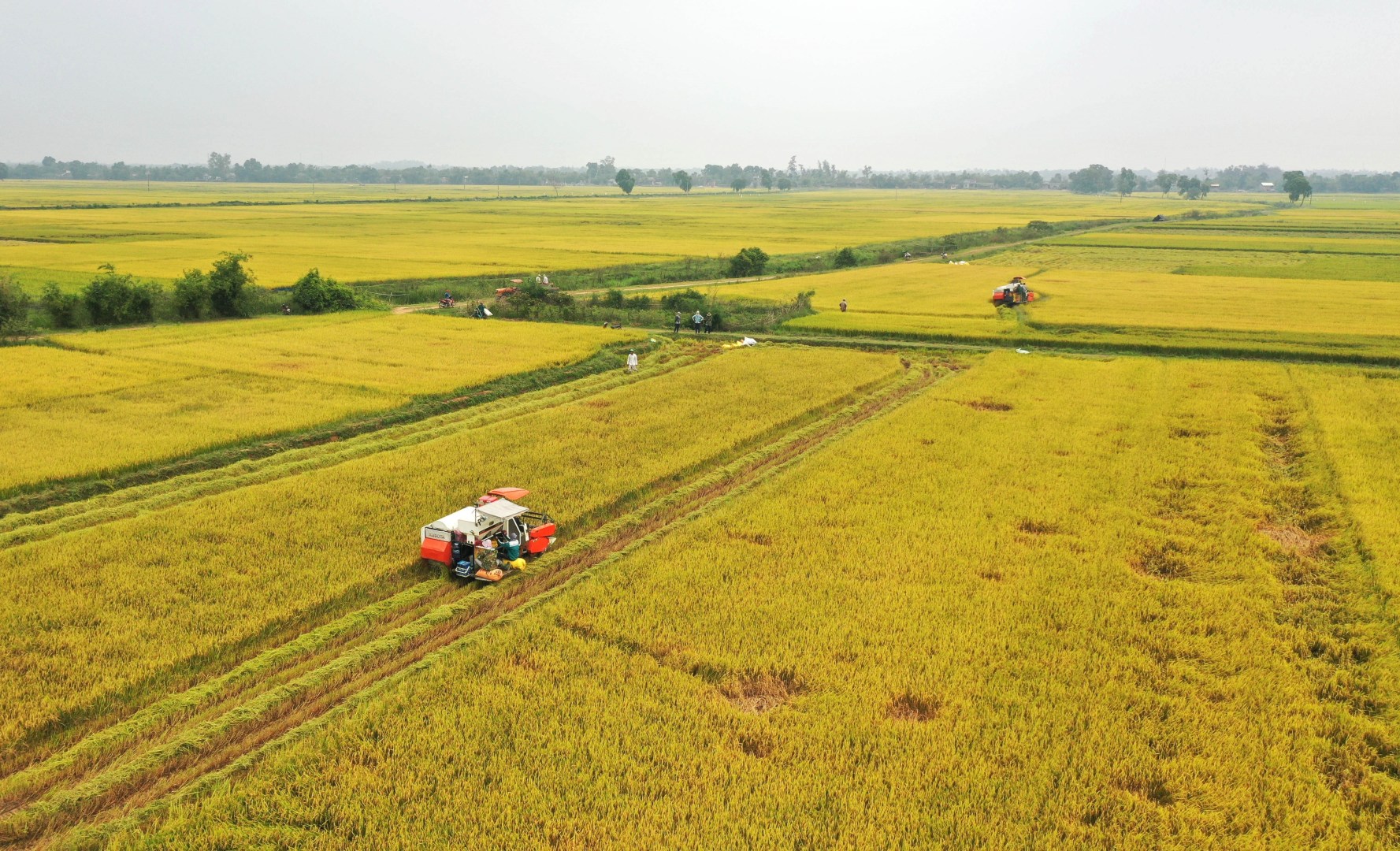
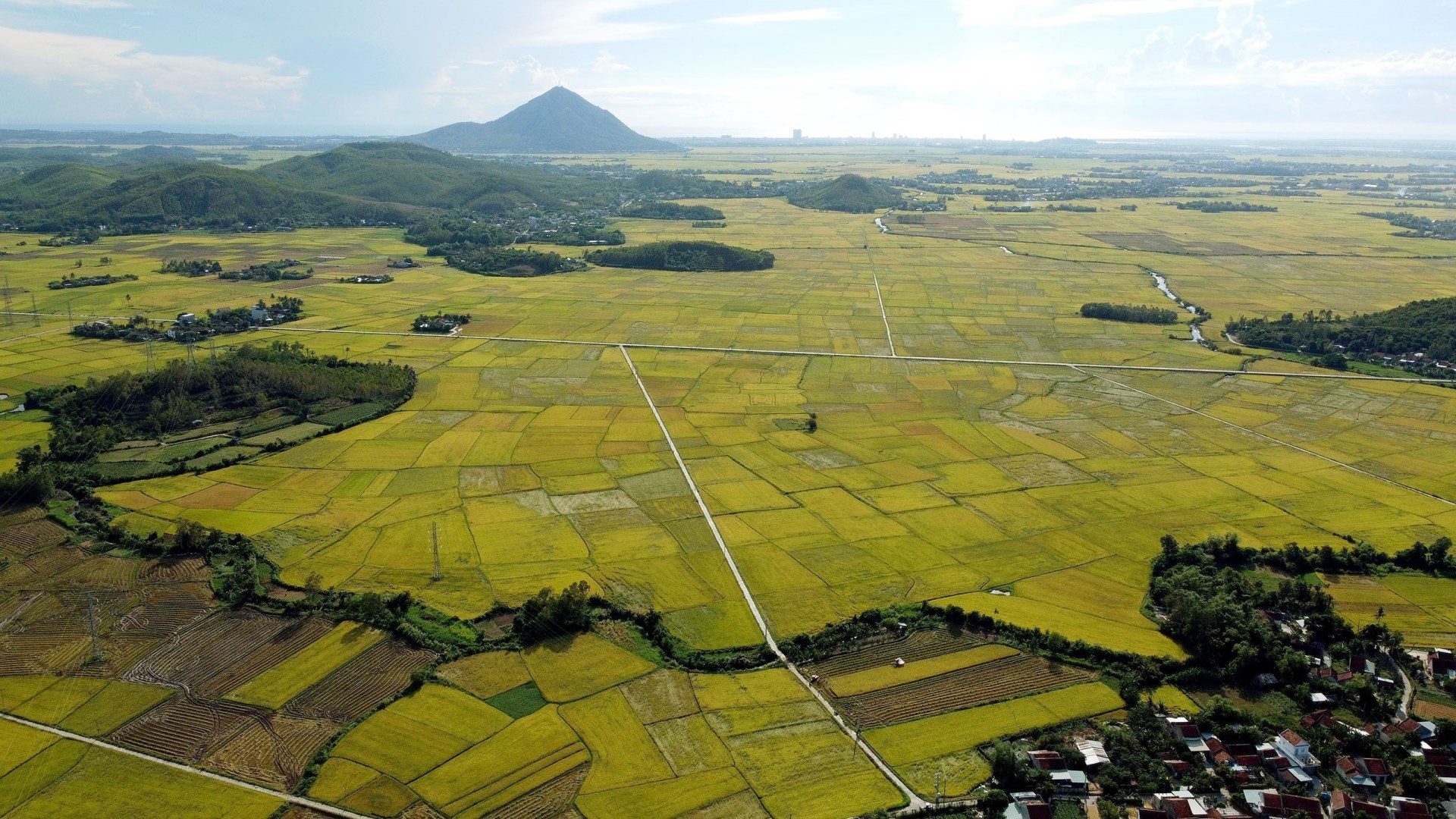
Harvesting winter-spring rice crop in central province of Quang Tri (Photo: VNA)
Not only does Vietnam produce enough rice to meet the needs of nearly 100 million people, but it also has the potential to increase rice exports and is fully capable of sharing food security responsibilities with the world.
Currently, Vietnamese rice boasts many high-quality varieties that are recognised worldwide for their sticky, fragrant qualities, representing a significant advantage in enhancing the value of the Vietnamese rice brand in the global market.
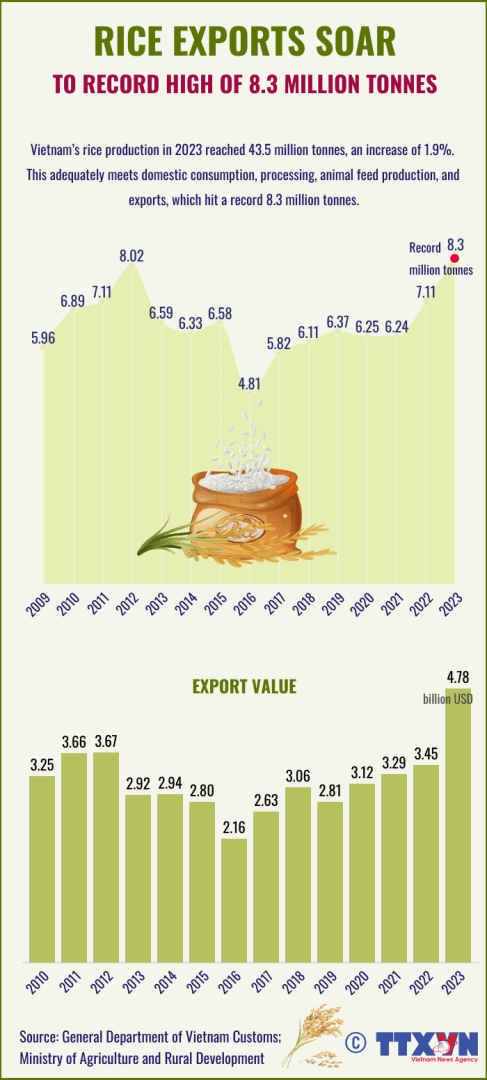
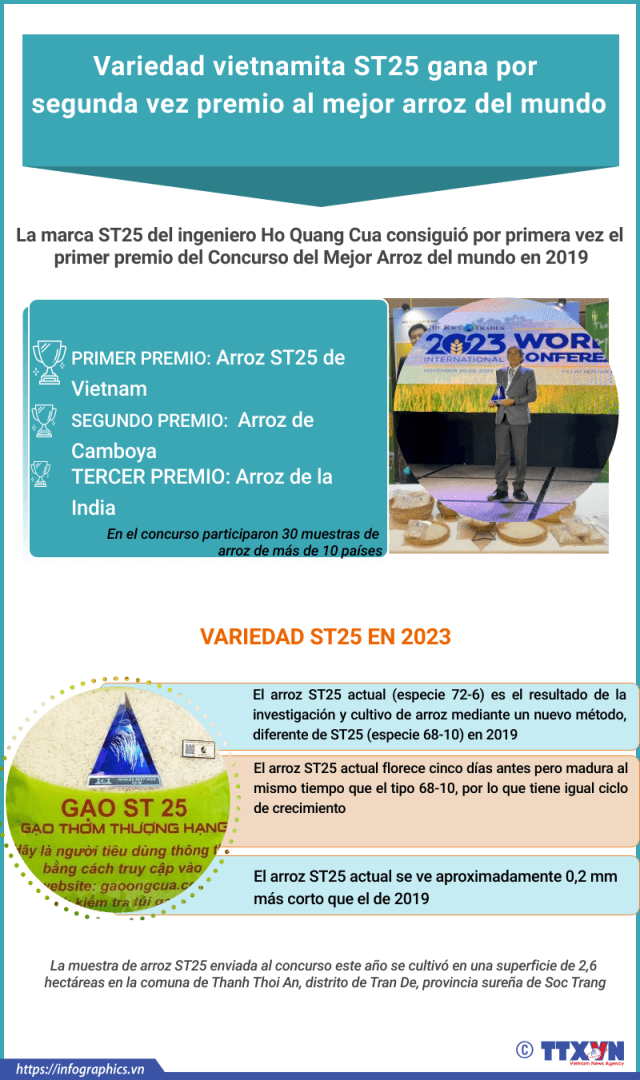
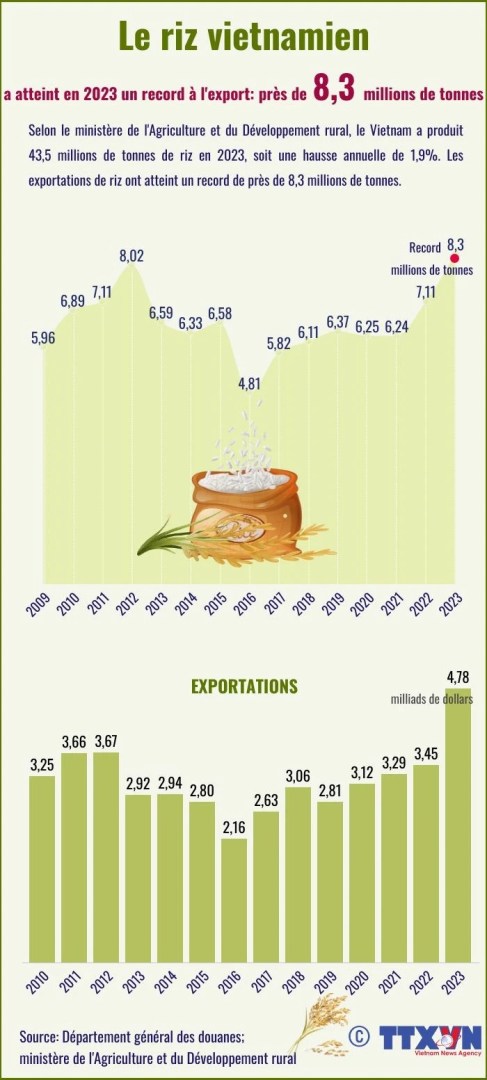
Vietnam exported over 7 million tonnes of rice worth 4.37 billion USD in the first nine months of this year, a year-on-year rise of 9.2% in volume and 23.5% in value. The average export price of rice was estimated at 624 USD per tonne, up 13.1% compared to the same period last year.
This year’s rice for export is forecast to mainly come from the Mekong Delta, known as the contry’s “rice bowl”. Thus, rice export plays a crucial role in the economic development of the region and the nation.
The Mekong Delta actively mechanises all stages from sowing to harvesting in rice production. (Photo: VNA)
Contributions to export market
The Mekong Delta, with a natural area of 4.092 million hectares, of which 2.5 million hectares are used for agricultural production, is one of Vietnam’s primary rice-growing regions.
In recent years, rice production in this region has been maintained at 24-25 million tonnes, accounting for over 50% of the country’s total rice output, with more than 90% of the national rice export volume coming from this area, generating jobs and incomes for millions of local households.
Statistics from the Ministry of Industry and Trade show that in 2024, the total amount of rice exported nationwide is estimated to maintain over 8 million tonnes, of which the Mekong Delta region will account for 7.6 million tonnes.
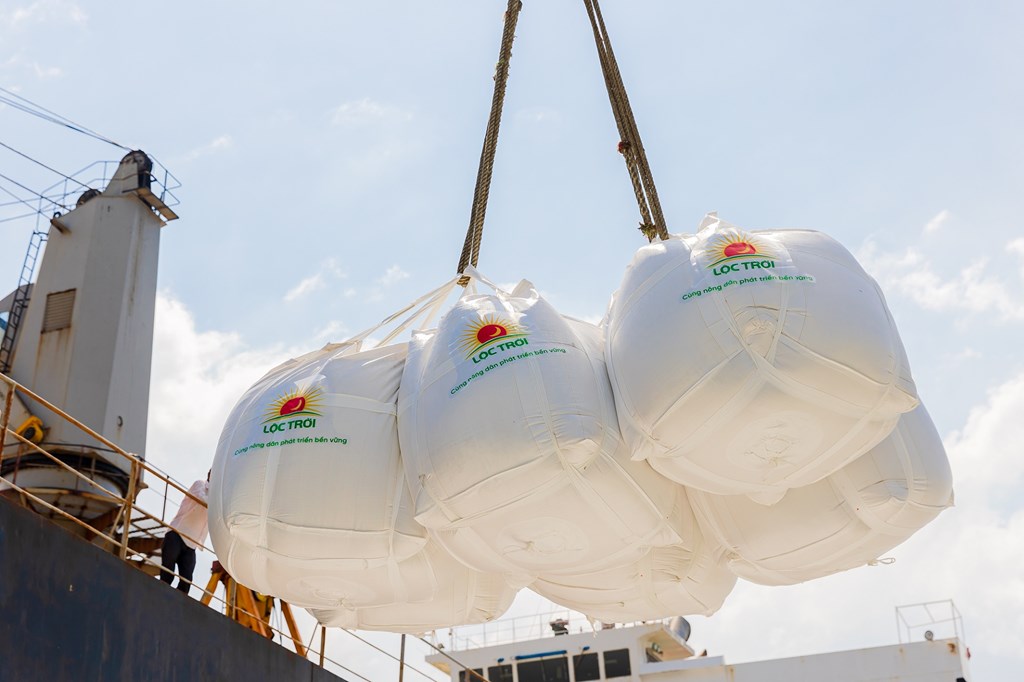
Loc Troi Group exported rice for the first time using bulk carriers to save costs and increase export efficiency (Photo: VNA)
Rice exports from the region mainly target traditional key markets such as China, the Philippines, Malaysia, and Ivory Coast, as well as new and promising markets like Russia and various regions in Africa, West Asia, and South Asia, including South Africa, Algeria, Angola, and the United Arab Emirates.
According to the Ministry of Agriculture and Rural Development (MARD), the rice industry’s productivity has increased sharply and its export value is expected to exceed the expectation of 5 billion USD for the whole year. Notably, rice yields in the Mekong Delta city localities have surged even though the cultivation area has decreased compared to 2023.
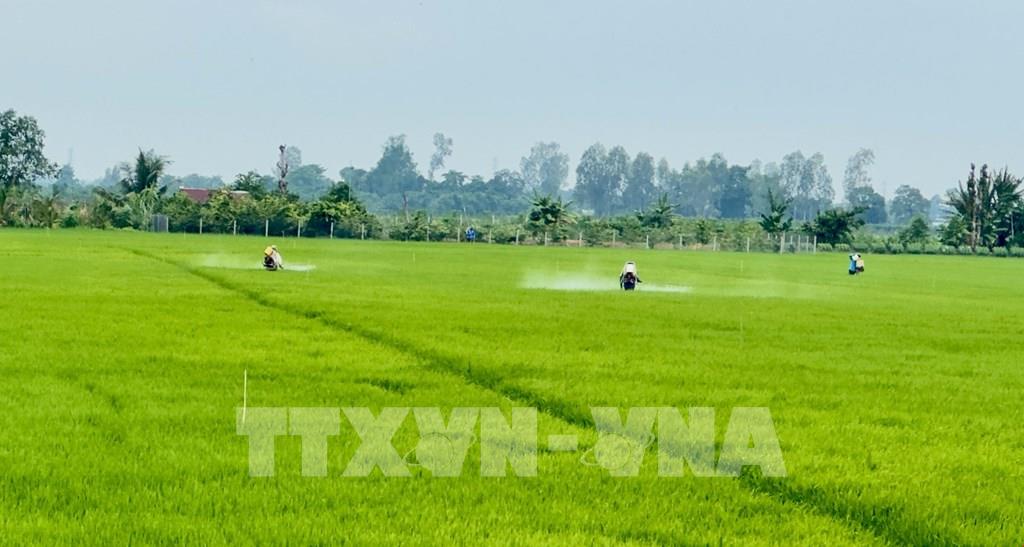
Farmers in the Mekong Delta city of Can Tho apply technology to irrigation systems to increase rice production efficiency (Photo: VNA)
This year, several localities in the region have effectively implemented a project on developing 1 million hectares of high-quality, low-emission rice linked with green growth in the Mekong Delta region by 2030. It not only helps farmers increase profits by over 20% but also reduces emissions by 5-10 tonnes of CO2 equivalent per hectare compared to traditional methods.
The Mekong Delta has rolled out seven models on 333.5ha during the 2024 summer-autumn crop across five localities, namely Can Tho city, and Soc Trang, Tra Vinh, Dong Thap and Kien Giang province.
As a province with the largest country’s rice growing area, Kien Giang produces 4.3 million tonnes rice each year. From 2024, the province puts 60,000 hectares into production under the 1 million hectares of high-quality rice project. The registered area is up to 200,000 ha, divided into two phases.
Many businesses in the Mekong Delta have engaged in providing inputs, services, and product purchasing guarantees for farmers involved in the project, according to the MARD.
“Big game”: 1 million hectares of high-quality rice
Despite the achievements, the Mekong Delta still faces challenges such as a lack of concentrated, large-scale rice production areas with linkage and cooperation under value chains between rice farmers, cooperatives, and enterprises. Rice cultivation remains unsustainable as many farmers still use chemical fertilisers and pesticides, adversely affecting the environment and increasing greenhouse gas emissions.
Moreover, recent market demands have become increasingly stringent, with importing countries enforcing stricter regulations requiring higher quality rice and ensuring food safety, which includes minimising the use of chemical inputs and reducing emissions. Besides, the Prime Minister signed a commitment to achieve net-zero emissions by 2050 at the 26th UN Climate Change Conference of the Parties (COP26).
Given this context, the government has approved the project on developing 1 million hectares of high-quality, low-emission rice linked with green growth in the Mekong Delta region by 2030.
A pilot model of the project on developing one million hectares of high-quality and low-emission rice is launched at Thuan Tien Cooperative in Thanh An commune, Vinh Thanh district, Can Tho city on April 5. (Photo: VNA)
The project not only brings direct benefits to nearly 1.5 million farmers but also affirms Vietnam’s commitment to global food security and reducing greenhouse gas emissions.
The project is associated with restructuring the production system along the value chain, applying sustainable farming processes to enhance value, ensuring the sustainable development of the rice sector. It also seeks to improve production efficiency, increase income and living standards for rice farmers, protect the environment, adapt to climate change, and reduce greenhouse gas emissions.
Once the project is carried out successfully, the model will be replicated nationwide, aiming to turn “green development, emission reduction, high quality” as the brand of Vietnamese rice.
Rice production is a key industry that not only ensures national food security but also supports the country’s economic development and reflects Vietnam’s responsibility for maintaining the international food system.
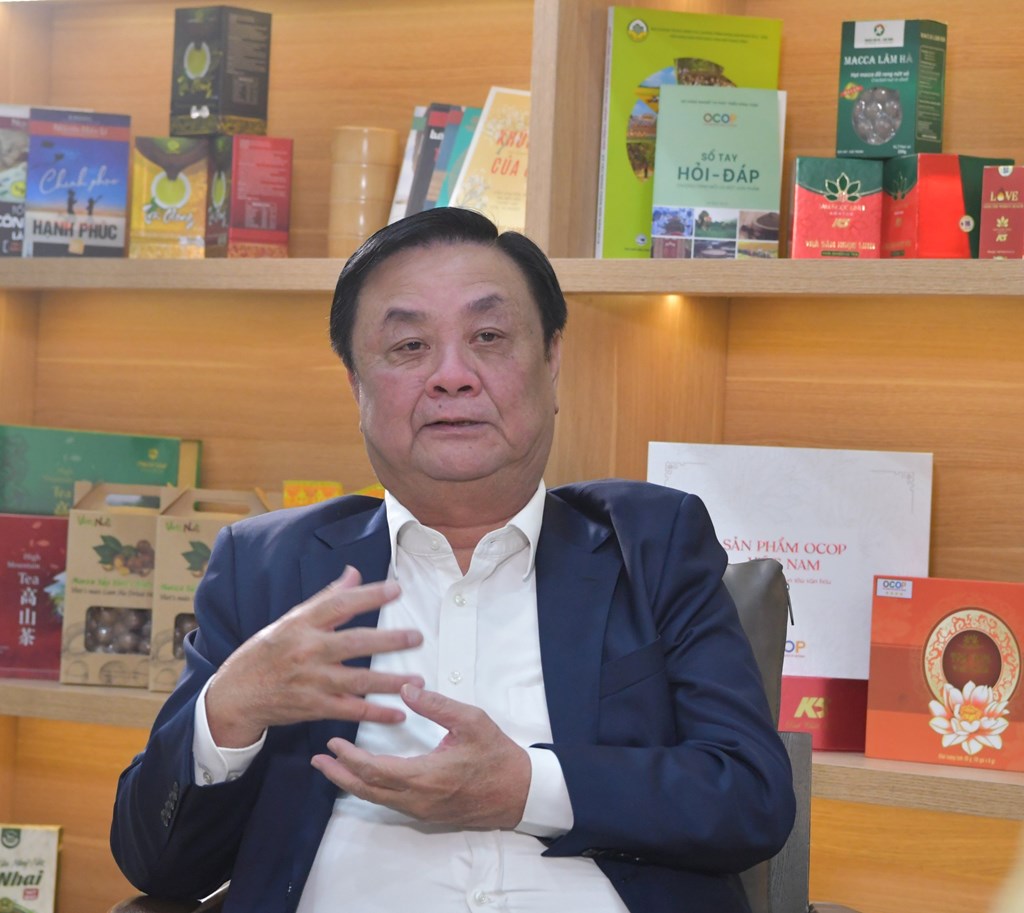
Minister of Agriculture and Rural Development Le Minh Hoan. (Photo VNA)
The MARD estimates the total funding required for the project to be around 800 million USD. The World Bank has agreed to select the project as one of the key initiatives in the Asia-Pacific region and will provide Vietnam with a 500 million USD loan./.
Ripened rice fields are also attractive tourist spots (Photo: VNA)
Cosecha de arroz en la provincia rural de Quang Tri (Foto: VNA)
Vietnam no sólo produce suficiente arroz para satisfacer las necesidades de una población de casi 100 millones de personas, sino que también puede aumentar las exportaciones de este cereal, con el fin de ayudar a combatir los problemas relacionados con la seguridad alimentaria en el mundo.
El arroz vietnamita tiene muchas variedades calificadas como las de mejor calidad del mundo con características fragantes y flexibles, lo que representa un gran potencial y una ventaja para mejorar el valor de ese rubro en el mercado mundial.
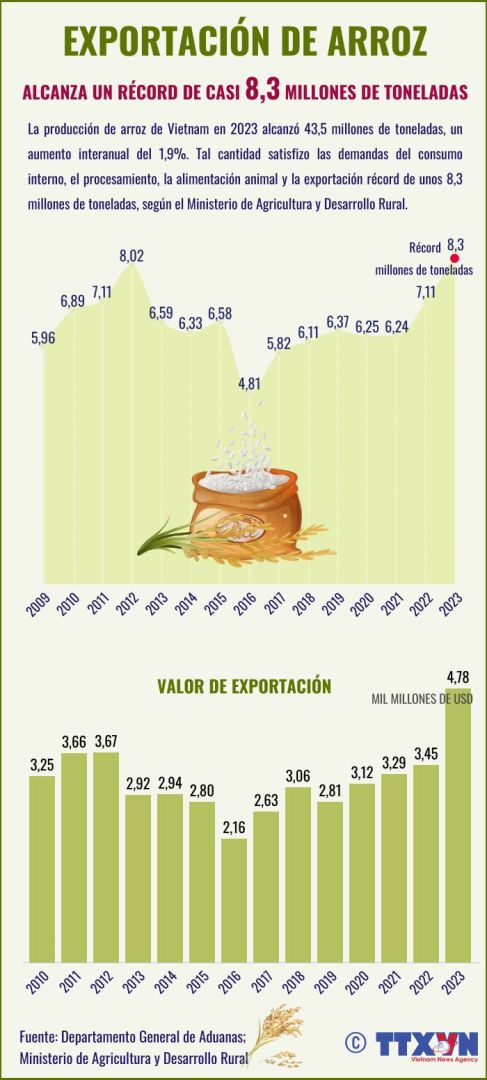
En los primeros nueve meses de este año, Vietnam exportó más de siete millones de toneladas de arroz por un valor de 4,37 mil millones de dólares, para aumentos respectivos de 9,2 por ciento y 23,5 por ciento. El precio medio del arroz exportado alcanzó los 624 dólares por tonelada, un aumento del 13,1%.
Se prevé que la producción de arroz para exportación de Vietnam en 2024 aún se concentrará principalmente en las localidades situadas en el delta del Mekong, considerado el “cuenco de arroz” del país. En ese sentido, las envíos al exterior del cereal juegan un papel muy importante en el desarrollo económico de la región y de todo el país.
El delta del Mekong implementa activamente la mecanización en la producción de arroz. (Foto: VNA)
Importante contribución de la industria arrocera a las exportaciones
El delta del Mekong, con una superficie natural de 4,92 millones de hectáreas, de las cuales 2,575 millones de hectáreas de tierra se utilizan para la producción agrícola, es una de las principales regiones productoras de arroz de la nación indochina.
La producción arrocera en el Delta del Mekong en los últimos años se ha mantenido estable en 24-25 millones de toneladas, lo que representa más de la mitad de la producción y alrededor del 90% de la exportación del país, creando empleos e ingresos para millones de hogares de agricultores.
El Ministerio de Industria y Comercio estima que la cantidad total de arroz exportado en el 2024 se mantendrá en más de ocho millones de toneladas, de las cuales 7,6 millones se cultivaron en la región del Delta del Mekong.
Empresa Loc Troi exportó por primera vez un lote de arroz utilizando graneleros para ahorrar costos y aumentar la eficiencia de las exportaciones. (Foto: VNA)
Las exportaciones de arroz de esa zona se realizan principalmente a través de los mercados tradicionales como China, Filipinas, Malasia y Costa de Marfil. Los nuevos mercados con mucho potencial son Rusia, Sudáfrica, Argelia, Angola y Emiratos Árabes Unidos.
El Ministerio de Agricultura y Desarrollo Rural evalúa que la capacidad de producción del arroz en 2024 ha aumentado considerablemente y se espera que el valor de las exportaciones supere las expectativas de cinco mil millones de dólares para todo el año. En particular, en las localidades del delta del Mekong, la producción este año se incrementa a pesar de la disminución de la superficie plantada en comparación con 2023, gracias al aumento de la productividad.
Los agricultores de la ciudad de Can Tho, en el delta del Mekong, aplican tecnología al sistema de riego para aumentar la eficiencia de la producción de arroz. (Foto: VNA)
En este año, varias localidades en la región del Delta del Mekong han implementado efectivamente el proyecto “Desarrollo sostenible de un millón de hectáreas de cultivo de arroz de alta calidad y bajas emisiones”. La ejecución de esa iniciativa no sólo ayuda a los agricultores a aumentar sus ganancias en más de un 20 por ciento, sino que también genera una reducción de las emisiones de gases de efecto invernadero entre 5 y 10 toneladas de CO2 equivalente por hectárea.
Hasta la fecha, las localidades en el delta del Mekong han desplegado 7 modelos (un total de 333,5 hectáreas) en la cosecha verano-otoño de 2024 en 5 provincias y ciudades: Can Tho, Soc Trang, Tra Vinh, Dong Thap y Kien Giang.
Según el Ministerio de Agricultura y Desarrollo Rural, numerosas empresas han proporcionado insumos y servicios para la producción, además de aumentar la compra de productos en el marco del proyecto de elevar la eficiencia y disminuir los daños al medio ambiente.
Proyecto de un millón de hectáreas de arroz de alta calidad
Además de los logros comunes, el Delta del Mekong aún presenta limitaciones, a saber la falta de áreas arroceras concentradas a gran escala y la deficiencia de cooperación a lo largo de la cadena de valor entre los agricultores y las empresas; también la sobreutilización de fertilizantes y pesticidas químicos, los cuales afectan al medio ambiente y aumentan las emisiones de gases de efecto invernadero.
Por otro lado, en los últimos tiempos, los requisitos del mercado se han vuelto cada día más altos y las regulaciones de los países importadores son cada vez más estrictas, exigiendo a los agricultores mejorar la calidad del arroz y garantizar la seguridad alimentaria, incluyendo minimizar el uso de insumos de producción de origen químico, reducir emisiones. Además, en la COP26, el primer ministro de Vietnam también anunció el compromiso de cero emisiones netas para 2050.
En ese contexto, el gobierno vietnamita aprobó la iniciativa “Desarrollo sostenible de un millón de hectáreas de cultivo de arroz de alta calidad y bajas emisiones, asociado con el crecimiento verde en el delta del Mekong para 2030″ (conocido como el proyecto de un millón de hectáreas de arroz)
La Cooperativa Thuan Tien (comuna de Thanh An, distrito de Vinh Thanh, ciudad de Can Tho) 5 de abril de 2024 inauguró el primer paso del proyecto “un millón de hectáreas de campo de arroz de alta calidad y bajas emisiones”. (Foto:VNA)
El proyecto no solo aporta beneficios directos a casi 1,5 millones de agricultores, sino que también contribuye a afirmar que Vietnam es un país responsable a la hora de garantizar la seguridad alimentaria mundial y reducir las emisiones de gases de efecto invernadero.
Este plan está asociado con la reorganización del sistema de producción a lo largo de la cadena de valor, aplicando procesos agrícolas sostenibles para aumentar el valor, además de desarrollar de manera sostenible la industria arrocera, mejorar la producción y la eficiencia empresarial, y aumentar los ingresos de los productores, ayudando así a proteger el medio ambiente y adaptarse al cambio climático y reducir las emisiones de gases de efecto invernadero.
A partir de los pilotos exitosos, se espera que este modelo se expana a todo el país, con el objetivo de hacer que el objetivo de “Desarrollo verde, reducción de emisiones, alta calidad” se convierta en la marca del arroz vietnamita.
la producción arrocera es una industria clave, que no solo ayuda a garantizar la seguridad alimentaria nacional sino que también apoya el desarrollo económico del país y demuestra la responsabilidad de Vietnam a la hora de garantizar la sostenibilidad del sistema alimentario internacional.
El ministro de Agricultura y Desarrollo Rural, Le Minh Hoan
El misterio de Agricultura y Desarrollo Rural estima que el capital total para implementar el proyecto es de unos 800 millones de dólares. El Banco Mundial (BM) selecciona este proyecto como uno de los programas claves en la región de Asia y el Pacífico y concederá a Vietnam un préstamo de 500 millones de dólares./.
Los campos de arroz maduros en Vietnam son atracciones turísticas. (Foto: VNA)
Récolte du riz hiver-printemps à Quang Tri. Photo: VNA
Le Vietnam dispose non seulement de suffisamment de riz pour répondre aux besoins de près de 100 millions d’habitants, mais il est en capacité d’accroître ses exportations de riz et ainsi de limiter les problèmes de sécurité alimentaire avec le monde.
Actuellement, le riz vietnamien compte de nombreuses variétés reconnues parmi les meilleures au monde, avec des caractéristiques parfumées et flexibles, ce qui constitue un grand potentiel et un avantage pour accroître la valeur de la marque de riz vietnamien sur le marché mondial.
Les exportations de riz du Vietnam au cours des 9 premiers mois de 2024 ont atteint 4,37 milliards de dollars, en hausse de 23,5% par rapport à la même période de l’année dernière. La production pour l’exportation a dépassé 7 millions de tonnes, soit une augmentation de 9,2 %. Le prix moyen à l’exportation du riz a atteint 624 dollars/tonne, soit une augmentation de 13,1%.
La production de riz destinée à l’exportation au Vietnam en 2024 sera principalement concentrée dans les provinces du delta du Mékong, l’une des régions les plus fertiles du pays, souvent qualifiée de “grenier à riz” du Vietnam. L’exportation de riz joue ainsi un rôle crucial dans le développement économique, tant pour cette région que pour l’ensemble du pays.
Ledelta du Mékong, “grenier à riz” du Vietnam. Photo: VNA
Contributions importantes au marché d’exportation
Le delta du Mékong a une superficie naturelle de 4,092 millions d’hectares, dont 2, 57 millions d’hectares de terres utilisées pour la production agricole, et constitue la principale région de production de riz du Vietnam.
La production de riz dans la région ces dernières années est restée stable à 24-25 millions de tonnes, représentant plus de 50 % de la production nationale de riz. La production de riz pour l’exportation de la région représente plus de 90 % de la production d’exportation de riz totale du pays, créant des emplois et des revenus pour des millions de ménages de la région.
Les statistiques du ministère de l’Industrie et du Commerce montrent qu’en 2024, la quantité totale de riz exportée devrait rester supérieure à 8 millions de tonnes, dont 7,6 millions de tonnes provenant de la seule région du delta du Mékong.
Le riz exporté du groupe Lôc Troi expédié vers des marchés étrangers. Photo: VNA
Les exportations de riz de la région du delta du Mékong visent de principaux marchés comme la Chine, les Philippines, la Malaisie et la Côte d’Ivoire et aussi de nouveaux marchés à fort potentiel comme la Russie, l’Algérie, l’Angola, les Émirats arabes unis……
Le ministère de l’Agriculture et du Développement rural estime que la capacité de production du riz a fortement augmenté en 2024 et que la valeur des exportations devrait dépasser 5 milliards de dollars pour l’ensemble de l’année. En particulier, dans les villes et provinces de la région du delta du Mékong, la production du riz a augmenté malgré la diminution des superficies plantées par rapport à 2023.
Les agriculteurs de la ville de Cân Tho appliquent les technologies dans la riziculture. Photo: VNA
Dans la région, la superficie de production de riz a diminué de plus de 16 000 hectares par rapport à 2023, mais la production a augmenté de plus de 11 000 tonnes, assurant la consommation intérieure et l’exportation. La raison de ce gain de productivité est liée notamment à la mise en oeuvre par plusieurs localités de la région du projet « développement durable d’un million d’hectares de riz spécialisé de haute qualité et à faibles émissions associé à une croissance verte dans le delta du Mékong jusqu’en 2030 ». Ce projet a aidé non seulement les agriculteurs à augmenter leurs bénéfices de plus de 20 %, mais a réduit également les émissions de 5 à 10 tonnes d’équivalent CO2/ha.
À ce jour, le delta du Mékong a déployé 7 modèles (sur un total de 333,5 hectares) pour la récolte de l’été-automne 2024 dans cinq villes et provinces que sont Can Tho, Soc Trang, Tra Vinh, Dong Thap et Kien Giang.
En tant que province possédant la plus grande superficie rizicole du pays, Kien Giang produit 4,3 millions de tonnes de riz par an. Depuis 2024, la province met en production 60.000 hectares dans le cadre du projet d’un million d’hectares de riz de haute qualité. La superficie enregistrée pour la participation à ce projet s’étend jusqu’à 200.000 hectares, divisée en deux phases.
Selon l’évaluation du ministère de l’Agriculture et du Développement rural, de nombreuses entreprises de la région du delta du Mékong ont participé à la fourniture d’intrants et de services pour la production et à l’achat de produits pour les agriculteurs du projet.
Grand enjeu : un million d’hectares de riz de haute qualité
Malgré ces réussites, de nombreuses difficultés subsistent dans la région du delta du Mékong. On peut citer l’absence de nombreuses zones de culture rizicole concentrées et à grande échelle avec des liens et une coopération tout au long de la chaîne de valeur entre les riziculteurs, les coopératives et les entreprises. Ou encore l’utilisation abondante d’engrais et de pesticides chimiques qui nuisent à l’environnement et augmentent les émissions de gaz à effet de serre…
Par ailleurs, ces derniers temps, les exigences du marché se sont accrues, et les réglementations des pays importateurs sont devenues plus strictes, imposant une amélioration de la qualité du riz et une garantie de la sécurité alimentaire, notamment en limitant l’utilisation d’intrants chimiques et en réduisant les émissions. De plus, lors de la COP26, le Premier ministre s’est engagé à atteindre la neutralité carbone d’ici 2050.
C’est dans ce contexte que le Gouvernement a approuvé le projet « Développement durable d’un million d’hectares spécialisés dans la culture du riz de haute qualité et à faibles émissions associé à une croissance verte dans le delta du Mékong jusqu’en 2030 ».
Les localités du Sud réalisent le projet d’un million d’hectares de riz de haute qualité. Photo: VNA
Le projet apporte non seulement des bénéfices directs à près de 1,5 million d’agriculteurs, mais contribue également à faire du Vietnam un pays responsable vis-à-vis de la sécurité alimentaire mondiale et la réduction des émissions de gaz à effet de serre.
Le projet est associé à la réorganisation du système de production tout au long de la chaîne de valeur, à l’application de processus agricoles durables pour augmenter la valeur, développer durablement l’industrie du riz, améliorer la production et l’efficacité commerciale, et augmenter les revenus et améliorer la vie des riziculteurs, protéger l’environnement et s’adapter au changement climatique et à la réduction des émissions de gaz à effet de serre.
En cas de succès, ce modèle dans le delta du Mékong sera étendu à l’ensemble du pays, dans le but de faire du « développement vert, émissions réduites, haute qualité » la marque du riz vietnamien.
Selon le ministre de l’Agriculture et du Développement rural Le Minh Hoan, la production de riz est une industrie clé, contribuant non seulement à assurer la sécurité alimentaire nationale, mais également à soutenir le développement économique du pays tout en démontrant la responsabilité du Vietnam vis-à-vis du système alimentaire international..
Le ministre de l’Agriculture et du Développement rural Le Minh Hoan. Photo: VNA
Le ministère de l’Agriculture et du Développement rural estime que le capital total nécessaire à la mise en œuvre du projet est d’environ 800 millions de dollars. La Banque mondiale (BM) a accepté de sélectionner le projet comme l’un des projets clés dans la région Asie-Pacifique et accordera au Vietnam un prêt de 500 millions de dollars./.
Les rizières mûres sont aussi des attractions touristiques. Photo: VNA
Церемония поднятия национального флага на Ханойской флагштоке 10 октября 1954 года знаменует собой священный момент и веху в истории Вьетнама – освобождение столицы Ханоя. (Фото: ВИA)
Августовская революция 1945 года увенчалась успехом, была провозглашена Демократическая Республика Вьетнам, но французские колонизаторы вернулись со злым замыслом – с намерением восстановить колониальное господство. 19 декабря 1946 года вспыхнуло всенародная война сопротивление, и Ханой стал отправной точкой для долгой борьбы.
hПобедой при Дьенбьенфу в 1954 году Вьетнам вынудил французских колонизаторов подписать Женевское соглашение от 21 июля 1954 года о прекращении военных действий во Вьетнаме и вывести французские войска с севера Вьетнама. (Фото: ВИA)
После девяти лет упорной войны сопротивления, благодаря непоколебимой воле и стойкому, мужественному, творческому боевому духу вьетнамских войск и народа, особенно победе в исторической кампании при Дьенбьенфу в 1954 году, французские колонисты были вынуждены подписать Женевское соглашение 21 июля 1954 года. Оно предусматривало прекращение военных действий во Вьетнаме и признание независимости, суверенитета и территориальной целостности трёх стран — Вьетнама, Лаоса и Камбоджи, а также согласие на вывод войск с севера нашей страны.
В свете истории и национальной гордости 10 октября 1954 года стало неизгладимым событием в сознании вьетнамского народа, когда столица Ханой была освобождена после почти столетнего гнета.
Подразделения 308-й дивизии, занявшей Ханой, участвуют в первой церемонии салюта флага на Ханойской флаговой башне 10 октября 1954 года. (Фото: ВИA)
День Победы, День возвращения
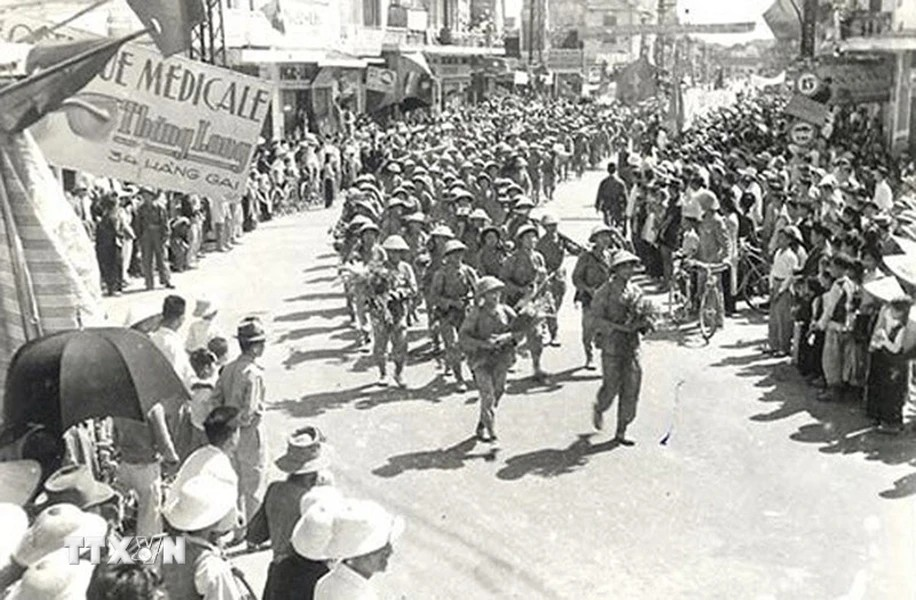
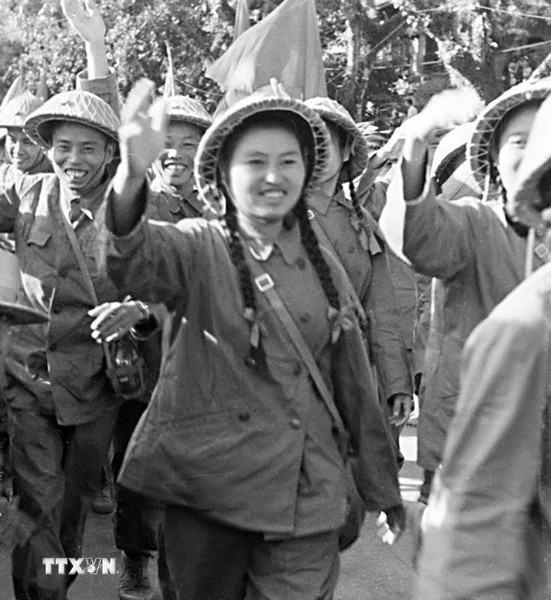
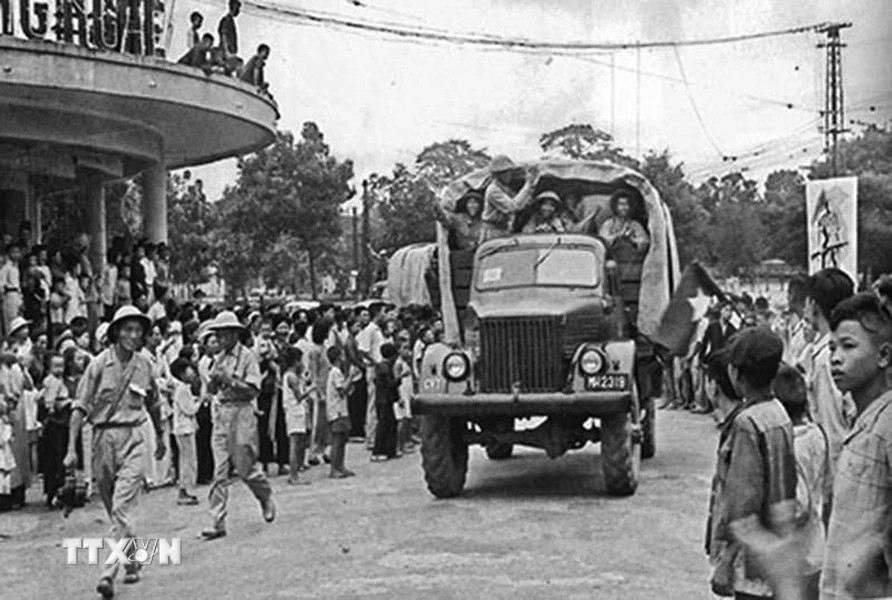
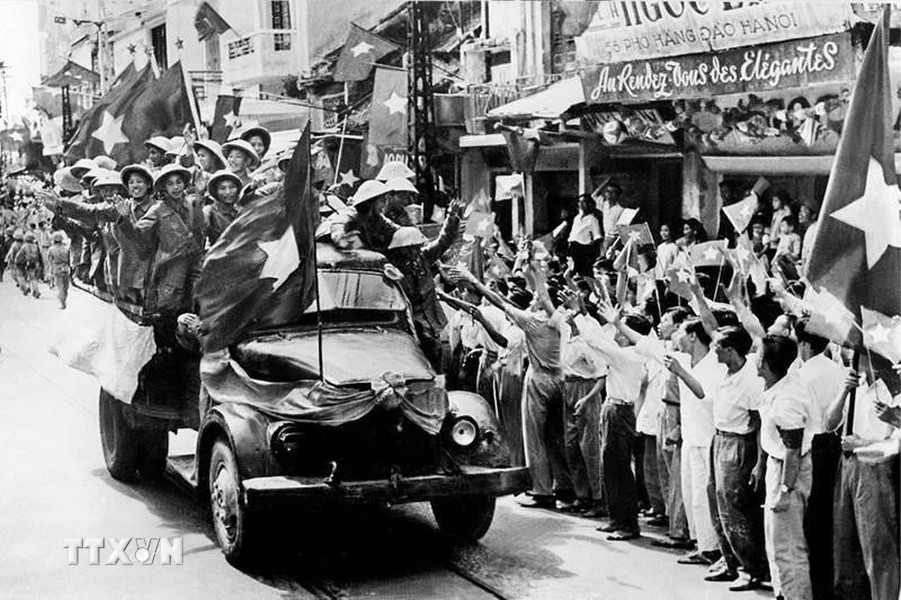
Победоносная армия марширует к Ханою 10 октября 1954 года.
Согласно условиям соглашения, Ханой находился в 80-дневной зоне сосредоточения французской армии. В течение этих 80 дней в Ханое не было мира; войскам и жителям столицы пришлось продолжать борьбу в новых условиях, чтобы захватить власть.
Французские колонизаторы воспользовались этим временем, чтобы разрушить экономические и культурные объекты, пытаясь заманить людей на юг, создав хаос и приостановив все работы. Они хотели, чтобы вьетнамцы захватили истощенную, охваченную хаосом столицу, подорвав доверие к лидерам войны сопротивления внутри страны и за рубежом.
Зная о французском заговоре, осознавая масштаб и важность захвата Ханоя, Политбюро и Центральный секретариат партии направили товарищей: Во Нгуен Зяпа, Ле Ван Лыонга, Суан Тхуи, То Хыу непосредственно руководить освобождением столицы.
17 сентября 1954 года, в соответствии с резолюцией правительства, была создана военная комиссия города Ханоя для освобождения города. Комиccию возглавлял генерал-майор Выонг Тхыа Ву, а товарищ Чан Зуй Хынг исполнял обязанности вице-председателя. Правительственный совет объявил политику в отношении освобожденного города, дисциплинарные правила для солдат, офицеров и личного состава при въезде в освобожденный город. Главнокомандующий отдал приказ подразделениям войск, находящимся на пути к освобождению Ханоя, поддерживать порядок в городе, защищать людей, иностранцев, строго соблюдать политику и дисциплину, установленные правительством, а также всегда проявлять бдительность и быть готовыми разоблачить все провокационные и разрушительные заговоры.
После того, как борьба на дипломатическом фронте заставила французских колонизаторов покинуть Ханой в установленный строк, обеспечив принцип передачи власти в порядке и безопасности, без проведения подрывной деятельности и не нарушая повседневную жизнь людей, 30 сентября 1954 года обе стороны подписали соглашение о передаче военного аспекта Ханоя; 2 октября 1954 года было подписано соглашение о передаче административного аспекта Ханоя. Вьетнамское правительство направило в Ханой милицию, службы охраны порядка и административные подразделения для подготовки к освобождению города. Церемония передачи власти состоялась в торжественной обстановке на стадионе «Флагшток» в присутствии многих лидеров и жителей Ханоя.
Церемония взятия столицы Ханоя проходит торжественно, в присутствии лидеров, солдат и жителей Ханоя. (Фото: ВИA)
Захват столицы прошел успешно. Вьетнамцы быстро и надежно захватили 129 офисов, общественных зданий, заводов, больниц, школ, включая важные военные позиции и штабы. Жизнь людей осталась нормальной и стабильной. Энергетический, водный, транспортный и коммуникационный секторы продолжили функционировать бесперебойно, политическая безопасность и общественный порядок полностью были обеспечены; школы, больницы, культурные учреждения, газеты и другие организации продолжали работать в обычном режиме под управлением властей.
Церемония взятия столицы Ханоя проходит торжественно, в присутствии лидеров, солдат и В 1999 году Ханой был признан ЮНЕСКО «Городом за мир». С тех пор Ханой остается единственной столицей в Азиатско-Тихоокеанском регионе, получившей это звание. (Фото: ВИA)
От «города за мир» к «креативному городу»
25 лет назад, в 1999 году, жители столицы гордились, когда Ханой был удостоен звания ЮНЕСКО «Город за мир». По сей день Ханой остается единственной столицей Азиатско-Тихоокеанского региона, удостоенной этого звания.
Премия ЮНЕСКО «Город за мир» – это признание международным сообществом позитивного вклада Ханоя в борьбу за мир, а также в развитие и строительство города ориентированного на мир.
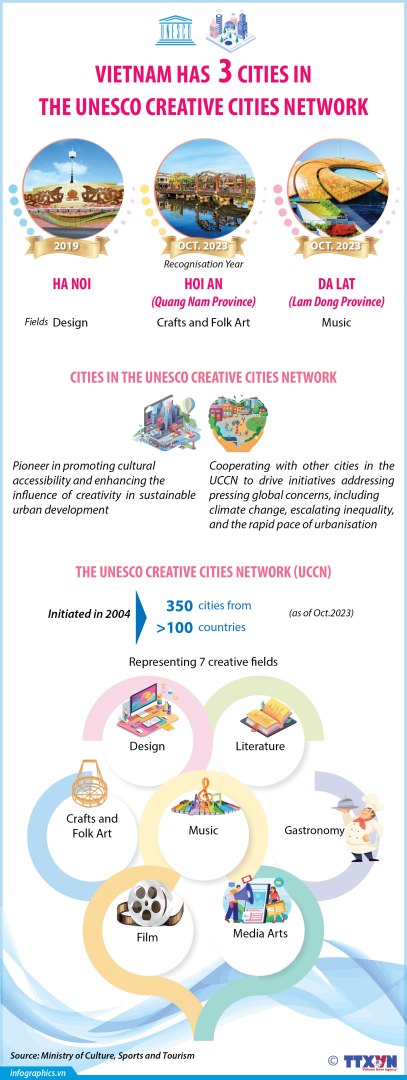
Спустя 20 лет после получения звания «Город за мир», в октябре 2019 года, Ханой был внесен в список членов «Сети креативных городов ЮНЕСКО в области дизайна».
Являясь «Креативным городом в области дизайна, Ханой определил общую цель к 2025 году – развить столицу для быстрого и устойчивого роста в направлении зеленого, умного и современного города с высокой конкурентоспособностью в стране и регионе. С ориентацией на 2030 год Ханой стремится стать «зеленым, умным и современным» городом, развивающимся динамично и эффективно на региональном и международном уровнях.
Согласно видению развития столицы до 2045 года, Ханой будет отличаться высоким качеством жизни и всесторонним, устойчивым экономическим, культурным и социальным развитием; это будет город с глобальными связями и международной конкурентоспособностью.
После 5 лет участия в «Сети креативных городов ЮНЕСКО» и реализации инициатив и обязательств по продвижению креативного дизайна в рамках социально-экономического и культурного развития Ханой организовал множество мероприятий, связанных с креативным дизайном. Эти мероприятия привлекли к участию большое количество подразделений, организаций и частных лиц как в стране, так и за рубежом, постепенно привнося креативный дизайн во все аспекты жизни города .
Креативные продукты присутствуют в городе повсюду, демонстрируя прочную основу для развития Ханоя, основанного на креативном дизайне. В частности, проведение культурных фестивалей, мероприятий, характерных для творческой деятельности столицы, привлекло к участию большое количество творческих людей и сообществ.
Присоединение к «Сети творческих городов ЮНЕСКО» является первым, но важным шагом на пути к повышению статуса, созданию нового, более привлекательного имиджа Ханоя, открытию множества возможностей и потенциала для реконструкции города.
Уделяя особое внимание сохранению культурного наследия, улучшению инфраструктуры и поощрению творчества, Ханой постепенно реализует Цели устойчивого развития, внося свой вклад в строительство современного, цивилизованного и пригодного для жизни города в соответствии с Повесткой дня ООН в области устойчивого развития на период до 2030 года и резолюцией Политбюро 15-NQ/TW о направлениях, задачах развития столицы Ханоя до 2030 года с видением до 2045 года./.
Ханой уделяет особое внимание сохранению культурного наследия, улучшению инфраструктуры и поощрению творчества. (Фото: ВИA)
A Rong (community) house of the Gia Rai people in Kon Tum (Photo: VNA)
The Central Highlands province of Kon Tum has issued a directive aimed at strengthening the preservation and promotion of the cultural heritage of local ethnic minorities, particularly the space of gong culture, traditional festivals, and folk songs, dances, and music.
The provincial People’s Committee has instructed relevant departments to review, document, and collect the heritage from the seven long-established ethnic groups in Kon Tum. They are Gia Rai, Ba Na, Xo Dang, Gie -Trieng, Brau, Ro Mam, and Hre.
The Ba Na ethnic group’s peace-praying festival in Kon Tum is vividly and authentically recreated at the Vietnam National Village for Ethnic Culture and Tourism in Dong Mo, Son Tay, Hanoi. (Photo: VNA)
Accordingly, guidance should also be provided to localities to preserve and restore their communal houses in a way that maintains the cultural identity of these communities and leverages locally available materials.
It is necessary to develop traditional crafts tied to the gong culture, festivals, folk music, and local economic and social development.
Also in need are the proposal and implementation of protection measures targeting traditional village names to preserve cultural spaces, as well as the prohibition of actions that may dilute or alter ethnic minority cultures.
Preservation efforts have helped establish a sustainable cultural system across Kon Tum (Photo: VNA)
Annually, based on current budget allocations and legal external sources, funds are set to be prioritised to support the preservation of the cultural heritage.
In 2022, the provincial Party Committee issued a resolution focusing on the preservation of traditional crafts through 2025, with a vision for 2030, the results of a project on sustaining traditional village culture for the 2020 – 2025 period.
To date, such efforts have helped establish a sustainable cultural system across the province.
Out of 622 ethnic minority villages in Kon Tum, 409 now have Rong (communal) houses. The establishment is considered as the most sacred place where the souls of the heaven and earth join together to protect the village and its people. It is the administrative headquarters of ethnic villages and also the place where community activities, such as religious festivals, the delivery of a new baby and wedding ceremony, take place. It has for long been praised as a great work of sculpture, painting and decoration. Each village keeps their own valuable traditional objects such as gong, drum, weapon and heads of immolated animals in its Rong house.
These traditional structures contribute to the richness of the province’s cultural identity and attract both tourists and researchers. Renovating and preserving traditional Rong houses are crucial in the modern context, as they are the core of the culture of ethnic groups in the Central Highlands, together with the famous gong space.
Effective preservation and restoration of traditional Rong houses will create conditions for heritages and cultural values associated with them to be preserved and promoted. (Photo: VNA)
Kon Tum has also implemented an open-air museum project, showcasing the traditional cultural space of ethnic minority groups. This approach has proven effective and widely influential.
In terms of intangible heritage, the province has successfully restored several traditional cultural practices, including the Ro Mam Wedding Ceremony, Brau New Rice Festival and Xo Dang Water Source Ceremony. The new rice celebration is usually held around October (lunar calendar) when the rice is ripe and the ethnic community begins harvesting them.
The new rice celebration is usually held by the Xo Dang people in Kon Tum around October (lunar calendar) when the rice is ripe and the ethnic community begins harvesting them. (Photo: VNA)
In addition, Kon Tum has conducted surveys and collected cultural highlights from the Brau and Xo Dang ethnic groups.
According to the provincial ethnic affairs committee, Xo Dang people are among the indigenous groups that have long resided in the Truong Son mountain range, the Central Highlands region, and nearby mountainous areas of Quang Nam and Quang Ngai provinces. Today, they predominantly live in Kon Tum province as well as Tra My and Phuoc Son districts of Quang Nam and Tay Son district of Quang Ngai. Believers in supernatural forces, the Xo Dang integrate numerous rituals into their daily lives and farming practices, focusing on prayers for bountiful harvests, safety, and protection from misfortune for both individuals and their communities. The ethnic minority group are known for their numerous musical instruments and dances, with specific dance performances for men, women, or mixed-gender groups. Additionally, their folklore is rich and vibrant, featuring an array of captivating tales passed down through generations.
The Brau people, meanwhile, migrated to Vietnam around a century ago and now primarily reside in Dac Me village, Bo Y commune, Ngoc Hoi district, Kon Tum. They live in high-roofed stilt houses and rely on upland farming to cultivate rice, corn, and cassava as their primary livelihood. Within their villages, traditional blacksmith workshops repair farming tools, while skilled men craft woven items. At the heart of the community is the communal house, which also serves as a training ground where village elders teach the youth vocational skills, cultural traditions, and the importance of safeguarding their community’s security and heritage. Brau folklore includes enchanting melodies, wedding songs, lullabies, and myths such as the story of Pa Xay – the creator god, and the legend of Un Cha Dap Lep. Their musical heritage is equally distinctive, featuring instruments like the klong put and sets of bronze gongs.
These two groups exemplify the cultural diversity of Kon Tum, offering a wealth of traditions, stories, and arts that contribute significantly to the province’s vibrant heritage.
Notably, in Kom Tum, gong culture is now integral to the lives of local ethnic minorities, closely linked to communal ceremonies and often held in their communal houses, stilt houses, or cemeteries.
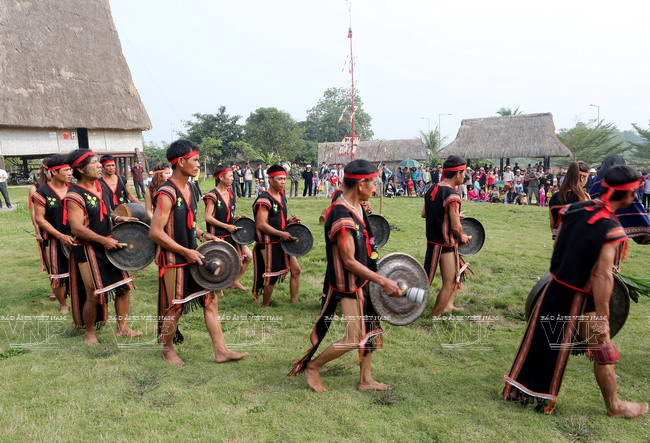
Since a project to preserve gong culture for the 2016 – 2020 period was launched, 502 out of 622 local ethnic minority villages now have gongs. Over 200 workshops have been held, teaching over 5,000 participants gong playing, traditional dances, weaving, basketry, and musical instrument crafting, among others.
Gongs dated back to the Dong Son culture, some 3,500-4,000 years ago. Nowadays, the cultural space of gongs covers five Central Highlands provinces, namely Dak Lak, Dak Nong, Lam Dong, Kon Tum and Gia Lai, with 17 ethnic minority groups. As a communication form among people, with Gods and the supernatural world, they become the most sacred and valuable asset in every ethnic family.Most of ethnic minority villages in the Central Highlands have a gongs team to play at their groups’ traditional rituals and festivals, such as wedding, new house welcoming, baby delivery, crop harvest, new year, and funeral. The space of the gong culture in the Central Highlands was recognised as a masterpiece of the oral and intangible cultural heritage of humanity on November 25, 2005.
To preserve and promote the cultural values of indigenous peoples, the Education Department of Kon Tum city has introduced gong and xoang dance into extracurricular teaching hours. (Photo: VNA)
Additionally, the Ba Na-Ro Ngao ethnic group’s Epic has been recognised as a national intangible cultural heritage, contributing to further safeguarding these unique traditions.
Blessed with a cool climate, diverse ecosystems, and natural beauty, including forests, rivers, and waterfalls, Kon Tum is well-suited for eco-tourism, adventure and resort tourism.
The province also boasts several scenic spots, such as the Mang Den Ecotourism Resort and Chuu Mom Ray National Park.
With a rich history and diverse cultural heritage, it is home to over 30 ethnic groups, each with distinct customs and traditions. These include customary laws, housing styles, festivals, gong music, folk art, traditional clothing, ethnic languages, and crafts like weaving and carving.
By 2025, Kon Tum aims to develop diverse tourism products, focusing on ecotourism, community-based, and cultural-historical tourism. The province will also invest in key sites such as Mang Den and Chu Mom Ray to fully develop its ethnic tourism potential. It plans to complete five main tourism offerings, including eco-tourism, cultural-historical tourism, resort tourism, community-based tourism, and specialised thematic tourism.
Kon Tum currently boasts 13 tourist destinations and one provincially-recognised tourism area. In the first half of this year, it welcomed an estimated 1.565 million visitors, generating approximately 427 billion VND (16.7 million USD) in revenue.
According to Bach Thi Man, Deputy Director of the provincial Department of Culture, Sports, and Tourism, the province aims to attract 1.7 million tourist arrivals in 2024, representing an annual increase of nearly 30%. The projected total revenue is expected to reach 605 billion VND, up 12% year-on-year.
Looking ahead, Kon Tum is setting its sights on welcoming 2.5 million visitors by 2025./.
Brau people in Dak Me village, Po Y commune, Ngoc Hoi district, Kon Tum province, perform gongs. (Photo: VNA)
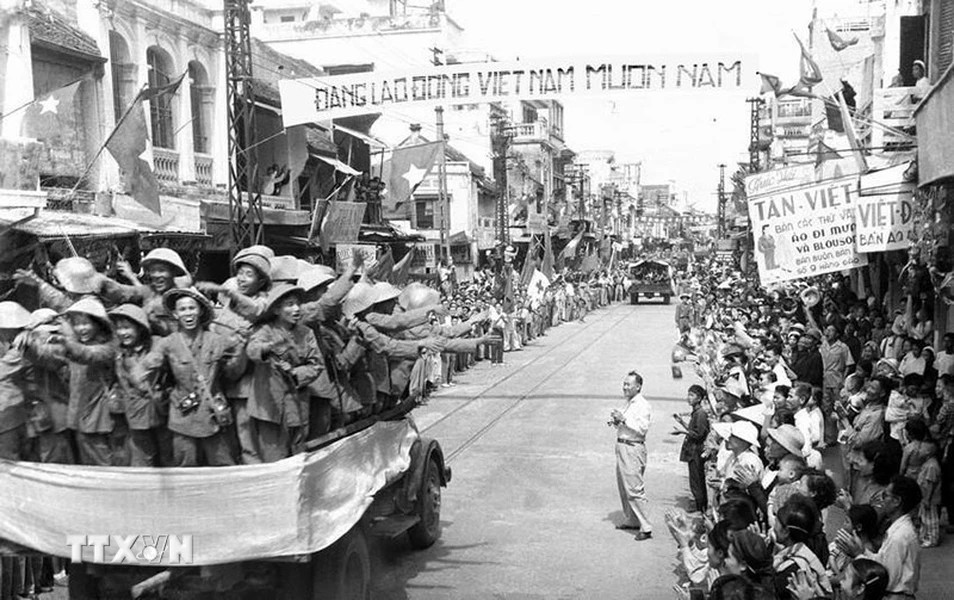
The national flag hoisting ceremony at the Hanoi Flag Tower on October 10, 1954, marks a sacred moment and a milestone in Vietnamese history: the liberation of the capital city of Hanoi. (Photo: VNA)
After the successful August Revolution, the Democratic Republic of Vietnam was established in 1945, but the French colonialists returned to invade Vietnam again. A resistance war against the French colonialists started on December 19, 1946 in Hanoi, then spread to other localities nationwide. One day later, on December 20, President Ho Chi Minh, on behalf of the Democratic Republic of Vietnam Government, called upon the entire population to take part in the resistance war, having affirmed the Vietnamese nation’s iron will not to lose the country and not to be enslaved again.
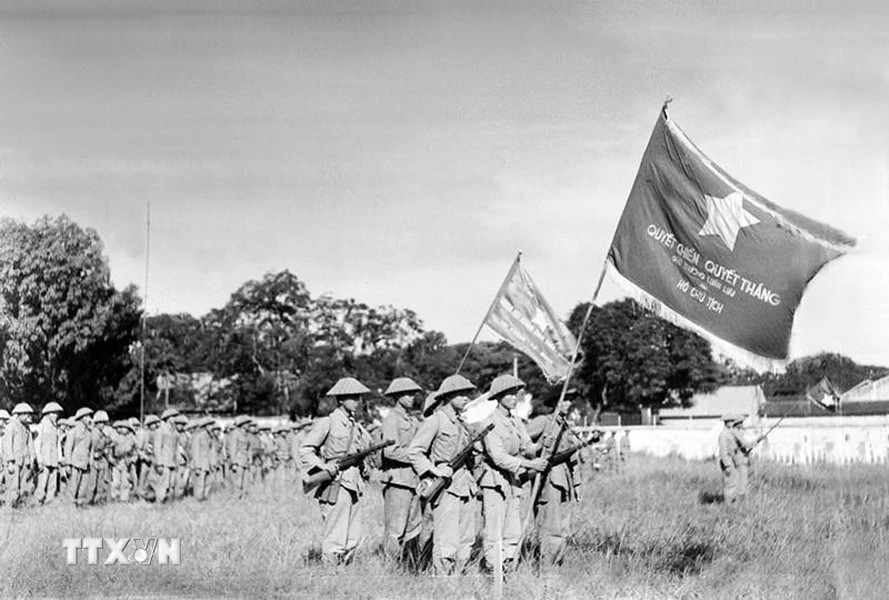
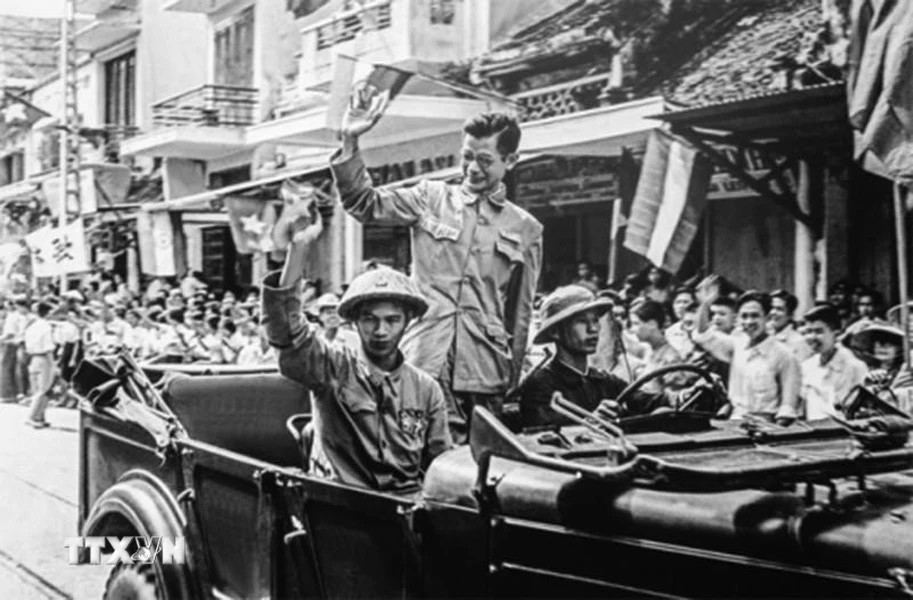
With the Dien Bien Phu Victory in 1954, Vietnam forced the French colonialists to sign the Geneva Agreement on July 21, 1954 on the cessation of hostilities in Vietnam and withdraw French troops from the North of Vietnam. (Photos: VNA)
After the nine-year arduous resistance war, with the unshakable will and the indomitable, intelligent, brave, and creative fighting spirit of the Vietnamese army and people, especially with the Dien Bien Phu Victory in 1954, Vietnam forced the French colonialists to sign the Geneva Agreement on July 21, 1954 on the cessation of hostilities in Vietnam; recognise the independence, sovereignty, and territorial integrity of the three countries of Vietnam, Laos, and Cambodia; and withdraw French troops from the North of Vietnam.
In the light of history and national pride, October 10, 1954 became an indelible mark in the minds of the Vietnamese people. It was the day when Hanoi was liberated after being colonised for nearly a century.
Units of the Division 308 taking over Hanoi join the first flag salute ceremony at the Hanoi Flag Tower on October 10, 1954. (Photo: VNA)
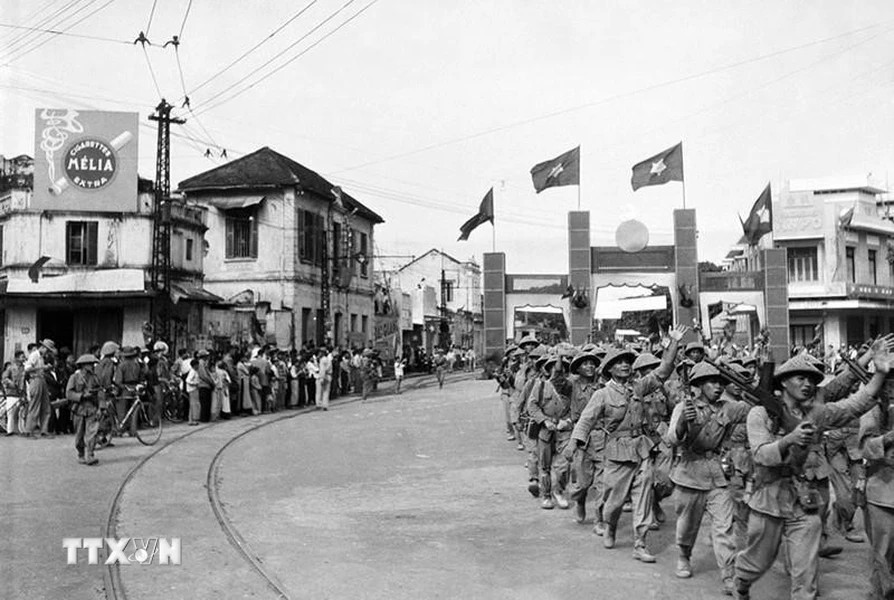
Day of Victorious Army’s return
The victorious army march towards Hanoi on October 10, 1954.
Under the terms of this agreement, Hanoi was part of the gathering area of the French troops in 80 days. During those 80 days, the army and people in Hanoi had to continue the fight in the new context to move towards the takeover of the capital.
The French colonialists took advantage of that time to sabotage economic and cultural facilities, lure people to move to the South, cause disorder and make thing grind to a halt. They wanted to leave an exhausted, chaotic city which would decrease the prestige of the Vietnamese resistance government both domestically and internationally.
Knowing in advance the French colonialists’ plot, and fully being aware of the scale and importance of taking over Hanoi, the Politburo and the Secretariat of the Party Central Committee assigned comrades Vo Nguyen Giap, Le Van Luong, Xuan Thuy, and To Huu to directly lead the takeover.
On September 17, 1954, according to the Government’s resolution, the Hanoi Military Administrative Committee was established to take over the city. Major General Vuong Thua Vu was assigned as the committee’s chairman while Tran Duy Hung was its vice chairman. The Government Council announced policies for the newly-liberated city, policies on religion, and regulations for soldiers, cadres and employees who enter the newly liberated city; the General Command ordered the army units advancing to liberate Hanoi to maintain order and security in the city, protect the people, foreigners, thoroughly implement the policies and rules set forth by the Government, always keep vigilance, and be ready to crush all provocations and sabotage plots.
After the diplomatic struggle to demand the French colonialists withdraw from Hanoi on time, ensure the principle of orderly and safe transfer, without sabotage and without interrupting the activities of the people’s lives, on September 30, 1954, the two sides signed the Agreement on the military transfer of Hanoi.
On October 2, 1954, they signed the Agreement on the administrative transfer of Hanoi. The government sent police, guards, and administrative teams to Hanoi to prepare for the takeover of the city.
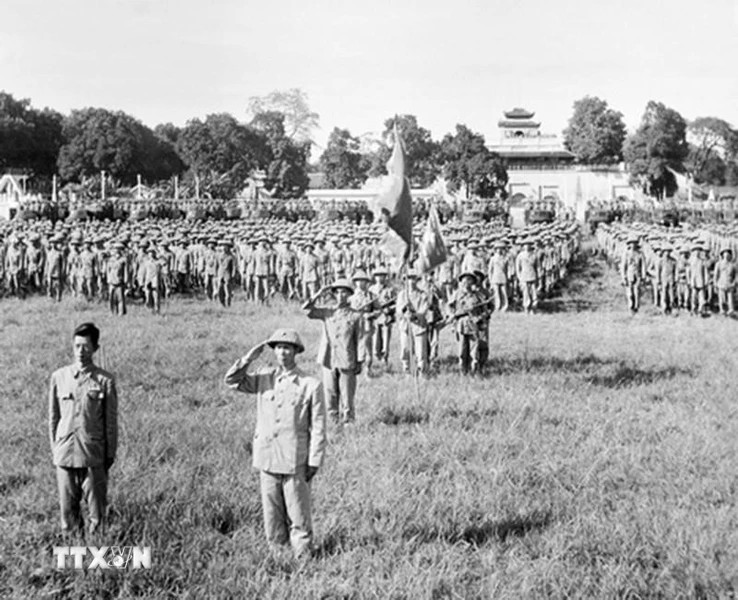
The capital takeover ceremony was held solemnly at the Cot Co stadium, with the presence of many leaders and the people of Hanoi.
The ceremony to take over the capital city of Hanoi is held solemnly, with the presence of leaders, soldiers and people of Hanoi. (Photo: VNA)
The takeover of the capital was a great success. The Vietnamese side safely and quickly took over 129 offices, public works, factories, hospitals, and schools, including military positions and important headquarters. The people’s lives remained normal and stable. The electricity, water, transport and communications sectors operated smoothly and regularly; political security and social order were ensured properly; schools, hospitals, cultural agencies, press agencies, among others continued to operate normally under the government’s management.
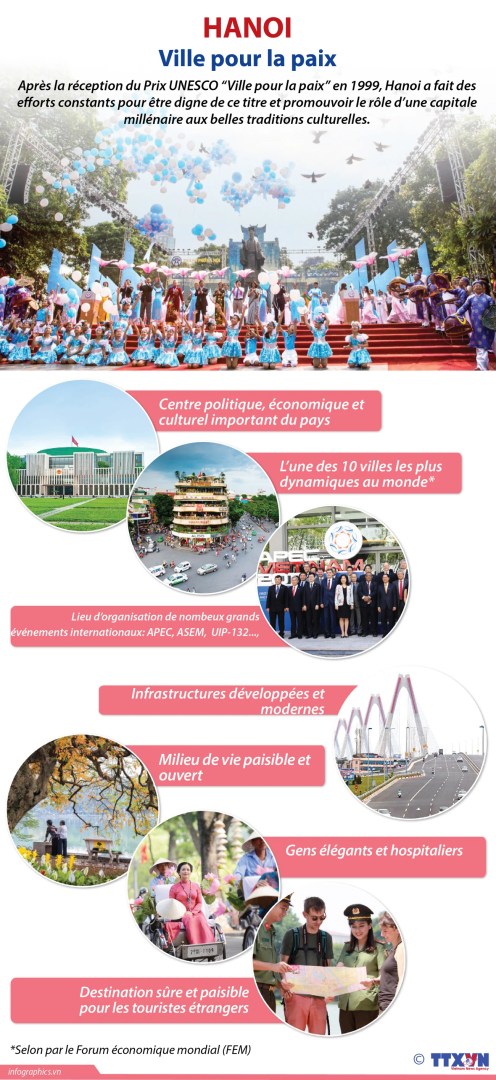
In 1999, Hanoi was recognised as a “City for Peace” by UNESCO. Since then, Hanoi has remained the only capital in the Asia-Pacific region to receive that title. (Photos: VNA)
From “City for Peace” to “Creative City”
In 1999, Hanoi was recognised as a “City for Peace” by UNESCO. Since then, Hanoi has remained the only capital in the Asia-Pacific region to receive that title.
The title of “City for Peace” that the UNESCO granted to Hanoi showed a recognition by the international community of the positive contributions of the capital city in the struggle for peace, and its efforts to develop a city of peace.
Exactly 20 years after achieving the title of “City for Peace”, in October 2019, Hanoi continued to be honoured as a member of the UNESCO’s Creative Cities Network in the field of design.
As a creative city in the field of design, Hanoi has set general goals by 2025. It strives to develop rapidly and sustainably to become a green urban area, a smart and modern city with high competitiveness in the country and in the region. By 2030, Hanoi is expected to become a “green-smart-modern” city, developing dynamically, effectively, and have high competitiveness in the region and the world.
By 2045, Hanoi is envisioned to ensure a high quality of life for people, achieve comprehensive and sustainable economic, cultural and social development; is a globally connected city with international competitiveness.
After joining the “UNESCO Creative Cities Network” and implementing initiatives and commitments to promote creative design activities in cultural-economic-social development programmes, for the last five years, Hanoi has organised many activities related to creative design. The activities have attracted the participation of many domestic and international units, organisations and individuals, gradually bringing creative design activities into all aspects of life.
Creative products are present across the city, showing a solid foundation for Hanoi’s development based on creative design. In particular, cultural festivals, events, and typical creative activities held in the city have attracted a large number of people who do creative jobs and people in general.
Joining the “UNESCO Creative Cities Network” is the first but important step towards the goal of enhancing the position, creating a new and more attractive image for Hanoi, opening up many opportunities and potential in urban reconstruction.
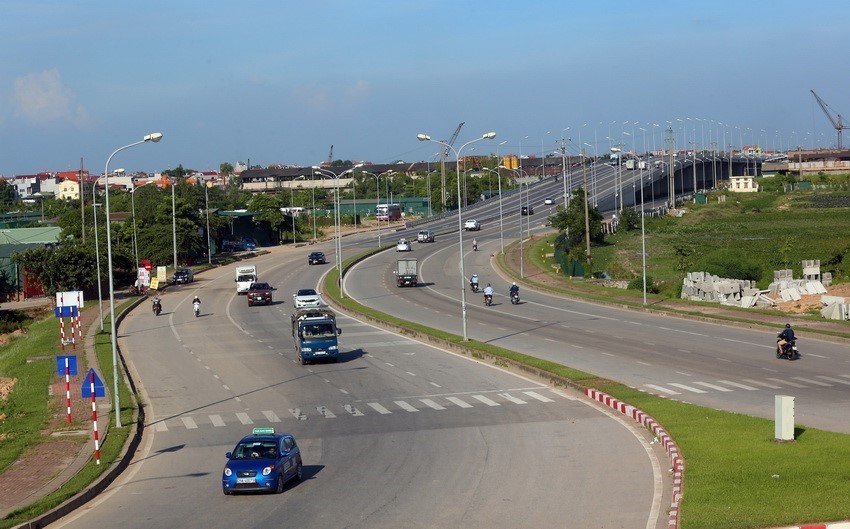
Attaching importance to preserving cultural heritage, improving infrastructure and encouraging creativity, Hanoi is gradually implementing sustainable development goals, contributing to building a modern, civilised and livable city, in line with the United Nations 2030 Agenda for Sustainable Development and the Politburo’s Resolution 15-NQ/TW on the direction and tasks of developing Hanoi Capital to 2030, with a vision to 2045./.
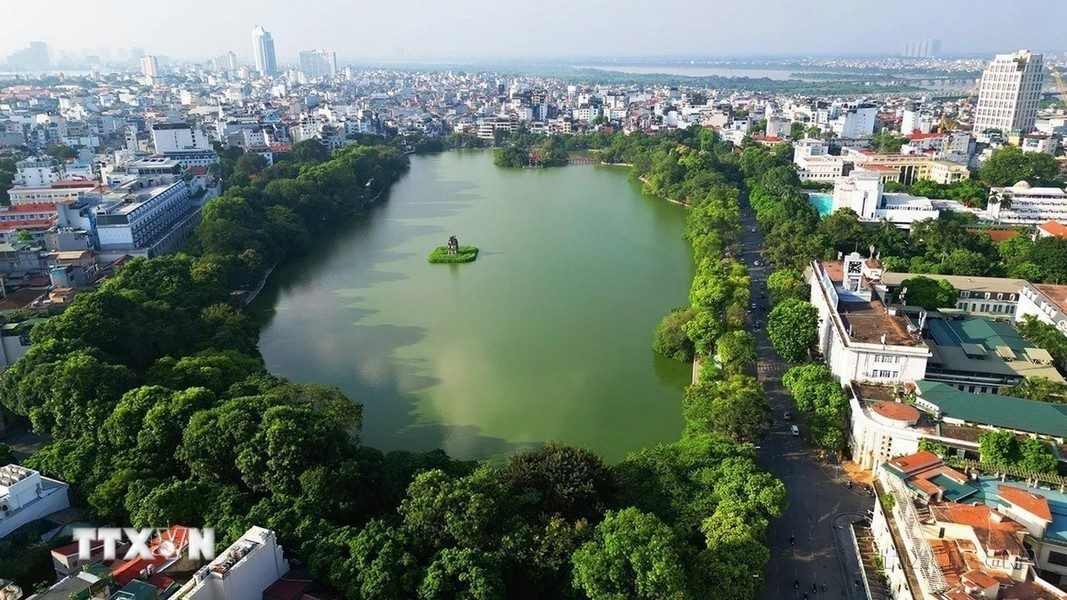
Hanoi focuses on preserving cultural heritage, improving infrastructure and encouraging creativity. (Photo: VNA)
El 10 de octubre de 1954, la solemne ceremonia de izamiento de la bandera nacional en la Torre de la Bandera de Hanoi se convirtió en un momento sagrado y marcó un punto de inflexión decisivo en la historia de Vietnam con la liberación de su capital. (Foto: VNA)
Tras el éxito de la Revolución de Agosto de 1945, se proclamó la República Democrática de Vietnam. Sin embargo, los colonialistas franceses regresaron para invadir el país con la intención de restablecer su dominio colonial. El 19 de diciembre de 1946 estalló la resistencia nacional y Hanoi se convirtió en el escenario propicio para una larga guerra.
La histórica victoria en Dien Bien Phu en 1954 obligó a las fuerzas coloniales francesas a firmar los Acuerdos de Ginebra el 21 de julio de 1954. (Foto: VNA)
Después de nueve años de feroz resistencia, marcada por la determinación inquebrantable y el espíritu de lucha del ejército y el pueblo vietnamitas, la histórica victoria de Dien Bien Phu en 1954 obligó a las fuerzas coloniales francesas a firmar los Acuerdos de Ginebra el 21 de julio de 1954. Estos acuerdos pusieron fin a las hostilidades en Vietnam, reconociendo la independencia, soberanía e integridad territorial de Vietnam, Laos y Camboya, al tiempo que estipula la retirada de las tropas francesas de la zona norte del país indochino.
El 10 de octubre de 1954 quedó grabado en la memoria de los vietnamitas como el día en que la capital Hanoi recuperó su libertad después de casi un siglo de dominación colonial.
Unidades de la División 308 organizan la primera ceremonia oficial de izamiento de bandera el día de la liberación de la capital. Este hecho histórico tuvo lugar el 10 de octubre de 1954 en la Torre de la Bandera de Hanoi. (Foto: VNA)
El día del regreso triunfal
Los soldados marchan hacia Hanoi el 10 de octubre de 1954. (Foto: VNA)
Según los términos de los Acuerdos de París, Hanoi fue designada como zona de concentración del ejército francés durante 80 días. Durante este período, la paz aún no se había establecido en la urbe. El ejército y la población de la capital tuvieron que continuar sus esfuerzos en un nuevo contexto a la espera del día en que se tomara el control total.
Los colonialistas franceses aprovecharon este momento para sabotear los establecimientos económicos y culturales, incitar a la gente a emigrar al Sur y alterar el orden público. Su objetivo era volver la transición de poder de caótica y agotada, con el fin de reducir la reputación del Gobierno de resistencia tanto a nivel nacional como internacional.
Anticipándose al complot francés y conscientes de la importancia crucial de la reconquista de Hanoi, el Buró Político y la Secretaría del Comité Central del Partido encargaron a Vo Nguyen Giap, Le Van Luong, Xuan Thuy y To Huu supervisar directamente la transición de poder en la capital.
El 17 de septiembre de 1954, de acuerdo con la decisión del Gobierno, se creó el Comité Militar de la ciudad de Hanoi bajo el liderazgo del general Vuong Thua Vu para garantizar este proceso. El Consejo de Gobierno promulgó políticas para las ciudades recién liberadas, así como normas religiosas y disciplinarias para los soldados, oficiales y funcionarios públicos que se establecerían en ellas. El Comando General pidió a las unidades militares responsables de la liberación de Hanoi que mantuviesen el orden y la seguridad, protegieran a la población, respetaran escrupulosamente las políticas y la disciplina fijadas por el Gobierno y permanecieran vigilantes contra cualquier intento de provocación o sabotaje.
Tras negociaciones diplomáticas destinadas a garantizar la retirada ordenada y pacífica de las fuerzas francesas de Hanoi a tiempo, el 30 de septiembre de 1954 se firmó un acuerdo sobre el traslado militar de la capital, seguido de un pacto sobre el traspaso administrativo el 2 de octubre. El Gobierno vietnamita desplegó equipos policiales y administrativos para prepararse para tomar la ciudad. La ceremonia oficial de traslado del poder tuvo lugar en el estadio Cot Co, en presencia de numerosos dirigentes y ciudadanos.
La transición de poder en la capital se llevó a cabo solemnemente, en presencia de numerosos líderes, soldados y ciudadanos de Hanoi. (Foto: VNA)
Este proceso se llevó a cabo con éxito y Vietnam tomó el control de 129 edificios administrativos, infraestructuras públicas, fábricas, hospitales y escuelas, incluidas importantes instalaciones militares y órganos claves. Las actividades diarias de los residentes pudieron continuar con normalidad. Servicios esenciales como electricidad, agua y transporte continuaron funcionando sin interrupción. La seguridad política y el orden social se mantuvieron efectivamente. Las escuelas, los centros de salud, las instituciones culturales y los medios de comunicación continuaron sus actividades bajo la nueva administración.
En 1999, Hanoi fue honrada por la UNESCO como “Ciudad para la Paz”, convirtiéndose en el único representante de la región de Asia y el Pacífico en esta calidad hasta hoy. (Foto: VNA)
Hanoi, de “Ciudad por la Paz” a “Ciudad Creativa”
En 1999, Hanoi fue honrada por la Organización de las Naciones Unidas para la Educación, la Ciencia y la Cultura (UNESCO) como “Ciudad por la Paz”, convirtiéndose en el único representante de la región de Asia y el Pacífico en esta calidad hasta hoy. Esta distinción despertó un inmenso orgullo entre los habitantes de la capital vietnamita.
El título de “Ciudad por la Paz” otorgado por la UNESCO es el reconocimiento de la comunidad internacional a las importantes contribuciones de Hanoi a la construcción de una urbe armoniosa.
Veinte años después, en octubre de 2019, Hanoi fue designada también por la UNESCO como “ciudad del diseño” entre las 66 “ciudades creativas” seleccionadas. Como parte de esta nueva designación, la metrópolis se ha fijado objetivos ambiciosos.
Para 2025, la capital aspira a convertirse en una ciudad verde, inteligente y moderna, competitiva tanto a nivel nacional como regional. De aquí a 2030, debería convertirse en una urbe verde, inteligente y moderna, dinámica y eficiente, capaz de competir en la escena regional e internacional.
En su visión a largo plazo hasta 2045, Hanoi ofrecerá una alta calidad de vida, un desarrollo sostenible en todos los ámbitos y una ciudad con conectividad global y competitividad internacional.
En los cinco años transcurridos desde que se unió a la “Red de Ciudades Creativas de la UNESCO”, Hanoi ha implementado varias iniciativas y compromisos destinados a aumentar las actividades de diseño creativo en sus programas de desarrollo socioeconómico y cultural. Hasta la fecha, la ciudad ha organizado numerosos eventos relacionados con el diseño creativo, atrayendo la participación de actores nacionales e internacionales y promoviendo la progresiva integración de la creatividad en la vida.
La ubicuidad de los productos creativos en la ciudad demuestra la sólida base para el desarrollo de Hanoi centrado en el diseño creativo. En particular, los festivales culturales y eventos creativos celebrados en la capital han atraído una gran participación de creadores y público.
La integración a esta red de marca un primer paso importante para fortalecer el estatus de Hanoi y crear una imagen urbana más atractiva, abriendo así nuevas oportunidades y potenciales para el desarrollo urbano.
Al prestar especial atención a la preservación del patrimonio cultural, la mejora de las infraestructuras y la estimulación de la creatividad, Hanoi está avanzando hacia el logro de los Objetivos de Desarrollo Sostenible, contribuyendo a construir un espacio moderno, civilizado y agradable para vivir. Estos esfuerzos se enmarcan en la Agenda 2030 para el Desarrollo Sostenible de Naciones Unidas y la Resolución 15-NQ/TW del Buró Político, que definen las orientaciones y tareas para el progreso de la capital hasta 2030, con una visión hasta 2045./.
Hanoi presta especial atención a la preservación del patrimonio cultural, la mejora de la infraestructura y la estimulación de la creatividad. (Foto: VNA)
Le 10 octobre 1954, la cérémonie solennelle de lever du drapeau national à la Tour du drapeau de Hanoï devient un moment sacré, marquant un tournant décisif dans l’histoire du Vietnam avec la libération de la capitale Hanoï. Photo : VNA
Après le succès de la Révolution d’août 1945, la République démocratique du Vietnam fut proclamée. Cependant, les colonialistes français revinrent pour envahir le pays, avec l’intention de rétablir leur domination coloniale. Le 19 décembre 1946, la résistance nationale éclata, et Hanoï devint le point de départ d’une longue lutte.
La victoire historique de Dien Bien Phu en 1954 contraint les forces coloniales françaises à signer les Accords de Genève le 21 juillet 1954.Photo: VNA
Après neuf années de résistance acharnée, marquées par la détermination inébranlable et l’esprit combatif de l’armée et du peuple vietnamiens, la victoire historique de Dien Bien Phu en 1954 a contraint les forces coloniales françaises à signer les Accords de Genève le 21 juillet 1954. Ces accords ont mis fin aux hostilités au Vietnam, reconnaissant l’indépendance, la souveraineté et l’intégrité territoriale du Vietnam, du Laos et du Cambodge, tout en stipulant le retrait des troupes françaises du Nord du Vietnam.
Le 10 octobre 1954 reste gravé dans la mémoire des Vietnamiens comme le jour où la capitale Hanoï a retrouvé sa liberté après près d’un siècle de domination coloniale.
Les unités de la division 308, ayant pris le contrôle de Hanoï, organisent la première cérémonie officielle de lever du drapeau le jour de la libération de la capitale. Cet événement historique se déroule le 10 octobre 1954, à la Tour du drapeau de Hanoï. Photo : VNA
Le jour du retour triomphal
Les soldats marchent vers Hanoï le 10 octobre 1954. Source: VNA
Aux termes des Accords de Paris, Hanoï a été désignée comme zone de regroupement pour l’armée française pendant 80 jours. Durant cette période, la paix n’était pas encore établie à Hanoï. L’armée et la population de la capitale ont dû poursuivre leurs efforts dans un contexte nouveau pour attendre le jour de prise du contrôle de la capitale.
Les colonialistes français ont tenté de tirer parti de cette période pour déstabiliser les institutions économiques et culturelles, encourager l’exode vers le Sud, et perturber l’ordre public. Leur objectif était de transférer au Sud Vietnam une capitale affaiblie et désorganisée, dans le but de compromettre la crédibilité du gouvernement tant au niveau national qu’international.
Anticipant le complot français et conscients de l’importance cruciale de la reprise de Hanoï, le Bureau politique et le secrétariat du Comité central du Parti ont mandaté Vo Nguyen Giap, Le Van Luong, Xuan Thuy et To Huu pour superviser directement la transition du pouvoir dans la capitale.
Le 17 septembre 1954, conformément à la décision du gouvernement, le Comité militaire de la ville de Hanoï a été mis en place sous la direction du général Vuong Thua Vu pour assurer la transition du pouvoir dans la capitale. Le Conseil de gouvernement a promulgué des politiques destinées aux villes nouvellement libérées, des politiques religieuses et des règles pour les soldats, militaires et fonctionnaires qui allaient s’installer dans les villes nouvellement libérées. Le commandement général a demandé aux unités militaires chargées de la libération de Hanoï de maintenir l’ordre et la sécurité, de protéger la population, de respecter scrupuleusement les politiques et la discipline fixés par le gouvernement, et de rester vigilantes face à toute tentative de provocation ou de sabotage.
À l’issue des négociations diplomatiques visant à assurer à temps le retrait ordonné et pacifique des forces françaises de Hanoï, un accord sur le transfert militaire de la capitale a été signé le 30 septembre 1954, suivi d’un accord sur le transfert administratif le 2 octobre. Le gouvernement vietnamien a déployé des équipes de police, de maintien de l’ordre et d’administration pour préparer la prise en charge de la ville. La cérémonie officielle de transfert du pouvoir s’est déroulée au stade Côt Co, en présence de nombreux dirigeants et citoyens de Hanoï.
La transition du pouvoir dans la capitale se déroule solennellement, en présence de nombreux dirigeants, de soldats et de citoyens hanoïens. Photo : VNA
La transition du pouvoir dans la capitale s’est déroulée avec succès. Le Vietnam a pris le contrôle de 129 bâtiments administratifs, infrastructures publiques, usines, hôpitaux et écoles, dont d’importantes installations militaires et organes importants. Les activités quotidiennes des habitants ont pu se poursuivre normalement. Les services essentiels tels que l’électricité, l’eau et les transports ont continué de fonctionner sans interruption. La sécurité politique et l’ordre social ont été maintenus de manière efficace. Les écoles, les établissements de santé, les organes culturels et les médias ont poursuivi leurs activités sous la nouvelle administration.
En 1999, Hanoï est honorée par l’UNESCO en tant que “Ville pour la paix”, devenant ainsi l’unique représentante de la région Asie-Pacifique à ce titre jusqu’à aujourd’hui. Photo: VNA
Hanoï, de la “Ville pour la Paix” à la “Ville créative”
En 1999, Hanoï a été honorée par l’UNESCO en tant que “Ville pour la paix”, devenant ainsi l’unique représentante de la région Asie-Pacifique à ce titre jusqu’à aujourd’hui. Cette distinction a suscité une immense fierté chez les habitants de la capitale vietnamienne.
Le titre de “Ville pour la paix” décerné par l’UNESCO est une reconnaissance de la communauté internationale envers les contributions significatives de Hanoï envers la cause d’une édification d’une ville pour la paix.
Vingt ans plus tard, en octobre 2019, Hanoï a cette fois été désignée par l’UNESCO «ville de design» parmi les 66 «villes créatives» sélectionnées. Dans le cadre de cette nouvelle désignation, Hanoï a fixé des objectifs ambitieux.
D’ici 2025, la capitale vise à devenir une ville verte, intelligente et moderne, compétitive tant au niveau national que régional. À l’horizon 2030, elle devrait devenir une ville verte, intelligente et moderne, dynamique et efficace, capable de rivaliser sur la scène régionale et internationale.
Dans sa vision à long terme jusqu’en 2045, Hanoï offrira une qualité de vie élevée, un développement durable dans tous les domaines, et une ville ayant une connectivité mondiale et compétitive internationale.
Au cours des cinq années suivant son adhésion au “Réseau des villes créatives de l’UNESCO”, Hanoï a mis en œuvre diverses initiatives et engagements visant à multiplier les activités de design créatif dans ses programmes de développement culturel, économique et social. A ce jour, la ville a organisé de nombreux événements liés au design créatif, attirant la participation d’acteurs nationaux et internationaux et favorisant l’intégration progressive de la créativité dans la vie.
L’omniprésence des produits créatifs dans la ville témoigne des fondations solides pour le développement de Hanoï axé sur le design créatif. En particulier, les festivals culturels et les événements créatifs organisés dans la capitale ont attiré une grande participation des créateurs et du public.
L’intégration au “Réseau des villes créatives de l’UNESCO” marque une première étape importante dans l’objectif de renforcer le statut de Hanoï et à créer une image urbaine plus attractive, ouvrant ainsi de nouvelles opportunités et potentiels pour le développement urbain.
En accordant une attention particulière à la préservation du patrimoine culturel, à l’amélioration des infrastructures et à la stimulation de la créativité, Hanoï progresse vers la réalisation des objectifs de développement durable, contribuant à l’édification d’une ville moderne, civilisée et agréable à vivre. Ces efforts s’inscrivent dans le cadre de l’Agenda 2030 des Nations Unies pour le développement durable et de la Résolution 15-NQ/TW du Bureau politique, qui définissent les orientations, les tâches pour le développement de la capitale jusqu’en 2030, avec une vision jusqu’en 2045. -VNA
Hanoï accorde une attention particulière à la préservation du patrimoine culturel, à l’amélioration des infrastructures et à la stimulation de la créativité. Photo: VNA