РЕЛИГИИ СОПРОВОЖДАЮТ ПОСТРОЕНИЕ, УКРЕПЛЕНИЕ И ПРОДВИЖЕНИЕ БЛОКА ВЕЛИКОГО НАЦИОНАЛЬНОГО ЕДИНСТВА

 
Комплекс памятников и ландшафтов Йенты в северо-восточной провинции Куангнинь также считается буддийской столицей Вьетнама. (Фото: ВИA)

Уважение свободы убеждений, вероисповедания, осуществление политики национального единства – это сквозная, последовательная политика партии и государства Вьетнама.

Вьетнам – страна со многими религиями и типами верований, разнообразными по организации, разными по численности, имеющими разное происхождение, которые по-разному развиваются и оказывают влияние в политической, культурной и социальной жизни. Партия и государство Вьетнама всегда определяют, что религиозная и этническая  работа является стратегическим вопросом, имеющиим особое значение.

13 июня 2024 года в Ханое президент То Лам встречается с лидерами и высокопоставленными представителями религиозных организаций. (Фото: ВИA)

Партия и государство рассматривают цель построения мирного, независимого, единого и территориально целостного Вьетнама, где «богатый народ, сильная страна, справедливое, демократическое и цивилизованное общество» служат общей основой для всех религий. При этом уважаются различия, которые не противоречат общим интересам нации и страны, а также поднимается национальный дух, традиции доброты и терпимости, чтобы объединить всех вьетнамцев и создать новую жизненную силу для блока великого национального единства. Следовательно, необходимо не только предотвращать и решительно бороться с действиями, направленными на использование религиозных убеждений и вероисповеданий в корыстных целях, но и с религиозной деятельностью, противоречащей закону. Это особенно важно в нынешней ситуации, когда появляются новые религии и религиозные явления.

Масджид Джамиул Азхар, построенная в 1959 году, является одной из крупнейших мечетей в провинции Анжанг, расположенной в дельте Меконга. Она также считается одной из самых красивых мечетей во Вьетнаме. (Фото: ВИA)

Партия и государство Вьетнама также поддерживают продвижение положительных культурных и нравственных ценностей религий. С одной стороны, это способствует внедрению в жизнь культурных, моральных и гуманистических ценностей, которые накапливались в религиях на протяжении тысячелетий. С другой стороны, это также позволяет религиозным соотечественникам и священнослужителям видеть уважение и признательность со стороны партии к культурным и нравственным ценностям религий, что способствует укреплению блока великого национального единства и вовлечению религиозных соотечественников и сановников в этот процесс. Поэтому также важно уделять внимание и создавать условия для деятельности религиозных организаций в соответствии с уставами и положениями религиозных организаций, признанных государством, в соответствии с положениями закона, и активно способствовать делу строительства и защиты страны.

Католики и жители Ханоя празднуют Рождество (Фото: ВИA)

Религиозные организации Вьетнама осуществляют международные обмены в духе мира и дружбы с церквями и религиозными организациями всего мира. Многие религиозные организации страны приглашают иностранные религиозные организации посетить Вьетнам с рабочим визитом; одновременно они запрашивают разрешение на проведение проповедей в ряде религиозных учреждений. Эти мероприятия способствуют расширению обмена информацией и помогают иностранным религиозным организациям лучше понять ситуацию со свободой убеждений и вероисповедания во Вьетнаме.

Продвижение ресурсов религиозных организаций

В документе всевьетнамского съезда КПВ 13-го созыва  отмечалось, что «Необходимо продвигать положительные культурные и нравственные ценности, а также ресурсы религий в интересах национального развития».

Заместитель председателя Центрального комитета Отечественного фронта Вьетнама Нгуен Хыу Зунг

В настоящее время концепции о ресурсах религий стали популярны в некоторых точках зрения, таких как подтверждение роли религий, рассмотрение положительных воздействий религий как одного из важных ресурсов в деле строительства и защиты Отечества; признание ресурсов религий в двух аспектах – духовных ресурсах и материальных ресурсах, при этом особое внимание уделяется духовным ресурсам, включающим культурные ценности и религиозную этику. Подчеркивается, что ресурсы религий участвуют во всех сферах процесса строительства и защиты Отечества, особенно проявляя себя и внося значительный вклад в такие области, как образование, здравоохранение, социальное обеспечение и гуманитарная благотворительность.

Последователи буддизма Хоахоа награждены за вклад в строительство мостов в сельских районах в провинции Анжанг в дельте Меконга. (Фото: ВИA)

Профессор Тхыонг Май Тхань, глава правления «Святой престол» Каодай в Ханое, сказал, что великое национальное единство является драгоценной традицией вьетнамского народа на протяжении тысячелетий. В нынешний период сила национального единства продолжает укрепляться, и политика единства религий, проводимая партией, является мудрым шагом, приносящим много практических результатов в общественной жизни.

«Чтобы продвигать религиозные ресурсы, Отечественному фронту Вьетнама необходимо продолжать укреплять единство и активно продвигать роль сановников религиозных организаций»,

предложил профессор Тхыонг Май Тхань.

Говоря о моральных и культурных ценностях некоторых религий во Вьетнаме, доцент, доктор Чу Ван Туан, Института религиоведения – Вьетнамской академии социальных наук, предложил, прежде всего, продвигать ценности религий в построении этики и образа жизни современного вьетнамского народа. Кроме того, необходимо использование этического аспекта религии для просвещения людей и общества с помощью различных форм и моделей, таких как информационные сайты, социальные сети, религиозные пространства, фестивали, в целях донесения до людей моральные ценности, направляя их, помогая им понять, осознать необходимость быть добропорядочными, ответственными перед обществом гражданами.

Признавая, что религиозная работа занимает важное место, Нгуен Тхи Ким Зунг, заместитель председателя Комитета Отечественного фронта Вьетнама в городе Ханое, сказала, что со временем Отечественный фронт на всех уровнях города сосредоточился на руководстве и обеспечении надлежащего исполнения политики партии и законов государства в интересах общества. Это способствует тому, чтобы люди могли исповедовать свои убеждения и религии в соответствии с законом.

Протестанты из группы этнических меньшинств в северной горной провинции Каобанг. (Фото: ВИA)

На основе уважения и обеспечения свободы убеждений и религий народа, Вьетнам решительно борется с враждебными силами, пытающимися использовать религию для подрыва революционных устремлений страны. При этом Вьетнам уважает и поддерживает благие ценности религий, способствуя приумножению и обогащению культурных ценностей нации, что создает прочную основу для объединения верующих ради общей цели — построения великого национального единства для достижения идеалов «богатого народа, сильной страны, демократии, справедливости и цивилизации». Способствуя национальной солидарности, религиозная солидарность всегда связана с требованием поддержания дисциплины в сферах общественной жизни./.

Святой престол Каодай в юго-восточной провинции Тэйнинь. (Фото: ВИA)

NEW VITALITY IN NHI KHE TRADITIONAL WOODTURNING VILLAGE

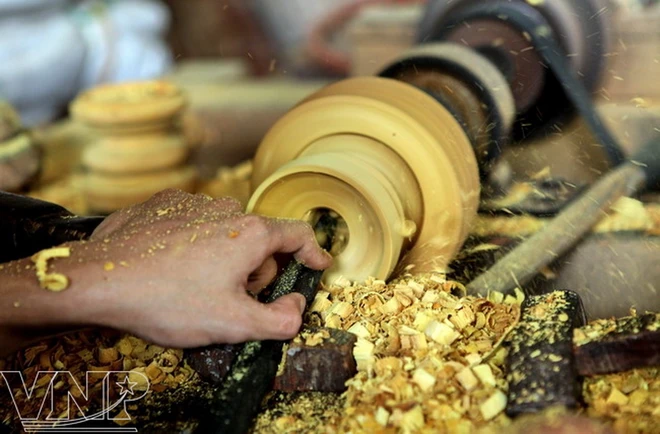
An artisan shapes the outside of a wood log. (Photo: VNA)

For hundreds of years, Nhi Khe village in Hanoi’s Thuong Tin district has been home to the fine craft of wood turning.

Located about 20 kilometers south of Hanoi, the village is well-known for hand-turned wooden objects for use in religious activities and other wooden, horn, bone, stone and clamshell items for decoration and daily use.

Nhi Khe also boasts a rich culture, academics, and is the hometown of great figures such as Nguyen Trai (1380 – 1442) – a prominent Vietnamese poet, scholar, and statesman during the early 15th century, and his father Nguyen Phi Khanh. Also hailing from the village is Luong Van Can (1854 – 1927) – a Vietnamese mandarin, school administrator, independence activist and writer, as does Luong Ngoc Quyen (1885 – 1917) – a patriot who took part in many movements against French colonialists.

Nhi Khe village is famous nationwide for sophisticated wood products. The craft has brought a prosperous life to local people and shaped the fame of this place. Turning is not limited to wood but also other materials like horn, bone, and stone. From this village, many high-quality jewelry and other handicraft items are exported to many countries in Europe and Asia.

In the history

Legend has it that during the reign of the Le Kings and Trinh Lords, a talented woodturner named Doan Tai designed many unique products, including an 18-hole bamboo pipe for 18 young men to smoke at the same time.

Originally, he went to Khanh Van village, Khanh Ha commune on the other side of the To Lich River (also in Thuong Tin district), to teach carpentry. He was frustrated as it was difficult to teach the craft there. He went to the river bank and saw children swimming. He asked if they wanted to learn about how to make wooden things. The children agreed, so he waded across the river to Nhi Khe village to teach the craft.

Over the years, the people in Nhi Khe village mastered the job. The great trainer Tai left suddenly and never returned to the village, leaving only the wood craft in his wake. To show their gratitude and respect to the founder of the craft, Nhi Khe villagers built a small shrine to worship him and chose the day he left the village, the 25th of the 10th lunar month, as the day to pay tribute to their craft village’s founder.

The craft village developed prosperously. In the 18th-19th century, locals brought the craft to various places such as Nam Dinh and Thai Nguyen to make a living. In Hanoi, their shops concentrated on To Tich street in Hang Gai ward today.

New vitality

In the past, with very simple tools and foot-powered lathe, Nhi Khe woodturners were able to make sophisticated products.
They use two main materials for turning – wood and horns. There are various kinds of wood that can be used while artisans use horns of buffalo, cow, deer, and elk. Ivory was also turned to make precious items for the royal court and noble families.

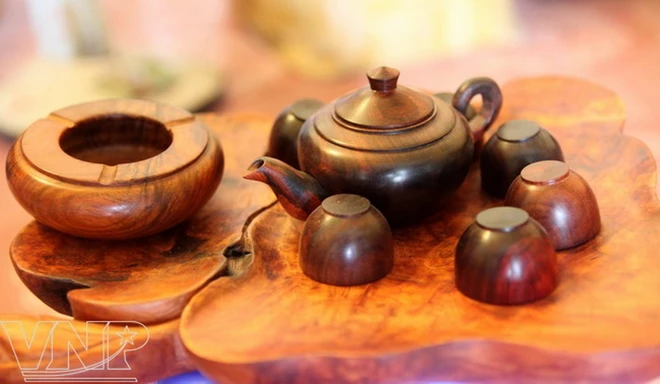
Previously, villagers focused on producing religious objects and household utensils such as incense tubes, vases, display trays, candle holders, baskets for holding teapots, pipe bowls, or spinning tops.

Nowadays, Nhi Khe craftsmen have managed to diversify their products. Apart from traditional objects, the list of the craft village’s products now includes jewelry items made from wood, buffalo horn and bone, clamshell and stone, wooden chessmen, wooden-bead mats and curtains, chopsticks, toothpick containers, which serve not only domestic demands but also export markets. In addition, Nhi Khe village’s products, such as trays, candle holders, vases and teapots, are also used by lacquer makers in the neighboring village of Ha Thai in Duyen Thai commune to produce lacquer-coated items of high economic value.

In recent years, taking advantage of wood scraps, they have made round beads to string into blinds or pillows. This new profession creates jobs and income for hundreds of local workers of different ages. New products have also been created to meet consumers’ demand such as Buddha statues and animal statues.

nhi khe2.jpg
Thanks to the application of machinery, Nhi Khe’s lathe products now have high precision and consistency. (Photo: VNA)

Moreover, local craftsmen also skillfully combine carpentry with lacquer, sculpture, and pearl shell inlay production techniques to invent exquisite products, especially high-class decorative and handicraft items.

Today, turning technology has developed a lot. Households purchased lathes and other types of machinery and equipment for production. Each household is usually specialised in a certain product.

Products in Nhi Khe are increasingly diverse, meeting the tastes of domestic and foreign consumers. Many are even exported, contributing to the development of the craft village.

The woodturning craft has created jobs not only for villagers but also people from other localities. Thanks to that, people’s lives have been improved, and the locality gained a facelift.

nhi khe4.jpg
Wooden products made in Nhi Khe village. (Photo: VNA)

Attractive tourist destination

Nhi Khe village is also an attractive tourist destination in Thuong Tin district.

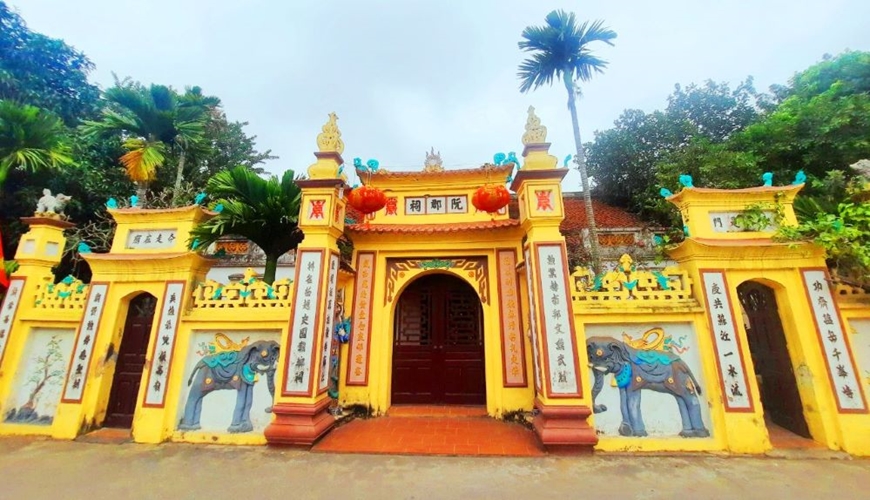
Coming to the village, visitors can witness the process of creating wooden products and souvenirs. They can also learn about and visit relics along with tangible and intangible cultural heritages such as the village communal house, the Truc Shrine, the temple dedicated to the craft founder, Nguyen Trai’s Temple, the Dragon stop, the Phoenix stop, Van Bridge, the Ba Cha communal house, or Thong Pagoda. Nguyen Trai (1380 – 1442) was an illustrious Vietnamese Confucian scholar, a noted poet, a skilled politician and a master strategist. He was credited with writing the important political statements of Le Loi and inspiring the Vietnamese populace to support open rebellion against the Ming dynasty rulers. He was also the author of ‘Great Proclamation upon the Pacification of the Wu’.

Marking his 600th birth anniversary in 1980, Nguyen Trai was recognised by the United Nations Educational, Scientific and Cultural Organization (UNESCO) as a World Cultural Celebrity.

At the eastern end of Van Bridge that spans the To Lich River, there is a Confucian worship site and stele records which show the names and positions of the local people who passed the imperial examinations during the Tran and Le dynasties. The oldest stele was erected in 1690.

Coming to the village, visitors can witness the process of creating wooden products and souvenirs. (Photo: VNA)

Nhi Khe is also home to many halls of worship dedicated to those who contributed to the village and the country. These include the halls of the Duong, Nguyen Trung, and Luong clans, worshiping their ancestors and renowned figures such as Duong Cong Do, Duong Ba Cung, Nguyen Trung Mach, Nguyen Trung Luong, and Luong Van Can.

The school built by Luong Van Can in 1924 is now used as classrooms for first graders in the village. It was listed as a municipal-level relic site in 2005.

A memorial temple dedicated to National Hero and World Cultural Celebrity Nguyen Trai, in Nhi Khe commune of Hanoi’s Thuong Tin district. (Photo: VNA)

Meanwhile, the Ba Cha communal house used to be the oldest of its kind in Nhi Khe village but it was destroyed by the French colonialists to build an outpost in 1948. The only relic of the communal house is the stone statues of two generals that the villagers brought to the Thuong Dinh communal house to preserve.

The Thong Pagoda, built 300 years ago, was also ruined by the French army. A statue that used to be placed at the pagoda are now at Duyen Thai Pagoda./.

An artisan keeps the wood turning in Nhi Khe village. (Photo: VNA)

COMUNIDADES RELIGIOSAS CONTRIBUYEN A FORTALECER Y PROMOVER GRAN UNIDAD NACIONAL EN VIETNAM

El complejo de monumentos y paisajes de Yen Tu, en la provincia nororiental de Quang Ninh, también se considera la capital budista de Vietnam. (Foto: VNA)

Respetar el derecho a la libertad de creencia y religión e implementar la política de gran unidad nacional es una política constante del Partido y Estado de Vietnam.

Con muchos tipos de creencias que varían en su estructura, tamaño, origen e influencia en la vida política y sociocultural, el Partido y el Estado vietnamitas han determinado el trabajo religioso y étnico como una cuestión estratégica con un significado particularmente importante.

El 13 de junio de 2024, el entonces presidente To Lam se reúne con líderes y dignatarios de organizaciones religiosas en Hanoi. (Foto: VNA)

El Partido y el Estado aspiran a construir un Vietnam pacífico, independiente y unido con un pueblo rico, una nación fuerte y una sociedad democrática, justa y civilizada, que sirva de base común entre las religiones, respetando las diferencias para que no entren en conflicto con los intereses comunes de la nación y el pueblo. El espíritu nacional, las tradiciones humanitarias y la tolerancia se mantienen para unir a todo el pueblo vietnamita y fortalecer el bloque de unidad nacional. En el contexto actual, cuando surgen nuevos dogmas, es urgente prevenir y combatir resueltamente los actos que explotan las creencias y las actividades que contravienen las disposiciones legales.

Masjid Jamiul Azhar, construida en 1959, es una de las mezquitas más grandes de la provincia de An Giang, en el delta del Mekong. También se considera una de las mezquitas más hermosas de Vietnam. (Fotos: VNA)

El Partido y el Estado de Vietnam también abogan por promover los buenos valores culturales y morales de las religiones. Este enfoque no sólo utiliza y realza las tradiciones culturales, éticas y humanitarias que se han cristalizado a lo largo de miles de años, sino que también demuestra el respeto del Partido por estos valores, atrayendo así a los creyentes al bloque de unidad nacional. El Estado se compromete a facilitar las actividades de las organizaciones religiosas de conformidad con sus estatutos y regulaciones legales, contribuyendo así a la causa de la construcción y protección nacional.

Los católicos y el pueblo de Hanoi celebran la Navidad (Fotos: VNA)

Las organizaciones de culto en Vietnam participan activamente en intercambios internacionales con instituciones similares de todo el mundo en un espíritu de paz y amistad. Muchas organizaciones nacionales han invitado a homólogos extranjeros a visitar y trabajar en el país, y han solicitado permiso para realizar sermones y enseñanzas en diversos establecimientos. A través de estas actividades, las religiones en Vietnam han mejorado el intercambio de información, lo que permite a las organizaciones extranjeras obtener una comprensión más clara del estado de la libertad religiosa en la nación indochina.

Promueven recursos en las religiones

Los documentos aprobados por el XIII Congreso Nacional del Partido dicen claramente: “Promoción de los excelentes valores culturales y éticos y los recursos de las religiones para el desarrollo de la nación”.

El vicepresidente del Comité Central del Frente de la Patria de Vietnam (FPV), Nguyen Huu Dung. (Foto: VNA)

En la actualidad, los valores espirituales, culturales y éticos de las religiones reafirman el papel de estas y se considera que sus impactos positivos son importantes en los esfuerzos de construcción y defensa nacionales. Se afirma además que los recursos de las religiones han contribuido a todas las áreas de progreso nacional, en particular en la educación, la atención médica, el bienestar social y los esfuerzos humanitarios.

Los seguidores del budismo Hoa Hoa se honran por contribuir a la construcción de puentes en las zonas rurales de la provincia de An Giang, en el delta del Mekong. (Foto: VNA)

El profesor Thuong Mai Thanh, jefe del Consejo de Administración de la parroquia Cao Dai de Hanoi, dijo que la gran unidad nacional es una valiosa y duradera tradición del pueblo vietnamita. Agregó que en la etapa actual la solidaridad religiosa es una política sabia del Partido que ha estado produciendo muchos resultados prácticos en la vida social.

“Para promover con más fuerza los recursos de las religiones, el Frente de la Patria de Vietnam (FPV) debe seguir fortaleciendo el papel de los representantes de esas organizaciones”, recomendó Mai Thanh.

Destacando los valores éticos y culturales de ciertas creencias en Vietnam, el profesor asociado Dr. Chu Van Tuan del Instituto de Estudios Religiosos de la Academia de Ciencias Sociales, propuso que el enfoque debe estar primero en promover los valores para dar forma a los estándares éticos y estilos de vida del pueblo vietnamita contemporáneo. Además, sugirió aprovechar los aspectos éticos de la religión para la educación pública a través de diferentes formas, como portales de información, redes sociales, espacios de culto y festivales, para difundir la moralidad, guiar a las personas hacia la bondad y ayudar a los ciudadanos a comprender la importancia de ser miembros responsables de la comunidad.

Reconociendo el importante papel de los asuntos relacionados con la práctica de la fe, Nguyen Thi Kim Dung, vicepresidenta del Comité del FPV en Hanoi, explicó que el frente de la ciudad se centra en liderar y dirigir la implementación efectiva de las políticas del Partido y las leyes del Estado en esta materia, facilitando la práctica de las religiones y creencias de acuerdo con las disposiciones legales.

Protestantes de una minoría étnica en la provincia montañosa de Cao Bang, en el norte del país. (Foto: VNA)

Basándose en el respeto y la garantía de la libertad de credo del pueblo, Vietnam está luchando resueltamente contra las fuerzas hostiles que se aprovechan de las creencias para socavar la revolución; paralelamente asegura el respeto y promueve las buenas costumbres. Este enfoque enriquece el patrimonio cultural de la nación y sirve como base crucial para unir a las personas de todas las religiones hacia el objetivo nacional común de construir un sólido bloque de unidad nacional con el propósito de “un pueblo próspero, una nación fuerte y una sociedad justa, democrática y civilizada”. La promoción de la unidad nacional y la solidaridad siempre está vinculada a la necesidad de mantener el orden en todos los aspectos de la vida social./.

La Santa Sede de Cao Dai en la provincia sudoriental de Tay Ninh. (Foto: VNA)

越南各宗教共同建设、巩固和发扬民族团结力量

广宁省安子遗迹与名胜群素有“越南佛教之都”之称。图自越通社

尊重宗教信仰自由权,贯彻民族大团结政策,是越南党和国家的一贯方针。

越南是一个宗教多、信仰类型丰富、宗教组织多样,其数量、起源、传入、发展和对政治社会生活影响各异的国家。越南党和国家始终将宗教和民族工作视为具有特别重要意义的战略问题。

2024年6月13日下午,国家主席苏林在主席府亲切会见了由各宗教神职人员和宗教组织领导代表团。图自越通社

党和国家以致力于建设和平、独立、统一、领土完整、民富、国强、民主、公平、文明的越南目标为各宗教之间的共同点;尊重不违背国家和民族共同利益的差异;弘扬民族精神和善良宽容的传统,凝聚所有越南人的团结和共识,从而为民族大团结创造新的活力。因此,越南不仅要防止和坚决打击利用信仰、宗教的行为,而且还要打击违反法律规定的信仰、宗教活动,这在当前新宗教和新宗教现象不断出现的情况下显得十分紧迫。

建于1959年的贾米尔爱资哈尔清真寺 (Masjid Jamiul Azhar) 是安江省最大的清真寺之一,其被视为越南最美丽的清真寺之一。图自越通社

越南党和国家主张弘扬各宗教的良好文化和道德价值观,一方面弘扬各宗教几千年历史中所结晶的文化、伦理、人文价值,另一方面也使全国同胞和宗教界人士意识到党对宗教文化和道德价值的尊重和赞赏,从而吸引宗教界人士加入民族大团结,关心支持宗教组织按照经国家认可的宗教组织宪章、章程和法律规定开展宗教活动,积极为国家建设与保护事业作出贡献。

基督教徒与河内居民欢度充满温馨和快乐的圣诞节。图自越通社

越南的宗教组织都本着和平友好的精神与世界各地的教会和宗教组织开展国际交流活动。许多国内宗教组织邀请国外宗教组织代表团对越南进行工作访问,同时申请在一些宗教场所开展布道活动。通过这些活动,越南宗教界加强了信息交流,使外国宗教组织更好地了解越南信仰和宗教自由状况。

挖掘各宗教的资源

越共十三大文件明确提出:“弘扬优良的文化、道德价值和对国家发展事业的宗教资源”。

越南祖国阵线中央委员会副主席阮有勇。图自越通社

宗教资源指的是肯定宗教的作用,将宗教的积极影响视为祖国建设和保卫事业中的重要资源之一;承认宗教资源有两个方面:精神资源和物质资源,其中更注重精神资源,即宗教的文化和道德价值观;强调宗教资源参与了祖国建设和保卫进程中的各个领域,其中在教育、卫生、社会保障、人道主义慈善等领域贡献了巨大贡献。

为安江省建设2250多座农村桥梁贡献力量的和好佛教信徒。图自越通社

河内首都高台圣室管理委员会主任尚梅清教授表示,民族大团结是越南人民几千年来的宝贵传统。在当前阶段,民族大团结的力量越来越受到肯定,其中宗教团结问题是党的明智政策,给社会生活带来了许多实际成果。

“为了更有力地挖掘宗教资源,越南祖国阵线应继续发挥宗教组织神职人员的作用。”

尚梅清教授

提及越南部分宗教的道德文化价值观时,越南社会科学翰林院宗教研究所副教授朱文俊建议,首先,有必要弘扬宗教在塑造当今越南人的道德和生活方式方面的作用。与此同时,利用宗教伦理方面,通过信息网站、社交网络、宗教活动空间、节庆等不同形式和模式,向人们传递道德观念,引导人们向善并了解宝贵的道德价值,从而成为社区负责任的好公民。

越南祖国阵线河内委员会副主席阮氏金庸表示,河内市各级祖国阵线集中领导和指导越南党和国家有关宗教工作的主张、政策和法律,为人民群众依法进行宗教活动创造便利条件。

信仰自由——高平省政府与新教少数民族同之间的桥梁。图自越通社

在尊重和保障人民宗教信仰自由权的基础上,越南坚决反对利用宗教破坏革命的敌对势力,尊重和弘扬宗教美好价值,培育民族文化财富,并以此为凝聚各宗教人士共同建设民族大团结以实现“民富、国强、民主、公平、文明”的目标的重要基础。(完)

西宁省高台圣座。图自越通社

Les religions jouent leur rôle dans la construction de la grande union nationale

Le complexe d’Yen Tu est considéré comme la capitale bouddhiste du Vietnam. Photo: VNA

Le respect du droit à la liberté de croyance et de religion et la mise en œuvre de la politique de grande union nationale constituent une politique constante du Parti et de l’État.

Le Vietnam abrite de nombreuses religions et croyances, et le Parti et l’État identifient toujours les affaires religieuses et ethniques comme une question stratégique aux significations particulièrement importantes.

Le président de la République, To Lam, rencontre le 13 juin à Hanoï une délégation de dirigeants et de dignitaires d’organisations religieuses, en vue de les encourager à promouvoir la grande union nationale. Photo: VNA

Le Parti et l’État du Vietnam ont pour premier objectif d’édifier un Vietnam pacifique, indépendant, unifié et territorialement intégral, avec “un peuple riche, un pays puissant, démocratique, équitable, civilisé”, lequel est un objectif commun des religions. Le Parti et l’État respectent les différences qui ne sont pas contraires aux intérêts communs de la nation. Ils promeuvent le patriotisme et la tolérance pour rassembler et unir tous les Vietnamiens. Ils luttent résolument contre les actes qui abusent des croyances et des religions, ainsi que les activités religieuses qui violent la loi.

Masjid Jamiul Azhar, l’une des plus grandes mosquées dans la province d’An Giang (Sud), a été construite en 1959. Elle est considérée comme l’une des plus belles mosquées du Vietnam. Photo: VNA

Le Parti et l’État du Vietnam prônent également la promotion des bonnes valeurs culturelles et morales des religions. Ils créent des conditions favorables permettant aux organisations religieuses reconnues par l’État de fonctionner conformément à leurs chartes et règlements, aux dispositions de la loi, contribuant au processus de développement et de défense du pays.

Célébration chaleureuse de Noël à Hanoï. Photo: VNA

Les organisations religieuses du Vietnam mènent toutes des activités d’échange avec des organisations religieuses du monde entier, dans un esprit de paix et d’amitié. Grâce à ces activités, l’échange d’informations est renforcé afin que les organisations religieuses étrangères puissent mieux comprendre la situation de la liberté de croyance et de religion au Vietnam.

Promouvoir les ressources des religions

Les documents du 13e Congrès national du Parti déclarent clairement l’objectif : « Promouvoir les bonnes valeurs culturelles, éthiques et les ressources des religions pour le développement national ». Ainsi, le Parti affirme le rôle des religions et leurs effets positifs sur le développement du pays.

Le vice-président du Comité central du Front de la Patrie du Vietnam, Nguyen Huu Dung. Photo: VNA

Un séminaire des adeptes bouddhistes de Hoa Hao à An Giang sur la construction de ponts et routes en zones rurales. Photo: VNA

Le professeur Thuong Mai Thanh, chef du conseil d’administration du temple du caodaïsme à Hanoï, a déclaré que l’union nationale était une tradition précieuse du peuple vietnamien. Selon lui, la force de la grande union nationale s’affirme toujours davantage, et la solidarité des religions est une sage politique du Parti.

« Pour promouvoir plus fortement encore les ressources des religions, il est nécessaire que le Front de la Patrie du Vietnam continue à promouvoir le rôle des dignitaires des organisations religieuses », a proposé le professeur Thuong Mai Thanh.

Le professeur agrégé et docteur Chu Van Tuan, de l’Institut d’études religieuses de l’Académie vietnamienne des sciences sociales, a proposé de promouvoir les valeurs des religions afin de guider les gens, de les encourager à devenir de bons citoyens, responsables envers la communauté.

Soulignant l’importance des affaires religieuses, Nguyen Thi Kim Dung, vice-présidente du Comité municipal du Front de la Patrie du Vietnam (FPV) de Hanoï, a déclaré que les antennes du FPV à tous les niveaux dans la capitale se concentraient sur une bonne application des préconisations du Parti, des politiques et des lois de l’État sur ce travail, créant ainsi des conditions favorables à la pratique des croyances et des religions selon la loi.

Liberté de croyance – Le lien entre le gouvernement et les protestants issus des minorités ethniques de Cao Bang (Nord). Photo: VNA

Sur la base du respect et de la garantie du droit à la liberté de croyance et de religion, le Vietnam lutte résolument contre les forces hostiles qui profitent des religions pour saboter la révolution. Le Vietnam respecte et promeut les bonnes valeurs des religions, rassemblant les personnes de toutes religions pour partager le même objectif national : construire une grande union nationale avec l’objectif de créer « un peuple riche et un pays puissant, démocratique, équitable et civilisé ».-VNA

Architecture unique du Saint-Siège du Caodaïsme à Tay Ninh. Photo: VNA

RELIGIOUS COMMUNITIES CONTRIBUTE TO STRENGTHENING AND PROMOTING NATIONAL UNITY

Yen Tu Complex of Monuments and Landscapes in the northeastern province of Quang Ninh is also considered the Buddhist capital of Vietnam. (Photo: VNA)

Respecting the freedom of belief and religion and implementing a national unity policy are consistent principles of the Party and State of Vietnam.

Vietnam is a country with various religions and beliefs that vary in structure, size, origin and influence on political, cultural, and social life in Vietnam. The Vietnamese Party and State have consistently recognised religious and ethnic affairs as strategic issues of particular importance.

On June 13, 2024, the then President To Lam meets with leaders and dignitaries of religious organisations in Hanoi. (Photos: VNA)

The Party and State aim to build a peaceful, independent, and united Vietnam with wealthy people, a strong nation, and a democratic, fair, and civilised society, which serves as the common ground among religions, while respecting differences that do not conflict with the common interests of the nation and the people. National spirit, humanitarian traditions, and tolerance are upheld to unite all Vietnamese people and invigorate the national unity bloc. In the current context when new religions and religious phenomena are emerging, it is urgent to prevent and resolutely combat acts that exploit beliefs and religions and activities that contravene legal provisions.

Masjid Jamiul Azhar built in 1959 is one of the largest mosques in the Mekong Delta province of An Giang. This is also considered one of the most beautiful mosques in Vietnam. (Photos: VNA)

The Vietnamese Party and State also encourage the promotion of the positive cultural and ethical values of religions. This approach not only utilises and enhances the cultural, ethical, and humanitarian values that have crystallized in religions over thousands of years but also demonstrates the Party’s respect for these values, thus attract religious people to the national unity bloc. The State is committed to facilitating religious organisations’ activities in accordance with their charters and legal regulations, thereby contributing positively to the cause of national construction and protection.

Catholics and people in Hanoi celebrate Christmas (Photos: VNA)

Religious organisations in Vietnam actively engage in international exchanges with religious institutions worldwide in the spirit of peace and friendship. Many domestic religious organisations have invited foreign counterparts to visit and work in Vietnam, and sought permission to conduct sermons and teachings at various religious establishments. Through these activities, religions in Vietnam have enhanced information exchange, enabling foreign religious organisations to gain a clearer understanding of the state of religious freedom in the country.

Promotion resources of religions

The documents adopted by the 13th National Party Congress clearly say: “Promoting the fine cultural and ethical values and the resources of religions for the development of the nation.”

Vice President of the Central Committee of the Vietnam Fatherland Front (VFF) Nguyen Huu Dung (Photo: VNA)

Currently, common viewpoints regarding the resources of religions affirm the role of religion and considering religions’ positive impacts as one of the important resources in the national construction and defence efforts. Those viewpoints recognise religions’ spiritual and material resources, with a greater emphasis on spiritual resources, particularly the cultural and ethical values inherent in religions. It is asserted that resources of religions have contributed to all areas of national construction and defence, particularly in education, healthcare, social welfare, and humanitarian efforts.

Hoa Hoa Buddhist followers are honoured for contributing to building bridges in rural areas in the Mekong Delta province of An Giang. (Photo: VNA)

Professor Thuong Mai Thanh, Head of the Management Board of Hanoi Caodai parish, said that national unity is a precious long-lasting tradition of the Vietnamese people. Now, the strength of national unity is strongly affirmed, with religious solidarity being a wise policy of the Party that has been yielding many practical results in social life.

“To further harness the resources of religions effectively, the Vietnam Fatherland Front needs to continue engaging and promoting the role of religious dignitaries.”

Professor Thuong Mai Thanh recommended.

Highlighting the ethical and cultural values of certain religions in Vietnam, Associate Professor Dr. Chu Van Tuan from the Institute of Religious Studies at the Vietnam Academy of Social Sciences proposed that the focus should first be on promoting the values of religions in shaping the ethical standards and lifestyles of contemporary Vietnamese people. Additionally, he suggested leveraging the ethical aspects of religion for public education through various formats, such as on information portals, social media, in religious spaces, and during festivals, to disseminate moral values, guide individuals towards goodness, and help citizens understand the importance of being responsible members of the community.

Recognising the significant role of religious affairs, Nguyen Thi Kim Dung, Vice Chairwoman of the VFF Hanoi Committee, said that recently, the VFF chapters at all levels in the city has focused on leading and directing the effective implementation of the Party’s policies and the State’s laws concerning religious affairs, facilitating the practice of religions and beliefs in accordance with legal provisions.

Protestants from ethnic minority group in the northern mountainous province of Cao Bang. (Photo: VNA)

Based on the respect and assurance of the people’s freedom of belief and religion, Vietnam is resolutely fighting against hostile forces that exploit religions to undermine the revolution, while also respecting and promoting the fine values of religions. This approach enriches the cultural heritage of the nation and serves as a crucial foundation for uniting people of all faiths towards the common national goal of building a solid national unity bloc for the purpose of “prosperous citizens, strong nation, and a fair, democratic, civilized society.” The promotion of national unity and religious solidarity is always linked to the need to maintain order across all aspects of social life./. 

Cao Dai Holy See in the southeastern province of Tay Ninh. (Photo: VNA)

ПОСЛЕДОВАТЕЛЬНАЯ ПОЛИТИКА ВЬЕТНАМА В ОБЛАСТИ ОБЕСПЕЧЕНИЯ ПРАВ ЧЕЛОВЕКА

В рамках 57-й очередной сессии, состоявшейся 27 сентября 2024 года, Совет ООН по правам человека утвердил результаты национального доклада Вьетнама четвертого цикла универсального периодического обзора (УПО).

Одновременно с текущим обзорным циклом (2019-2023 гг.) во Вьетнаме произошло много важных политических событий, имеющих стратегическую ориентацию на развитие страны, укрепивших основы обеспечения прав человека и граждан, в частности, всевьетнамский съезд Коммунистической партии Вьетнама, выборы в Национальное собрание и правительства 15-го созыва.

Посредством этих мероприятий Вьетнам сформулировал видение и ориентиры развития страны на период 2021-2030 годов, которые определяют цель построения и совершенствования социалистического правового государства, повышения уровня жизни и прав людей, продвижения и защиты прав человека во Вьетнаме.

Совершенствование правовых институтов

С 2019 года по конец ноября 2023 года Национальное собрание Вьетнама приняло 44 закона, а также множество важных законов, касающихся прав человека, гражданских прав, в частности положений Конституции 2013 года, обеспечивающих соответствие международным договорам, участником которых является Вьетнам.

Национальное собрание приняло ряд поправок и дополнений. (Фото: ВИА)

Вьетнам рассматривает правовые институты, чтобы внести поправки и дополнения в ряд законов в соответствии с международными обязательствами, такими как изучение поправок закона о детях, законопроектов о предотвращении проституции и борьбе с ней, судебный закон о несовершеннолетних, закон о трансгендерах.

Правительство также продолжает предлагать Национальному собранию включить проекты в программы законотворчества, постановлений на 2023 и 2024 годы, чтобы продолжить совершенствование институтов, связанных с правами человека и основными гражданскими правами такие, как закон о предупреждении торговли людьми и борьбе с ней (с поправками), Закон о земле (с поправками), Закон о социальном страховании (с поправками), Закон о народонаселении (с поправками), Закон о занятости (с поправками), Закон о медицинском страховании (с поправками) и т.д.

В процессе разработки правовых документов государство всегда создает благоприятные условия для реализации гражданами права на участие в государственном и социальном управлении посредством внесения мнений, рекомендаций, участия в разработке политики, законов, а также проверки и надзора за работой государственного аппарата.

Вьетнам продолжает совершенствовать институты, связанные с правами человека. (Фото: ВИА)

Государство также обеспечивает открытость и прозрачность в получении мнений и рекомендаций граждан, а также предоставляет обратную связь на них.

Сбор мнений граждан о проектах документов в соответствии с положениями настоящего Закона уже привел к положительным изменениям, повысив эффективность и качество проектов правовых актов.

Вьетнам учредил Исследовательский комитет для изучения возможности создания Национального агентства по правам человека и провел ряд встреч для обсуждения содержания, связанного с его созданием. В ходе этих встреч планируется определить структуру, организацию и модель агентства.

В ближайшее время Вьетнам продолжит изучать опыт агентств по правам человека в других странах и консультироваться с учетом практических условий страны.

Новые политики, направленные на обеспечение прав человека

В сфере социально-экономического развития Вьетнам обновил многие цели в рамках стратегии социально-экономического развития на 2021–2030 годы и плана на 2021–2025 годы. Страна полна решимости продолжать значительные инвестиции в повышение качества человеческих ресурсов, улучшение уровня жизни бедных домохозяйств, людей в отдаленных районах, уделяя приоритетное внимание продвижению человеческого фактора в стратегии развития. Вьетнам стремится стать развивающейся страной с современной промышленностью и высоким средним уровнем дохода к 2030 году и развитой страной с высоким уровнем дохода к 2045 году.

Кроме того, Вьетнам также выпустил новые стратегии и политики, направленные на социальное обеспечение и защиту уязвимых групп людей, например, программу по повышению качества защиты и медицинского обслуживания людей, имеющих заслуги перед революцией, пожилых людей, детей, инвалидов и людей, нуждающихся в социальной помощи в период 2021-2030 годы, утвержденные премьер-министром в ноябре 2021 года.

Вьетнам также выпустил новые стратегии и политику, направленные на социальное обеспечение и защиту уязвимых групп населения (Фото: ВИA)

Об устойчивом развитии и реализации Целей устойчивого развития (ЦУР): с 2016 года по настоящее время Вьетнам приложил много усилий для реформирования мобилизации, использования и финансового управления в целях развития, чтобы успешно реализовать ЦУР. Доля капитала на социальное развитие по отношению к ВВП в период 2016-2021 годов всегда оставалась на уровне более 34% и достигла самого высокого уровня в 2020 году (34,8%).

Мониторинг и оценка реализации ЦУР проводятся регулярно. База данных ЦУР постоянно обновляется, расширяется. Вьетнам опубликовал систему из 158 статистических показателей устойчивого развития Вьетнама и дорожную карту по реализации ЦУР до 2030 года. Институт устойчивого развития становится все более полным и строгим. Вьетнам сформировал и развивает межведомственную координированную сеть и учреждения, которые содействуют достижению ЦУР, включая правительственные учреждения, международных партнеров по развитию, предприятия, НПО.

Вьетнам приступает к реализации плана реструктуризации сельского хозяйства на период 2021-2025 годов (Фото: ВИA)

Что касается продовольственной безопасности, устойчивого развития сельского хозяйства и сельских районов, в 2021 году правительство выпустило резолюцию 34/NQ-CP об обеспечении национальной продовольственной безопасности к 2030 году. Вьетнам также реализовал план реструктуризации сельскохозяйственного сектора на период 2021-2025 годов, направленный на стимулирование инвестиций в сельское хозяйство, сельские районы и поддержку сокращения потерь в сельском хозяйстве. Базовая инфраструктура сельского хозяйства и сельских районов продолжает улучшаться, особенно ирригация, предотвращение стихийных бедствий и борьба с ними. Следующим направлением деятельности сельскохозяйственного сектора является трансформация модели высокодоходного сельского хозяйства в экологичное, ответственное, высокотехнологичное сельское хозяйство, которое будет устойчиво развиваться.

О зеленом росте, реагировании на изменение климата: Закон об охране окружающей среды 2020 года предусматривает, что «Охрана окружающей среды должна сочетаться с социальным обеспечением, правами детей, гендерным равенством, обеспечивая право людей на жизнь в экологически чистой среде».

Национальная стратегия борьбы с изменением климата на период до 2050 года и План действий по зеленому росту приняты с целью снижения уязвимости, потерь и ущерба, вызванных изменением климата, за счет повышения устойчивости и адаптационного потенциала сообщества.

Вьетнам является одной из первых развивающихся стран в мире, которая включила свои обязательства по сокращению выбросов парниковых газов в правовую систему. В декабре 2022 года Вьетнам присоединился к странам G7 и нескольким международным партнерам, подписав политическую декларацию о создании партнерства по справедливому энергическому переходу (JETP) с целью привлечения от 3 до 15,5 миллиардов долларов в течение 3-5 лет для поддержки финансовых и энергетических технологий Вьетнама.

Премьер-министр опубликовал проект по реализации декларации JETP, в котором ставится задача разработки механизмов, политики и мер для обеспечения социальной справедливости. Эти меры включают поддержку уязвимых групп населения в доступе к электроэнергии по доступным ценам, продвижение экологически чистой и устойчивой занятости, а также внедрение политики, направленной на укрепление социальной защиты.

Проекты по производству ветряной и солнечной энергии в коммунах Лойхай и Бакфонг уезда Тхуанбак быстро запускаются благодаря поддержке провинции Ниньтхуан (Фото: ВИA)

В сфере административной реформы и борьбы с коррупцией и негативными явлениями Вьетнам продолжает достигать значительных положительных результатов, руководствуясь девизом премьер-министра: «дисциплина, честность, действие, креативность, прорыв, эффективность». Страна придерживается последовательной позиции, исключающей любые запретные зоны или исключения при рассмотрении коррупционных преступлений. Вьетнам также активно внедряет информационные технологии, развивает электронное правительство, повышает уровень ответственности и поощряет участие граждан и организаций в процессе разработки и реализации политики.

Закон о предотвращении и борьбе с коррупцией, вступивший в силу с 1 июля 2019 года, создал прочную правовую основу для антикоррупционной работы, в частности регулируя коррупционные действия и нарушения закона о предотвращении и борьбе с коррупцией.

Правительство утвердило общую программу государственной административной реформы на период 2021-2030 годов, направленную на продолжение усилий по созданию демократической, профессиональной, современной, бережливой и эффективной администрации, которая фокусируется на институциональной реформе, создании и развитии электронного и цифрового правительства. Министерство внутренних дел выпустило ряд новых инструментов, таких как индекс административной реформы, индекс удовлетворенности населения, организация в отношении работы государственных административных органов./.

Обеспечение права граждан на свободу религии, убеждений и вероисповедания является последовательной политикой партии (Фото: ВИA)

VIETNAM HAS CONSISTENT POLICIES TO ENSURE HUMAN RIGHTS

During its 57th regular session on September 27, 2024, the United Nations Human Rights Council approved the outcomes of the Universal Periodic Review (UPR)’s fourth cycle for Vietnam.

Coinciding with this review cycle (2019-2023), Vietnam witnessed significant political events that have strategically shaped its development trajectory and solidified the foundation for ensuring human and citizens’ rights, notably the 13th National Congress of the Communist Party of Vietnam and the elections of the 15th-tenure National Assembly (NA) and Government.
Through these events, Vietnam has articulated a vision and development directions for the 2021-2030 period, aiming to build and perfect a socialist rule of law State, improve living standards and citizens’ right to enjoyment, promote and protect human rights in the country.

Perfecting Legal Framework

From 2019 to November 2023, the Vietnamese NA passed 44 laws, many of which pertain to human and citizens’ rights. These laws align with the 2013 Constitution and international treaties, ensuring compatibility with international treaties of which Vietnam is a member.

National Assembly adopts several revised laws (Photo: VNA)

Vietnam is reviewing several laws to amend and supplement them in accordance with international commitments. This includes revisions to the Law on Children, the draft Law on Prevention and Control of Prostitution, the Law on Juvenile Justice, and the Law on Gender Reassignment, among others.

The Government has also proposed incorporating various bills into the 2023 and 2024 Programme on Law and Ordinance Building. These bills aim to further refine the legal framework concerning human rights and fundamental rights of citizens, including revisions to the Law on Prevention and Control of Human Trafficking, the Land Law, the Social Insurance Law, the Population Law, the Employment Law, and the Health Insurance Law.

Throughout the process of building legal documents, the State has facilitated citizens’ rights to engage in the management of State and society. This is achieved by encouraging public feedback, suggestions, involvement in policy and law building, as well as monitoring and supervising the activities of State agencies.

Vietnam continues to perfect institutions related to human rights (Photo: VNA)

The State ensures openness and transparency in the process of receiving and responding to citizens’ feedback and suggestions.

To date, public consultations on various bills have led to positive changes, improving their effectiveness and quality.

Vietnam has established a research committee to explore the feasibility of establishing a National Human Rights Institution (NHRI). Several discussions have been held regarding the establishment of this agency, including proposed options for its structure, organisation and model.

Moving forward, Vietnam will continue to study and reference human rights agency models from around the world, adapting them to the country’s realities.

New policies ensure human rights in Vietnam

Vietnam’s socioeconomic development strategy for 2021-2030 sees the country lay emphasis on improving the quality of its human resources and living standards for the poor and those in remote areas. With a human-centred approach, Vietnam set goals to become a developing country with a modern industry and a high middle-income status by 2030, progressing toward a developed country with high income by 2045.

Vietnam has also issued new strategies and policies focused on social welfare and protection of vulnerable groups. Notably, in November 2021, the PM approved a programme to enhance the quality of protection, healthcare and support for revolution contributors, the elderly, children, the disabled, and those in need of social assistance for the 2021-2030 period.

Vietnam has also issued new strategies and policies focusing on social welfare and the protection of vulnerable groups (Photo: VNA)

In the realm of sustainable development, Vietnam has made substantial reforms in pooling, using, and managing financial resources for development, aligning with the Sustainable Development Goals (SDGs) since 2016. Social development investment remained above 34% of GDP from 2016-2021, peaking at 34.8% in 2020.

The monitoring and evaluation of the progress in fulfilling the SDGs are carried out regularly. The database on SDGs is continuously updated and expanded. Vietnam has issued a system comprising 158 statistical indicators for sustainable development and a roadmap for achieving the SDGs by 2030. The institutional framework for sustainable development is becoming increasingly refined and stringent. Vietnam has stepped up and developed a network of inter-agency coordination and organisations to promote the fulfillment of the SDGs, including Government agencies, international development partners, businesses, and non-governmental organisations.

Vietnam embarks on agricultural restructuring scheme for 2021-2025 period (Photo: VNA)

On food security, rural and sustainable agricultural development, the Government issued the Resolution 34/NQ-CP on ensuring national food security by 2030 in 2011. Vietnam is also deploying an agricultural restructuring plan for the 2021-2025 period to encourage investment in agriculture and rural areas, support the reduction of agricultural losses. The basic infrastructure for agriculture and rural areas continues to be improved, especially in irrigation and disaster prevention and control. The focus for the sector in the coming time is to transition from high-yield agriculture to high-tech, eco-friendly, responsible and sustainable agriculture.

Regarding green growth and climate change response: The 2020 Law on Environment Protection stipulates that environment protection is harmoniously linked with social security, children’s rights, gender equality, and ensuring the right of everyone to live in a clean environment.

Vietnam’s national climate change strategy to 2050 and its green growth action plan aim to reduce vulnerability and loss caused by climate change by bolstering community resilience and adaptability.

Vietnam has emerged as one of the first developing countries to incorporate greenhouse gas reduction obligations into its legal framework. In December 2022, the country, in partnership with the G7 and several international allies, adopted the Political Declaration on establishing the Just Energy Transition Partnership (JETP). The goal is to raise 15.5 billion USD over the next 3-5 years to offer financial and technological support to Vietnam’s energy transition.

The PM has issued an action plan for the JETP, detailing mechanisms, policies and solutions to ensure equitable support, particularly for vulnerable groups, with affordable energy access, green job creation, and social welfare policies.

Wind and solar power projects in Loi Hai and Bac Phong communes of Thuan Bac district are quickly launched thanks to support from Ninh Thuan province (Photo: VNA)

In administrative reform and the fight against corruption and negativity, Vietnam continues to achieve numerous positive results. The campaign is driven by the PM’s action motto “Discipline, Integrity, Action, Creativity, Breakthrough, Efficiency”, along with the consistent stance that there are no off-limit areas or exceptions in handling corruption. This approach is coupled with the application of information technology, the development of e-Government, and the improvement of accountability and public participation, feedback, and contributions in the policy-making and enforcement process.

The Anti-Corruption Law, effective from July 1, 2019, has established a solid legal foundation for anti-corruption efforts, specifying acts of corruption and violations related to anti-corruption.

The Government has issued a comprehensive programme for State administrative reform for the 2021-2030 period, aiming to continue efforts to build a democratic, professional, and effective administrative system. Key focuses include institutional reform, and the development of e-Government and digital government. The Ministry of Home Affairs has introduced new tools such as the Administrative Reform Index and the Satisfaction Index of Public Administration Services./.

Ensuring the citizens’ right to freedom of religion, belief and faith is a consistent policy of the Party (Photo: VNA)

Les politiques cohérentes du Vietnam en matière de protection des droits de l’homme

Le Conseil des droits de l’homme des Nations Unies (CDH) a adopté le 27 septembre les résultats du quatrième cycle de l’Examen périodique universel (EPU) pour le Vietnam, dans le cadre de sa 57e session ordinaire.

Au cours du cycle d’examen actuel (2019-2023), le Vietnam a connu plusieurs événements politiques majeurs qui ont façonné l’orientation stratégique du développement national. Ces événements, notamment le 13e Congrès national du Parti communiste du Vietnam et les élections de la 15e Assemblée nationale et du gouvernement, ont contribué à consolider les fondements de la protection des droits de l’homme et des droits civils.

Ces événements ont permis au Vietnam d’établir une vision et une orientation claires pour la période 2021-2030. L’objectif principal est de consolider un État de droit socialiste, d’améliorer la qualité de vie des citoyens, et de renforcer la promotion et la protection des droits de l’homme au Vietnam.

Perfectionnement du cadre juridique

Entre 2019 et fin novembre 2023, l’Assemblée nationale du Vietnam a adopté 44 lois, dont de nombreux textes juridiques importants concernant les droits de l’homme et les droits civils, concrétisant ainsi les dispositions de la Constitution de 2013 et assurant la conformité avec les traités internationaux auxquels le Vietnam est partie.

L’Assemblée nationale adopte un certain nombre de Lois (modifiées). Photo : VNA

Actuellement, le Vietnam examine la possibilité de modifier et de compléter plusieurs lois conformément à ses engagements internationaux, notamment la Loi sur les enfants, ainsi que l’élaboration de projets de Loi sur la prévention et la lutte contre la prostitution et la Loi sur la justice pour les mineurs.

Le gouvernement a également proposé à l’Assemblée nationale d’inclure dans le programme législatif 2023-2024 des projets visant à perfectionner les institutions liées aux droits de l’homme et aux droits fondamentaux des citoyens. Parmi ces projets figurent la Loi sur la prévention et la lutte contre la traite humaine (modifiée), la Loi foncière (modifiée), la Loi sur l’assurance sociale (modifiée), la Loi sur la population (modifiée), la Loi sur le travail (modifiée) et la Loi sur l’assurance maladie (modifiée).

Dans le processus d’élaboration des documents juridiques, l’État veille à créer les conditions propices à la participation citoyenne dans la gestion étatique et sociale. Les citoyens sont encouragés à exprimer leurs opinions, formuler des recommandations, participer à l’élaboration des politiques et des lois, ainsi qu’à inspecter et superviser les activités de l’appareil d’État.

Le Vietnam continue d’améliorer ses institutions liées aux droits de l’homme. Photo : VNA

Parallèlement, l’État s’engage à garantir la transparence dans la réception et le traitement des opinions et recommandations des citoyens.

La collecte des avis citoyens sur les projets de documents, conformément aux dispositions de la loi, a engendré des changements positifs, contribuant ainsi à améliorer l’efficacité et la qualité des projets de documents juridiques.

Le Vietnam a mis en place un comité de recherche pour étudier la possibilité de créer une agence nationale des droits de l’homme. Plusieurs réunions ont été organisées pour discuter des aspects liés à la création de cette agence, notamment sa structure, son organisation et son modèle de fonctionnement.

Dans les années à venir, le Vietnam poursuivra ses recherches et s’inspira des modèles d’agences des droits de l’homme du monde entier, en les adaptant aux conditions spécifiques du pays.

Politiques récentes pour la protection des droits de l’homme

S’agissant du développement socio-économique, la Stratégie de développement socioéconomique pour 2021-2030 et le Plan de développement socio-économique pour 2021-2025 fixent de nouveaux objectifs pour la période 2021-2030. Le Vietnam s’engage à investir substantiellement dans l’amélioration de la qualité des ressources humaines, à rehausser les conditions de vie des populations défavorisées dans les régions isolées et lointaines, et à placer l’humain au cœur de ses stratégies de développement. L’ambition du Vietnam est de devenir un pays en développement doté d’une industrie moderne et d’un statut de pays à revenu intermédiaire élevé d’ici 2030 et un “pays développé à revenu élevé” d’ici 2045.

Par ailleurs, le Vietnam a élaboré de nouvelles stratégies et politiques centrées sur la sécurité sociale et la protection des groupes vulnérables. Un exemple notable est le Programme d’amélioration de la qualité de la protection et des soins de santé, approuvé par le Premier ministre en novembre 2021, qui cible les personnes ayant contribué à la révolution, les personnes âgées, les enfants, les personnes handicapées, ainsi que celles nécessitant une assistance sociale pour la période 2021-2030.

Le Vietnam élabore de nouvelles stratégies et politiques centrées sur la sécurité sociale et la protection des groupes vulnérables. Photo: VNA

En ce qui concerne le développement durable et la mise en œuvre des Objectifs de Développement Durable (ODD), le Vietnam entretient depuis 2016 des réformes significatives dans la mobilisation, l’utilisation et la gestion des financements pour le développement, en vue d’assurer une mise en œuvre efficace des ODD. Il est à noter que le ratio d’investissement pour le développement social par rapport au PIB s’est maintenu au-dessus de 34% entre 2016 et 2021, atteignant un pic de 34,8% en 2020.

Le suivi et l’évaluation des progrès dans la réalisation des ODD sont réalisés régulièrement. La base de données relative aux ODD est constamment actualisée et enrichie. Le Vietnam a établi un système comprenant 158 indicateurs statistiques pour le développement durable et a élaboré une feuille de route pour la mise en œuvre des ODD jusqu’en 2030. Les institutions dédiées au développement durable sont en constante amélioration et deviennent plus rigoureuses de jour en jour. Le pays a également mis en place un réseau de coordination intersectorielle et des agences promouvant la réalisation des ODD, impliquant des organismes gouvernementaux, des partenaires de développement internationaux, des entreprises et des organisations non gouvernementales.

Le Vietnam initie également le Plan de restructuration du secteur agricole pour la période 2021-2025. Photo : VNA

Concernant la sécurité alimentaire, le développement rural et l’agriculture durable, le gouvernement a promulgué en 2021 la résolution 34/NQ-CP visant à garantir la sécurité alimentaire nationale jusqu’en 2030. Le Vietnam a également initié le Plan de restructuration du secteur agricole pour la période 2021-2025, dans le but de stimuler les investissements dans l’agriculture et les zones rurales, et de réduire les pertes agricoles. Les infrastructures agricoles et rurales de base font l’objet d’améliorations continues, notamment en matière d’irrigation et de prévention des catastrophes naturelles. L’objectif à long terme du secteur agricole est d’opérer une transition vers une agriculture de haute technologie, écologique, responsable et durable.

En matière de croissance verte et de réponse au changement climatique, la Loi sur la protection de l’environnement de 2020 stipule que “la protection de l’environnement est intrinsèquement liée à la sécurité sociale, aux droits de l’enfant, à l’égalité des genres, garantissant ainsi le droit de chaque individu à vivre dans un environnement sain”.

La Stratégie nationale sur le changement climatique d’ici 2050 et le Plan d’action pour la croissance verte ont été publiés dans le but de réduire la vulnérabilité, les pertes et les dommages liés au changement climatique, tout en renforçant la résilience et la capacité d’adaptation de la société.

Le Vietnam se distingue comme l’un des premiers pays en développement à intégrer dans son système juridique des obligations et des engagements concrets en matière de réduction des émissions de gaz à effet de serre. En décembre 2022, le Vietnam, en collaboration avec les pays du G7 et plusieurs partenaires internationaux, a adopté une déclaration politique instaurant le Partenariat pour une transition énergétique juste (JETP). Ce partenariat a pour objectif de mobiliser 15,5 milliards de dollars sur une période de 3 à 5 ans afin de soutenir la transition énergétique et financière du Vietnam.

Le Premier ministre a présenté un projet de mise en œuvre de la Déclaration JETP, mettant l’accent sur l’élaboration de mécanismes, de politiques et de solutions visant à garantir l’équité sociale. Ces mesures comprennent notamment le soutien aux groupes vulnérables en termes d’accès à l’électricité à des tarifs abordables, la promotion de la création d’emplois verts et durables, ainsi que la mise en place de politiques de soutien à la sécurité sociale.

Les projets d’énergie éolienne et solaire dans les communes de Loi Hai et Bac Phong (district de Thuan Bac) sont mis en œuvre rapidement grâce au grand soutien de la province de Ninh Thuan. Photo : VNA

Dans le domaine de la réforme administrative et de la lutte contre la corruption et les pratiques malsaines, le Vietnam continue d’enregistrer des progrès significatifs. Le Premier ministre a adopté la devise “Discipline, intégrité, action, créativité, surdépassement et efficacité” et prône le principe “aucune zone d’interdite ni exception” dans la lutte contre la corruption. Cet approche est associée à l’utilisation des technologies de l’information, le développement de l’administration électronique, le renforcement de la responsabilité, et l’implication des citoyens et des organisations dans l’élaboration et la mise en œuvre des politiques.

La Loi sur la prévention et la lutte contre la corruption, entrée en vigueur le 1er juillet 2019, constitue un fondement juridique solide dans ce domaine. Elle définit précisément les actes de corruption et les infractions à la législation anticorruption.

Le gouvernement a lancé le Programme directeur de réforme administrative de l’État pour la période 2021-2030. Ce programme vise à poursuivre les efforts de construction d’une administration démocratique, professionnelle, moderne, rationalisée et efficace, mettant l’accent sur la réforme institutionnelle, ainsi que sur l’édification et le développement du gouvernement électronique et du gouvernement numérique. Dans ce cadre, le ministère de l’Intérieur a promulgué de nouveaux outils d’évaluation, tels que l’indice de réforme administrative et l’indice de satisfaction des usagers vis-à-vis des services administratifs de l’État./.

La garantie de la liberté de croyance, de religion et de foi est une politique constante du Parti. Photo : VNA

Vietnam mantiene política coherente de garantizar los derechos humanos

En el marco del 57 período de sesiones, el 27 de septiembre de 2024, el Consejo de Derechos Humanos de la ONU aprobó los resultados del cuarto ciclo del Examen Periódico Universal (EPU) para Vietnam.

En el ciclo de revisión (2019-2023), en el país indochino han ocurrido muchos acontecimientos políticos importantes con orientación estratégica para el desarrollo del país, lo que ha fortalecido las bases para garantizar los derechos humanos y los derechos de los ciudadanos, en particular el XIII Congreso Nacional del Partido Comunista de Vietnam y las elecciones de diputados a Asamblea Nacional de la XV Legislatura y los miembros del Gobierno.

A través de esos eventos, Vietnam ha establecido una visión y orientación para el desarrollo del país en el período 2021-2030, que define el objetivo de construir y perfeccionar un Estado socialista de derecho, mejorar los niveles de vida y los derechos de disfrute del pueblo, promover y proteger la justicia social.

Perfeccionar las instituciones legales

Desde 2019 hasta finales de noviembre de 2023, la Asamblea Nacional de Vietnam aprobó 44 leyes, incluidos documentos legales importantes relacionados con los derechos humanos y ciudadanos, concretando las disposiciones de la Constitución de 2013 y garantizando la compatibilidad con los tratados internacionales de los que el país es miembro.

La Asamblea Nacional aprobó una serie de enmiendas y suplementos de leys. Foto: VNA

Vietnam está revisando para ajustar y complementar una serie de normativas de conformidad con los compromisos internacionales, como el estudio para la modificación de la Ley sobre la Infancia, así como la investigación y el desarrollo de proyectos de leyes referentes a la prostitución, la justicia para los adolescentes y el cambio de género.

El Gobierno propuso a la Asamblea Nacional la inclusión de proyectos y anteproyectos en el Programa de Desarrollo de Leyes y Ordenanzas en 2023 y 2024 para seguir perfeccionando las instituciones relacionadas con los derechos humanos y fundamentales de los ciudadanos como las leyes modificados sobre la prevención y lucha contra la trata de personas, tierra, seguro social, población, empleo y seguro médico.  

En el proceso de elaboración de documentos legales, el Estado siempre crea las condiciones para que los ciudadanos participen en la gestión estatal y social mediante el aporte de opiniones y recomendaciones, así como en el desarrollo de políticas y leyes, la supervisión e inspección de las actividades del aparato estatal.

Vietnam continúa mejorando las instituciones relacionadas con los derechos humanos. Foto: VNA

Al mismo tiempo, el Estado también garantiza la transparencia en la atención y solución de opiniones y recomendaciones de los ciudadanos.

Hasta ahora, la recopilación de opiniones de la población sobre proyectos y borradores de documentos de acuerdo con las disposiciones ha generado cambios positivos, contribuyendo a mejorar la eficiencia y la calidad de las propuestas de documentos legales.

Vietnam estableció un Comité de Investigación para estudiar la posibilidad de crear una Agencia Nacional de Derechos Humanos y ha llevado a cabo una serie de reuniones para discutir contenidos relacionados, incluidos planes para su estructura, organización y modelo.

En los próximos años, el país del sudeste asiático continuará investigando y consultando modelos de agencias de derechos humanos de otros países que sean adecuados para las condiciones prácticas nacionales.

Nuevas políticas relacionadas con la garantía de los derechos humanos

En cuanto al desarrollo socioeconómico: la Estrategia de Desarrollo Socioeconómico 2021-2030 y el Plan de Desarrollo Socioeconómico 2021-2025 actualizan muchas metas para el período 2021-2030. Vietnam está decidido a seguir invirtiendo en mejorar la calidad de los recursos humanos, elevar la calidad de vida de los pobres y los residentes en zonas remotas, y priorizar a las personas, optimizando el factor humano en las estrategias de progreso. Aspira a convertirse en un país en desarrollo con una industria moderna e ingresos mediano alto para 2030 y uno desarrollado con ingresos alto para 2045. 

Además, también emitió nuevas estrategias y políticas centradas en la seguridad social y la protección de los grupos vulnerables; por ejemplo, el programa para perfeccionar la calidad de la protección y la atención médica para las personas con méritos revolucionarios, los ancianos, los niños y las personas con discapacidad y aquellas que necesitadas de asistencia social en el período 2021-2030, aprobado por el Primer Ministro en noviembre de 2021.

Vietnam emitió nuevas estrategias y políticas centradas en la seguridad social y la protección de los grupos vulnerables. Foto: VNA

En cuanto al desarrollo sostenible y la implementación de los Objetivos de Desarrollo Sostenible (ODS): Desde 2016 hasta el presente, Vietnam ha realizado muchos esfuerzos para reformar la movilización, el uso y la gestión de las finanzas para implementar con éxito los ODS. La ratio de capital de inversión para desarrollo social respecto al PIB en el período 2016-2021 se mantuvo siempre en más del 34%, y alcanzó el máximo en 2020 (34,8%).

La inspección y la evaluación del progreso en la implementación de los ODS se llevan a cabo periódicamente y su base de datos se actualiza y amplía continuamente. Vietnam ha publicado un sistema de 158 indicadores para el desarrollo sostenible y una hoja de ruta para implementar los ODS hasta 2030 y las  instituciones encargadas de su implementación son cada vez más perfectas y estrictas. El país ha formado y desarrollado una red de coordinación intersectorial y agencias que promueven el cumplimiento de los ODS, incluidas agencias gubernamentales, socios de desarrollo internacionales, empresas y organizaciones no gubernamentales.

Vietnam implementa un plan para reestructurar el sector agrícola en el período 2021-2025. Foto: VNA

En cuanto a la seguridad alimentaria, el desarrollo rural y la agricultura sostenible: en 2021, el Gobierno emitió la Resolución 34/NQ-CP para garantizar la seguridad alimentaria nacional hasta 2030. También implementó el Plan de reestructuración del sector agrícola para la fase 2021-2025 destinado a fomentar la inversión en agricultura, modernización rural, y apoyar la reducción de las pérdidas en este sector. Se sigue mejorando la infraestructura agrícola y rural esencial, especialmente el riego y la prevención y el control de desastres naturales. El enfoque futuro de la industria agrícola es centrarse en convertir el modelo agrícola de alto rendimiento a una agricultura de alta tecnología, ecológica.

En cuanto al crecimiento verde y la respuesta al cambio climático: la Ley de Protección Ambiental de 2020 estipula: “La protección del medio ambiente está armoniosamente vinculada con la seguridad social, los derechos de los niños, la igualdad de género y la garantía del derecho de todos a vivir en un medio ambiente limpio”.

La Estrategia Nacional sobre el Cambio Climático para el período hasta 2050 y el Plan de Acción de Crecimiento Verde se emitieron para reducir la vulnerabilidad, las pérdidas y los daños causados por el cambio climático mediante el aumento de la resiliencia y la capacidad de adaptación de la comunidad.

Además, es uno de los primeros países en desarrollo del mundo en introducir obligaciones y compromisos para reducir las emisiones de gases de efecto invernadero en el sistema legal. En diciembre de 2022, Vietnam, junto con los países del G7 y varios socios internacionales, adoptaron una Declaración Política por la que se establece la Asociación para una Transición Energética Justa (JETP), con el objetivo de movilizar 15,5 mil millones de dólares en un plazo de tres a cinco años para apoyar la transición financiera y tecnológica en la energía de la nación del sudeste asiático.

El Primer Ministro ha emitido un Proyecto para implementar la Declaración JETP, estableciendo claramente la tarea de construir mecanismos, políticas y soluciones para garantizar la equidad, como el apoyo a los grupos vulnerables en términos de oportunidades de acceso a la electricidad a precios razonables y promover la creación de empleos verdes y sostenibles, e implementar políticas para apoyar la seguridad social.

Los proyectos de energía eólica y solar en las comunas de Loi Hai y Bac Phong (Thuan Bac) se implementaron rápidamente gracias al gran apoyo de la provincia de Ninh Thuan. Foto: VNA

En cuanto a la reforma administrativa, la lucha contra la corrupción y la negatividad: Vietnam continúa logrando muchos resultados positivos con el lema de acción “Disciplina, integridad, acción, creatividad, avance, eficiencia” emitido por el Primer Ministro y tiene una visión consistente de que no hay áreas prohibidas ni excepciones en el manejo de delitos de corrupción; asociado a la aplicación de tecnologías de la información, el desarrollo del gobierno electrónico, el aumento de la responsabilidad y la retroalimentación de la población en la implementación de políticas.

La Ley de Prevención y Lucha contra la Corrupción, en vigor desde el 1 de julio de 2019, ha creado una base jurídica sólida para la labor contra este mal, regulando específicamente los actos corruptos y las violaciones de la ley.

El Gobierno emitió el Programa general de reforma administrativa para el período 2021-2030 para continuar los esfuerzos por construir una administración democrática, profesional, moderna, ágil y eficaz, que se centra en la reforma institucional, el desarrollo del gobierno electrónico y digital. El Ministerio del Interior publicó una serie de nuevas herramientas, como el Índice de Reforma Administrativa y el Índice de Satisfacción de personas y organizaciones con los servicios de las agencias administrativas estatales./.

Garantizar la libertad de religión, creencias y fe del pueblo es una política coherente del Partido. Foto: VNA