Delta du Mékong : faire des produits agricoles de véritables atouts touristiques

Le modèle d’agrotourisme dans la province de Dong Thap, dans le delta du Mékong, aide non seulement les agriculteurs à augmenter leurs revenus, mais développe également l’économie agricole locale. Photo: VNA

Depuis de nombreuses années, le delta du Mékong est le principal producteur et exportateur de produits alimentaires, de produits de mer et de fruits au Vietnam. Fort de cette capacité, de nombreuses localités développent des produits agricoles phares pour dynamiser l’économie agricole, en intégrant le développement du tourisme et des services. Cette stratégie permet à chaque localité d’apporter sa touche unique à l’image globale du tourisme dans l’ensemble de la région.

Les visiteurs du delta du Mékong peuvent aujourd’hui apprendre et expérimenter de nombreuses activités touristiques associées à la production et à la transformation des produits agricoles.

Ecolotus Vietnam Co., Ltd., située dans la ville de My Tho, district de Cao Lanh, province de Dong Thap, a étudié la transformation du lotus en un nouveau matériau artisanal. Photo: VNA

Cependant, en réalité, de nombreux produits touristiques issus d’industries agricoles clés n’ont pas encore « révélé » toutes leurs caractéristiques uniques, ne donnant pas aux touristes la possibilité de prendre toute la mesure des aspects historiques et culturels.

Pour augmenter la valeur des produits agricoles et créer davantage de produits touristiques à partir des atouts des industries clés, il faut améliorer la conception des produits destinés aux touristes.

Lier davantage produits agricoles et tourisme

Le développement de nombreuses industries clés dans les localités du delta du Mékong fournit non seulement aux marchés nationaux et étrangers une grande quantité de produits alimentaires, de fruits et de produits de mer, mais apporte également une identité touristique propre à la région.

D’après Huynh Thi Hoai Thu, directrice du service de la Culture, des Sports et du Tourisme de Dong Thap, la marque du lotus rose de Dong Thap est étroitement liée au développement touristique, comme en témoignent les nombreux produits expérientiels qui en découlent.

Produits à base de lotus de Dong Thap. Photo: VNA

En outre, les produits touristiques issus de l’industrie des fleurs ornementales sont exploités, ouvrant davantage d’opportunités pour promouvoir la consommation de produits et développer des produits touristiques diversifiés.

La ville de Sa Dec, à elle seule, promeut le développement de l’économie nocturne et organise périodiquement des événements, des festivals, des semaines culturelles permettant de promouvoir le savoir-faire des villages artisanaux en matière de plantes ornementales. Par ailleurs, son propre fabrication de la farine fait ainsi cette localité une destination importante du tourisme de Dông Thap.

Actuellement, la province met en œuvre un projet ayant pour objectif de créer une identité touristique propre à Dong Thap sur la période 2023-2025, avec une orientation vers 2030. L’orientation générale est de continuer à développer et à promouvoir la marque touristique de Dông Thap « Pure comme une âme de lotus ».

La première édition du Festival de fleurs de Sa Dec 2023 tenue du 30 décembre 2023 au 5 janvier 2024 dans la province de Dông Thap. Photo: VNA

Représentation artistique lors de la cérémonie d’ouverture du festival. Photo: VNA

A Bên Tre, les habitants exploitent les avantages des cocotiers pour développer l’économie, y compris l’économie touristique, contribuant ainsi à affirmer la destination touristique labellisée : “Terre des cocotiers”.

Vo Van Phong, directeur de la société de communication et de tourisme C2T, a expliqué que les produits touristiques de Bên Tre comprennent l’écotourisme associé aux jardins de cocotiers sur les îles, les usages de la noix de coco par les populations locales, la visite de villages artisanaux et les installations de production associées à la transformation de produits liés à la noix de coco.

Une zone écologique sur l’île de Bao, district de Ba Tri, province de Ben Tre, attire les touristes. Photo: VNA

Des touristes à Bên Tre. Photo: VNA

À Tra Vinh, le Festival centenaire des noix de coco en cire et la semaine Vu Lan Thang Hoi, organisée fin août, sont parmi les principales manifestations dédiées à la promotion du tourisme, de la culture et du commerce.

Selon Duong Hoang Sum, directeur du Service provincial de la Culture, des Sports et du Tourisme, les produits touristiques comprennent la visite de vestiges culturels historiques et typiques, de destinations écotouristiques et le tourisme spirituel, ainsi que la découverte des caractéristiques uniques de la culture gastronomique associée aux noix de coco en cire… qui montrent toute la spécificité de la province de Tra Vinh en termes culturel et gastronomique.

Des touristes à Tra Vinh. Photo: VNA

Développer un tourisme expérientiel

Grâce à des industries clés, de nombreuses localités réussissent aujourd’hui à présenter des produits touristiques attractifs. Cependant, selon de nombreux experts, le développement de produits touristiques associés aux produits agricoles et aux spécialités locales nécessite d’être renforcé en multipliant les expériences pour mettre en valeur le caractère unique et les différences de la production agricole, augmentant ainsi l’attrait touristique.

Selon la professeure Phan Thi Thu Hiên (Université des sciences sociales et humaines, Université nationale de Hô Chi Minh-Ville), le tourisme floral est devenu une tendance dans le développement du tourisme dans de nombreux pays du monde. Dong Thap dispose de toutes les bases nécessaires pour promouvoir l’exploitation touristique basée sur les ressources locales du lotus.

Les fleurs de Sa Dec pour le Têt traditionnel 2024. Photo: VNA

A An Giang : des touristes prennent des photos. Photo: VNA

Des touristes visitent le Parc national de Tram Chim, province de Dông Thap. Photo: VNA
Pour bien exploiter ce potentiel, le secteur du tourisme de Dông Thap doit innover. En particulier, il est possible d’étudier la construction d’un parc à thème de lotus – un lieu où convergent de nombreuses variétés rares de lotus provenant d’autres pays du monde. Les localités de la région devraient ainsi construire ensemble des circuits typiques tels que le tourisme spirituel du lotus, le tourisme patrimonial du lotus…

La professeure Phan Thi Thu Hiên

Selon le docteur Pham Van Luân (Université de la culture de Hô Chi Minh-Ville), Ben Tre peut développer davantage des produits touristiques expérientiels associés aux cocotiers, comme l’étude sur le symbolisme du cocotier, ses aspects historiques et culturels, les spécialités culinaires…

Des touristes à la zone d’écotourisme de Hai Vân, commune de Tân My, district de Ba Tri, province de Bên Tre. Photo: VNA

Pour développer efficacement le tourisme, en plus de créer des produits attractifs, il faut renforcer les connexions, d’élargir les espaces et de diversifier les offres touristiques. Cette approche permet non seulement d’accroître la valeur des produits agricoles, mais aussi de promouvoir les spécificités culturelles locales telles que la vie quotidienne, les croyances spirituelles et les villages d’artisanat des locaux.

Des touristes aiment les circuits expérimentaux dans le delta du Mékong. Photo: VNA

Le delta du Mékong est une destination privilégiée des visiteurs internationaux. Photo: VNA

Soulignant la connexion, Bui Thi Ngoc Hieu, directrice adjointe du service du Tourisme de Ho Chi Minh-Ville, a annoncé que le secteur touristique municipal, en partenariat avec les 13 villes et provinces du delta du Mékong, lançait un programme de vote pour les destinations touristiques les plus attrayantes. Ce programme vise à renforcer la découverte, la promotion et la mise en réseau de destinations variées, en valorisant les atouts spécifiques de chaque localité, notamment en agriculture, tourisme rural, écotourisme, ainsi qu’en patrimoine historique et culturel./.

Des lotus de Dông Thap. Photo: VNA

提升农业品牌对旅游目的地的吸引力

湄公河三角洲农业旅游模式不仅帮助农民提高收入,还推动了当地农业经济的发展。 (图自越通社

多年来,湄公河三角洲一直是越南最大粮食、水产品和水果生产及出口基地。凭借这一优势,许多地方开发农业主导产品,推动农业经济与旅游、服务业的融合,给地区的旅游业增添了独特的色彩。

前往湄公河三角洲地区的游客有机会了解并体验与农业生产和加工相关的多种旅游活动。

为了提高荷花的附加值,将越南荷花形象推广到世界,位于同塔省高岭县美寿镇的Ecolotus越南有限公司研发了一种独特的荷花干燥技术,将荷花变成新的手工艺材料。 图自越通社

然而,实际上,许多从农业主导旅游产品,仍未能完全展现其独特性,未能为游客提供全面的历史、文化、娱乐、休闲、饮食等方面的体验。

为提高农产品的价值,从主导行业的优势中创造更多旅游产品,需要在产品开发和设计上进行创新,并实现新突破。

从农产品到特色旅游产品

湄公河三角洲许多地方的农业主导产业的发展不仅为国内外市场提供了大量的粮食、水果和水产品,还为当地带来许多独具特色、富有吸引力的旅游产品。

同塔省文化、体育和旅游厅厅长黄氏怀秋表示,同塔省的荷花品牌已与当地旅游发展紧密结合在一起,并纳入多种旅游体验产品中。

同塔省的荷花加工产品。 图自越通社

在同塔省,该省正在开发花卉产业的旅游产品,开辟了推动产品销售和旅游产品多样化发展的机遇。

与此同时,同塔省沙沥(Sa Đéc)市大力发展夜间经济,定期举办各类文化节庆活动,将花卉盆景产业与多元化美食相结合,使得这座沙江河畔的城市成为同塔省旅游的亮点。

目前,该省正在实施旅游发展项目,旨在打造2023-2025年展望至2030年同塔省形象。该省坚持发展“如荷花般纯净”的同塔旅游品牌。

主题为“花情 乡情”的2023年第一届沙沥花卉盆景文化节将从2023年12月30日至2024年1月5日举行。 图自越通社

第一届沙沥花卉盆景文化节开幕式举行。 图自越通社

对于槟椥省,人们利用椰子树这种独特资源来促进经济发展,包括旅游业,为彰显“椰子之乡”旅游目的地品牌做出了贡献。

C2T旅游传媒公司总经理武文丰表示,本地的特色旅游产品包括与椰子相关的生态旅游,了解当地民众的生活,参观手工艺村以及与椰子加工相关的生产基地。

槟知省巴知县宝岛上的生态区吸引了大量游客。 图自越通社

槟知省生态旅游吸引游客。 图自越通社

对于茶荣省, 2024年8月底举行的茶荣省糯米椰节100周年和盂兰盆节是最为突出文化旅游贸促活动。

茶荣省文化、体育和旅游厅厅长杨黄嵩介绍,参观历史文化遗址、生态旅游、宗教旅游以及与糯米椰相关的饮食文化等旅游产品正在为该省的旅游业带来差异化和吸引力。

桥坝县和新镇的园主向游客介绍糯米椰。 图自越通社

深度开发旅游产品 增加游客体验

凭借农业产业的优势,许多地方已经开始投资、建设和开发旅游产品。然而,根据许多专家的评估,开发与地方特色农产品相关的旅游,不仅仅是让游客触摸到产品,更需要增加游客体验,突出农业产品的独特性与差异化,从而提升旅游吸引力。

胡志明市国家大学社会科学与人文大学教授潘氏秋贤表示,花卉旅游已成为世界许多国家旅游业发展的趋势。同塔省完全可以利用当地本土荷花资源推动旅游业的发展。

为2024年春节做准备的沙沥花卉盆景。 图自越通社

涨水季节的安江省茶师(Trà Sư)白千层森林受到许多游客追棒。 图自越通社

在同塔省的森林公园体验“当一天渔民”。 图自越通社

为了更好地朝这个方向去开发,湄公河三角洲的旅游业需要不断更新升级。可以考虑建设荷花主题公园,打造如荷花宗教旅游、荷花遗产旅游等特色旅游项目。

潘氏秋贤教授

对于椰子产业,胡志明市文化大学的范文伦博士表示,作为“椰子之乡”,槟知省可以开发更多体验型旅游产品,包括了解椰子的象征性意义、历史、文化、习俗、信仰、传统乐器表演、文学作品以及特色美食等方面。

游客在槟知省海云一农场生态旅游区品尝特产椰子。 图自越通社

从主导农产品产业出发,为了更有效地发展旅游业,除了开发产品,另一个重要的解决方案是加强连接 ,拓展空间,结合多种类型和旅游产品向游客推广,既可以提升农产品的价值,又能展示当地文化特色,如生活习俗、宗教信仰和手工艺村等。

湄公河三角洲的果园体验游吸引了大量游客。 图自越通社

凭借错综复杂的河流系统、广阔的稻田和硕果累累的果园,湄公河三角洲正成为国际游客的热门目的地。 图自越通社

胡志明市旅游局副局长裴氏玉孝表示,胡志明市旅游局与湄公河三角洲13个省市发起旅游目的地评选活动,从而发掘、展示和连接各地的特色旅游目的地,其中包括农业、农村、生态旅游、历史文化旅游等方面的优势。(完)

由5000盆荷花拼成的越南地图的艺术造型。 图自越通社

AGRICULTURAL PRODUCT BRANDS HELP TOURISM BLOOM IN MEKONG DELTA

The agritourism model in Dong Thap helps local farmers increase income while developing the province’s rural economy. (Photo: VNA)

The Mekong Delta, Vietnam’s largest producer and exporter of food, aquatic products and fruits, is stepping up agricultural economy linked with tourism development. Regional localities are leveraging their agricultural strengths to create distinctive experience tourism products, adding vibrancy to the region’s tourism palette.

While visitors to the region have engaged in various agriculture-based tourism activities, many products have yet to fully showcase their unique features, falling short of providing tourists with comprehensive experiences that blend local history, culture, entertainment, resort facilities, and cuisine.

Ecolotus Vietnam Co., Ltd. in My Tho town, Cao Lanh district, Dong Thap province, has successfully developed a lotus drying technology that transforms lotus into a new material for handcraft products. (Photo: VNA)

To increase both agricultural product value and tourism products from key industries, the region needs innovative approaches in developing attractive products and services for visitors.

From farm produce to typical tourism products 

Known as the bread basket of Vietnam that supplies both domestic and international markets, the region boasts agricultural prowess that has spawned a new identity – a destination with unique agriculture-based tourism experiences.

According to Director of the Department of Culture, Sports and Tourism of Dong Thap province Huynh Thi Hoai Thu, a wide range of products have been created with the local pink lotus and ornamental flower brands.

Several products made of Dong Thap lotus (Photo: VNA)

Besides developing its night-time economy, Sa Dec city has leveraged its traditional craft villages, from ornamental plants to flour production, to establish itself as an attractive tourist destination in the province, she said.

The Sa Dec flower village has been a role model of how to capitalise on local advantages with the development of a traditional flower capital into an agritourism hub, attracting large numbers of visitors.

Established in the late 19th century, the village is home to lush flower gardens and ornamental plants, which have been important to the province’s distinguished agri-tourism.

There are 72 agri-tourism spots that allow visitors to get first-hand experiences of farm work and traditional crafts and taste fresh fruits and other agricultural products as well as local specialities.

Dong Thap is implementing a tourism development plan for 2023-2025, with a vision until 2030, focusing on strengthening its “pure as lotus soul” tourism brand for a more profound appeal.

The first Sa Dec Flower – Ornamental Festival 2023 themed “Love of Land – Love of Flowers” takes place in Dong Thap province from December 30, 2023 to January 5, 2024. (Photo: VNA)

An art programme kicks off the first Sa Dec Flower – Ornamental Festival. (Photo: VNA)

In Ben Tre province, the land of coconut, local people have capitalised on their coconut industry and transformed it into a tourism asset.

Director of C2T communications and tourism company Vo Van Phong said that local standout products include eco-tourism in coconut groves on islets, cultural experiences with local residents, and tours to coconut processing facilities.

An ecological area on Bao islet, Ba Tri district, Ben Tre province, has attracted visitors. (Photo: VNA)

Ben Tre province’s ecotourism has been attractive to visitors. (Photo: VNA)

Meanwhile, Director of the Department of Culture, Sports and Tourism of Tra Vinh province Duong Hoang Sum said the locality offers distinctive experiences combining historical sites, eco-tourism, and unique coconut-based culinary traditions to visitors.

A garden owner in Hoa Tan commune, Cau Ke district, introduces macapuno coconut to visitors. (Photo: VNA)

Increasing better experiences for tourists

Experts emphasised that agricultural tourism must go beyond mere observation. Professor Phan Thi Thu Hien at the University of Social Sciences and Humanities under the Vietnam National University, Ho Chi Minh City suggested Dong Thap tap into its lotus growing sector to build tourism offerings.

Sa Dec flowers for the upcoming Tet holiday (Photo: VNA)

The 800-hectare Tra Su forest in An Giang province is one of the most popular tourist destinations in the Mekong Delta region. (Photo: VNA)

Experiencing “A day as a fisherman” at Tram Chim National Park in Dong Thap province (Photo: VNA)

Dong Thap could develop a lotus-themed park featuring rare lotus varieties from around the world. Each tourist site should incorporate lotus culture to build signature tours such as lotus-based spiritual tourism and lotus heritage tourism.

Professor Phan Thi Thu Hien

Meanwhile, Dr. Pham Van Luan at the Ho Chi Minh City University of Culture suggested Ben Tre develop experience tourism products that delve deeper into the coconut tree’s symbolic significance, exploring its role in local history, culture, customs practice and belief.

Visitors enjoy Ben Tre coconut at Hai Van ecotourism site. (Photo: VNA)

To effectively develop tourism based on key agricultural products, experts emphasised the need to strengthen connections and combine various products to create unique experiences for visitors. The move would help improve the value of local farm produce while popularising cultural characteristics, including the lifestyle, spiritual belief and traditional crafts.

Tours to the Mekong Delta’s orchards allure visitors. (Photo: VNA)

Boasting a network of canals, immense rice fields and fruit orchards, the Mekong Delta region has become a favourite destination for foreign visitors. (Photo: VNA)

Highlighting the connectivity initiative, Deputy Director of the Department of Tourism of Ho Chi Minh City Bui Thi Ngoc Hieu said that the city is working with 13 provinces and cities in the Mekong Delta region to launch an attractive destination voting programme themed “Elevating Destinations – Connecting Journeys”. The campaign is aimed at forging links between destinations and leverage local strengths in agriculture, ecotourism and culture./.
A Vietnam map formed with 5,000 lotus pots in Dong Thap province. (Photo: VNA) 

ИСТОРИЧЕСКАЯ МИССИЯ КОММУНИСТИЧЕСКОЙ ПАРТИИ ВЬЕТНАМА

Президент Хо Ши Мин – основатель Коммунистической партии Вьетнама (Фото: ВИA)

Более чем за 94 года руководства революцией Коммунистическая партия Вьетнама партия (КПВ) совершенствовала и продолжает постоянно совершенствовать способы руководства, повышает лидерские качества и способность правящей партии. В настоящее время, когда страна переживает новый исторический момент, новую эпоху, возникает неотложная необходимость в решительном обновлении методов руководства, чтобы вывести нацию на путь «эпохи подъема».

Вывод нации в новую эпоху

10-й пленум Центрального комитета партии 13-го созыва открывается в Ханое 18 сентября 2024 года. (Фото: ВИA)

Реальность и история, как внутри страны, так и за рубежом, показали конкретные доказательства того, что, когда революция сталкивалась с трудностями, кризисами и даже неудачами, причина была не в руководящих принципах, курсах, а, скорее, в методе руководства, который не подходил и не следовал ситуации и контексту того времени. На практике Коммунистическая партия Вьетнама на протяжении всего процесса руководства революцией уделяла особое внимание обновлению методов руководства, последовательно выполняя соответствующие и эффективные задачи и решения.

Продолжение дополнения и совершенствования способов руководства партии очень необходимо и имеет важное значение, соответствующее сегодняшнему новому контексту. Это объективные требования. Именно гибкость, творческий подход и совершенствование методов руководства КПВ помогли стране преодолеть трудности.

Доктор Нгуен Вьет Чык, член Центрального комитета Вьетнамского фронта Отечества, заместитель председателя Социально-культурного консультативного совета.

По словам доктора Нгуен Вьет Чыка, генеральный секретарь ЦК КПВ То Лам отметил, что новая эпоха – это эпоха развития Вьетнама с большими стремлениями: к 2030 году страна стремится стать развивающимся государством с высоким уровнем дохода, а к 2045 году — развитой страной с высоким доходом. Поэтому необходимо продолжать совершенствовать методы партийного руководства. Опыт вьетнамской партии, накопленный за годы революционного процесса, подтверждает важность постоянного творческого и новаторского подхода при неизменной сути. Принцип заключается в том, чтобы сохранить руководящую роль партии, но обновить методы её руководства.

Основываясь на взглядах марксизма-ленинизма и идеологии Хо Ши Мина, съезд партии 6-го созыва впервые упомянул об «обновлении содержаний и методов руководства партии», подчеркнув необходимость «конкретного регулирования отношений и стиля работы между партией, государством и массовыми народными организациями на всех уровнях, прежде всего на центральном».

На 8-м, 9-м, 10-м, 11-м и 12-м съездах Коммунистической партии Вьетнама были продолжены усилия по дополнению и развитию взглядов на методы партийного руководства. На 13-м съезде партии было подчеркнуто: «Необходимо решительно продолжать обновление методов руководства партии в новых условиях». На основе подведения итогов 15-летней реализации резолюции № 15-NQ/TW ЦК КПВ 10-го созыва, 6-й пленум ЦК КПВ 13-го созыва принял резолюцию № 28-NQ/TW от 17 ноября 2022 г. о продолжении обновления методов руководства, правящих методов партии в отношении политической системы в новый период. Руководящая роль правящей партии в государстве и обществе закреплена в Конституции Социалистической Республики Вьетнам; механизм «партийного руководства, государственного управления», «господства людей» также подтвержден и закреплен строгими положениями устава Партии, Конституции и нормами закона, а также уставами и положениями других организаций в политической системе, массовых народных организациях.

6-й пленум Центрального комитета партии 13-го созыва приняла резолюцию № 28-NQ/TW от 17 ноября 2022 года о продолжении обновления методов руководства и управления политической системой партии в новый период. (Фото: ВИA)

Доцент, доктор Чыонг Нгок Нам, бывший директор Академии журналистики и коммуникации, отметил, что вьетнамская партия выполнила свою историческую роль и миссию. Несмотря на возникшие в процессе развития трудности, она преодолела вызовы, оперативно выявляя и устраняя свои недостатки, что позволило укрепить лидерские качества и боевую мощь, став решающим фактором успехов вьетнамской революции на разных этапах. Строя правящую партию в истинном духе президента Хо Ши Мина, руководство должно определить верный путь развития страны. Через этот путь партия направляет государство и массовые организации на его реализацию.

Роль партийного руководства – ключевой фактор

Наслаждаясь улучшением качества жизни, представители этнической группы чут в деревне Раоче провинции Хатьинь всегда сохраняют доверие к партии и гордость за свою фамилию «Хо», которая происходит от имени любимого президента Хо Ши Мина. (Фото: ВИA)


В процессе руководства партия регулярно обновляет, развивает, совершенствует методы руководства правящей партии в соответствии с поставленными требованиями и задачами, тем самым приводя вьетнамский народ к достижению многих больших достижений, имеющих историческое значение, чтобы страна смогла обрести такое благосостояние, потенциал, положение и международную репутацию, как сегодня.

Магистр Нгуен Тхи Тхуи, глава факультета партийного строительства провинциальной политической школы Биньзыонг, сказала, что роль партийного руководства в нынешний период является ключевым фактором обеспечения чистоты и силы, помогает партии преодолеть все трудности и вызовы, чтобы привести страну к развитию.

Анализируя практический опыт в провинции Биньзыонг, магистр Нгуен Тхи Тхуи отметила, что провинция добилась больших успехов благодаря обновлению методов руководства. На среднесрочной предварительной конференции 2020-2025 годов, была высоко оценена роль провинциальной партийной организации в ориентации социально-экономического развития.
Благодаря политикам, направленным на привлечение инвестиций и улучшение бизнес-среды, Биньзыонг стала лидером по привлечению прямых иностранных инвестиций. Это развитие не только способствует развитию экономики, но и повышает качество жизни людей благодаря программам социального обеспечения, образования и здравоохранения.

Чтобы сохранить эту динамику развития, провинция Биньзыонг продолжает содействовать работе по строительству партии, сильной политической системе, а также реализации заключения № 21-KL/TW от 25 октября 2021 года о строительстве и исправления партии. В частности, провинция сосредотачивается на устойчивом развитии городских районов, ускоряет реализацию ключевых проектов и планирует строить «умные города», инновационные центры.

Биньзыонг ускоряет реализацию ключевых строительных проектов и активизирует строительство «умных городов». (Фото: ВИA)

Магистр Нгуен Тхи Тхуи выразила уверенность, что благодаря смелости в мышлении, действиях и готовности брать на себя ответственность, цель провинции Биньзыонг — получить статус города центрального подчинения к 2030 году — станет реальностью. Это будет способствовать превращению провинции в современный и цивилизованный центр, помогая Юго-Восточному региону стать ведущим экономическим, финансовым, образовательным и научно-технологическим центром страны.

Под руководством Коммунистической партии Вьетнама – партии, которая всегда считает служение народу жизненным  идеалом и целью устремления, будучи абсолютно и бесконечно верной интересам нации и народа, президент Хо Ши Мин сказал: «Кроме интересов Отечества и народа, у нашей партии нет других интересов». Именно она управляла революционной лодкой, повела Вьетнам преодолевать все трудности, сотворив целый ряд чудес.

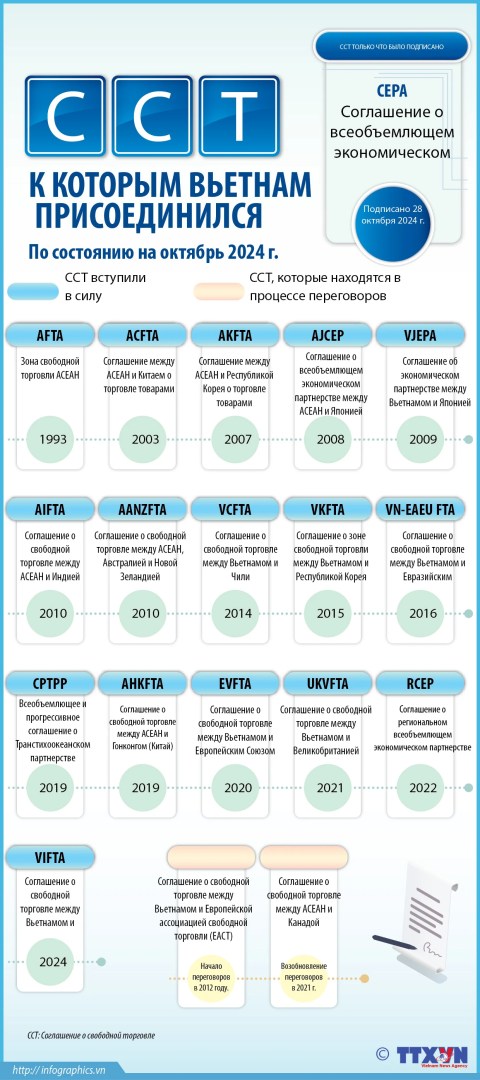
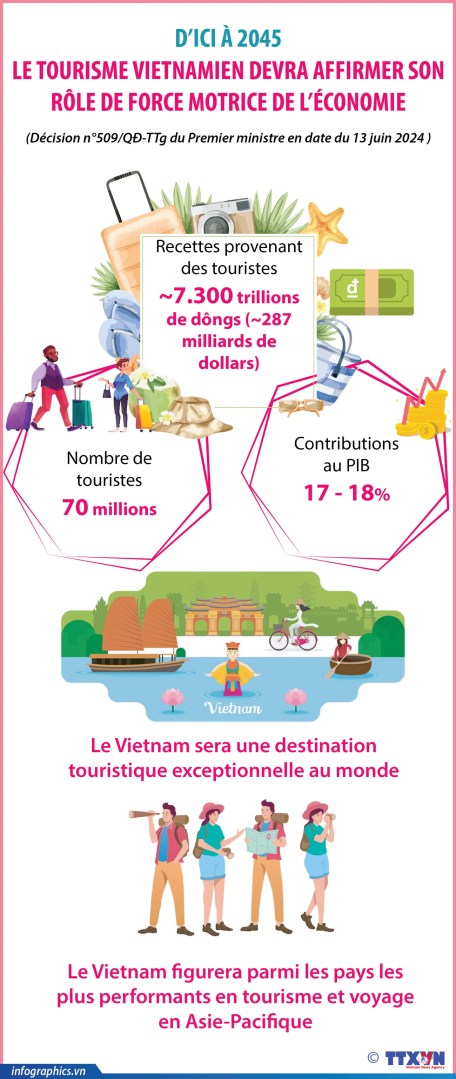
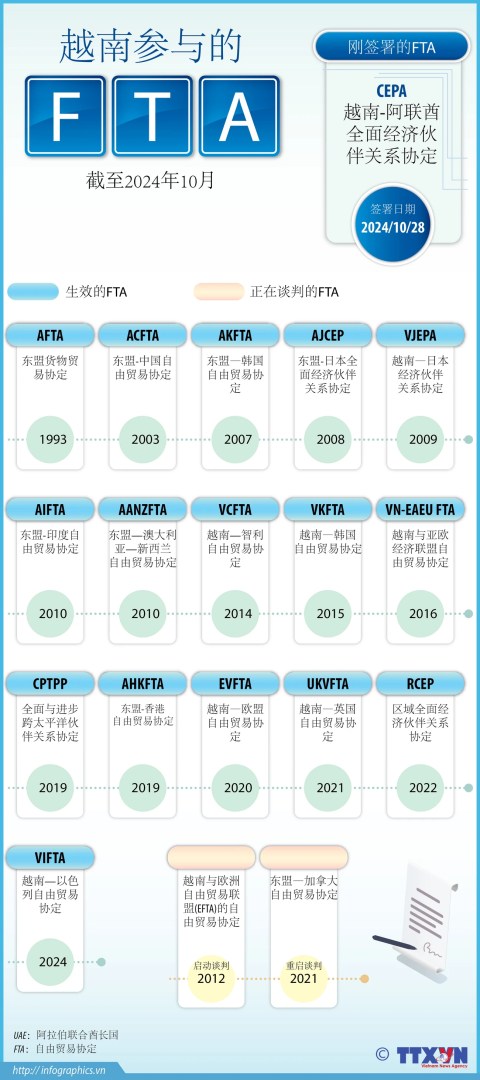
Из безымянной страны на карте мира, опустошенной войной, Вьетнам превратился в символ мира, стабильности, гостеприимства, напрвление международных инвесторов и посетителей. Из отсталой экономики Вьетнам вошел в число 40 крупнейших экономик, по масштабам торговли – в число 20 крупнейших стран мира, а ключевое звено в 16 ССТ связано с 60 ключевыми экономиками региона и всего мира.

Из страны, находившейся в условиях осады и эмбарго, Вьетнам превратился в страну, имеющую отношения со 193 странами – членами ООН, поддерживающую стратегические и всеобъемлющие партнерские отношения с 30 странами, включая все крупные государства, и являющуюся активным членом более чем 70 региональных и международных организаций. Партия неизменно ставит счастье и благополучие народа в центр своих устремлений. Организация Объединенных Наций и международные друзья рассматривают Вьетнам как историю успеха, яркий пример борьбы с бедностью, постоянного улучшения материальной и духовной жизни людей.

Провинция Дьенбьен украшена флагами в честь Национальной независимости (2 сентября). (Фото: ВИA)

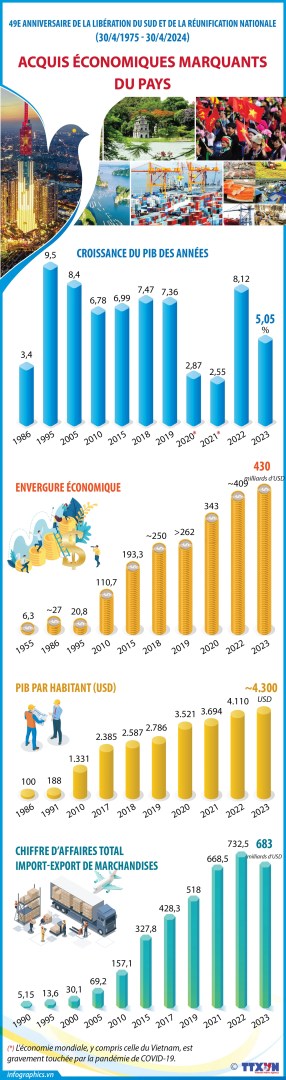
В 21 веке Вьетнам добился больших успехов в социально-экономическом развитии. Оценивается, что средние темпы роста ВВП в период 2021-2025 годов достигают 5,7-5,9% в год, что выводит страну в число лидеров по этому показателю в регионе и мире. Размер экономики увеличился в 1,45 раза и, по прогнозам, достигнет 500 миллиардов долларов США к 2025 году. Доход на душу населения значительно вырос с 3400 до примерно 4650 долларов США, что позволит Вьетнаму к 2025 году войти в группу стран с высоким уровнем дохода.

В частности, с ориентацией, целями и задачами всей партии, армии и народа на 2026-2030 годы Вьетнам наращивает усилия по реализации 10-летней стратегии социально-экономического развития на 2021-2030 годы, работая над столетием партии в 2030 году и прокладывая путь к реализации видения 2045 года, когда страна будет отмечать 100-летие своего основания.

Крупные экономические центры готовы работать в направлении столетия Вьетнама под руководством партии. (Фото: ВИA, электронный портал города Хайфон)

Перед лицом этих знаменательных вех, кадры, члены партии и народ с нетерпением ждут новых, сильных и обоснованных решений партии, которые приведут к прорывам в развитии страны./.
Флаги Вьетнама и партии подняты во время парада по случаю 70-й годовщины победы над Дьенбьенфу в провинции Дьенбьен 7 мая 2024 года. (Фото: ВИA)

Partido Comunista de Vietnam: Misión histórica

Presidente Ho Chi Minh, fundador del Partido Comunista de Vietnam. Foto: VNA

A lo largo de 94 años de liderazgo, el Partido Comunista de Vietnam (PCV) ha perfeccionado continuamente su sistema de dirección y su capacidad de gobernanza. Actualmente, el país se encuentra en un momento histórico, una nueva etapa, y resulta urgente innovar en los métodos de liderazgo para llevar la nación a la “era de ascenso”.

Llevando la nación hacia una nueva era

En la mañana del 18 de septiembre de 2024 se inauguró en Hanoi el décimo pleno del Comité Central del Partido Comunista de Vietnam del XIII mandato. Foto: VNA

La realidad y la historia, tanto a nivel nacional como internacional, han demostrado que cuando la revolución encontró dificultades, crisis e incluso fracasos, la causa no surgió de la política sino más bien de métodos de liderazgo inapropiados, que no mantienen al día la situación y el contexto de ese momento. En la práctica, durante todo el proceso de revolución, nuestro Partido siempre valora la innovación de los métodos de liderazgo para realizar tareas con soluciones adecuadas y efectivas.

La complementación y perfeccionamiento constante de los métodos de liderazgo del Partido es necesario y tiene un significado importante en el contexto actual. La flexibilidad, la creatividad y la perfección son los métodos de dirección del Partido que han guiado al país para superar las dificultades.

El doctor Nguyen Viet Chuc, miembro del Comité Central del Frente de la Patria de Vietnam y vicepresidente del Consejo Asesor Sociocultural

Según Nguyen Viet Chuc, como apuntó el secretario general del PCV, To Lam, la nueva era es una de desarrollo, que plantea una gran aspiración, la de convertirse en un país en desarrollo con altos ingresos para 2030, y un estado desarrollado con altos ingresos para 2045. Por lo tanto, se debe continuar innovando en los métodos de liderazgo. Esta es la experiencia de nuestro Partido durante todo el proceso revolucionario que busca la creatividad e innovación mientras mantiene siempre su naturaleza. El principio planteado consiste en no cambiar el liderazgo del Partido, pero innovar en los métodos, significó. 

Basado en los puntos de vista del marxismo-leninismo y el pensamiento de Ho Chi Minh, el VII Congreso Nacional del PCV mencionó por primera vez “la innovación en el contenido y los métodos de liderazgo del Partido”, enfatizando la necesidad de regular específicamente las relaciones y el estilo de trabajo entre el Partido y el Estado y las organizaciones de masas en todos los niveles, en primer lugar en el nivel central.

Los congresos partidistas de los VIII, IX, X, XI y XII mandatos continuaron complementando y desarrollando puntos de vista sobre los métodos de liderazgo del Partido. La XIII cita magna destacó la necesidad de “seguir innovando fuertemente los métodos de liderazgo del Partido en nuevas condiciones”. Sobre la base del resumen de 15 años de implementación de la Resolución No. 15-NQ/TW del Comité Central del Partido del X mandato, el sexto pleno del Comité Central de la organización del XIII mandato emitió la Resolución No. 28-NQ/TW del 17 de noviembre de 2022 sobre la continuidad de la mejora en la dirección del Partido sobre el sistema político en el nuevo período. El papel de autoridad del Partido sobre el Estado y la sociedad se reafirman en la Constitución de la República Socialista de Vietnam. El mecanismo del “Partido lidera, el Estado gestiona y el pueblo domina” también fue ratificado y aplicado mediante estrictas regulaciones en los Estatutos del Partido, la Constitución y las normas legales, así como regulaciones de otras organizaciones del sistema político y asociaciones de masas.

El sexto pleno del Comité Central del Partido del XIII mandato emitió la Resolución No. 28-NQ/TW del 17 de noviembre de 2022 sobre la continuación de la innovación en los métodos de liderazgo y gobernanza del Partido sobre el sistema político en el nuevo período. Foto: VNA

El profesor asociado, doctor Truong Ngoc Nam, ex director de la Academia de Periodismo y Comunicación, afirmó que el PCV ha cumplido su papel y misión históricos. Aunque ha habido ciertas dificultades en el proceso de desarrollo, el Partido ha superado todos los obstáculos, e incluso rápidamente descubrió y corrigió sus limitaciones y deficiencias para mejorar cada vez más sus capacidades. Estos son los factores decisivos en todas las victorias de la revolución vietnamita en diferentes períodos. Para construir el Partido gobernante en el espíritu del Presidente Ho Chi Minh, la guía suprema consiste en trazar el camino correcto para desarrollar el país y, a través de ese camino, dirigir el Estado y las organizaciones de masas.

Papel de liderazgo del Partido: un factor clave

Al dar la bienvenida a una nueva vida, en el corazón de cada persona de la etnia chut en la aldea de Rao Tre, provincia de Ha Tinh, siempre hay una luz brillante de las directrices y políticas del Partido y el orgullo de llevar el apellido del Presidente Ho Chi Minh. Foto: VNA

Durante el proceso de liderazgo, el Partido innova, desarrolla y perfecciona constantemente sus métodos de gobernanza de acuerdo con las necesidades y tareas establecidas, llevando así al pueblo vietnamita a alcanzar grandes logros de importancia histórica, para que el país pueda tener la fortuna, el potencial, la posición y el prestigio internacional que tienen hoy.

La maestra Nguyen Thi Thuy, jefa del Departamento de Construcción del Partido de la Escuela Provincial de Política de Binh Duong, detalló que el protagonismo partidista en el período actual es un factor clave para garantizar la transparencia y la fuerza, ayudando a la organización política a superar todas las dificultades y desafíos.

Analizando la práctica en Binh Duong, Thuy puntualizó que la provincia ha logrado importantes avances gracias a métodos novedosos de dirección. En la conferencia de medio término en el período 2020-2025 se valoró mucho el papel del Comité Provincial del Partido en la orientación del desarrollo socioeconómico. Con políticas para atraer inversiones y mejorar el entorno empresarial, Binh Duong se ha convertido en la localidad líder en atracción de capital de inversión extranjera directa. Este desarrollo no sólo impulsa la economía sino que también mejora la calidad de vida de los pobladores mediante los programas de bienestar social, educación y salud.

Para mantener este ritmo de desarrollo, Binh Duong continúa promoviendo el trabajo de construcción de un Partido y un sistema político fuertes, así como implementando la Conclusión No. 21-KL/TW, del 25 de octubre de 2021, sobre la construcción y rectificación partidista. En particular, la provincia se centrará en el desarrollo urbano sostenible, acelerará el progreso de proyectos clave y construirá ciudades inteligentes y centros de innovación.

Binh Duong acelera el progreso de proyectos clave y construye ciudades inteligentes y centros de innovación. Foto: VNA

Thuy expresó su convicción de que, con el espíritu de atreverse a pensar, hacer y asumir responsabilidades, el objetivo de convertir a Binh Duong en una ciudad bajo administración central para 2030 se hará realidad; ayudando a que la región del Sudeste se convierta en el principal centro económico, financiero, educativo y de ciencia y tecnología del país.

El Partido Comunista de Vietnam, una organización política que considera el servicio al pueblo como su razón de vida, siendo leal a los intereses de la nación y a la promesa del Presidente Ho Chi Minh de que: “fuera de los intereses de la Patria y del pueblo, el Partido no tiene otros intereses”, dirigió Vietnam a través de complejos momentos y logró importantes resultados.

De un país gravemente devastado por la guerra, Vietnam ha pasado a convertirse en un símbolo de paz, estabilidad, hospitalidad y un destino para inversores y turistas internacionales. De una economía atrasada, la nación indochina ha pasado a estar entre las 40 principales economías, con una escala comercial entre los 20 principales países del mundo, y es miembro de 16 tratados de libre comercio asociados con 60 economías clave a nivel regional y global.

Igualmente, de ser un país aislado y asediado, Vietnam ha establecido relaciones diplomáticas con 193 países miembros de las Naciones Unidas, tiene asociaciones estratégicas y asociaciones integrales con 30 países, incluidos las principales potencias, y es miembro activo de más de 70 organizaciones regionales e internacionales. Teniendo como objetivo la felicidad y el bienestar de su pueblo, la nación del sudeste asiático es considerada por la comunidad internacional como un ejemplo de éxito, un punto brillante en la erradicación del hambre y la reducción de la pobreza, mejorando constantemente la calidad de vida material y espiritual de su pueblo.

Dien Bien se cubre de banderas y flores para celebrar el Día Nacional. Foto: VNA

A lo largo en el siglo XXI, Vietnam ha alcanzado un desarrollo socioeconómico estable. Se estima que la tasa de crecimiento promedio del PIB en el período 2021-2025 alcanzará el 5,7-5,9%/año, entre los principales grupos de la región y el mundo. La escala de la economía aumentará 1,45 veces y se estima que llegará a los 500 mil millones de dólares en 2025. El ingreso promedio per cápita aumentará de tres mil 400 dólares a aproximadamente cuatro mil 650 dólares, lo que colocará a Vietnam en el grupo de países de ingresos medios altos para 2025.

Con la dirección, los objetivos y las tareas de todo el Partido, el pueblo y el ejército en los próximos cinco años (2026-2030), el país continúa implementando la estrategia decenal de desarrollo socioeconómico (2021 – 2030) para conmemorar los 100 años del país bajo el liderazgo del Partido; creando una importante base para hacer realidad la visión hasta 2045, cuando se cumpla el centenario de la fundación de la nación.

Los principales centros económicos están listos para avanzar hacia el centenario de la fundación del país bajo el liderazgo del Partido. Foto: VNA, Portal de la ciudad de Hai Phong

Ante estos hitos históricos, los cuadros y el pueblo tienen grandes expectativas por las nuevas, fuertes y sabias decisiones del Partido para lograr avances en el progreso del país./.

Desfile de banderas del Partido y banderas nacionales en el 70 aniversario de la victoria de Dien Bien Phu. Foto: VNA

Adapter le leadership du Parti à la nouvelle ère de développement

Le Président Ho Chi Minh – fondateur du Parti communiste du Vietnam. Photo : VNA

Au cours de ces 94 années à la tête de la Révolution, notre Parti n’a cessé d’améliorer ses méthodes et ses capacités de direction ainsi que sa gouvernance. Aujourd’hui, il continue de se renouveler pour s’adapter efficacement à cette nouvelle étape historique, exigeant des approches de leadership innovantes pour élever toujours plus haut la nation vietnamienne.

Faire entrer la nation dans une nouvelle ère

Le 10e Plénum du Parti communiste du Vietnam du 13e mandat s’est ouvert le 18 septembre 2024 à Hanoï. Photo : VNA

L’histoire montre clairement que les crises et même les échecs de la révolution ne provenaient pas des options et des lignes directives, mais plutôt des méthodes de leadership qui n’étaient pas appropriées. C’est pour cela que tout au long de l’histoire de la Révolution, le renouvellement des méthodes de direction a toujours été pris en haute considération par notre Parti, mis en œuvre efficacement étape par étape.

Il est nécessaire de perfectionner continuellement les méthodes de direction du Parti et cela revête une signification importante pour le contexte actuel. C’est la flexibilité, la créativité et la perfection des méthodes de direction du Parti qui ont permis au pays de surmonter les difficultés.

Dr. Nguyen Viet Chuc, membre du Comité central du Front de la Patrie du Vietnam et vice-président du Conseil consultatif socio-culturel.

Selon le Dr Nguyen Viet Chuc, comme l’a souligné le secrétaire général du Parti To Lam, l’ère moderne inspire de grandes aspirations au peuple vietnamien, notamment celle de devenir un pays à revenu élevé d’ici 2030 et un pays développé à revenu élevé d’ici 2045. Il est donc essentiel de continuer à renouveler les méthodes de direction du Parti. C’est l’expérience acquise par notre Parti tout au long du processus révolutionnaire : être toujours créatif et innovant, tout en restant fidèle à sa nature. Le principe est de ne pas changer le rôle dirigeant du Parti, mais de renouveler ses méthodes de leadership.

S’appuyant sur les points de vue du marxisme-léninisme et de la pensée Hô Chi Minh, le 12e Congrès national du Parti a évoqué pour la première fois le “renouvellement du contenu et des méthodes de direction du Parti”, soulignant les “réglementations spécifiques sur les relations et le style de travail entre le Parti et l’État et les organisations populaires à tous les niveaux, en premier lieu au niveau central”.

Les 8e, 9e, 10e, 11e et 12e Congrès ont tous complété et développé les points de vue sur les méthodes de direction du Parti. Le 13e Congrès a souligné le besoin de “continuer à innover fortement les méthodes de direction du Parti pour les adapter aux conditions nouvelles”. Sur la base de l’expérience de 15 années de la mise en œuvre de la Résolution n° 15-NQ/TW du Comité central du Parti du 10e mandat, le 6e Plénum du Parti du 13e mandat a promulgué la Résolution n° 28-NQ/TW du 17 novembre 2022 sur la poursuite de l’innovation dans la direction et le leadership du Parti pour adapter le système politique à la nouvelle période. La direction et le rôle dirigeant du Parti pour l’État et la société sont affirmés dans les Constitutions de la République socialiste du Vietnam.

Le 6e Plénum du Parti du 13e mandat a promulgué la Résolution n° 28-NQ/TW du 17 novembre 2022 sur la poursuite de l’innovation dans la direction et le leadership du Parti pour adapter le système politique à la nouvelle période. Photo : VNA

Le professeur agrégé Dr Truong Ngoc Nam, ancien directeur de l’Académie de journalisme et de communication, a affirmé que notre Parti avait rempli son rôle et sa mission historiques. Malgré des difficultés durant son processus de développement, notre Parti avait surmonté les difficultés et les défis et a même rapidement découvert et corrigé ses limites et ses lacunes pour améliorer toujours plus sa capacité de leadership et sa puissance de combat qui sont les facteurs décisifs de toutes les victoires de la révolution vietnamienne à différentes périodes. Le leadership consiste à tracer la bonne voie pour développer le pays et, à travers cette voie, à diriger l’État et à amener les organisations de masse à réaliser cette voie.

Le rôle de leader du Parti – un facteur clé

Ayant une nouvelle vie heureuse d’aujourd’hui, les populations ethniques Chut du village de Rao Tre, province de Ha Tinh (Centre) font confiance dans les lignes directives et les politiques du Parti et sont fiers de porter le nom de famille d’Oncle Ho. Photo : VNA

Durant son processus de direction, le Parti innove, développe et perfectionne régulièrement ses méthodes de leadership et de gouvernance, conformément aux exigences et aux tâches définies, conduisant ainsi le peuple vietnamien à réaliser de nombreuses grandes et importantes réalisations afin que notre pays puisse bénéficier de la réputation internationale qui est la sienne aujourd’hui.

La maître Nguyen Thi Thuy, cheffe du Département d’édification du Parti à l’École provinciale de politique de Binh Duong, estime que le rôle de leader du Parti dans la période actuelle est un facteur clé pour assurer à la fois la pureté et la force du système politique mais aussi à ce que la nation vietnamienne surmonte toutes les difficultés et tous les défis pour développer le pays.

Analysant la situation de Binh Duong, elle a précisé que la province avait réalisé de grands progrès grâce à des méthodes de leadership innovantes. Grâce à des politiques visant à attirer les investissements et à améliorer l’environnement des affaires, Binh Duong est devenue la localité leader dans l’attrait des investissements directs étrangers (IDE). Ce développement stimule non seulement l’économie locale mais améliore également la qualité de vie des locaux à travers des programmes de bien-être social, d’éducation et de santé.

Binh Duong accélère l’achèvement des ouvrages clés et la construction de la ville intelligente et du centre d’innovation. Photo : VNA

Binh Duong continue d’accélérer le travail d’édification d’un Parti et d’un système politique forts, parallèlement au développement urbain durable, à l’avancement des projets clés et à la construction des villes intelligentes et des centres d’innovation.

Sous la direction du Parti communiste, le Vietnam a surmonté toutes les difficultés et réalisé de nombreux miracles. D’un pays sans nom sur la carte du monde, lourdement dévasté par la guerre, le Vietnam est devenu un symbole de paix, de stabilité, d’hospitalité et une destination pour les investisseurs et les touristes internationaux.

Passant d’une économie en retard de développement, le Vietnam s’est hissé parmi les 40 premières économies mondiales, avec une balance commerciale parmi les 20 premières au monde. Le pays est devenu un acteur clé dans 16 accords de libre-échange, intégrant 60 économies majeures aux niveaux régional et mondial.

Le Vietnam a établi des relations diplomatiques avec 193 États membres des Nations Unies, entretient aujourd’hui des partenariats stratégiques et globaux avec 30 pays et participe activement à environ 70 organisations régionales et internationales.

Dien Bien se couvre de drapeaux pour célébrer la Fête nationale. Photo : VNA

ce début de 21e siècle, le Vietnam a réalisé de grands progrès en matière de développement socio-économique. Le taux de croissance moyen du PIB sur la période 2021-2025 est estimé à 5,7-5,9 %/an. La taille de l’économie va augmenter de 1,45 fois pour atteindre 500 milliards de dollars en 2025. Le revenu moyen par habitant augmentera fortement, passant de 3 400 dollars à environ 4 650 dollars, plaçant le Vietnam dans le groupe des pays à revenu intermédiaire supérieur en 2025.

Au cours des cinq prochaines années (2026-2030), notre pays poursuivra la mise en œuvre de la Stratégie décennale de développement socio-économique (2021-2030), en vue d’atteindre le jalon important des 100 ans de leadership du Parti et du centenaire de la fondation du pays.

Les principaux centres économiques sont prêts à faire écho au 100e anniversaire de la fondation du pays sous la direction du Parti. Photo : portail d’information électronique de la ville de Hai Phong

Devant ces étapes marquantes, les cadres, les membres du Parti et le peuple attendent avec impatience les nouvelles décisions fortes et sages du Parti pour continuer d’avancer en matière de développement au pays./.

Défilé du drapeau du Parti et du drapeau national lors du 70e anniversaire de la Victoire de Dien Bien Phu. Photo : VNA

历史的使命

越南共产党创始人——胡志明主席。图自越通社

我们党在领导革命94年来已不断完善领导方式,提高领导能力和执政能力。目前,国家正站在新的历史起点上、迈入新纪元时,大力改进领导方式,以引领民族迈进“奋勇前进的纪元”的要求较为紧迫。

引领民族迈入新纪元

2024年9月18日,越南共产党第十三届中央委员会第十次全体会议在河内开幕。图自越通社

国内外实践和历史已证明,在革命面临困难、危机或甚至失败时,原因不在于路线和主张,而在于领导方式不适合,不切合当时的实际和背景。领导革命过程的实践中,我们党始终重视改革领导方式并以各适合、有效的任务和方式来逐步实施。

继续补充和完善党的领导方式是必要的并具有重要意义,符合当前新的背景。这是客观的要求。正是党的灵活性、创造性和领导方式的完善已引领了国家大船渡过各困难。

越南祖国阵线中央委员会委员、文化社会咨询委员会副主任阮曰职

阮曰职表示,苏林总书记所说的“新纪元”就是发展的新纪元,越南发展的新阶段,提出一个巨大的渴望。到2030年成为高收入发展中国家,特别是到2045年成为高收入发达国家的渴望。因此,需继续改进党的领导方式。这正是我们党在革命过程中的经验:一直发挥创造力,一直改革但本质不改变。原则是不改变党的领导地位,但方式的改进是必要的。

在马克思列宁主义观点、胡志明思想的基础上,党的第七次全国代表大会首次提及了“改进党的领导内容和方式”,强调需具体规定党与国家和各级人民团体,首先为中央级的关系和工作作风。

自越共八大至十二大,都继续补充、发展党的领导观点和方式。越共十三大强调,“在新条件下继续大力改进党的领导方式”。在对越共第十届委员会的15-NQ/TW号决议实施15年进行总结的基础上,越共十三届六中全会于2022年11月17日签发关于在新阶段继续改进党对政治体系的领导和执政方式的第28-NQ/TW号决议。党对国家和社会的领导和执政作用在越南社会主席共和国各宪法中得到肯定;“党领导、国家管理、人民当家做主”机制早被列入党章、宪法、各项法律规定,政治体系内其他组织以及群众协会的工作制度和规定并推进实施。

越共十三大六中全会于2022年11月17日签发关于在新阶段继续改进党对政治体系的领导和执政方式的第28-NQ/TW号决议。图自越通社

新闻与传播学院原院长张玉南副教授、博士强调,党已履行好自己的作用和历史使命。尽管在发展过程中有一定的困难,但我们党已度过各种困难和挑战,甚至快速发现和整改自己各缺陷和不足,日益提高领导能力和战斗力,是各时期越南革命取得胜利的决定性因素。按照胡志明主席的精神建设执政党,领导是提出推动国家发展的正确路线和通过该路线已领导国家,领导团体组织实现该路线。

党的领导作用——关键的因素

能过上今日的新生活,河静省竹篱(Rào Tre)村每个哲族人的心中都拥有党的路线和主张灿烂的光芒并带有爱戴胡伯伯之姓的自豪感。图自越通社

在领导过程中,党不断改进、发展和完善领导和执政方式,使其符合提出的要求和任务,从而领导越南民族争取更多巨大、具有历史意义的成就, 让国家拥有当今的基业、潜力、地位和国际声誉。

平阳省政治学校党建系主任阮氏水表示,当前阶段党的领导作用是确保廉洁、强大,帮助党战胜一切困难、挑战,推动国家发展的关键因素。

2025年任期中期总结会议上,该省党委在经济社会发展指明方向中的作用获高度评价。平阳省基于吸引投资和改善营商投资环境的政策成为吸引外资最多的省份。该发展不仅推动经济发展,而且还通过各项社会保障、教育和卫生等计划改善居民生活质量。

为了保持该发展势头,平阳省继续推进党建和强大的政治体系建设工作,实施2021年10月25日关于整党建党工作的第21-KL/TW号结论。特别,该省将集中朝着可持续发展方向发展城市,加快重点工程、智能城市、创新中心等进度。

平阳省加快重点工程、智慧城市和创新中心建设进度。图自越通社

阮氏水表示相信,基于敢想、敢做、敢负责精神,平阳省到2030年成为中央直辖市的目标将成为现实,把该省建设成为文明、现代的地方;助力东南部地区成为全国经济、金融、教育和科技等领域领先中心。

越南共产党——一直将服务人民为奋斗目标、始终绝对和无限忠诚于民族、人民的利益,犹如胡志明主席所说的“除了祖国、人民的利益外,我们党没有任何利益”,已引领革命的航船,劈波斩浪,使越南国家战胜一切困难,创造出许多奇迹。

越南从一个地图上没有名字,遭战争严重破坏的国家,发展成为和平、稳定、好客的象征,外国投资者和游客的目的地。越南从落后的经济体,现已跻身世界40大经济体行列,经济规模跻身全球经济总量前20强经济体,是16项自贸协定的重要一环,将地区和全球60个经济体连接起来。

越南从一个被包围封锁的国家,现已同联合国193个国家建立外交关系,与包括各大国在内的30个国家建立全面战略伙伴关系,是70个地区和国际组织的积极成员。以人民的幸福、温饱为奋斗目标,越南获联合国和国际友人视为成功的故事,消除贫困,不断提升人民物质和精神生活的一大亮点。

奠边省处处都挂满旗帜,庆祝国庆节。图自越通社

迈入21世纪,越南在经济社会发展中取得更大成就,2021-2025年阶段GDP增长年均可达5.7至5.9%,跻身地区和世界领先国家行列;到2025年经济规模增长1.45倍,约达5000亿越盾。2025年,人均收入从3400美元至4650美元,将越南跻身中等偏高收入国家行列。

特别,以全党、全民和全军在2026-2030年5年内的方向、目标和任务,我国继续实现2021-2030年10年经济发展战略;走向国家在党领导下100年的里程碑,为实现2045年建国百年的愿景打下基础。

各大经济中心为迎来在党领导下建国百年这一重要里程碑做好准备。图自越通社  海防市电子信息门户

在该转折性的里程碑下,干部、党员和人民正对党新的、强有力和英明的决策将为国家发展创造各大突破给予巨大期望。(完)

奠边府大捷70周年庆典上党旗、国旗方阵列队。图自越通社

PARTY REFORMS LEADERSHIP METHODOLOGY TO FULFIL HISTORIC MISSION

President Ho Chi Minh – the founder of the Communist Party of Vietnam (Photo: VNA)

Hanoi (VNA) – For more than 94 years of leading the revolution, the Communist Party of Vietnam (CPV) has been unceasingly perfecting the leadership methodology and improving the leadership and ruling capabilities. Now that the country is on the threshold of a new historical point in time – a new era, there is an urgent need for reformation of the leadership methodology to guide Vietnam to “the era of the nation’s rise”.

Guiding nation to new era

The 10th session of the 13th-tenure Party Central Committee opens in Hanoi on September 18, 2024. (Photo: VNA)

Facts in both Vietnam and the world provide concrete examples. When a revolution encounters difficulties, crisis or even failure, the cause of those problems does not come from its guidelines or policies but the leadership methodology that is inappropriate to the context of the revolution.

Throughout its leadership of the revolution, the Party has consistently attached importance to the reform of leadership methodology, which has been carried out gradually by performing appropriate and effective tasks and measures.

The continued supplementation and perfection of the Party’s leadership methodology are necessary and important in the current context as they are objective requirements. It is the Party’s flexibility, creativity, and perfection of leadership capacity that have navigated the country through countless difficulties.

Dr Nguyen Viet Chuc, member of the Vietnam Fatherland Front Central Committee and vice chairman of this committee’s advisory council for cultural and social affairs

He noted that the “new era”, as Party General Secretary To Lam said, is a new period of development in Vietnam with a big aspiration – the aspiration to become a developing country with upper-middle income by 2030 and, particularly, a developed nation with high income by 2045. Therefore, it is necessary to continue reforming the Party’s leadership methodology.

This is the Party’s experience throughout its leadership of the revolution – staying creative and making constant reform but keeping the nature unchanged. The principle is not to change the leadership position of the Party but to reform methodology, Chuc said.

On the basis of Marxism – Leninism and President Ho Chi Minh’s thought, the 7th National Party Congress mentioned “the reform of the Party’s leadership content and methodology” for the first time. It emphasised the importance of “detailing regulations on the relationship and working style between the Party and the State as well as mass organisations at different levels, firstly the central level”.

The 8th, 9th, 10th, 11th, and 12th National Party Congresses continued to supplement and develop the viewpoint on the Party’s leadership methodology. The 13th congresses emphasised the need to “continue strongly reforming the Party’s leadership methodology amidst new conditions”.

On the basis of the review of the 15-year implementation of the 10th-tenure Party Central Committee’s Resolution No. 15-NQ/TW, the 6th session of the 13th-tenure Party Central Committee issued Resolution No. 28-NQ/TW, dated November 17, 2022, on the continued reform of the methodology of the Party’s leadership and rule over the political system in the new period.

The Party’s leadership and rule over the State and society are affirmed in different versions of the Constitution of the Socialist Republic of Vietnam. The mechanism that “the Party holds the leadership, the State exercises management, and the people act as the master” has also long been affirmed and practiced as seen in the provisions of the Party’s Statutes, the Constitution, legal regulations, as well as the rules of other organisations in the political system.

The 6th session of the 13th-tenure Party Central Committee issued Resolution No. 28-NQ/TW, dated November 17, 2022, on the continued reform of the methodology of the Party’s leadership and rule over the political system in the new period. (Photo: VNA)

Assoc. Prof. Dr. Truong Ngoc Nam, former Director of the Academy of Journalism and Communications, stated that the Party has fulfilled its historic role and mission. Despite certain difficulties and challenges during the development process, the Party has managed to surmount them all, and even quickly detected and addressed its shortcomings to increasingly improve the leadership capacity and combat strength, forming the decisive factor of every victory of the Vietnamese revolution in different periods.

According to President Ho Chi Minh’s thought on the building of a ruling Party, he noted, the leadership means sketching a right policy for national development and leading the State and organisations to implement that policy.

Party’s leadership role – key factor

Enjoying a better life quality, people of the Chut ethnic group in Rao Tre village of Ha Tinh province always maintain their trust in the Party and the pride in their family name of “Ho”, which is taken from the beloved President Ho Chi Minh. (Photo: VNA)

During its leadership process, the Party has continually reformed, developed, and perfected its leadership and ruling methodology in accordance with requirements and tasks, guiding the Vietnamese people to obtain significant and historic achievements so that the country can secure the fortune, strength, stature, and reputation in the world as it has today.

MA Nguyen Thi Thuy, Dean of the Party building faculty at the School of Politics of southern Binh Duong province, perceived that the Party’s leadership in the current context is the key factor ensuring its purity and strength and helping it overcome every difficulty and challenge to develop the country.

In Binh Duong, Thuy said this province has made great strides thanks to reforming the leadership methodology. At the mid-term review conference for the 2020 – 2025 tenure, the provincial Party Organisation was highly valued for its role in guiding socio-economic development. With various investment attraction and business environment improvement policies, Binh Duong has taken the lead in attracting foreign direct investment (FDI). Such development has not only promoted its economy but also improve the quality of people’s life through social security, education, and health programmes.

To sustain this trend, the province is pressing on with the building of the Party and politicial system, along with the implementation of the Party Central Committee’s Conclusion No. 21-KL/TW, dated October 25, 2021, on the Party building and rectification. In particular, it is working to sustainably develop urban areas, speed up key construction projects, and boost smart city building.

Binh Duong is speeding up key construction projects and boosting smart city building. (Photo: VNA)

Thuy expressed her belief that with the spirit of thinking big, acting bold, and daring to bear responsibility, Binh Duong will be able to become a centrally-run city by 2030, establishing itself as a civilised and modern locality and helping the southeastern region become the leading economic, financial, educational, and scientific – technological centre in Vietnam.

The CPV, a party which always views serving the people as its goal and stays absolutely loyal to the nation and the people’s interests as President Ho Chi Minh said: “Our Party has no other interests than the interests of the Fatherland and the people”, has steered the revolution to navigate the country through every challenge to make numerous miracles.

From a country unkown in the world and severely torn by war, Vietnam has emerged as a symbol of peace, stability, hospitability, and a destination of international investors and tourists. From an undeveloped economy, it has turned into one of the top 40 economies, one of the top 20 countries in terms of trade, and a crucial link in 16 free trade agreements that connect 60 key economies in the region and the world.

In addition, Vietnam, which used to be subject to blockage and embargo, has set up diplomatic relations with 193 United Nations member states, as well as strategic partnerships and comprehensive partnerships with 30 countries, including all major countries in the world. It is also an active member of more than 70 regional and international organisations.

Setting people’s happiness and prosperity as its ultimate goal, Vietnam was viewed by the UN and international friends as a success story and a bright spot in the alleviation of poverty and the improvement of people’s material and spiritual lives.

Dien Bien province is adorned with flags to celebrate the National Day (September 2). (Photo: VNA)

In the 21st century, the country has gained significant achievements in socio-economic development. Its annual GDP growth during 2021 – 2025 averages 5.7 – 5.9%, among the highest in the region and the world, while the size of the economy is expected to expand 1.45-fold to an estimated 500 billion USD in 2025. Besides, per capita income has surged from 3,400 USD to about 4,650 USD, hoped to lift Vietnam to the group of upper-middle-income nations in 2025.

Particularly, with the orientations, targets, and tasks of the entire Party, army, and people for 2026 – 2030, Vietnam is augmenting efforts to carry out the 10-year socio-economic development strategy for 2021 – 2030, working towards the centenary of the Party in 2030 and paving the way for realising the vision for 2045, when the country celebrates its 100th founding anniversary.

Large economic hubs are ready to work towards the centenary of Vietnam under the Party’s leadership. (Photo: VNA, e-Portal of Hai Phong city)

On the threshold of these milestones, cadres, Party members, and people now have big expectations for new, strong, and clear-sighted decisions and policies of the Party so as to secure breakthroughs for national development./.

The flags of Vietnam and the Party are held aloft during a parade marking the 70th anniversary of the Dien Bien Phu Victory in Dien Bien province on May 7, 2024. (Photo: VNA)

HANOI CAPITAL WHERE VIETNAM’S CULTURAL AND SPIRITUAL STRENGTHS CONVERGE

Professor, Doctor, and People’s Teacher Nguyen Quang Ngoc, Vice President of the Vietnam Association of Historical Sciences and former Director of the Centre for Hanoi Studies and Capital Development, has conducted extensive research on Hanoi. He has served as the chief author or co-author for numerous books and dozens of scientific articles on the city, and successfully established the field of Hanoi Studies to support the capital’s development strategies. He also played a key role in developing the dossier for the Thang Long Imperial Citadel to be recognised as a UNESCO World Cultural Heritage Site. In 2020, Professor Ngoc was honoured with the title, “Outstanding Citizen of the Capital”.

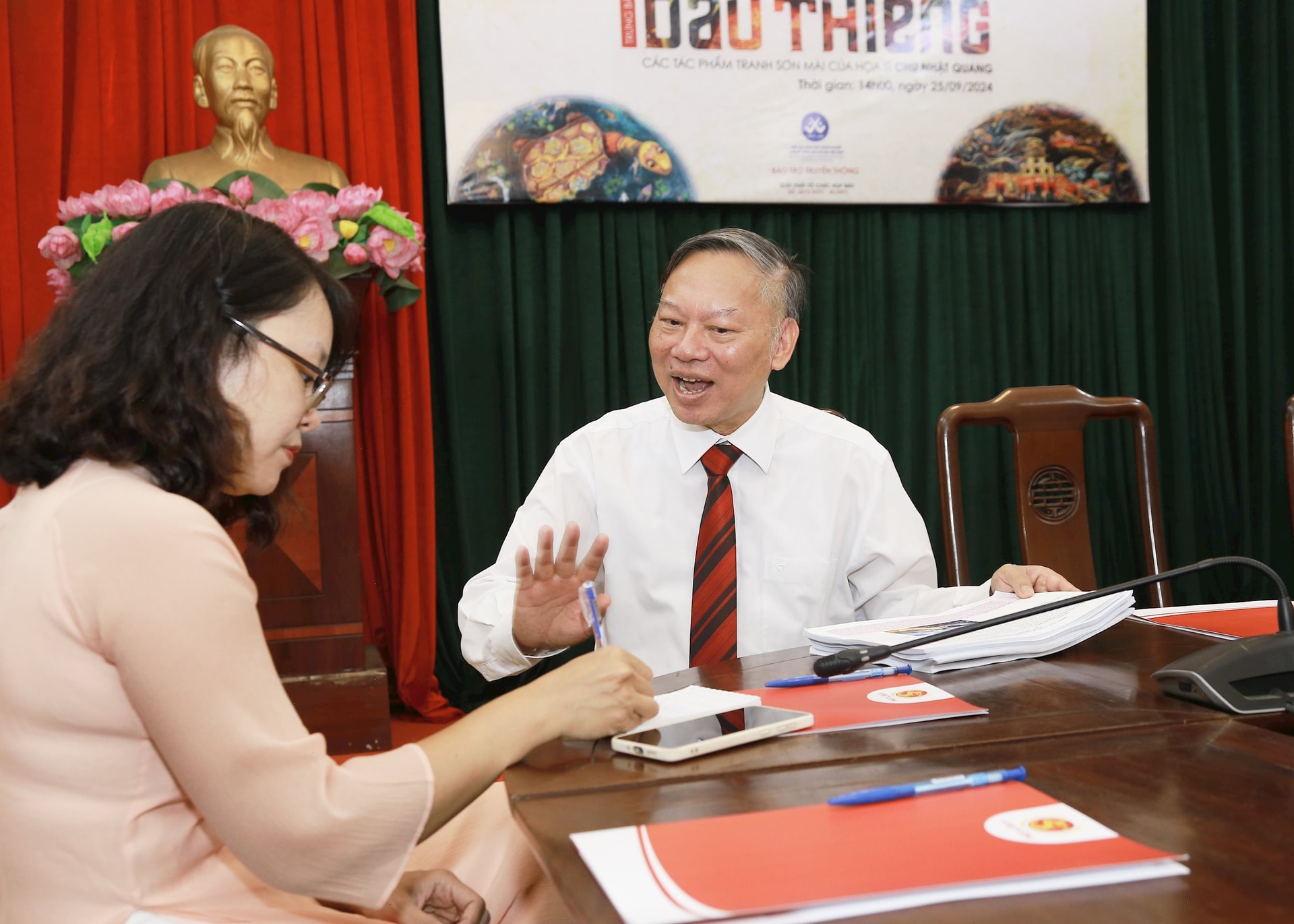
Professor, Doctor, and People’s Teacher Nguyen Quang Ngoc (Photo: VietnamPlus)

On the occasion of the 70th anniversary of the Liberation of Hanoi (October 10, 1954 – 2024), Professor Ngoc had a talk with a reporter from the Vietnam News Agency’s VietnamPlus e-newspaper about the heroic history of the capital and the core values necessary to preserve and develop it as the City for Peace.

In the memories of many Vietnamese people, the event of the Liberation of the Capital on October 10, 1954 was a milestone in the heroic history of our nation, as the revolutionary army entered to liberate the capital, opening a new chapter in the struggle for national liberation. Could you please share the historical context of this significant milestone?

Professor Nguyen Quang Ngoc: On May 7, 1954, the historic Dien Bien Phu Victory put an end to our nation’s resistance war against French colonialism. We returned to the Geneva negotiating table in a position as a winner and signed the Accords on July 21, 1954. Under the Geneva Accords, France and the concerned parties, by signing, committed to respecting the independence, sovereignty, and territorial integrity of Vietnam, Laos, and Cambodia. Due to the balance of power, the parties designated the 17th Parallel as a provisional military demarcation line. France and pro-French forces had to move southward. The region from the 17th Parallel northward, including Hanoi, was completely liberated.

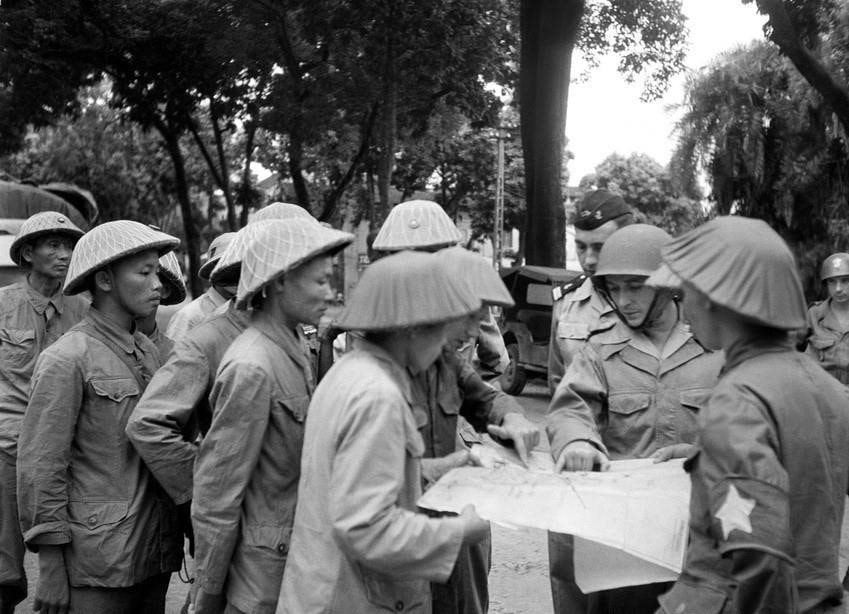
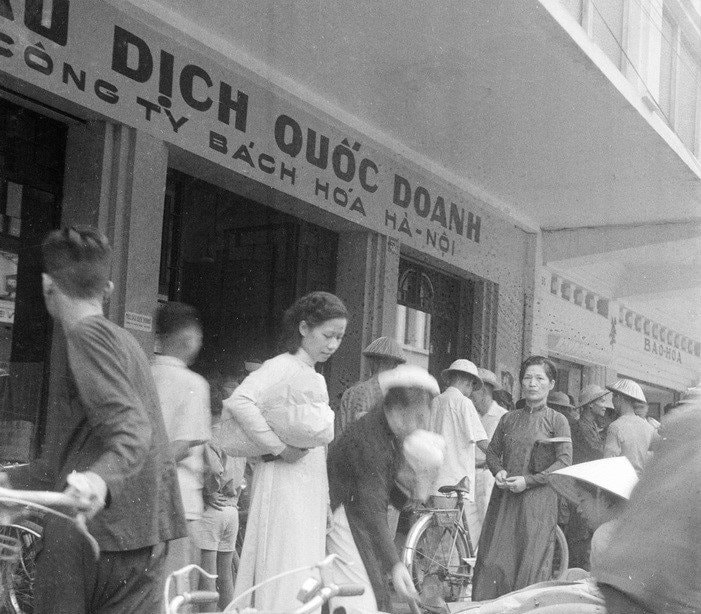
On the Vietnamese side, the Party and Government aimed to take control of the entire northern region, with a focus on the city of Hanoi. Meanwhile, French troops gradually withdrew from the city. From September 1954 to October 9, 1954, the last French soldiers exited Hanoi via Long Bien Bridge, signifying that the capital was liberated.

On September 19, 1954, Uncle Ho (President Ho Chi Minh) and the Vanguard Brigade (now Division 308) arrived in Phu Tho and stopped at the Gieng Temple in the Hung Kings Temple historical site. Talking to the Vanguard Brigade, Uncle Ho said, “The Hung Kings founded the nation; we must together protect it.”

President Ho Chi Minh talking to officers and soldiers of the Tien Phong Division at the Gieng Temple on September 19, 1954, where he said:
“The Hung Kings had the merit of founding the country, we must work together to protect it.” (File Photo: VNA)

He instructed the officers and soldiers preparing to take over the capital to maintain discipline, ensure security and order, protect the lives and property of the people, and counter any sabotage from the enemy. Safeguard commerce, including that of foreign nationals. The troops were to assist the people, explain and educate them, and avoid any activities annoying them to ensure that everyone, from the elderly to children, were both fond of them, and trusted them. This was a sacred order and a strategy for taking over the capital, relying not only on military forces but also on the combined strength of the entire population – material strength, spiritual strength, and the strength of the depth rooted in the history and culture of the nation. Thus, on October 10, 1954, we witnessed the Vanguard Brigade taking over the capital in an atmosphere of peace and joy, without gunfire or bloodshed.

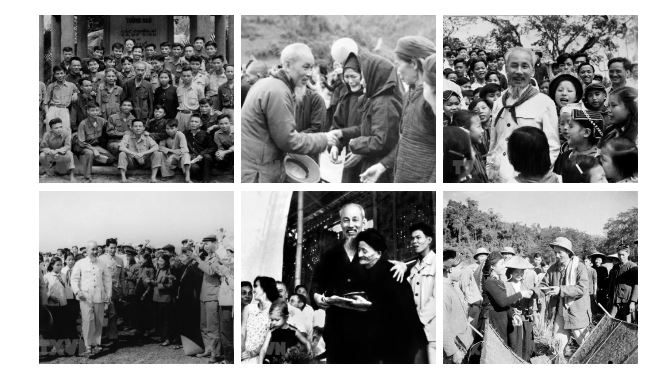
President Ho Chi Minh with people from all walks of life (File Photos: VNA)

– What was the significance of President Ho Chi Minh and the Party’s decision to send educated youth from the military bases to the capital city in early October to prepare for the takeover in the initial days of building and developing the capital later on?

img_9029.jpg
Professor Ngoc has a talk with a reporter from the Vietnam News Agency’s VietnamPlus e-newspaper (Photo: VietnamPlus)

Professor Nguyen Quang Ngoc: When we had just seized power in Hanoi capital in the great August Revolution, we had to immediately enter the resistance war against the French troops. Most of the intellectuals in the capital had moved to the Viet Bac base to support the resistance war. Those remaining worked at Indochina University. By 1951, Indochina University had relocated to Sai Gon, and Hanoi had almost no intellectuals working directly. It was around this time that the Party and Government, in line with the policy of resistance and nation-building, focused on developing a new intellectual contingent for Hanoi. This was a crucial force in the takeover of the capital, following Uncle Ho’s teachings of, “making Hanoi a stable, joyful, and prosperous capital.”

The fact that we took over and preserved the capital relatively intact was a remarkable achievement. While the infrastructure was severely outdated and there were still plots of sabotage from the enemy, we ultimately overcame all obstacles, taking over the capital quickly and safely, maintaining peace, and promptly reconstructing the millennia-old cultural capital in accordance with the socialist orientation, making it a strong rear for the southern front. The new intellectuals of Hanoi always played a particularly important role in this monumental undertaking.

– As the one who has conducted extensive research on Hanoi, how do you evaluate the 70-year renewal and development process of Hanoi?

Professor Nguyen Quang Ngoc: First of all, I believe that Hanoi fulfilled its mission as a strong rear for the major front during the resistance war against the US imperialism. This mission was particularly epitomised by the historic “Dien Bien Phu in the Air” victory in late 1972. This event encapsulated all historical and cultural values, creating a miracle that contributed to the liberation of the South and the reunification of the country.

As the capital of the Socialist Republic of Vietnam, Hanoi has taken the lead in the nation building and renewal cause.

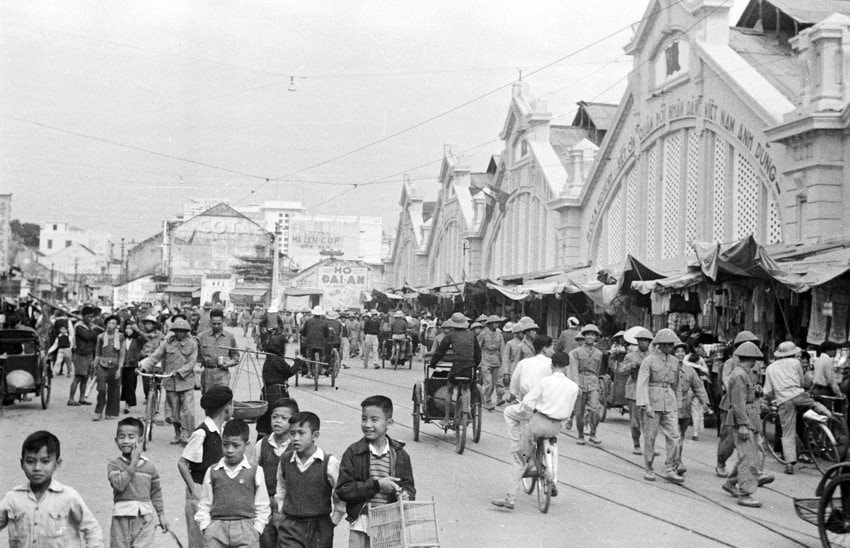
On the first day of the takeover, Hanoi had only 36 inner-city streets and four suburb districts (46 communes), with a population of around 400,000, the vast majority of whom being small traders and impoverished farmers. Today’s Hanoi has completely transformed compared to it 70 years ago. This is truly a miraculous advancement.

Vietnamese soldiers took over offices from the French on October 9, 1954. (File photo: VNA)
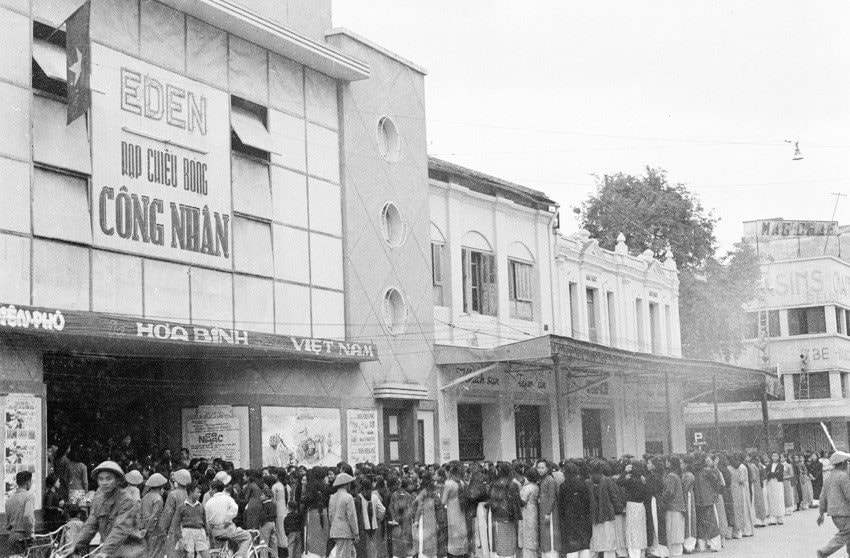
Workers’ Theater (Eden Theater), located at 42 Trang Tien, Hoan Kiem district, Hanoi, used to be a cinema and is now the headquarters of the Hanoi Drama Theatre. (File Photo: VNA)

– As a capital with a thousand-year history, what should Hanoi do to preserve the cultural values that form its essence?

Professor Nguyen Quang Ngoc: One principle in building our capital is to develop on the foundation of heritage. It can be said that Hanoi possesses a vast wealth of historical, cultural, and natural heritage that is incredibly rich and diverse. If only tangible cultural heritage is taken into account, statistics show that Hanoi has nearly 6,000 relic sites, accounting for almost one-third of the total number in the country, while Hanoi’s area represents only 1% of the nation’s total area. This is a significant resource for the capital’s comprehensive and sustainable development, but it also poses a great challenge for its leaders and managers, as utilising this resource requires both dedication and vision.

The city has shown its determination to build a cultural, civilised, and modern capital based on its heritage, with policies and decisions grounded in upholding historical and cultural values, and preserving and promoting heritage values. It aims to lead in the development of the cultural industry, boost cultural tourism, and elevate the heritage economy into a strong sector of the capital. I think this represents a sustainable direction for development with a high degree of successes for Hanoi today.

Culture has become a torch guiding our people through two resistance wars, creating miracles in the building and safeguarding of the Fatherland (Photo: VNA)

– Hanoi has been recognised by the world as a “Creative City,” a “City for Peace,” and “the Capital of Conscience and Human Dignity.” What should we do to promote these titles without straying from the flow of urban civilisation?

Professor Nguyen Quang Ngoc: On July 16, 1999, Hanoi was honoured by UNESCO as the “City for Peace.” However, we need to understand that it reflects the world’s recognition of the entire historical and cultural process of the city, not just the last year of the 20th century.

Our ancestors emphasised the importance of peace and stability. A deep love for independence and freedom, along with a burning desire for true peace, has always been a source of strength to overcome all challenges.

Today, we need to continue this tradition and elevate its values. This is truly a significant cultural revival, a period of “great renaissance” for our national culture, aimed at enhancing the comprehensive and sustainable development of the capital city.

Culture has become a torch guiding our people through two resistance wars, creating miracles in the building and safeguarding of the Fatherland. From the first National Culture Conference in 1946, Uncle Ho emphasised, “Culture must light the way for the nation,” and indeed, culture has served as a guiding torch for our people, helping us overcome two resistance wars and achieve remarkable feats in building and defending the Fatherland. Despite this proven role of culture, there are still opinions that view it merely as an adornment to life, a sector that “follows along” and only consumes resources without generating wealth for society. This perspective is unrealistic and naive. We live in an era where the economy and culture are intertwined as a unified whole, and culture is becoming the greatest and most important resource for development in any nation.

I am very pleased to know that Hanoi is the first locality in the country to have a specialized resolution on developing the cultural industry (Resolution No. 09-NQ/TU). Hanoi has also recently completed the revised Capital Law and the Capital Planning for the 2021-2030 period, with a vision toward 2050. All particularly emphasise the role of culture. This demonstrates the great determination of the entire political system of the city to realise the goal of building a cultural, civilised, and modern capital city.

– Thank you very much!

GRAND PRIZE OF BUI XUAN PHAI AWARDS HONOURS HANOIAN ARCHITECT HOANG DAO KINH

VNA General Director Vu Viet Trang (left) and Vice Chairman of the Hanoi People’s Committee Ha Minh Hai present the Grand Prize of the “Bui Xuan Phai: For the Love of Hanoi” Awards to architect Hoang Dao Kinh at the ceremony on October 8. (Photo: VNA)

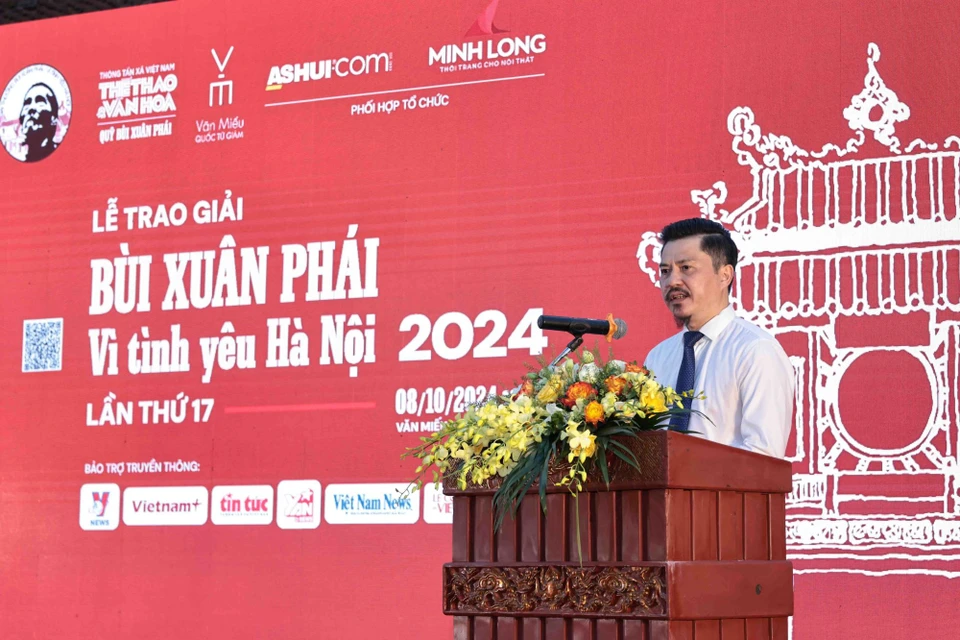
The 17th “Bui Xuan Phai: For the Love of Hanoi” Awards were presented at a ceremony held at the Temple of Literature in the capital city on October 8, with the Grand Prize honouring architect Hoang Dao Kinh.

Leaving a mark of intellect on a series of architectural works

The architect has left his mark across Vietnam, with heritage projects in Hue, Hoi An, My Son, and especially in Hanoi, his birthplace.

For the last nearly 50 years, Kinh has substantially contributed to the restoration of many cultural and architectural structures nationwide. In particular, he is deeply attached to his hometown, Hanoi, through the rehabilitation of various historical relics and cultural heritage sites symbolising the millennium-old city.

With his dedication to preserving cultural heritage and monuments across the country, especially in Hanoi, over the last 50 decades, Kinh was honoured with the Grand Prize “For the Love of Hanoi”.

Architect Hoang Dao Kinh’s career spans from the north to the south, with heritage projects in Hanoi, Hue, Hoi An, My Son, among others. However, he holds a profound connection to his birthplace, Hanoi, with a deep love for the capital city’s historical sites and cultural heritage, which are symbols of the thousand-year city.

For this reason, his friends and colleagues call him the “knight of architectural monuments.”

z5909681683800_c8255f04f1f1801e4156d11cafd71f7e.jpg
Architect Hoang Dao Kinh speaks at the ceremony (Photo: VietnamPlus)

 “I am most deeply connected with Hanoi, both in my professional work and my thinking. But seriously, what I have accomplished for Hanoi in tangible terms may not be much, because there are not always opportunities. However, I have spent a lot of time and effort on taking care of Hanoi’s relics, and I am satisfied with the things I’ve been able to do.”

Humble as he may be, a brief listing of his works reveals impressive accomplishments. Notable contributions include his lead role in the restoration of Tay Dang Communal House, Kim Lien Pagoda, Tay Phuong Pagoda, Thay Pagoda, the Temple of Literature, and the Hanoi Opera House. These are iconic monuments that embody the enduring historical and cultural values of Hanoi over time.

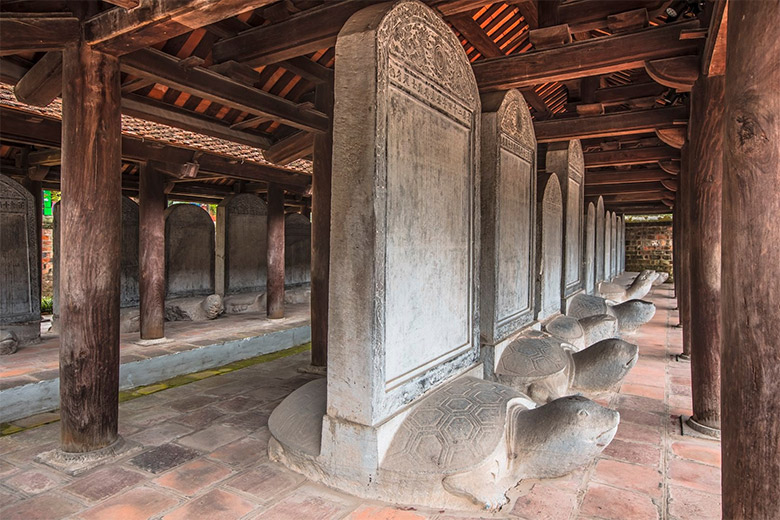
Regarding the Temple of Literature, Kinh’s major contribution to the conservation and restoration of the relic site is the design of the roofs for the 82 stone steles, which were inscribed on the UNESCO Memory of the World List in 1992.

Stone steles in the Temple of Literature (Photo: VNA)

In the 1990s, several options were proposed to protect the valuable steles at the Temple of Literature from environmental impacts. These included plans to create a modern roof using alloy components and glass panels, as well as using chemicals to preserve the surface of the steles. However, these proposals were critiqued as unsuitable and had not been tested in practice.

“Then we came up with the solution of creating roofs with traditional architecture that would not contrast with the relics and would be easy to build. To avoid creating large stele houses that would challenge the nearby Khue Van Cac and the courtyard space, we divided them into two rows, eight stele houses, in proportion to the Temple of Literature complex,” recalled Kinh.

Apart from the Grand Prize, three others were also presented at the ceremony.

HHKD2317.JPG
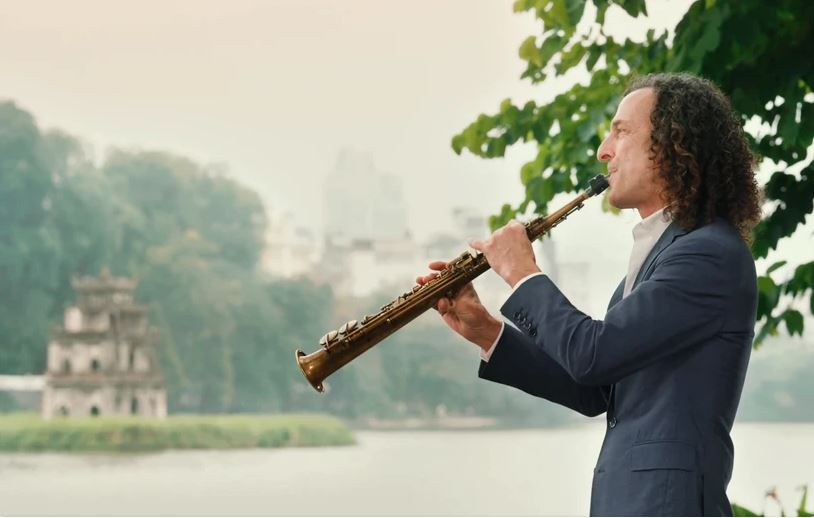
The Job Prize was presented to US saxophonist Kenny G’s music video “Going Home”, produced by the Nhan Dan (People) newspaper and IB Group Vietnam. (Photo: VietnamPlus)

The Work Prize went to a book entitled “Ha Noi thoi can dai – Tu nhuong dia den thanh pho (1873 – 1945)” (Hanoi in Modern Times – from Conceded Territory to City) by Dao Thi Dien. This is a meticulous and comprehensive study of the transformation of Hanoi into a western-style modern city in the late 19th and early 20th centuries. The materials used in this book, published by the Hanoi Publishing House and the Nha Nam Publishing and Communications JSC, could help authorities institutionalise State regulations to create a legal corridor for proper urban development management, and also assist with the research and popularisation of the city’s culture.

The Job Prize was presented to US saxophonist Kenny G’s music video “Going Home”, produced by the Nhan Dan (People) newspaper and IB Group Vietnam. In this MV, the artist performed “Going Home” at famous places of Hanoi, including Hoan Kiem Lake, the Thang Long Imperial Citadel, the Temple of Literature, and Long Bien Bridge.

Meanwhile, the Idea Prize was won by an idea to renovate the landscape around Thien Quang Lake and its vicinity which was studied and developed by the People’s Committee of Hai Ba Trung District in 2023.

World-renowned saxophonist Kenny G visited several famous landmarks in Hanoi to shoot a music video. (Photo: VNA)

Honouring big loves for Hanoi

Addressing the event, General Director of the Vietnam News Agency (VNA) Vu Viet Trang hailed the efforts and creativity by the VNA’s The Thao Va Van Hoa (Sports and Culture) Newspaper along with partners in popularising the awards to honour the capital.

She stressed that the 17th edition of the awards, coinciding with the 70th anniversary of the Hanoi Liberation Day (October 10, 1954 – 2024), continues to praise the works, authors, ideas, and efforts in building and preserving the values of the capital city of time-tested culture.

The awards now have gone beyond all boundaries of time, space, and nations to bring the image of Hanoi closer to friends across the five continents, she said.

General Director of the Vietnam News Agency (VNA) Vu Viet Trang speaks at the ceremony (Photo: VNA)

According to Trang, looking at this year’s nomination list, it is evident that love for Hanoi is not confined to any specific field. This love can stem from decades-long efforts of a researcher seeking a portrait of Hanoi in the past through archival documents, both in Vietnam and France. It is also the love of an American writer and political activist who visited Hanoi over half a century ago, during a time of fierce war, to help the world understand more about Vietnam through incredibly authentic notes.

The “Bui Xuan Phai: For the Love of Hanoi” Awards increasingly has a broad social impact. Love for Hanoi is not only encapsulated in nominations and awards given but has also manifested in specific and meaningful actions for the capital.”

Editor-in-Chief of The Thao Va Van Hoa (Sports and Culture) Newspaper Le Xuan Thanh speak at the ceremony (Photo: VNA)

The awards were launched in 2008 by the newspaper and family of late artist Bui Xuan Phai (1920-1988), a founder of Vietnam’s modern art. It aims to honour the contributions of individuals and organisations to the capital city.

The judging panel for the awards included esteemed figures such as poet Bang Viet, former chairman of the Hanoi Literature and Arts Association; historian Duong Trung Quoc, Vice President of the Vietnam Association of Historical Sciences; journalist Ho Quang Loi, Vice President of the Vietnam Digital Communications Association (VDT); journalist Ngo Ha Thai, former Deputy General Director of the Vietnam News Agency; and journalist Le Xuan Thanh, Editor-in-Chief of the The thao & Van hoa newspaper; Assoc. Prof. Dr. Bui Hoai Son, Standing Member of the National Assembly’s Culture and Education Committee.

HHKD1989.JPG
Participants visit an exhibition within the framework of the award ceremony. (Photo: VietnamPlus)

Son praised the efforts of The Thao & Van Hoa Newspaper for organising the awards, saying that this initiative fosters public interest and love for the capital city.

He said he really likes the way the outstanding works, ideas and individuals are selected to be honoured, expressing his belief that this recognition not only strengthens love for Hanoi but also enhances its status as a cultural and political centre and a source of national pride.

“Events like the awards will inspire us to transform love for Hanoi into concrete action, and specific products, thereby making Hanoi more beautiful and livable in the future,” he said.

Results of the 17th “Bui Xuan Phai: For the Love of Hanoi” Awards – 2024

1. Grand Prize: Prof. Dr. architect Hoang Dao Kinh, “the knight of architectural monuments.”

2. Work Prize: the book entitled “Ha Noi thoi can dai – Tu nhuong dia den thanh pho (1873 – 1945)” (Hanoi in Modern Times – from Conceded Territory to City) by Dao Thi Dien.

3. Job Prize: US saxophonist Kenny G’s music video “Going Home”, produced by the Nhan Dan (People) Newspaper and IB Group Vietnam

4. Idea Prize: “Project to renovate the landscape around Thien Quang Lake and its vicinity” studied and developed by the People’s Committee of Hai Ba Trung district in 2023.

z5909682128391_805c2db7d778b561687bb355d8e935ba.jpg
Participants pose for a group photo at the ceremony (Photo: VietnamPlus)