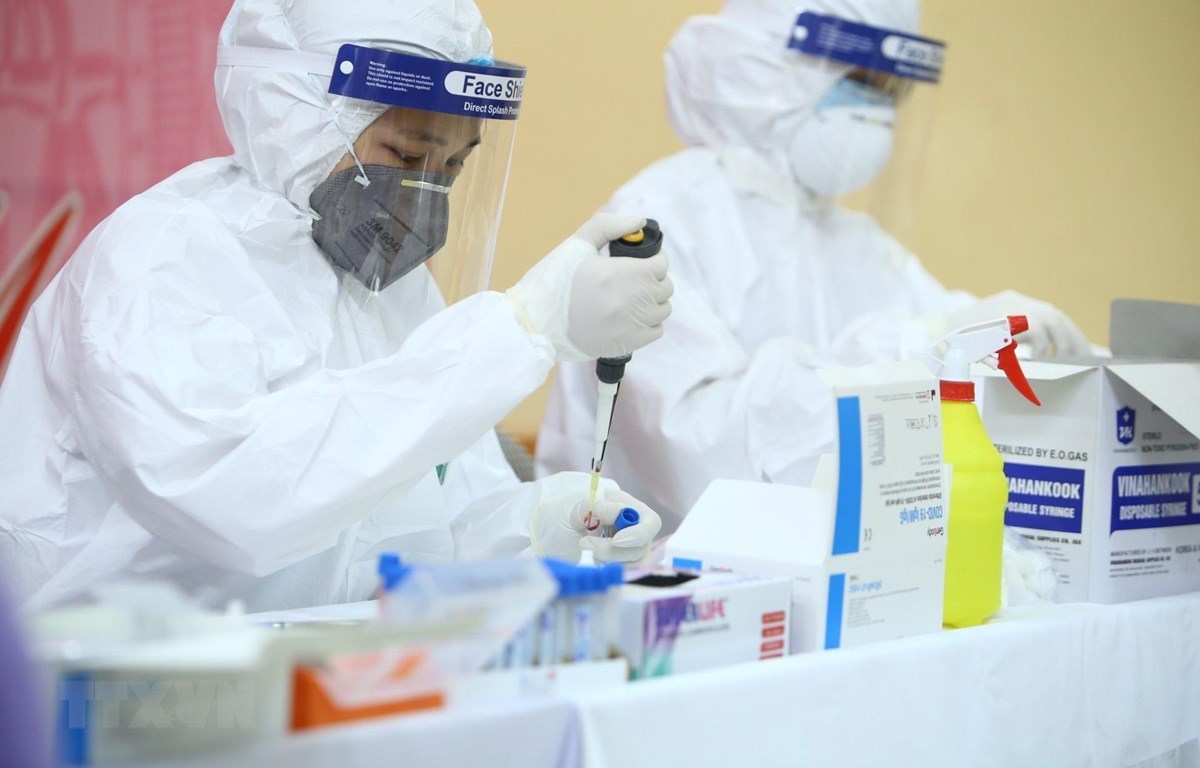
Doctors struggle to save lives of COVID-19 patients

Hanoi (VNA) – Going on duty at night has become normal for doctors during the peak of the COVID-19 pandemic. Many have become obsessed with the rhythmic beeping of ventilators and dialysis machines installed around critically ill patients.

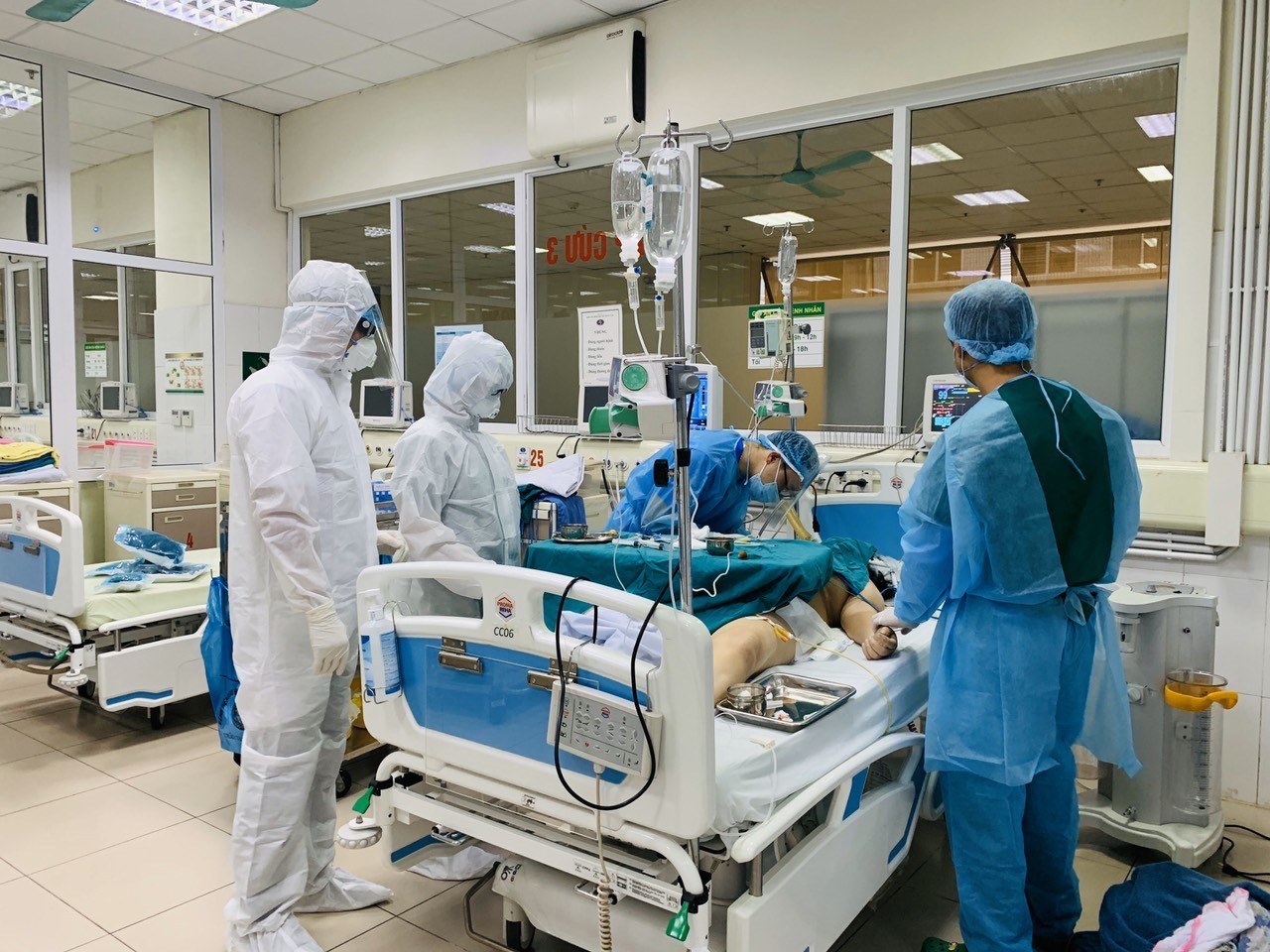
Doctor Dong Phu Khiem, deputy head of the resuscitation department at the National Hospital of Tropical Diseases in Hanoi, recounted his days struggling to help COVID-19 patients.

Saving the lives of patients

According to Khiem, in the early days of March, when the COVID-19 pandemic broke out in Vietnam, specialised ambulances continuously worked to carry patients to the hospital.

When the 17th patient was hospitalised on March 5 and tested positive for SARS-CoV-2 the next day, many people became worried. Before that, the country had recorded no new infections for more than 20 straight days.

On March 7, another patient was transferred to the hospital. The testing result showed that the patient was positive for the virus.

By March 12, the total number of COVID-19 cases treated at the hospital amounted to 10, including six foreigners.

In only a few days, all medical workers at the hospital were mobilised. Patients infected with the disease were treated in a separate area. Suspected cases (F1) were closely monitored and quarantined. During the peak of the disease, the 500-bed hospital had to treat nearly 400 patients and monitor other suspected cases.

Doctor Nguyen Trung Cap, head of the hospital’s Emergency Department, said the number of critically ill patients increased in the second and third waves of the disease. Health workers had to work hard day and night to minimise the fatalities.

Doctor Nguyen Trung Cap, head of the hospital’s Emergency Department (Photo: Minh Quyet/Vietnam News Agency).

Statistics showed that the hospital received and treated 143 patients who tested positive for SARS-CoV-2 (over 50 percent of the total cases in Vietnam), including 15 critically ill patients and five who had to use ventilators and intensive treatment around the clock.

With the help of the entire medical staff, the hospital has successfully treated 109 patients. At present, only two patients need ventilators, but their health continues to improve.

The hospital also received over 2,100 suspected cases for quarantine, including 30 from Wuhan in China – the epicentre of the disease. To date, more than 100 cases are continuously quarantined and undergo health monitoring. The remainders have been discharged from the hospital.

Recovered patients at the National Hospital of Tropical Diseases (Photo: VietnamPlus)

Ensuring fighting strength

Doctor Nguyen Trung Cap recounted that, during the peak of the disease, his department had seven doctors and 15 nurses treating 15 COVID-19 patients.

“We sometimes have the feeling that we cannot distinguish what the date is today due to the heavy workload. We have no concept of days off and working days,” he said.

Recounting a series of treatment days for patients, Cap said that most of the patients were Vietnamese in the first phase, but in the second phase, the hospital received patients from different countries, such as the UK, France, Germany and Sweden. The quick spread of the disease and the treatment of patients from different countries caused a lot of difficulties for health workers, like language barriers.

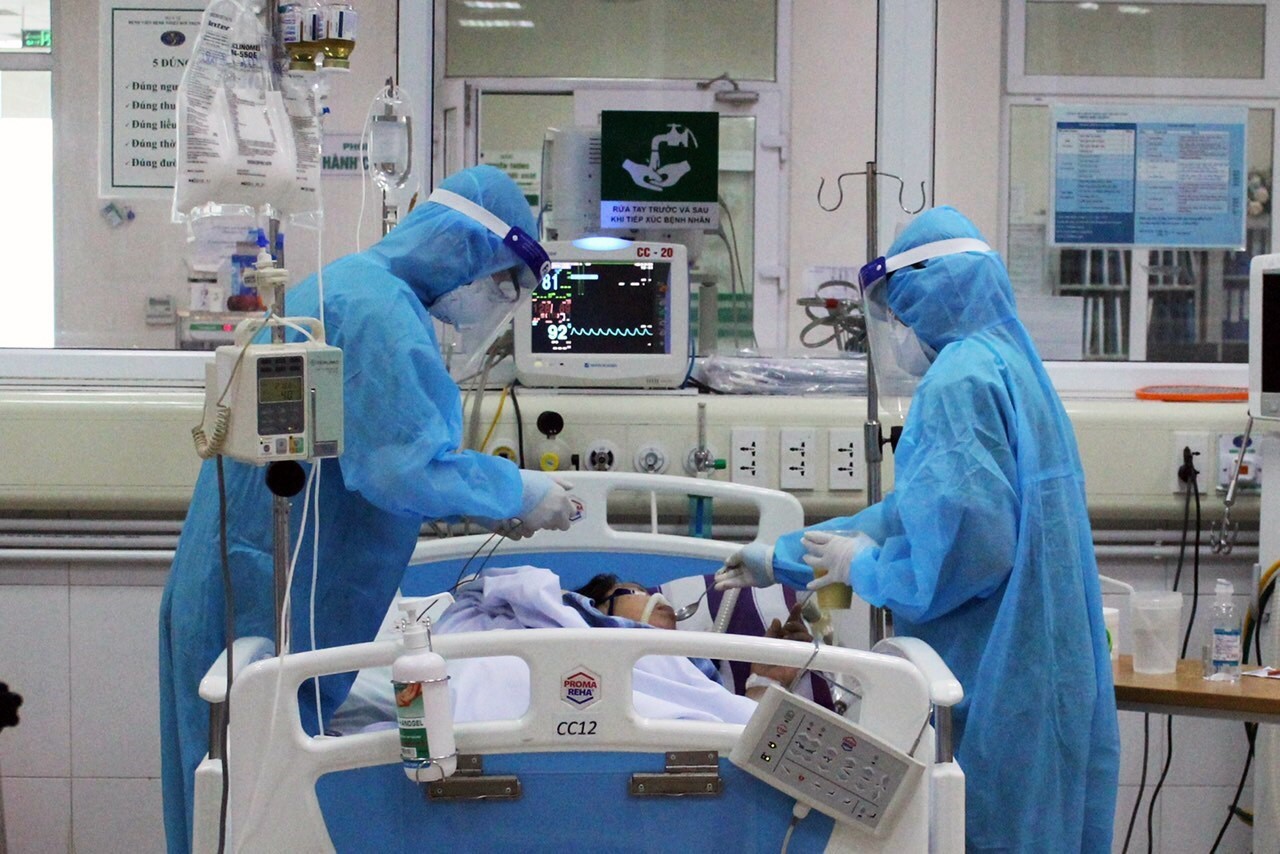
Treating a critically ill patient at the National Hospital of Tropical Diseases (Photo: VietnamPlus).

Cap said hospitals are on the frontline of the battle against COVID-19. Despite the complicated developments of the disease, no one has stopped in this fight, he added.

The risk of transmission among health workers is the biggest threat to all hospitals, Cap said, adding that, ensuring fighting sources is important to win the fight. Therefore, the hospital had opened training courses for its medical staff before the disease outbreak and prepared the best protective equipment to minimise the transmission risk.

Thank you Vietnam!

Thanks to the efforts of soldiers in white coats nationwide, Vietnam has achieved unexpected achievements. The world has recorded over 3.4 million infections and over 239,000 deaths, and Vietnam shares a long borderline with China – where the pandemic first occurred, the Southeast Asian country has promptly localised outbreak areas and treated successfully 223 out of the total 270 patients, with zero death.

Dixong John Garth and his wife are treated at the National Hospital of Tropical Diseases (Photo: VietnamPlus)

Among the recovered patients, many are foreign nationals who expressed their admiration for Vietnam’s health care system. Shan Coralie Baker (67 years old) and her husband Dixong John Garth (74 years old) from the UK shared that 22:00 on April 13 was a memorable moment for them because they were discharged from the hospital and returned to their hometown safely after 35 days of treatment.

Earlier in March 2020, Shan Coralie Baker and her spouse came to Vietnam to visit their son in the central city of Da Nang. They tested positive for SAR-CoV-2 and brought to the National Hospital of Tropical Diseases.

Baker said she was shocked at first. Her health status became more serious as she began to cough a lot and struggled to breath. She thought she would die. But Vietnamese doctors have saved her life.

After active treatment, she had gradually recovered and tested negative for the virus three times. But her husband had to use a ventilator.

Shan Coralie Baker and her husband are given the all-clear from the disease and allowed to discharge from the hospital (Photo: VietnamPlus).

Baker said that, when she knew that her husband was transferred to the resuscitation department, she was very scared. With nursing experience in the UK for 40 years, she understood that this is a very critical condition that could be life-threatening.

However, the medical staff at the hospital had worked for 10 days to save the life of her husband – a 10-year blood cancer patient, she said.

She expressed her deep gratitude and admiration for Vietnamese health workers. She said they were very lucky to meet Vietnamese doctors and nurses. “Thank you! Thank you so much!”

The National Hospital of Tropical Diseases (Photo: VietnamPlus)
Moving stories

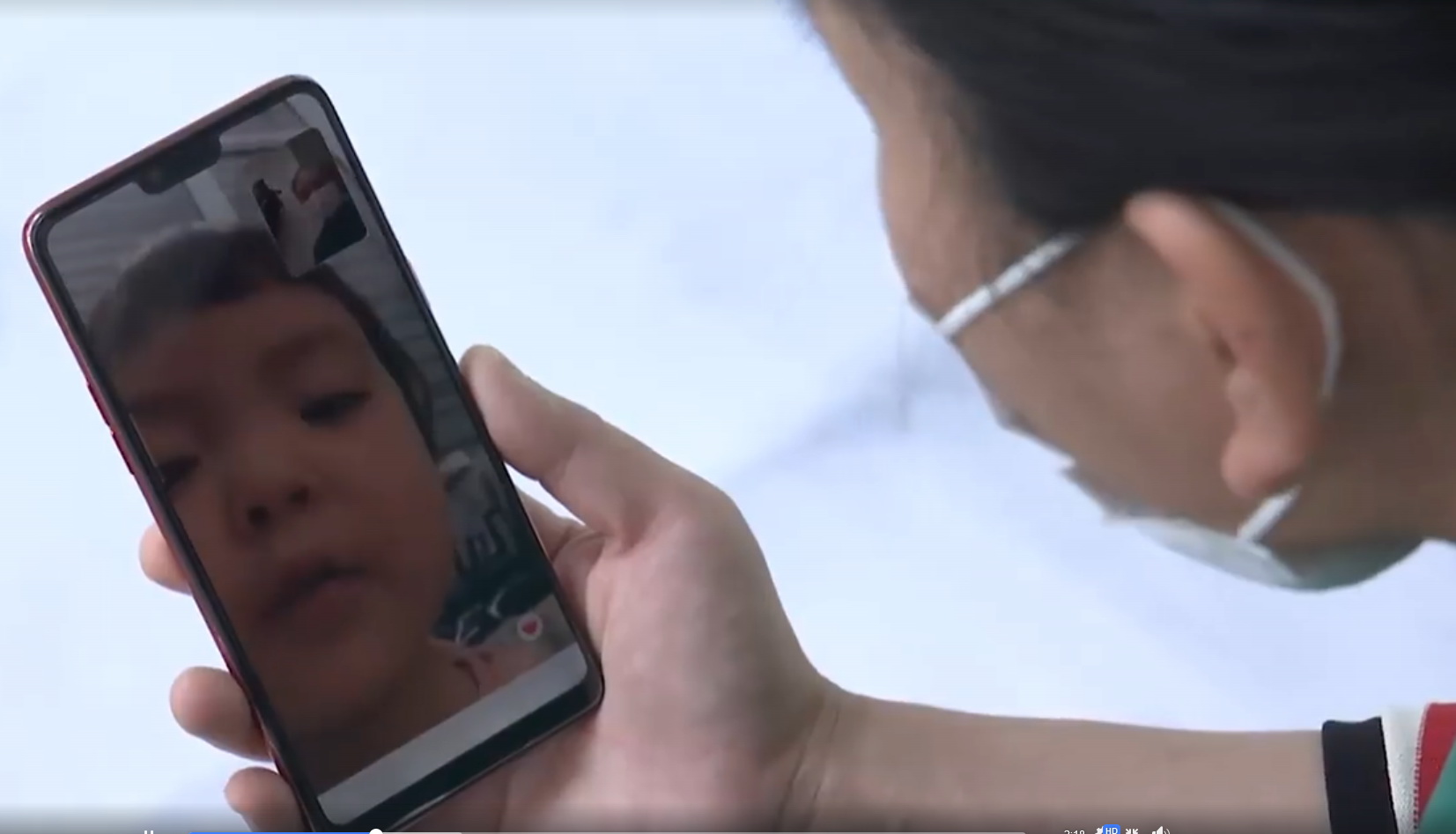
Hanoi (VNA) – Every time seeing her mother on the mobile phone screen, Sau, the little daughter of nurse Nguyen Thi Thuy, always cries out, asking mummy to come to take her home. For more than two months now, the mobile phone has been the only means for Thuy and her husband to see their little girl.

Mom and Dad are busy with … catching COVID-19

At around 7pm every day, Sau never forgets to get the mobile phone and give it to her grandmother, so that she can talk to her mother, Thuy.

In her talk with us, Thuy, a nurse at the Hepatitis Department in the second facility of the National Hospital for Tropical Diseases, said she and her husband have not returned to their home for the past two months. Their small daughter was sent to Thai Binh to live with her grandmother, while the couple are working at two different places in the hospital. Thuy’s husband is also a nurse at the National Hospital for Tropical Diseases, the Emergency Department. The family’s three members can only talk to each other on the phone.

A nurse of the National Hospital for Tropical Diseases makes a phone call to her child (Photo: VietnamPlus)

Their small daughter has gradually got used to being apart from her parents. She urged her parents to quickly catch the COVID-19 so that they can come home with her.

Thuy said this is the first time since they got married five years ago that the couple have been apart for so long a time. Neither have they been away from their daughter for such a long time.

The nurse recalled that she went to work on March 7 as usual. But when a patient in the department was confirmed to be positive for SARS-CoV-2, the department was immediately isolated and all staff members were asked to stay in the hospital.

Thuy said this is the first time since they got married five years ago that the couple have been apart for so long a time. Neither have they been away from their daughter for such a long time.

“It is still lucky my husband was not quarantined at that time. He urgently took our daughter to Thai Binh,” Thuy said, adding that since then she always tries to talk to her daughter whenever she has free time.

“Dear wife, please go to the window for me”

Around one week after that, Thuy’s husband, Toan, was also assigned to work in the isolation area at the hospital. He took care of COVID-19 patients in serious conditions.

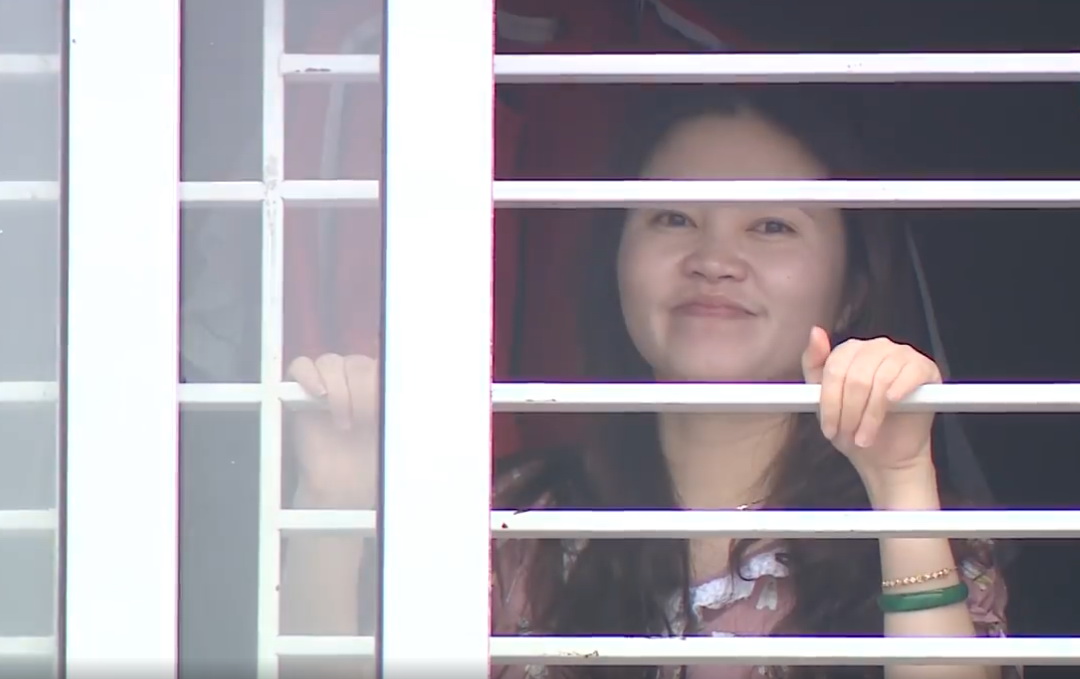
While at the same hospital, the couple worked in different departments, so they could not meet each other. Sometimes, Toan would tell his wife on the phone: “I miss you so much, let’s go to the window for me to see you.”

Toan waves to his wife, who is in the opposite building, from the window (Photo: VietnamPlus)

Thuy said the days working in quarantine were the most memorable time in her life, with a lot of memories shared with colleagues and family members.

Thuy looks in the direction of her husband from the window of her department. (Photo: VietnamPlus)

Looking forward to returning home

Thuy said every time a patient tested negative for SARS-CoV-2, she and her colleagues felt very happy, thinking that they were coming closer to the day the pandemic would end and they could go home.

At the peak of the COVID-19 outbreak, there were about 70 patients in her department. The number has reduced to only around 30. Thuy said there were six female nurses in the department, and all of them stayed at the hospital for quarantine and also to take care of patients. Their workload has also increased as there are more and more patients.

A nurse at work in the National Hospital for Tropical Diseases (Photo: VietnamPlus)

Dr. Tran Hai Ninh, Director of the Internal Medicine Department Tran Hai Ninh at the National Hospital for Tropical Diseases, said all medical workers are aware that they face a high risk of contracting COVID-19 any time. She added that however, she has got used to it, and found that the work was not as hard as the question of her children “Mommy, when will you come home?”

Health workers tend to a patient in critical condition at the National Hospital for Tropical Diseases (Photo: VietnamPlus)
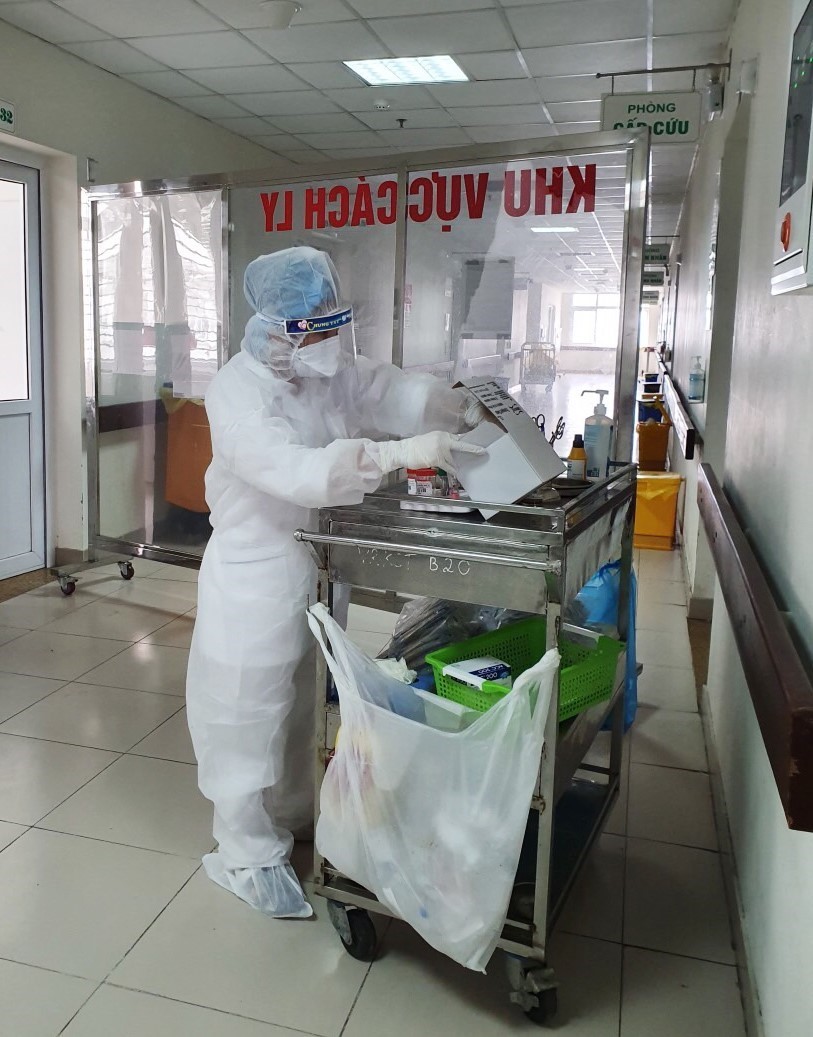
“We don’t know when we will be able to go home, so we dare not promise our children when we will go home. That is the time we feel down the most during a day,” Ninh said.

Our workload has heaped up since COVID-19 broke out. We all miss our children, but have to put the feeling aside, because if everyone is afraid and go home, who will take care of the patients.

The difficult days have not passed when the COVID-19 pandemic is still showing complicated developments. Vietnam has not recorded new locally-infected cases over recent days, but there have been some relapsed cases.

For the medical staff at the frontline of the battle against the pandemic, they accept sacrifices, including the sadness when having to live far from their children, in order to fulfill their noble mission under the Hippocratic Oath./.

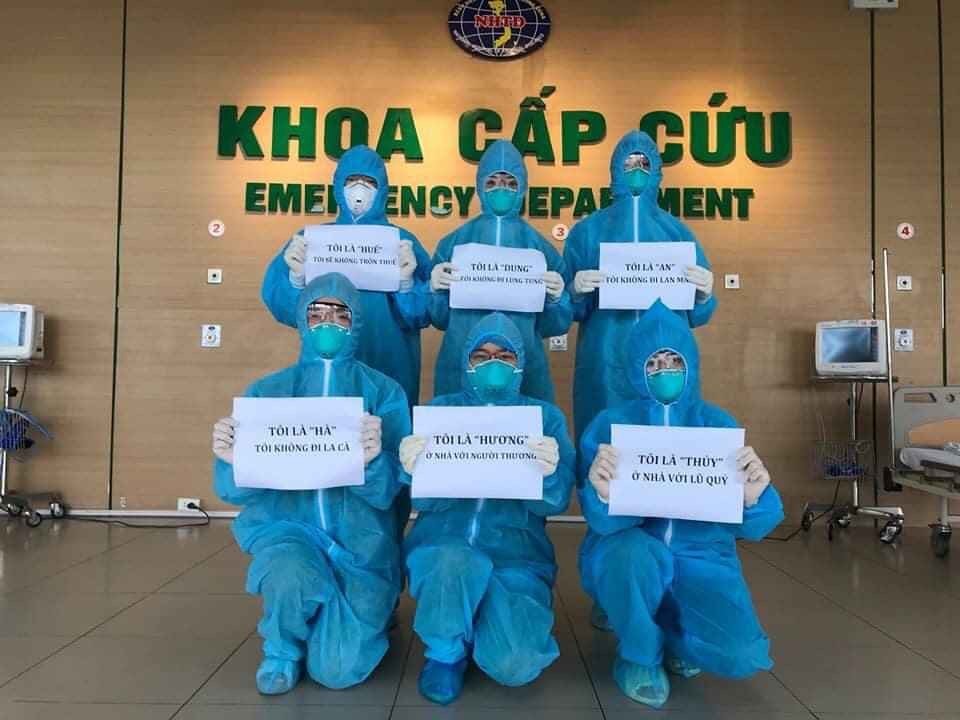
Health workers show messages to people amid the peak of the COVID-19 outbreak (Photo: VietnamPlus)

The press, a sharp revolutionary weapon: President Ho Chi Minh

The press, a sharp revolutionary weapon: President Ho Chi Minh

Hanoi (VNA) – President Ho Chi Minh – the great leader of the nation – is the founder of the Vietnam revolutionary press, and the teacher of generations of Vietnamese revolutionary journalists.

In 1921, the late leader founded and worked as the editor-in-chief of the “Le Paria” newspaper in France, which was the voice of the Alliance of Colonial Nations. He wrote 38 articles for the paper.

In 1925, he formed the “Thanh Nien” (Youth) newspaper, which printed the first edition on June 21, 1925, and led the journal through 88 editions.

In 1941, he set up the journal “Vietnam doc lap” (Independent Vietnam), the first revolutionary newspaper formed inside the country, and directed the publishing of the newspaper through 36 editions.

Through his 50-year journalism career, President Ho Chi Minh wrote about 2,000 articles, 1,524 of which were published under 53 different pseudonyms.

From his first article in 1919 to the last one published in 1969, the President had 50 years of writing with about 2,000 articles, 1,524 of which were published under 53 different pseudonyms.

The late leader showed a special interest in the “Nhan dan” (People) newspaper to which he contributed 1,205 articles.

He creatively applied Marxism and Leninism into the Vietnamese revolution in all aspects, including journalism activities.

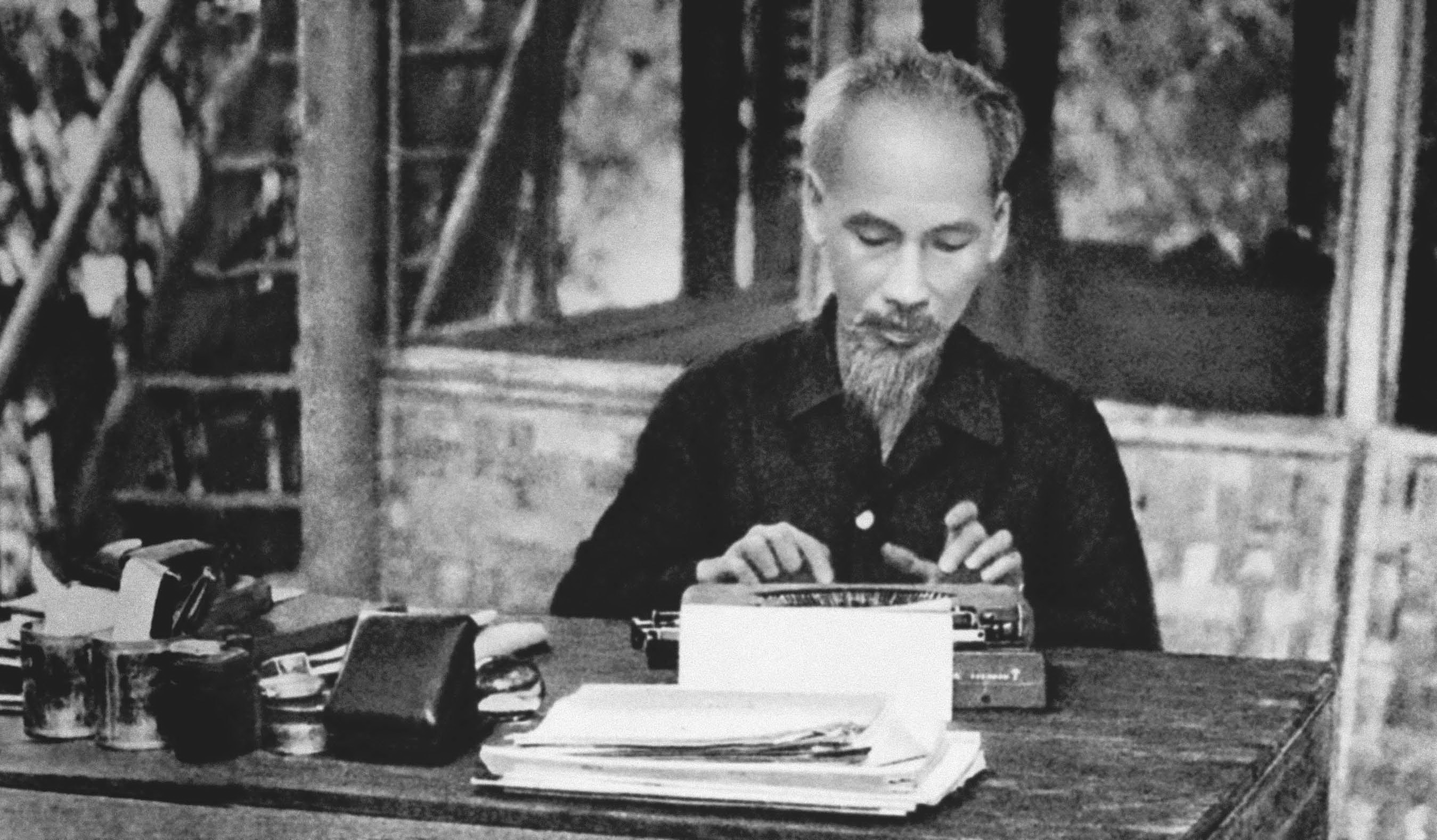
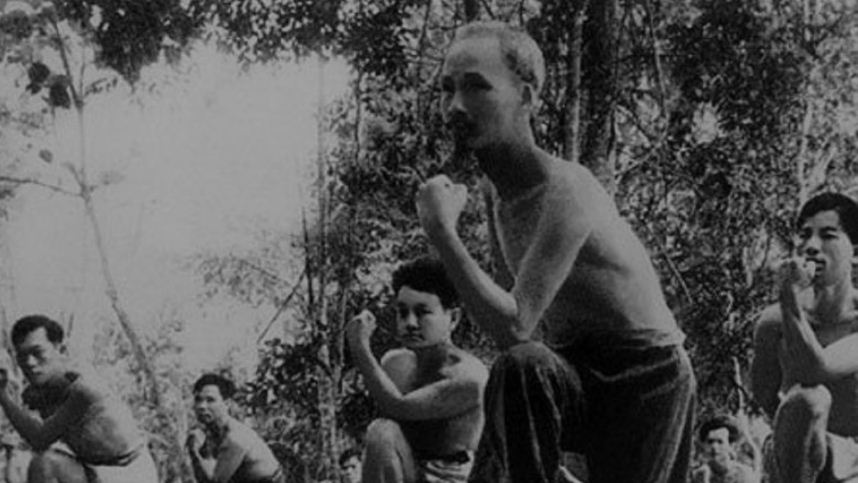
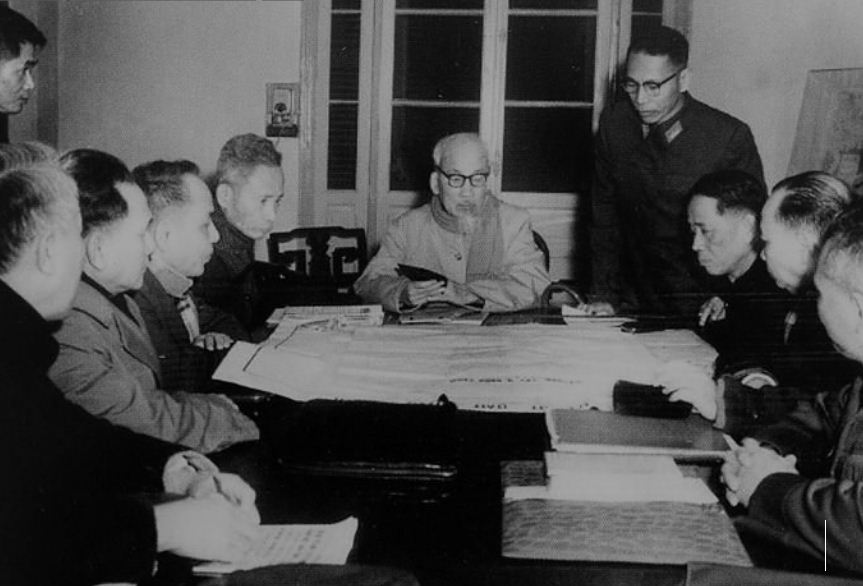
President Ho Chi Minh was the founder of the Communist Party of Vietnam and the State, as well as the father of the Vietnamese revolutionary press. He was also a great journalist. Along with his excellent press articles, the late leader left younger generations with a special heritage – Ho Chi Minh thoughts about the revolutionary press, the style and the art of the revolutionary press (File photo: VNA)

With his talent and deep understanding of journalism, President Ho Chi Minh considered the press a sharp weapon and used the press for revolution communications and to encourage people’s involvement in the revolution.

In his letter, sent to members of the first press course, he underlined that in order to write press articles, it is necessary to be close to the people, know at least one foreign language, carefully review one’s own stories, and stay progressive.

In his speech delivered at the third congress of the Vietnam Journalists’ Association on September 8, 1962, he shared that “This is my experience. Whenever I write a story, I questioned myself: Who did I write for? What did I write for? How do I get the public to understand and to make the story short and simple? When I finished my stories, I had my colleagues read and edit them for me.”

He defined that:

“1 – What to write about? We write about the good deeds of the people, soldiers, and friends, and to criticise shortcomings of us, our officials, people and soldiers.

2 – Who to write for? For workers, farmers, and soldiers, and for people from all walks of life regardless of their age, religion and party.

3 – What to write for? For communicating, for enlightening, uniting and awaking the public.

4 – How to write? Make the stories short, clear, coherent, and informative.”

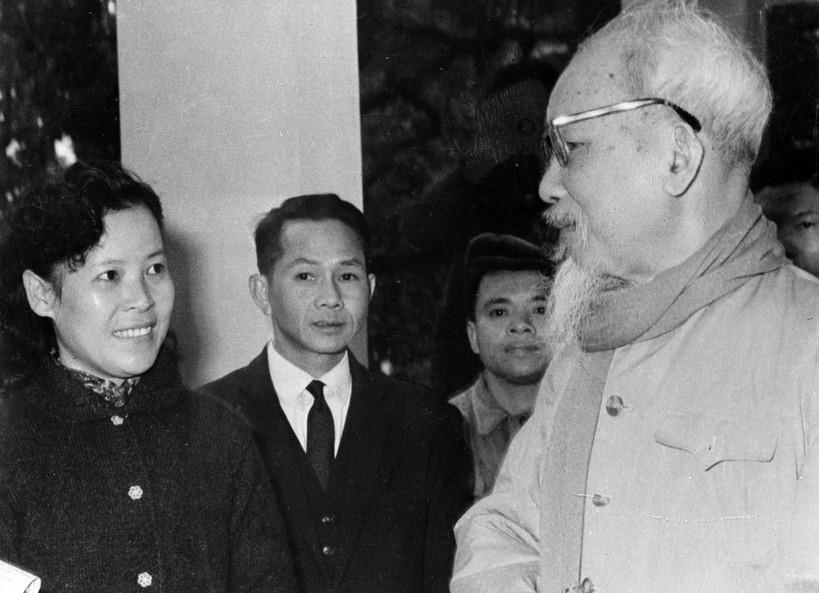
President Ho Chi Minh talked to reporter Tue Oanh from the Vietnam News Agency on how to report the third general election in 1964. (Photo: VNA)

Targeting the majority of the people, President Ho Chi Minh always reminded himself to make his article understandable for all people.

In his talks to reporters at the third congress of the Vietnam Journalists’ Association in 1962, he pointed out that: “The articles are often too long, which is not suitable to the level of knowledge and time of the public.”

At the second congress of the association on April 16, 1959, he said that “all journalists (all who are involved in the writing, printing, editing and publishing process) must maintain a firm political stance. Politics must play the key role. Proper political orientations will ensure that other activities are proper. Therefore, our press must follow the right political orientations.”

He underscored that “Journalists are revolution fighters. Pens and papers are their weapons.”

He underscored that “Journalists are revolution fighters. Pens and papers are their weapons.”

Along with good political orientations, he also reminded journalists to enhance the quality of their products.

“It is necessary to focus on political studying to firmly understand policies. But we should better our ideology, professional skills and culture, while becoming closer to reality and the public.” (Complete Works of Ho Chi Minh, Vol. 10, Page 616, National Publishing House, 1995).

On January 8, 1946, the leader told communications officials: “During the communications, you should keep in mind that people always respect the truth. Only by telling the truth, can we get people to listen to us. We should not follow the countries that report war news totally different from the truth.”

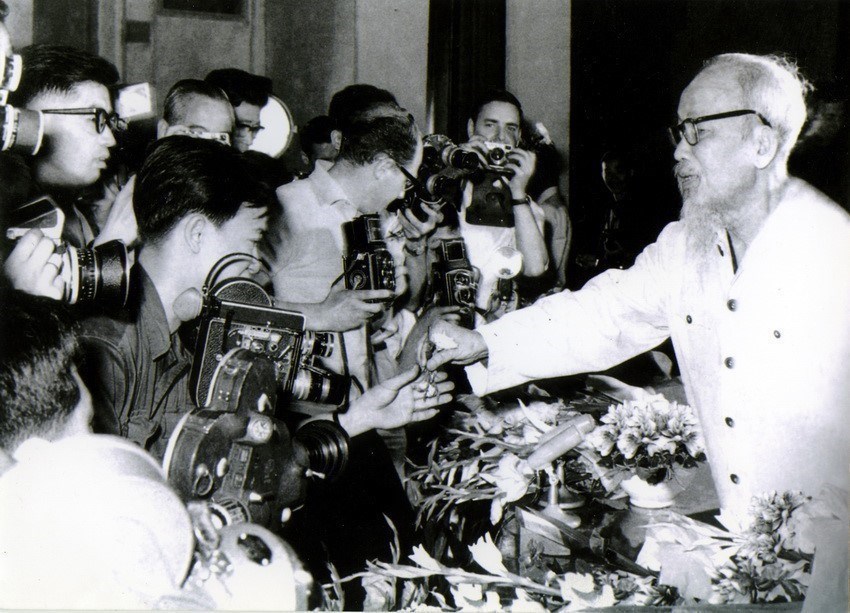
President Ho Chi Minh having his picture taken with reporters covering the third National Party Congress in September, 1960 (Photo: VNA)

The truth is considered the ethics of revolutionary journalists. Therefore, Vietnamese revolutionary press is the voice of the Party and the forum of the people. The press reports constructive opinions of the people, showing their aspirations and suggestions to the national construction.

At the same time, the press has resolutely fought corruption and smuggling, combating crimes and social evils as well as signs of degradation in personality, morality and lifestyle. The press has won the public’s trust in the leadership of the Party and traditional humanitarian and revolution.

President Ho Chi Minh held that “Our press has an important position in the world’s opinion. Both enemies and friends are interested in our press. Therefore, we should be careful about the form, contents and methods of writing,”

His opinions are still valuable in the current period despite the development of means of the mass media.

“We should be careful about the form, contents and methods of writing.” (President Ho Chi Minh)

The leader’s thoughts have been inherited by the Party, particularly manifested in the Resolution of the 8th Party Central Committee’s fifth plenum: “Building the national communication strategy in line with the country’s characteristics and the global mass media trends. Making full use of the achievements of the Internet revolution to introduce the renewal cause and culture of Vietnam to the world, while applying measures to prevent and minimise the negative impacts of the Internet and other means of mass media.”

President Ho Chi Minh also highlighted the need to enhance the quality of the press. The quality in his idea also covers the arrangement and format of articles.

For President Ho Chi Minh, the press is a weapon of the revolution. His teachings to journalists are precious, which have been transferred from generations to generations of journalists./.

Protecting workers amid COVID-19 crisis

The COVID-19 pandemic took its toll on both the society and the economy during the social distancing period, with millions of family businesses and thousands of companies having to temporarily stop operations. As time went by, more and more jobs disappeared.

Labour market suffers the COVID-19 brunt

According to a survey by the General Statistics Office of Vietnam on affected enterprises and reports from localities on the problems facing their workforce, as of mid-April, there were 5 million workers impacted by the pandemic. About 84.8 percent of questioned firms said they were experiencing difficulties due to COVID-19.


As of mid-April, there were 5 million workers impacted by the pandemic. About 84.8 percent of questioned firms said they were experiencing difficulties due to COVID-19. 

The International Labour Organization (ILO) in Vietnam said the influence of the pandemic on the labour market might become clearer in the second quarter.

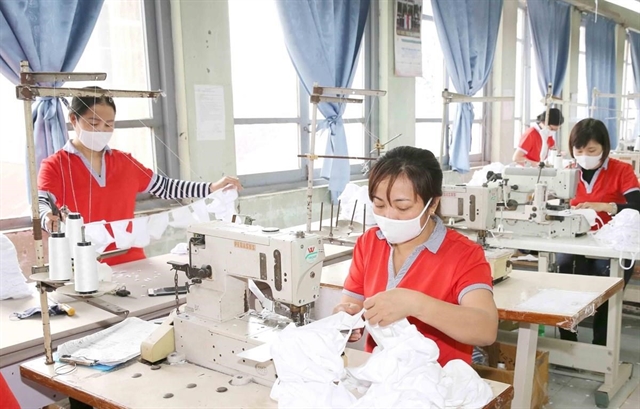
Representatives of exporters in the garment-textile and leather-footwear sectors said their biggest US and EU clients had requested rescheduling delivery deadlines, stopped signing new contracts, and even cancelled existing contracts. New contracts for June and following months are yet to be negotiated and the chance of contract recovery by year’s end remains low.

People who lost their jobs wait to receive unemployment insurance benefits (Photo: VNA)

The electronics industry has also borne the brunt of the disease, with Samsung’s global and production forecast set to drop. Samsung Vietnam, meanwhile, planned to cut its export target to about 45.5 billion USD in 2020 compared to 51.38 billion USD in 2019.

ILO experts predicted that by the end of the second quarter, the crisis might negatively impact the livelihoods of between 4.6 and 10.3 million Vietnamese citizens. They will face the risk of getting their working hours and salaries cut or losing their jobs.

Switching to online recruitment

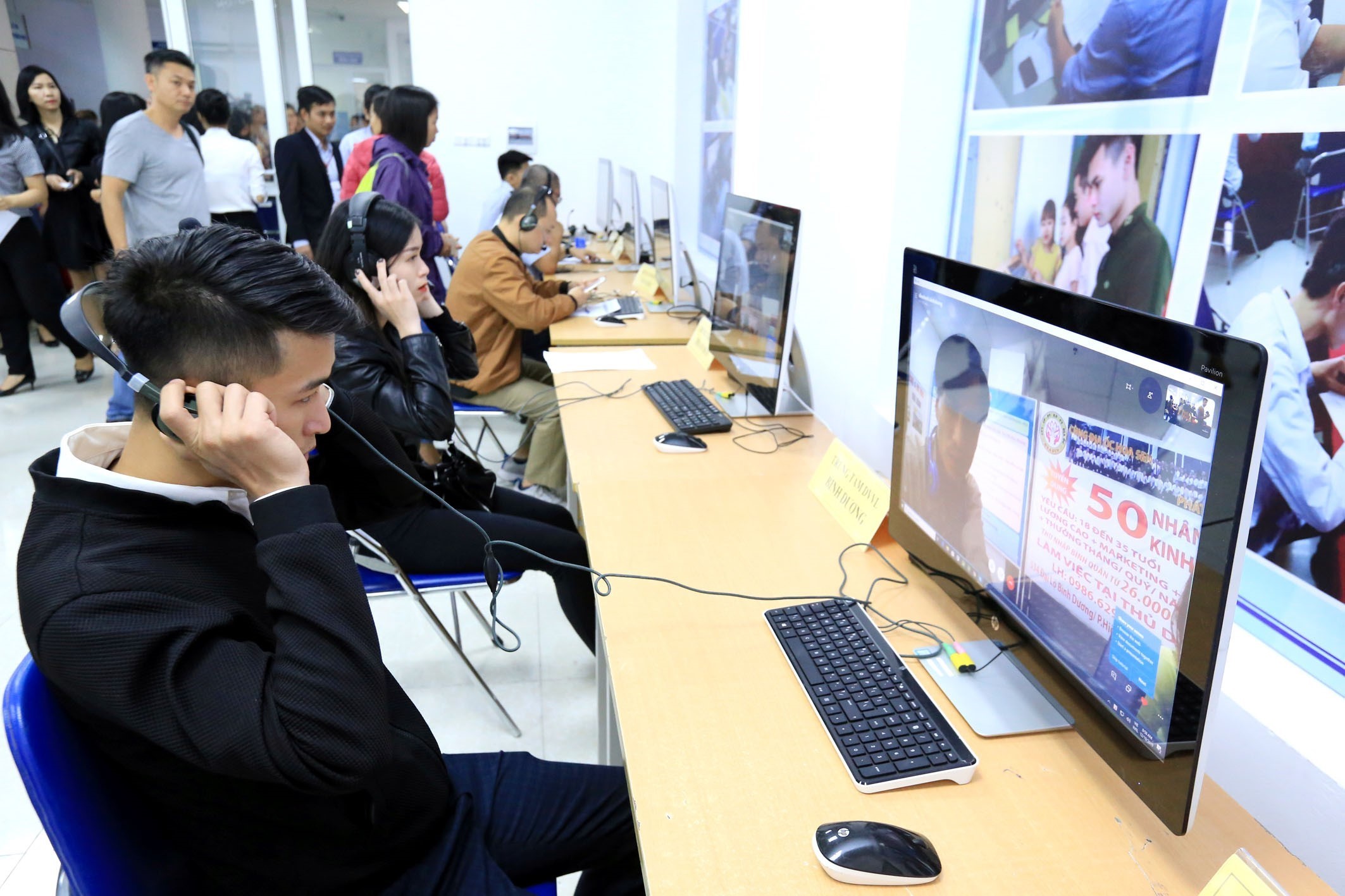
Currently, the maintaining of employment is a priority. The labour market has not been ‘frozen’ but switching to online recruitment to adapt to the new context.

Vietnam has shown its capable of controlling the disease and begun easing social distancing measures, hence positive developments in demand for recruitment.

On April 24, to support job seekers amid the pandemic, the project “200,000 job opportunities to assist workers and enterprises in overcoming COVID-19” was launched on four popular recruiting-service websites, namely timviecnhanh.com; vieclam24h.vn; viectotnhat.com; and mywork.com.vn. After less than a week, it attracted registration from 4,000 companies and curriculum vitae from over 1,500 workers.

Duong Thi Tuyet Trinh, who oversees the recruitment section of the project, said: “From the four websites, we calculated that over 10,000 firms have demand for more than 300,000 workers to fill 30,000 positions.”

Meanwhile, Navigos Search, which offers recruiting service targeting professionals, is implementing a “Career Support” campaign to connect job seekers to their most suitable recruiters. In the first week of the pilot run, the campaign received registration from over 1,200 employees across Vietnam.

Businesses and workers are switching to online recruitment (Photo: VNA)

Nguyen Phuong Mai, CEO of Navigos Search, said: “Vietnam has shown its capable of controlling the disease and begun easing social distancing measures, hence positive developments in demand for recruitment. A number of firms have stepped hiring new employees to quickly recover their production and business.”

Solving the puzzle of the “double crises”

Vietnam is among leading countries globally in terms of public health. It is time for the nation to show its similar excellency in tackling socio-economic and workforce challenges, said ILO Vietnam Director Chang-Hee Lee.

He praised the country’s introduction of economic stimulus and enterprise support packages.

Lee said: “I would like to emphasise that the Government direct its support and subsidy package to enterprises which make best efforts to retain workers and to minimise layoffs, by making adjustment to working hours, job sharing, on-the-job training, wage cuts which are consulted with trade unions and workers. It can encourage enterprises to make the best efforts to retain workers or minimise layoffs. Then, it can slow down the process of layoffs, minimising the societal shock it can trigger, while preserving workers’ productive capacity for a quicker post-COVID 19 recovery.”

COVID-19 is a global crisis. Even when Vietnam could be capable of controlling the disease, it would still be affected as its trade partners might still be struggling with the pandemic.

Vietnam is among the leading countries globally in terms of public health. It is time for the nation to show its similar excellency in tackling socio-economic and workforce challenges.  

Lee noted: “It is important to minimise the impacts of various containment measures on micro-enterprises, family business and rural agricultural communities. These are the businesses that sustained Vietnam during the wars and economic crises in the past. However, the current pandemic and social distancing measures are causing a heavy strain on their capacity to absorb economic and social shocks. When there is an abrupt collapse of global demand for Vietnamese goods and services, or a disruption of global supply chains, millions of micro-enterprises, family businesses and rural farming communities provide subsistence support. Therefore, it is urgent to allow them to play their roles at this critical juncture, with the Government’s support.”

Mai said that COVID-19 has interrupted the global supply chain, making firms aware of the necessity of supply sources and production diversification and of not relying on a country. Such facts have given a boost to a wave of shifting investment and production facilities to Southeast Asian countries, including Vietnam as the most attractive destination.

The COVID-19 combat is not only a health challenge. Measures introduced to protect the public health must also need to ensure livelihoods of residents. If people’s livelihoods are not guaranteed, governments will fail in protecting them in the fight against the pandemic.

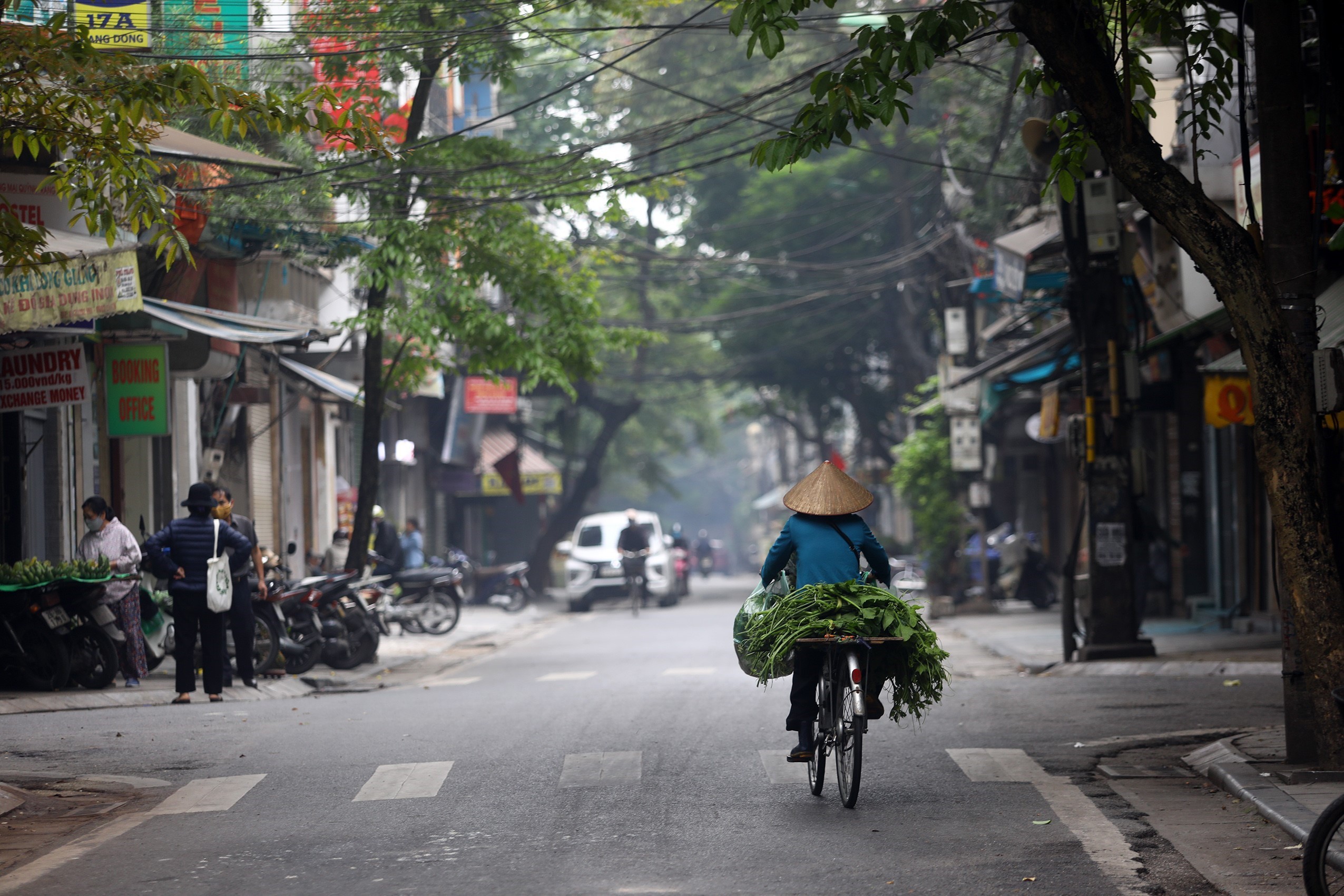
There is a need to protect people’s livelihoods (Photo: VNA)

There is a need to protect people’s livelihoods (Photo: VNA)

Leather and footwear sector seeks answer to market-material puzzle

The COVID-19 pandemic has been hitting Vietnam’s leather and footwear businesses since the first quarter of the year.

According to General Secretary Phan Thi Thanh Xuan of the Vietnam Leather and Footwear Association (Lefaso), there has been a reduction in exports and orders, together with an interruption in material supply.

Difficulties keep piling up

Reporter: What was the impact of the pandemic on the leather and footwear sector in the first quarter of the year?

Phan Thi Thanh Xuan: In January alone, the sector’s exports dropped 30 percent compared to the same period in 2019. The number went down even harder in February, with exports reaching just nearly 1 billion USD. The figure for February last year was 3.1 billion USD.

According to statistics from the Ministry of Industry and Trade, the value of overseas shipments of footwear products, as well as handbags, suitcases, hats, and umbrellas, dropped 1.9 percent and 6.5 percent on year, respectively.

If import markets remain closed to curb the spread of the disease, consumer demand will keep falling, significantly affecting production.

In the remaining quarters of the year, if import markets remain closed to curb the spread of the disease until the last quarter of the year, stores will continue closing their doors, and consumer demand will keep falling, significantly affecting production.

I think there will be three big problems.

First, the material supply sources, despite catering to production demand, are not diverse. As such, new orders will not cover a wide range of products.

Second, although enterprises are capable of producing ordered goods, they could not export them, as their clients are seeing a reduction in their sales. It means that they will face a high risk of customers cancelling their existing orders indefinitely.

Finally, no new orders from customers due to the pandemic will affect the trade of goods.

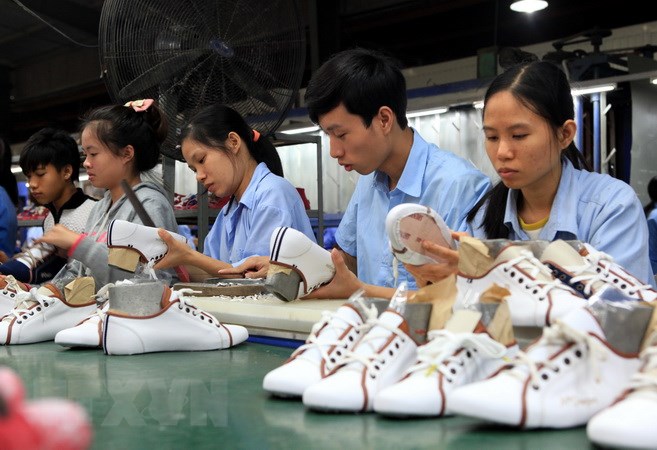
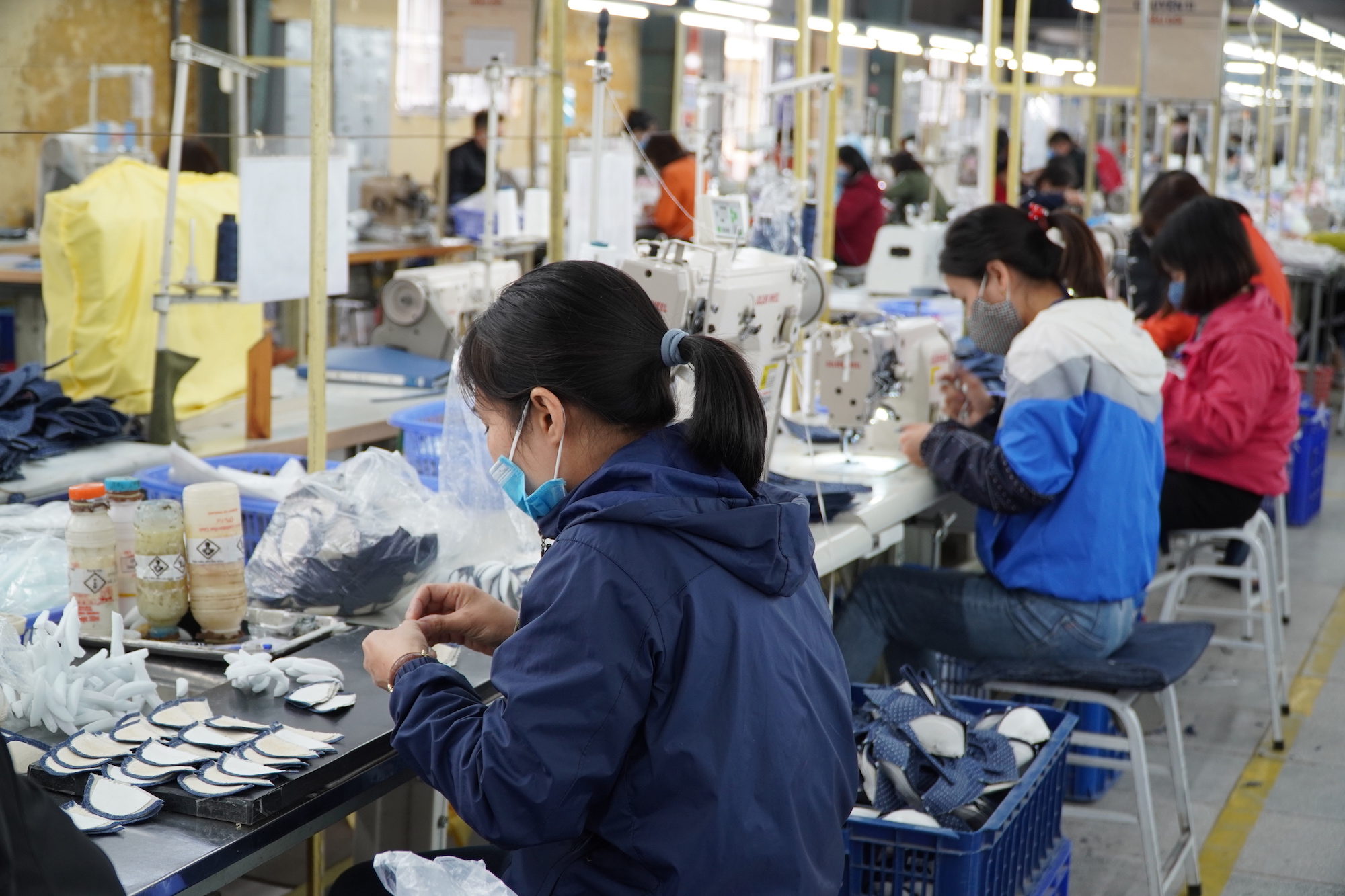
Producing shoes at the Ha Tay Chemical Wave Co. Ltd (Photo: VietnamPlus)

Reporter: Can you share more about these difficulties and the response scenarios prepared by firms in the sector?

Phan Thi Thanh Xuan: Our firms have been working to promptly deliver goods to their customers in the first and second quarters. However, as we can see, the markets are being closed, hence raising concern over the delivery in the second quarter. As the pandemic remains complicated, there is a high chance of customers cancelling their orders.

As for the third and fourth quarters, if the situation gets better, our enterprises will also have the opportunity to obtain new orders. If the situation gets worse, a drop in orders of at least 30 percent or even an end to orders will be likely.

As a result, workers’ job security is being threatened. Since April, many of them have been taking turns to temporarily stop working.

Currently, the most pressing issue of the sector revolves around the number of goods orders, as its key markets are plagued by COVID-19.

Reporter: Do you believe that imported materials are a factor directly affecting the business outside of the market?

Phan Thi Thanh Xuan: Plants in China have resumed operation, thus the materials are no longer a big issue.

Currently, the most pressing issue for the sector revolves around the number of goods orders, as its key markets are plagued by COVID-19.

Products of Ha Tay Chemical Wave Co. Ltd are exported to many markets, including the EU and the US (Photo: Vietnam Plus)

Policies must be flexible

Reporter: Which policies do the Lefaso think are suitable for the sector at the moment?

Phan Thi Thanh Xuan: Leather-footwear and garment-textile are fashionable industries, meaning they are diverse and change quickly. Therefore, the two require open and flexible policies.  


If we have good policies, we will attract technologies serving the production and development of materials.

If we have good policies, we will attract technologies serving the production and development of materials. High standards are only suitable for foreign-funded or big enterprises, while small and medium-sized are those we are targeting for development.

Lefaso General Secretary Phan Thi Thanh Xuan (Photo: VietnamPlus)

Reporter: Do you believe that, in the long run, we have to build supply chains and own our trademarks for sustainable growth?

Phan Thi Thanh Xuan: Currently, many companies are offering outsourcing services for big international brands. By doing so, they are joining the global supply chain.

Self-development of trademarks is good but the capacity of our enterprises remains limited. They are yet to reach the global market. As such, companies can become outsourcing service providers or develop their own brands depending on their business strategies.

Reporter: What are the recommendations of Lefaso for enterprises to stand strong amid current market fluctuations?

Phan Thi Thanh Xuan: Support from the authorities is necessary.

Self-development of trademarks is good but the capacity of our enterprises remains limited. They are yet to reach the global market. 

For example, they can issue policies that allow enterprises to delay their payment for insurance and bank loans or have the costs reduced until their number of orders become more stable.

Thank you!

Many Vietnamese firms have invested in technology for trademark development (Photo: VietnamPlus)

塑造越南旅游品牌的征程:越南旅游征服越南游客

2020年越南旅游业第二次要面对由疫情造成的危机。本来被视为主打产业,因此越南旅游从业人员很快制定应对情景,旨在激发旅游需求,吸引国内游客。 国内旅游业再一次肯定其作为等待恢复国际市场期间越南旅游业 “救生衣” 的作用。多家企业意识到这就是越南旅游业征服越南游客的时候并把其视为重点市场,而不是急救方法。

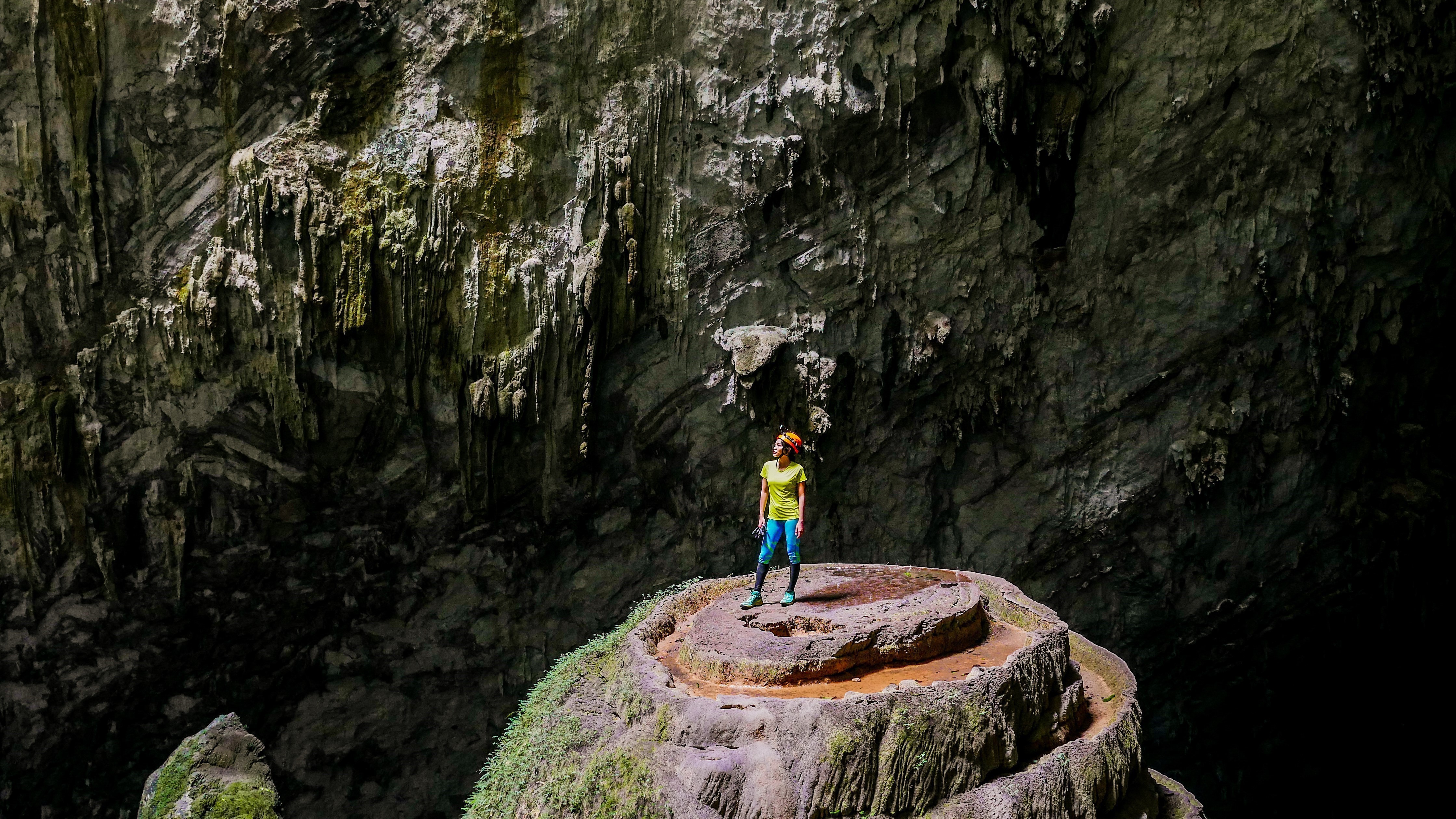
                                            越南广平省韩松洞的美景。图自越通社
                                            越南广平省韩松洞的美景。图自越通社

国内游客破解旅游业因Covid-19造成的寒冬之冰

据行内专家的研究,越来越多越南游客游览国内外,特别是在暑假、新年假期等多日假期。每年,各家旅行社向国内游客推出许多实惠且颇具吸引力的旅游产品。国内权威旅游展销会期间也推出许多优惠旅游路线。越南成功控制新冠肺炎疫情后发起国内旅游活动,激发国内旅游需求,为复苏遭受疫情影响坐以待毙的旅游业做出贡献。 旅游咨询理事会主席陈仲坚表示:2019年越南旅游业营业额中的45%来自于国内游客。疫情蔓延全球成为越南国内旅游业的黄金机会,因为以前喜欢出境旅游的越南游客现在将探索越南之美。上述游客消费能力强,因此如果向他们提供优质、崭新服务及产品的话,他们将多次参加国内旅游路线。

                      高平山水地质公园跻身世界最具吸引力的50个景点名单

在疫情期间如何吸引国内游客?旅游从业者已成立一个联盟,其任务通过推出高质量、优惠价格的产品或在旅游路线中增多服务,激发旅游需求。 越南旅游协会常务副主席武世平强调,旅游业的发展依赖于旅游客源。因此吸引游客的最好措施就是快速且大力采取激发需求的措施,意在在两个月内恢复国内旅游活动。力争年底旅游业恢复了原始增长水平。这样做才能在疫情在全球上得以控制时开展国际旅游业务。

                             广平省韩松洞的美景。图自越通社
                             广平省韩松洞的美景。图自越通社

有人提及大幅下降价格是否质量随之下降这一问题?然而,多家企业都肯定,降价不降质。不仅如此,还提高服务产品价值,给游客增多服务。从而,游客可感受到这是去旅游的最好机会。 旅游产品是吸引游客的最重要要素,因此为了成功激发旅游需求,每家旅行社应真正投资开发旅游产品。这时候,旅游业只能依赖于国内游客。产品除了实惠、优质、颇具吸引力之外,还要保障游客的安全,这样方能为游客多次重返注入动力。许多企业承诺开展促销优惠计划,但不实施倾销;明确国内游客才是截至2021年6月的主要客源。

                        广平省韩松洞的美景。图自越通社
                        广平省韩松洞的美景。图自越通社

据旅游总局副总局长阮黎福,文化体育与旅游部及时启动“越南人游越南”计划,旨在加强宣传与推广旅游景点,推介旅游产品。 预计,如果我们继续控制好疫情,2020年接待国内游客量有望达6000万-6500万人次。此外,旅游部门应为迎接外国游客做好准备。如果今年第三季度可以重新迎接外国游客的话,游客量有望达600万至800万人次。如果第四季度能够迎接外国游客,游客量有望达450万至500万人次。

                             越南被列入十大最便宜的旅游目的地名单。

吸引国内游客促进可持续发展

多年来,越南权威的各场国内和国际旅游展会均推出针对国内游客的多项促销产品和特价机票,吸引大量游客来订购,但实际上仅能满足人们的部分旅游需求,尤其是国内游客。
                             广平省韩松洞的美景。图自越通社
                             广平省韩松洞的美景。图自越通社

越南旅游协会传媒部主任、Flamingo Redtours总经理阮功欢分享说,近日,尤其在新冠肺炎疫情产生负面影响的背景下,旅游业继续受到整个政治体系的广泛关注。越南文化体育与旅游部发起了“越南人游越南”活动,越南旅游协会启动国内旅游刺激计划;各地也举办了多项活动吸引游客。 阮功欢先生称,开发国内游客不能只靠游客的喜爱和同情,而企业需要坚持“越南旅游征服越南游客”这一目标。在刺激旅游需求或呼吁游客与旅游业分担困难的同时,更重要的是,旅行社应以优质产品来吸引游客。

                                            广平省韩松洞的美景。图自越通社
                                            广平省韩松洞的美景。图自越通社
                              广平省韩松洞的美景。图自越通社
                              广平省韩松洞的美景。图自越通社

越南旅游业和全国各地方应为疫情过后促进国内旅游复苏做好准备。国内旅游产品依然是重点,旅游基础设施应得到充分关注。这就是越南旅游业开发国内旅游产品,使其从被动转向主动,促进可持续发展的机遇,无论遇到多大困难也要靠着内在力量作出迅速反应。(完)

                          越南被列入十大最便宜的旅游目的地名单。

President Ho Chi Minh

In his journey to seek ways for national salvation, late President Ho Chi Minh travelled to various countries across the world. Everywhere he went to or even was yet to set foot, people developed strong sentiments and respect for him.

The leader has become a special symbol in the hearts and minds of Vietnamese people and international friends.

He was an inspiration for poet To Huu to write that “Ho Chi Minh, you are everywhere…/ The great soul, just like the ocean, receives all-loving messages”.

In June 1999, the International Who’s Who, a series of reference books of notable people worldwide, made a list of the 100 most influential figures of the 20th century, dubbed ‘The Millennium list’.

President Ho Chi Minh was among the only three Asian people who made it into the list.

The beloved leader of Vietnamese workers and people, and a communist, received praise internationally.

On the occasion of his 130th birth anniversary, VietnamPlus newspaper quoted a number of international friends’ praises for President Ho Chi Minh.

Heydar Aliyev, a member of the Politburo of the Communist Party of the Soviet Union, wrote in the memorial book at the President Ho Chi Minh relic site at the Presidential Palace in Hanoi on October 29, 1983, that his name and career will be immortal, proven by victories of the Communist Party of Vietnam and Vietnamese people in the construction of communism and protection of revolutionary success.

The State Council of China, on September 5, 1969, affirmed that President Ho Chi Minh is a brilliant communist and the most admired leader of the Vietnamese people, as well as a close friend of the Chinese people, reported the Vietnam News Agency (VNA) one week later. He devoted his whole life to the national liberalisation of Vietnam and the cause of communism, the Chinese body noted.

Meanwhile, Prince Souphanouvong of Laos on September 5, 1969 noted that President Ho Chi Minh was an unyielding and prominent soldier of the world revolutionary movement and national liberalisation campaigns in Asia, Africa and Latin America.

Khamsuk Kaeola, on behalf of the Alliance Committee of the Lao Patriotic Neutralist Forces, wrote on September 6, 1969 that President Ho Chi Minh is a brilliant example for nations struggling for independence and freedom in Asia, reported the VNA on September 12, 1969.

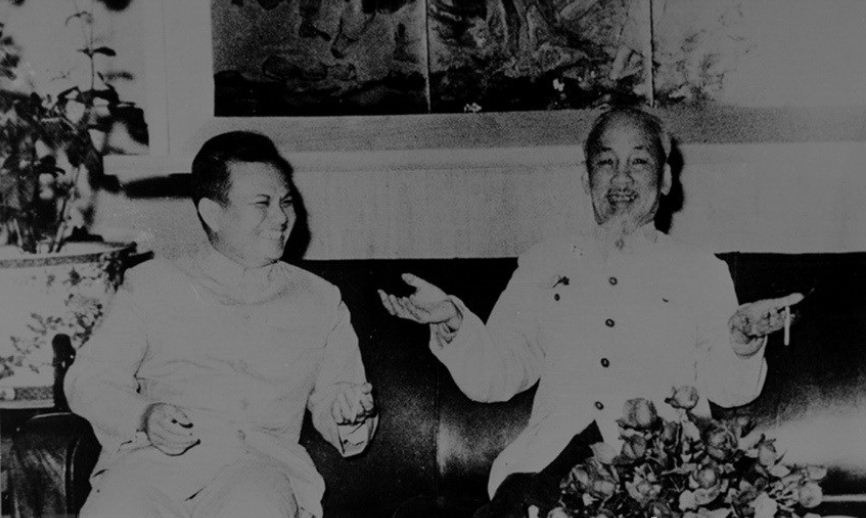
President Ho Chi Minh receives a delegation of the Lao Party and Patriotic Front led by Kaysone Phomvihane in 1966 (File photo: VNA) 

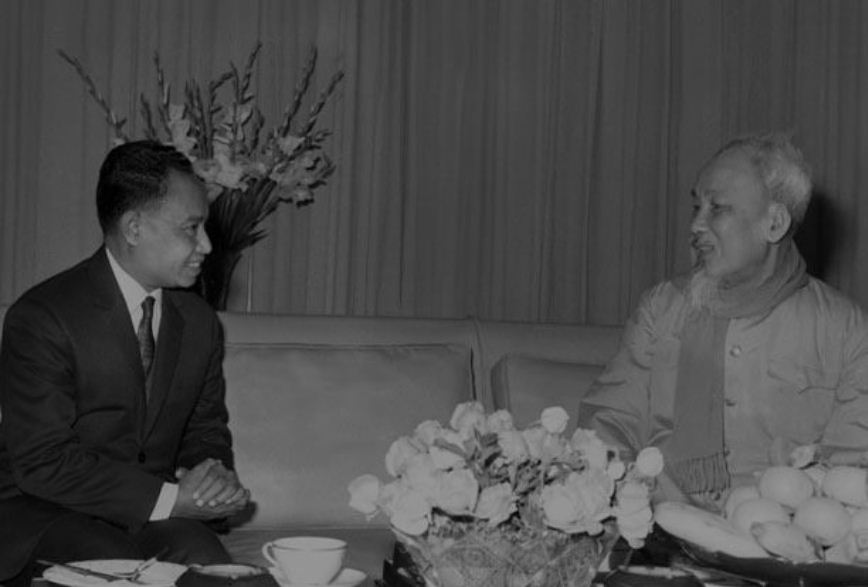
King Norodom Sihanouk of Cambodia on September 4, 1969 wrote that President Ho Chi Minh entered the history of countries in Indochina and all nations in Asia, Africa and Latin America as a symbol of the patriotic struggle for national independence, reported the VNA two days later.

President Ho Chi Minh hosts Prince Norodom Phurissara, Minister of Foreign Affairs of Cambodia on January 10, 1968 (File photo: VNA)

Major Fidel Castro, First Secretary of the Communist Party of Cuba Central Committee and Prime Minister of Cuba, stated on September 4, 1969 that the life of President Ho Chi Minh is a prominent example for revolutionary virtues and humanitarianism, reported the VNA two days later.

There is hardly a leader in the world who demonstrates his clear-sightedness, calmness, bravery, selflessness, determination and courage in challenging times and in such an extraordinary manner, he added.

President Ho Chi Minh welcomes Cuban President Osvaldo Dorticos at his stilt house in the Presidential Palace on October 29, 1966 (File photo: VNA)

A special edition of Cuba’s Granma newspaper dated September 14, 1969 noted that President Ho is an unrivalled and unsurpassable figure, yet with all his virtues, he has become an example that many people could follow.

Le Figaro newspaper of France in January 1970 wrote that President Ho Chi Minh caused France to give up its most important colony of Indochina. He also showed the powerful United States that humans can win against weapons./.

Secrets on first victory over COVID-19 revealed

The Prime Minister has just issued Directive No.16/CT-TTg on the implementation of urgent measures to prevent and combat the novel coronavirus disease (COVID-19).

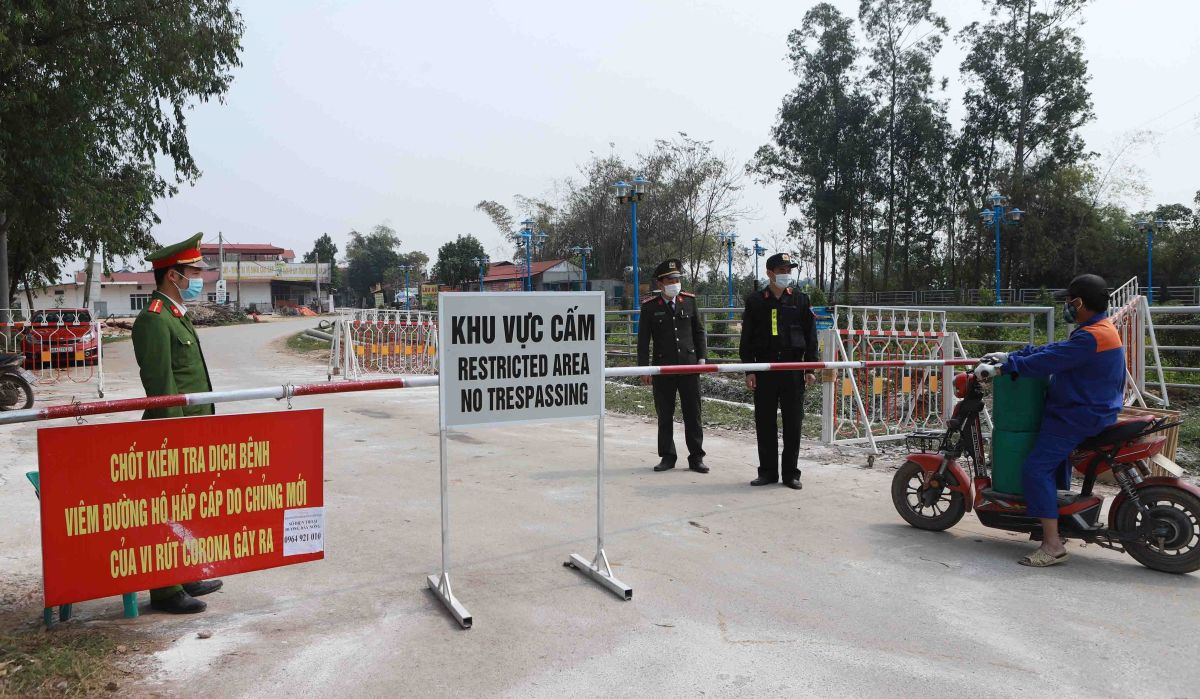
Under the directive, the PM ordered a 15-day period of nationwide social distancing starting 00:00 on April 1, with the principle of every household, village, commune, district and province going into self-quarantine. Factories and workshops are required to ensure a safe distance between workers, facemasks must be worn, and workplaces must be sterilised according to regulations. In March and April, many localities had areas locked down and quarantined because of COVID-19, such as Binh Thuan province; Ha Loi village, Me Linh commune of Hanoi; and some localities of Ha Nam province.

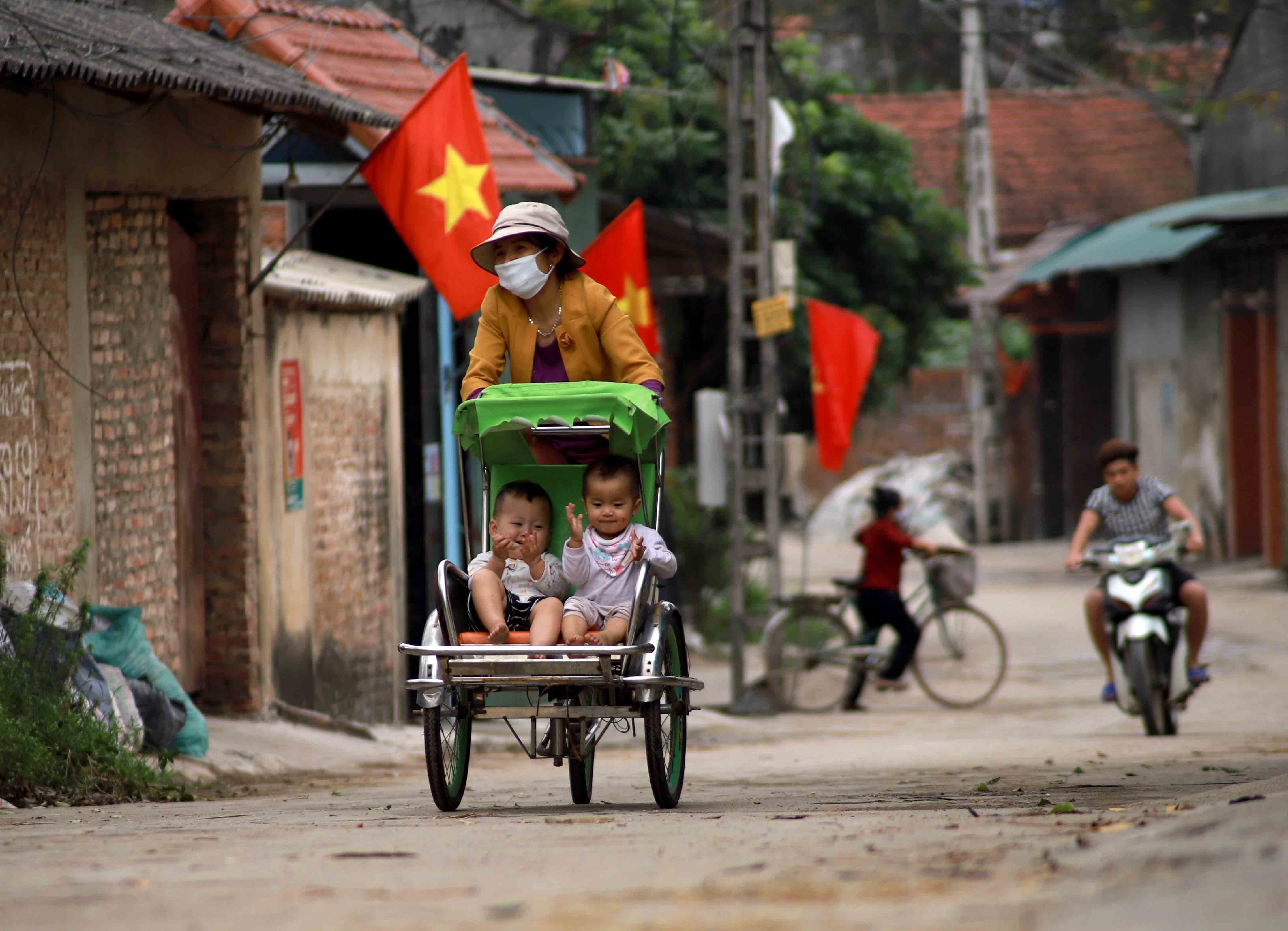
The country is now in a quarantine period similar to the situation that people in Son Loi commune, Binh Xuyen district, Vinh Phuc province experienced more than one month ago.

VietnamPlus interviewed Nguyen Trong Khoa – Deputy Director of the Administration of Medical Services under the Ministry of Health, who is in charge of the special task force of the National Steering Committee for COVID-19 Prevention and Control in Vinh Phuc, to gather a better understanding.

Reporter: Recently, Son Loi commune of Vinh Phuc province was locked down for 21 days. Having stayed with the people of Son Loi commune, what impressed you the most?

Nguyen Trong Khoa: The most impressive thing for me was that, despite being quarantined, the activities of local people still took place as normal.

When we came to the families, the people were very nice. When going to the temporary market, people still sold goods and said they only sold commodities to villagers.

At checkpoints, all forces from soldiers, police, health workers, other forces, and staff of medical stations engaged in the fight.

The 30 medical teams did a huge amount of work every day, but no one complained or quit their jobs. Everyone was very active.

The Son Loi Medical Station had a total of more than 90 volunteers joining 30 medical groups to monitor, measure body temperatures, and conduct health checks for nearly 10,000 people here daily.

The 30 medical teams did a huge amount of work every day, but no one complained or quit their jobs. Everyone was very active.

Reporter: As the person responsible for monitoring medical workers in the lockdown area, what did your team do at that time?

Nguyen Trong Khoa: My team conducted screening and took people showing signs of fever to quarantine areas for testing.

The Ministry of Health and Vinh Phuc province cooperated in performing the work at the Quang Ha General Clinic (with many doctors from the Bach Mai Hospital, the National Children’s Hospital and the Central Lung Hospital). Health checks were conducted at medical stations. We received full support, with portable X-ray scanners, ultrasound equipment, ECG machines, quick blood glucose test equipment and monitors.

During the 21 days of lockdown in Son Loi, doctors here provided nearly 500 health check-ups. In addition, nearly 100 patients were transferred to the Phuc Yen Regional General Hospital and higher-level hospitals for emergency and treatment. Reporter: Could you elaborate on the difficulties in the transfer of patients to higher-level hospitals in the context of lockdown in Son Loi?

Nguyen Trong Khoa: The task was not simple, requiring a process that ensured the commune’s people did not contact others outside. The patients were transported by an ambulance which has two compartments: one for the driver and one for patients.

At the Phuc Yen Regional General Hospital, a separate 110-bed area was arranged for medical examination and treatment of Son Loi patients. About 20 women in the commune gave birth during 20 days of lockdown. Their deliveries were performed by doctors in the isolated area of the hospital. Doctors arranged delivery tables and an operating room for those from Son Loi commune.

The transfer of patients was not simple, requiring a process that ensured the commune’s people did not contact others outside.

Similarly, for dialysis patients, the dialysis machines were arranged in a separate room to ensure that Son Loi people with normal diseases did not have to go to the common area to avoid the risk of spreading the coronavirus to other people and the community. These were very difficult jobs but the Son Loi people were very cooperative and assured of all medical services.

In addition, together with the Binh Xuyen Medical Center, we opened a health insurance area. All patients who were treated here had their treatment costs covered by health insurance. The transferred patients were those with diabetes, hypertension, chronic diseases and palliative care. We even had to go to central-level hospitals to get medicine for some patients.

Son Loi commune’s market is located between two villages Ai Van and Ngoc Bao. (Photo: VNA)

This showed that, within 21 days of lockdown, all medical services for people in Son Loi commune were provided at the medical station. Any cases that could not be served here were transferred to higher-level hospitals by special vehicles in line with safety procedures. In particular, there was a separate room at the Phuc Yen Regional General Hospital for two dialysis patients from Son Loi commune while 20 women giving birth at the hospital were carried by specialised vehicles. Reporter: Could you share more about the activities of the working groups in the lockdown area?

Within 21 days of lockdown, all medical services for people in Son Loi commune were provided at the medical station.

Nguyen Trong Khoa: There were two groups: one of the Ministry of Health and the other of the provincial People’s Committee. We stayed at the district canteen and were provided lunch there.

Some doctors who were sent to hospitals or medical stations, they cooked for themselves at the sites and were on duty around the clock.

Reporter: After three weeks of staying in Son Loi, when the lockdown order was lifted, what were your feelings?

Nguyen Trong Khoa: Actually, this was a very long working trip. Before my working trips lasted only one week, including those abroad. The day we met again after the lockdown in Son Loi was removed, we were very happy. We had this feeling not only because we met again after a long time, but because our working teams already fulfilled the tasks.

COVID-19 checkpoints are set up at the entrances to Son Loi commune. (Photo: VNA)

When we came here, we determined that everything could happen at any time. The most important element is to provide the best medical examination and treatment and health care for the people so that they can be assured. In particular, we must do our best to detect suspect cases as early as possible to avoid transmission in the community.

When we came here, we determined that everything could happen at any time.

Reporter: What is the happiest thing after the “victory” in Son Loi?

Nguyen Trong Khoa: The best news is that we have not recently detected any new cases of COVID-19. Everything goes smoothly and people here are well cared for.

Reporter: Thank you very much!

Technicians prepare for radiography for patients in a special quarantine area at the Quang Ha General Clinic, Binh Xuyen district. (Photo: VNA)

Vietnam is bright spot in COVID-19 fight: insiders

Hanoi (VNA) – The development of COVID-19 in the world remains complicated with over 4.5 million people infected, including more than 330,000 fatalities.

Vietnam has so far recorded 314 COVID-19 cases, including 260 recoveries and there is zero death. The country’s achievements in the fight against COVID-19 have been internationally recognised.

The disease has been basically pushed back

At 12:00 on May 14, the quarantine area in Dong Cuu hamlet, the last of its kind in Hanoi, was unlocked. This means there is no community outbreak across the country at present.

As of May 16, the country had gone through 30 consecutive days without new local transmissions. Among the total 314 infections, 174 were imported and quarantined upon arrival.

To date, the disease at home has been basically pushed back. However, we should not lower guard but must resolutely prevent the pandemic’s resurgence.(Prime Minister Nguyen Xuan Phuc)

Despite facing a lot of difficulties and challenges in the context of the complicated developments of COVID-19 in the globe, Vietnam has basically contained the disease and prevent its transmission among the community thanks to the drastic and effective direction of the Government as well as the high determination and consensus of the whole political system and people, said Prime Minister Nguyen Xuan Phuc.

The triumph in the disease prevention at this moment is crucial, demonstrating the strong determination and will of the whole Party and army and the support of the people nationwide, he went on.

Prime Minister Nguyen Xuan Phuc (Photo: Vietnam News Agency)

However, cabinet members said besides favourable factors, in the coming time Vietnam will continue to encounter numerous difficulties and challenges, especially when the pandemic is still developing complicatedly and unpredictably in the world. The number of infections and fatalities remain high in many countries, requiring all departments, relevant sectors and localities to keep high guard, striving to prevent the disease from resurging.

The key task at present is to promote business production and to boost growth as well as to address employment and to ensure life for people, said Prime Minister Nguyen Xuan Phuc.

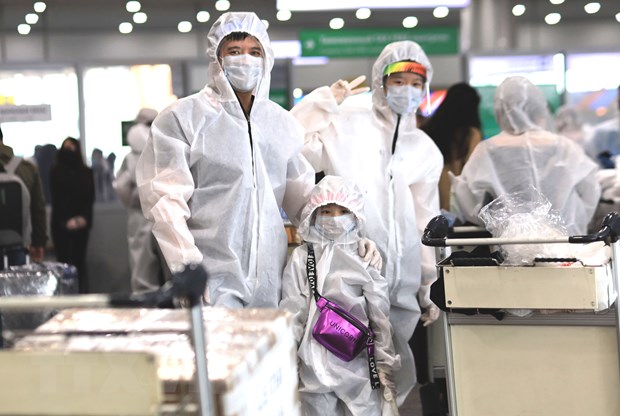
Vietnamese citizens at Sheremetyevo airport about to return home (Photo: Vietnam News Agency)

Striving to prevent external sources of infection

The country has entered a new period of preventing the disease, according to permanent Deputy Minister of Health Nguyen Thanh Long. Currently each day, Vietnam tests about nearly 2,000 samples and so far 2750,000 samples have been tested, with 288 cases found, mainly at quarantine establishments. The Ministry of Health said the risk of community transmissions is low.

Vietnam still continues taking measures to prevent the external sources of infection. All those who enter Vietnam must be quarantined at concentrated quarantine areas for 14 days and have samples tested twice. The monitoring and early detection system in the community has been maintained to zone off the outbreak areas and stamp them out immediately. The pandemic response capacity will be continuously enhanced, especially the medical staff, he said.

“Vietnam still continues taking measures to prevent the external sources of infection.” (Deputy Minister of Health Nguyen Thanh Long)

Vietnam has proactively produced a lot of medical equipment and medicines at home. The National Steering Committee for COVID-19 Prevention and Control is focusing on coordinating prevention activities of ministries, relevant departments and localities, Long said.

In the long-term strategy, Deputy Prime Minister Vu Duc Dam said Vietnam will continue applying strict management of people entering the country to ensure safety and realise the dual tasks of preventing the disease and reviving socio-economic development.

Forces in the front lines of the battle such as the health, military and public security sectors must always stand ready. The health sector will continue studying vaccine, medicines, treatment regimen and e-health record, while the military and public security sectors will continue strictly monitoring entrance in the country and implement concentrated quarantine measures, he added.

Reliable address for investors

Over the past time, the international media has praised Vietnam for successfully curbing the disease and returning to normal. Many insiders described Vietnam as a reliable address for investors post-pandemic.

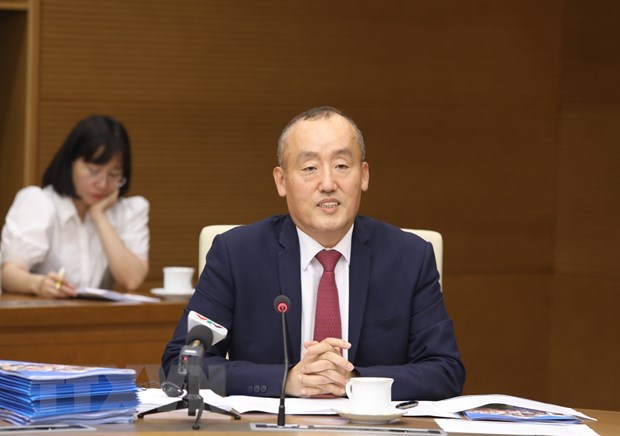
Chief Representative of the World Health Organisation (WHO) in Vietnam Kidong Park expressed his impression on Vietnam’s prompt and effective measures against COVID-19.

Chief representative of the World Health Organisation (WHO) in Vietnam Kidong Park (Photo: Vietnam News Agency)

He said Vietnam grasped information quickly. He wants to spend time analysing and collecting Vietnam’s lessons and experience in the fight against COVID-19 to share with the international community.

He added that he feels safe while working and living in Vietnam. He and many international experts spoke highly of Vietnam’s close coordination and information sharing about COVID-19 prevention activities, including data about the number of infections, recoveries and there is no death.

However, he added that as there is no vaccine against COVID-19, the pandemic is forecast to prolong for months or even years. Vietnam should still maintain high vigilance to prevent the risk of community transmissions, he advised.

Foreign experts recommended Vietnam strengthen efforts to contain the disease and prevent the external sources of infection.

On April 1, 2020, Prime Minister Nguyen Xuan Phuc signed Decision 447/QD-TTg declaring national COVID-19 epidemic.

In April 2020, the Government promulgated many documents directing measures against COVID-19.

The Prime Minister’s Directive 19/CT-TTg issued on April 24, 2020, on continuously implementing measures against COVID-19 in the new situation which  allow the relaxation of restriction measures and resumption of socio-economic activities based on the good control of the disease, especially in Hanoi, Ho Chi Minh City and urban areas./. 

The ones who leave aside personal affairs

In the afternoon of the first day of the Lunar New Year (Tet), while spending the holiday in his hometown in Thai Binh province, political commissar Major Mai Van The received a phone call from his chief at the Po Hen border guard post (the northern province of Quang Ninh), ordering him to immediately return to the post.

“Telegrams from the High Command continuously arrived, saying the pandemic situation in China is very tense, and border guard posts need to promptly carry out plans to have the best shield [against the disease]”, The recounted the call from his boss.

Leaving his holiday unfinished, on the second day of Tet, saying goodbye to his family, The quickly returned to his post on the front line of the COVID-19 battle.

Self-commitment to not fall ill or collapse

On the first days of the Lunar New Year, incessant rains and a thick fog blanketed the northern border, making it hard for people to see one another just a few metres away. Muddy roads threatened to undermine people’s determination.

Mai Van The said: “When we guard border trails and crossings well, the COVID-19 pandemic from abroad will be prevented from entering the country. This is the task of fighting against the COVID-19 enemy that we have to perform in peacetime.”

Leaving his holiday unfinished, on the second day of Tet, saying goodbye to his family, Major Mai Van The quickly returned to his post on the front line of the COVID-19 battle.

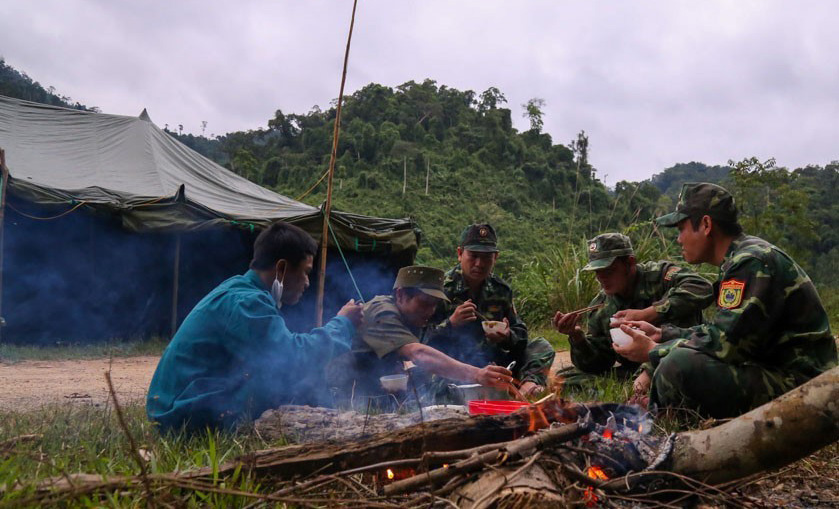
The over-12km-long tortuous border road was a big challenge to soldiers of the Po Hen border guard post. There, they had to take turns to stand guard around the clock regardless the constant rain or the bone-chilling cold on the frontline.

Soldiers of the A Pa Chai border guard post go on a patrol to prevent illegal entry in Muong Nhe district, Dien Bien province (Photo: VNA)

Pointing towards the banks of the Ka Long River, where makeshift huts became dilapidated after a downpour, The said: “In the initial period, we successfully prevented many [illegal entry] cases. That was from the 12th to the 17th day of the first lunar month. There were a large number of informal Vietnamese workers in China. When the disease broke out there, many of them wanted to come home. Many went along border trails or crossings to enter the country illegally.”

They have been away from their families for the last three months, and had to repress personal sadness so as to fulfil the duty of safeguarding the homeland’s border areas.

In the face of this situation, the border guards have deployed personnel to this side of the bank by the border river and set up dense checkpoints to prevent anyone intending to enter the country illegally.

Relevant forces in China have also ramped up the examination of houses on their side to check whether or not there are illegal Vietnamese workers, and if they find out there are any, those workers will be sent back to Vietnam.

The recalled that there were times the temperature was only 10 degrees Celsius and it rained for over 10 consecutive days, but they still went on patrol with only raincoats and committed themselves to not falling ill or collapse. Now, the Po Hen border guard post is settled and local residents still continue their normal daily lives.

Lieutenant Colonel Nguyen Thanh Le, head of the Po Hen border guard post, said that many of his comrades have had important events or incidents in their families over the last three months, but were unable to go home. Putting their duties above all, they have phoned and encouraged their families to strive to overcome, so that they can focus on the COVID-19 fight and border defense.

There were times the temperature was only 10 degrees Celsius and it rained for over 10 consecutive days, but they still went on patrol with only raincoats, committing themselves to not falling ill or collapse.

To counter the COVID-19 pandemic, under the Party and State’s directions, officers and soldiers of different military units have exerted efforts to weather difficulties and join hands, with forces, authorities and residents on border areas, to fulfill their duties.

But it’s not just The and soldiers at the Po Hen border guard posts fighting the COVID-19 fight. Thousands of people across the S-shaped nation have also been repressing joy and sadness to fulfil their duties, preventing illegal entry and dealing with any problems emerging in border areas.

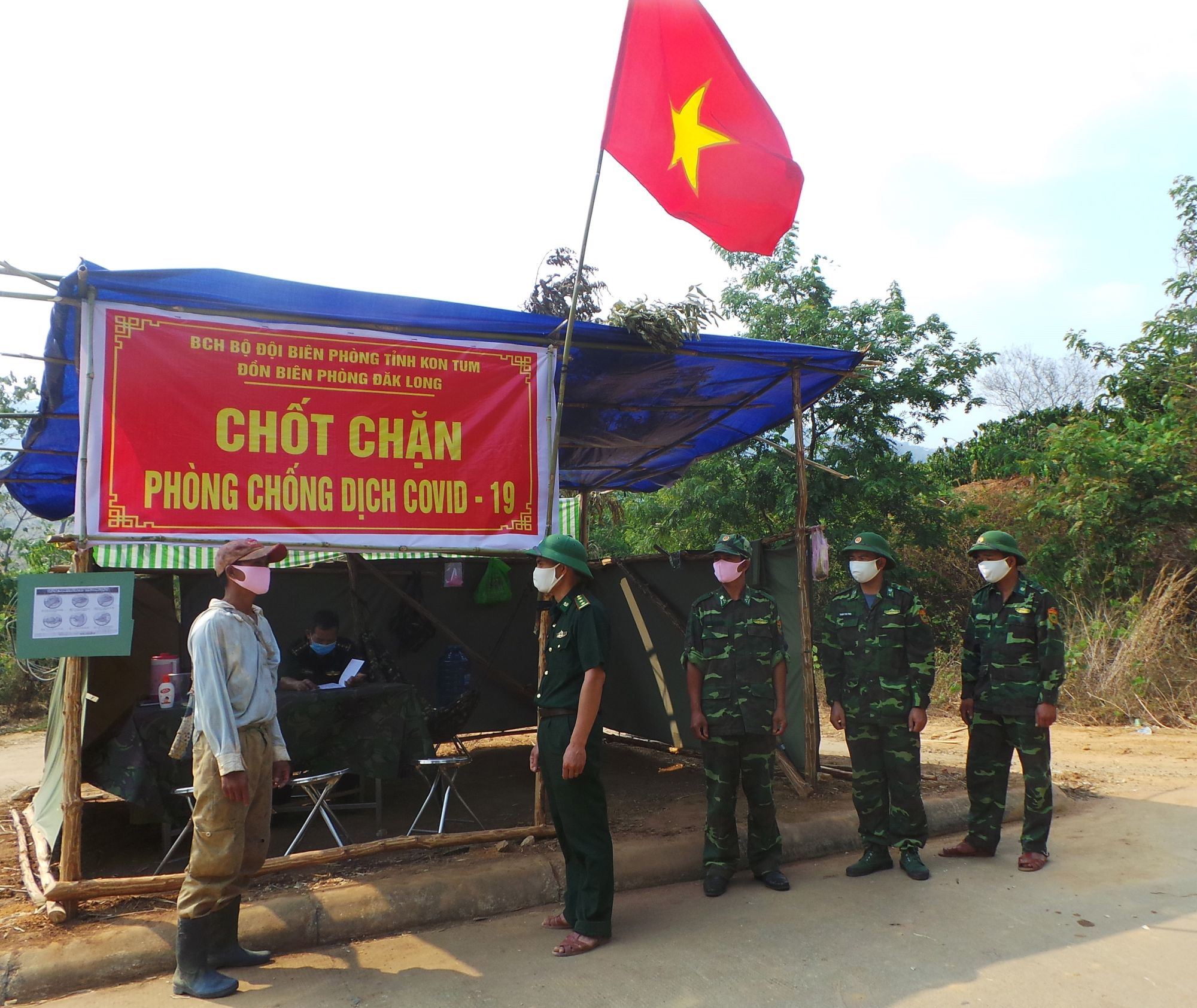
Soldiers of the Dak Long border guard post in Dak Glei district, the Central Highlands province of Kon Tum, give disease prevention guidance to a local resident (Photo: VNA)

Postponing weddings and missing funerals to fight the pandemic

Over the last three months, to focus on their tasks on the frontier, many soldiers have had to shelve their personal affairs.

Lieutenant Le Dinh Thanh at the border guard post of the Nam Can International Border Gate, the central province of Nghe An, is a prime example. He had to delay his wedding to perform his tasks.

Thanh said he was very sad but also aware of his duties. He spoke to his fiancée so that she could sympathise with him. He hoped that the “COVID-19 enemy” will be contained soon so they can hold their wedding.

Thanh hoped that the “COVID-19 enemy” will be contained soon so they can hold their wedding.

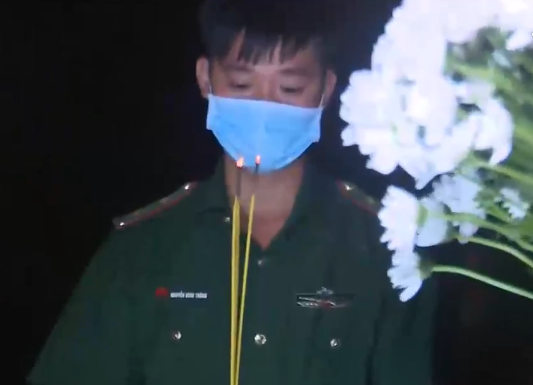
Lieutenant Nguyen Dinh Thong at the Thanh Tri border guard post, the southern province of Long An, had to control the sorrow at his father’s death and being unable to see him for the last time. His colleagues set up a small altar next to their checkpoint for him to worship the deceased father from afar.

According to the Border Guard High Command, its units along the land borderline nationwide have braved harsh weather conditions and numerous difficulties, yet organised thousands of teams with more than 5,000 officers and soldiers to patrol and stand guard on border trails and crossings around the clock.

Lieutenant Nguyen Dinh Thong of the Thanh Tri border guard post.

Border guards have managed and controlled the borderline and border gates to prevent cross-border disease transmission.

Aside from guarding the frontier, they have also actively and proactively disseminated information and instructed locals in COVID-19 prevention and control.

Hundreds of officers, soldiers and students at military schools, along with those guarding the country’s coastline, have also been deployed, under directions of the Border Guard High Command, to key border guard units to engage in the pandemic combat.

A number of them have had to leave aside their personal emotions or affairs to take part in the fight together with their comrades.

At the Thanh Tri border guard post, right beside their checkpoint, border guards set up a small altar for Lieutenant Nguyen Dinh Thong to worship his deceased father from afar.

The Border Guard High Command reported that since April 3, 64 border guards have had to put aside their personal affairs to join hands in COVID-19 prevention and control. Among them, three were unable to return to attend their relatives’ funerals, 30 had to delay their weddings, and 21 others weren’t on the side of their wives when their babies were born.

Throughout the three months in the frontier, border guards have been persistently performing their tasks to keep strict control of the borderline, and their efforts deserve respect from people nationwide./.

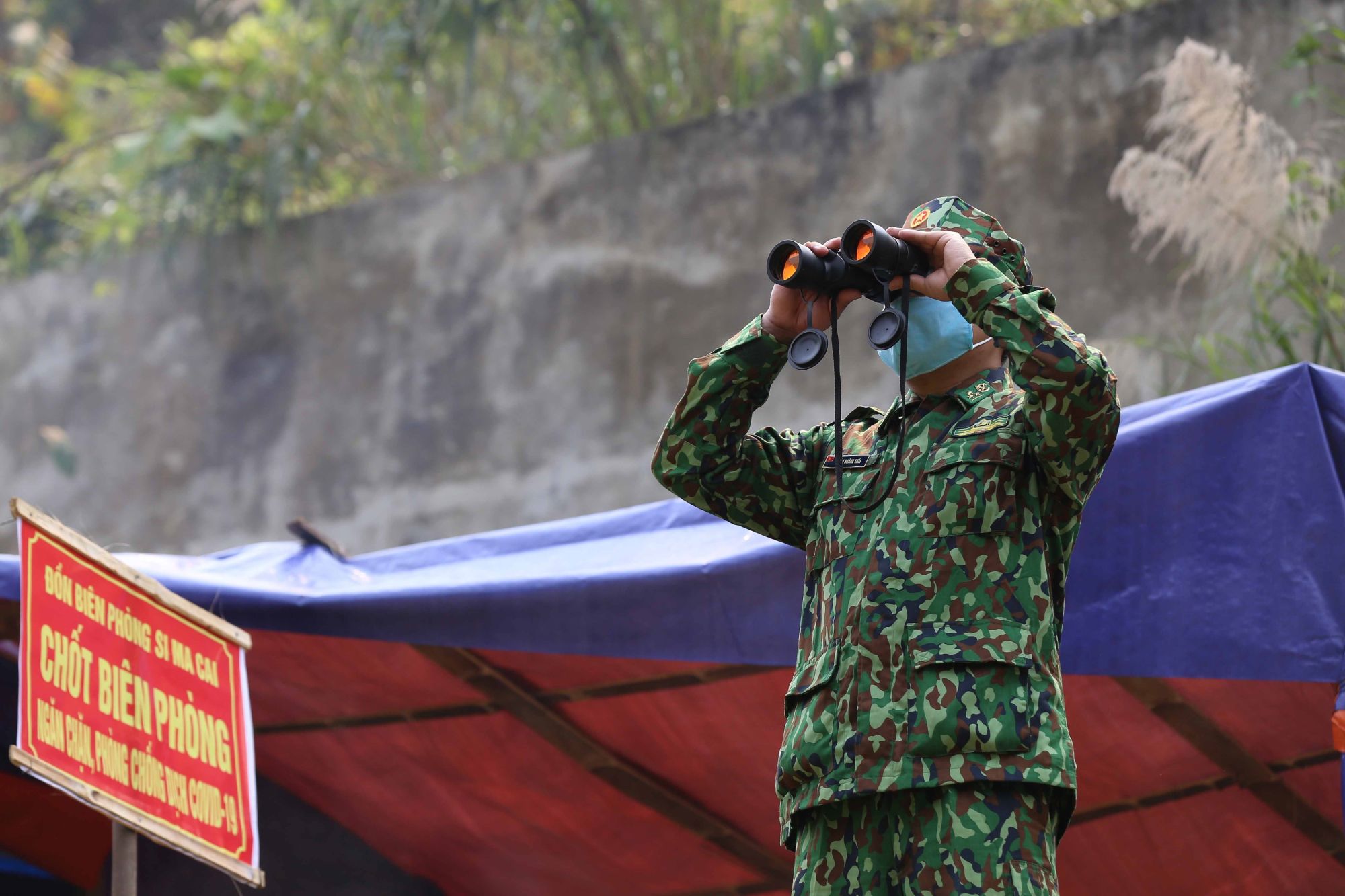
A soldier of the Si Ma Cai border guard post stands guard to prevent COVID-19 transmission (Photo: VNA)