
With the country rapidly advancing its plan to merge provincial-level administrative units, set to be completed by mid-August, the tourism industry, along with other sectors, is presented with challenges but also significant opportunities for innovation and sustainable growth in the era of the nation’s rise.



Opportunities, challenges intertwined
To streamline the political system and reorganise administrative units, the number of provinces and centrally governed cities will be reduced from 63 to 34. The scheme is anticipated to affect tourism operations, particularly in terms of destination branding, management, and market perception.
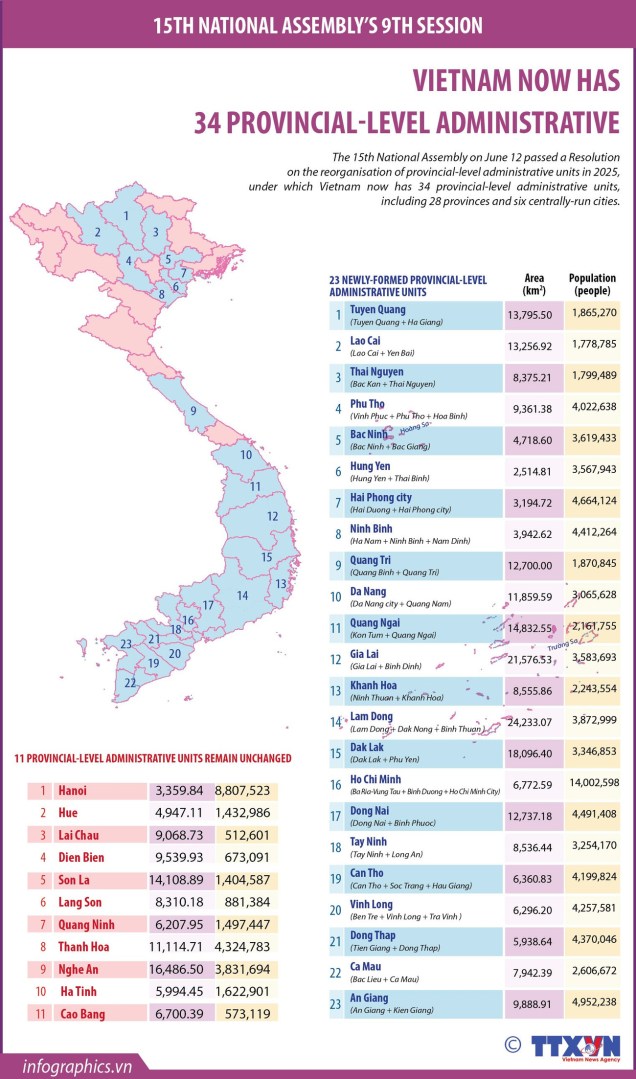
Concerns have been raised about the potential loss of tourism brands once provincial names change. However, Vu Quoc Tri, General Secretary of the Vietnam Tourism Association, argued that while rebranding is a challenge, it does not fundamentally alter the destinations themselves.
In tourism, the name of a place may evolve, but the essence of a destination remains. The landmarks still exist on the tourism map, even if they fall under a new administrative name, he explained.


Meanwhile, Truong Quoc Hung, Chairman of the Hanoi UNESCO Travel Club, sees the mergers as a strategic opportunity. The expanded geographical coverage, natural resources, and cultural heritage pools will enable localities to diversify tourism offerings and develop broader inter-provincial tourism products.
The elimination of administrative barriers will enable seamless management and more effective tourism development strategies, he stated.


Nguyen Tien Dat, Vice Chairman of the Hanoi Tourism Association, echoed this optimism, suggesting that the administrative mergers may catalyse new multi-regional tours and integrated tourism experiences. Many merged provinces will now be able to balance mountain and beach tourism offerings, which opens up opportunities to reinvent destination appeal.
Experts agree that the real opportunity lies in leveraging this transition to restructure tourism products, enhance strategic planning, and attract significant investment.


Adaptability key to post-merger tourism growth
In anticipation of administrative changes, several provinces are already adapting by reassessing destinations and forming collaborative tourism plans.
The northern provinces of Ha Nam, Ninh Binh, and Nam Dinh, which will be merged and take the name Ninh Binh, have organised famtrips and tourism forums to recalibrate offerings in line with evolving market demands. Provinces across the south-central and Central Highlands localities recently held a regional tourism development forum aimed at designing fresh tourism products aligned with Vietnam’s reform requirements.


The administrative overhaul gives localities more room to expand development spaces, particularly in tourism. Yet, experts perceived that the initial stages will be met with obstacles, especially regarding governance, identity preservation, and the coherence of tourism narratives.
Ha Van Sieu, Deputy Director of the Vietnam National Authority of Tourism, emphasised that this restructuring should be viewed as a lever for innovation. He claimed that this is a chance for localities to change their approach and adapt flexibly to achieve new advancements in development.
It’s time to reassess their potential and advantages and develop suitable multi-destination products, thereby leveraging the strengths of each region, he stated.


Policies needed to preserve cultural, historical heritage
“The merging of administrative boundaries will present localities with both challenges and opportunities. The most evident advantage lies in reducing overlaps in administrative management, enabling more efficient use of resources and facilitating infrastructure development investment. However, the greatest challenge is the concern that the merged localities may overshadow the established tourism brands of each area.”
PHAM HAI QUYNH, DIRECTOR OF THE ASIAN TOURISM DEVELOPMENT INSTITUTE


Pham Hai Quynh, Director of the Asian Tourism Development Institute, stressed the need for deliberate heritage conservation policies in the face of potential identity dilution. To turn challenges into opportunities, localities must prioritise preserving cultural and historical heritage while rebranding to emphasise the diversity of new destinations, he said.
He also called for investment in infrastructure, high-quality accommodation services, skilled tourism personnel, and community-based tourism to ensure sustainability.
Develop specific policies for tourism growth
“The merging of administrative units presents a significant opportunity to expand the scope of tourism development—not only in terms of geographical area but also through the enrichment of natural landscapes, culture, and local communities.”
PHAM DUY NGHIA, VICE CHAIRMAN OF THE HANOI TRAVEL ASSOCIATION AND DIRECTOR OF VIETFOOT TRAVEL
Pham Duy Nghia, Vice Chairman of the Hanoi Travel Association and Director of VietFoot Travel, underlined the importance of immediate policy alignment with the new administrative boundaries. He said unified governance and expanded geography will create chances for product diversification, but success hinges on clear tourism development policies.
He advocated destination reassessment, public-private partnership in tour and product design, and methodical digital marketing efforts.


Building professional communications, promotional strategy
“The merger of provincial-level units is a carefully considered policy and an inevitable trend aimed at ushering the country into a new era of development.”
NGUYEN CHAU A, CHIEF EXECUTIVE OFFICER OF OXALIS ADVENTURE AND OXALIS HOLIDAY

Nguyen Chau A, CEO of Oxalis Adventure and Oxalis Holiday, highlighted the opportunity for brand consolidation and upgraded promotion efforts.
As Quang Binh is set to merge with Quang Tri, he said he expects changes in names, but not in destination appeal. Their caves, beaches, and experiences remain intact. Now is the perfect time for tourism businesses to invest more methodically, introduce new offerings, and professionalise marketing campaigns, added the CEO./.
