
As artificial intelligence (AI), along with machine learning (ML), big data and cloud computing make more in-roads among all sectors, it requires labourers to equip themselves with necessary technology knowledge and skills.
The tech boom will make it hard for untrained workers to maintain their current jobs and seek new ones, experts said.


Those unable to use technology will find it hard to seek jobs in the future. (Photo: VNA)
At the annual meeting of the World Economic Forum in Davos, Switzerland, in January, the International Monetary Fund (IMF) said AI will affect almost 40% of jobs around the world, replacing some and complementing others.
AI applications may execute key tasks currently performed by humans, which could lower labour demand, leading to lower wages and reduced hiring, the fund noted.
AI impacts on labour market
Hoang Nam Tien, Vice Chairman of the FPT University Council, cited studies as predicting that by 2030, up to 375 million workers worldwide may need to switch occupational categories, and 85% of the jobs that will exist in the year haven’t even been invented yet.
In the near future, the generation that understands and utilises AI will take over jobs from the older, less tech-savvy staff. AI will not completely replace humans, but instead, those using it will outperform the others. It will also become a new workforce with the advantage of never getting tired, not requiring bonuses, and not taking leave for family reasons like humans.

It is a must to “eliminate technology illiteracy” among workers in the Fourth Industrial Revolution.
Hoang Nam Tien, Vice Chairman of the FPT University Council.
About 85% of employees performing repetitive tasks will lose their jobs in the near future, Tien said.
According to a report by the General Statistics Office of Vietnam, in the second quarter of 2024, the country had 51.4 million employed workers (aged 15 and above). Among them, up to more than 32 million (61%) accepted informal jobs, while the remainder held formal ones.
The report also pointed out the biggest limitation of the domestic labour market that is up to 70% of the workforce has not received any primary training, exacerbating job hunting, both domestically and internationally, particularly in securing stable and high-paying positions.


About 85% of employees performing repetitive tasks will lose their jobs in the near future. (Photo: VNA)
In the next 10-15 years, many current jobs and occupations will decline or disappear entirely, while entirely new jobs will emerge. The shift in the workforce structure is inevitable, and technology plays a crucial role in determining the transition.
It is forecast that the top professions most likely to decline and disappear in the future include accountant, bank teller, data entry clerk, and secretary. At the same time, many new tech-related jobs will be created and attract a large workforce like AI and ML specialist, data analyst, information security specialist, financial technology (FinTech) engineer, robotics engineer, digital transformation specialist, and smart agriculture equipment operator.
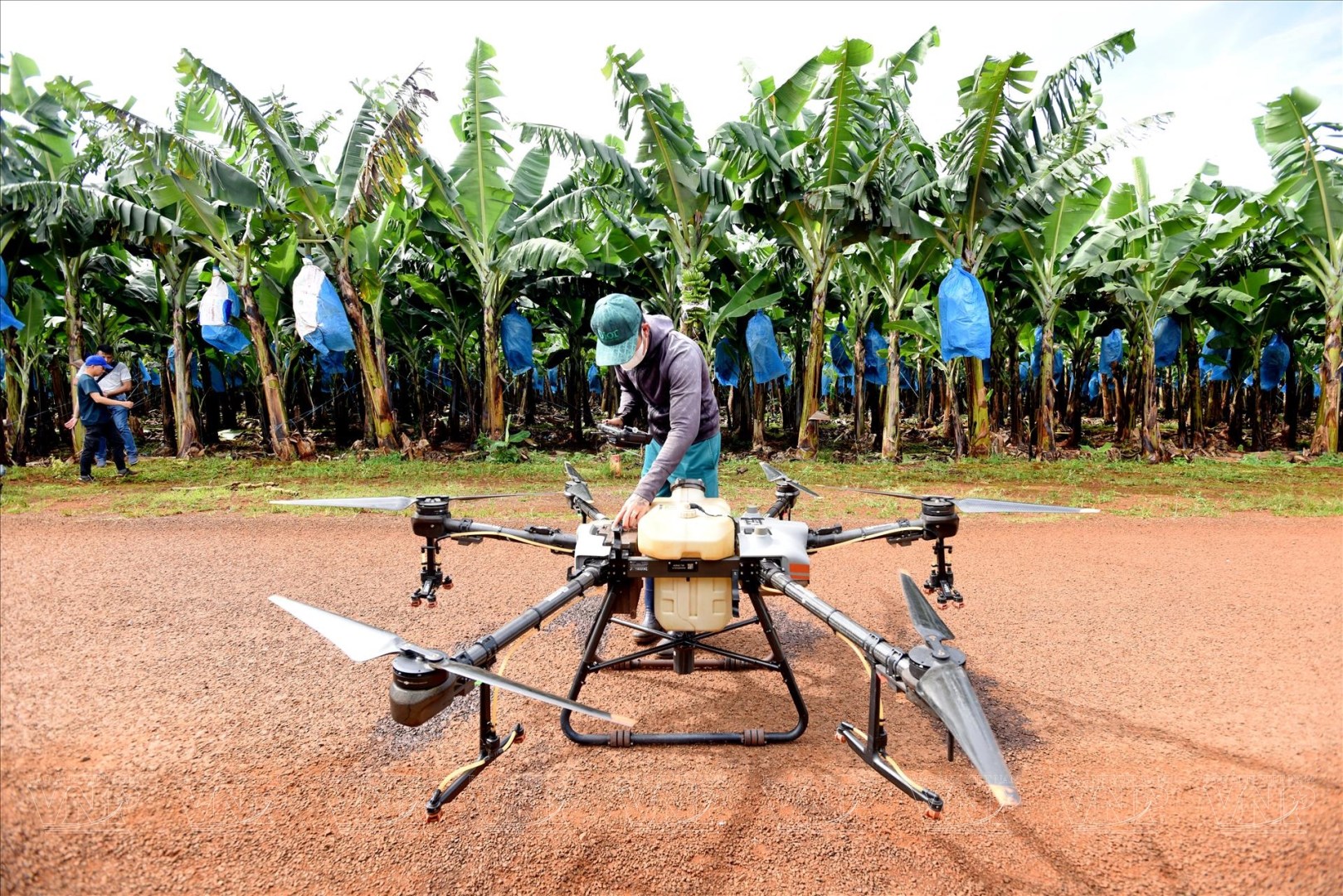
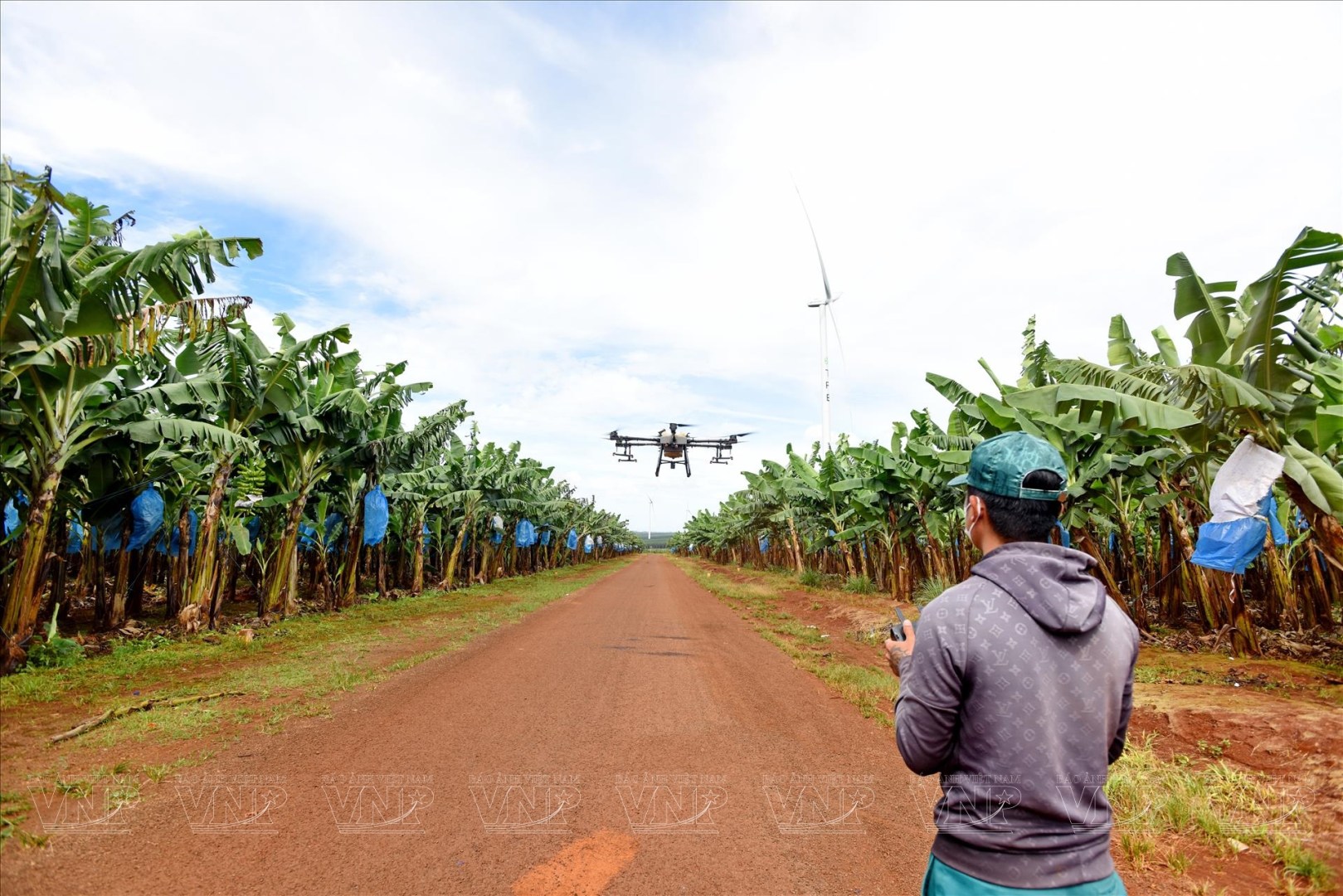
Smart agriculture equipment operator is among the new tech-related jobs to be created. (Photo: VNA)
To ensure good job prospects, workers need to update their tech knowledge and skills, said Hoang Trung Dung, Chairman at the Kingsman Strategy and Human Resources Academy. Many young people have equipped themselves with digital and tech skills through online learning platforms. This is a simple, widespread, low-cost method with diverse options for workers, tailored to their own levels and needs.


Students at Trung Vuong Secondary School (Hanoi) learn about future career trends and neccessary AI and robotic skills. (Photo: VNA)
To ensure good job prospects, workers need to update their tech knowledge and skills, said Hoang Trung Dung, Chairman at the Kingsman Strategy and Human Resources Academy. Many young people have equipped themselves with digital and tech skills through online learning platforms. This is a simple, widespread, low-cost method with diverse options for workers, tailored to their own levels and needs.
With the aim of upgrading tech skills for the Vietnamese workforce, particularly in new sectors (AI, blockchain and ML) as well as in using platforms for human resources (HrTech), FinTech, and office management, the Vietnam Software and IT Services Association (VINASA) that represents 600 domestic IT firms has recently signed a cooperation agreement with Udemy, a high-tech company that is one of the largest Massive Open Online Course (MOOC) platforms in the world, and the online university FUNiX. This partnership aims to develop a tech training system across multiple fields on an online platform.
Tran Duy Kiem, Partnership Development Manager of Udemy in Vietnam, said in addition to courses offered in English, Udemy has recently launched several technology courses, which are globally popular, with Vietnamese language support to better serve the Vietnamese population.
TThis initiative will create opportunities for many Vietnamese personnel and organisations to access online tech education more quickly and conveniently, he added, noting in the context of the Fourth Industrial Revolution, this is a long-term strategy to enhance the value of Vietnamese labourers, thereby enhancing their competitiveness in the international market.
Vietnam prioritises AI development, application
From the Government’s perspective, AI is one of the prioritised technologies for research, development, and application, enabling Vietnam to proactively participate in the Fourth Industrial Revolution.
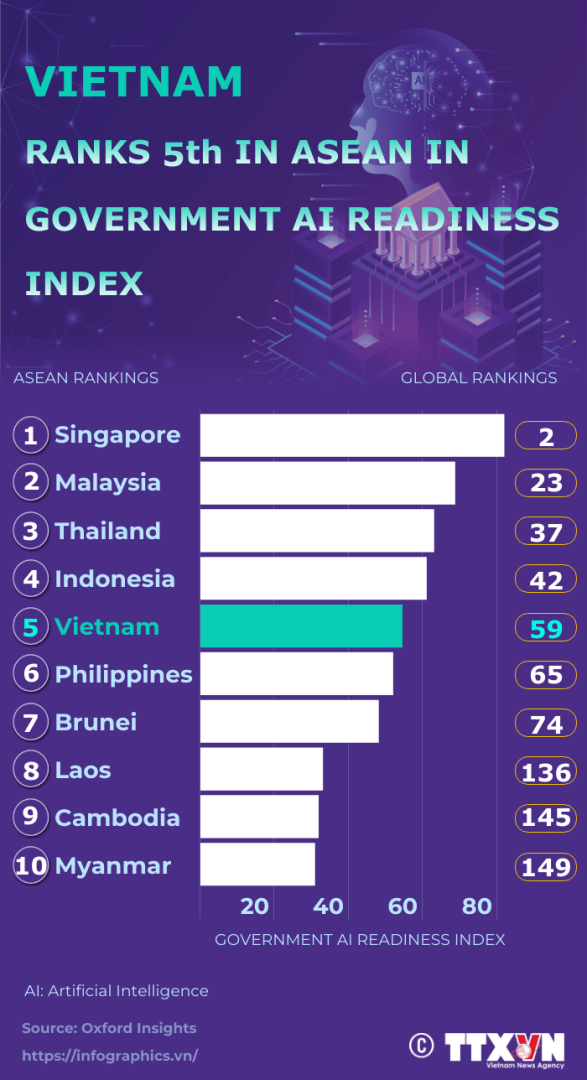

“In early 2021, the Prime Minister approved the National Strategy on AI Research, Development, and Application by 2030, which aims to make AI a key technological sector in Vietnam amidst the Fourth Industrial Revolution, striving to turn the country into a centre for innovation and development of AI solutions and applications in the Association of Southeast Asian Nations (ASEAN) and globally by 2030.“
Prime Minister Pham Minh Chinh said at a ceremony marking the Vietnam Science and Technology Day on May 18, 2024.
According to Deputy Minister of Science and Technology Nguyen Hoang Giang, in addition to the PM’s Decision No. 127/QD-TTg, dated January 26, 2021, approving the national strategy, Vietnam issued Decision No. 411/QD-TTg, dated March 31, 2022, approving the National Strategy for Digital Economy and Digital Society Development by 2025, with a vision toward 2030.
On February 2, 2024, the Government also approved the National Data Strategy, providing the foundation necessary for AI development in the country.
Giang said amidst the AI technology development trend, Vietnam can ill afford to stay on the sidelines. On one hand, the country must establish a clear and practical legal framework to support AI research and application in daily life to spur socioeconomic development. On the other hand, it needs to learn from and share experience with developed countries to adopt AI applications responsibly and in a manner that aligns with the Vietnamese culture while avoiding potential losses./.
