
Over the past eight decades, Vietnam has undergone a remarkable transformation in agriculture. From a former colony challenged by famine and outdated farming practices, the country has emerged as one of the world’s leading agricultural exporters, playing a crucial role in the global food supply chain.
From famine to food security
In 1945, more than two million Vietnamese died in a devastating famine, the result of colonial and fascist oppression and an underdeveloped agricultural system with low productivity. Following the August Revolution that year, the top priority of Vietnam’s agricultural sector was to ensure food supplies for the population.
Throughout three decades of resistance wars for national liberation, Vietnamese agriculture fulfilled the dual tasks of feeding the population and supplying the frontlines.


After the national reunification in 1975, the country faced hardship due to the severe aftermath of war and foreign embargoes.
According to the National Statistics Office under the Ministry of Finance, the output of unhusked rice between 1976 and 1980 averaged just 13–14 million tonnes annually. In 1978, production fell to a historic low of 9.79 million tonnes, forcing Vietnam to import nearly 1.6 million tonnes of milled rice per year.

For many Vietnamese, the 1970s and 1980s were characterised by memories of rice mixed with cassava and sweet potatoes, symbolising survival. “Each grain of rice, each maize kernel or potato back then was more than just food – it embodied sweat, tears, and the will to survive,” recalled Nguyen Huu Quan, former Deputy Party Secretary and Chairman of Kim Long town, Tam Duong district of Vinh Phuc province (now Tam Duong commune, Phu Tho province).


Meals mixed with cassava and sweet potatoes became unforgettable memories of the subsidy era. Illustrative photo: People queue up to buy food during the subsidy period. (Source: VNA)
The turning point of Doi Moi (Renewal)

At the Sixth National Party Congress in 1986, the Communist Party of Vietnam designated agriculture as a top priority. A series of bold reforms followed, most notably the Politburo’s Resolution No. 10-NQ/TW, dated April 5, 1988, which gave farmers autonomy in production and business on the allocated land plots over extended periods.


The Politburo’s Resolution No. 10-NQ/TW, dated April 5, 1988, marked a critical turning point by allocating land to households and granting farmers the autonomy in production and business activities on the given land for extended periods. (Photo: VNA)
This landmark policy was a crucial part of the Doi Moi (Renewal) policy, empowering farmers and injecting vitality into Vietnam’s agricultural development.
As a result, the unhusked rice output surged from 15.1 million tonnes in 1987 to 32.55 million tonnes in 2000. In a historic breakthrough, Vietnam began exporting milled rice in November 1989, shipping 1.7 million tonnes within just two months. For the first time in decades, Vietnam transitioned from a food importer to an exporter.


For the first time in decades, Vietnam transformed from a food importer into a food exporter. (Illustrative photo: VNA)
Dr Dang Kim Son, former Director of the Institute of Policy and Strategy for Agriculture and Rural Development said:
“This was truly miraculous. From importing millions of tonnes of food, Vietnam became an exporter. Today, agriculture, farmers, and rural areas remain the bedrock of our resilience to challenges.”

Science, technology, and the aspiration for global integration


The revolution in science and technology application has marked a major turning point for Vietnamese agriculture, particularly in rice farming. Illustrative photo: Mechanised agriculture in Can Tho (Photo: VNA)
The revolution in the application of science and technology, combined with institutional reform, has marked a major turning point for Vietnamese agriculture, particularly in the rice sector. Once reliant on traditional knowledge, manual labour and natural conditions, rice production has undergone a profound transformation towards modernisation, sustainability, and high added value.

The Ministry of Agriculture and Environment (MAE) reported that so far, Vietnam has developed and introduced over 1,600 new rice varieties with improved yields, quality, and resilience. The unhusked rice productivity averaged 6.7–7.2 tonnes per hectare nationwide, consolidating Vietnam’s place among the world’s top rice exporters. Flagship varieties such as ST24 and ST25 have been recognised among the world’s finest.

Mechanisation has also grown rapidly. As of 2025, mechanisation rates reached over 97% for land preparation and over 70% for harvesting. The use of modern equipment has reduced labour, shortened production cycles, boosted economic efficiency, and minimised post-harvest losses. Meanwhile, advanced cultivation techniques – such as the system of rice intensification (SRI), integrated pest management (IPM), VietGAP, GlobalGAP, and organic farming – have been widely adopted, promoting safe and environmentally friendly farming practices, according to the MAE.

High-tech agricultural models in Vietnam have gone beyond production, forming closed-loop ecosystems that integrate cultivation, preliminary processing, value-added processing and distribution.
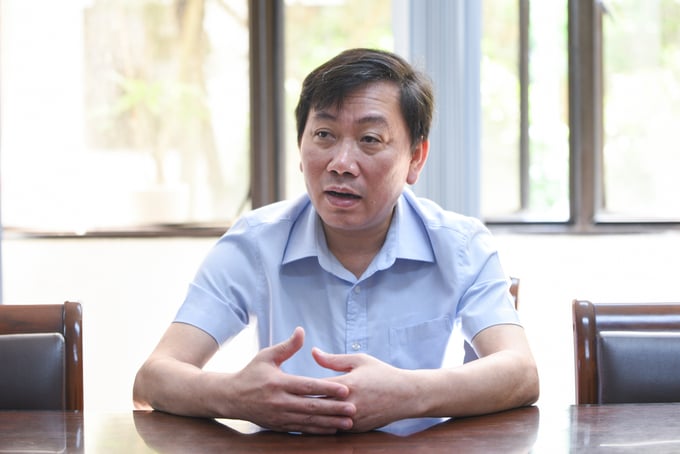
Assoc. Prof. Dr Nguyen Do Anh Tuan, Director of the MAE’s Department of International Cooperation said:
“Integrating science–technology and institutional reform has been a catalyst behind the breakthrough in Vietnamese agriculture. This has not only ensured food security but also allowed Vietnam to join global supply chains with branded, high-quality products.”

Building on that foundation, Vietnam is moving towards developing ecological agriculture, modern rural areas, and a civilised farming community, in line with the spirit of the resolution on agriculture, farmers, and rural areas issued at the 7th session of the 10th-tenure Party Central Committee.
The resolution outlines a comprehensive development policy, from rural infrastructure to human resources training. Guided by the Party’s resolutions, the national target programme on new-style rural area development has fundamentally transformed the landscape of over 70% of communes nationwide. As of June 2025, a total of 6,070 communes had met new-style rural area standards, with more than 1,200 recognised as advanced or model communes.
“The recent policies on agriculture, farmers and rural areas have demonstrated a major shift in thinking – from farmers simply growing rice to farmers playing a proactive role in production and in the market. This is also an opportunity for shaping a new generation of smart and digital-era farmers.”
Prof. Dr Tran Duc Vien, former Director of the Vietnam National University of Agriculture

In particular, the “One Commune, One Product” (OCOP) programme has created more than 8,400 products – 65% of which are rated three stars or higher – with many exported to demanding markets such as the US, Japan, and the Republic of Korea. New-style cooperatives and cooperative groups are flourishing, strengthening farmer linkages within value chains.
“The recent policies on agriculture, farmers and rural areas have demonstrated a major shift in thinking – from farmers simply growing rice to farmers playing a proactive role in production and in the market,” said Prof. Dr Tran Duc Vien, former Director of the Vietnam National University of Agriculture. “This is also an opportunity for shaping a new generation of smart and digital-era farmers,” he added.


Vietnamese agricultural products make inroads into foreign markets. (Photo: VNA)


Maintaining Vietnam’s status as an agricultural powerhouse

According to the MAE, Vietnam has consistently exported 6–7 million tonnes of milled rice annually since 2010. In 2023, the volume approximated 8.3 million tonnes, generating over 4.78 billion USD. In the first half of 2025 alone, total agro-forestry-fishery exports hit 33.84 billion USD, up 15.5% from a year earlier, with a trade surplus of 9.83 billion USD – a year-on-year increase of 16.5%.
This year, the agricultural sector targets a record export value of 70 billion USD. Of that, rice exports are expected to reach 4.9 million tonnes, bringing home 2.54 billion USD in revenue.


Some of Vietnam’s key agricultural exports (Photo: VNA)
Vietnam now leads the world in cashew exports, ranks second in rice and coffee, third in fruits and vegetables, and fourth in aquatic products. Many key products have gained access to high-standard markets in the EU, Japan, the Republic of Korea, and the US. The focus is increasingly shifting to premium products like ST25 rice, speciality coffee, organic shrimp, and processed fruits.


Organically-grown melons at Dfarm in Quang Tri province. (Photo published by VNA)
A hydroponic vegetable farm of Nguyen Viet Lam in Khang Nhat commune of Son Duong district, now Tan Thanh commune of Tuyen Quang province. (Photo: VNA)
Harvesting vegetables cultivated in coordination with farmers in Xuan Khe commune, Ly Nhan district (now Nhan Ha commune), Ninh Binh province. (Photo: VNA)
Vietnam is not only exporting products but also delivering green and sustainable values, with traceable origins and alignment with global social responsibility.


The V-ORGANIC Organic Agricultural Cooperative (Phu Tho province) produces vegetables following organic and safe farming standards. (Photo: VNA)
Workers of the Dai Dong Cooperative in Ngoc Luong commune, Yen Thuy district, Hoa Binh province (now Yen Tri commune, Phu Tho province), label Dien pomelos for the first export shipment to the UK. (Photo published by VNA)
“We’re no longer just exporting products – we’re exporting green and sustainable value,” said Dr Nguyen Do Anh Tuan. “Our goods come with traceable origins and global social responsibility.”

Nevertheless, Vietnamese agriculture is also facing many challenges posed by climate change, an ageing workforce, fierce cost competition, and stringent quality and traceability requirements. The sector recognises that science, technology, and digital transformation are the only path forward.
The Government has adopted a strategy for sustainable agricultural and rural development for 2021–2030, with a vision to 2050. This strategy targets ecological, circular and smart agriculture, annual agricultural growth of 2.5–3%, exports worth 60–70 billion USD by 2030, traceability for 70% of products, and half of all communes achieving the model new-style rural area status.

“Vietnamese agriculture is not just about food – it is also about culture, ecology, and human values.”
Le Minh Hoan, member of the Party Central Committee and Vice Chairman of the National Assembly, remarked during his tenure as Minister of Agriculture and Rural Development.
Le Minh Hoan, member of the Party Central Committee and Vice Chairman of the National Assembly, remarked during his tenure as Minister of Agriculture and Rural Development: “Vietnamese agriculture is not just about food – it is also about culture, ecology, and human values.”
The extraordinary journey of Vietnam’s agricultural sector has been forged through the sweat, determination, and intellect of its farmers, scientists, and policymakers. With strong foundations made, the sector is poised to remain a key driver of the nation’s sustainable development./
