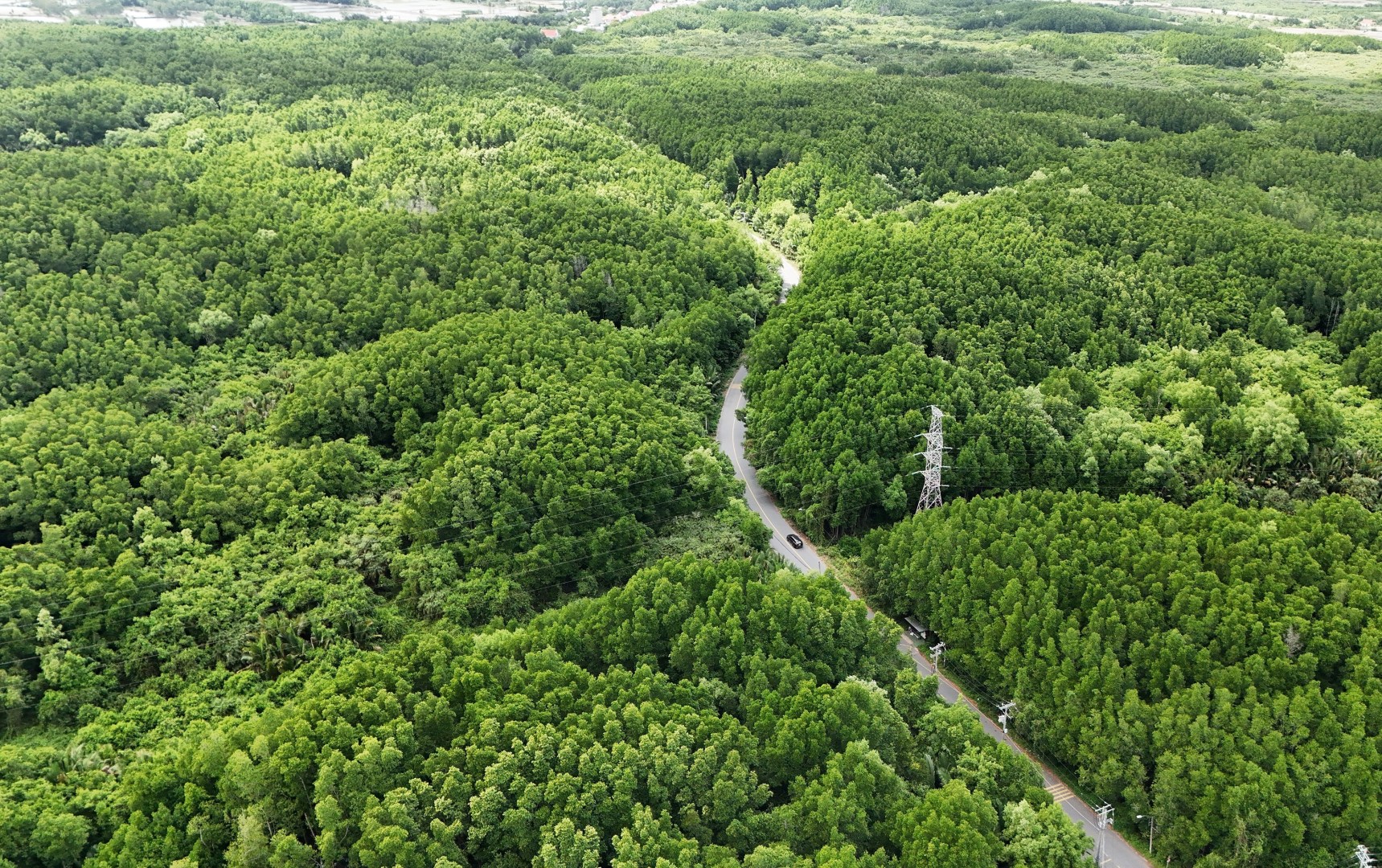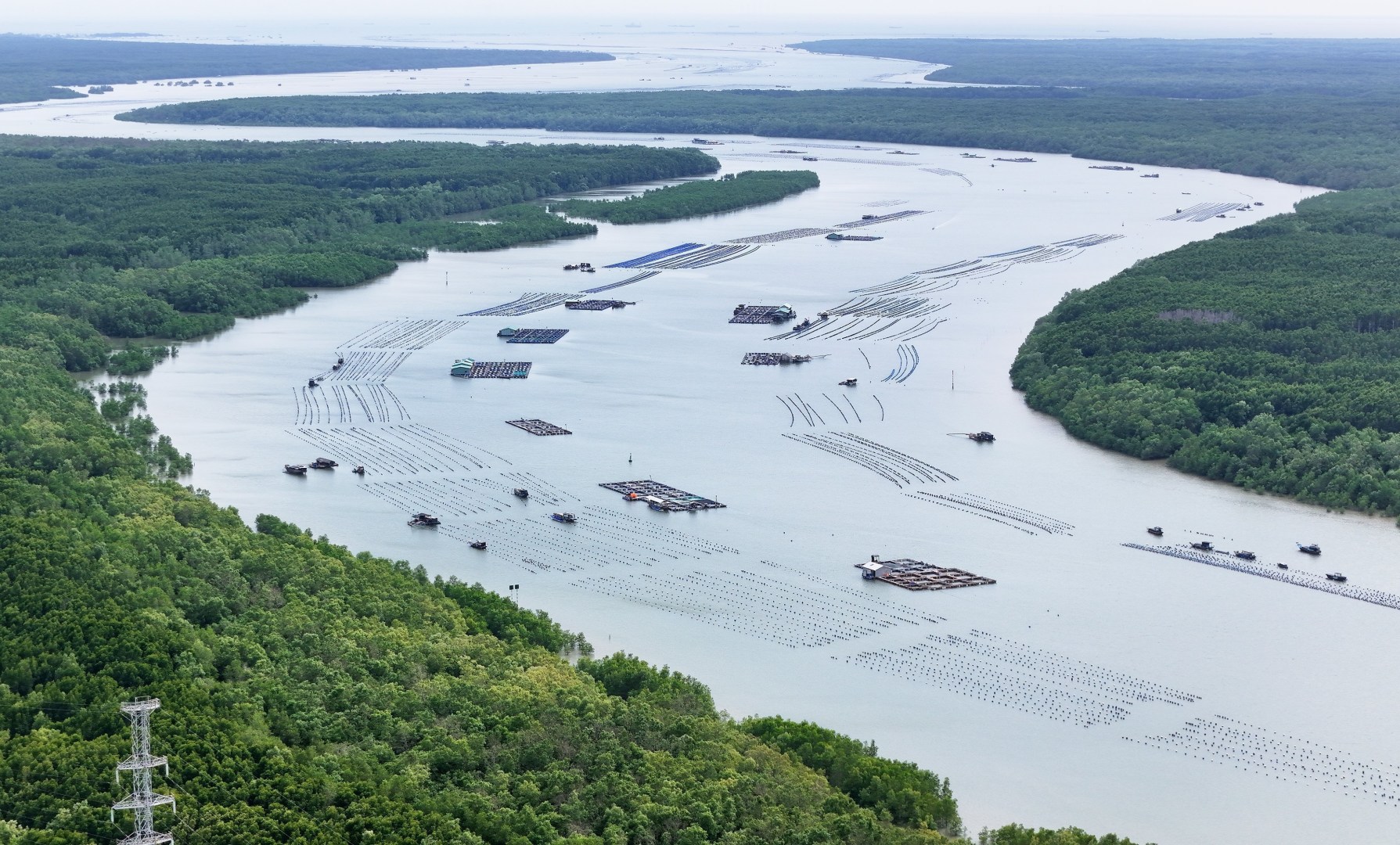
As a coastal locality of Ho Chi Minh City, Can Gio Island features a mangrove forest that thrives on the alluvial soil brought by the Sai Gon and Dong Nai rivers, combined with the tropical monsoon climate, a semi-diurnal tidal cycle, and a dense network of rivers and canals. With many unique values, the Can Gio Island mangrove forest became Vietnam’s first Biosphere Reserve recognised by UNESCO in 2000. Assessments have revealed a high level of biodiversity, rich in both quantity and species, and home to the largest and most beautiful concentrated mangrove forest in Southeast Asia.
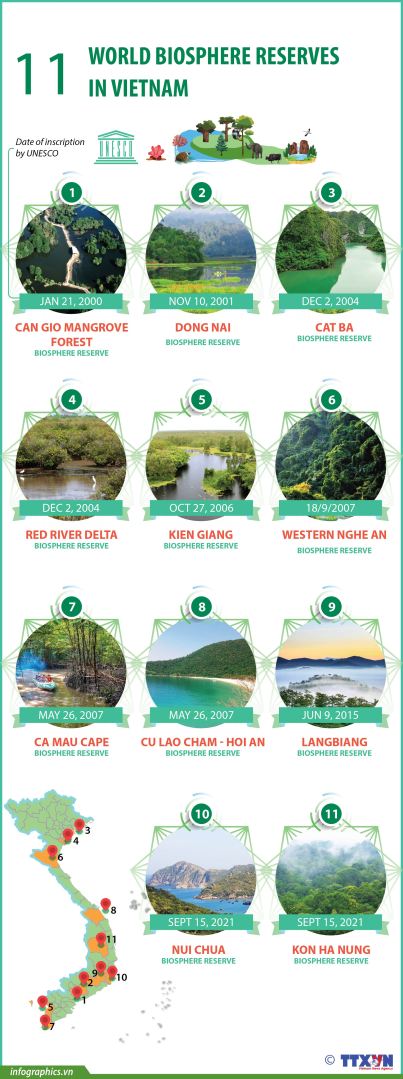
Can Gio Island mangrove forest became Vietnam’s first Biosphere Reserve recognised by UNESCO in 2000.
This is a remarkable rebirth, as during the years of war, this area suffered from millions of litres of chemical agents, thousands of tonnes of bombs and shells, transforming vast forests into barren and arid land. The resources of fauna, flora, and marine life were nearly destroyed, and the ecological environment was severely polluted.


After nearly 50 years of restoration, protection, and development (since 1978), the Can Gio mangrove ecosystem has been fully restored and is recognised by experts and scientists as a rapidly recovering mangrove forest on a large scale, primarily through human efforts. It is considered a “green carbon reservoir” and a “green lung” that forms a solid “green wall” protecting the environment for Ho Chi Minh City and neighbouring areas.
Green tourism linked with indigenous culture conservation


Can Gio holds huge potential with many eco-tourism destinations. In the photos: Students experience picking natural snails in the Can Gio mangrove forest. (Photos: VNA)
Can Gio holds great potential with numerous ecological tourism destinations, including forests and beaches, as well as historical and cultural sites. Recently, a new model has emerged, showing a revitalising shift toward community-based tourism in association with protecting the environment, the mangrove ecosystem, traditional crafts, and indigenous culture in Thieng Lieng hamlet, Thanh An Island commune.
The fresh air, the picturesque landscape, and the vibrant green of the mangrove forest, combined with the simple, pristine charm of the small island, are creating a unique appeal for this destination.


The mangrove forest landscape, the simple, wild features of a small island, and experiences associated with the lives of local people are creating a unique feature for tourism in Thieng Lieng island hamlet. (Photos: VNA)
In 2024, Can Gio attracted nearly 4.4 million visitors, and earned nearly 3.5 trillion VND (136.8 million USD) in tourism revenue, marking a 23% increase compared to 2023. The number of visitors to the mangrove forest has been steadily rising, helping to create jobs and improve income for those working in forestry, tourism services, aquaculture and fishing, and production under the forest canopy, while also boosting the local budget.

Green solutions for the future

With its mangrove ecosystem and Can Gio Biosphere Reserve, Ho Chi Minh City must plan to develop Can Gio into a “city in the forest” by 2030
Prime Minister Pham Minh Chinh
The vision for Can Gio development is outlined in Resolution No. 12-NQ/TU by the Ho Chi Minh City Party Committee’s Standing Board, which identifies that the economic development must be linked with the sustainable protection of the world biosphere reserve. It aims to make the district a model of harmony between the conservation of biodiversity and natural ecosystems, the improvement of the community’s quality of life, the preservation of traditional cultural values, and the promotion of green, sustainable economic growth.
Prime Minister Pham Minh Chinh once emphasised that with its mangrove ecosystem and Can Gio Biosphere Reserve, Ho Chi Minh City must plan to develop Can Gio into a “city in the forest” by 2030.
The city’s leaders have also long expected Can Gio to be a pioneering locality in the city for achieving the “net zero” goal by 2035, 15 years ahead of Vietnam’s international commitment. To achieve this goal, the city is focusing on investments in areas such as converting waste into electricity to meet production and living needs, creating a plastic-free destination, developing green tourism, and piloting carbon credits with the Can Gio forest.


Ho Chi Minh City develops green tourism and pilots carbon credits with Can Gio forest. Illustrative image: Monkey Island – a famous and unique destination of Can Gio. (Photos: VNA)
Ho Chi Minh City intends to develop and implement a plan to nominate the Can Gio Coastal Wetland as a Wetland of International Importance (Ramsar site) to preserve its marine and coastal ecosystems. The city will also effectively implement climate change adaptation programmes, combat coastal erosion, flooding, and saltwater intrusion based on the application of advanced science and technology. In particular, smart models capable of adapting to and withstanding natural disasters will be applied.

At the same time, the city is building mechanisms and policies to attract scientists, businesses, and local communities to participate and collaborate with local authorities in the management, conservation, restoration, and development of mangrove forests, in order to fully realise the role and value of the Biosphere Reserve according to the criteria set by the National Committee for the Man and the Biosphere Programme (MAB) of UNESCO.


Prime Minister Pham Minh Chinh inspects Can Gio International Transshipment Port project on July 18, 2023. (Photos: VNA)
Regarding the Can Gio International Transshipment Port project, based on preliminary environmental impact assessments, the municipal People’s Committee stated that the project lies within the buffer zone of the Can Gio Mangrove Biosphere Reserve. According to the regulations on biosphere reserve management, the area is allowed to carry out economic development activities, provided that the structures and materials used harmonise with the natural landscape and are approved by the competent authorities.
Furthermore, the project will be designed to have more than 10% of the area designated for the conservation of protective forests and green spaces, ensuring a balance between economic development and environmental protection./.