
International Women’s Day (March 8) marks a significant milestone in the history of the struggle for gender equality and women’s happiness in society. It is also a day when half of the world honours the contributions and efforts by mothers, sisters, and girls. In Vietnam, March 8 has become a driving force for generations of Vietnamese women to continuously bring into play their intellect, contribute to society, and help build a nation of sustainable development.
This year, as the world celebrates the 115th anniversary of International Women’s Day (1910–2025), a series of meaningful activities such as paying tribute to national heroes, visiting and presenting gifts to Heroic Vietnamese Mothers and revolutionary veterans, and honouring female revolutionaries with considerable dedication to national liberation, have been taking place across the country since the beginning of March.


Students perform folk and street dances at an event marking the 70th anniversary of the Dien Bien Phu Victory. (Photo: VNA)


Women take part in a Vietnamese traditional costume parade named “Bach Hoa Bo Hanh 2024” in Hanoi. (Photo: VNA)

Notably, on March 8, Prime Minister Pham Minh Chinh is set to meet with female generals, Heroines of the People’s Armed Forces, Heroines of Labour, and female scientists. He will also attend the 40th anniversary celebration of the Kovalevskaia Prize and the 2024 Kovalevskaia Prize award ceremony, with the participation of 280 delegates.
Each year, on this special occasion, Vietnam’s leaders take time to honour female generals and heroes who devoted themselves to the country’s liberation and development, while also encouraging female scientists and women who are making remarkable contributions in all fields such as economy, science, education, culture, and social affairs.
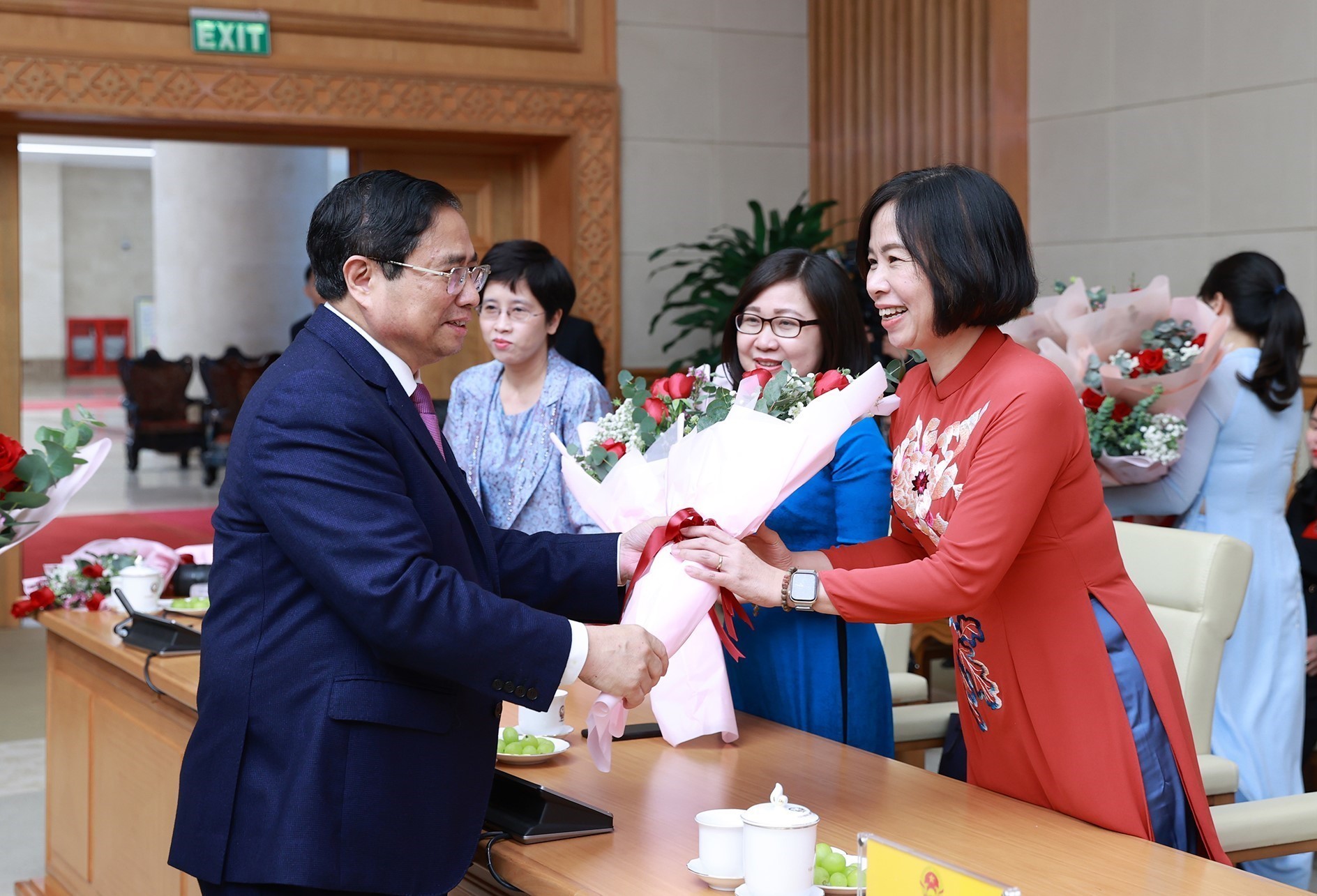


Prime Minister Pham Minh Chinh meets with female leaders and executives from central agencies and presents the Kovalevskaia Award to outstanding female scientists of 2022. (Photo: VNA)
Recognising the immense contributions by Vietnamese women, Prime Minister Pham Minh Chinh once emphasised:
“…In any circumstance and in any field of labour or work, Vietnamese women always uphold their traditional values and noble qualities of solidarity, intelligence, dynamism, creativity, kindness, and the ability to ‘excel in both state affairs and household duties’. They make tremendous contributions to the country’s Doi moi (Renewal), integration, and development. In all aspects of social life, women are increasingly affirming their role and continuously promote their position both domestically and internationally.”
The vital role of women in society
Throughout history, Vietnamese women have played a dual role both as homemakers and as active participants in the workforce, contributing to the nation’s development while fulfilling their sacred duty as mothers.
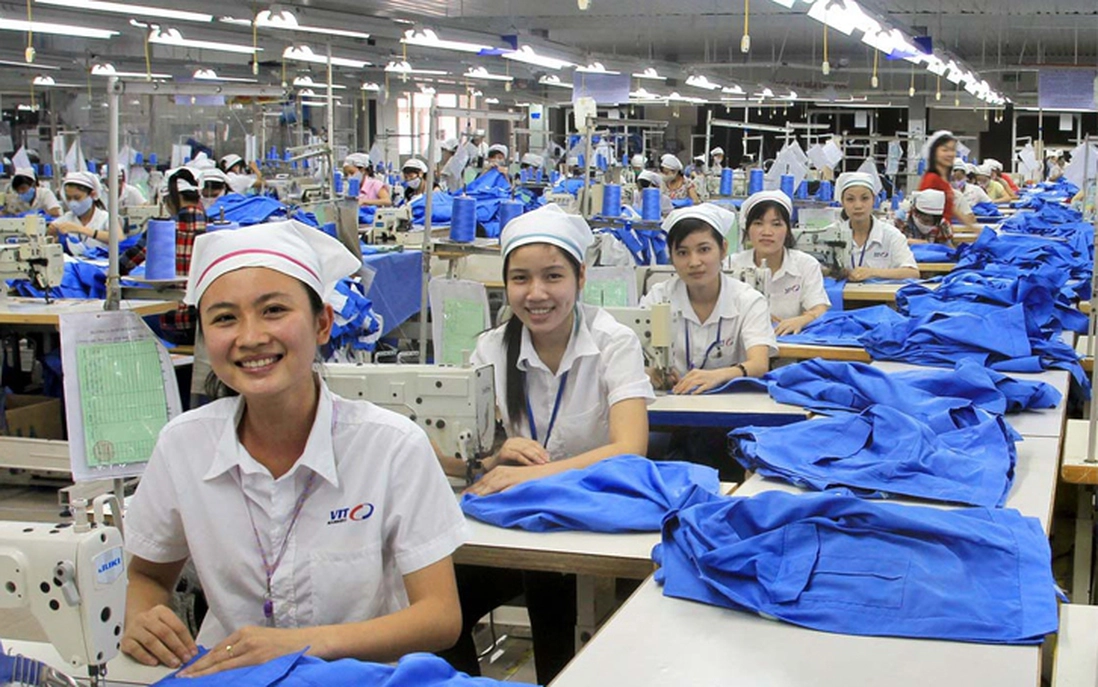


Women make up a significant part of Vietnam’s workforce, playing a crucial role in the country’s development. (Photo: VNA)
This year, March 8 holds even greater significance in Vietnam as it also marks the 1985th anniversary of the Trung Sisters’ Uprising. These two national heroines led a rebellion to drive out foreign invaders and defend the country’s sovereignty.
In the spring of 40 AD, the Trung Sisters raised the flag of revolt. After their victory, Trung Trac, the elder sister, was proclaimed Queen with the title Trung Nu Vuong (Trung the Queen) and established her capital in Me Linh (now Me Linh district, Vinh Phuc province). Though their reign lasted only briefly, their triumph became an eternal epic, embodying the spirit of independence, self-reliance, and national pride. It also served as a testament to the immense strength and capabilities of Vietnamese women in building and protecting the homeland.
During the resistance war against the US, in response to President Ho Chi Minh’s call, hundreds of thousands of women voluntarily took on both “state and household duties” so that their husbands and sons could fight with peace of mind.

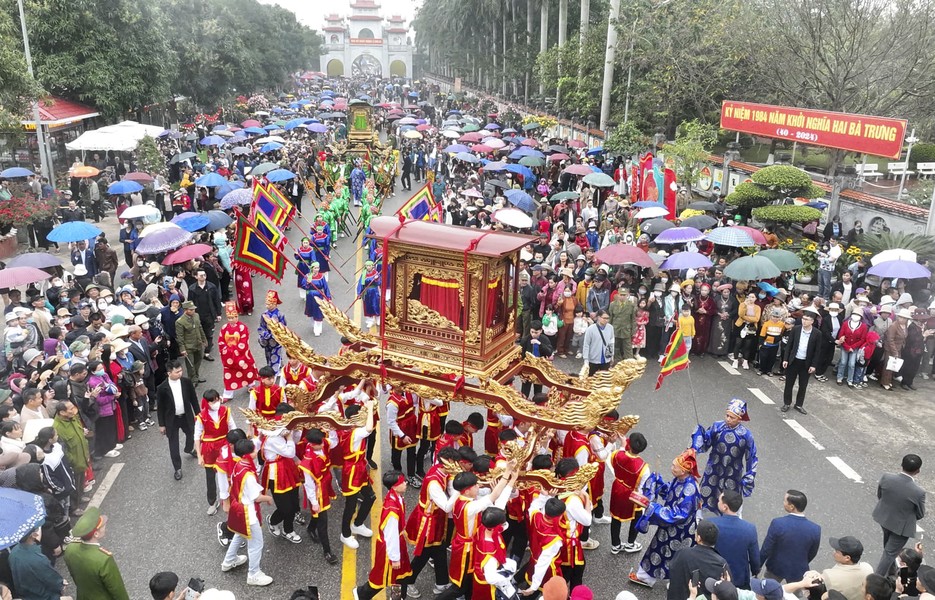
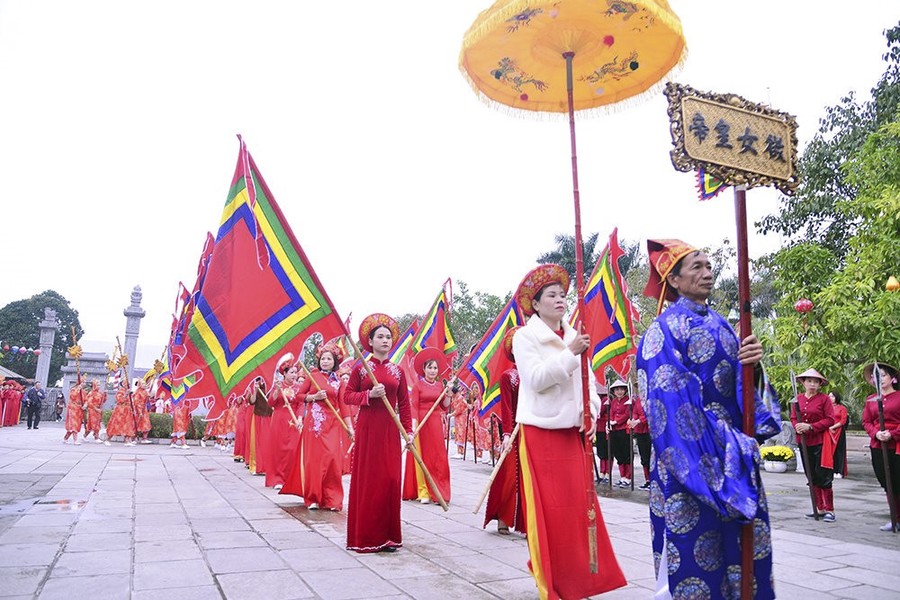


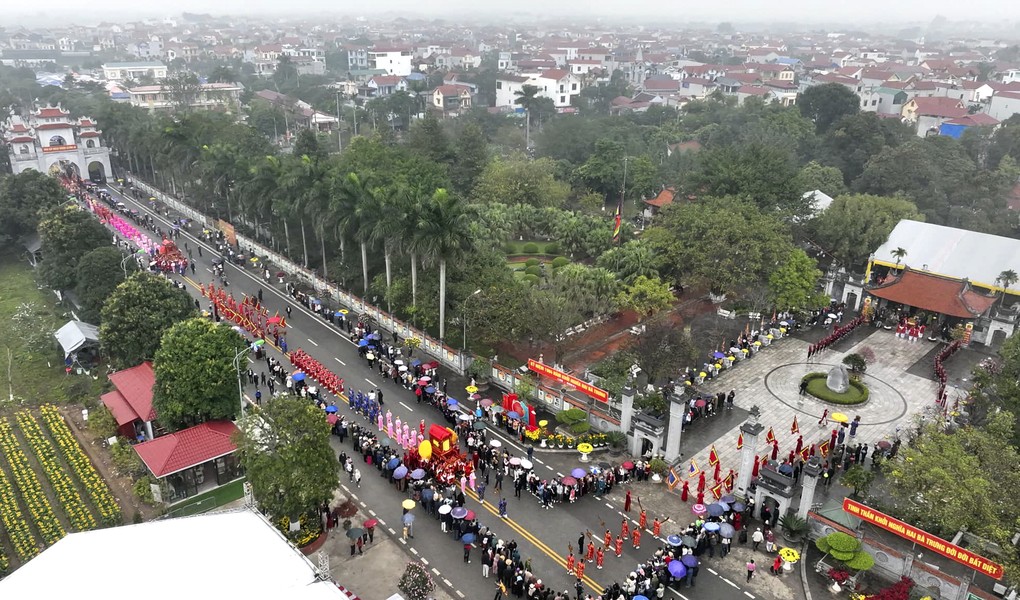
The unique palanquin procession at the 2024 Hai Ba Trung Temple Festival. (Photo: An Ninh Thu Do newspaper)
Many Vietnamese women have become influential politicians, renowned scientists, and dynamic leaders. They confidently assert their intelligence and capabilities across all sectors, making crucial contributions to national progress. In the new era – that of the nation’s rise, Vietnamese women continue to innovate and help with the country’s integration into the world.
On March 22, 1965, the Vietnam Women’s Union Central Committee launched the “Three Undertakings” movement. This involved taking over production and work duties in place of men who went to war, managing families and encouraging their husbands and children to serve, and actively serving or being ready to participate in combat when necessary.
Later, President Ho Chi Minh renamed the movement “Three Responsibilities”. Millions of women from rural areas to urban centres contributed to the victory over the US and the country’s ultimate reunification.
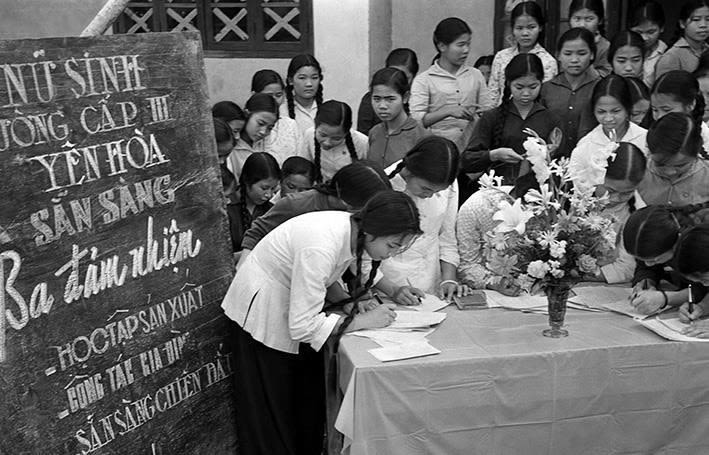
Today, in peacetime, Vietnamese women remain united, dynamic, and creative. They continue to “excel in both state affairs and household duties”, serving as a solid source of support for their families while driving social and economic progress. Women actively participate in national construction and safeguarding to help ensure fast and sustainable development for the country.


Many Vietnamese women have become influential politicians, renowned scientists, and dynamic leaders. They confidently assert their intelligence and capabilities across all sectors, making crucial contributions to national progress.





Women are increasingly proactive and confident in asserting their intelligence and capabilities across all aspects of society. (Photo: VNA)
In the new era — that of the nation’s rise — Vietnamese women continue to innovate and help with the country’s integration into the world.
International Women’s Day is not just a celebration but a reminder for everyone to recognise and appreciate the silent sacrifices by women, to understand their daily struggles, and to be motivated to create a fairer world where women do not have to fight for their rights but are naturally respected, loved, and empowered to live true to their values.

The history of International Women’s Day
International Women’s Day traces its origin to the struggle of American female workers. In the late 19th century, capitalism in the US was rapidly expanding, drawing many women and children into factories and enterprises. However, business owners exploited them with meagre wages and long, undefined working hours to maximise profits.
Outraged by these injustices, American female workers staged a strike on March 8, 1857, demanding higher wages and reduced working hours. Despite severe suppression by capitalists, the women remained united and persistent in their struggle, ultimately forcing their employers to make concessions.
In 1910, at the International Socialist Women’s Conference in Copenhagen, Denmark, delegates decided to designate March 8 as “International Women’s Day”, a day for global solidarity in the fight for women’s rights, with the key demands: “Eight-hour workday; Equal work; Protecting mothers and children.”
In 1975, the United Nations officially recognised March 8 as “International Women’s Day”.
Since then, March 8 has become a universal day of struggle for working women worldwide. It symbolises women’s aspirations for national independence, democracy, peace, and social progress, as well as for happiness for themselves and children./.
