
The area is part of Project 79, a resettlement and socio-economic development initiative aimed at ensuring national defense and security in Muong Nhe District. (Photo: VNA)
Vietnam is on a mission to eliminate temporary and dilapidated housing in 2025, a crucial step in its commitment to poverty reduction and social equity. This initiative aims to ensure safe, dignified living conditions for all, particularly vulnerable communities.


Aligned with Resolution No. 42 of the 13th Central Committee of the Communist Party of Vietnam, this effort seeks to enhance social policy and position of Vietnam as a leader in social welfare and sustainable development, in accordance with its goals as part of the United Nations.
A national commitment to secure housing
On April 13, 2024, Prime Minister Pham Minh Chinh launched a nationwide campaign to eradicate substandard housing. The initiative targets three key areas. These include housing support for 200,000 individuals with meritorious services funded by the state. It also includes assistance for 88,000 households through national programmes, and the eimination of unsafe housing for remaining impoverished families.


Local government data reveals that beyond those covered by state programmes, 153,881 impoverished households still live in inadequate conditions, requiring an estimated 6.5 trillion VND (255.7 million USD) for support.
The 450-day campaign
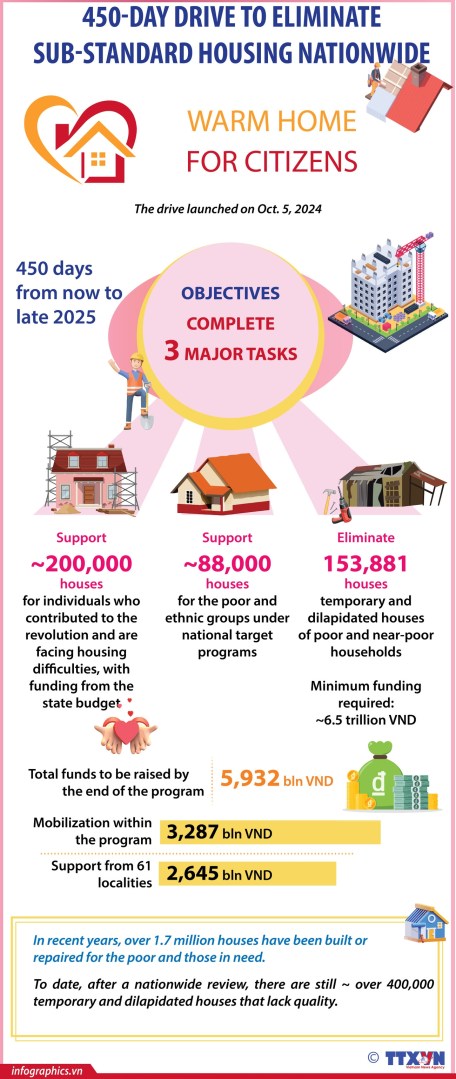
To accelerate progress, the Government and the Vietnam Fatherland Front Central Committee launched the project, “A Home for Fellow People” on October 5, 2024. The effort rallies resources to support over 150,000 struggling households. The campaign aims to provide homes meeting the “three-solid” standard—secure roofs, floors, and walls.
At the campaign launch ceremony, Prime Minister Chinh underscored the urgency, “With only 450 days left until 2025, we must act swiftly. I call upon the entire nation—citizens, soldiers, and local governments —to unite. Those with wealth contribute financially, those with skills contribute labour, and those with limited means contribute in any way possible. Together, we will end temporary housing, especially in remote and border regions,” he said.
Progress and impact


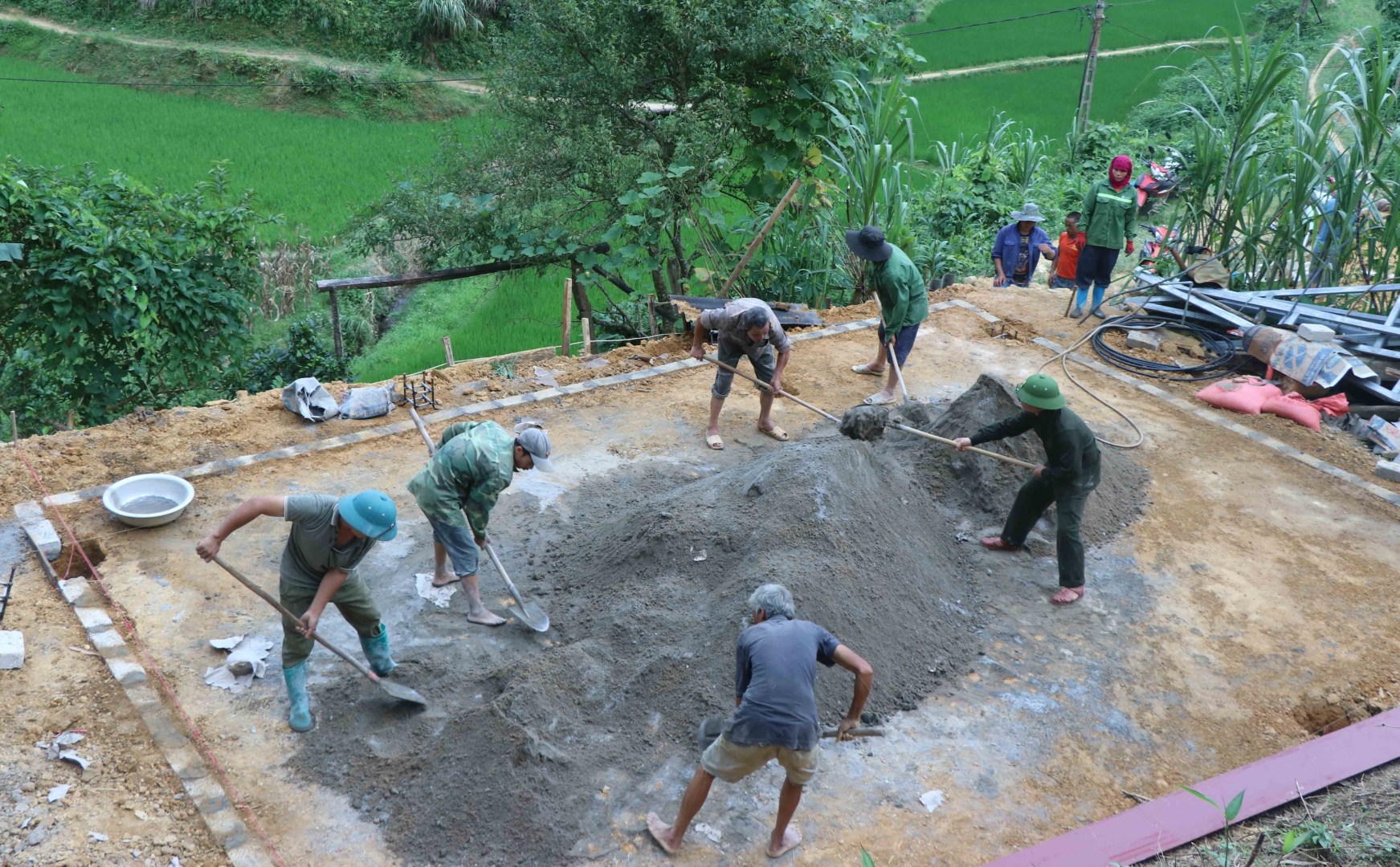


Since the Central Steering Committee’s first meeting on November 10, 2024, the Government, the Vietnam Fatherland Front, and ministries have taken decisive action.
Prime Minister Pham Minh Chinh emphasised that the programme has been effectively implemented thanks to the spirit of great national unity and the nation’s deep-rooted tradition of resilience—rising even stronger in times of difficulty and challenge. Its success is also attributed to the Party Central Committee’s sound policies, the collective engagement of the entire political system, the government’s decisive, timely, and effective leadership, as well as the strong support and active participation of the business community and people from all walks of life. Additionally, ministries, agencies, and localities have demonstrated initiative, proactiveness, flexibility, and creativity in implementation.
This effort is not just about poverty reduction—it embodies Vietnam’s spirit of unity and resilience, laying the foundation for a fairer, more prosperous future.
The successful implementation of the National Programme to Eliminate Temporary and Dilapidated Housing in 2025 carries profound significance. It realizes the Party’s policies and guidelines while reflecting the fundamental values of our system—ensuring a prosperous and happy life for the people.
A brighter future for vulnerable communities
A secure home is more than shelter—it provides stability, health, and opportunity. For families living in makeshift houses, safe housing is their dream.
Nguyen Van Hau, from Soc Trang, has struggled for years in poor conditions, compounded by Agent Orange exposure.
“At night, moonlight streamed through the holes in our roof. All I ever wished for was a house that could shield us from the rain and sun,” Hau shared.
Minister of Labour, Invalids, and Social Affairs Dao Ngoc Dung emphasised the initiative’s humanitarian values. “Providing secure housing is not just about shelter—it ensures dignity, security, and a foundation for a better life,” he said.
Thanks to the programme, families like Nguyen Van Hau’s in Lao Cai or Bui Van Moi’s in Hoa Binh now have safe, permanent homes. “We no longer fear the storms. We finally have a place to call home,” Moi said gratefully.
Eliminating unsafe housing is more than a poverty-reduction strategy—it is a testament to Vietnam’s commitment to solidarity and shared prosperity. By ensuring access to secure homes, the programme empowers families to break free from poverty.

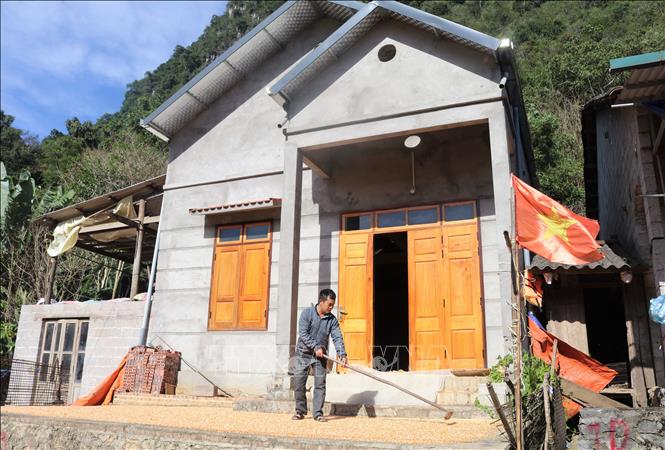
On the right, a newly-built house in Cao Bang. As of November 15, 2023, Cao Bang Province had disbursed nearly 120 billion VND (4.7 million USD) to support 3,584 out of 14,697 poor, near-poor, and policy-beneficiary households in building or repairing their homes. (Photo: VNA)
Advancing human rights and development
Prime Minister Chinh stated, “The greatest human right in Vietnam is ensuring a prosperous, happy, and peaceful life for our 100 million citizens, where security and democracy are upheld, and human potential is maximised.”
According to the UNDP’s 2024 Human Development Report, Vietnam’s Human Development Index (HDI) ranking rose from 115th to 107th out of 193 nations. The country’s happiness ranking climbed 11 spots to 54th out of 143 countries. Its Sustainable Development Goals (SDGs) index improved to 54th out of 166.
As an active member of the UN Human Rights Council for the 2023-2025 term, Vietnam continues to advocate for equitable and sustainable progress.
Professor Nguyen Xuan Thang, Director of the Ho Chi Minh National Academy of Politics, highlighted this shift. “In this new era, human rights are not just a goal but a driving force for progress. Vietnam is prioritising the well-being and rights of its people,” he said.
With a national commitment to eradicating substandard housing, Vietnam is laying the groundwork for a stronger, more prosperous future. By 2045, the country aims to become a high-income developed economy—one where no one is left behind.
Vietnam will not sacrifice social progress and welfare for mere economic growth. “We are committed to building a fair, just, and sustainable society.”
Prime Minister Pham Minh Chinh at the 2024 G20 Summit in Rio de Janeiro.
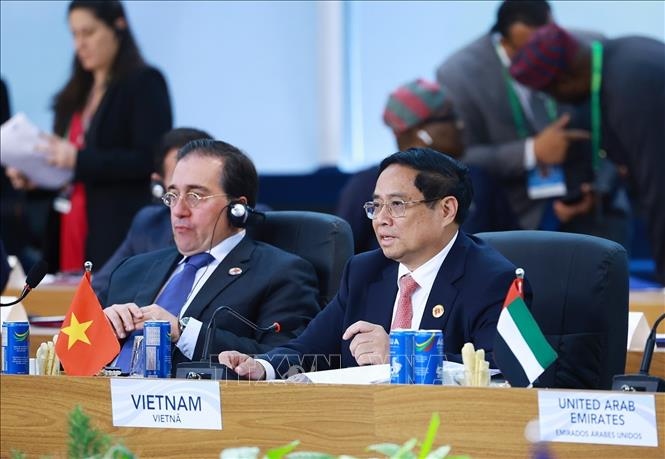
In an interview with a Vietnam News Agency correspondent in the UK, Kyril Whittaker, a political and historical researcher on Vietnam and a member of the Communist Party of Britain, praised the country’s achievements.
“The government’s push to eliminate substandard housing by 2025 showcases Vietnam’s commitment to fairness and human rights. This isn’t just about respecting human rights—it’s about protecting them in the best way possible,” Whittaker said./.


The nationwide campaign “Eliminating Temporary and Dilapidated Houses” is not only an effort to eradicate substandard housing for poor households but also aims to lay the foundation for sustainable poverty reduction and improve the quality of life for disadvantaged communities. (Photos: VNA)
Author: Phuong Vu, Trang Nhung / Editor: Hoang Nhuong