
The Trang An Landscape Complex, the first-ever Mixed Heritage Site of Vietnam and Southeast Asia, has not only become a key driver of socioeconomic development for the northern province of Ninh Binh but also served as a model for inspiring the preservation of humanity’s valuable assets. The province has made remarkable strides in conserving and promoting the site’s values, reinforcing its status as a World Heritage Site.
Spanning 12,252 hectares, the Trang An Landscape Complex features several nationally significant sites, including the Trang An Eco-tourism Complex, Tam Coc-Bich Dong Tourist Area, Bai Dinh Pagoda, and the Hoa Lu Ancient Capital Special National Relic. These landmarks are interconnected by the Hoa Lu Special-Use Forest ecosystem, which encompasses limestone mountains, wetlands, and a network of rivers, lakes, and ponds. Trang An is not only a showcase of natural beauty but also a repository of prehistoric relics and a blend of diverse cultural elements that bridge the past and present.


Spanning 12,252 hectares, the Trang An Landscape Complex features several nationally significant sites. (Photo: VNA)
Geological studies by domestic and international scientists have highlighted Trang An’s unique history. Over tens of thousands of years, the area underwent repeated marine invasions and transformations before emerging as land. This prolonged geological evolution shaped its stunning karst landscape, characterized by towering peaks, steep cliffs, tropical rain forests, water-filled basins, and navigable caves and underground rivers.
Artifacts unearthed from over 30 archaeological sites within the complex reveal evidence of human habitation and adaptation to natural changes over the past 30,000 years. These artifacts correspond to three distinct periods: before, during, and after significant marine transgressions.
Associate Professor Dr. Nguyen Khac Su from the Vietnam Academy of Social Sciences
Nguyen Cao Tan, Deputy Director of the provincial Department of Tourism (DoT), described the complex as a bridge connecting the past and present, history and scenery, and nature and humanity, creating a harmonious cultural and natural landscape. It is home to significant milestones in Vietnam’s history and heritage, including serving as the first capital of Dai Co Viet in the 10th century and as a royal retreat for the Tran Dynasty during their resistance against the Mongol invasions in the 13th century.
A model for sustainable tourism, economic growth


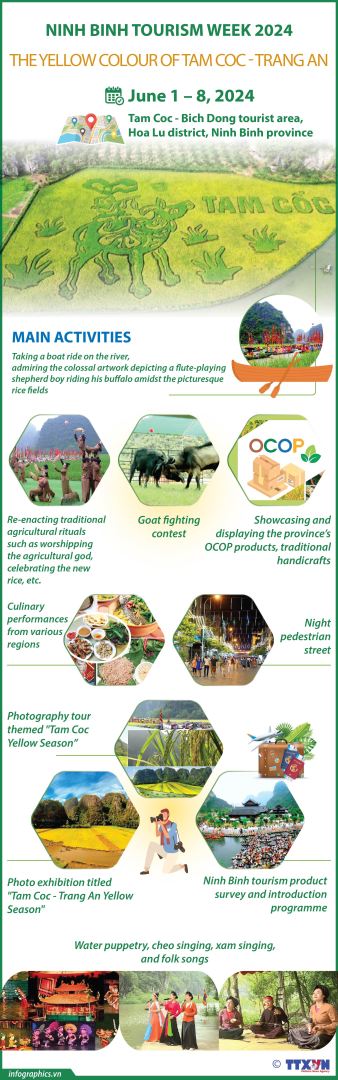
Since its UNESCO recognition as a World Cultural and Natural Heritage Site, Trang An has delivered significant economic benefits to the local government and community. Ninh Binh province has adopted a model that emphasises preserving the site’s integrity while leveraging its unique values for socioeconomic development and creating sustainable livelihoods. The success of heritage tourism in Ninh Binh exemplifies how heritage can become “alive” when thoughtfully utilised. Simona Mirela Miculescu, President of the UNESCO General Assembly, noted that Trang An’s collaborative and innovative approach has established it as a model for sustainable tourism and economic development.


Trang An becomes a model of sustainable economic and tourism development (Photo: VNA)


Ninh Binh’s Provincial Master Plan for 2021–2030, with a vision toward 2050, prioritises investment in tourism development rooted in heritage conservation. Trang An is envisioned as a premier hub for ecological, cultural, and spiritual tourism with global significance.
According to Bui Van Manh, Director of the provincial Department of Tourism, Ninh Binh has fully implemented UNESCO’s recommendations in the management of Trang An. Efforts have included strengthening administrative structures, enhancing staff capacity, enacting protective regulations, and allocating financial resources for restoration and preservation. Key initiatives include developing infrastructure, improving tourism services, and promoting scientific research.
Advancing heritage conservation
Jonathan Baker, UNESCO Representative and Head of Office in Vietnam, praised Trang An’s vision and collaborative approach, emphasising UNESCO’s commitment to supporting the site in maintaining its status as a beacon of sustainable tourism. He highlighted that Trang An’s mission aligns with UNESCO’s core goals of fostering cultural understanding, peace, and sustainable development through heritage conservation.
Dr. Ta Hoang Van of the Vietnam Institute for Urban and Rural Planning laid stress on the importance of inter-regional and international connections in heritage tourism to establish unique values and branding for sites like Trang An.

Ninh Binh needs to enhance cooperation with international organisations and local partners to share experiences and learn from successful destinations
Deputy Minister of Foreign Affairs Pham Thanh Binh
The Ministry of Foreign Affairs and the Vietnam National Commission for UNESCO have pledged ongoing support to ensure Trang An remains a model of heritage conservation and development. These efforts align with Ninh Binh’s aspiration to transform into a Millennial Heritage City and a UNESCO Creative City./.
