
The 10th of October 1954 marks a milestone in Vietnamese history as the capital city of Hanoi was officially liberated. Amidst the jubilant flutter of flags and flowers, victorious troops marched into the city, ending nine arduous years of resistance against French forces. This historic event not only symbolised the nation’s hard-won independence but also opened a new era for Hanoi – one of construction, renewal, integration, and development.


A parade reenacts the historic moment of the army’s march into Hanoi on October 10, 1954, as part of the Cultural Festival for Peace celebrating the 70th anniversary of the capital’s liberation. (Photo: VNA)
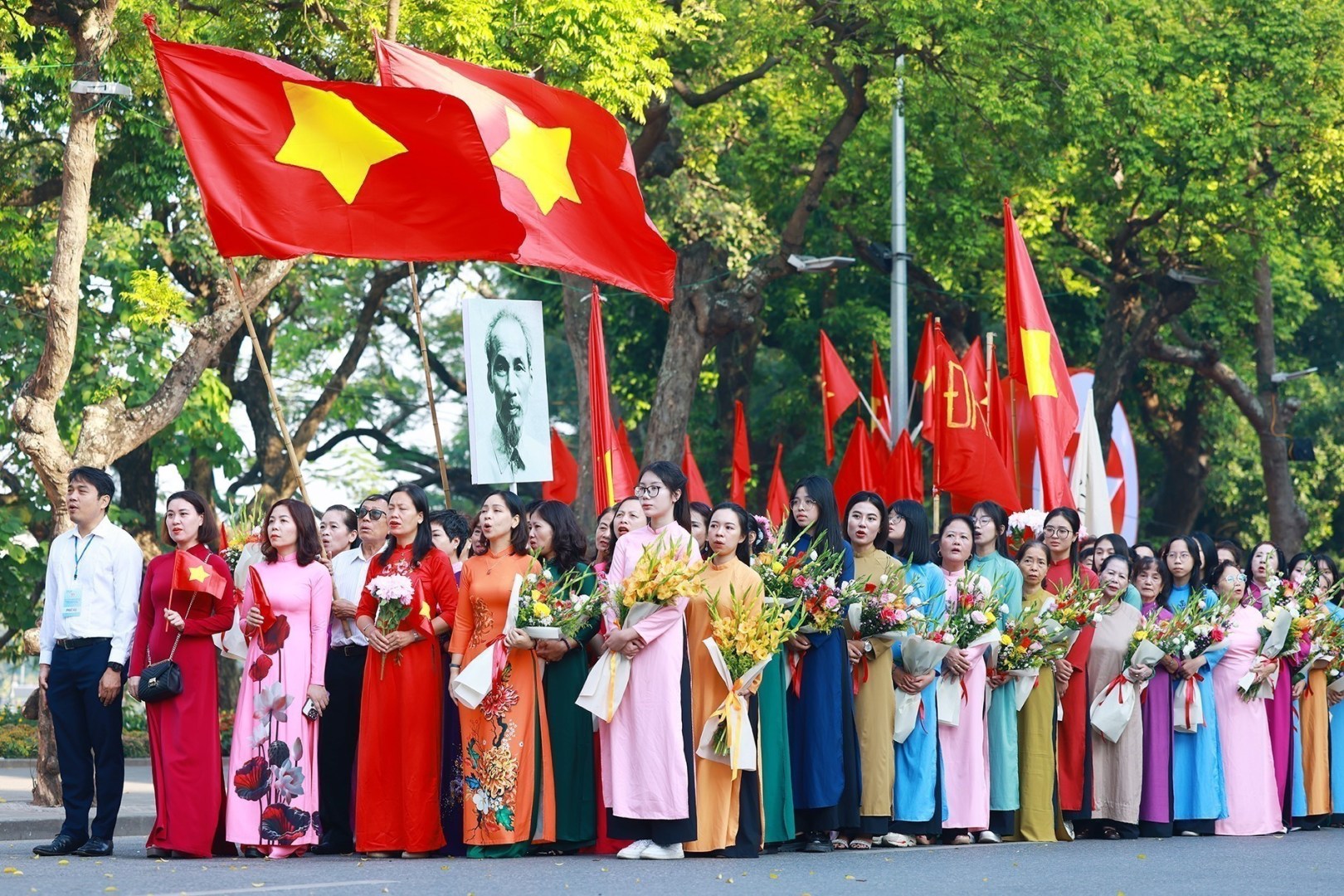
Seventy-one years later, Hanoi has undergone significant transformation, becoming the nation’s leading centre for politics, economy, and culture, while confirming its key role in Vietnam’s path toward reform and international integration.
Driving force of national economy
For more than seven decades, particularly during the country’s reform period, Hanoi has remained one of Vietnam’s leading economic growth poles. With a strong and diversified economy, the capital continues to make a significant contribution to the national GDP and budget, affirming its role as a financial, commercial, service, and high-tech industrial hub.
Between 2021 and 2025, Hanoi’s Gross Regional Domestic Product (GRDP) is projected to grow by an average of 6.57% per year, 1.1 times higher than the national rate. The city’s economy is estimated to reach 63 billion USD, 1.42 times that of 2020, accounting for 41.5% of the Red River Delta region’s output and 12.6% of the national total. Per capita GRDP is expected to reach 7,200 USD annually, reflecting a continued shift towards a more modern, service-oriented economic structure.
In the third quarter of 2025, Hanoi’s GRDP growth rate reached 8.85%, well above the same period last year. Agricultural production rose by more than 3% annually, with agricultural and forestry exports surpassing 2 billion USD.
Hanoi continues to attract robust domestic and foreign investment, with tens of thousands of new enterprises established each year. Major multinational corporations, high-tech hubs, and research centres have taken root, shaping a modern and globally connected economic landscape.


The Tay Ho Tay urban area (commercial name: Starlake Tay Ho Tay) covers a total area of 186.3 hectares and is planned to become a modern urban development, meeting the living and working needs of residents. (Photo: VNA)
As of the second quarter of 2025, cumulative foreign direct investment (FDI) reached approximately 61.5 billion USD, with 7,710 active projects, maintaining the capital’s position among the country’s top FDI destinations. In the first eight months alone, the city drew 3.82 billion USD in FDI, 1.6 times higher than the same period last year.
Beyond economic strength, Hanoi is leading the way in digital transformation, green growth, circular economy, and knowledge-based industries – key drivers of sustainable development in alignment with global trends.


Hanoi is pumping water from Ho Tay (West Lake) into the To Lich River through two 1.5 km-long HDPE pipes, marking the beginning of the river rehabilitation process after many years of pollution. (Photo: VNA)
Preserving heritage, fostering cultural and social creativity
If the economy is Hanoi’s engine, then culture is its soul. With over a millennium of history, the city is the cradle of Vietnamese heritage and a national centre for education, science, and technology.
Often described as a “living museum” of Vietnamese culture, Hanoi bears witness to centuries of evolution – every street, temple, and stone tells a story of resilience and renewal. As both the political and cultural heart of the nation, the capital carries the mission of safeguarding, celebrating, and promoting the country’s cultural identity.
In recent years, the city has implemented extensive programmes to preserve and revitalise key heritage sites, from the Old Quarter and the Temple of Literature complex to the Imperial Citadel of Thang Long — a UNESCO World Heritage site.
According to the draft political report for the upcoming 18th congress of the Hanoi Party Committee (2025 – 2030 term), the city has allocated over 5.17 trillion VND (196.09 million USD) from the state budget for cultural and sports initiatives, and an additional 1.7 trillion VND for heritage restoration, museum upgrades, and cultural infrastructure. Nearly 200 historical and cultural relics have been restored in the past five years, bringing the city’s total to nearly 6,000 recognised sites.


A night tour is officially launched at the special national relic site of Quan Thanh Temple in Hanoi on the evening of May 28, 2025. (Photo: VNA)
Cultural vibrancy also extends into modern life: over 3,000 artistic and cultural events were organised in the 2020 – 2025 period, reflecting Hanoi’s vision of making culture accessible to all communities.
The city’s recognition as a UNESCO Creative City of Design (2019) further affirms its global role in blending tradition with innovation – positioning culture not merely as heritage, but as a form of soft power for sustainable development and international influence.
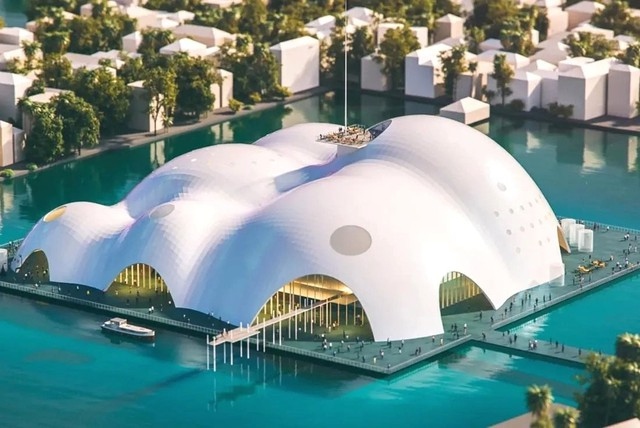
A leading destination in Asia
Home to an exceptional blend of heritage, architecture, and landscapes, from the Old Quarter and Hoan Kiem Lake to traditional craft villages and French colonial landmarks, Hanoi stands as one of Asia’s most captivating tourist destinations.


Quang Phu Cau incense-making village – a unique “check-in” destination on the outskirts of Hanoi. (Photo: VNA)


The silversmithing craft of Dinh Cong (Hanoi) dates back to the 6th century. Its silver filigree products feature intricate patterns with distinctive characteristics found nowhere else. (Photo: VNA)
For consecutive years, the capital has been honoured as Asia’s leading city destination, as well as one of the world’s top urban getaways. Alongside heritage and festival tourism, Hanoi is now developing creative, green, and community-based tourism experiences that reflect global travel trends.


At the 2023 World Travel Awards (Asia and Oceania) held in Ho Chi Minh City, Hanoi proudly won three major categories: Asia’s Leading City Destination 2023, Asia’s Leading City Break Destination 2023, and Asia’s Leading City Tourist Board.
In the first nine months of 2025, Hanoi welcomed 26.07 million visitors, a 23.8% increase from the same period in 2024, including 5.54 million international arrivals. These figures affirm its stature as Vietnam’s premier destination.
With world-class hotels, modern convention centres, and smart urban services, the city continues to enhance its image as a safe, friendly, and vibrant destination for travellers from across the globe.

Double-decker buses – a highlight of the capital’s tourism. (Photo: VNA)
Embracing global integration: Towards a modern and civilised capital
Beyond national development, Hanoi has established itself as Vietnam’s gateway to the world. The city has successfully hosted major international events such as the SEA Games, the DPRK–US Summit, the UN Vesak Celebrations, and the IPU-132 Assembly, among others.
Later this month, on October 25 and 26, it will host the United Nations Convention Against Cybercrime Signing Ceremony – an opportunity to showcase the capital’s thousand-year heritage to international friends.


Party General Secretary To Lam (left) and Prime Minister Pham Minh Chinh (right) deliver remarks at the opening session of the P4G Summit. (Photo: VNA)


Musical performances staged at the P4G Summit opening ceremony (Photo: VNA)
The city also maintains sister-city relationships and cooperation agreements with numerous capitals and major cities worldwide, facilitating the exchange of expertise in urban management, culture, education, and technology. These partnerships not only elevate Hanoi’s profile but also enhance Vietnam’s global standing.
Seventy-one years since its liberation, the capital now embodies a heroic history and a spirit of reform, integration, innovation, and development. Its achievements in economic growth, culture, tourism, and international cooperation reflect the collective determination and creativity of its leadership and people.
Chairman of the municipal Party Committee Tran Sy Thanh: “With a strong foundation, political will, and the unity of our people, Hanoi will continue to advance as a modern, civilised, and happy capital rich in identity, where progress is measured not only in numbers, but in the quality of life and the well-being of its citizens.”
Today, as Hanoi celebrates its 71st liberation day, it shines not only as a historic capital but as a beacon of progress, innovation, and global integration, continuing its journey to shape a brighter future./.


Phung Hung street adorned with colourful flags and flowers to celebrate the Hanoi Liberation Day. (Photo: VNA)