
Intellectual property (IP) has played a vital role throughout Vietnam’s history, driving innovation and socio-economic development while supporting the country’s industrialisation, modernisation, and deeper global integration.
Vietnam has long recognised IP, joining two key international treaties on trademark protection as early as March 8, 1949 – the Paris Convention for the Protection of Industrial Property (1883) and the Madrid Agreement Concerning the International Registration of Marks (1891).
Early participation in international treaties
The 1883 Paris Convention is one of the earliest and most significant agreements on industrial property, laying the foundation for later treaties such as the Madrid Agreement Concerning the International Registration of Marks and the Hague Agreement Concerning the International Registration of Industrial Designs. The Paris Convention is among the most widely applied international treaties worldwide, with Vietnam becoming a member on March 8, 1949.


The 1883 Paris Convention is one of the most important treaties on industrial property and among the earliest that Vietnam ratified. In the photos: President Ho Chi Minh visits an exhibition on technical improvement achievements by Hanoi workers in May 23, 1959. (Photos: VNA)
After 1954, industrial property, including trademarks, was covered under Law No. 13/57 dated August 1, 1957 and Law No. 14/59 dated September 11, 1959, on combating counterfeit goods. However, due to the country’s circumstances, these laws were not fully enforced. Following national reunification in 1975, Vietnam continued to uphold earlier international commitments and officially joined the World Intellectual Property Organisation (WIPO) on June 2, 1976. WIPO is essential in fostering global innovation and creativity by protecting and managing intellectual property rights.
Tran Le Hong, Deputy General Director of the Intellectual Property Office (IPO) of Vietnam under the Ministry of Science and Technology, said that Vietnam has joined a wide range of WIPO-administered treaties. These include the Patent Cooperation Treaty (PCT), the Paris Convention for the Protection of Industrial Property the Madrid Agreement Concerning the International Registration of Marks, the WTO Agreement on Trade-Related Aspects of Intellectual Property Rights (TRIPS), the Berne Convention for the Protection of Literary and Artistic Works, the Geneva Phonograms Convention, the Brussels Convention on Distribution of Satellite Signals, the Rome Convention for the Protection of Performers, Producers of Phonograms and Broadcasting Organisations, and the International Union for the Protection of New Varieties of Plants (UPOV).

🌏 International treaties on intellectual property Vietnam has joined under the administration of the WIPO
TRAN LE HONG, DEPUTY GENERAL DIRECTOR OF THE INTELLECTUAL PROPERTY OFFICE (IPO) OF VIETNAM UNDER THE MINISTRY OF SCIENCE AND TECHNOLOGY
- ✅ The Patent Cooperation Treaty (PCT)


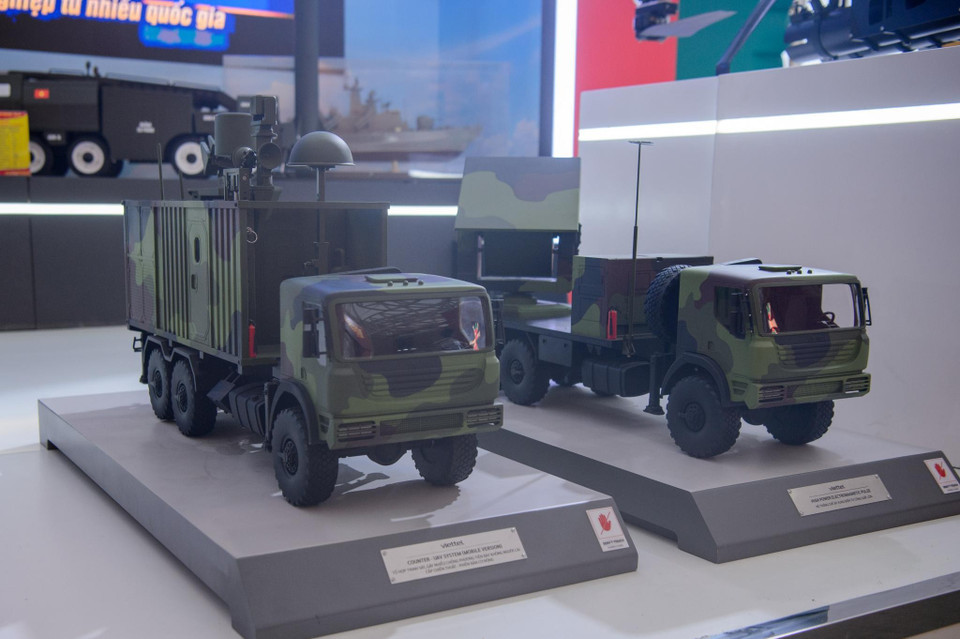


Photo series: Vietnam’s high-tech military equipment on display at the exhibition on national achievements marking the 80th National Day in Hanoi. (Photo: VNA)
- ✅ The Paris Convention for the Protection of Industrial Property


VinFast inaugurates its electric car assembly plant in India in August 2025. (Photos: VNA)
- ✅ The Madrid Agreement Concerning the International Registration of Marks and Protocol realating to the Madrid Agreement

- ✅ The WTO Agreement on Trade-Related Aspects of Intellectual Property Rights (TRIPS)

- ✅ The Berne Convention for the Protection of Literary and Artistic Works


Photo series: Dong Ho paintings – the quintessence of Vietnamese folk culture (Photos: VNA)
- ✅ The Geneva Phonograms Convention
- ✅ The Rome Convention for the Protection of Performers, Producers of Phonograms and Broadcasting Organisations

- ✅ The Brussels Convention on Distribution of Satellite Signals


Photo series: Vinasat – Que Duong satellite control and operations station in Hoai Duc, Hanoi. (Photos: VNA)
- ✅ The International Union for the Protection of New Varieties of Plants (UPOV)


Two new grape varieties, NH01-152 and NH04-102, were granted plant variety protection by the Crop Production Department under the then Ministry of Agriculture and Rural Development in 2024. The protection is valid for 25 years. (Photo: VNA)
As a WIPO member, Vietnam receives annual support in equipment and materials related to intellectual property, enabling the online transfer of international applications to WIPO’s International Bureau. This facilitates trademark registration abroad for Vietnamese businesses and individuals, as well as registration in Vietnam by foreign applicants.
Vietnam has also strengthened cooperation with countries such as the US, Japan, Switzerland, France, the Republic of Korea, Thailand, and Australia. Collaboration with WIPO and international partners has helped the country gradually meet industrial property requirements in economic integration, while affirming Vietnam’s position in multilateral forums and bilateral relations.
In 1993, Vietnam officially joined PCT. The following year, it signed a bilateral memorandum of understanding on industrial property cooperation with Thailand and a MoU on intellectual property cooperation with Australia in 1995. In 1999, Vietnam inked an intellectual property cooperation agreement with Switzerland and another with Japan to implement the Modernisation of Industrial Property Administration Project (MOIPA). Notably, in 2000, the Vietnam–US Trade Agreement included a dedicated chapter on intellectual property.


The Vietnam Intellectual Property Office signs a memorandum of understanding with the Korean Intellectual Property Office in June 2023. (Photos: VNA)


100 most valuable Vietnamese brands in 2024






Photo series: In October 2024, in Hanoi, the Vietnam Posts and Telecommunications Group (VNPT) officially launches the next-generation home Internet service device integrating advanced WiFi 7 technology (XGS-PON WiFi 7), becoming the first telecom provider in Vietnam to deploy this breakthrough technology with Qualcomm 10G Fiber. (Source: VNA)
Vietnam and international cooperation on intellectual property
1993: Vietnam officially accedes to the Patent Cooperation Treaty (PCT)
1994: Vietnam and Thailand sign a bilateral memorandum of understanding on industrial property cooperation
1995: Vietnam and Australia ink a MoU on intellectual property cooperation
1999: Vietnam and Switzerland ink an intellectual property cooperation agreement
1999: Vietnam and Japan sign an agreement to implement the Modernisation of Industrial Property Administration Project (MOIPA)
2000: The Vietnam–US Trade Agreement includes a dedicated chapter on intellectual property

Intellectual property meets requirements of national development
Since 1982, more attention has been paid to state management of intellectual property under the Intellectual Property Office of Vietnam. This began with Decree No. 197/HDBT on the Regulation of Trademarks, issued on December 14, 1982, which provided legal protection for trademarks and safeguarded the rights of consumers, producers, and businesses. This was followed by a series of inter-ministerial circulars, including No. 892/TT/LB (August 4, 1982), No. 1608/NN-UBKHKTNN (December 23, 1982), No. 1258/SC (October 18, 1983), and No. 173/SC (February 15, 1984).
Subsequent regulations further strengthened the legal framework for intellectual property, including Decree No. 85/HĐBT dated May 13, 1988, on industrial design protection, Decree No. 200-HDBT (December 28, 1988) on utility solution protection, and Decree No. 201-HDBT on industrial property licensing.
| Date of issue | Decree/Circular |
| 14/12/1982 | Decree No. 197/HDBT on the Regulation of Trademarks |
| 4/8/1982 | Inter-ministerial circular No.892/TT/LB |
| 23/12/1982 | Inter-ministerial circular No. 1608/NN-UBKHKTNN |
| 18/10/1983 | Circular No. 1258/SC |
| 15/2/1984 | Inter-ministerial circular No.173/SC |
| 13/5/1988 | Decree No. 85/HDBT on industrial design protection |
| 28/12/1988 | Decree No.200-HDBT on utility solution protection |
As early as 1984, Vietnam recorded significant progress in processing registration applications for industrial property, with nine invention patents and 12 trademark certificates granted. Notably, in 1983 alone, through the Madrid Agreement’s international office, 2,972 international trademarks were accepted for registration in Vietnam.



In 1995, the 9th National Assembly passed the Civil Code, which included provisions on intellectual property rights. This became the most comprehensive legal framework for implementing IP activities, marking a milestone in Vietnam’s industrial property protection and ushering in a period of strong integration into the region and the world.
By 2002, Vietnam’s integration into the international intellectual property system had driven remarkable growth in industrial property. Patent filings rose from 83 in 1992 to 1,211 in 2002, with patents granted increasing from 35 to 743. Similarly, trademark applications grew from 4,617 to 8,818, and certificates issued from 3,308 to 5,200 over the same period.
Intellectual property in the 1992–2002 period
| Year | Patent | Trademark |
| 1992 | 83 applications 35 patents | 4,617 applications 3,308 certificates |
| 2002 | 1,211 applications 743 patents | 8,818 applications 5,200 certificates |
Facing opportunities and challenges from economic integration and national modernisation, intellectual property protection became crucial for Vietnam’s development. The IP legal system is required to meet practical demands. Therefore, the 11th National Assembly’s 8th session in 2005 passed the Intellectual Property Law, marking a new phase in Vietnam’s IP activities.


Together with the 2005 Civil Code, these laws established a complete and unified framework for intellectual property, replacing previous regulations. This milestone was significant for Vietnam’s 2007 accession to the World Trade Organisation (WTO) and its broader international integration, further promoting innovation and a healthy competitive environment.
During this period, the establishment of intellectual property rights continued to make notable progress, with the number of applications steadily increasing. In 2003, there were 774 patent applications, 127 utility solution applications, 680 industrial design applications, and 12,135 trademark applications. By 2016, these numbers had risen to 5,228 patents, 478 utility solutions, 2,868 industrial designs, and 42,848 trademarks.
| Year | Patent applications | Utility solution applications | Industrial design applications | Trademark applications |
| 2003 | 774 | 127 | 680 | 12,135 |
| 2016 | 5,228 | 478 | 2,868 | 42,848 |
The year 2024 marked a milestone for the IPO, which for the first time received over 150,000 applications and processed more than 140,000, while issuing over 50,000 industrial property protection certificates. Notably, 51,437 industrial property protection certificates were granted, underscoring the crucial role of intellectual property activities in Vietnam’s socio-economic development, science, technology, and innovation.
2024

> 150,000
Applications received
> 140,000
Applications processed
> 50,000
Protection certificates granted
The Intellectual Property Office of Vietnam will gradually carry out comprehensive digital transformation in 2025 to improve labour productivity and reduce workload
Luu HOANG Long, DIRECTOR OF THE INTELLECTUAL PROPERTY OFFICE OF VIETNAM under the ministry of science and technology


Photo series: The ceremony to launch three innovation and expert networks in quantum technology (VNQuantum), cybersecurity (ViSecurity) and aviation and aerospace (UAV Vietnam) (Photo: VNA)
According to the Director of the Intellectual Property Office of Vietnam, Luu Hoang Long, his agency will gradually carry out comprehensive digital transformation in 2025 to improve labour productivity and reduce workload.
The agency will revise its working processes to suit the digital environment, enhancing productivity and efficiency. It will also pilot special policies to develop science-technology, innovation, and national digital transformation, aiming for an annual 16-18% increase in patent applications, with a commercialisation rate of 8-10%.
The office will take decisive action to resolve long-standing backlogs of patent and industrial property applications, aiming to clear all pending cases by October 2025. Additionally, it will promote public awareness of intellectual property, support the development of IP assets, and implement an online application system to simplify administrative procedures and gradually increase transparency in application processing./.
