The tuition exemption policy aims to meet the nation’s development and defense requirements, reflecting the preeminence of the regime and the commitment to ensuring equal access to education, “leaving no one behind.”
Hanoi (VNA) – The Politburo on February 28 announced a policy to waive tuition fees for students from preschool to high school in the public school system nationwide, starting from the 2025-2026 academic year in September 2025.
Private and non-public school students will receive tuition subsidies equivalent to tuitions in public schools, with families covering any difference in fees.


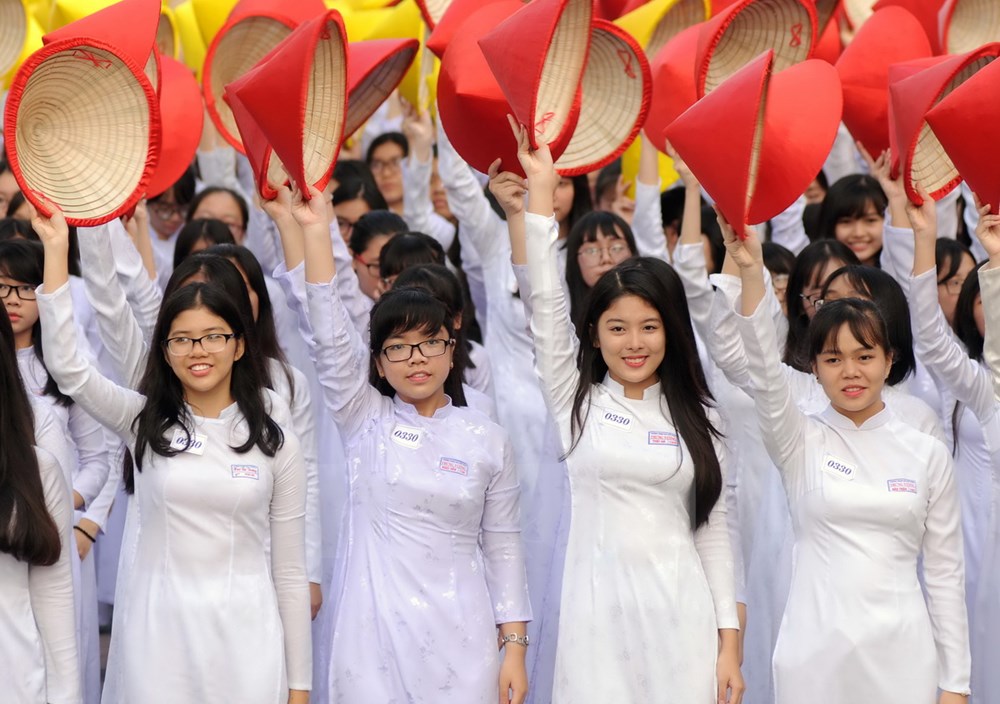


Female students in Ho Chi Minh City perform an Ao Dai showcase themed “I Love Vietnam.” (Photo: VNA)


Currently, Vietnam has 23.2 million students, excluding those studying at vocational and continuing education centres.
| Education levels | Number of students (million) |
| Under-five-year-old nursery school | 3,1 |
| Five-year-old preschool | 1,7 |
| Primary school | 8,9 |
| Junior high school | 6,5 |
| High school | 3,0 |

The Ministry of Education and Training estimates the state budget will need to allocate approximately 30 trillion VND (1.17 billion USD) annually to implement this policy.
Ten provinces and cities, including Vinh Phuc, Quang Ninh, Hai Phong, Yen Bai, Quang Nam, Khanh Hoa, Da Nang, Ba Ria-Vung Tau, Binh Duong, and Long An, have already waived tuitions for students in the 2024-2025 school year.
Provinces, cities have already waived tuitions for students in the 2024-2025 school year

The central budget will cover the remaining costs after deducting contributions from these provinces and cities.


Preschool children in Thai Binh get acquainted with traditional Cheo folk singing. (Photo: VNA)
The budget requirement will vary based on tuition levels set by each provincial/municipal People’s Council, following the government’s minimum and maximum tuition regulations.
The ministry emphasised that the policy is in line with Vietnam’s commitment to ensuring equitable access to education, reflecting the nation’s progressive approach and long-term investment in educational quality. The initiative is expected to create strong public support and is conformable to the regime’s preeminence, and the Party and State’s policy on education as well as common trends in developed countries.

Positive response from parents and educators
The Politburo’s decision has been warmly welcomed by parents, who view it as a major relief from financial burdens and a step toward educational equality.

Nguyen Thi Minh, a mother of three in Hanoi, expressed her excitement about the new policy. With two children in secondary school paying over 300,000 VND per month and one in preschool with fees exceeding 200,000 VND, her family’s monthly tuition costs total more than 500,000 VND.
“Tuition fees may seem manageable, but combined with expenses like meals, daycare, and extracurricular activities, the financial strain is significant. The policy alleviates some of that burden, especially during tough economic times.”
Nguyen Thi Minh (hanoi)

Luong Thanh Nga, a single mother in Hanoi who is raising two children, shared similar sentiments. Balancing a full-time job with an online business to support her children’s education, Nga was overjoyed by the news.
“I’m thrilled knowing my children won’t have to pay tuitions from next year. The policy offers real hope and fairness, ensuring no child is left behind, regardless of their family’s financial situation.”
lUOng thanh nga (hAnOi)
According to Nga, the policy offers real hope and fairness, ensuring no child is left behind, regardless of their family’s financial situation.
Educators also welcomed the policy. Nguyen Thi Van Hong, Principal of Chuong Duong Secondary School, in Hanoi’s Hoan Kiem district, said the decision was applauded by both teachers and students.
Despite being located in the capital’s downtown district, the school serves many students from underprivileged families who have migrated to Hanoi in search of work.
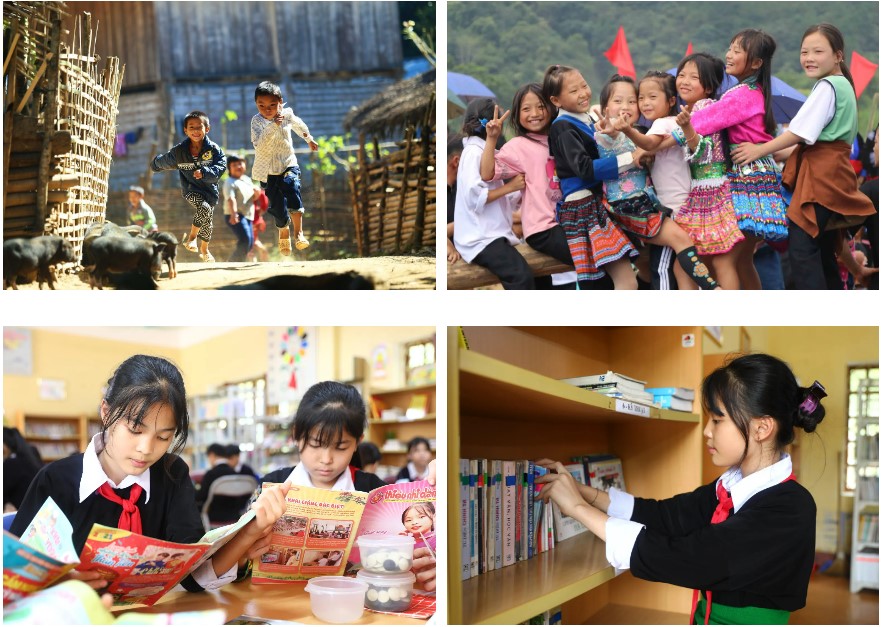
Hong noted that the school has long supported students from disadvantaged backgrounds by covering their tuition fees.
“Not all parents accept financial aid, and some students consistently delay payments due to their families’ hardships. This tuition waiver policy is a tremendous relief for the school’s teachers and students, and ensures that our students can focus on their studies without financial concerns,” Hong said.

The tuition waiver policy reflects the Politburo, the Party, and the Government’s commitment to education and ensuring equal access to schooling for all children.


Prime Minister Pham Minh Chinh attends opening ceremony at a primary school in Hanoi. (Source: VNA)
The tuition waiver policy also reflects the Party and State’s consistent stance that “education is the nation’s top priority.”


Prime Minister Pham Minh Chinh visits students and teachers of Hy Vong (Hope) School in Da Nang, September 2024. (Source: VNA)
Beyond a financial support, the significance of this policy lies in the government’s commitment to equitable education and the principle that “education is the nation’s top priority,” Hong said, expressing her hope for continued investment in education, recognising it as an investment in human development and the country’s future./.