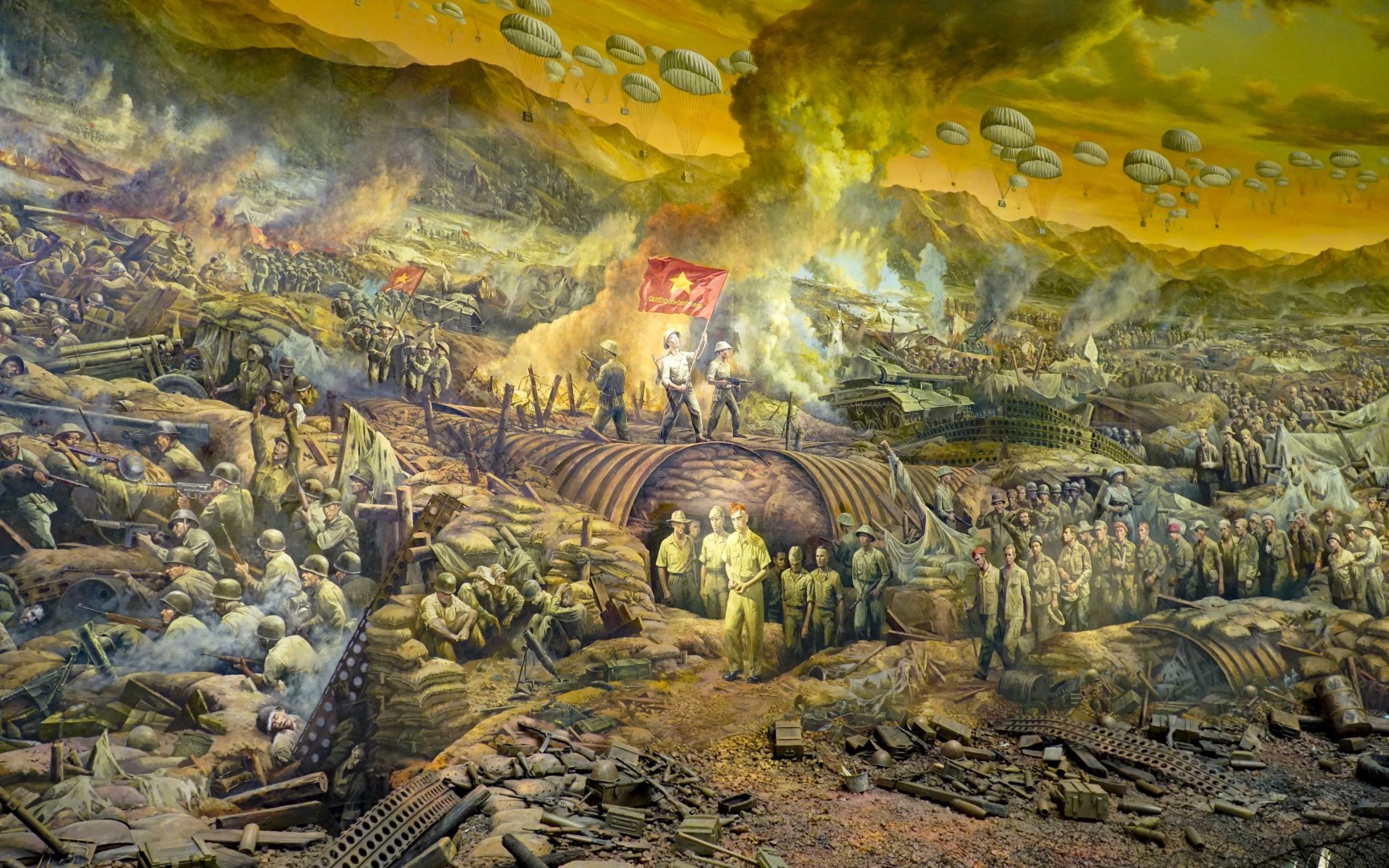
More than a decade has passed since millions of Vietnamese people and international friends paid their final respects to General Vo Nguyen Giap as he was laid to rest in his homeland of Quang Binh province (October 4, 2013). Renowned as an exceptional military strategist in Vietnam’s history, particularly for his pivotal role in the resounding victory of 1954 Dien Bien Phu campaign, the image of the humble, sincere, and devoted general, who dedicated his whole life to the nation and people, is not only revered and admired by the Vietnamese people but has also left an indelible mark in the hearts of international friends.
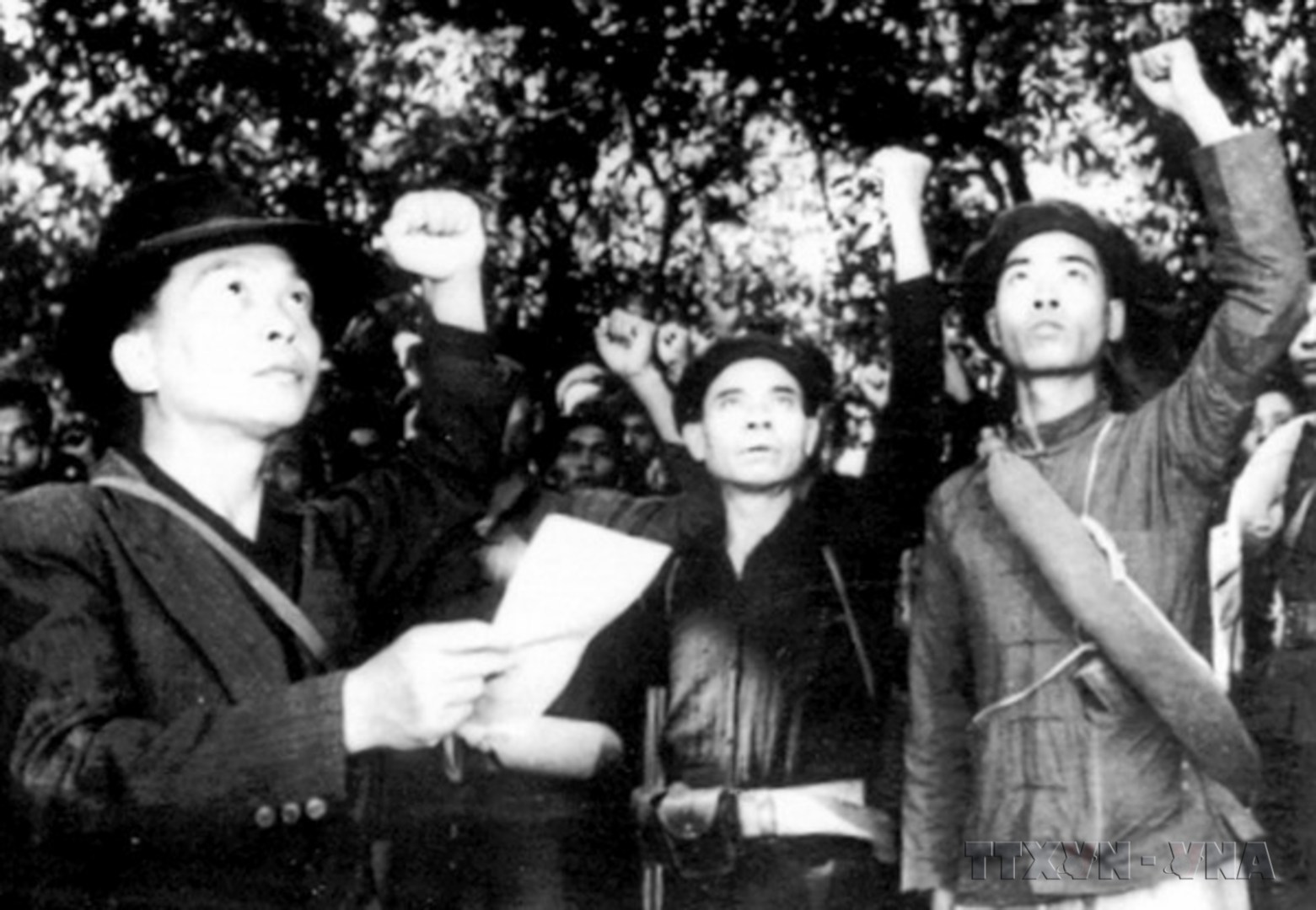


General Giap lives on in people’s mind
General Vo Nguyen Giap was a military leader of the greatest stature, a strategist of the “people’s war” and a faithful representative of the thought of President Ho Chi Minh, said Algerian Ambassador to Vietnam Sofiane Chaib.
The diplomat highlighted that besides the prestige and respect he won through his victories on the military field, the General devoted his entire life to serving his homeland and his people. “His destiny as a hero who gloriously accomplished his patriotic duty is intertwined with the most significant stages in the history of Vietnam.”
“This is undoubtedly the reason why General Giap remains present in the memory of the friendly Vietnamese people, as I was able to notice during the recent funeral of his late wife, which I personally attended. He is also present for the Algerian people who will never forget this friend whose name will always remain engraved in their memory.”

For the Algerian people, General Giap represents a central link in the historic relations of solidarity between Algeria and Vietnam, serving as a key figure in the most beautiful chapters of the two countries’ shared history, both before and after Algeria’s independence, according to the diplomat.
“This military hero of Vietnamese independence had special ties with Algeria, which he visited several times and where he delivered his famous speech in 1980 declaring that colonialists are bad students of history. This formula has remained proverbial in Algeria and my country always strives to perpetuate this collective memory which represents an inestimable heritage in the historical relations of friendship, solidarity and cooperation uniting us with Vietnam.”
General Giap’s legacy transcends borders
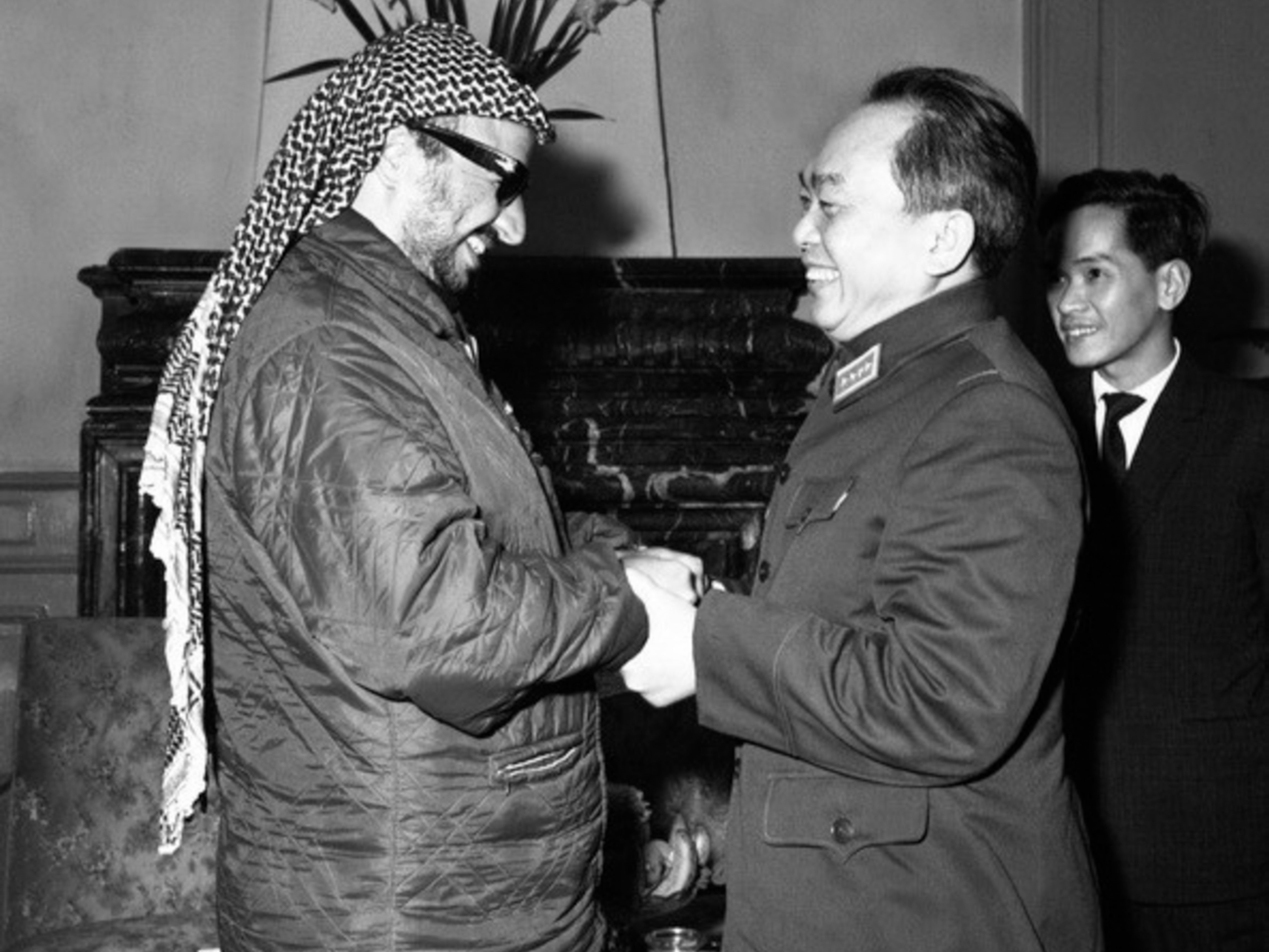


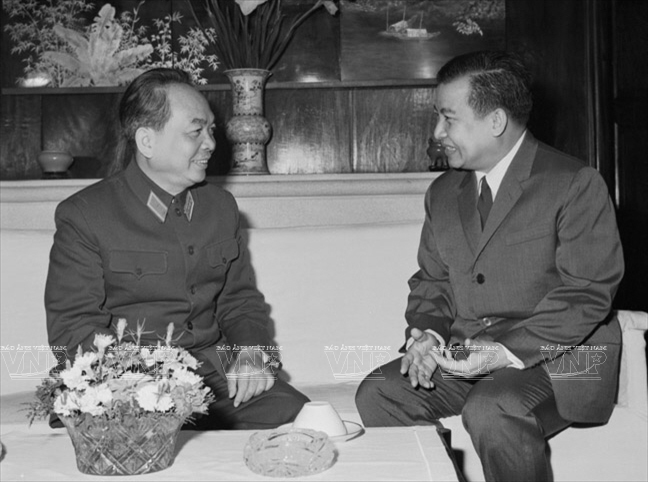
For Djoudi Noureddine, Chairman of the International Association of Algerian Revolution Friends, the memories of the legendary General remain fresh in his mind despite his old age. “General Giap’s legacy transcends borders, not only holding a deep place in the hearts of the Vietnamese people but also resonating globally,” he said.
The 90-year-old Chairman shared that he had the privilige to meet Giap once in Algiers and once in Hanoi, saying the General left a very strong impression on the Algerian people. “General Giap is an outstanding historical figure and a reference for the liberation movements, not only a military man who organised the Vietnamese liberation army and succeeded in defeating the army of colonisers.”
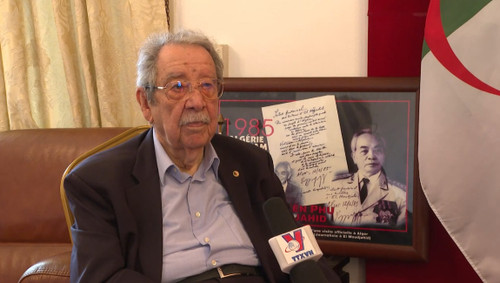
For us, obviously, the name of General Giap and Dien Bien Phu are closely linked. We had the opportunity to see him when he came to Algeria several times and we always have a lot of respect for him because he is truly an icon on the international level.
Noureddine quoted General Giap’s speech in Algeria during his historic tour to 12 African countries in October 1980: “The imperialists are bad students. We have given them lessons properly … But they learn the lessons poorly, although they are lessons of historical significance.”

“Giap’s words served as a source of inspiration for numerous Africans who strived to rise and struggle for their independence.”
“For example, the Mozambicans, the Angolans, and the Guinea-Bissaus, they were inspired by both the action of General Giap in Vietnam and the liberation war in Algeria. He was a man who went beyond the borders of Vietnam and a man of the international community,” Noureddine said.
He added that along with President Ho Chi Minh, General Vo Nguyen Giap remains forever in the memory of the African peoples and especially those who fought for their independence.”

Michelle Bachelet Jeria visits General Vo Nguyen Giap at his private residence (Photo: VNA)


General Giap and the historic Dien Bien Phu victory
Carl Thayer, Emeritus Professor at the University of New South Wales, described General Giap as a self-taught military strategist who combined elements of Vietnamese military tradition and the theory of the people’s war, adding Giap learned through battlefield experience how to conduct people’s war. “It was General Vo Nguyen Giap who defeated the French, one of the most modern military forces in the world at his time.”

The Dien Bien Phu victory under General Giap’s command brought to an end the anti-French resistance war, and this sounded not only the death knell of the French rule in Indochina but also the beginning of the end of colonialism in Asia and Africa.


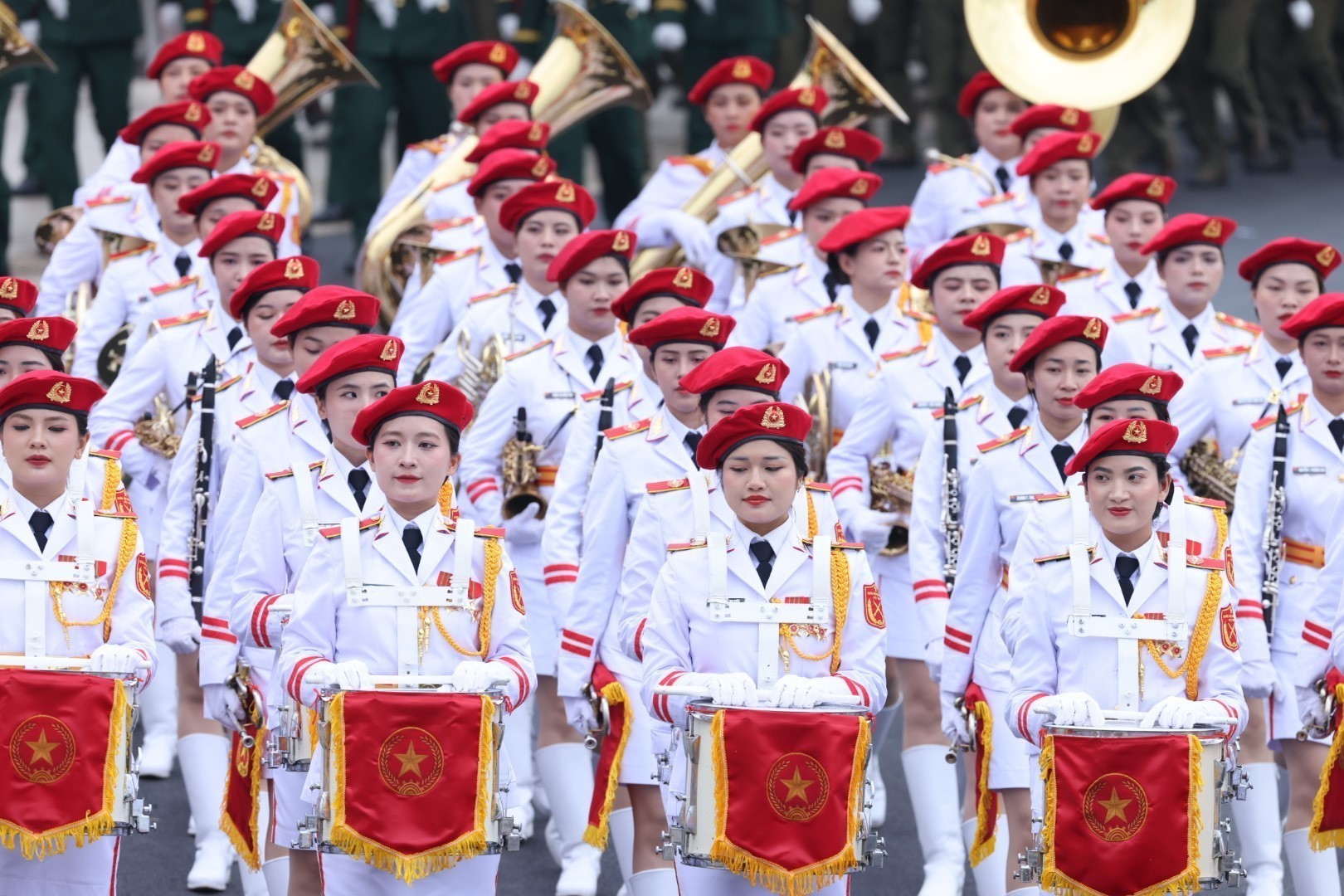


Photos: Parades Marking the 70th Anniversary of the Dien Bien Phu Victory (Source: VNA)
Pierre Asselin, Professor of History at San Diego State University, said General Giap is often lauded as a brilliant military leader, particularly thanks to his role in the battle of Dien Bien Phu. His standout quality during this battle was his flexibility.
“He was very flexible,” Asselin said, elaborating that initially aiming for a quick victory, Giap adjusted his tactics multiple times in response to the evolving situation. He transitioned from “fast strike, fast victory” to “steady attack, steady advance” strategy, eventually leading to success. “This adaptability and willingness to change plans in the face of adversity were crucial to the Vietnamese victory,” Asselin said.
General Giap’s ability to acknowledge and rectify mistakes sets him apart as a great leader, embodying a Vietnamese bamboo strategy characterised by adaptability and utility. This flexibility was instrumental in securing victory over the French forces at Dien Bien Phu.


Experts said because of these accomplishments, General Giap is widely respected by international leaders and friends as the military strategist who mastered the art of the people’s war by combining political struggle with military one in a protracted war that defeated both France and the US in the cause of Vietnamese independence against foreign aggression.
General Giap is also widely viewed as a symbol of the Vietnamese nation thanks to his remarkable lifelong contributions to the cause of national building and defense, as well as the nation’s peaceful socio-economic development./.
Biography of General Vo Nguyen Giap
(August 25, 1911 – October 4, 2013)
Native place: Loc Thuy commune, Le Thuy district, the central province of Quang Binh.
1925-1926: join students’ movement in Hue.
1927: participate in the Tan Viet (New Vietnam) Revolutionary Party (a predecessor of the Dong Duong Communist Party and now the CommunistParty of Vietnam).
1930: arrested and imprisoned two years by the enemy. After being released, he continued to involve in revolutionary activities, developing revolutionary bases among the youth.
1936: work as an editor for the Party’s newspapers, including Lao Dong (Labour), Tieng noi chung ta (Our Voice), Tien len (Advance), and Thoi bao Co Giai phong (Liberation Flag Times). He was appointed to be the chair of the Bac Ky (North) Press Committee.
1940: admitted to the Dong Duong Communist Party and sent abroad to meet comrade Nguyen Ai Quoc (Ho Chi Minh).
1941: return to the country, taking part in activities to prepare for an armed uprising in the Cao-Bac-Lang revolutionary base.
1944: Nguyen Ai Quoc assigned him the task of setting up the Vietnam Propaganda Liberation Army (now the Vietnam People’s Army).
1945: appointed to the Bac Ky (North) Military Committee.
From May 1945: serve as commander of the new armed revolutionary forces (then merged to be the Vietnam liberation army).
June 1945: assigned by Nguyen Ai Quoc to set up the provisional Commanding Committee of the liberated area.
August 1945: Appointed to the Party Central Committee and the National Uprising Committee. At the Tran Trao National People’s Congress, he was elected to the Vietnam National Liberation Committeeand Minister of Interior Affairs in the provisional government of the Democratic Republic of Vietnam.
March 1946: become military chairman, member of the coalition government. Then he became Secretary of the Central Military Commission when the commission was formed.
October 1946: become Minister of Defence and authorised by President Ho Chi Minh to be Commander in Chief of the Vietnam People’s Army and Militia.
1948: conferred the highest ranking of General, Commander in Chief of the Vietnam People’s Army.
1951: elected to the Party Central Committee at the second National Party Congress and the Party Central Committee then elected him to the Political Bureau.
September 1955 – December 1979: serve as Deputy Prime Minister and Defence Minister.
September 1960 – December 1976: re-elected to the Party Central Committee and the Political Bureau.
From January 1980: serve as Standing Deputy Prime Minister.
April 1981 – December 1986: serve as Deputy Chairman of the Council of Ministers.
In recognition of his great contributions to the Party and country’s revolutionary cause, General Vo Nguyen Giap was conferred with the Gold Star Order, the Ho Chi Minh Order, the 70-year Party membership badge and other noble orders and medals of Vietnam and foreign countries and organisations.