
The Vietnamese banking sector has taken proactive steps to accompany the nation in achieving goals outlined in the National Green Growth Strategy.


Since 2017, the number of credit institutions offering green credit has surged from a modest 15 to an impressive 50 financial institutions. The outstanding green credit balance now exceeds 665 trillion VND (26 billion USD), marking a 7.11% annual increase. Its average annual growth rate from 2017 to 2024 stands at 22%, with environmentally and social risk-assessed loans accounting for about 23% of the total outstanding loans in the economy.
The State Bank of Vietnam (SBV) reported that 80-90% of banks have embraced Environmental, Social, and Governance (ESG) practices, while nearly half have established risk management units specifically for environmental protection lending. These underscore the sector’s commitment to the Prime Minister’s direction, aiming to achieve the goals outlined in the national strategy.

At the fifth meeting of the National Steering Committee for the Delivery of Vietnam’s Commitments at 26th United Nations Climate Change Conference of Parties (COP26) on October 2, Prime Minister Pham Minh Chinh urged the Ministry of Finance to accelerate green finance, while the SBV must increase green credit sources.

“Green transition, energy transformation, and greenhouse gas emission reduction are inevitable trends that Vietnam must follow. Therefore, we must make even greater efforts and have stronger determination toward those goals. It is essential to mobilise all resources, engage society, and involve everyone. Connecting and attracting international resources, green finance flows, transfer of technology, knowledge and experience from other countries, international organisations and investors is crucial”.
Prime Minister Pham Minh Chinh
In response to the PM’s call to action, the SBV has adopted a range of measures and specific programmes to guide green credit activities and green banking development strategies, through the Vietnam Green Banking Development Project, and the restructuring plan for credit institutions.
The legal framework governing the banking sector has also been improved, with specific content and procedures allowing commercial banks to launch special initiatives for financing green projects and programmes in the economy, aligning with Vietnam’s green growth goals and commitments at international forums.

SBV Permanent Deputy Governor Dao Minh Tu said the SBV places great value in the crucial role of bank credit in steering production and business activities to a greener future. Therefore, the SBV has partnered with international organisations to develop a list of green industries and a guidebook for credit institutions to facilitate ESG-compliant lending. It has also actively been a member of various international financial forums, contributing numerous green banking initiatives based on Vietnam’s practical implementation.
“Credit institutions are actively and proactively embarking on green credit and green banking, viewing as both a challenge and an opportunity to meet the commitments made internationally on environmental protection, reducing greenhouse gas emissions, and ensuring the targets of a green economy”.
SBV Permanent Deputy Governor Dao Minh Tu

From the perspective of customers, an increasing number of enterprises are tapping into green-labelled funding from banks. Notably, HSBC Vietnam’s financing deal for Vinh Hoan JSC is a short-term green commercial loan aimed at supporting working capital for sustainable seafood production.
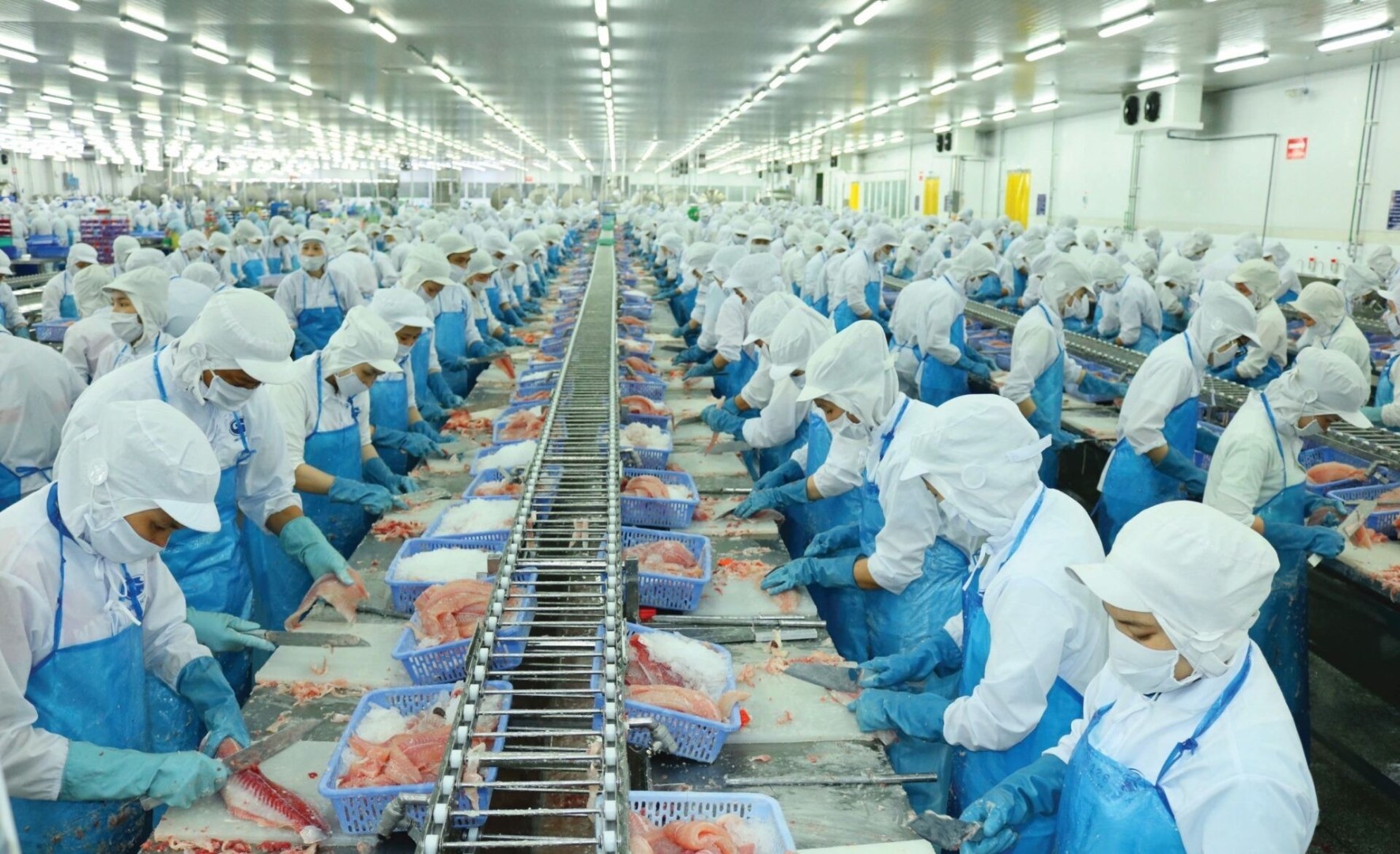

CEO of Vinh Hoan JSC Nguyen Ngo Vi Tam attributed the success in securing the green loan to the company’s years of commitment to the circular economy model, optimising the value chain, minimising waste, and creating additional value from by-products. International certifications also played a significant role in its application.

The Dai Dung Corporation (DDC), a supplier of turnkey services and steel structure products, recently announced a comprehensive collaboration with the Bank for Investment and Development of Vietnam (BIDV), including a green loan for the Nghi Son High-Tech Mechanical Factory Project. This project is designed, built and operated to meet the Leadership in Energy and Environmental Design (LEED) Gold certification standards, which is awarded to green buildings by the US Green Building Council (USGBC).

The capital market has also made headlines with non-financial businesses beginning to issue green bonds. A notable example is BIDV, which became the first bank to successfully issue 3 trillion VND in green bonds voluntarily adhering to the International Capital Market Association (ICMA) green standards in September 2024. This capital will finance projects with a positive impact on the environment and society.
For businesses, securing green financing from international institutions can be daunting, particularly due to stringent standards and high investment because technology and infrastructure often entail high initial costs.

Credit institutions are also increasingly entering the green capital race. In mid-November, Vietcombank announced the issuance of its Green Bond Framework in line with the ICMA Green Bond Principles.
“Vietcombank’s green credit help address the most urgent environmental issues the country is facing, such as carbon emissions and pollution”.
S&P Global, the independent organisation offering the Second Party Opinion
Despite the growing demand for understanding and complying with international standards, a major challenge for Vietnam remains the lack of legal regulations, particularly in the classification of green criteria.


Climate action projects are still considered risky (Photo: VNA)
Beyond the nascent regulatory framework, numerous barriers exist in the green capital market, including the ability of institutions to meet capital requirements, a limited number of potential projects, and skepticism regarding climate projects, often considered high risk.
According to FiinRatings, a credit rating agency in Vietnam, the country is in the process of drafting a framework for classifying green bonds and green credit. Recent green bond issuances have seen progress, thanks to the basic legal framework in place and, notably, the voluntary commitment of market participants./.
