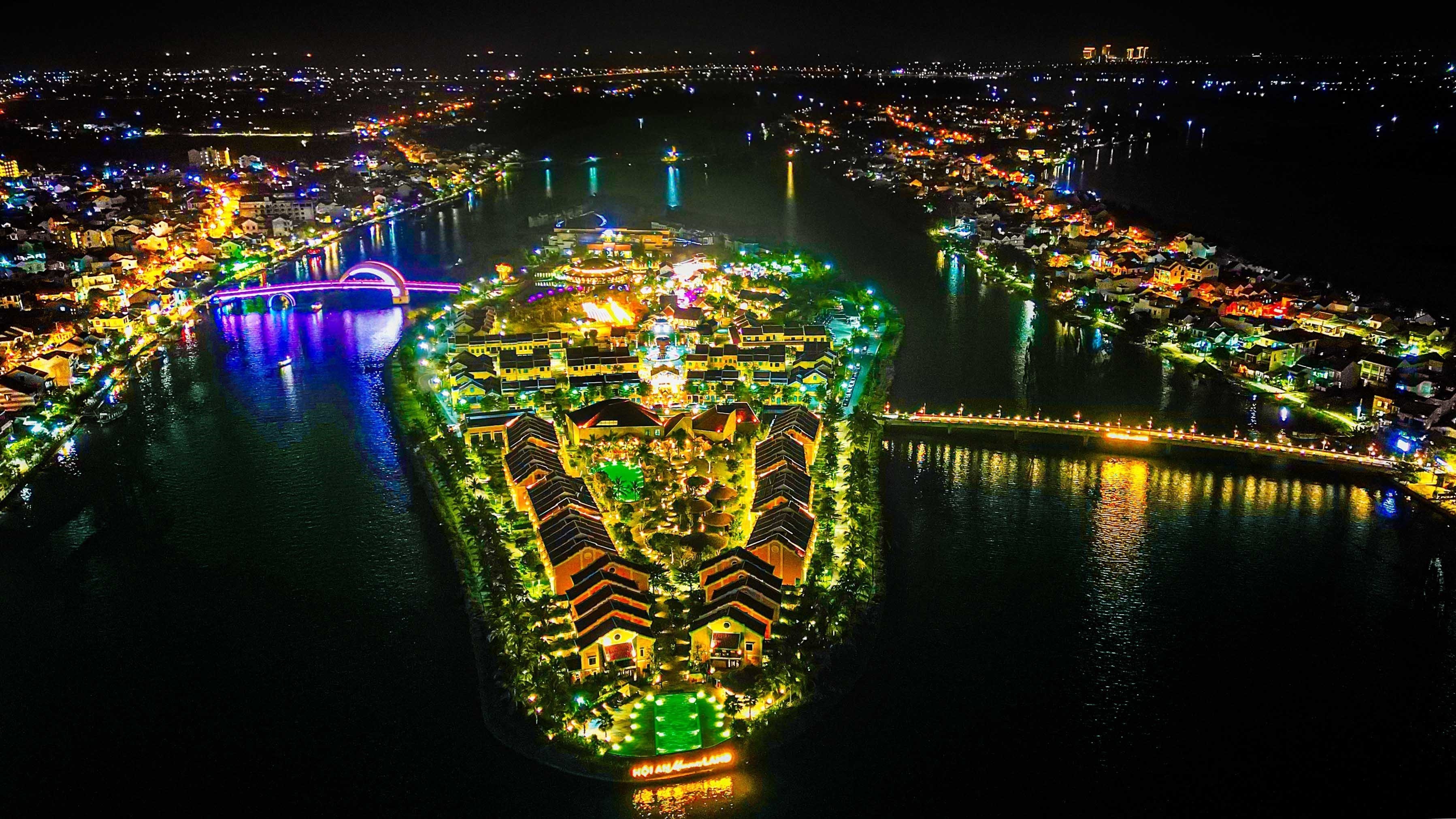
Located along the poetic Hoai River, the ancient city of Hoi An is likened to a precious gem in the heart of the central province of Quang Nam, with its ancient beauty and peaceful charm preserved throughout centuries.


Hoi An Memories 2024 – An impressive outdoor art programme. (Photo: VNA)


Recognised by UNESCO as a World Cultural Heritage site on December 4, 1999, it is not only a living museum of architecture and urban lifestyle but also a symbol of the unique East-West cultural fusion.
A global heritage, a source of pride for Vietnam
Formed since the 16th century, Hoi An was once one of the busiest international trading ports in the region. At that time, merchants from China, Japan, the Netherlands, India, and Spain came here to trade goods. As a result, its architectural works and cultural values have been shaped by a blend of Eastern and Western cultures. This influence is still evident in the yin-yang roof tiles, narrow streets, and intricately designed club-houses of the Hoa people.


Hoi An is not only a living museum of architecture and urban lifestyle but also a symbol of the unique East-West cultural fusion (Photo: VNA)


According to Pham Phu Ngoc, Director of the Hoi An Cultural Heritage Management Centre, the city has over 1,400 listed and classified relic sites, including 27 national-level, 49 provincial-level, and more than 1,330 sites under the city’s protection. Specifically, the ancient city has 1,130 sites, including nine individual national-level and eight provincial-level ones.
The monuments include architectural works such as residential buildings, bridges, wells, markets, and religious structures like temples, pagodas, tombs, shrines, clan houses of worship.

In contrast to the rapid modernisation of many other cities, Hoi An leaves a deep impression with its moss-covered rooftops, ancient yellow walls, and colourful lanterns.


Artisans make lanterns that carry the distinctive cultural mark of Hoi An. (Photo: VNA)
Hoi An is not only a living museum preserving ancient architectural values but also a vibrant cultural space. Traditional customs, beliefs, and folk arts such as “bai choi” (a popular folklore style of singing), and the “ho khoan” (heave-ho) chants on the Hoai River are still preserved, adding to the unique cultural beauty of the city.
Wandering through the narrow streets, visitors will easily encounter street vendors selling local specialties such as cao lau (a type of rice noodles), Quang noodle, and chicken rice, which embody the soul of Quang Nam’s countryside. Additionally, craft shops selling products from traditional villages like Kim Bong woodworking, Tra Que vegetables, and Thanh Ha pottery also remind visitors of a time when Hoi An was a bustling trading port.


Hoi An cuisine is also one of the attractions for tourists. (Photo: VNA)


In 2024, Quang Nam-style noodle is included in the National Intangible Cultural Heritage list under the category of folk knowledge. (Photo: VNA)

Especially on the 14th day of each lunar month, the lantern festival transforms Hoi An into a dazzling, colourful painting. A must-try experience when visiting the city is releasing lanterns on the Hoai River. For the local residents, releasing lanterns is not just a beautiful ritual, but also a way to dispel worries and seek peace and happiness.


Lanterns – a unique cultural symbol of Hoi An. (Photo: VNA)


An unmissable experience when visiting Hoi An is releasing lanterns on the picturesque Hoai River. (Photo: VNA)
With its unique values, Hoi An was classified as a national historical-cultural relic site by the Ministry of Culture in 1985, and a special national relic site by the Prime Minister in 2009. It was recognised by UNESCO as a World Cultural Heritage site in 1999.
In recent years, Hoi An has continually affirmed its position in the hearts of both domestic and foreign visitors. The number of tourists, particularly international travellers, has grown significantly, demonstrating the irresistible allure of this heritage site. In 2019, before the COVID-19 pandemic, the city welcomed 5.35 million tourists. After three years of pandemic-related challenges, the number of visitors has gradually recovered, reaching 4 million in 2023.


Hoi An is a favourite destination for many foreign tourists. (Photo: VNA)


2024 Hoi An – Japan Cultural Exchange Programme attracts a large number of tourists and locals. (Photo: VNA)


Many art performance programmes in Hoi An attract tourists. (Photo: VNA)
Hoi An has also consistently earned prestigious prizes. It bagged the Asia’s Leading Culture City Destination award for the fifth time in a row at the 2024 World Travel Awards (WTA), after winning the title in 2019, 2021, 2022 and 2023. In the 2024 World’s Best Awards by Travel + Leisure, Hoi An ranked 4th in the list of the 25 most-loved cities in the world and 3rd in the list of the 25 most-loved cities in Asia. It was also ranked at No. 1 place in the Top Best-Value Destination in the World in 2024 by The Post Office UK.

Efforts to preserve and promote heritage values
Since Hoi An was recognised as the World Cultural Heritage site, many large-scale conservation programmes have been implemented. Today, the management of the site is strictly decentralised in accordance with legal requirements, with coordination and participation from the central government, and the provincial and municipal authorities.
The restoration work has always been a top priority in the conservation strategy. According to statistics, since 2008, more than 400 relic sites have been restored, with funding exceeding 150 billion VND (5.9 million USD), including both state budget allocations and contributions from the community. Notably, the project on urgent restoration of relic sites at risk of collapsing has saved hundreds of ancient houses, thus preserving the city’s historic appearance for generations.


Cau Pagoda is an architectural work built by Japanese merchants who came to trade in Hoi An in the mid-16th century. This is one of the attractive destinations for tourists both day and night. (Photo: VNA)
Important tangible heritage sites such as Cau (Bridge) Pagoda, Tan Ky ancient house, and club-houses of the Hoa people have all been carefully restored, managed, and protected, in line with long-term plans to ensure their integrity and historical values. Local authorities have also adopted digital technology in managing these sites, creating records, and digitising monument data to enhance monitoring and conservation efforts.


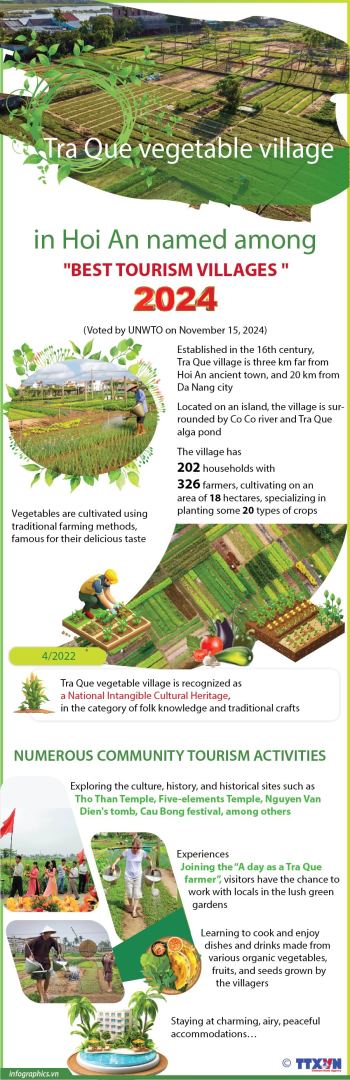
Tra Que vegetable village in Hoi An city is named in the United Nations World Tourism Organisation’s (UNWTO) 2024 list of the world’s 55 best tourism villages (Photo: VNA)


The village is Vietnam’s sole representative in this list (Photo: VNA)
In addition, intangible cultural heritage values have also received great attention. Traditional festivals such as the lantern festival and “bai choi” singing are held regularly, becoming typical features of the locality, while customs and folk arts are preserved and passed down through generations.


Hoi An is moving towards a model of sustainable tourism development (Photo: VNA)
The ancient city is moving towards a model of sustainable tourism development, by implementing a lot of initiatives such as the use of electric vehicles, minimising plastic waste, and encouraging tourists to engage in environmental protection activities. The Vietnamese government, along with international organisations, has also launched several support projects, including the establishment of a conservation fund, organising scientific workshops, and training programmes to raise public awareness.
However, it still faces pressures related to population growth, increasing population density, and the rapid and difficult-to-manage influx of tourists, particularly in the ancient city. The negative impacts of urbanisation and the development of services and tourism have seriously affected the integrity and authenticity of the cultural heritage as well.

In response to these challenges, in March 2024, the provincial People’s Committee developed and submitted to the Government for approval of a project for the conservation and promotion of Hoi An by 2030, with a vision to 2035.
Accordingly, 100% of deteriorated heritage sites will be restored. Besides, all tangible and intangible cultural heritages will be scientifically documented, and the heritage protection zone will be expanded to ensure the integrity and outstanding universal value of this ancient town, establishing Hoi An as a leading cultural and eco-tourism hub in the region.


Museum of Folklore in Hoi An preserves many artifacts with special traditional and educational values (Photo: VNA)
A wide range of activities have been held in the ancient city from November 23 to December 4 to mark 25 years since it was recognised as the World Cultural Heritage site.
Twenty-five years is a long journey filled with efforts to preserve and promote the value of this heritage. With the cooperation of the community, local authorities, and international friends, Hoi An is not only a source of pride for the Vietnamese people but also one of humanity’s cultural symbols. Its timeless beauty, the harmonious blend of architecture and culture, and the relentless efforts in conservation have helped it continue to shine./.
